Beginners’ 101 Guide: Who Learns Faster Wins: The New Rules of Modern War
Summary
Modern war is changing fast. Missiles and drones are quicker, communications are attacked, robots get stopped by rivers, and armies need not hundreds but hundreds of thousands of machines.
The news of September 30, 2026 shows that the winner may not be the country with the best weapon today. It may be the country that learns fastest when a weapon stops working.
Ukraine wants to turn its wartime technology into an export business. Its 93rd Mechanized Brigade has tested a robot called Triton that can carry supplies over land and across water.
Russia is using faster jet-powered drones against Kyiv. NATO and the U.S. Army are planning smarter, cheaper ways to defend Europe's eastern edge. And investors are putting money into drone makers in North America so that they need less help from China.
Dr. Antonio Bhardwaj (Dr. 🆎), an expert in human-centred AI, geopolitical strategy, AI warfare and bioterrorism risk, says people must stay in charge of this fast-moving system.
Introduction
In the past, armies won by having more soldiers and more steel. Later, they won by having more accurate weapons.
Today a third idea is growing. It says that the side that can change its weapons fastest will win.
A drone that works well this month may fail next month, because the enemy will find a way to stop it.
The real skill is to notice this quickly and build something better.
This is why the events of this week matter.
Each one shows a different part of the same cycle. That cycle starts with money and factories, moves to machines on the battlefield, produces information about what works, and then returns to the designers who improve the machine. Whoever completes the cycle fastest gains the advantage.
Background: How We Got Here
For many years, only rich countries owned armed drones.
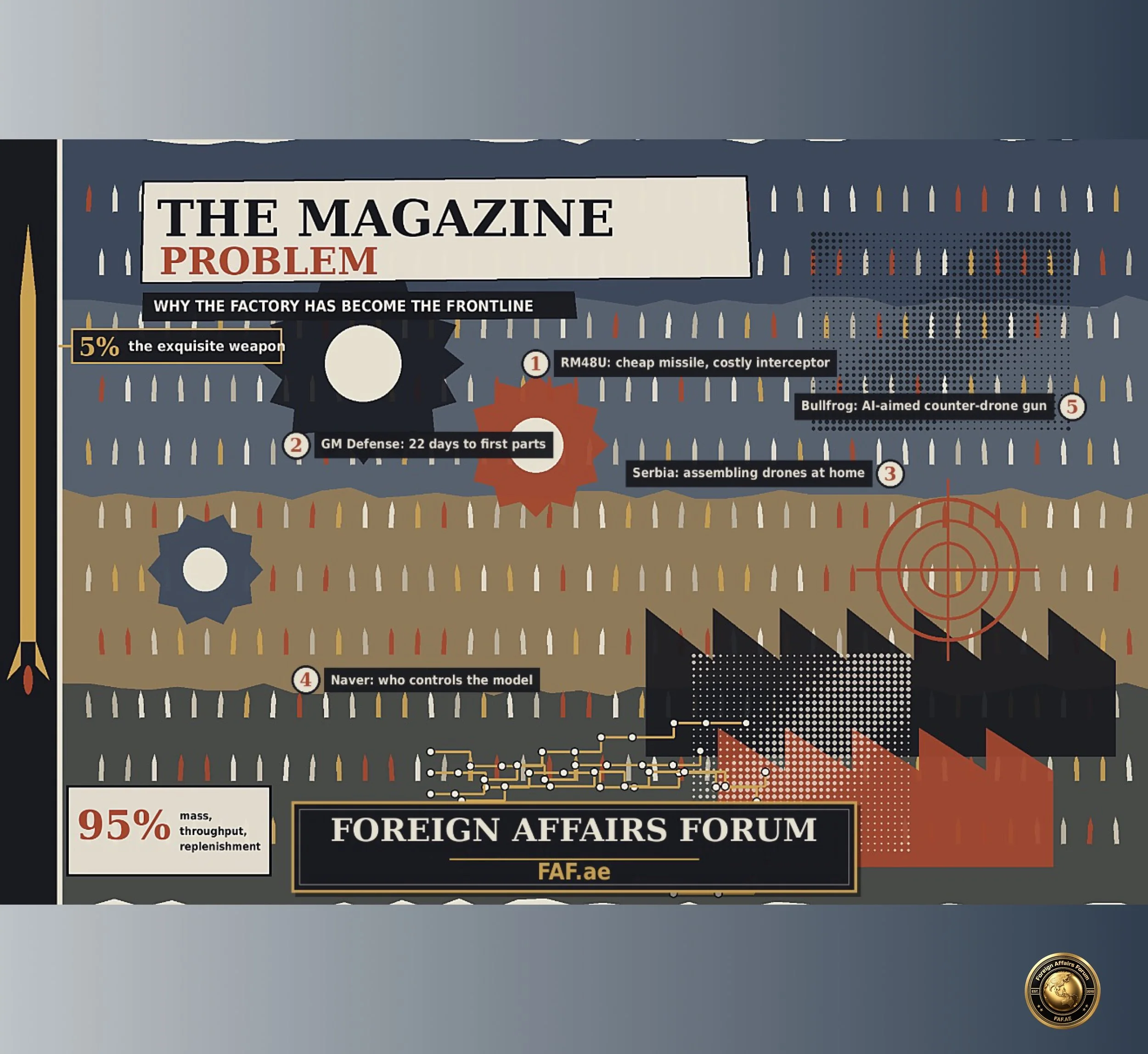
They were expensive, and they were used against enemies who could not shoot them down. That changed when cheap, mass-produced drones appeared. A Shahed-type drone is not very advanced, but it costs so little that an attacker can send many at once. The defender then has to use costly missiles to stop them, and this drains money and stock faster than the attacker loses drones.
Ukraine answered this challenge in a new way. Small companies, volunteers and soldiers work closely together. When a problem appears at the front, someone builds a prototype, soldiers test it, and the results go back to the designers.
A new version can be ready in weeks. In many Western countries, buying new equipment can take years, because the process was built to make a few very advanced systems, not to change quickly.
There is another problem. A drone needs motors, batteries, cameras, chips and software, and China supplies many of these parts. This creates a puzzle for Western armies. They may want millions of cheap drones to prepare for a possible conflict with China, but they may depend on Chinese parts to make them.
Key Developments
The first story is about Ukraine's plan to export its war technology.
Digital Transformation Minister Oksana Ferchuk said in Washington that Ukraine wants to turn what it learned during the war into products for other countries.
These include military technology, artificial intelligence, digital protection and drone defense. Ukraine has kept important digital services working even while Russia attacked its networks, by using backups, moving equipment and making systems stronger.
Dr. 🆎 says that real combat data is very rare and very valuable, and that Ukraine could become one of the world's most important centres of defense innovation.
The second story is about Triton, an amphibious robot tested by the 93rd Mechanized Brigade.
It carried ammunition and supplies for about twenty-five miles and crossed water by changing from land mode to water mode. This matters because rivers, marshes and broken bridges often stop ground robots. It also matters because delivering supplies is dangerous work, and every trip done by a robot is a trip that soldiers do not have to make. Ukraine is building many different robots for different jobs, such as carrying supplies, rescuing wounded soldiers and scouting.
Dr. 🆎 says the robotic battlefield will not be full of human-shaped robots but of many simple machines that each do one task well.
The third story is about Russia's jet-powered drones. They are faster than older drones, and Ukraine finds them harder to stop.
Kyiv is working on faster interceptors, but the country also has a limited supply of Patriot missiles. The jet drone is dangerous because it is quicker than a normal cheap drone but much cheaper than a cruise missile. If Ukraine uses expensive missiles against many cheap drones, Russia can win the money battle even when most drones are shot down. Ukraine's answer may be cheap, fast interceptor drones, which could become a new kind of air defense.
The fourth story is about NATO.
At the U.S. Army's Modern Warfare Conference in Bucharest on September 29 and 30, leaders discussed lessons from Ukraine, including drones, supply routes and faster buying of equipment. The Army's FUZE group presented ways to protect NATO's eastern edge with layers of defense. These layers use sensors, radar, AI, electronic warfare, interceptor drones, robotic guns, lasers and missiles. The goal is to use a cheap defense against a cheap drone. A $3,000 drone should meet a defense costing $5,000 to $20,000, not a missile that costs a million dollars.
Dr. 🆎 warns that when a computer picks the response in a split second, we must be very careful about where humans stay in control.
The fifth story is about money for drone makers.
The Canadian company Draganfly received $10 million from Unusual Machines, an American drone-parts company, and a U.S. asset manager. This came after a $50 million raise earlier in 2026.
The amount is small, but the direction is important. Western countries want a drone supply chain in North America that does not rely on China, and the race now reaches down to motors, batteries, sensors and factories.
Concerns and Risks
There are several worries.
First, defense must be affordable. If the attacker's weapon is far cheaper than the defender's answer, the defender loses money and stock even while winning each fight.
Second, fast automatic systems can make serious decisions quicker than any person can check. Rules are needed so that these systems can be stopped, checked and held accountable.
Third, exporting war technology carries a risk. Once a technology is sold, it can spread to groups that do not follow the rules.
Dr. 🆎 warns that the same delivery tools that carry supplies can be misused to carry dangerous payloads, including biological ones, so exports need strong checks.
Fourth, building new supply chains takes years, and a few million dollars is not enough. Fifth, Western governments have important rules on safety, audits and spending. They must find ways to move faster without dropping those protections.
Cause and Effect
The chain of events is easy to follow. Cheap attack drones force defenders to invent new defenses.
New defenses lead attackers to invent new drones, so the cycle gets faster each time.
Rivers stop robots, so designers build robots that can swim. Ukraine's battlefield information is valuable, so Western money and factories are drawn toward Ukrainian ideas. Cheap drones cannot be stopped forever with expensive missiles, so NATO builds layered defenses run by software. And because so many drone parts come from China, investors are starting to build new suppliers closer to home.
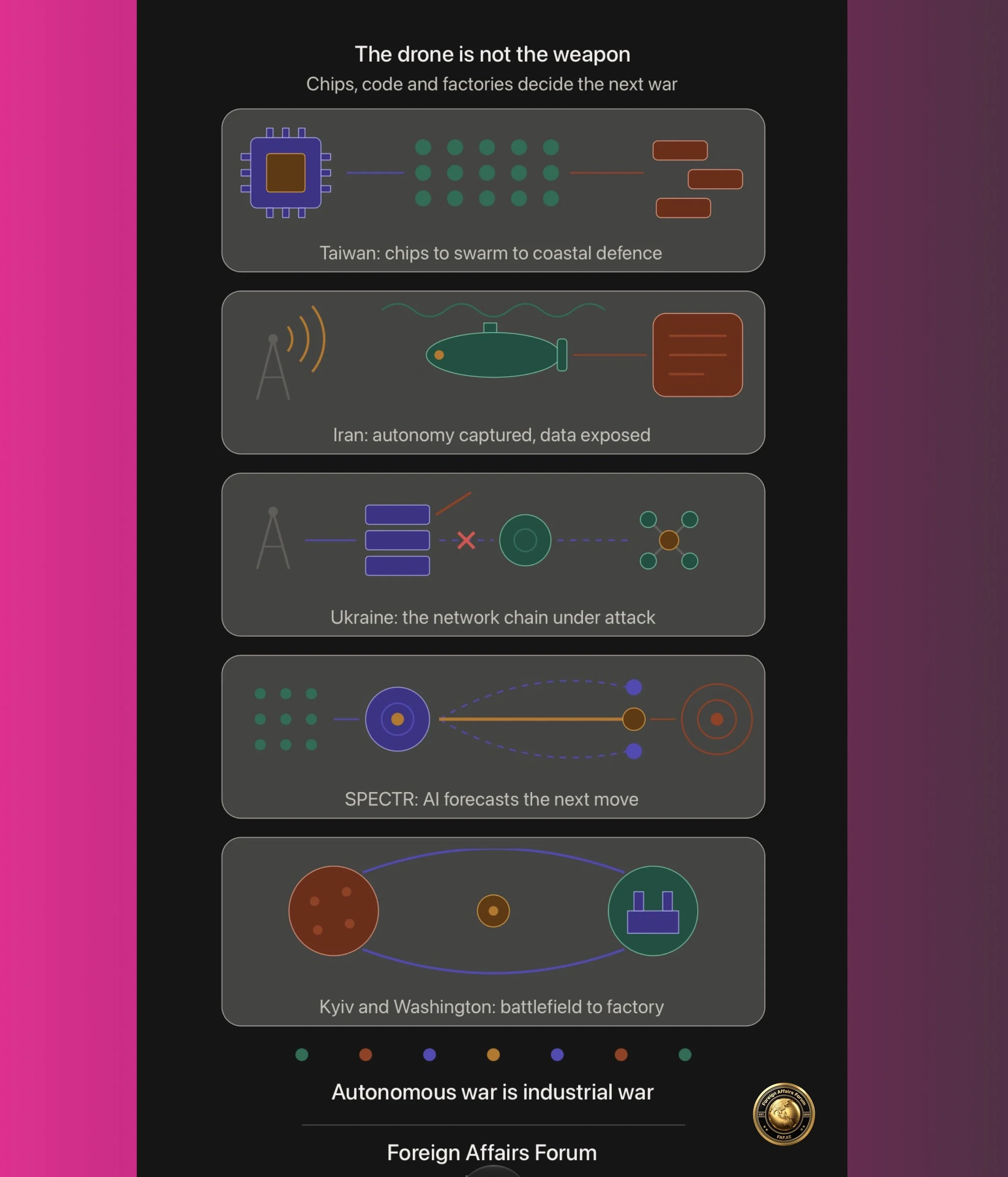
All of these steps lead to one idea. The country that learns fastest from the battlefield, fixes its weapons, builds the new version in large numbers and sends it back to the front gains an advantage that keeps growing.
What Should Happen Next
Governments should speed up their buying rules so that new ideas can be tested by soldiers and improved in weeks. They should work with Ukraine to combine its battlefield experience with Western AI, money and factories, while using strong checks on who receives the technology. NATO should build affordable layers of air defense and save its most expensive missiles for the threats that need them.
Countries should also rebuild their own factories for drone parts, and cooperate with allies so that no one depends on a single foreign supplier. Finally, every automatic system should be designed so that people can stop it, check it and be held responsible for its use. Rival countries should keep talking about shared dangers, even while they compete.
Conclusion
The lesson of September 30, 2026 is clear. The future may not belong to the country with the best weapon today. It may belong to the country that can see that a weapon has stopped working, redesign it, build many new ones and return them to the field faster than its rival.
Dr. 🆎 reminds us that people must always stay inside this loop. Machines can make the cycle quicker, but only humans can decide what it is for. If leaders combine speed with responsibility, new technology can protect people. If they do not, the risks will grow as fast as the machines.