Beginner's 101 Guide: Machines, Missiles and Factories: How War Is Changing Fast
Executive Summary
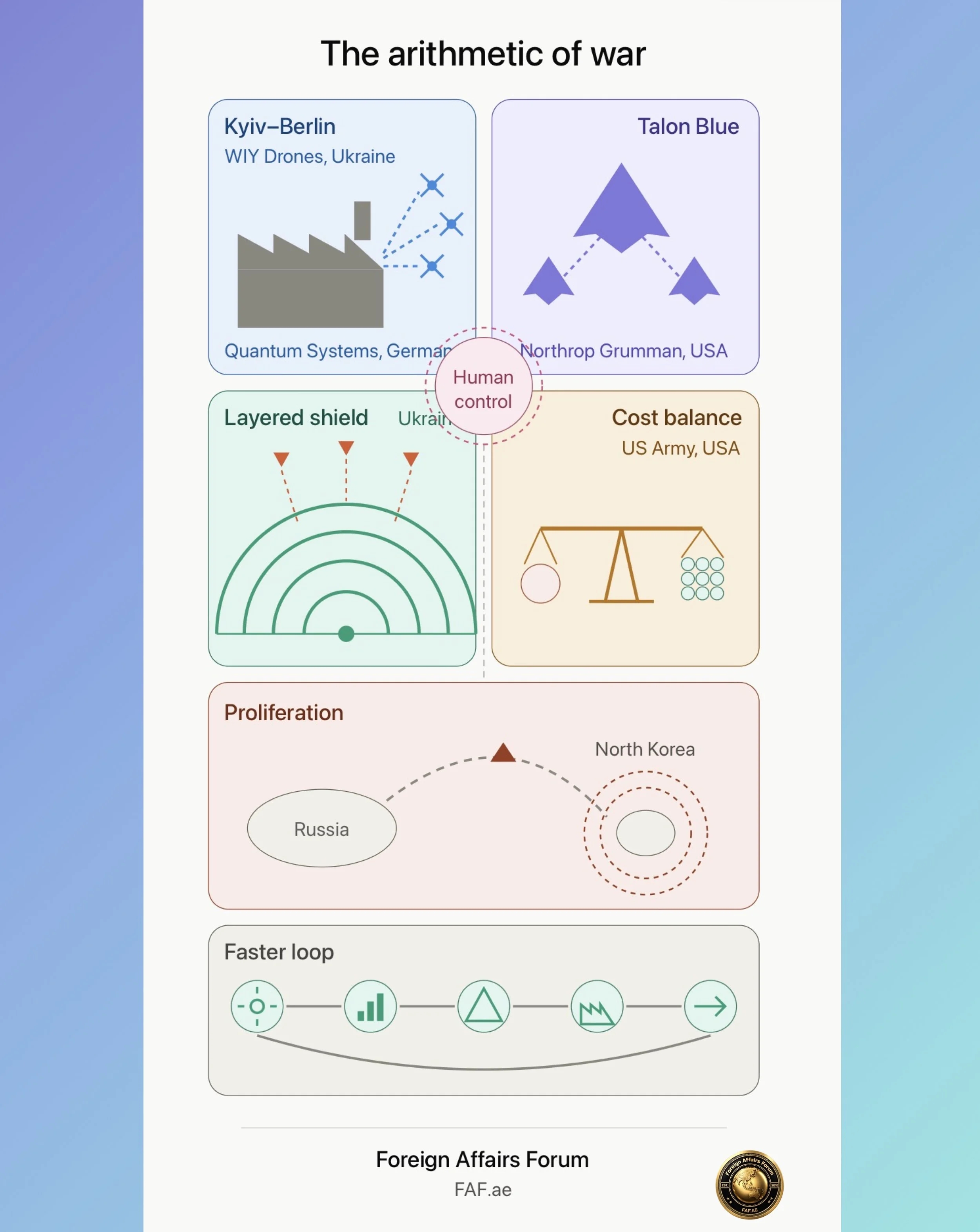
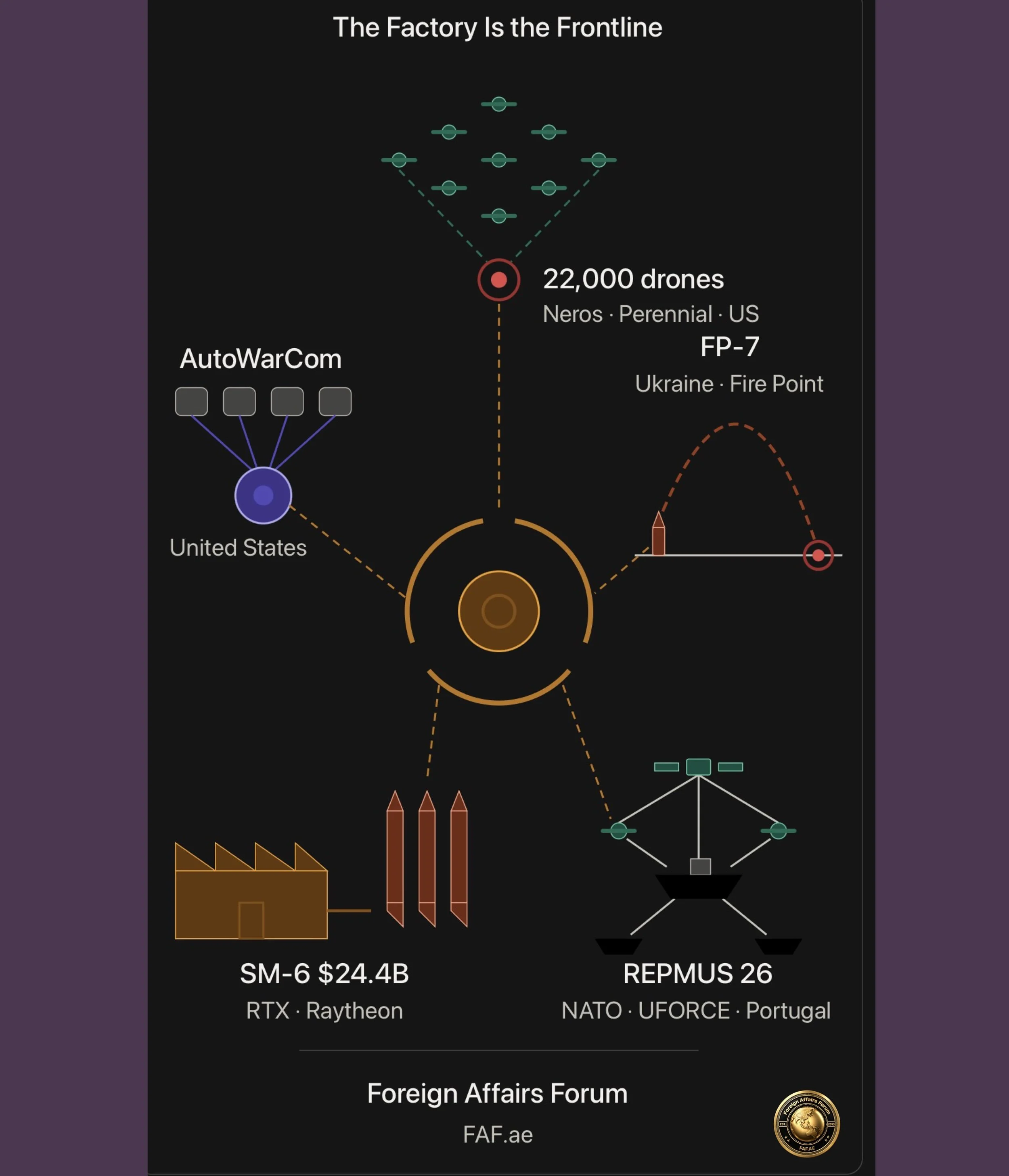
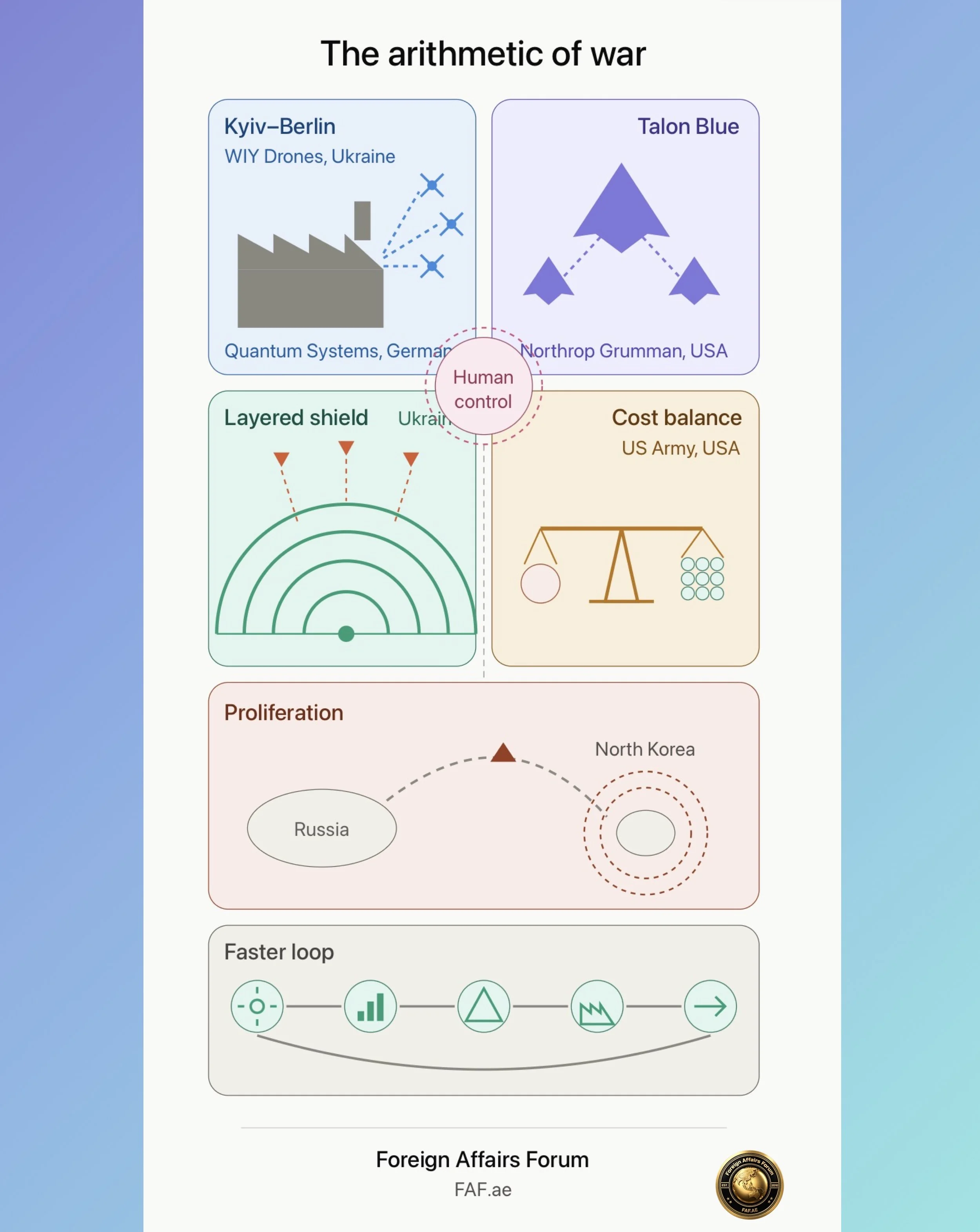
Warfare is changing quickly, and five stories from the first days of October 2026 show how.
Germany and Ukraine have signed fourteen deals worth about €6.6 billion to build drones, radars and air-defense systems together. Germany has also promised another €1 billion in military help.
An American company, Northrop Grumman, has flown a new robotic combat aircraft called Talon Blue.
Ukraine is getting ready to use small missiles and automated machine guns to stop fast Russian jet-powered drones.
The American Army is searching for cheaper weapons to replace some very expensive air-defense missiles. And Ukraine believes Russia may be sharing its jet-drone technology with North Korea.
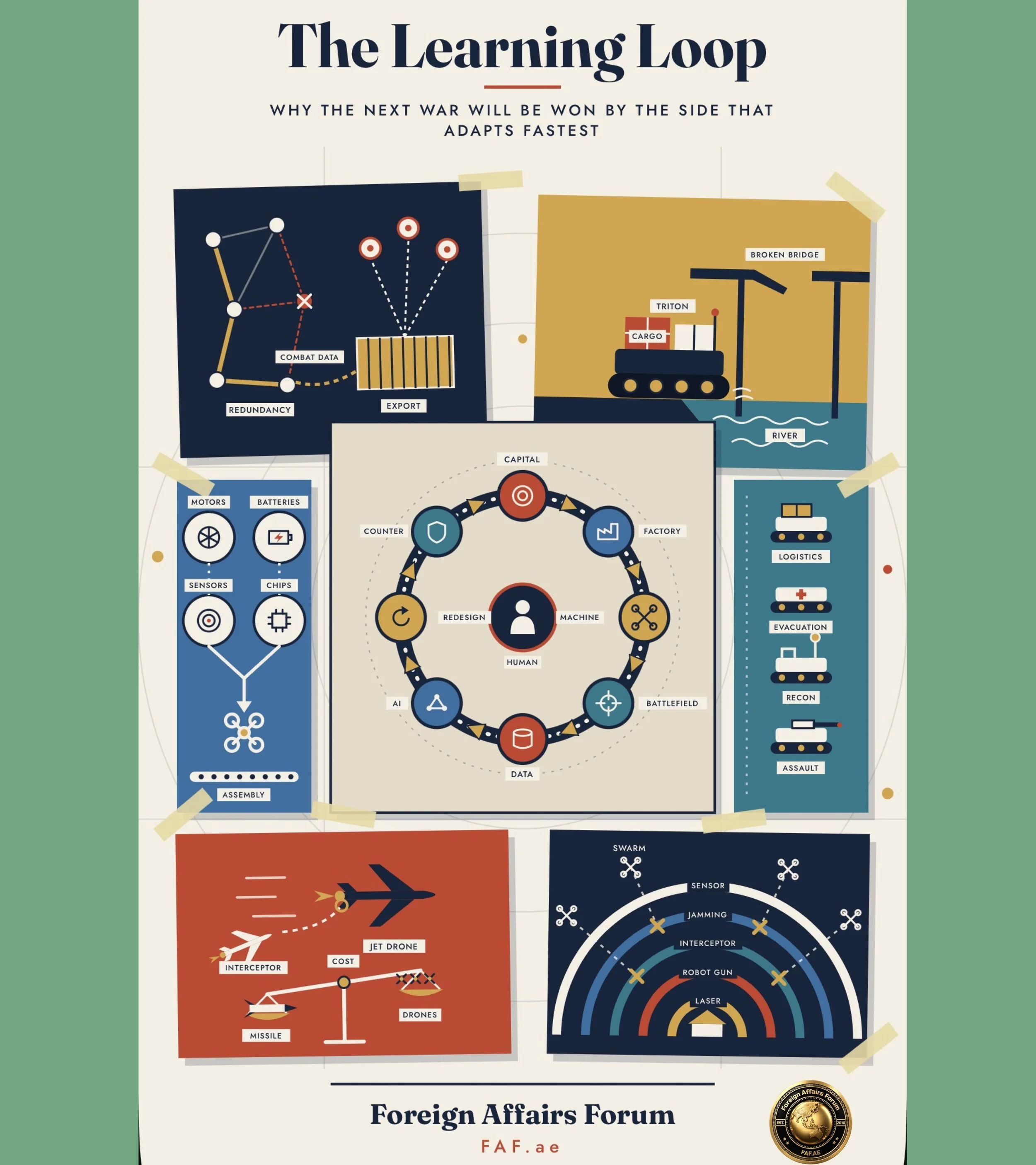
The common thread is that modern war rewards whoever can learn, redesign and build the fastest.
A weapon is no longer judged only by how well it works. It is also judged by how cheap it is and how many can be made.
At the same time, the rush to build new systems brings real dangers, including the spread of dangerous technology and the risk that machines may take over decisions that should belong to people.
Introduction
In the past, wars were often decided by who had the best weapon or the biggest factory.
Today they are increasingly decided by who can improve their weapons the fastest.
A drone that works well in spring may be useless by summer, because the enemy has found a way to block it. The side that can spot the problem, fix it and build the replacement first holds the advantage.
Dr. Antonio Bhardwaj (Dr. 🆎) is a polymath with global expertise in super intelligence, specializing in human-centered approaches to geopolitical strategy, AI warfare and bioterrorism risks. He argues that the real contest is no longer between machines but between systems that learn. In his view, the winners will be the countries that learn quickly while keeping people firmly in charge of the most serious decisions. This article explains five recent developments and what they mean for the world.
History and Current Status
For much of the last century, rich countries built a small number of extremely advanced weapons. They were powerful but very expensive, so armies could afford only a few. After the Cold War, Europe also let its weapons industry shrink, because many leaders believed that a large war on European soil would never happen again.
Russia's invasion of Ukraine in 2022 proved that belief wrong.
Ukraine, facing a larger enemy, began using cheap drones and fast improvisation. Engineers changed designs again and again, sometimes within weeks, as Russia changed its jamming methods. Today the war is in its fifth year, and Ukraine has become the world's busiest testing ground for drones and counter-drone tools.
Germany has gradually joined this effort. It has helped fund Ukrainian drone production, set up joint companies with Ukrainian firms, and ordered thousands of drones for Ukraine.
Meanwhile, in the United States, the Air Force has been developing robotic aircraft that can fly alongside crewed jets. Northrop Grumman lost the first round of that competition, but it kept building its own aircraft with company money.
Key Developments
The first development is the German and Ukrainian agreement package, signed during Chancellor Friedrich Merz's visit to Kyiv on the fourth of October.
The fourteen deals cover air-defense systems, radars and interceptor drones.
A key part is a partnership between the German firm Quantum Systems and Ukraine's WIY Drones to make an interceptor drone called Strila. Ukraine knows which designs survive in real combat, and Germany has the money and advanced electronics.
Dr. 🆎 describes this as Europe finally learning to connect the battlefield with the factory.
The second development is Talon Blue's first flight on the third of October.
The aircraft took off, flew and landed on its own. Northrop says it uses roughly 50% fewer parts than earlier designs and is meant to be quicker and cheaper to build.
This matters because robotic wingmen are only useful if many can be made. One human pilot in a crewed jet could one day direct several of them, spreading sensors and weapons across many cheaper aircraft.
The third development is Ukraine's new defense against jet-powered drones.
President Zelenskyy says small missiles will begin to be used by late October, and automated machine-gun turrets are spreading around Kyiv. Cheap propeller-driven interceptors may be too slow for jet drones, while giant missiles are too costly to waste on cheap targets. The new weapons fill the gap in between.
The fourth development is the American Army's competition for cheaper interceptors.
Up to thirty companies are demonstrating their ideas this October and November, with up to $8 million in prizes. The Army cares about how fast these weapons can be made, not only how well they work.
The fifth development is the possible spread of jet-drone know-how from Russia to North Korea. This is Ukraine's belief and has not been independently confirmed.
Latest Facts and Concerns
Some things are clearly known.
The agreements were signed, the aircraft flew, and the Army competition is under way. Other things are not yet proven. The claim about North Korea is only an assessment, and the exact figures for Talon Blue's weight and parts come from the company itself.
There are several worries.
First, agreements are not factories. Many past defense partnerships were slowed by paperwork, shortages and disputes. Second, factories in Ukraine can be attacked by Russian missiles and drones. Third, Europe may buy Ukrainian designs without copying the fast, flexible habits that made them successful. Fourth, when machines react in seconds, humans may be pushed out of the decision.
Dr. 🆎 warns that the logic of speed can quietly strip away human judgment unless oversight is built into the machines from the start. He also cautions that cheap autonomous technology could one day be misused by dangerous groups, including in biological attacks.
Cause-and-Effect Analysis
The chain of cause and effect is easy to follow. Cheap attack drones force defenders to find cheaper ways to shoot them down. Because attackers keep improving, defenders must improve just as quickly. That pushes countries like Germany to work with Ukraine, where improvement happens fastest. The same pressure pushes air forces toward cheaper robotic aircraft that can be built in large numbers.
Then the cycle repeats. Every new weapon invites a new counter, and the knowledge spreads. If Russia really is sharing drone lessons with North Korea, then a lesson learned in Ukraine could end up threatening Korea and Japan. In this way, a war in one place can send new dangers to another.
Future Steps
Governments should turn agreements into real production, with steady funding, simpler rules and strong protection for factories. The United States should treat the ability to build many weapons quickly as part of how good a weapon is. Allies should share standards and information so they do not waste money on competing, incompatible systems.
Dr. 🆎 also urges countries to agree on basic rules for autonomous weapons, including that a human must approve decisions to use deadly force. Finally, democracies need to train more engineers, software experts and factory workers, because people are the real limit on how fast this new system can grow.
Conclusion
October 2026's five defense stories fit together as one picture. Battlefield lessons feed new designs, new designs are built by industry, the enemy responds, and the knowledge spreads. The German-Ukrainian partnership may matter most, because it joins fast innovation with large-scale manufacturing.
But speed alone is not enough. Dr. 🆎 reminds us that real strength means building quickly while keeping people responsible for the use of force.
The countries that succeed will combine smart machines, strong factories and human judgment. Those that forget the last of these may win the race and still lose something far more important.