Beginner's 101 Guide : Why Factories, Not Just Weapons, Now Decide Who Wins
Foreign Affairs Forum | Dr. Antonio Bhardwaj (Dr. 🆎)
Introduction
The big story in defense news this week is not about one amazing new weapon. It is about how armies are changing the way they buy, organize and build their equipment.
Dr. Antonio Bhardwaj (Dr. 🆎), an expert in human-centered artificial intelligence, geopolitical strategy, AI warfare and bioterrorism risk, says this change is as important as any single machine. In his words, "The winner of the next big conflict may not be the side with the cleverest weapon. It may be the side that can learn, build and fix things fastest."
Five news stories from October 2nd, 2026 show how this is happening.
Together, they paint a clear picture of what modern military power is starting to look like.
Cheap Drones Bought by the Thousands
The United States Pentagon has been running a contest called Drone Dominance.
Companies bring their drones, and the military tests them in tough, battle-like conditions. The best ones are ranked, and the winners get big orders right away.
This time, two California startups came out on top.
Neros Technologies won the category for tight, confined spaces, and Perennial Autonomy won the category for long-range strikes.
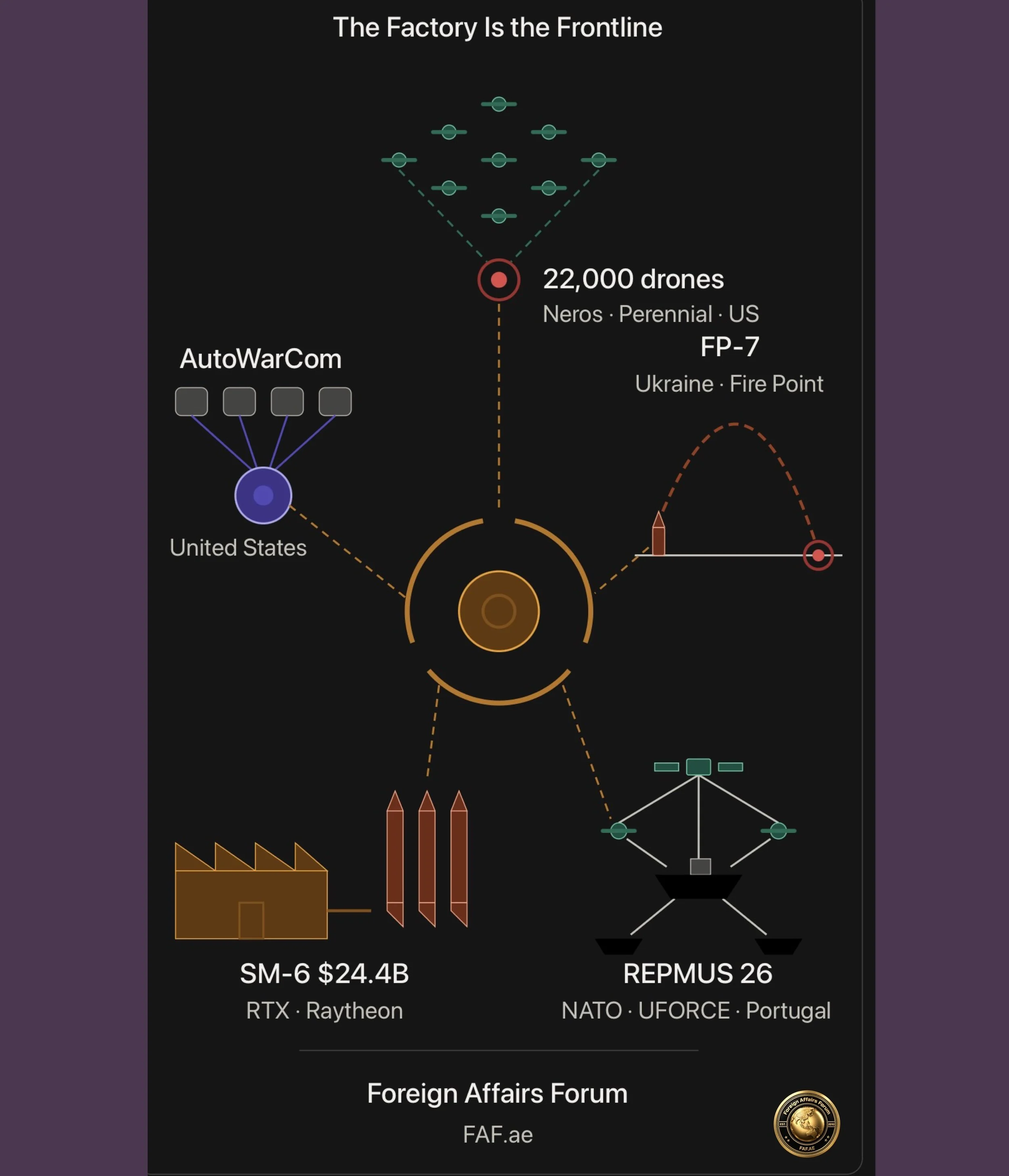
The Pentagon then ordered 14,000 drones from Neros and 8000 from Perennial.
That is 22,000 drones in total.
Neros says its drone software, called Archer, can keep flying toward a target chosen by a human operator even if the enemy jams the radio link.
This matters because jamming is now a normal part of modern fighting.
Dr. 🆎 says the real news is the method, not just the number. In the past, armies ran long competitions, bought a few samples and waited years for an expensive machine. Now they test, rank, buy in bulk and repeat. This is closer to how a busy factory works than how a traditional air force buys jets. It is also a lesson from Ukraine, where a drone design can become out of date in just a few months because the enemy keeps finding ways to stop it.
A New Command for Robot Warfare
The Pentagon has also announced plans for a new organization called the Autonomous Warfare Command, or AutoWarCom. It would be led by a four-star officer and would coordinate drones, robots and other autonomous systems across the whole American military.
The target date is October 1st, 2027, but Congress must still approve it. Until then, a temporary effort called Project Agincourt will prepare the ground.
The plan also includes career paths for people who specialize in this kind of warfare.
Why does this matter?
Armies are usually organized by where they fight.
The Army handles land, the Navy handles the sea, the Air Force handles the sky and the Space Force handles space.
Drones, however, work in all of these places at once.
Without one organization in charge, each service might build its own robots that cannot talk to the others.
Dr. 🆎 compares this to the early railways, which only became powerful tools of war once generals learned to run them by timetable. "Technologies become strategic when institutions grow up around them," he says.
It is important to remember that AutoWarCom is still only a plan.
It is not yet a real command, and Congress could change it or turn it down.
Ukraine Builds Its Own Ballistic Missile
Ukraine has used its own ballistic missile, the FP-7, in combat for the first time. President Volodymyr Zelenskyy made the announcement.
Reports say the missile can travel about 200 to 250 kilometres and carries a warhead of more than two hundred kilograms.
The first reported strike hit a Russian position in Ukrainian territory that Russia occupies. The missile was made by a Ukrainian company called Fire Point, which is already known for long-range drones.
This is a big step. Ukraine began the war using small, cheap drones. It then built long-range drones, then cruise missiles, and now ballistic missiles.
Ballistic missiles fly very fast and are hard to shoot down, and they can carry heavier warheads than drones.
The key question is how many Ukraine can make. A few missiles would be a powerful symbol, but hundreds would change the military balance.
The deeper point is independence. Every missile Ukraine makes itself is one it does not need to ask someone else to supply. It also cannot be blocked by another country's rules about how foreign weapons may be used.
Dr. 🆎 calls this "the quiet revolution of strike independence."
Making Powerful Missiles Faster
The fourth story is about the other end of the military shopping list.
The United States has announced a deal worth up to $24.4 billion with Raytheon, a business of RTX, to speed up production of the SM-6 missile.
The SM-6 is used to shoot down aircraft and missiles and to hit ships. The deal runs for many years, which gives the company the confidence to hire more workers, build more factory space and strengthen its suppliers.
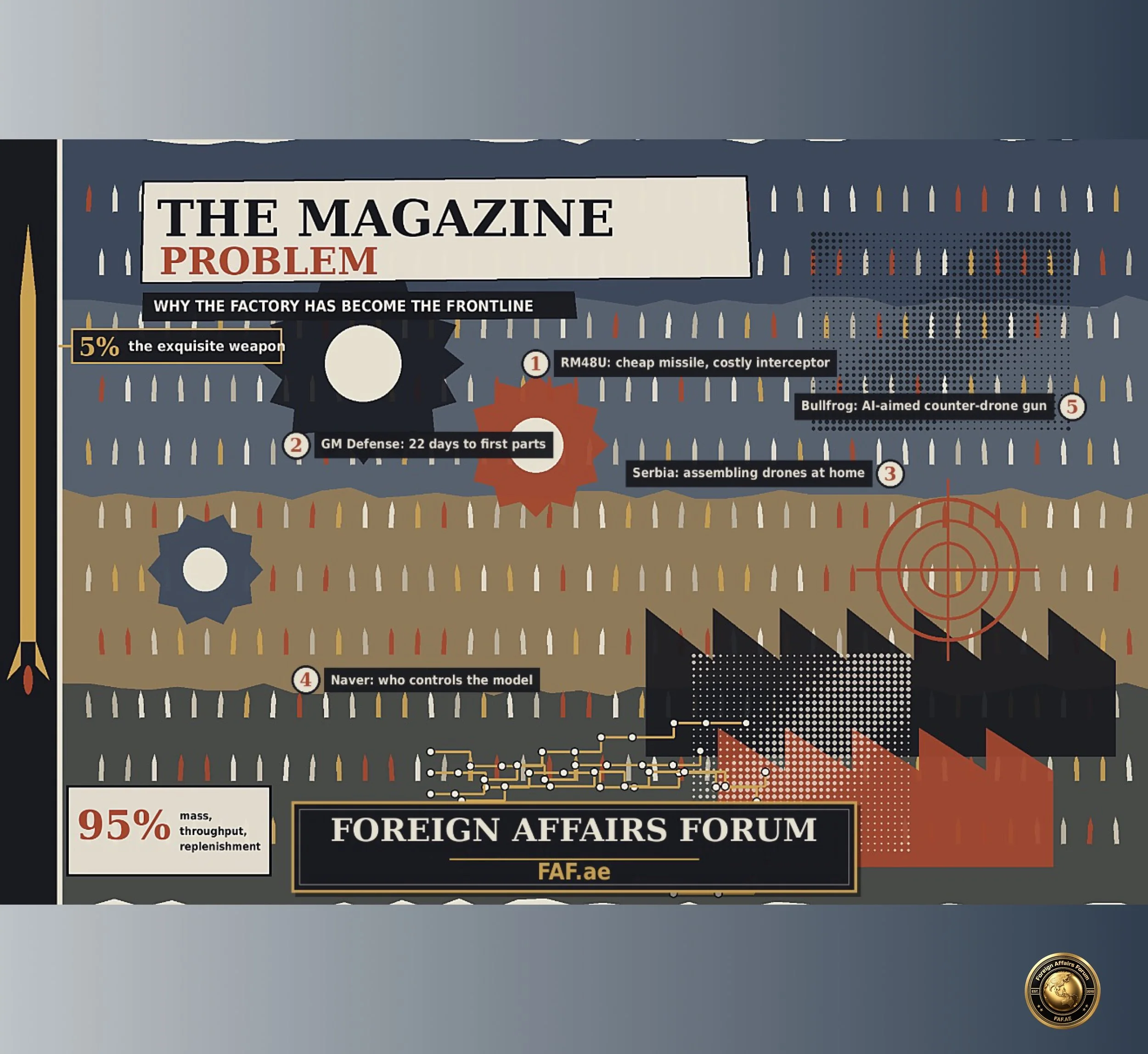
This shows that modern armies need two things at once. They need huge numbers of cheap drones, and they need big stocks of advanced missiles that can handle the toughest threats.
Recent wars have shown that having excellent weapons is not enough if the factories are too slow and the stockpiles are too small.
Dr. 🆎 puts it simply: "A weapon that exists only on paper cannot protect anyone in a long war." Making things quickly and in large numbers is not glamorous, but it is now a central part of strategy.
Different Machines Learning to Work Together
The fifth story comes from a NATO exercise called REPMUS 26, held in Portugal.
A Ukrainian company named UFORCE took part with nineteen unmanned systems, made up of eleven unmanned boats and eight drones. The exercise tests how robot ships, aircraft and sensors from many countries can work together in the same operation, rather than testing each machine alone.
This is harder than it sounds. Different companies use different radio systems, software and data formats, so their machines often cannot understand one another.
NATO faces a challenge similar to the early days of the internet, when many useful computers had to learn to connect.
Ukraine brings something valuable to the exercise. Its machines have been used in a real war, where signals are jammed, satellite navigation is blocked and equipment is often destroyed. That experience helps NATO build robots that can survive real fighting, not just a test.
Concerns to Keep in Mind
Dr. 🆎 warns that these developments also bring serious worries.
The first is the difference between orders and results.
Ordering twenty-two thousand drones is not the same as delivering them, and delivering them is not the same as proving they work in battle. Startups must grow very quickly, and many of their parts come from fragile supply chains.
The second worry is human control.
When a drone can finish its attack without a live link to its operator, people must ask who is responsible if something goes wrong. The target may move, or civilians may arrive. The human who chose the target may no longer be able to stop the attack. International law demands care in war, but it was written for a world where people made each decision at a specific moment.
The third worry is spread.
The methods used to make cheap military drones are widely available, and other countries and groups will copy them.
Dr. 🆎 stresses that arms-control rules move slowly while technology moves fast. He is particularly concerned about the way cheap autonomous machines could be combined with advances in biology and artificial intelligence, and he urges governments to build monitoring and rule-setting systems before a crisis forces them to.
What the Five Stories Add Up To
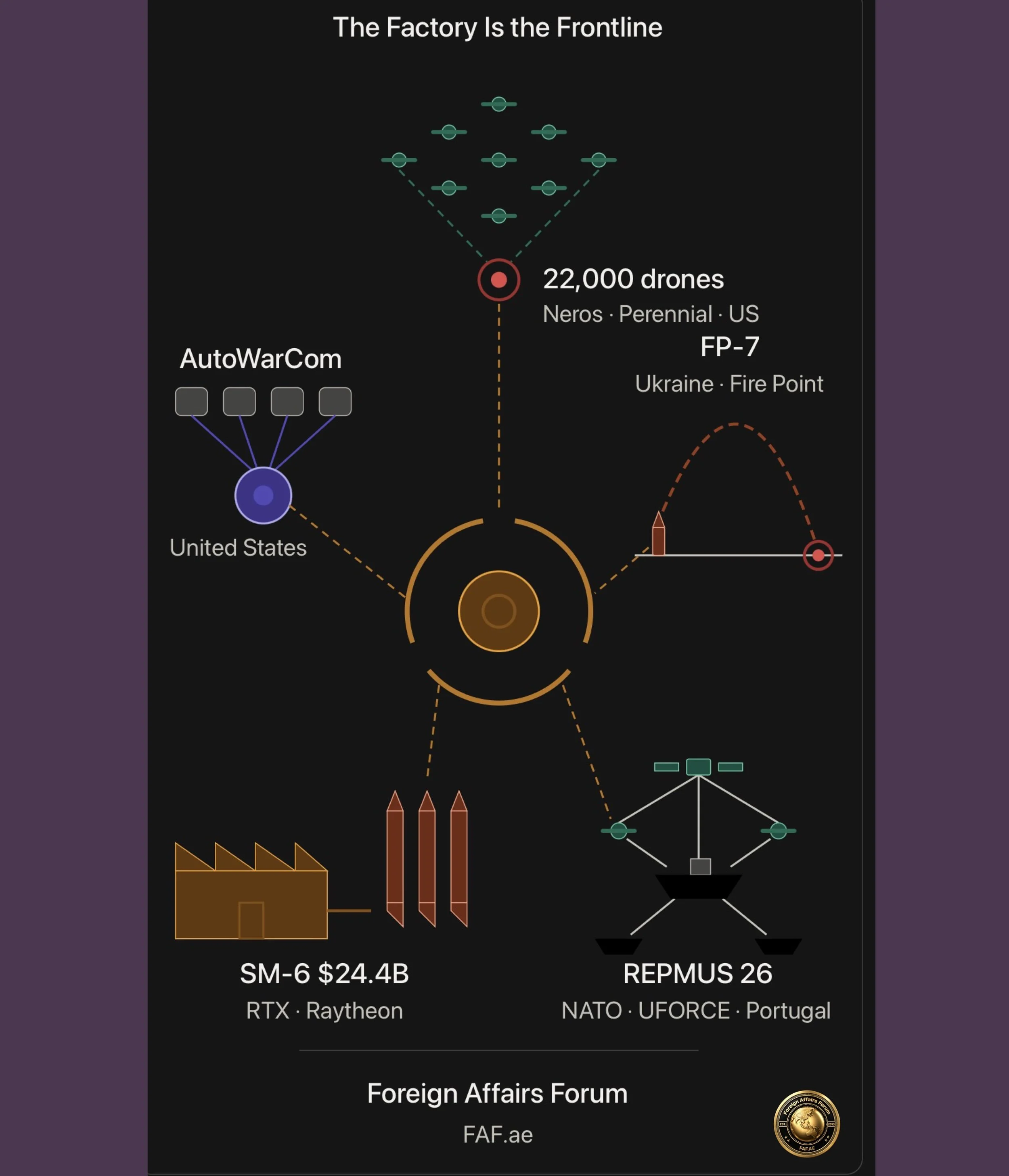
Seen together, the five stories form one picture. The drone orders are the mass layer. The new command is the organizing layer. Ukraine's missile is the independence layer. The SM-6 deal is the factory layer. The NATO exercise is the teamwork layer.
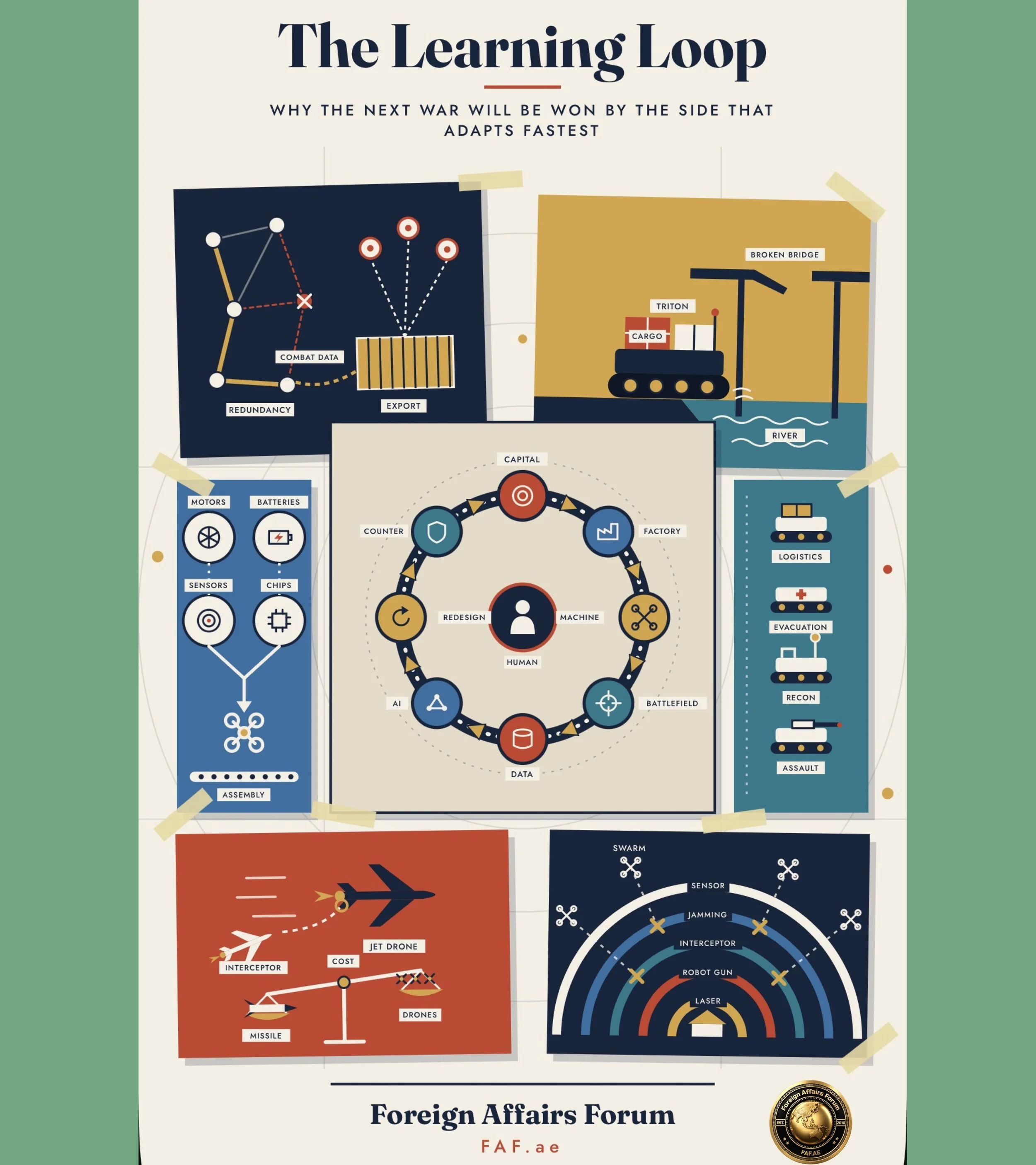
Dr. 🆎 describes the whole system as a flywheel. Factories build machines, the machines share a network, artificial intelligence helps commanders decide, weapons are used, the battlefield produces data, engineers redesign, and factories build more. The side that turns this wheel fastest builds up an advantage that grows over time.
What Should Happen Next
Dr. 🆎 recommends several steps. Governments should test new weapons under tough, unpredictable conditions and insist on common software standards so no single company controls an essential capability. If AutoWarCom is approved, it should include strong rules about human control and an independent office to test systems honestly. Missile production should be expanded through long contracts and investment in suppliers, with allied countries sharing the work.
NATO should turn its exercises into real standards that every manufacturer must follow, and it should learn directly from Ukraine's battlefield experience. Finally, countries should work together on export controls and shared rules for autonomous weapons, even if a full treaty is out of reach.
Conclusion
The central lesson of October 2nd, 2026 is bigger than drones. A cheap drone that becomes outdated in months cannot go through the same slow process as a fighter jet meant to last 40 years.
The armies of the future will need a faster rhythm of testing, buying, using, learning and redesigning. The country that turns battlefield lessons into mass production fastest will gain a major advantage.
But speed alone is not enough.
As Dr. 🆎 puts it, "The nation that learns fastest will hold the advantage, but the nation that learns wisely will hold the peace." The challenge ahead is to build powerful, adaptable forces while keeping human judgment firmly in charge.