Beginner's 101 Guide : Cheap Drones, Smart Defenses: How War Is Changing Fast
Summary
Wars are changing quickly. For many years, the strongest armies relied on a small number of very expensive and very advanced weapons, such as stealth fighter jets and costly missiles.
Today, cheap drones and missiles can be made in huge numbers, and they are changing the rules.
Dr. Antonio Bhardwaj (Dr. 🆎), Chief Executive Officer of the Foreign Affairs Forum and an expert on artificial intelligence in warfare and on bioterrorism risks, puts it simply: "The question is no longer only how good a weapon is. It is how many you can make, how cheaply you can defend yourself, and how fast you can learn."
Several news stories from the last week of October 2026 show this change clearly.
The Big Problem: Cheap Attacks, Expensive Defense
Wars in Ukraine and the Middle East have taught the world a hard lesson.
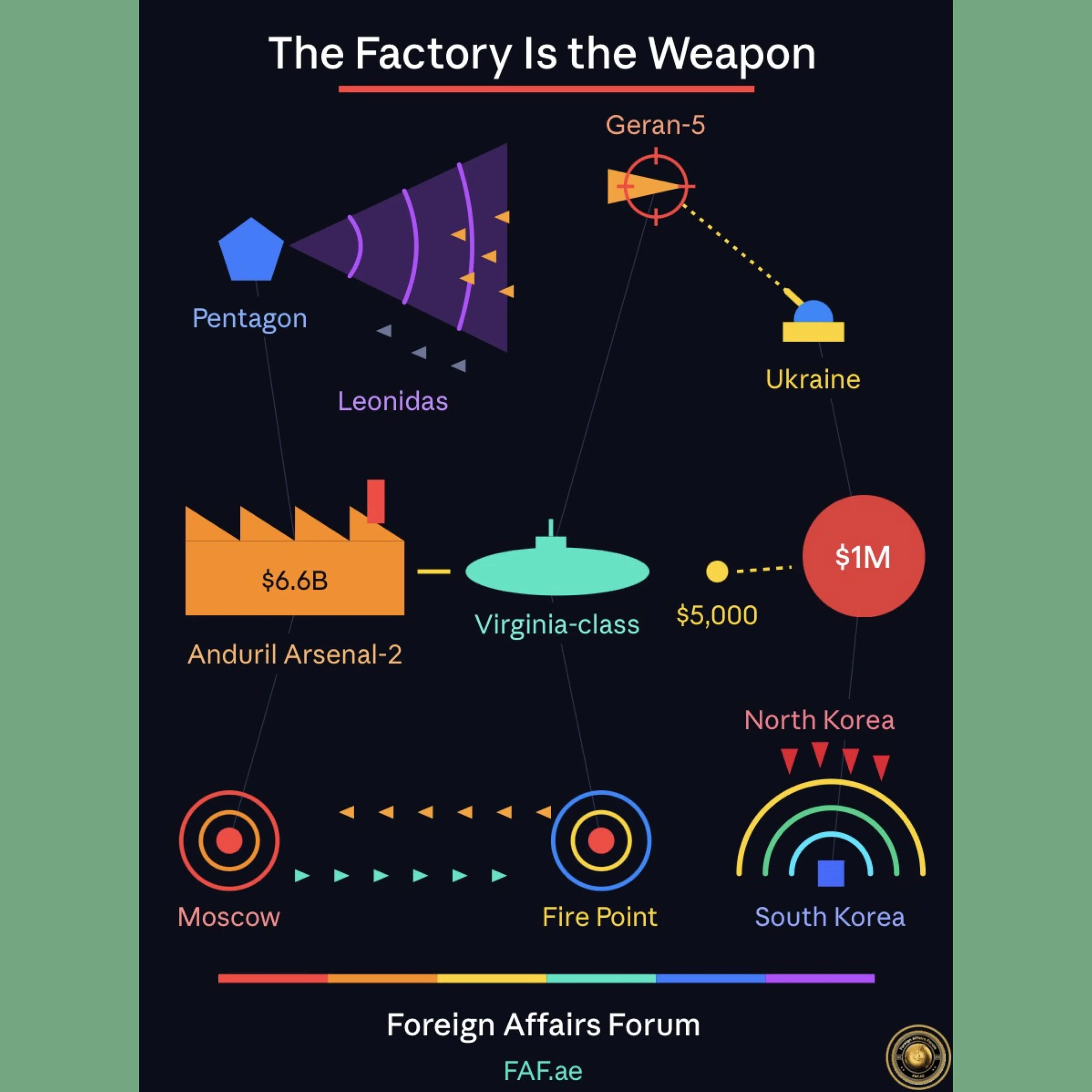
An attacker can send a drone that costs a few thousand dollars, and the defender may need a missile that costs hundreds of thousands, or even millions, to shoot it down. Even if the defender wins most of these fights, it can slowly run out of money and missiles.
Dr. 🆎 explains: "A country that wins every fight but cannot afford the next one is losing the war slowly." This is why governments and companies around the world are now searching for cheaper ways to defend themselves.
India Makes a Huge Investment
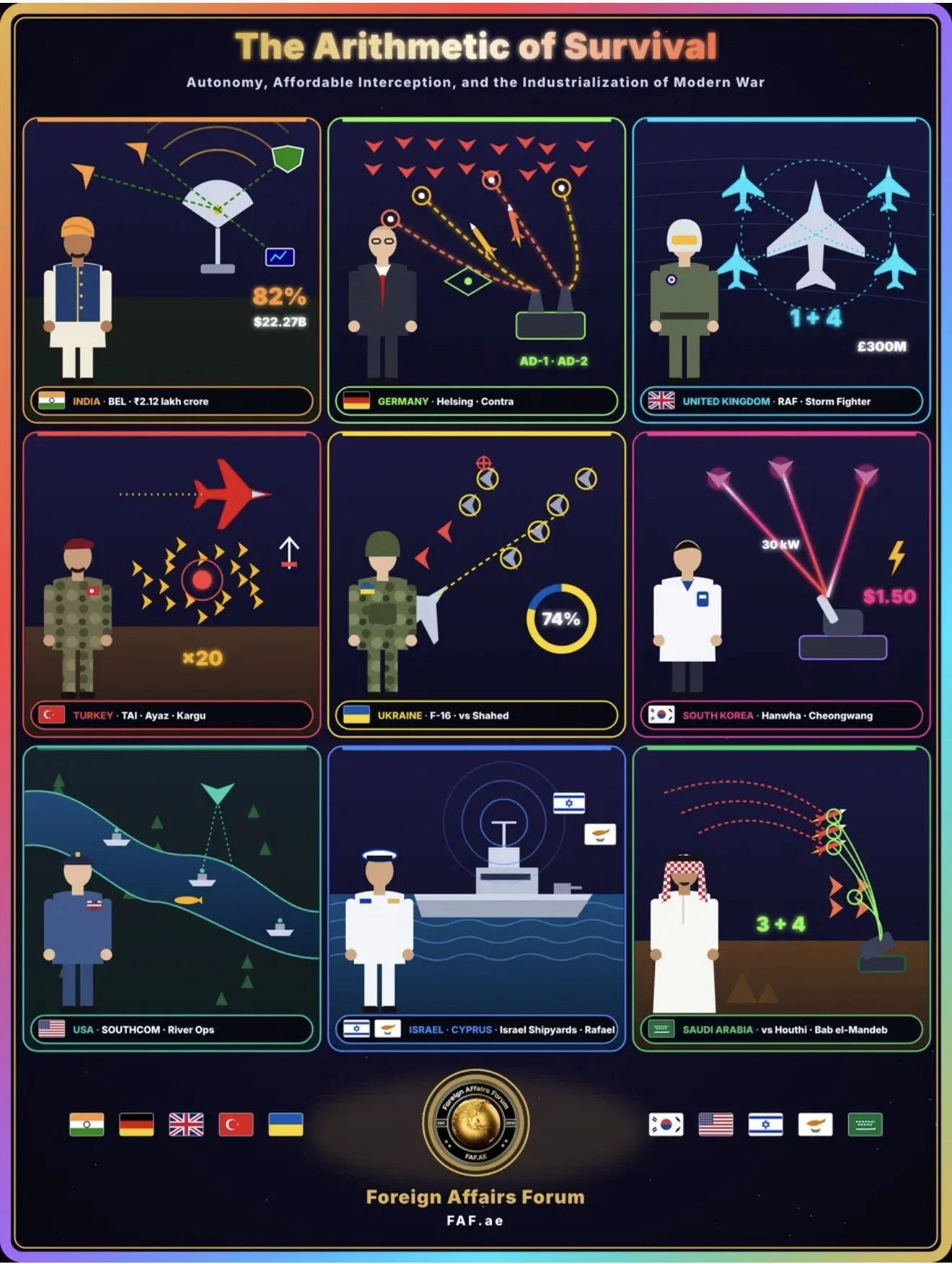
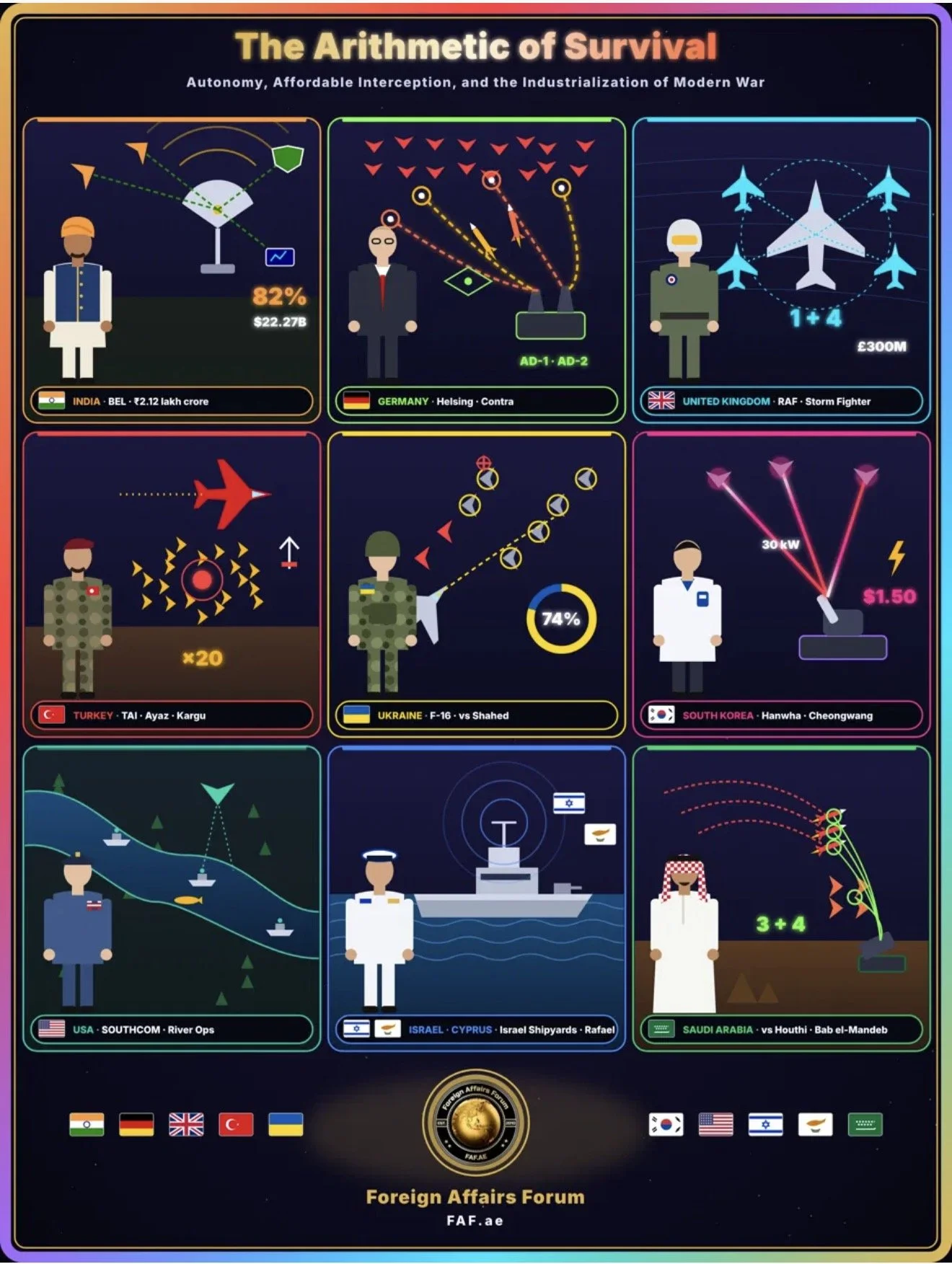
The biggest news came from India. The government approved plans to buy military equipment worth about $22.27 billion. The list includes long-range attack drones, systems that can spot and strike targets, short-range air defenses, anti-drone equipment, helicopters and navy ships.
About 82% of the money is expected to go to Indian companies, so India wants to build its own weapons rather than depend on other countries.
These are early approvals, not final contracts, and India has sometimes been slow to turn approvals into deliveries. India also signed a separate, confirmed contract with Bharat Electronics Limited for radars that can spot small, low-flying drones. That matters because you cannot stop a drone you cannot see.
Germany Builds an AI Shield
In Germany, the defense company Helsing showed a new air-defense system called Contra. It uses artificial intelligence to manage defenses against many attackers at once, and it comes with two new interceptor missiles. One is jet-powered. The other uses a rocket and can fly at about two and a half times the speed of sound.
Helsing says Contra could handle hundreds or even thousands of threats together.
The system is still being tested and is expected to be ready in the second half of 2027. If it works as promised, Europe could defend itself more cheaply and depend less on other countries.
Britain Pairs Pilots With Robot Planes
Britain's Royal Air Force has a £300 million plan called Storm Fighter.
Each Typhoon fighter jet would fly with four armed drones guided by artificial intelligence.
The drones could carry sensors, weapons and jamming equipment, keeping human pilots out of the most dangerous areas. Testing is planned for 2027, with the aim of using the system before the end of the decade.
Turkey Shows Off Drone Swarms
Turkey held a military exercise where new jet-powered attack drones, including the Ayaz from Turkish Aerospace Industries, hit their targets with live warheads.
Twenty Kargu drones attacked together as a coordinated swarm, and other drones helped carry medical supplies and injured soldiers. Turkey already sells many drones abroad, and this show was partly an advertisement to buyers around the world.
Ukraine Holds the Line
In Ukraine, new figures show that Ukrainian forces stopped about 74% of Russia's fast, jet-powered Shahed drones between October 14 and 24.
They managed this even while a satellite communication service called Starshield was disrupted. That is only a little below their usual rate of 77%.
However, Ukraine had to rely heavily on F-16 fighter jets, which are expensive to fly and maintain. The episode shows both Ukraine's strength and how much modern defense depends on communications that can be cut.
South Korea's Low-Cost Laser
South Korea tested a laser weapon called Cheongwang, made by Hanwha Systems and a government defense agency. In a demonstration, it destroyed all three drones it targeted.
The company says each shot costs only about $1.50 in electricity. Lasers do not use up a missile for every shot, which could make defense much cheaper. They do have limits: rain, fog and clouds can weaken them, and they need a lot of power and cooling.
Robots on Rivers and at Sea
The United States Southern Command, which covers Latin America, plans to use unmanned boats, aerial drones and underwater robots to watch rivers and coastlines, especially routes used for smuggling.
In the eastern Mediterranean, Israel and Cyprus signed a deal for a new patrol ship built by Israel Shipyards, with equipment from Rafael Advanced Defense Systems.
Attacks Continue in the Gulf
Saudi Arabia reported shooting down three ballistic missiles and four drones fired by the Houthi group in Yemen.
The attack is a reminder that mixed waves of missiles and drones put heavy pressure on radars, interceptor supplies and the people making split-second decisions.
The Worries
These changes raise serious concerns. Many new systems are still unproven, and promises do not always survive real battle.
Communications can be jammed, which leaves drones and defenses blind.
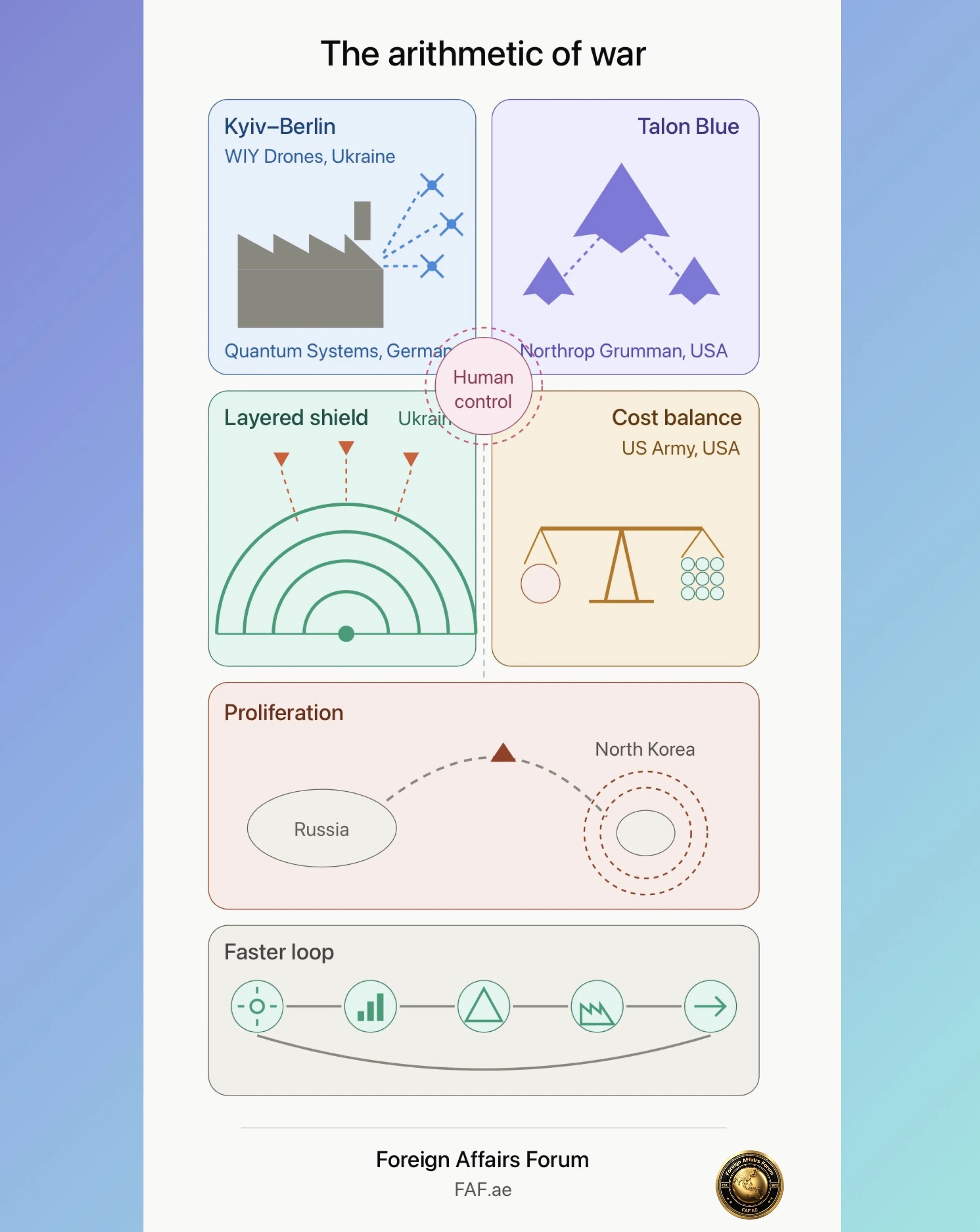
As machines make faster decisions, there is a risk that humans lose control over life-and-death choices.
Dr. 🆎 says, "Machines already take part in these decisions. What matters is whether we keep human judgment and responsibility built into every system."
Cheap drone technology is also spreading to smaller countries and armed groups.
Dr. 🆎 raises a further warning: "Cheap, long-range drones could one day be used to spread chemical or biological weapons. Defending against drones and watching for disease threats must be treated as one problem."
What Should Happen Next
Countries should judge each defense by whether they can afford it over a long war, not only by whether it works.
They should invest in radars and sensors that can find small drones, and protect their communication networks from jamming.
Clear rules should keep humans in charge of weapons that use artificial intelligence.
Nations also need factories that can produce weapons quickly and keep producing them, and they must learn and adapt as fast as their enemies do.
Conclusion
War is entering a new age in which numbers, cost and speed matter as much as quality.
The winners will be the countries that can build many good weapons cheaply, link them together intelligently, protect them from disruption and keep improving them.
As Dr. 🆎 concludes, "The real question is whether people can stay in command of the machines they are teaching to fight."