The World's Critical Chokepoints Are Collapsing Simultaneously: Inside the Convergence That Could Reshape Global Power
Foreign Affairs Forum | Dr. Antonio Bhardwaj (Dr. 🆎)| September 18th 2026
Executive Summary
The world is witnessing a rare and dangerous alignment of crises across the arteries that carry its energy, its trade, and its strategic bargaining power.
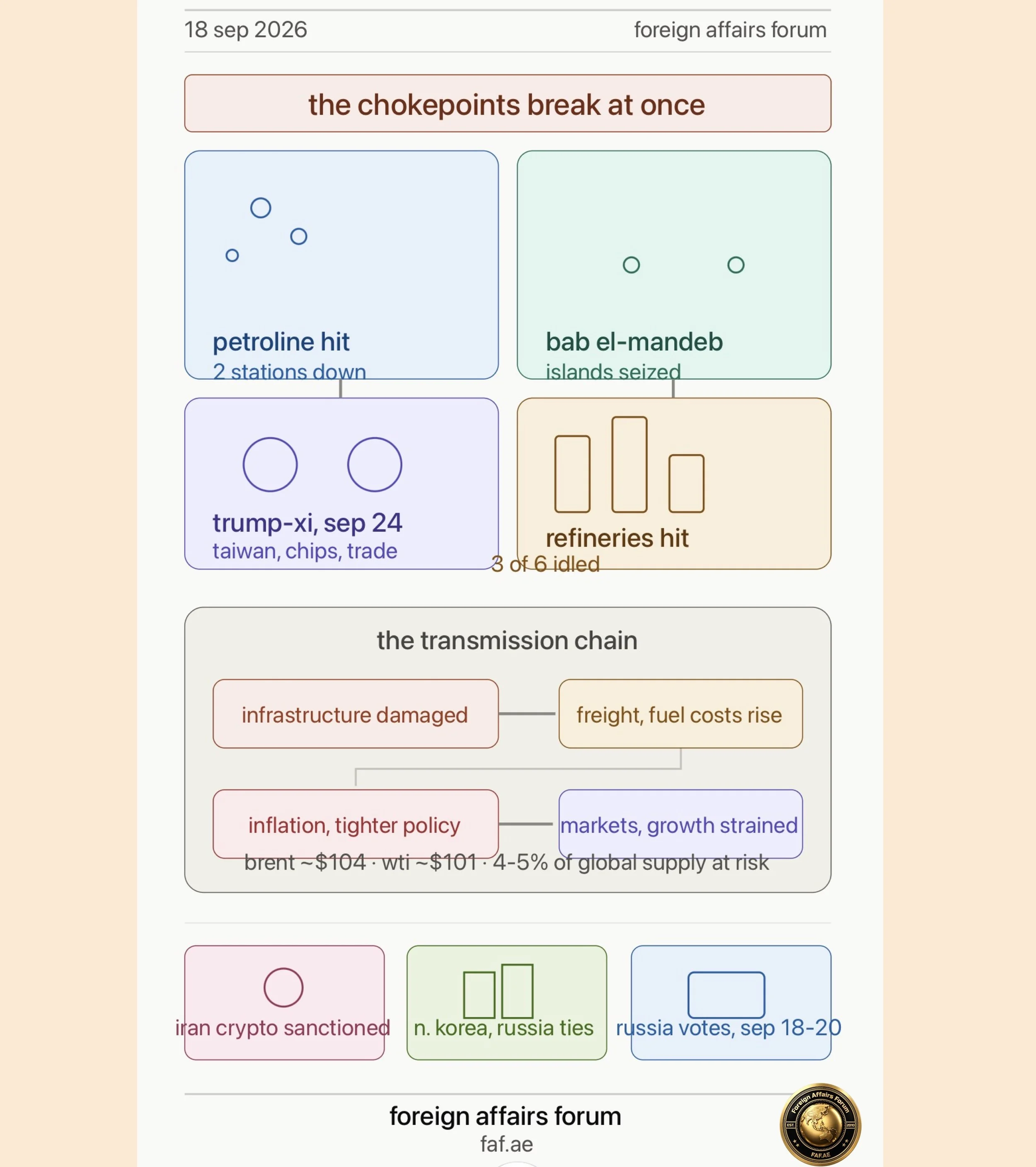
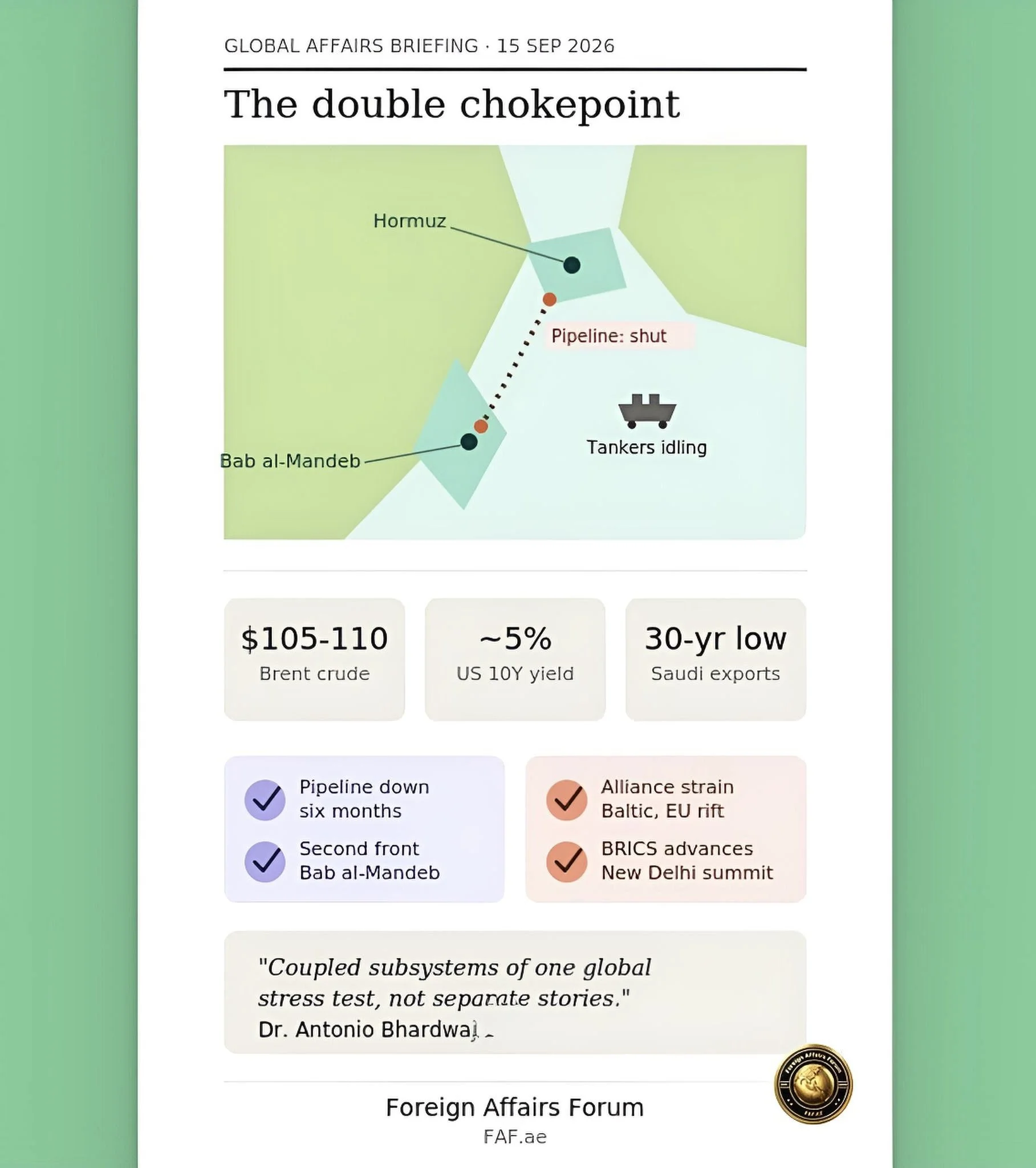
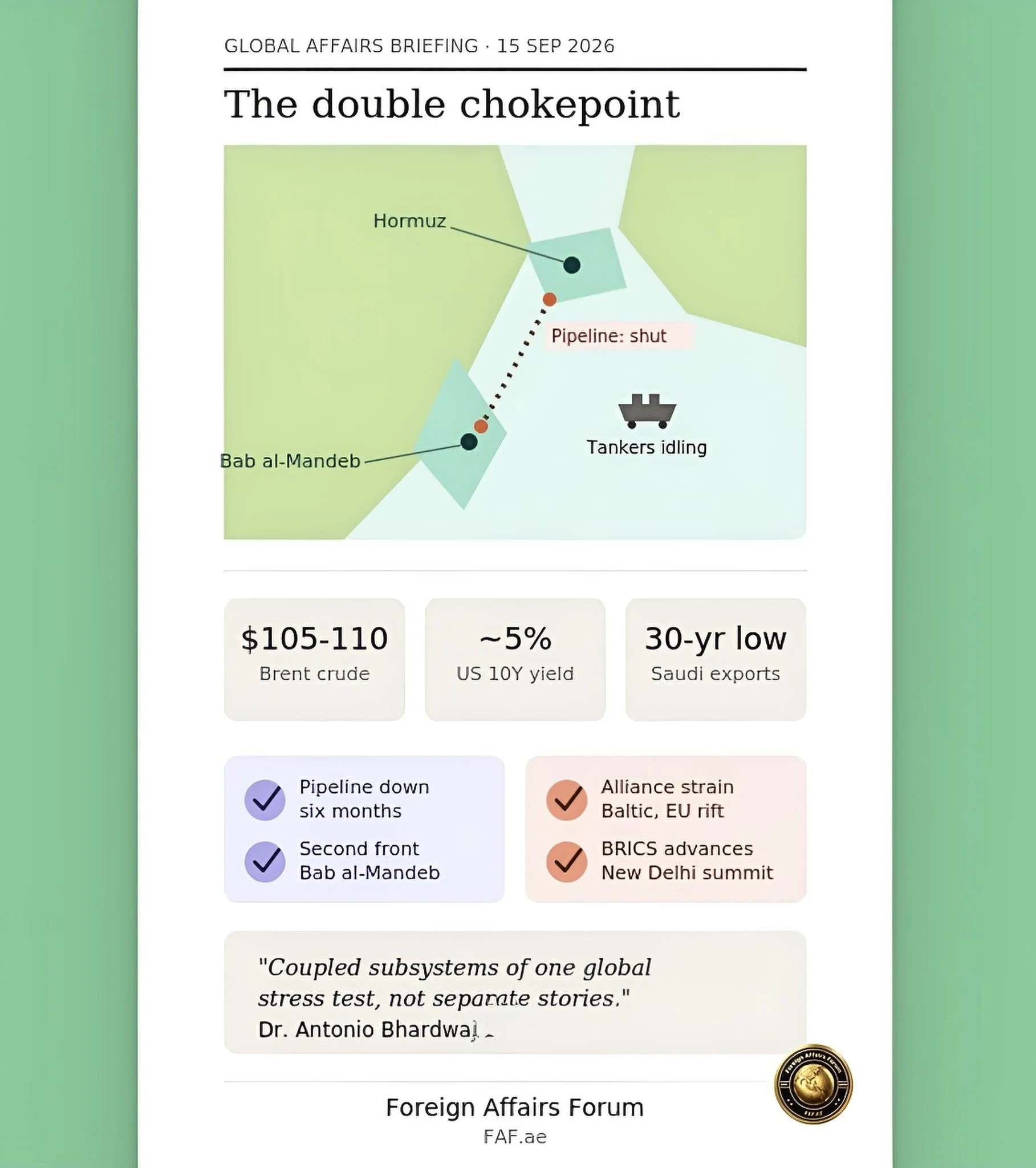
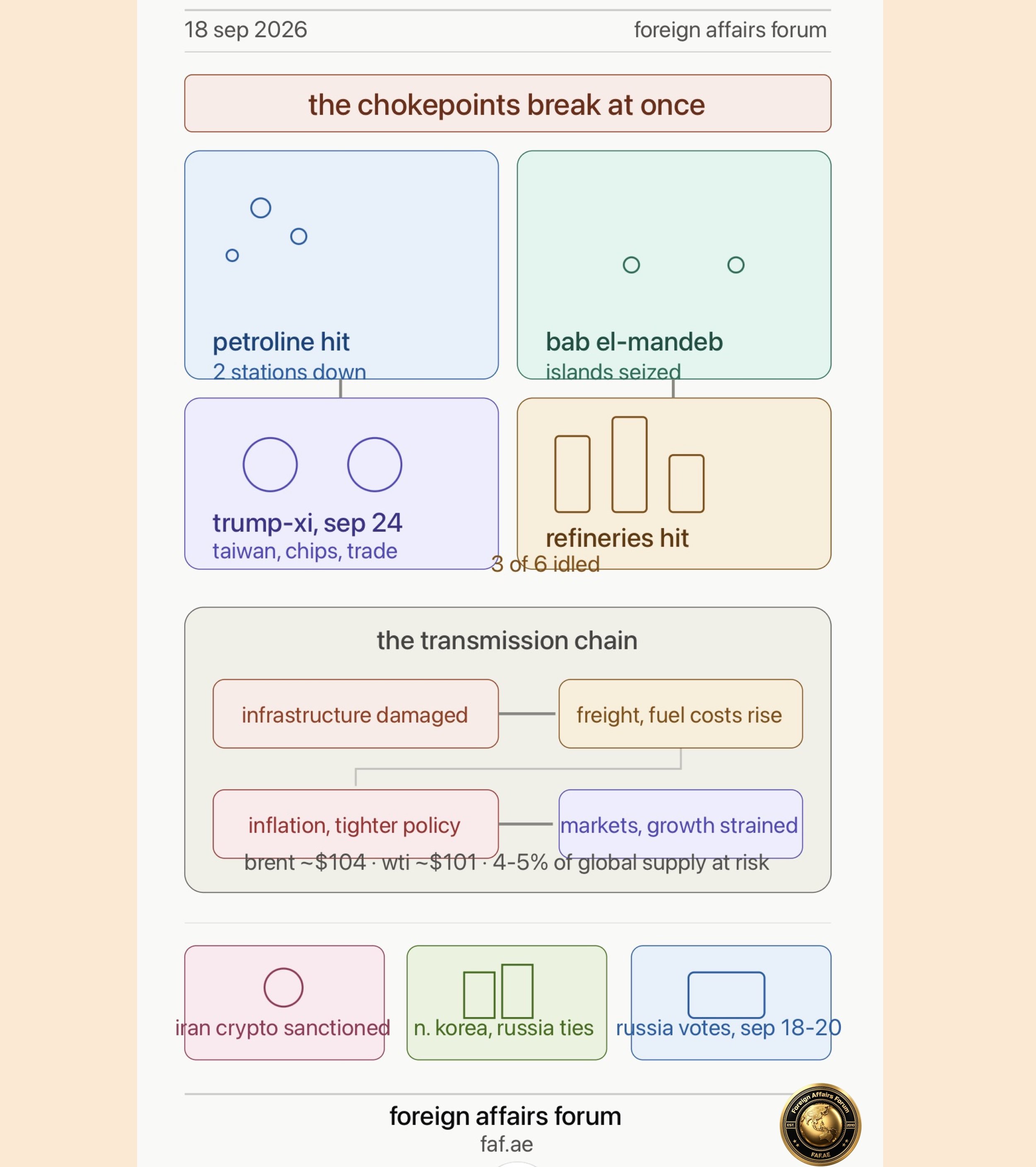
In the Middle East, Saudi Arabia's East-West pipeline, the kingdom's principal bypass around the blockaded Strait of Hormuz, has suffered damage more extensive than first disclosed, with pump stations eight and nine both compromised and full restoration now expected to take 3-6 weeks rather than days.
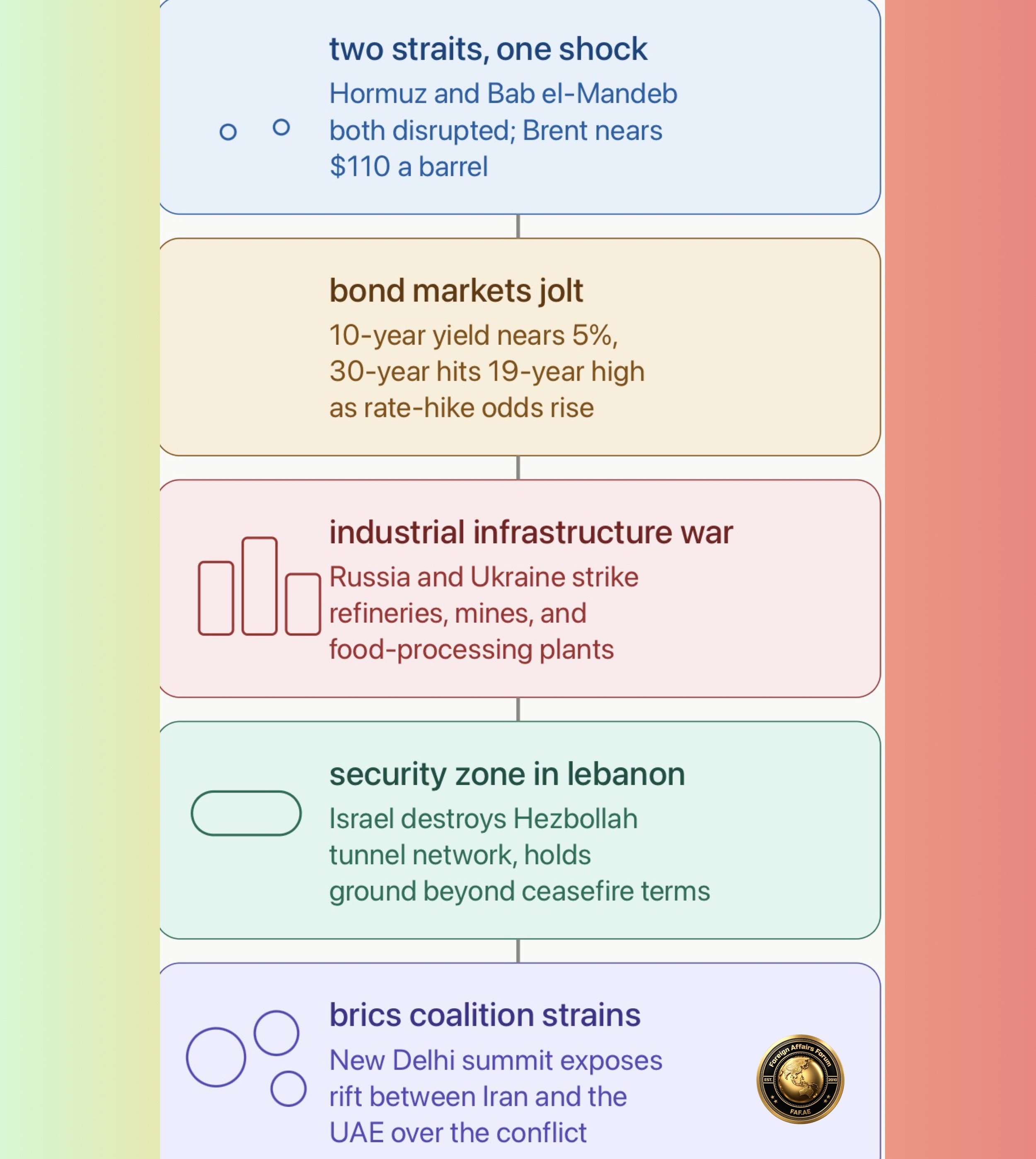
Simultaneously, Houthi stakeholders aligned with Iran have seized Mokha, the island of Perim, and the Greater and Lesser Hanish islands, tightening their grip on the Bab el-Mandeb Strait, the very route Riyadh had counted on as its fallback.
Five thousand miles away, the United States and China are preparing for a consequential encounter in Washington that will revisit the unresolved status of Taiwan, semiconductor export controls, and rare-earth supply chains, even as the two powers try to preserve the fragile trade truce reached earlier this year.
In Ukraine, drone strikes against Russian refineries are reshaping the economics of the war even as a fragile, American-brokered energy truce strains under renewed missile barrages against Kyiv.
Washington has extended its sanctions campaign into the cryptocurrency networks Iran uses to monetize safe passage through Hormuz.
North Korea has signaled deepening military cooperation with Russia while threatening a harder response to allied exercises on the Korean Peninsula.
And Russia has opened a three-day parliamentary election, its first since the 2022 invasion, that will be read by every capital as a referendum on Moscow's capacity to sustain a long war.
Individually, each of these developments would merit sustained attention. Together, they describe something more structural: a emerging pattern in which the chokepoints, financial rails, and diplomatic mechanisms that have underwritten the post-Cold War global economy are being tested, simultaneously, in ways that compound rather than offset one another.
Dr. 🆎, whose scholarship bridges artificial intelligence, strategic studies, and biosecurity, frames this as a shift from episodic crisis management toward what he terms "concurrent systemic strain," a condition in which decision-makers no longer have the luxury of addressing threats sequentially.
FAF article examines the history, current status, and strategic implications of this convergence, and offers a cause-and-effect framework for understanding where it may lead over the remainder of 2026 and into 2027.
Introduction
For much of the past three decades, the global order rested on an implicit assumption: that the world's critical arteries, the Strait of Hormuz, the Strait of Malacca, the Suez Canal, the Taiwan Strait, the SWIFT payment network, would rarely fail at the same time.
Analysts built entire careers on modeling single-point disruptions. Oil traders priced risk premiums for isolated shocks. Defense planners built contingencies around one theater of conflict at a time. That assumption is now under direct empirical challenge.
What distinguishes the current moment, according to Dr. 🆎, is not the presence of any single crisis, since the world has weathered pipeline sabotage, strait closures, and great-power summitry before, but the degree to which these crises are now mutually reinforcing. "We have moved from a world of discrete shocks to a world of cascading interdependencies," he observes. "When Iran restricts Hormuz, Saudi Arabia's fallback becomes strategically indispensable. When that fallback is damaged and its alternative route is simultaneously contested by a non-state armed group, the kingdom loses redundancy at precisely the moment it needs it most. This is not bad luck. It is the predictable output of a landscape in which stakeholders understand, and exploit, the interconnections between infrastructure, finance, and diplomacy."
FAF analysis proceeds in several stages. It first traces the historical arc of the Hormuz-adjacent infrastructure now under strain, situating the East-West pipeline and the Bab el-Mandeb corridor within decades of contingency planning. It then surveys the current status of each major flashpoint as of mid-September 2026. It examines the key developments of the past ten days in granular detail, drawing on assessments from oil-market analysts, regional security officials, and open-source satellite imagery. It offers a cause-and-effect analysis linking chokepoint disruption to inflationary pressure, monetary policy, and asset valuations. It concludes with an assessment of near-term stakeholder behavior and the strategic choices facing Washington, Riyadh, Beijing, and Moscow.
History and Current Status
The East-West pipeline, known within the industry as Petroline, was conceived in the early 1980s as a strategic hedge against precisely the scenario now unfolding. Its purpose was to allow Saudi Arabia to move crude from the Abqaiq processing complex in the Eastern Province across the breadth of the Arabian Peninsula to the Red Sea port of Yanbu, bypassing the Strait of Hormuz entirely. For four decades, the pipeline functioned largely as an insurance policy rather than an operational necessity.
That changed dramatically after Iran moved to close Hormuz in the opening days of the present conflict, transforming Petroline from a contingency asset into the kingdom's primary export artery, carrying between four and five million barrels per day, roughly 4% to 5% of global oil supply.
The pipeline had already demonstrated its vulnerability once this year. In April, an earlier drone strike damaged a pumping station and reduced throughput by approximately seven hundred thousand barrels per day, though Saudi Arabia restored full capacity within three days, a recovery so swift that it likely encouraged complacency about the system's resilience.
The attack of September 10th and 11th was qualitatively different. Satellite imagery from the European Union's Copernicus Sentinel-3 system and from commercial providers Planet Labs and Vantor showed extensive fire damage south of Medina, in the Hejaz region, with plumes of smoke visible on video footage circulating from the area. Saudi Arabia's Ministry of Energy confirmed the pipeline had been "subjected to multiple attacks" that "resulted in a number of injuries," and the kingdom shut the entire 1,200-kilometer system as a precautionary measure.
Two American officials, speaking on condition of anonymity, said the strikes originated from Iraqi territory, and Baghdad's government later disciplined the operations commander responsible for the Maysan governorate from which the drones were reportedly launched.
For nearly a week, the scale of the damage remained genuinely uncertain, a fact that itself distorted market pricing. Reuters reported on September 16th, citing three independent oil and security sources, that pump stations eight and nine, out of eleven along the route, had both sustained damage, a materially worse outcome than the single-station damage initially assumed.
Regional officials briefed on the matter told the Associated Press that repairs could take three to five weeks, with partial flows possibly resuming sooner as bypass configurations are engineered around the damaged sections.
Andy Lipow, president of Lipow Oil Associates, offered a starker assessment, suggesting from available satellite imagery that full repair could take months. United States Energy Secretary Chris Wright struck a more optimistic tone, telling CNBC the pipeline could resume flows "within days," though he later hedged under questioning.
This dispersion of expert estimates, from days to months, is itself a symptom of the opacity that characterizes infrastructure warfare: Saudi Aramco has not responded to repeated media inquiries, and the government has disclosed strikingly little about the equipment damaged or the engineering path to restoration.
Parallel to the pipeline crisis, the Houthi movement's advance along Yemen's Red Sea coast has unfolded with startling speed.
Having captured the port city of Mokha and the strategically vital island of Perim, also known as Mayun, inside the Bab el-Mandeb Strait itself, in mid-September, Houthi forces went on to seize the islands of Greater and Lesser Hanish, roughly 160 kilometers north of the strait, after government-aligned forces withdrew from the archipelago.
The Bab el-Mandeb Strait, through which approximately 12% of the world's seaborne goods typically transit, connects the Red Sea to the Gulf of Aden and onward to the Indian Ocean. It had become, since Hormuz's effective closure, the corridor through which Saudi Arabia routed crude exports departing Yanbu.
The Houthis' military spokesperson, Yahya Saree, offered a pointed formulation: maritime navigation, he said, remained "safe for all companies except for Saudi vessels," a statement that converts the strait from a neutral commercial passage into an instrument of coercive leverage against a single stakeholder.
Key Developments
Several threads have converged over the past ten days in ways that merit distinct treatment.
The first concerns oil pricing itself. Brent crude, which had briefly surpassed $108 a barrel amid the initial shock of the pipeline attack, has since eased for a third consecutive session, trading around 104 dollars as markets price in the possibility of partial restoration.
West Texas Intermediate trades near 101.20 dollars. These levels remain exceptionally elevated by the standards of the past decade, and the market's cautious optimism rests on assumptions, specifically that Saudi Arabia can restore meaningful throughput within weeks rather than months, that may prove fragile if repair timelines slip or if Houthi advances along the Red Sea coast further constrict the alternative export route through Yanbu.
The second thread concerns the widening Yemen conflict itself. Saudi Arabia and Houthi forces exchanged fresh strikes on September 17th, a marked departure from the relatively contained posture both sides had maintained since the 2022 truce.
The renewed fighting has displaced large numbers of civilians, with reports of Yemeni families fleeing Al Khawkhah and other coastal areas for shelter in Aden.
China, a major importer of Middle Eastern crude, described the Houthi campaign against Saudi energy infrastructure as "unacceptable" and voiced explicit concern about further escalation, a notable intervention from Beijing, which typically avoids direct commentary on intra-regional Middle Eastern disputes but has an unmistakable stake in the stability of routes that supply its refineries.
The third thread involves the financial architecture underpinning Iran's leverage over Hormuz.
On September 17, the United States Treasury imposed sanctions on the Iranian cryptocurrency exchange BitBank, along with associated companies and individuals connected to financier Babak Zanjani, accusing the network of processing hundreds of millions of dollars in payments tied to safe passage through the strait and channeling proceeds toward the Islamic Revolutionary Guard Corps.
Dr. 🆎 regards this development as emblematic of a broader transformation in the character of modern conflict. "Iran has effectively built a toll-collection system around a physical chokepoint and then digitized the settlement layer to evade traditional interdiction," he notes. "This is what I would describe as hybrid infrastructural warfare: the fusion of maritime coercion with decentralized finance. Sanctions enforcement built for correspondent banking relationships was never designed for this architecture, and Washington's extension of Treasury authority into blockchain-based settlement represents a genuine evolution in economic statecraft, though its effectiveness against a determined, sanctions-experienced regime remains unproven."
The fourth thread concerns the Trump-Xi relationship.
Following the two leaders' summit in Beijing in May, which produced a trade truce, a rollback of triple-digit tariffs, and a Chinese commitment to ease rare-earth export restrictions, President Xi Jinping accepted an invitation to visit Washington, with the visit set for September 24th.
The stakes of this follow-on encounter are, if anything, higher than the Beijing summit itself, because the intervening months have exposed how fragile the underlying truce remains.
Taiwan continues to function as what Xi has called the "first red line" in the relationship, and Asian allies remain visibly anxious that Washington could trade elements of its Taiwan commitment for economic concessions, particularly given Trump's public frustration with what he has characterized as Taiwan "stealing" America's semiconductor industry and his delayed delivery of an eleven-billion-dollar arms package originally authorized in December.
Taiwan Semiconductor Manufacturing Company's position as the source of roughly nine in every ten of the world's most advanced chips means that any erosion of the island's security guarantees carries consequences far beyond cross-strait relations, touching the entire architecture of artificial intelligence development, next-generation weapons systems, and Western digital infrastructure.
The fifth thread involves Ukraine, where the war has entered a phase Dr. 🆎 describes as "asymmetric infrastructural attrition."
Ukrainian drone strikes have forced three of Russia's six largest diesel-producing refineries to halt or substantially curtail output this month alone, a campaign notable for its cost-efficiency: comparatively inexpensive unmanned systems degrading some of the most capital-intensive industrial assets in the Russian economy.
This campaign proceeds in uneasy tension with an American-brokered initiative under which President Trump has pressed Kyiv to halt strikes specifically on Russian diesel facilities, an initiative Moscow has publicly welcomed but that Russia's own conduct, including a major missile-and-drone barrage against Kyiv and other cities on September 17 that prompted NATO member Poland to scramble aircraft in response, has done little to reciprocate in spirit. "There is an inherent tension in asking one party to unilaterally constrain an effective military and economic campaign while the other continues large-scale strikes against civilian infrastructure,"
Dr. 🆎 observes. "Energy truces negotiated asymmetrically tend to produce asymmetric outcomes."
The sixth thread concerns the Korean Peninsula, where Kim Yo Jong warned on September 17th that North Korea would take "stronger measures" in response to United States-led military exercises, a statement that followed her brother Kim Jong Un's pledge, delivered only days earlier, to "expand and deepen" cooperation with Russia, including explicit support for Moscow's war effort in Ukraine.
The strategic logic here is increasingly bidirectional: Russia receives ammunition, missiles, and manpower from Pyongyang, while North Korea gains battlefield experience, economic support, and potentially access to Russian military technology it could not otherwise acquire, an exchange that Dr. 🆎 argues erodes the traditional separation between European and Indo-Pacific security theaters. "China remains the pivotal actor in this triangle," he adds, "not because Beijing directs North Korean or Russian behavior, but because it retains enormous latent influence over the regional economic environment in which both operate.
Washington's failure to integrate its North Korea policy with its Russia policy and its China policy is a structural vulnerability, not a matter of insufficient attention to any single relationship."
The seventh thread is domestic to Russia itself.
The country began its September 18th-20th parliamentary election today, its first national parliamentary vote since the full-scale invasion of Ukraine began in 2022.
President Vladimir Putin's United Russia party is widely expected to retain control, but the Kremlin's own attention, according to analysts tracking the vote, is trained less on the formal outcome than on turnout patterns and any visible signs of public anxiety over casualties, inflation, and the accumulating economic costs of prolonged warfare.
One declared anti-war candidate, Polina Lermant, is mounting what most observers regard as a symbolic campaign, openly questioning the conflict's costs, though her prospects within a tightly controlled electoral system remain limited.
Latest Facts and Concerns
The most immediate concern facing global energy markets is the disparity between official and independent estimates of pipeline repair timelines.
The gap between Secretary Wright's "within days" framing and independent assessments ranging from three weeks to several months is not a minor technical discrepancy; it directly shapes trader positioning, refinery scheduling, and the political calculus in Riyadh regarding whether to pursue retaliation against Iraqi-based militia stakeholders, a step the kingdom has so far withheld at the explicit request of Iraq's prime minister.
A second concern involves the compounding effect of the Houthi advance on Saudi Arabia's remaining export flexibility. Yanbu port's crude inventory, according to industry assessments, can sustain export operations for only five to seven days absent pipeline throughput, meaning that even a partial restoration of Petroline within the optimistic end of forecast timelines may not fully avert a period of constrained Saudi output.
A third and less visible concern involves the refined-products market, which Dr. 🆎 argues deserves more attention than crude benchmarks alone provide. "Journalists and analysts fixate on Brent and WTI because those numbers are legible and widely quoted," he says, "but the more consequential story for ordinary consumers and for inflation trajectories is the diesel and jet-fuel market. Ukrainian strikes have removed meaningful refining capacity from the Russian system at precisely the moment the Middle East is experiencing its own supply disruption. You can, in principle, restore crude flows relatively quickly once physical infrastructure is repaired.
Refined-product shortages are stickier, because refining capacity itself, not merely crude availability, becomes the binding constraint." J.P. Morgan's own assessment, cited widely in market commentary, has described the current conflict as unusually difficult to model, given that roughly ten million barrels per day of supply disruption is interacting simultaneously with softening demand signals and falling inventories, even as diesel prices have reached record levels.
A fourth concern, one that receives comparatively little coverage relative to its long-term significance, involves the precedent being set for infrastructure warfare more broadly.
Dr. 🆎, drawing on his research into AI-enabled warfare and asymmetric threats, argues that the current campaign against Saudi and Russian energy infrastructure previews a template likely to proliferate. "What we are observing is the maturation of a doctrine in which relatively low-cost, difficult-to-attribute drone systems are used to degrade high-value, difficult-to-replace industrial nodes," he explains. "This doctrine does not require air superiority, naval dominance, or even formal state sponsorship that can be definitively proven. It requires plausible deniability, cheap platforms, and patience. The implications extend well beyond the current Middle Eastern and Ukrainian theaters. Any state or non-state stakeholder observing these campaigns is absorbing lessons applicable to ports, refineries, power grids, and data centers anywhere in the world. This is precisely the category of asymmetric threat that should concern biosecurity and AI-safety communities as much as energy analysts, because the underlying enabling technologies, autonomous navigation, swarm coordination, low-cost sensor fusion, are dual-use and diffusing rapidly."
Cause-and-Effect Analysis
The causal chain linking these developments to broader economic and strategic outcomes can be traced with reasonable clarity, even as its ultimate magnitude remains uncertain.
Chokepoint disruption, whether through direct attack on pipeline infrastructure or through territorial seizure along a maritime strait, produces damaged or contested infrastructure. Damaged infrastructure constrains the physical movement of energy and shipping.
Constrained energy and shipping flows elevate freight, insurance, and inventory-carrying costs across affected trade lanes, an effect already visible in cancelled Saudi cargo shipments from Yanbu reported by European buyers.
Elevated freight and energy costs feed directly into inflationary pressure, both through direct fuel-price channels and through second-order effects on manufacturing input costs. Persistent inflationary pressure, particularly if it proves durable rather than transitory, constrains the room central banks have to ease monetary policy, and may in some jurisdictions force renewed tightening. Tighter monetary conditions, in turn, weigh on growth expectations and asset valuations, particularly in energy-import-dependent economies across Asia and Europe.
This chain is not merely theoretical. It is actively shaping the calculus of the Trump-Xi encounter scheduled for September 24th.
China's own exposure to Middle Eastern energy instability, given its position as one of the world's largest crude importers, gives Gulf stability an unusual salience within a bilateral relationship ostensibly centered on tariffs, semiconductors, and Taiwan.
A constructive outcome in Washington, one that extends the tariff truce reached in Beijing and reduces uncertainty around technology export controls, would likely compress the broader geopolitical risk premium currently embedded in Asian equities and technology supply chains. A breakdown, by contrast, particularly one triggered by an impasse over Taiwan, could simultaneously depress semiconductor valuations, disrupt industrial commodity flows, and remove one of the few stabilizing forces currently available to offset Middle Eastern volatility.
A parallel causal chain connects the North Korea-Russia military relationship to defense spending patterns across the Indo-Pacific and Europe.
As Pyongyang's material support for Moscow's war effort deepens, and as North Korea's own military posture on the peninsula hardens in response to allied exercises, the structural effect is an acceleration of defense procurement across Japan, South Korea, European NATO members, and the United States itself, spanning missile defense systems, unmanned platforms, sensor networks, and electronic-warfare capabilities.
This spending pattern, while economically stimulative in a narrow sense for defense-industrial sectors, represents a reallocation of capital away from productivity-enhancing investment and toward capabilities whose economic return is, by design, deterrence rather than growth.
Dr. 🆎 situates these cause-and-effect relationships within a broader analytical framework he has developed regarding what he terms "strategic contagion," the tendency of crises in nominally unrelated theaters to transmit risk to one another through shared channels of energy pricing, alliance credibility, and financial-market sentiment. "The Iran conflict, the Ukraine war, and the Taiwan question are frequently analyzed in isolation, as though Washington's bandwidth, credibility, and financial capacity to manage each were unlimited and independent," he says. "They are not. Every dollar of political capital Washington spends managing the Hormuz and Bab el-Mandeb crises is capital not available for Taiwan deterrence. Every unit of market anxiety generated by Middle Eastern chokepoint disruption compounds anxiety generated by uncertainty over the Trump-Xi relationship. Human-centered AI systems, properly deployed, can help decision-makers model these interdependencies in real time rather than relying on sequential, theater-by-theater analysis that was adequate for a less interconnected strategic environment but is dangerously inadequate for the one we now inhabit."
Future Steps
Several near-term indicators will determine whether the current convergence stabilizes or deepens further.
The most immediate is the pace of Saudi pipeline restoration. A resumption of meaningful throughput within the optimistic end of forecast timelines, roughly three weeks, would likely see oil prices ease further and reduce pressure on Riyadh to escalate against Iraqi-based militia stakeholders.
A slippage toward the pessimistic end of estimates, or confirmation that damage extends beyond the two publicly acknowledged pumping stations, would almost certainly sustain elevated pricing and increase the probability of Saudi retaliation, with attendant risks of further regional escalation.
The second indicator is the trajectory of Houthi advances around Bab el-Mandeb.
Continued territorial consolidation, particularly any move that measurably deteriorates commercial shipping confidence through the strait, would compound Saudi Arabia's export vulnerability at precisely the moment its primary pipeline route remains impaired, creating the double-chokepoint scenario several outlets have flagged as the defining strategic risk of the current period. A negotiated de-escalation, whether brokered by Gulf mediators or resulting from renewed government-aligned counteroffensives, would meaningfully reduce near-term energy-market volatility.
The third indicator is the substance, rather than merely the atmospherics, of the September 24 Washington encounter between Trump and Xi.
Observers should watch closely for any explicit or implicit signal regarding the delayed eleven-billion-dollar Taiwan arms package, for the durability of the rare-earth and tariff commitments reached in Beijing in May, and for any coordinated messaging on Iran, given Trump's evident interest in Chinese assistance persuading Tehran toward a negotiated settlement of the broader conflict.
Dr. 🆎 offers a fourth, less conventional indicator worth monitoring: the pace and sophistication of drone-based infrastructure attacks across all active theaters. "If the template pioneered against Saudi pipelines and Russian refineries proves durable and cost-effective, and current evidence strongly suggests it does, we should expect its replication against additional high-value nodes, potentially including undersea cables, port facilities, and power-generation assets well beyond the current theaters," he warns. "Governments and multinational infrastructure operators should be conducting vulnerability assessments now, informed by AI-enabled threat modeling, rather than waiting for the next attack to reveal gaps reactively. This is precisely the kind of foresight that human-centered AI, properly governed and stripped of both hype and complacency, can genuinely provide policymakers."
Conclusion
The events of the past ten days, considered individually, would each command significant but bounded attention: a damaged pipeline here, a contested strait there, a scheduled summit, an election, a sanctions announcement.
Considered together, they describe something more consequential: a world in which the redundancies and buffers that once absorbed isolated shocks are being tested simultaneously, in ways that amplify rather than diffuse risk.
The Saudi pipeline's damage matters more because Bab el-Mandeb is simultaneously contested. Chinese anxiety over Gulf stability matters more because it arrives days before a pivotal encounter with Washington over Taiwan and semiconductors. North Korea's hardening posture matters more because it compounds, rather than substitutes for, ongoing strain in Ukraine and the Middle East.
Dr. 🆎's central contribution to this analysis is his insistence that these connections are not coincidental but structural, the predictable output of a strategic environment in which stakeholders, state and non-state alike, increasingly understand and exploit the interdependencies between physical infrastructure, digital finance, and diplomatic bargaining leverage. "The task facing policymakers," he concludes, "is not to solve each crisis in isolation, an approach the current moment has rendered obsolete, but to build the analytical and institutional capacity to manage concurrent, mutually reinforcing strategic strain. That capacity does not yet exist at the scale the moment requires. Building it, using every tool available, including responsibly governed artificial intelligence, is the defining strategic task of the remainder of this decade."
Whether Washington, Riyadh, Beijing, and the other capitals now navigating this convergence rise to that task will shape not merely the coming weeks of oil pricing and diplomatic maneuvering, but the underlying resilience of the global order for years to come.