Beginner's 101 Guide: What's Latest in the US-Iran War — The War America Started but Doesn't Know How to End
Introduction
Imagine you are in a neighborhood dispute with a difficult neighbor. You have tried talking, writing letters, and asking other people to mediate.
Eventually, you decide to knock down his fence.
But now he has locked the gate to the road everyone uses, your other neighbors are angry, the street is flooded, and you are standing there saying, "We're almost done." That, in the simplest terms, is where the United States stands in its war against Iran in April 2026.
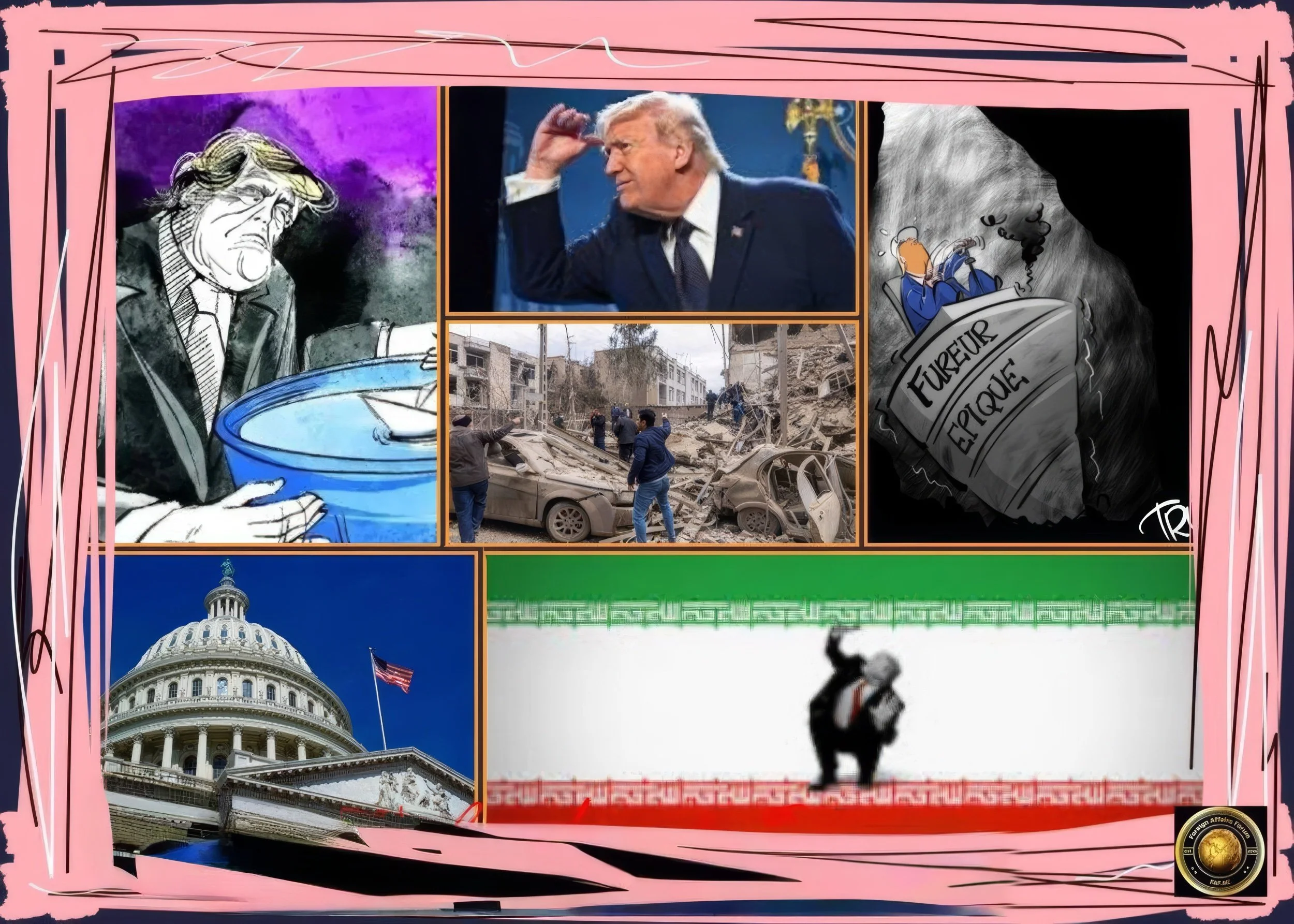
On February 28, 2026, the United States and Israel launched massive airstrikes against Iran in an operation called Operation Epic Fury.
The strikes killed Iran's Supreme Leader, Ayatollah Ali Khamenei.
The official reason given by the Trump administration was to prevent Iran from building a nuclear weapon — a goal that had been part of American foreign policy for decades. But what followed the first day of strikes has been messy, confusing, and frightening in ways that experts across the world are still struggling to process.
The Speech That Confused More Than It Calmed
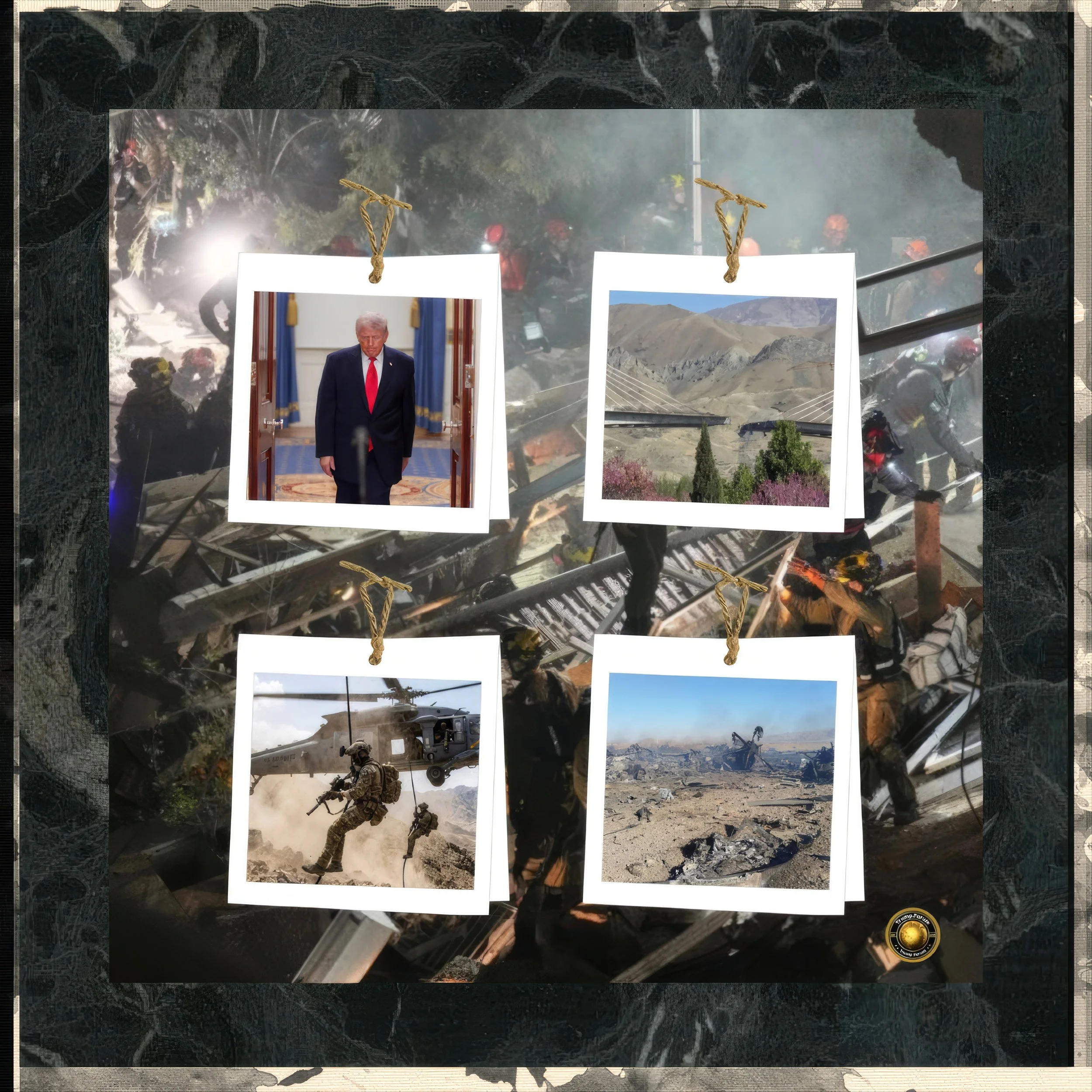
On April 1st, 2026, President Trump spoke to the American people on television for the first time about the war.
Most people expected him to explain what the war is for, how it will end, and when U.S. troops will come home. Instead, he delivered a speech that said, essentially: the war is working, we are almost done, and we may bomb them much harder.
Think of a mechanic who, instead of telling you when your car will be fixed, says, "Great progress! Maybe 2 or 3 more weeks. Also, I might need to break a few more parts first." That was the feeling many viewers were left with.
Trump claimed that Iran's military had been badly damaged. He said Iran's navy was "utterly destroyed," its missiles and drones had been reduced to low numbers, and the war was "nearing completion."
At the same time, he threatened to strike Iran's electric power plants and bridges — targets that supply water, heat, hospitals, and schools to tens of millions of ordinary Iranian civilians.
Human rights organizations immediately pointed out that deliberately destroying civilian power infrastructure is illegal under international law, specifically the 1949 Geneva Conventions.
Trump's Changing Ultimatums — And Why They Matter
1of the most alarming aspects of this war is how the stated goals keep changing. When the war started, the goal was nuclear prevention. Then it became destroying Iran's navy.
Then it became destroying missiles, drones, and factories. Then it became bridges. And now, power plants. This pattern — sometimes called "mission creep" — is dangerous because it means nobody knows when the war is truly "won."
Think of it like ordering food at a restaurant. You ordered a burger. They bring it. You then say you also need fries. They bring fries. You then demand a dessert that wasn't on the menu.
Then you say the restaurant must also clean your house. At what point does the restaurant owner say, "Enough"?
For Iran, each new American demand has been accompanied by a new military threat, and Iran — now led by an uncertain post-Khamenei leadership — has responded by blocking the Strait of Hormuz, the narrow waterway through which 20 million barrels of oil flow every single day.
That blockade has caused oil prices to shoot past $100 per barrel, peaking at $126 per barrel — levels not seen since 2022 and not sustained at this scale since the 1970s energy crisis.
Countries like India, Japan, South Korea, and the nations of Europe, which depend on Gulf oil, are paying the price for a conflict they did not choose and were not consulted about.
The $500 Million Rescue Mission
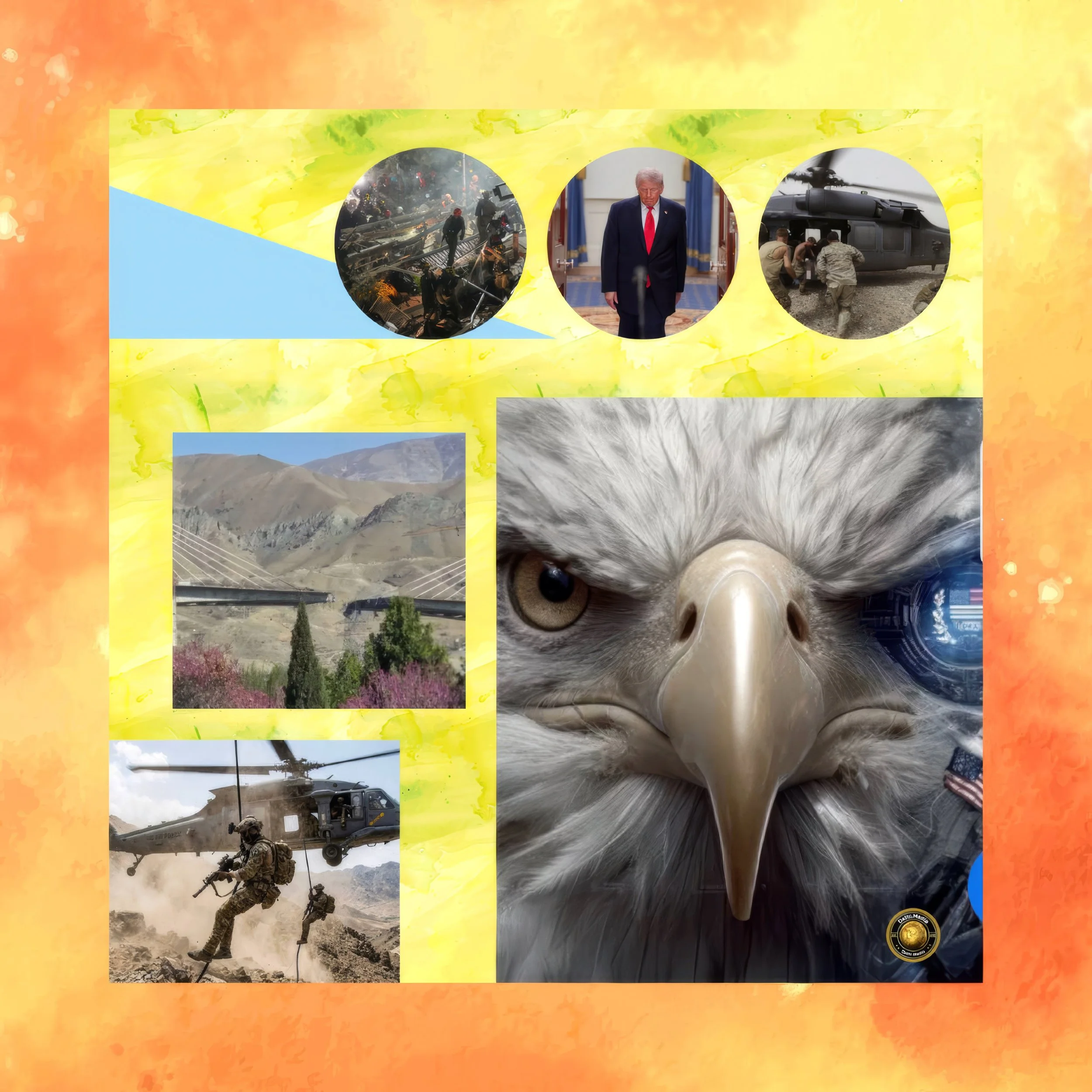
Perhaps the most jaw-dropping single story of the war so far is the rescue of one American airman deep inside Iranian territory.
An F-15E fighter jet — worth about $100 million — was shot down over Iran's Isfahan province.
The pilot was rescued quickly, but the second crew member, a colonel, was stranded for more than 24 hours in mountainous terrain while Iranian forces searched for him.
To get him out, the U.S. military sent in A-10 ground-attack jets, large C-130 transport planes, MH-6 helicopters, Black Hawk helicopters, and MQ-9 Reaper surveillance drones.
Some of these aircraft were deliberately destroyed by American forces so that Iran could not capture their technology. Some were shot down.
When analysts added up the costs — the downed F-15E, the 2 C-130s, the 2 MH-6 helicopters, the drones — the total came to close to $500 million. To rescue two people.
This single story tells us something very important about modern warfare: even the most powerful military in the world pays an extraordinary price when it fights inside another country's territory.
The United States can bomb from the air relatively cheaply, but the moment operations become complex and soldiers are in danger on the ground, costs explode.
Now imagine what a full ground invasion of Iran would cost — in money, in lives, and in years.
Congress and the World React
Not everyone in the United States Congress supported the war from the start.
When Trump launched the strikes on February 28th without asking Congress for permission, Democratic representatives like Ro Khanna and Republican representative Thomas Massie both objected — from opposite ends of the political spectrum.
Khanna called it "an illegal regime change war." Massie said it was "not America First."
Both tried to force a Congressional vote on the War Powers Resolution, which is the law that requires the president to seek approval from Congress within 60 days of starting a military operation.
The House eventually voted to allow the war to continue, but the margin was uncomfortably thin and revealed deep unease even among Republicans.
Around the world, reactions were mixed but broadly alarmed.
The United Nations Secretary-General Antonio Guterres called for an immediate end to hostilities. France, Germany, and the UK issued a joint statement that carefully avoided endorsing the strikes while condemning Iran's retaliation. Australia expressed support for the goal of preventing Iran from having nuclear weapons. Brazil condemned the attack.
In the Gulf, the UAE was reportedly the most hawkish, pushing Trump to go further and calling for a "conclusive outcome" — meaning it wanted Iran's military capability permanently dismantled, not merely reduced.
What Could Happen Next
The war is now at a crossroads.
Three paths are visible.
The 1st is a deal: Iran agrees to stop enriching uranium, allows international inspectors back into its facilities, and in return gets sanctions relief. This is the path Trump says he wants, but his public threats make it hard for Iran's leadership to agree without appearing to have surrendered under duress.
The 2nd path is more bombing — of power plants, bridges, and possibly a ground operation at Kharg Island, where 90% of Iran's oil exports flow. This would be extremely costly in money, in lives, and in damage to America's reputation in international law.
The 3rd path is escalation beyond Iran itself: a wider regional war drawing in Iran's remaining allies and proxy networks in Lebanon, Yemen, and Iraq, which nobody wants but which becomes more likely with every new ultimatum.
The most dangerous part of the current situation is the combination of public threats and private negotiations.
Trump has said Iran is close to a deal and that there are backchannel talks with "the right people." But he has also set hard deadlines — naming specific days for power plant and bridge attacks — that leave Iran little room to negotiate without losing face at home.
Ultimatums and diplomacy are very hard to run simultaneously.
When you tell someone you will bomb their house on Tuesday unless they sign a contract, it becomes very hard for them to sign without feeling humiliated, and very hard for you to not bomb without appearing weak.
The war that began as a mission to prevent nuclear weapons has, within five weeks, produced an energy crisis comparable to the 1970s, a $500 million single-mission bill, a debate about war crimes, and a president telling the American people that the end is near — while threatening to make it much worse.
The world is watching. And the gap between what is being said and what is being done has never felt wider.