The Speech That Revealed Everything: Operation Epic Fury, Trump's Shifting Ultimatums, and the Frightening Logic of an Unfinished War
Executive Summary
Nuclear Materials, Natanz, and Fordow: What America Hasn't Hit Yet — and Why That Matters Most
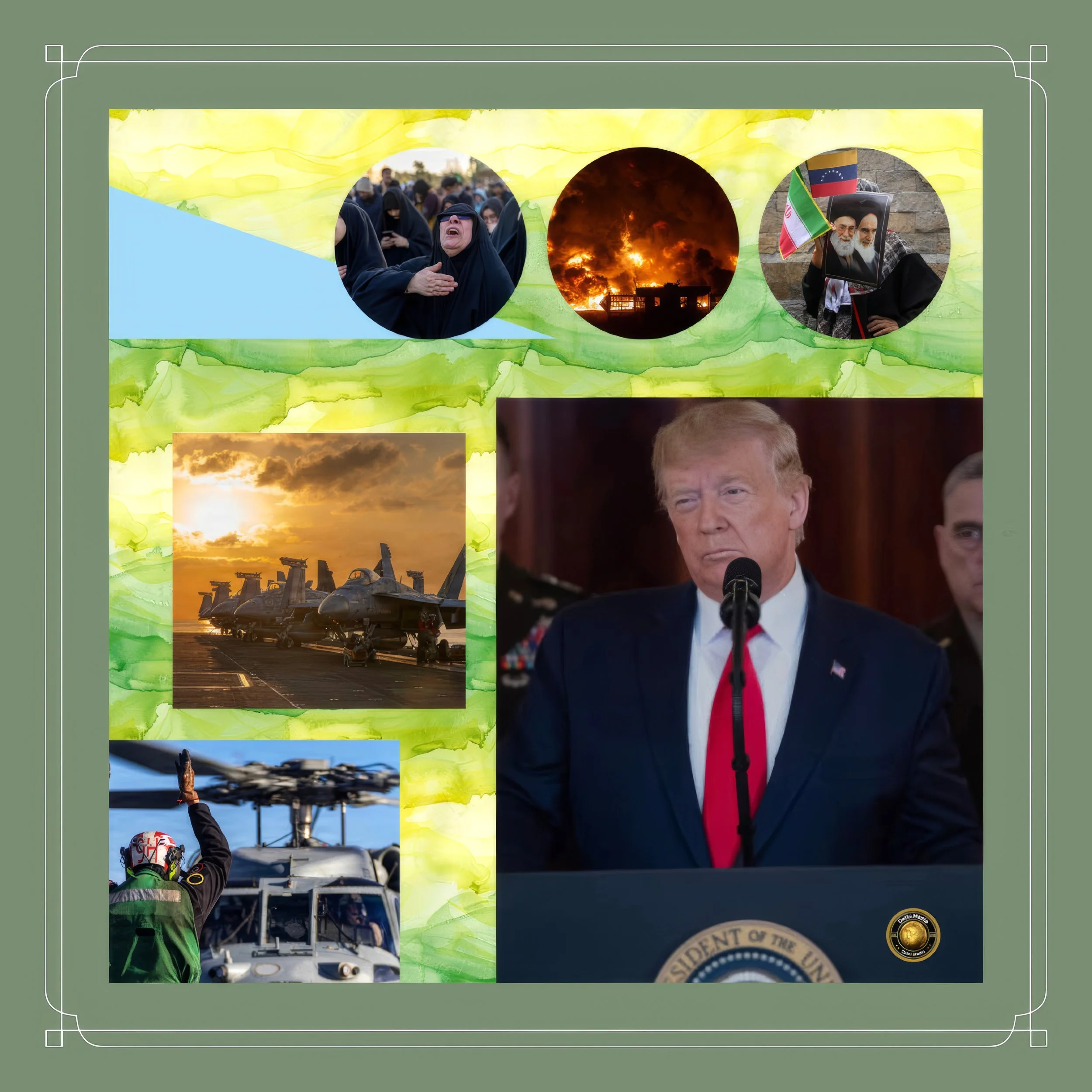
On April 1st, 2026, U.S. President Donald Trump addressed the nation in a primetime broadcast from the White House regarding Operation Epic Fury — the ongoing U.S.-Israeli military campaign against Iran that began on February 28th, 2026.
Rather than offering strategic clarity, the speech exposed the contradictions at the heart of American war aims: escalating threats against civilian infrastructure, shifting ultimatums, the catastrophic cost of rescuing a downed airman, and the specter of a ground campaign against Kharg Island.
Domestic congressional reaction has been divided along predictably partisan lines, while global leaders have oscillated between condemnation, nervous neutrality, and opportunistic hawkishness.
Iran's blockade of the Strait of Hormuz has produced the largest energy crisis since the 1970s, with Brent crude peaking at $126 per barrel.
The war's trajectory now points toward one of three outcomes: a negotiated agreement under duress, a prolonged air campaign of uncertain legality, or a ground invasion whose costs may dwarf anything the United States has experienced since Iraq.
Introduction
Bombing Civilians Back to the Stone Ages: The Legal and Moral Crisis at the Heart of This Conflict
When a president of the United States addresses the nation during wartime, the occasion carries a weight that transcends political theater.
Citizens, lawmakers, foreign governments, and markets all tune in — not merely to hear what has happened, but to understand what comes next.
Trump's April 1st address to the nation on Operation Epic Fury failed that expectation in ways that alarmed many seasoned foreign policy analysts.
The speech was more notable for what it omitted than what it delivered. There was no clear articulation of a diplomatic end state. There was no credible timeline.
There was no acknowledgment of the international legal questions now surrounding American conduct in Iran.
Instead, viewers received a collage of familiar boasts, recycled threats, and the unmistakable suggestion that the worst of the war may still be ahead.
That silence — strategic, rhetorical, and moral — is what made the speech so worrying.
History and Current Status
From Geneva Talks to Bombs: How U.S.-Iran Diplomacy Collapsed Into Full-Scale War in 2026
The current U.S.-Iran conflict did not emerge from a vacuum. Decades of structural antagonism — rooted in the 1979 Islamic Revolution, the hostage crisis, proxy wars across the Levant, and successive rounds of failed nuclear diplomacy — had long prepared the geopolitical landscape for precisely this kind of rupture.
The 2015 Joint Comprehensive Plan of Action (JCPOA) briefly appeared to offer a managed equilibrium, but Trump's first-term withdrawal from that agreement in 2018 shattered the diplomatic architecture that might have prevented this outcome.
By 2025, Iran's uranium enrichment had reached near-weapons-grade levels, and Geneva talks between U.S. Special Envoy Steve Witkoff, Jared Kushner, and Iranian counterparts had produced only superficial commitments.
A critical fault line emerged over whether Iran would pledge never to develop nuclear weapons or merely limit enrichment to 5% — a distinction with enormous strategic consequences. When those talks collapsed, the decision to strike had already been made.
On February 28th, 2026, U.S. and Israeli forces launched coordinated airstrikes against Iranian military and nuclear installations.
The death of Supreme Leader Ayatollah Ali Khamenei in the initial strikes removed the most symbolically stable figure in Iran's political structure.
Iranian retaliation was swift: ballistic missiles and cheap drone swarms closed the Strait of Hormuz, the 100-mile waterway through which approximately 20 million barrels of oil per day — roughly 25% of global oil trade — normally flow.
By March 8th, Brent crude had surpassed $100 per barrel for the 1st time in four years, climbing to a peak of $126 per barrel.
Economists compared the disruption to the 1970s Arab oil embargo, with the World Bank warning of stagflationary pressure across import-dependent economies from South Asia to sub-Saharan Africa.
By early April, over 50,000 U.S. troops had been deployed to the broader Middle East region — a figure that, paradoxically, the White House framed as a "deterrence force" rather than an invasion contingent.
The war had, within five weeks, already reshaped global energy markets, destabilized the Gulf Cooperation Council's economies, and produced the most serious international legal controversy over civilian targeting since NATO's Kosovo campaign.
Key Developments
Bridges, Power Plants, and the Stone Age: Trump's Most Alarming Threats Now Have Deadlines
Since the war's commencement, the most striking feature of Trump's conduct has been the volatility of his stated objectives.
The original casus belli, presented to the American public, was the destruction of Iran's nuclear weapons capability.
Within days, the declared goals expanded to include the elimination of Iran's navy, its drone and missile production networks, and its defense industrial infrastructure. Then came the bridges.
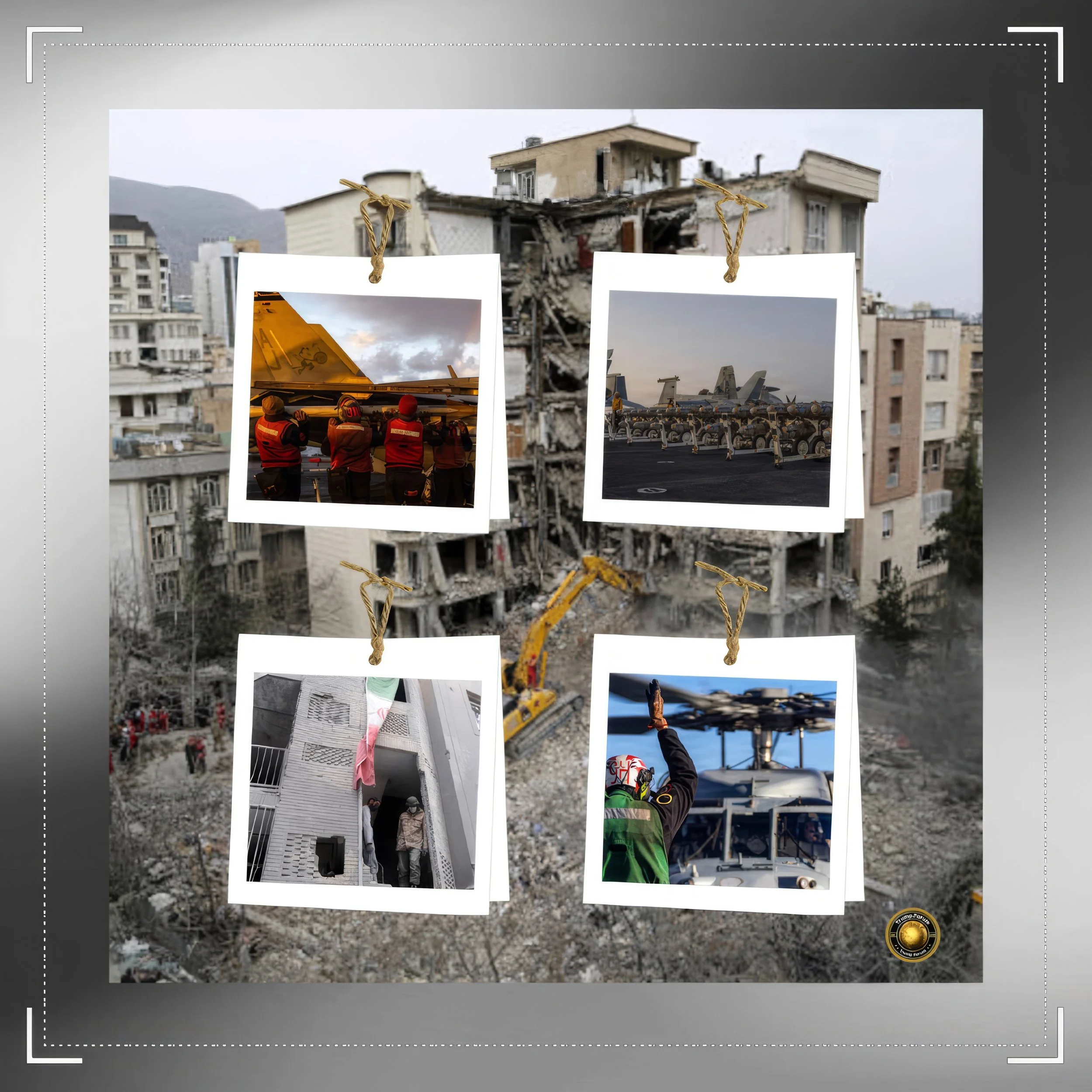
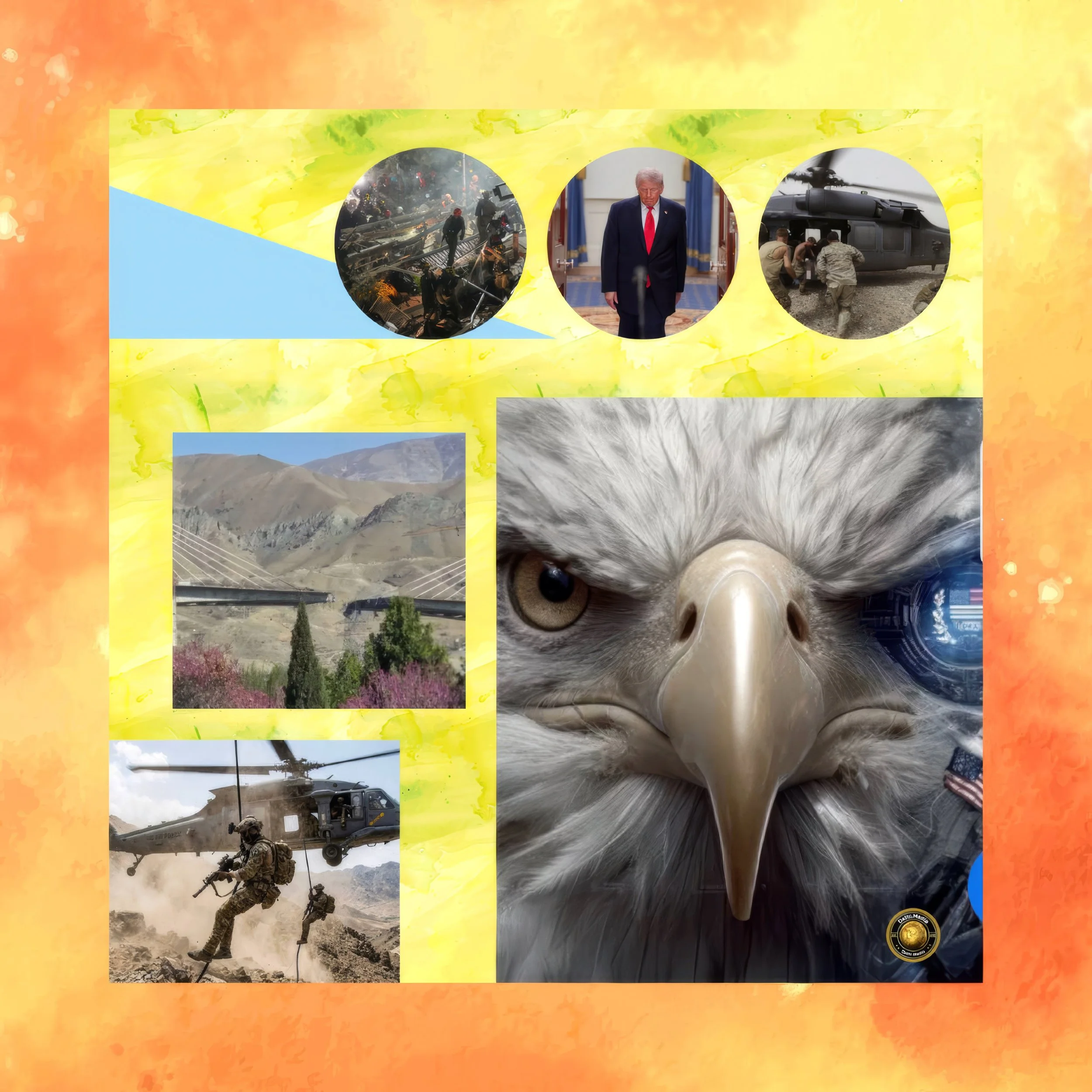
On April 3rd, U.S. forces struck a bridge connecting Tehran to the city of Karaj, killing at least 13 people.
Defense Secretary Pete Hegseth reportedly convinced Trump that road infrastructure could be used to transport missiles and drone components — a rationale that legal experts and humanitarian organizations immediately contested.
Senior White House advisers further persuaded the president that targeting Iran's electric power generation facilities could complicate Tehran's path to nuclear capability.
Trump publicly designated an upcoming Tuesday as both "Power Plant Day" and "Bridge Day," signaling a simultaneous campaign against Iran's energy and transport infrastructure.
Sarah Yager of Human Rights Watch warned that power plants are vital for civilian life and that even where a military rationale exists, international law demands extreme caution and proportionality.
Under the 1949 Geneva Conventions and their 1977 Additional Protocols, deliberate targeting of civilian infrastructure constitutes a war crime — a legal reality that the Trump administration has conspicuously refused to address.
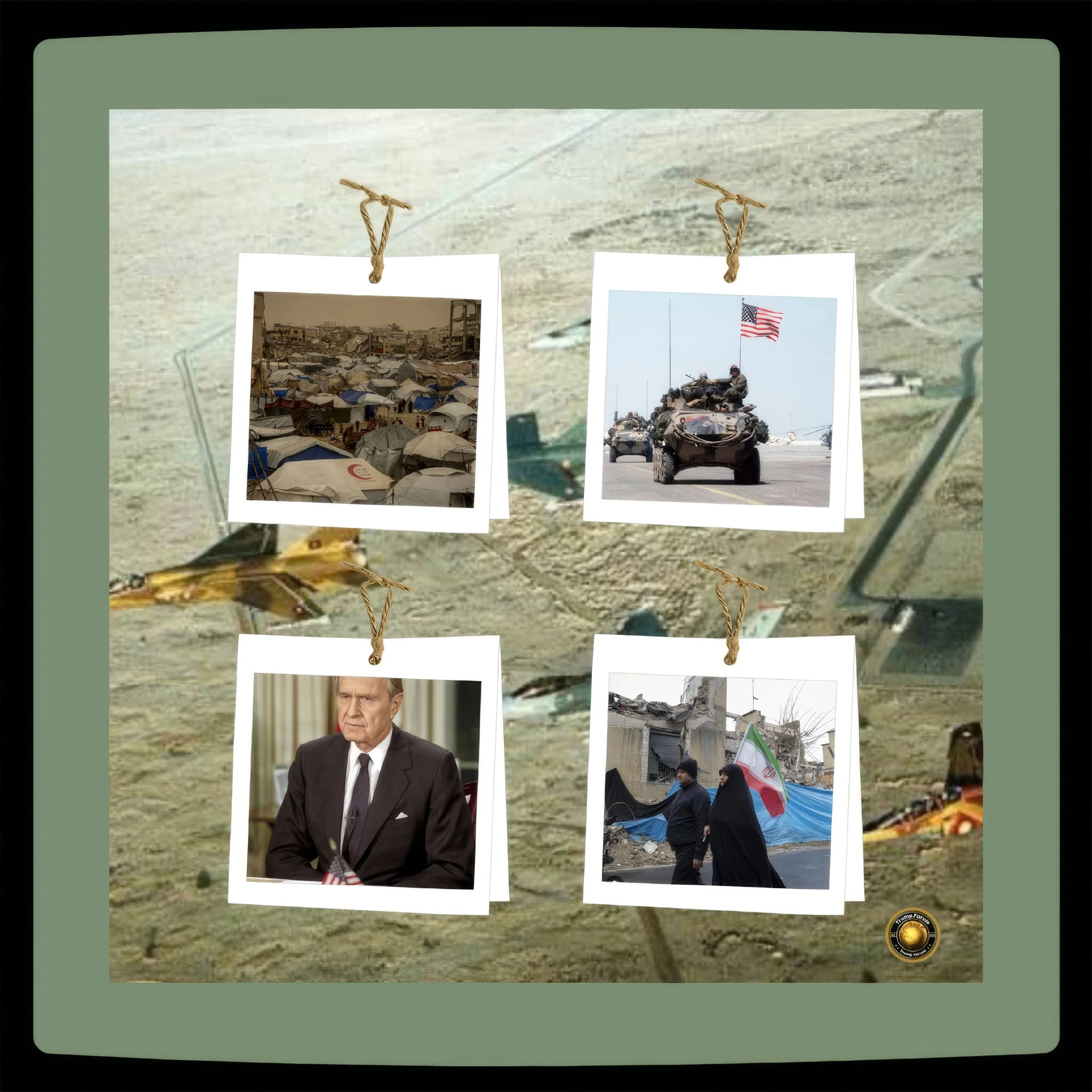
Simultaneously, U.S. forces have been systematically preparing the operational landscape for a possible ground assault on Kharg Island — the coral outcrop approximately 26 kilometers off Iran's southwestern coast that accounts for approximately 90% of Iran's oil exports.
U.S. airstrikes have already neutralized military installations on the island, including its airfield, radar sites, air defenses, and hovercraft base.
A U.S. Navy ship carrying approximately 2,500 Marines arrived in the Middle East, while another 2,500 Marines were being deployed from California.
At least 1,000 troops from the 82nd Airborne Division — trained for parachute insertion into contested territory — were also being moved into the region.
Military analysts noted that while seizing Kharg Island is technically feasible, it would be provocative far beyond any airpower campaign, expose U.S. forces to sustained fire from Iran's mainland, and still would not constitute a decisive blow since Iran maintains secondary export terminals capable of sustaining reduced oil flows.
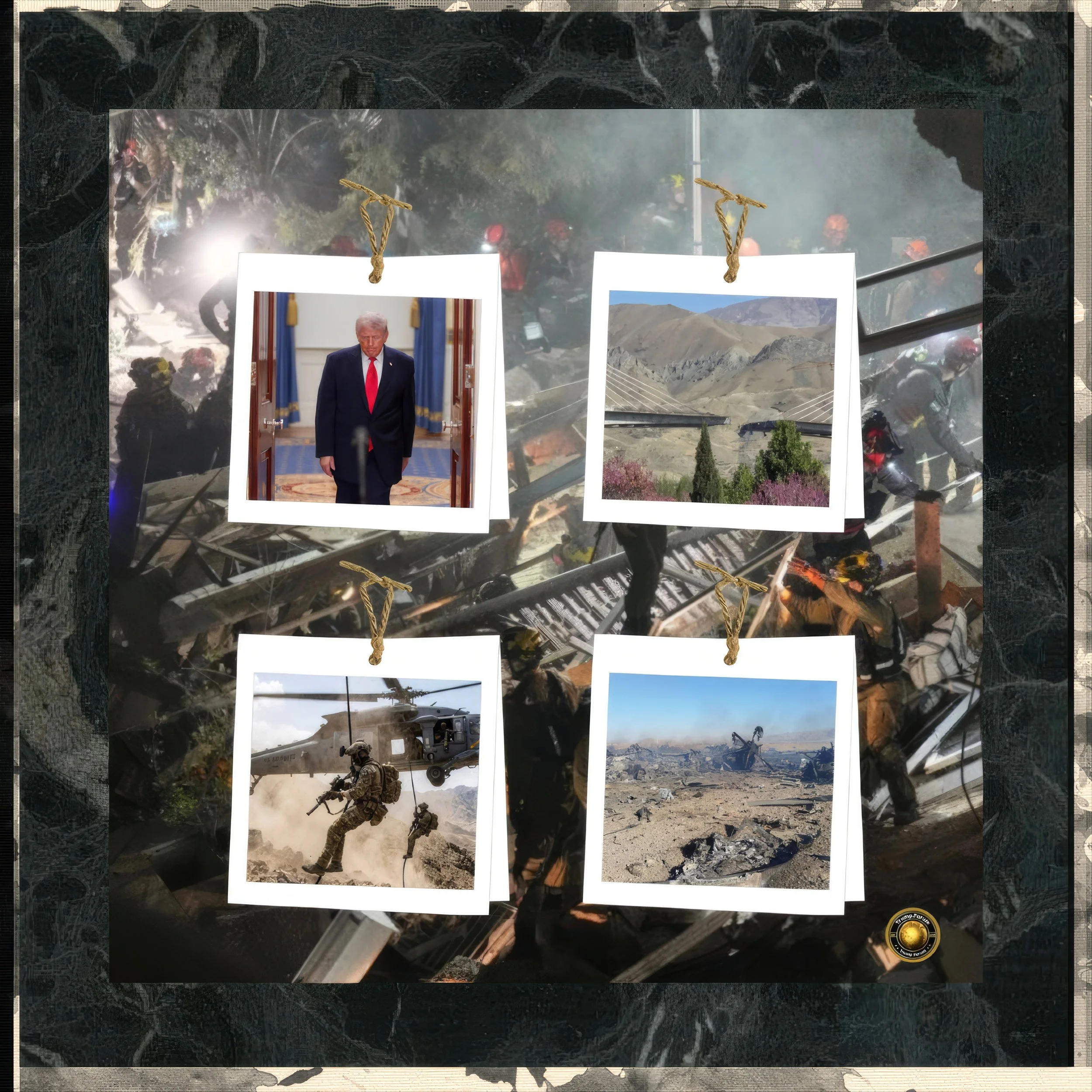
The most dramatic single incident of the war thus far — arguably the most revealing of its true costs — was the rescue of a downed American airman in Iran's Isfahan province.
An F-15E Strike Eagle was shot down by Iranian air defenses, forcing its two crew members to eject over hostile territory.
The subsequent rescue operation became a multi-day ordeal, involving A-10 Thunderbolt II jets, MC-130J Commando II aircraft, Black Hawk helicopters, MQ-9 Reaper drones, and elite ground troops inserted into Iranian airspace.
Multiple aircraft were destroyed — either in combat or deliberately to prevent advanced technology from falling into Iranian hands.
The F-15E alone carries a unit cost of approximately $100 million.
Two C-130 transports and 2 MH-6 helicopters were destroyed.
Iranian forces claimed to have downed several MQ-9 Reaper drones valued at between $30 and $60 million each.
An A-10, valued at approximately $20 million, reportedly crashed after entering Kuwaiti airspace following damage sustained during the mission.
Total estimated cost of the rescue operation: close to $500 million — for the extraction of two service members.
Trump himself described the rescued colonel as "highly respected," but the strategic and financial proportions of the operation raised urgent questions about the sustainability of combat operations at this level of intensity.
Latest Facts and Concerns
Iran Lists Gulf Bridges as Targets: How Washington's Escalation Is Threatening Regional Allies in Real Time
As of April 6th, 2026, the Strait of Hormuz remains partially blocked, and global oil markets continue to operate under severe stress.
The strategic oil reserve release — at 400 million barrels, the largest in history — has provided limited stabilization, but analysts at RBC Capital Markets described the crisis as "the most significant energy crisis since the oil embargo of the 1970s."
Iraq, which depends on the strait for virtually all its oil exports, has been forced to shut down major oil fields.
Aluminum, fertilizer, and helium markets have also recorded sharp price increases as supply chains anchored to Hormuz transit face prolonged disruption.
The U.S. has temporarily suspended sanctions on select Russian and Iranian oil to ease market pressure — a remarkable concession that has received little domestic scrutiny.
Iran, meanwhile, has listed key Gulf infrastructure — including bridges across the Gulf states — as potential retaliatory targets, raising fears that a broader regional conflict could engulf U.S. partners in the UAE, Saudi Arabia, Qatar, and Bahrain.
The April 1st speech itself further unsettled markets.
Trump claimed that Iran's capacity to launch missiles and drones had been "significantly reduced," but provided no independent verification.
He asserted that the war was "nearing completion" and projected another two to three weeks of involvement.
Markets did not respond favorably to these claims, which analysts noted were structurally identical to assurances made by the administration in weeks one and two of the conflict.
The president also threatened to strike "every one of their generating plants, likely simultaneously" if no agreement was reached — a threat that, if executed, would plunge tens of millions of Iranian civilians into darkness, contaminate water supplies, and potentially trigger a humanitarian catastrophe on a scale not seen in the 21st century.
Secretary of State Marco Rubio's concurrent statement that Iran had ceased uranium enrichment raised the obvious question: if Iran is no longer enriching uranium, what precisely is the war now achieving?
That gap between stated rationale and operational reality is one of the most troubling features of the current conflict.
Cause-and-Effect Analysis
Iran's Drone Swarms Closed Hormuz Without a Single Warship: The Tactical Revolution Washington Underestimated
The causal architecture of this conflict follows a logic that foreign policy analysts have long warned about.
The U.S. withdrawal from the JCPOA in 2018 removed the primary institutional mechanism for constraining Iranian enrichment.
Iran responded with a deliberate, graduated expansion of its nuclear program, calculating — correctly — that the absence of multilateral oversight provided strategic leverage.
When Trump returned to office in January 2025 and discovered that Iran's enrichment had reached near-weapons-grade levels, the diplomatic window had effectively closed to a narrow slit.
The Geneva negotiations of early 2026 were the last serious attempt to pull back from the precipice.
Their failure was not incidental — it reflected the structural incompatibility between Iran's demand for sanctions relief and recognition as a near-nuclear state, and Washington's insistence on full denuclearization without regime change guarantees.
Neither side had the political space to make the concessions required, and the February 28th strikes were the result.
The effects of those strikes have cascaded in precisely the ways that regional security analysts and energy economists predicted.
Iran's asymmetric response — drone swarms over the Strait of Hormuz rather than direct confrontation with U.S. naval assets — was textbook anti-access/area-denial strategy, a tactic Iran had spent two decades developing.
The closure of Hormuz was not achieved by Iran's navy, which has since been largely destroyed.
It was achieved by cheap, mass-produced drones — a sobering reminder that conventional military dominance does not automatically translate into strategic control.
Each subsequent American escalation has triggered a proportional Iranian counter-threat: strikes on Karaj's bridge produced Iran's list of Gulf infrastructure targets; Trump's "Power Plant Day" threat produced Iranian counter-declarations about Gulf state energy facilities; the movement of U.S. Marines toward Kharg produced encrypted signals from Tehran that any ground assault would be treated as an existential act warranting full retaliation.
The pattern suggests not a war approaching its conclusion but a conflict entering its most dangerous phase, in which both sides are simultaneously escalating and signaling a willingness to negotiate — a volatile combination that, historically, is among the hardest to de-escalate without miscalculation.
The $500 million rescue operation is emblematic of a deeper cost dynamic. Modern high-intensity warfare against a technologically capable adversary is extraordinarily expensive — not only in human terms but in material terms.
The U.S. Air Force has a finite inventory of advanced strike aircraft.
The F-35 program's unit cost is approximately $80 million per aircraft; the F-15E runs close to $100 million; advanced surveillance drones range from $30 to $60 million per unit.
If the current operational tempo continues for another two to three weeks, as Trump suggested, the financial toll will climb into the tens of $billions — before accounting for any ground operation, humanitarian obligations, or post-conflict reconstruction.
The Congressional Budget Office has yet to produce a formal cost estimate, but independent analysts at the Center for Strategic and Budgetary Assessments have suggested that even a 60-day air campaign at current intensity would exceed $50 billion in direct military expenditure.
Future Steps
Deal or Destruction: The Narrow Diplomatic Window Still Open Between Washington and Tehran Today
The next several weeks will be determinative. Trump has framed the conflict as approaching its conclusion, but the gap between declared objectives and achieved results is wide. Iran's nuclear program has been damaged but not destroyed.
The sites at Natanz and Fordow — the most hardened components of Iran's enrichment infrastructure — have reportedly survived significant strikes and retain residual capability.
Secretary Rubio's statement that Iran has stopped enriching uranium is significant, but it is not a treaty, not a verification mechanism, and not a permanent constraint.
If Iran retains centrifuge infrastructure and intellectual capital, it can restart enrichment within months of any ceasefire.
The underlying strategic problem that justified the war's initiation, in other words, has not been solved — it has merely been paused.
Three scenarios now appear most plausible.
In the 1st, diplomatic pressure produces a negotiated framework — likely a modified JCPOA-plus that includes Iranian commitments on enrichment limits, IAEA inspection access, and a partial lifting of economic sanctions.
This scenario requires both sides to accept outcomes substantially inferior to their stated maximalist goals, but it offers a face-saving off-ramp for both Trump and Iran's post-Khamenei leadership.
In the 2nd scenario, the current trajectory continues: escalating air campaigns against civilian infrastructure, a possible but extremely costly ground assault on Kharg Island, and a war that formally concludes without a verifiable nuclear agreement but with Iran temporarily degraded.
This scenario produces massive humanitarian damage, sustained energy market disruption, and severe long-term damage to American credibility under international law.
In the 3rd scenario — the one most feared by Gulf state partners and European allies — the conflict spirals beyond bilateral U.S.-Iran dynamics and draws in Hezbollah remnants, Houthi forces, or proxy networks in Iraq and Syria, producing a regional war whose end point no strategic model can currently predict.
Congress's role will become increasingly critical.
The War Powers Resolution establishes a 60-day clock from the initiation of hostilities within which the president must either obtain formal authorization or cease operations.
That clock is running. Representative Mike Lawler's April 5th statement that Congress would "take necessary action" if the timeline is not respected suggests that bipartisan concern about the war's open-endedness is growing.
GOP defections from the executive's war consensus — led by Representative Thomas Massie and, cautiously, by Representative Warren Davidson — signal that the political cost of continued ambiguity is rising.
A formal Congressional authorization debate, if it occurs, would force the administration to publicly articulate what "winning" means — something it has conspicuously avoided doing since February 28th
Conclusion
Can Gulf States Survive an Extended War? The Regional Fragility That Washington’s Strategists Are Ignoring
Trump's April 1st speech was worrying not because it announced anything catastrophic, but because it revealed, through omission and contradiction, a war without a coherent strategic architecture.
The stated objectives have shifted from nuclear prevention to the destruction of infrastructure.
The tactical landscape has evolved from precision airstrikes against hardened military targets to threats against power plants serving tens of millions of civilians.
The human cost of the campaign — illustrated with brutal clarity by the $500 million extraction of 2 service members — exposes the extraordinary price of high-intensity warfare against a capable adversary.
The global economy is bearing consequences that extend far beyond the Persian Gulf, with oil markets, shipping networks, and commodity supply chains all absorbing shocks not seen since the 1970s.
The international community — from the UN Secretary-General to the E3 — has condemned the trajectory of the conflict while stopping short of meaningful intervention.
What the next two to three weeks will produce depends not only on military operations but on whether any diplomatic channel can survive the escalatory pressures now operating from both Washington and Tehran.
The speech was worrying because it made clear that nobody — including the man delivering it — knows how this ends.