How America and Israel Are Leveraging Smart Software to Accelerate Their Response: A Beginner's 101 Guide to the War on Iran
Summary
What Just Happened?
On February 28, 2026, the United States and Israel launched a massive joint military attack against Iran called Operation Epic Fury.
In the first 12 hours of that single day, nearly 900 strikes were carried out against Iranian military sites — more than America managed across an entire opening day of combat in either the Gulf War of 1991 or the Iraq War of 2003.
To understand why this is remarkable, think of it this way: in previous wars, preparing a list of targets to bomb was like planning a road trip with paper maps.
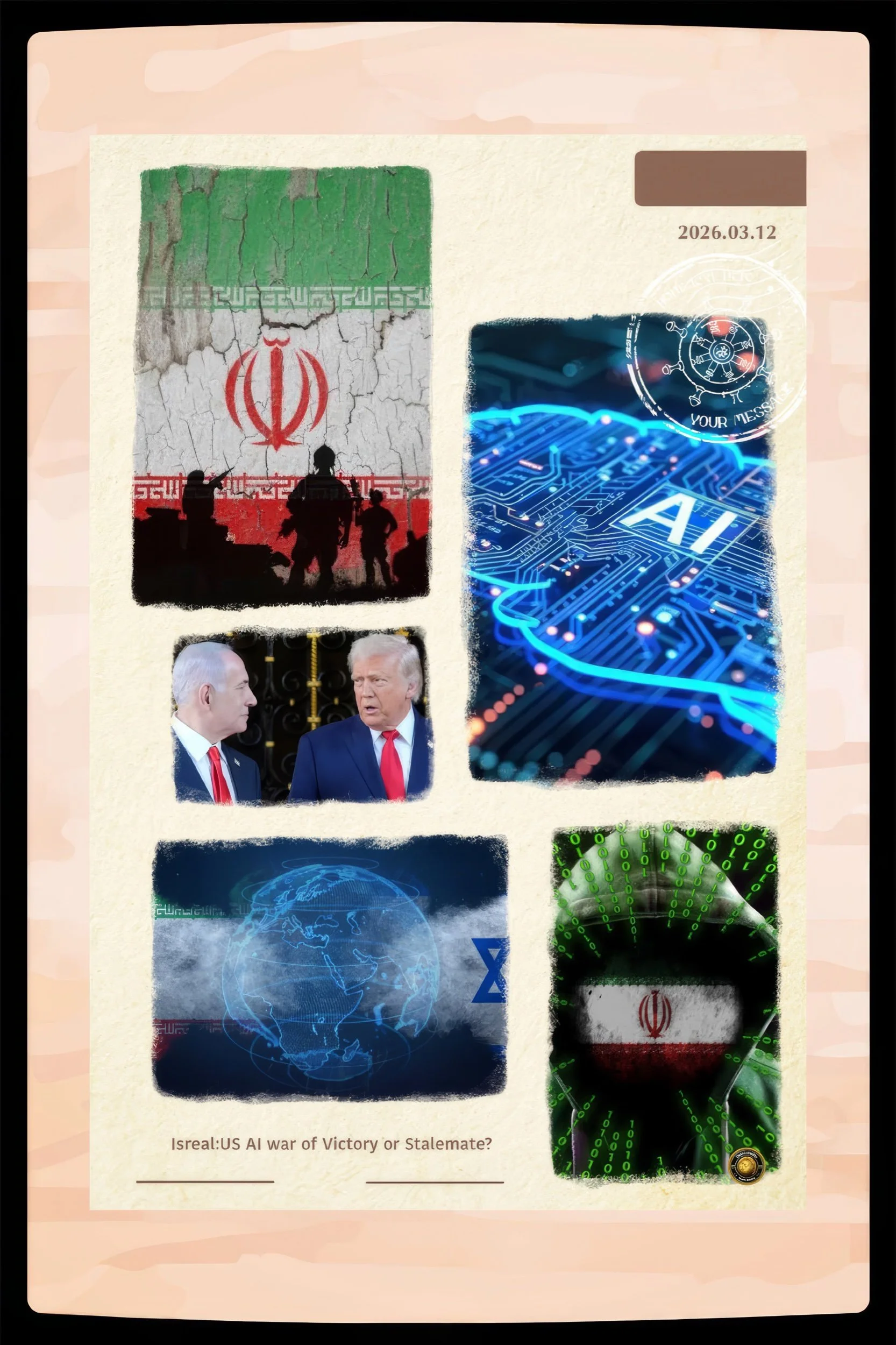
Today, America and Israel use something like a GPS system powered by artificial intelligence — except instead of finding the fastest route, it finds the most important things to bomb and does so thousands of times faster than any human team ever could.
America's Secretary of War Pete Hegseth declared that the operation had delivered "twice the air power of shock and awe of Iraq in 2003" — and the numbers back that claim up.
What made this possible was not just better planes or bigger bombs.
It was software — artificial intelligence systems that scan satellite images, piece together intelligence, and generate strike recommendations at a pace no human analyst team can match.
The Smart Software Behind the Strikes
Israel built 2 key AI systems over years of fighting in Gaza and Lebanon, and those systems have now been put to work in Iran on a far larger scale.
The first system, called The Gospel, works like an ever-running search engine pointed at Iran's military.
It scans real-time surveillance data, identifies buildings, weapons depots, missile launchers, and command centers, and spits out a continuously updated list of recommended bombing targets.
Before AI, a skilled human analyst team might identify 50 viable targets over an entire year. The Gospel can generate 100 per day.
When Israel began running out of pre-prepared targets during fighting in Gaza, The Gospel essentially said: "Don't worry — there are another 36,000 ready to go."
The second system, called Lavender, focuses on people rather than buildings.
It analyzes intelligence data to identify individuals and place them on a kill list.
A third tool, informally called "Where's Daddy?", then monitors those individuals and notifies strike planners when a target has returned to their home — essentially turning a mobile phone signal or a pattern of movement into a trigger for a missile.
The United States brought its own AI tools that fuse satellite images, phone intercepts, and human intelligence into a single targeting picture, allowing commanders to see, decide, and strike faster than Iran can respond.
Think of the old way of going to war as making a decision by committee: you gather information, hold a meeting, argue about it, get approval from multiple levels of command, and then finally act.
The new AI-driven method skips most of those steps — the machine does the reconnaissance, makes a recommendation, and all a human has to do is press a button.
That is why 900 strikes could happen in 12 hours.
What Iran Did Back
Iran did not simply absorb the strikes in silence.
The Islamic Revolutionary Guard Corps launched its own counter-campaign, firing ballistic missiles at Israel and at American military bases in Bahrain and Qatar.
Iranian drones were detected over the United Arab Emirates — 541 of them in Emirati skies alone, of which 506 were intercepted.
One Iranian strike hit Dubai Airport, injuring four workers, while another targeted a major hotel in Dubai.
Iran's strikes were intense at the start but declined by 70 to 85% within days as American and Israeli forces destroyed missile launchers and production facilities.
Iran was essentially spending a stockpile it could not restock quickly, while America kept refilling its own magazine through fresh deliveries of munitions and fuel.
The cyberspace dimension of the war was also striking. Before a single bomb fell, American military units were already operating in Iranian computer networks, disrupting command systems.
Israel hacked a popular prayer app used by millions of Iranians and used it to send messages to Iranian soldiers encouraging them to defect.
All of this was designed, as one Israeli commander explained, to make Iran believe nothing was about to happen right up until the moment it did.
Has America Won the War?
This is the hardest question — and the honest answer is no, not yet, and possibly not ever in the traditional sense.
There is a crucial difference between winning battles and winning a war.
America and Israel have unquestionably won the opening battles in every measurable military sense.
They destroyed hundreds of Iranian targets, degraded Iran's missile arsenal, struck nuclear sites, eliminated senior leadership including Supreme Leader Khamenei, and achieved air superiority over Tehran within days.
On paper, that looks like a rout.
But winning a war means achieving the political goals you started fighting for — and this is where the picture grows complicated.
Think of the American experience in Vietnam.
The United States military never lost a major battle in Vietnam. American forces killed far more enemy fighters than they lost.
American air power was dominant throughout.
Yet America ultimately withdrew without achieving its political objective because the other side simply refused to quit, absorbed the punishment, and waited.
Afghanistan followed the same pattern over 20 years. In both cases, the enemy did not need to defeat America — it only needed to survive and make the cost too high.
Iran appears to be reading from exactly that playbook. As one senior analyst put it, Iran does not need to defeat the United States militarily — it only needs to survive and impose enough cost.
Iran's ability to fire missiles at Gulf Arab cities, disrupt oil shipping through the Strait of Hormuz, and activate proxy groups in Lebanon and elsewhere gives it levers of pressure that do not require defeating a single American fighter jet.
One study using historical conflict data calculated that there is a 90.63% chance this war ends in stalemate, with only a 5.38% chance of clear American victory.
The Problem Nobody Can Agree On
One of the deepest problems with Operation Epic Fury is that the United States and Israel do not fully agree on what winning actually looks like.
Israel wants the Iranian regime gone permanently and the entire network of Iranian-backed armed groups dismantled — a generational project that could require years of sustained military pressure.
The United States under President Trump has issued shifting demands: first, the destruction of Iran's nuclear and missile programs; then, "unconditional surrender"; then, the possibility of talks; then, a declaration that talks are "too late."
Gulf Arab countries hosting American military bases want something far simpler — stop the missiles raining down on their airports and hotels, and restore stability.
When three allies fighting the same war cannot agree on what "done" looks like, the war tends not to end cleanly. Instead, it drifts — more strikes, more retaliation, more cost, without a clear finish line.
That drift is precisely what transformed Vietnam and Afghanistan from quick military campaigns into generational quagmires.
The AI targeting machine can tell America where to bomb next. It cannot tell America when to stop or what political settlement to accept. That remains entirely a human problem — and one that, as of March 2026, remains unsolved.
What Could Happen Next?
There are three plausible paths from here.
First, Iran's regime could collapse internally — pressured by strikes, economic ruin, and popular uprising — and a new government could emerge that accepts American and Israeli terms.
This is what Trump's rhetoric seems to be aiming for, but historically, foreign military strikes rarely produce the kind of internal political revolution they are designed to trigger.
Second, a negotiated deal could emerge — perhaps a stripped-down agreement in which Iran accepts tight limits on its nuclear program in exchange for a ceasefire.
There were early signs of this possibility when Trump said on March 1st that "they want to talk."
A weakened Iran that can no longer threaten its neighbors but keeps its government intact might be the minimum face-saving outcome all sides can eventually accept.
Third — and most likely — the war settles into a grinding stalemate where neither side achieves its maximum goals. Iran fires missiles at Gulf cities to keep pressure on America's allies.
America keeps bombing Iranian sites to prevent any reconstitution of capabilities. Both sides take costs neither originally anticipated.
Eventually, domestic pressures in America — and the complaints of Gulf Arab partners absorbing Iranian fire — push Washington toward a settlement that falls short of the "unconditional surrender" Trump initially demanded.
The AI targeting revolution has given America and Israel a military machine of extraordinary power.
But as the history of modern warfare has consistently shown, the most sophisticated killing machine in the world still cannot substitute for a clear political strategy, a shared definition of victory, and the patience to pursue it.
The Iran war, 12 days in, has already confirmed that the hardest battles are fought not in the skies above Tehran but in the conference rooms of Washington.