The War That Could Change Everything — What America's Operation Epic Fury Means for the World - Beginners' 101 Guide on the Future of the Middle East: Iran War
Summary
That military pressure, combined with internal opposition, will eventually force political change in Iran. controls its oil, and whether Iran will ever develop a nuclear weapon.
Introduction: A War that Started in the Dark
At 1:15 a.m. on February 28, 2026, American missiles and bombs started striking Iran.
President Donald Trump authorized the largest U.S. military operation in the Middle East in over two decades.
The American military called it Operation Epic Fury. Israel fought alongside the U.S. under its own operation name — Operation Roaring Lion.
Think of it like two teammates in the same game — one wearing an American jersey, the other an Israeli jersey — both attacking the same opponent.
Why did this happen?
Because Iran had been pursuing a nuclear weapon for years, and by January 2026, American intelligence concluded Iran was about two weeks away from possessing enough highly enriched uranium to build 10 nuclear bombs.
Imagine a neighbor who has been claiming for years they want to burn down your house — and then you find out they just bought matches. That’s the position the United States faced.
Additionally, in January 2026, Iran's government killed thousands of its own citizens — men and women protesting for freedom.
Trump used both reasons to justify the war: to stop the nuclear bomb and to halt the killing of innocent people.
History: How Things Got This Bad
The U.S. and Iran have been enemies since 1979 — that’s 47 years of hostility.
In 2015, under President Obama, a deal called the JCPOA was made that limited Iran's nuclear activities in exchange for easing some economic sanctions.
But in 2018, Trump withdrew from that deal. Iran then began violating the limits — enriching more uranium and getting closer to bomb-making levels.
In June 2025, the U.S. and Israel carried out a smaller series of strikes — called Operation Midnight Hammer — targeting Iran's main nuclear sites at Natanz, Fordow, and Isfahan. Think of this as a warning shot.
But Iran didn’t stop. Its regime kept rebuilding and continued suppressing protesters.
So in February 2026, that warning escalated into a full-scale attack.
What Has Happened So Far
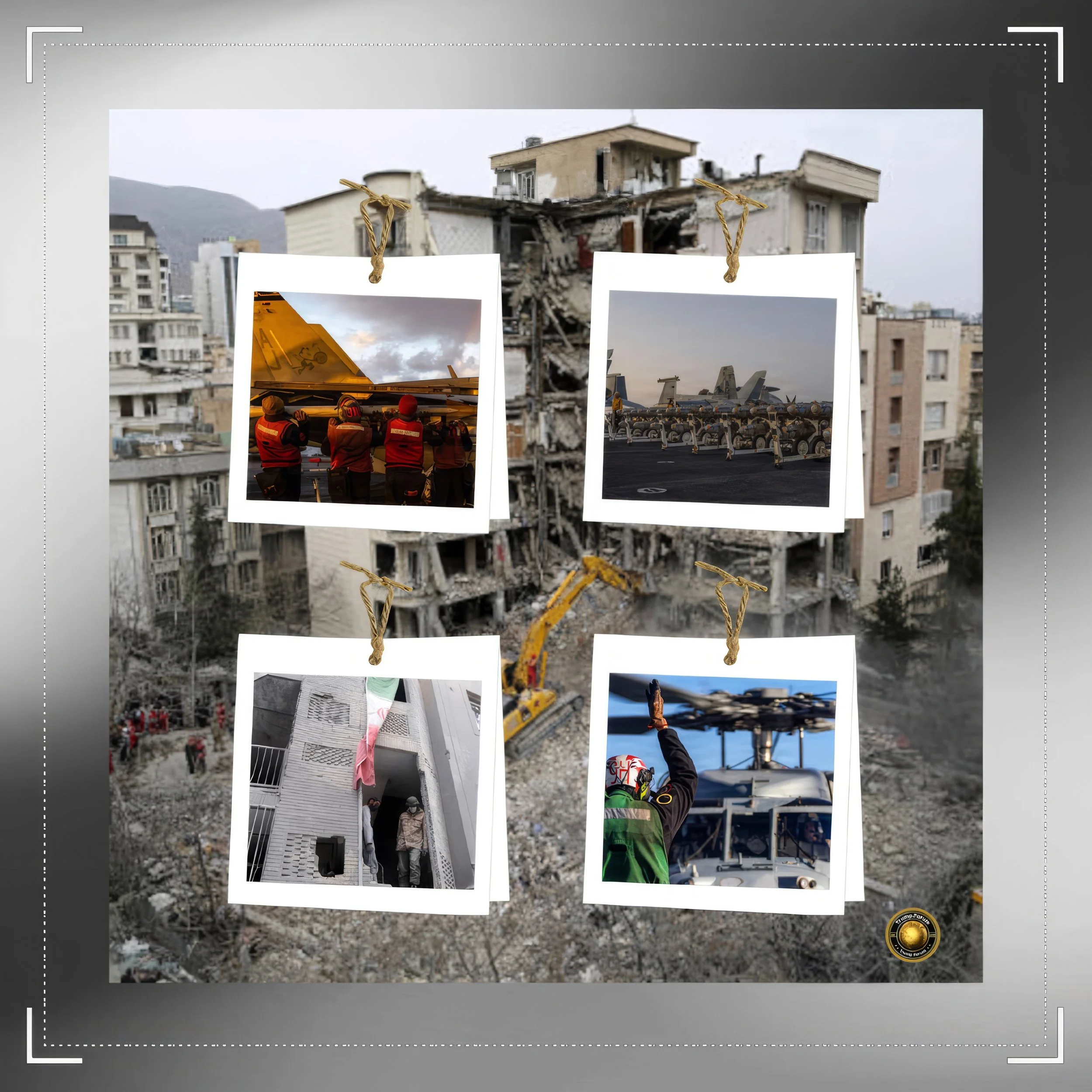
In less than four weeks, the U.S. military has hit over 5,500 targets inside Iran.
To grasp how big that is — imagine a city the size of a large metropolitan area, with every major military building, naval ship, missile factory, and weapons site being bombed one after another, day and night.
More than 60 Iranian warships have been sunk or disabled. Iran’s special fleet of four advanced Soleimani-class warships — all four are now destroyed.
The nuclear enrichment sites at Natanz, Fordow, and Isfahan have been destroyed. Iran's ability to operate drones and ballistic missiles has decreased sharply since the campaign started.
On March 14, U.S. forces bombed military installations on Kharg Island — a small island off Iran's coast responsible for over 90% of Iran's oil exports.
Think of Kharg Island as the sole checkout counter in a store. If it’s shut down, nothing is sold.
Trump targeted its military facilities but deliberately left the oil terminal intact — keeping that threat in reserve, like a card not yet played.
Since the war began, global oil prices have risen by more than 40%.
Qatar's large natural gas terminal was hit by Iranian missiles, shutting down two refineries and disrupting a significant portion of global gas supplies.
People from Tokyo to London to New Delhi are feeling this conflict through higher energy bills and petrol prices.
The Peace Plan That Iran Rejected
While bombs keep falling, Trump has also proposed a 15-point peace plan — a list of 15 demands.
The main points are: Iran must abandon its nuclear program completely, hand over its enriched uranium, halt funding armed groups like Hezbollah and the Houthis, reopen the Strait of Hormuz (which Iran has blockaded), and cease missile expansion.
In return, the U.S. would lift nuclear-related sanctions and help Iran develop civilian nuclear energy.
Iran's government publicly rejected this — calling the U.S. a country "negotiating with itself.”
However, Trump claims discussions are happening behind closed doors with a senior Iranian figure, suggesting the rejection may be political posturing.
Think of it like two people arguing in a room but still passing notes under the door.
What Comes Next
The top U.S. military goal in the next three weeks is to open the Strait of Hormuz — the narrow waterway through which about 21% of the world's oil is shipped.
Iran has mined it and positioned weapons along its shores.
Opening it will require risky close-range naval and air operations.
Another key goal is to ensure Iran's nuclear weapons capability is completely eradicated — not just damaged but destroyed beyond recovery.
The third priority is taking control of Kharg Island, either through continued pressure or a ground operation — but Iran has fortified the island with missiles and mines, making any assault highly challenging.
If Trump succeeds in all three, the U.S. and Israel will gain significant control over Iran's ability to export oil and access global markets.
At that point, Iran's remaining leaders will face a choice: accept Trump's terms or see their economy collapse entirely.
The Larger Context
This war is not just about Iran. In the broader region, Saudi Arabia and Gulf states — long threatened by Iranian proxies and missiles — are watching the dismantling of a long-standing threat.
In Lebanon, Hezbollah — Iran's most powerful allied armed group — has lost its main financier and weapons supplier. In Yemen, the Houthis face similar setbacks.
For the Iranian people — many of whom risked their lives protesting — the hope is that military pressure combined with internal opposition will eventually force political change in Iran.
Trump has publicly promised that once military operations end, the U.S. will warn Iran's leaders that if they fire on protesters or continue executions, serious consequences will follow.
Whether this promise will lead to genuine democracy or leave Iran a fractured country without a functioning government remains uncertain — but it’s a question that the next three weeks will help to answer.