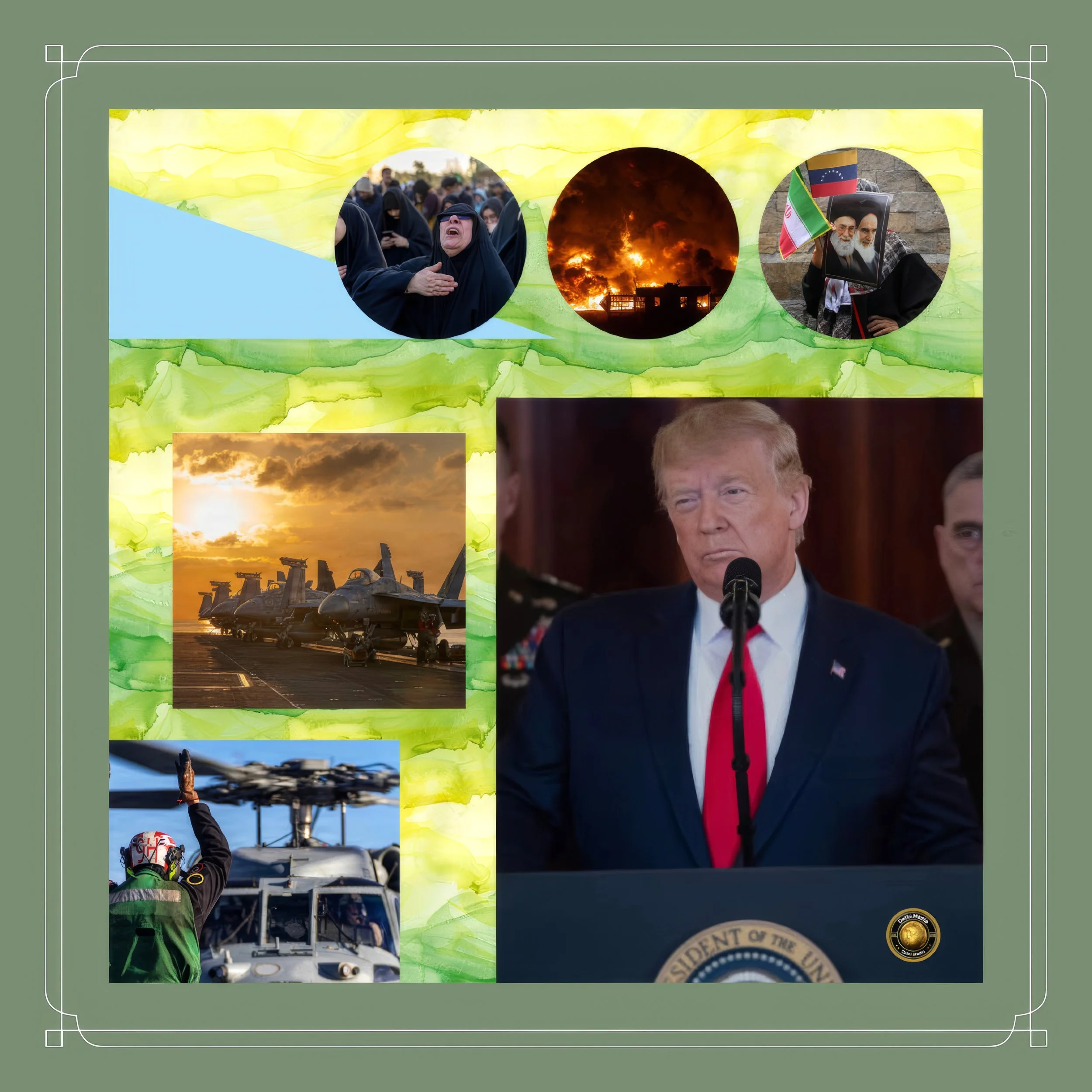
Trump's War of Attrition: How Operation Epic Fury Is Redrawing the Strategic Map of the Middle East
Prelude
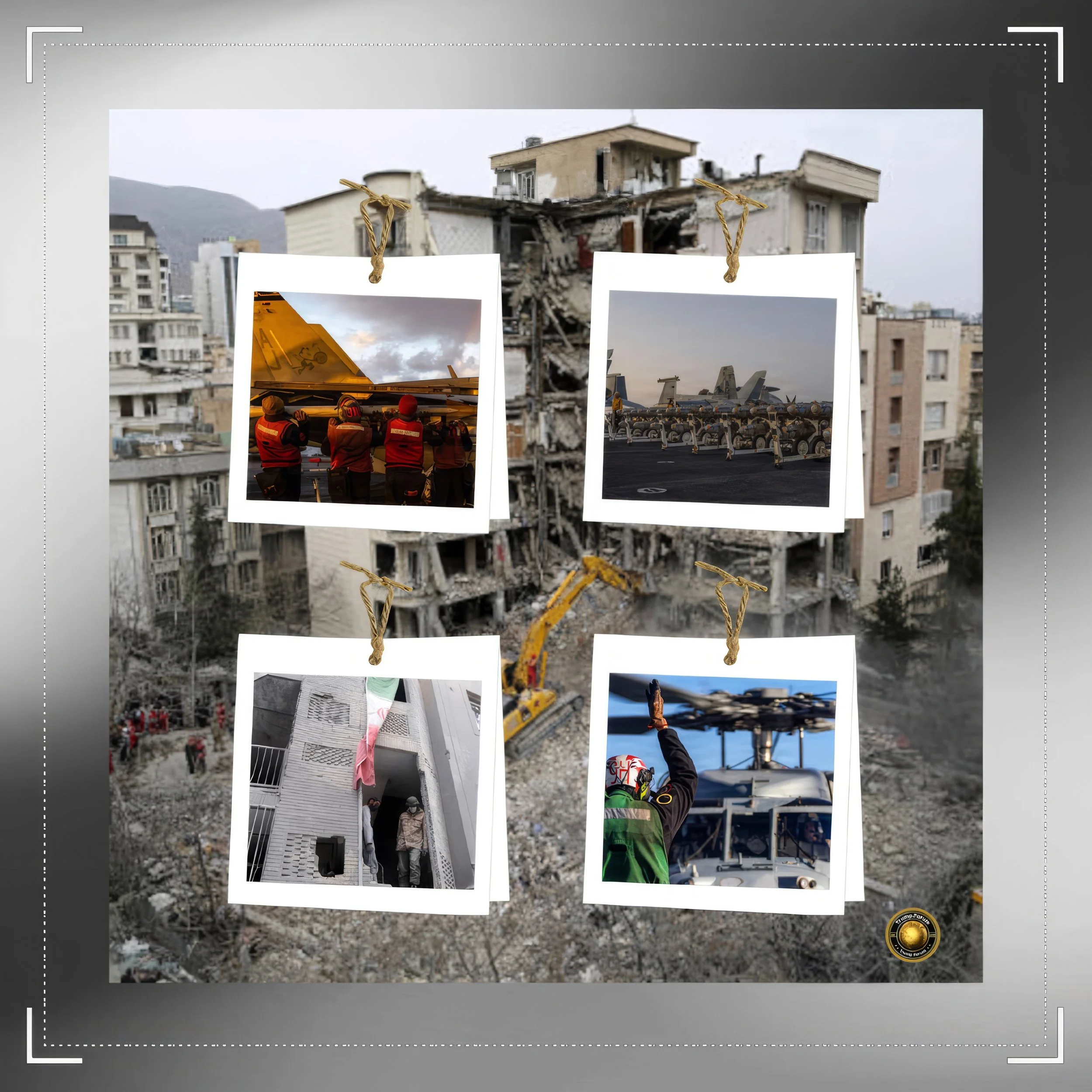
The United States launched Operation Epic Fury on February 28, 2026, initiating what may prove to be the most consequential military campaign in the Middle East since the 2003 invasion of Iraq.
Nearly four weeks into the campaign, the operation has struck over 5,500 targets, dismantled Iran's nuclear enrichment infrastructure, shattered its naval capacity, and placed Washington — alongside Israel — at the threshold of strategic dominance over the Persian Gulf.
Yet the endgame remains contested, diplomatically opaque, and fraught with dangers that extend well beyond the battlefield.
Executive Summary
From 10 Nuclear Bombs to Zero — How Operation Epic Fury Dismantled Iran's Deadliest Ambition
Operation Epic Fury, launched at 1:15 AM Eastern Time on February 28, 2026, represents the largest U.S. military operation in the Middle East in over two decades.
Authorized by President Donald Trump, the campaign was directed by Admiral Brad Cooper, commander of U.S. Central Command (CENTCOM), and has been executed in close coordination with Israeli forces operating under their parallel operation — Operation Roaring Lion.
In under four weeks, U.S. and Israeli forces have struck IRGC command and control nodes, ballistic missile production sites, naval assets, nuclear enrichment facilities at Natanz, Fordow, and Isfahan, and military installations on Kharg Island — Iran's primary oil export hub.
As of late March 2026, over 60 Iranian warships have been destroyed or disabled, the entire Soleimani-class fleet has been eliminated, Iranian drone and missile attack frequency has fallen sharply, and crude oil prices have surged more than 40% globally since the outbreak of hostilities.
On the diplomatic front, Trump has placed a 15-point peace framework on the table, demanding Iran's full nuclear disarmament, cessation of ballistic missile production, closure of proxy networks, and reopening of the Strait of Hormuz — while Tehran publicly denies the existence of any formal negotiations.
The situation on March 29, 2026, is one of layered complexity: significant military progress, unresolved diplomatic tracks, residual Iranian resilience, and escalating regional spillover.
Introduction: The Strategic Stakes of a Defining Campaign
The War America Spent 47 Years Avoiding and Why It Finally Chose to Fight It in 2026
History will record February 28th, 2026, as the date on which the United States crossed a threshold it had approached but never fully crossed in its 45-year confrontation with the Islamic Republic of Iran.
The decision by President Trump to launch Operation Epic Fury did not emerge from a vacuum.
It was the culmination of years of failed diplomacy, accelerating nuclear proliferation, unprecedented domestic unrest inside Iran, and a broader American strategic calculus that concluded that the cost of inaction had grown unacceptable.
Trump's January 2nd, 2026, warning that the United States was "locked and loaded" if Iran massacred protesters was not mere rhetoric; it was strategic signaling that preceded a phased military escalation designed to achieve conditions no diplomatic framework had managed to deliver.
The campaign sits at the intersection of multiple strategic imperatives: halting Iran's nuclear breakout trajectory, neutralizing its asymmetric power projection through proxies, reopening the Strait of Hormuz — through which roughly 21% of global oil trade transits — and, implicitly, creating the conditions for political transformation inside Tehran.
These objectives are mutually reinforcing but individually complex, and their simultaneous pursuit defines both the ambition and the difficulty of Operation Epic Fury.
Historical Context: Decades of Confrontation and the Road to War
Why America's Control of Kharg Island Would Put Iran's Entire Economy in an Irreversible Strategic Vise
The United States and the Islamic Republic of Iran have existed in a state of structured hostility since 1979, when the revolution that toppled Shah Mohammad Reza Pahlavi installed a clerical government that defined itself in explicit opposition to American power.
The hostage crisis, the Iran-Iraq War, the 1988 naval engagements in the Persian Gulf, the periodic crises over the nuclear file, the JCPOA negotiations, Trump's 2018 withdrawal from the deal, and the 2020 killing of IRGC commander Qasem Soleimani — each episode tightened the coil of confrontation.
The nuclear dimension became particularly acute after Trump's withdrawal from the Joint Comprehensive Plan of Action in May 2018.
Iran progressively exceeded the enrichment limits set by the agreement, moving from 3.67% enriched uranium to 60% and, by early 2026, to a threshold within weeks of weapons-grade 90% enrichment.
American intelligence assessments in January 2026 concluded that Iran was approximately two weeks from accumulating sufficient highly enriched uranium for 10 nuclear devices — a finding that accelerated the administration's decision calculus.
Operation Midnight Hammer in June 2025 had already struck Natanz, Fordow, and Isfahan in a limited counterproliferation raid. Still, Iranian reconstitution efforts and the regime's refusal to negotiate in good faith rendered that operation ineffective as a deterrent.
By late 2025, the strategic logic within Washington had shifted from deterrence to destruction.
The domestic Iranian backdrop is equally significant. Beginning in late December 2025, the largest anti-government protests since the 1979 revolution erupted across Iran, driven by economic collapse, currency devaluation, and decades of accumulated grievance.
By January 8-10th, 2026, government security forces had massacred thousands of protesters — estimates range from 3,117 according to Iranian state media to over 5,000 according to American human rights activists.
It was this massacre that Trump cited as a moral catalyst alongside the strategic imperatives when announcing Operation Epic Fury.
The convergence of nuclear urgency and domestic Iranian fragility created the operational window that U.S. planners exploited.
Current Status: Inside Operation Epic Fury
Iran's Collapsing Proxies, Shattered Navy, and the New Security Architecture Emerging in the Gulf
Admiral Brad Cooper's March 11th, 2026, situational briefing presented a picture of sweeping, yet unfinished, military success. Over 5,500 targets had been struck inside Iran, including more than 60 ships across Iran's naval inventory.
The entire Soleimani-class fleet of 4 warships was confirmed destroyed. Iranian drone and ballistic missile attack rates had declined sharply.
The IRGC command and control infrastructure had been systematically degraded, with Iranian missile and drone launches against Gulf civilian infrastructure — including Qatar's Ras Laffan LNG terminal — continuing but at diminished intensity.
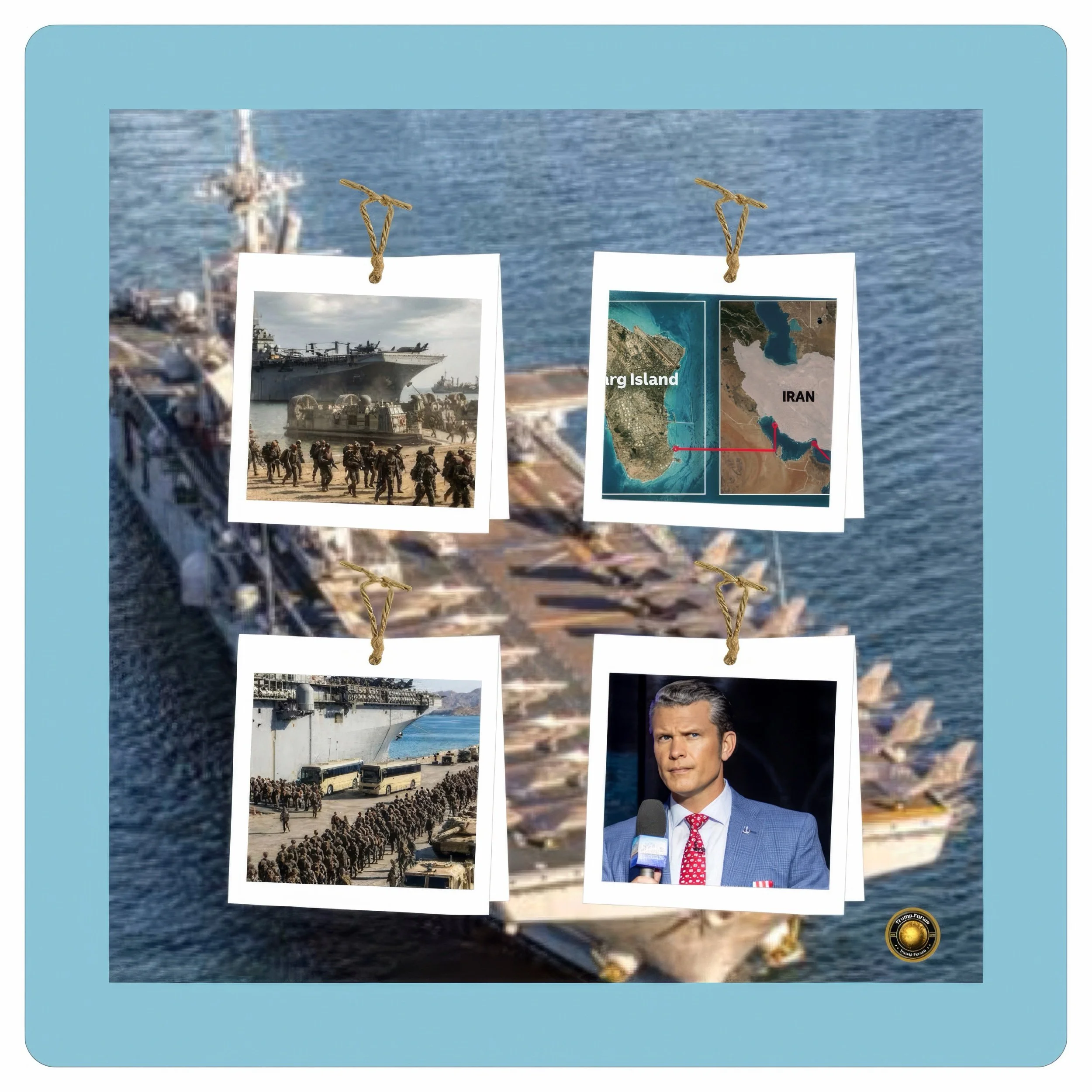
On March 14, U.S. forces struck over 90 military sites on and around Kharg Island, Iran's critical oil export hub through which more than 90% of the country's crude oil passes.
Trump publicly declared the island's military facilities "totally obliterated" while conspicuously withholding strikes on the oil infrastructure itself — a deliberate lever of coercive pressure held in reserve.
Iranian state media claimed oil exports from Kharg were proceeding normally, a claim contested by satellite imagery assessments.
Iran's response was to threaten that any strike on the island's oil infrastructure would result in attacks on "U.S.-linked oil facilities" across the Gulf, and separately, that any U.S. ground operation on Kharg would trigger a blockade of the Bab al-Mandeb Strait — through which approximately 12% of global seaborne oil passes.
The nuclear picture, as assessed by CSIS, is one of significant degradation but residual uncertainty.
The enrichment facilities at Natanz, Fordow, and Isfahan — all struck during both Operation Midnight Hammer and Operation Epic Fury — have not been reconstituted since June 2025.
The headquarters of the Atomic Energy Organization of Iran in Tehran, the explosive research and testing facility at Parchin, and further components of the Isfahan complex have been struck in the current campaign.
Yet Global Defense Corp's March 26th assessment suggests that Iran's nuclear and ballistic missile capabilities have been degraded by approximately 70%, with an intact stockpile of intermediate-range ballistic missiles (IRBMs) remaining in hardened, undisclosed locations.
These residual assets represent both a continued threat and a negotiating card in Tehran's hand.
Key Developments: The 15-Point Framework and Diplomatic Impasse
The 15-Point Plan That Could End Iran's Nuclear Dream and Open the Strait of Hormuz Forever
The emergence of diplomatic tracks alongside kinetic operations defines the current phase of the conflict.
Trump's approach — described by the BBC as "Two off-ramps at once" — involves simultaneous military pressure and negotiated terms of capitulation.
The 15-point plan, reported by The New York Times and the Wall Street Journal, demands that Iran decommission its three key nuclear sites — Natanz, Isfahan, and Fordow — surrender its enriched uranium stockpile, dismantle its proxy network (including Hezbollah and the Houthis), reopen the Strait of Hormuz, limit its missile program to purely defensive use, and end political persecution of protesters.
In exchange, the United States has reportedly offered to lift nuclear-related sanctions and assist in developing Iran's civilian nuclear program.
This notable concession signals Washington's interest in a face-saving framework for Iranian interlocutors.
Trump has stated publicly that negotiations are being conducted with "the most respected" surviving Iranian leader, confirming that leadership in Tehran has been degraded through at least "phase one, phase two, and largely phase three" of targeted strikes.
The assassination of Supreme Leader Ali Khamenei on February 28th, 2026, the opening day of the operation, marked the most dramatic single event of the campaign — eliminating the singular figure who had defined Iran's confrontational posture for over three decades.
Yet Iran's official posture remains one of defiant denial.
Tehran has publicly rejected the 15-point plan, demanded U.S. reparations and recognition of Iranian authority over the Strait of Hormuz, and insisted that Washington is "negotiating with itself".
This gap between what Iranian officials say publicly and what appears to be happening in back-channel contacts reflects a pattern of strategic ambiguity: Tehran attempting to preserve domestic legitimacy.
At the same time, its surviving leadership privately engages with U.S. terms it cannot openly accept.
The role of Israel in all of this is both operationally and diplomatically complex.
Operating under Operation Roaring Lion in parallel with Epic Fury, Israeli forces conducted a strike in Bandar Abbas that killed IRGC Naval Commander Commodore Ali Reza Tansiri.
Trump publicly distanced the U.S. from an Israeli strike on Iranian gas infrastructure — describing it as Israel acting "out of anger" — while American media reported that Washington was informed in advance.
This public-private divergence reflects the coalition-management challenge inherent in a joint campaign in which Israeli and American strategic interests, while substantially aligned, are not identical.
Latest Facts and Concerns: The Global Dimension
How the Assassination of Khamenei and 5,500 Strikes Changed the Middle East's Strategic Balance
The economic fallout of Operation Epic Fury has reverberated across global markets with extraordinary speed. Crude oil prices have surged more than 40% since the conflict's outbreak.
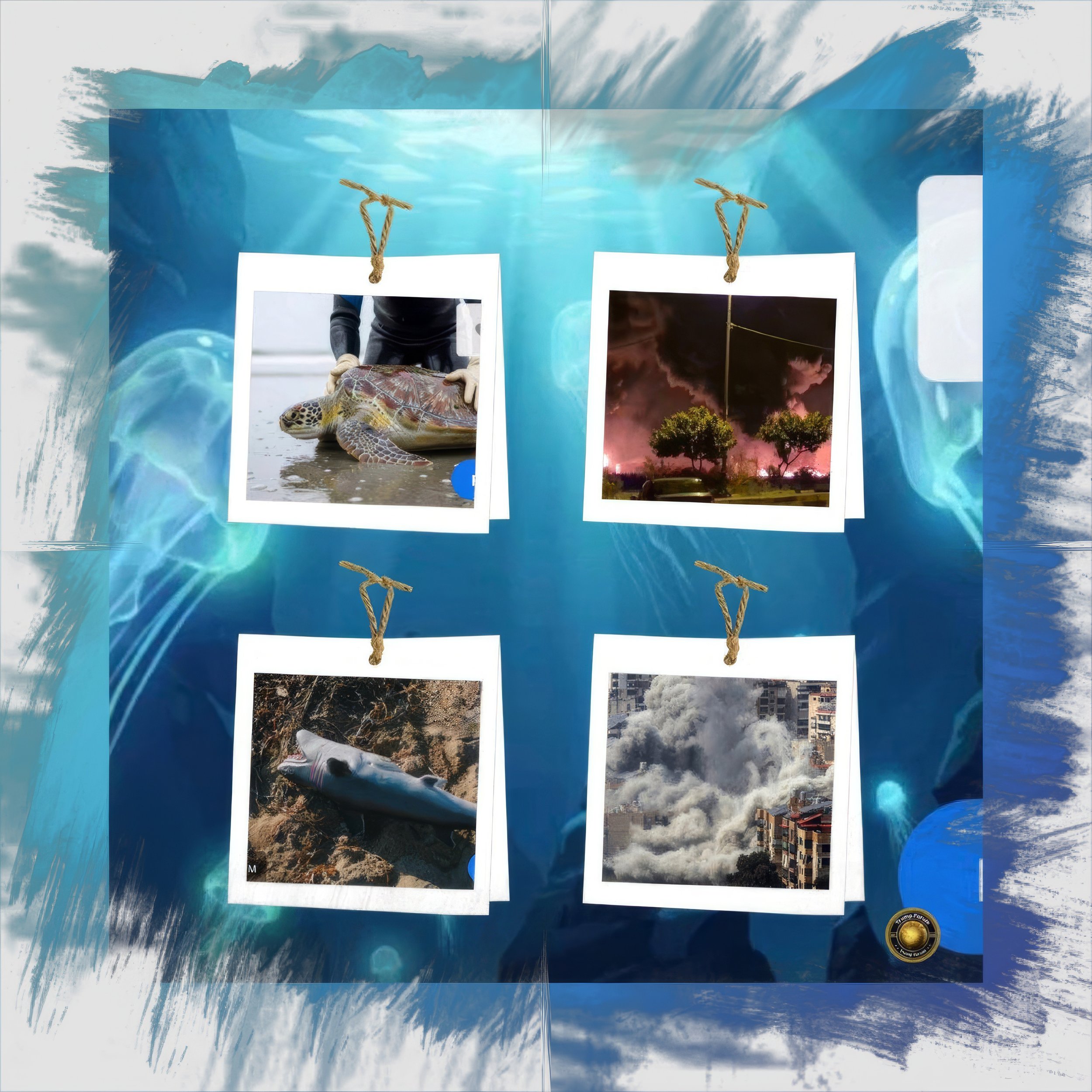
Qatar's Ras Laffan LNG terminal — one of the most critical natural gas export hubs in the world — sustained extensive damage from Iranian ballistic missile strikes, forcing the closure of two refineries in Asaluyeh with a combined daily capacity of approximately 100 million cubic metres.
The damage to Iranian gas production itself — the strikes affecting nearly 12% of Iran's total gas output — has compounded global energy volatility.
For the United States, the human cost of the campaign is real, even if historical standards constrain it.
Four American service members have been killed as of early March, with four others seriously wounded.
CENTCOM has deployed 50,000 service members to the region, and the campaign's appetite for precision-guided munitions has raised supply chain and sustainment questions among Pentagon planners and congressional defense committees alike.
For Iran's civilian population, the suffering is acute. Cities have been used as shields by IRGC forces — a pattern Admiral Cooper publicly documented — while the combination of military strikes, pre-existing international sanctions, currency collapse, and energy infrastructure disruption has produced humanitarian conditions of acute severity.
The United Nations High Commissioner for Human Rights issued an emergency statement warning of civilian harm. At the same time, Iran's surviving governing structures have directed the population to disperse from likely target zones, reinforcing the sense of impending strategic collapse.
Cause-and-Effect Analysis: Understanding the Strategic Chain
Why the Final Three Weeks of Operation Epic Fury Will Define a Generation of American Foreign Policy
The causal architecture of Operation Epic Fury spans multiple dimensions.
At its foundation lies a decade-long failure of diplomacy: the Obama-era JCPOA of 2015, the Trump withdrawal of 2018, the Biden re-engagement attempts, and the third rounds of negotiations between 2024 and 2025, all of which collapsed amid Iran's refusal to accept permanent and verifiable limits on enrichment.
Each failed negotiation increased the premium on military options by narrowing the time available for peaceful alternatives.
The protests of December 2025 and January 2026 introduced a causal variable that restructured the political economy of intervention.
A regime massacring 5,000 of its own citizens in two days provided a moral dimension to Trump's case for military action that complemented the strategic imperatives — allowing the administration to frame Operation Epic Fury not merely as a counterproliferation strike but as a liberation campaign.
This framing, however sincerely or strategically intended, carries its own causal weight: it commits Washington to outcomes — democratic transformation, protection of protesters, and civil society formation — that military force alone cannot deliver and that require sustained post-conflict engagement.
The targeting of Kharg Island's military infrastructure without destroying the oil terminal represents a deliberate causal choice designed to preserve a coercive option rather than deploy it.
If the United States controls the Strait of Hormuz by force and holds Kharg Island's oil infrastructure at risk, it possesses simultaneous leverage over Iran's economic lifeline and global oil markets.
This leverage is only valuable if not exercised — the threat is the instrument.
The cause-and-effect logic is one of structured coercion: compliance with Trump's terms preserves the oil infrastructure; defiance invites its destruction and the collapse of what remains of Iran's economy.
The regional spillover effects follow a cascade logic.
Hezbollah in Lebanon has been significantly degraded by the combination of Israeli operations in 2024-2025 and the severing of Iranian resupply chains.
The Houthis in Yemen, deprived of Iranian financial and material support, face a similarly constrained operational environment.
The Iraqi Shia militias that constitute Iran's most proximate coercive tool have been placed under severe pressure by the combined effect of IRGC leadership eliminations and the severing of command and logistical links.
The degradation of the Iranian "axis of resistance" proxy network is not merely a military achievement — it fundamentally reshapes the strategic landscape of the Levant, the Persian Gulf, and the Red Sea.
Future Steps: The Endgame and Its Uncertainties
How Operation Epic Fury in Three Weeks Could Permanently Rewrite Middle Eastern Geopolitical History
Retired Army General Jack Keane's assessment — that CENTCOM needs approximately three more weeks to complete all assigned military objectives — defines the near-term operational horizon.
Those objectives include reopening the Strait of Hormuz by force, completing the elimination of Iran's nuclear enrichment capacity, and securing control over Kharg Island.
Each of these goals presents distinct operational challenges.
The Strait of Hormuz challenge is asymmetric. Iran has seeded the waterway with mines, deployed anti-ship missile batteries on coastal positions, and prepared small-boat swarm tactics designed to impose attrition on U.S. naval assets in the confined waters of the strait.
The 1988 Operation Praying Mantis, in which U.S. forces destroyed a significant portion of Iran's naval fleet in a single day, provides historical precedent for decisive American naval dominance — but the strategic and operational context of 2026 is more complex.
Iran has learned from 1988 and has made the strait a contested environment requiring sustained mine-clearing operations and ground-force-enabled coastal security before commercial shipping can safely transit.
The question of Kharg Island ground operations looms as the most consequential near-term decision point.
Iran has reportedly fortified the island with missile batteries, mined its approaches, and pre-positioned personnel for a contested defense.
A U.S. amphibious assault would represent the first American ground combat operation in Iran. It would cross a threshold that carries profound implications for regional escalation, Iranian domestic mobilization, and international legal standing.
The threat of such an operation may itself serve as the most effective coercive instrument — forcing Iranian interlocutors to choose between negotiated capitulation and an existential military confrontation.
The diplomatic track will only succeed if military pressure is sustained rather than relaxed.
The history of Iranian negotiations suggests that pauses in military pressure are interpreted as vacillation rather than as good-faith efforts.
This dynamic makes Keane's three-week timeline not merely a military preference but a diplomatic necessity.
Trump's dual-track approach — continuing to pummel the regime while negotiating — reflects a sophisticated understanding of this dynamic.
The 15-point plan's publication was not a sign of weakness but a statement of terms, an ultimatum clothed in diplomatic language.
The longer-term challenge is governance. Regime change in Iran — whether through military decapitation, internal uprising, or negotiated transition — leaves a power vacuum in a country of 90 million people, with a complex ethnolinguistic mosaic, a heavily armed IRGC that has penetrated every dimension of the economy and state, and a traumatized civil society that has experienced both revolutionary upheaval and decades of authoritarian consolidation.
Washington has articulated the desired outcome — Iranians "taking over their government" — but has not publicly specified how it intends to support, structure, or guarantee that process.
The history of American post-conflict engagement in the broader region offers sobering lessons about the gap between military success and political consolidation.
The Broader Regional Calculus
From Natanz to Kharg Island — The Systematic Dismantling of Iran's Strategic Power Projection Capacity
Operation Epic Fury cannot be evaluated solely through the Iranian prism. Its reverberations across the broader Middle East and the global order are already manifest and will deepen in the months ahead.
For Saudi Arabia and the Gulf Cooperation Council states, the degradation of Iranian power represents a strategic windfall decades in the making, removing the primary source of asymmetric military pressure on their populations, infrastructure, and political systems.
Gulf states that privately endorsed the campaign — while maintaining official ambiguity — now confront a post-Iranian-hegemony landscape in which U.S. power is demonstrated but also, paradoxically, finite: Washington will not maintain the military posture of February-March 2026 indefinitely.
For Israel, the campaign achieves what years of threats, covert operations, and the June 2025 Operation Midnight Hammer could not: the comprehensive dismantling of Iran's nuclear weapons pathway and the systemic degradation of the Lebanese Hezbollah and regional proxy infrastructure that has defined Israel's security environment since the 1980s.
Prime Minister Netanyahu's confirmation of the Bandar Abbas IRGC naval commander strike signals an Israeli posture of active operational engagement that extends beyond nuclear counterproliferation to the wholesale restructuring of the regional security environment.
For China and Russia — both of which have cultivated deep economic and strategic relationships with Tehran — Operation Epic Fury represents a demonstration of American military capability and willingness to use it that reconfigures their own risk assessments regarding potential U.S. military action in their spheres of competition.
China's access to Iranian oil under discounted sanctions-busting arrangements, valued at tens of billions of dollars annually, is now deeply uncertain.
Russia's use of Iran as a strategic partner in the Ukraine war context — including Iranian drone supply to Russian forces — has been operationally disrupted.
For global energy markets, the 40% surge in crude oil prices since February 28th is only the opening act.
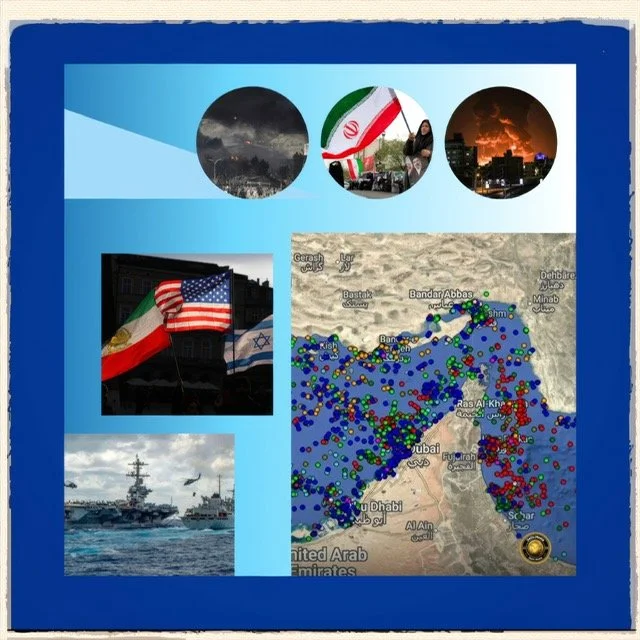
The Strait of Hormuz remains effectively closed to commercial traffic, representing a sustained disruption to 21% of global oil trade — the most significant energy shock since the 1973 Arab oil embargo in its structural impact on supply, pricing, and the accelerated search for alternative routing and source diversification.
Conclusion
Trump's Dual Gambit — Bombing Iran While Negotiating the Terms of Its Unconditional Surrender
Operation Epic Fury has, in under four weeks, achieved a degree of structural disruption to Iranian military and nuclear power that decades of sanctions, diplomacy, and limited strikes could not.
The elimination of Supreme Leader Khamenei, the destruction of the Soleimani-class fleet, the degradation of nuclear enrichment infrastructure at Natanz, Fordow, and Isfahan, and the strikes on Kharg Island's military assets constitute a military achievement of extraordinary scale.
Yet the most consequential decisions — the final push in the Strait of Hormuz, the question of ground operations on Kharg Island, the diplomatic resolution of the 15-point framework, and the long-term question of Iranian political reconstruction — all lie ahead.
Trump's refusal to lose his nerve, as the article's title asserts, is not simply a matter of personal temperament.
It reflects a strategic architecture in which the three remaining weeks are the difference between a transformative regional settlement and a frozen conflict that leaves Iran wounded but unreformed — capable of reconstituting its threats over the following decade.
The United States is, as General Keane observed, in the red zone.
Whether it reaches the end zone will determine not merely the outcome of Operation Epic Fury, but the shape of the Middle East for a generation.