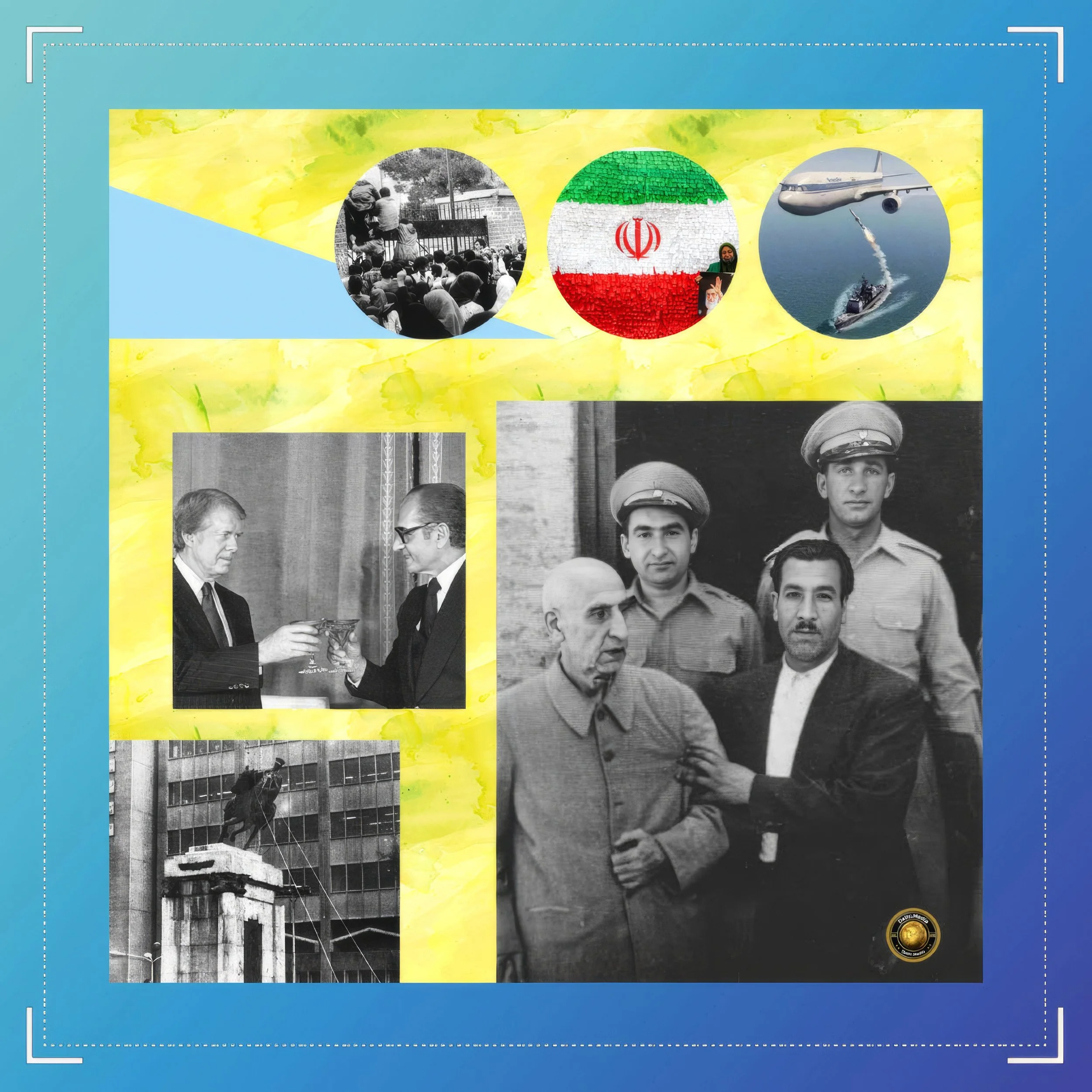
The Weight of Memory: How Seven Decades of U.S.-Iran Enmity Led to Operation Epic Fury
Executive Summary
From Mossadegh to Operation Epic Fury: How America Repeatedly Ignored Iran's Historical Memory Over Seven Decades
The war that the United States launched against Iran on February 28th, 2026, did not begin on that day.
It began in August 1953, when the CIA and British intelligence overthrew Iran's democratically elected Prime Minister Mohammad Mosaddegh in what became one of the most consequential acts of imperial covert intervention in the twentieth century.
That act planted a seed of institutional memory in the Iranian national consciousness — a memory that flowered into revolution in 1979, erupted in the 444-day hostage crisis, deepened with the USS Vincennes downing of Iran Air Flight 655 in 1988, and ultimately calcified into a geopolitical architecture of distrust that no subsequent American administration has successfully dismantled.
The Trump administration's decision to launch Operation Epic Fury, a large-scale aerial and naval assault on Iran executed in coordination with Israel, ignored not merely the warnings of U.S. intelligence analysts, who assessed that Iran posed no direct threat to the American homeland for at least 10 years, but also the entire accumulated weight of a bilateral relationship defined by grievance, miscalculation, and asymmetric consequence.
The result, by early April 2026, was a humanitarian catastrophe involving more than 1,900 deaths and 20,000 injuries in Iran alone, a closure of the Strait of Hormuz that the International Energy Agency described as the greatest global energy security challenge in history, oil prices surging past $120 per barrel, and a geopolitical rupture that has strained NATO alliances, destabilized Gulf monarchies, and undermined Washington's credibility as a diplomatic stakeholder.
FAF article examines the layered origins of that catastrophe, the cascading consequences of decades of unresolved historical wounds, and the lessons that responsible geopolitical stewardship demands be learned.
Introduction: The Architecture of Accumulated Grievance
The 1953 Coup, the 444 Days, and the Downed Airliner: America's Long Trail of Iranian Grievances Never Healed
To understand why a group of Iranian students stormed the American Embassy in Tehran on November 4th, 1979, one must first understand what Iran believed the United States to be. Not merely a foreign power.
Not simply a Cold War competitor. But an empire that had reached into the sovereign soil of Iran, removed its most popular leader, reinstalled a pliant monarchy, and then watched as that monarchy tortured and suppressed its own people for 26 years with American-made weapons and American-trained secret police.
The storming of the embassy was not spontaneous. It was the expression of an institutional memory that had been building since August 1953, gathering fury through every subsequent year of the Shah's authoritarian rule, and then detonating in the revolutionary heat of 1979.
FAF article is structured as a longitudinal analysis of the U.S.-Iran relationship from the 1953 coup to the 2026 war, tracing how each successive rupture — the hostage crisis, the downing of Iran Air Flight 655, the sanctions decades, the nuclear negotiations, and the eventual military assault — was shaped by the failures of the preceding episode.
FAF argues that the Trump administration's 2026 decision to launch Operation Epic Fury represents not merely a policy error but a wholesale failure of historical cognition, a refusal to engage with the depth and complexity of a relationship that demands sophisticated understanding, not a doctrine of overwhelming force.
The 1953 Coup: The Original Sin of U.S.-Iran Relations
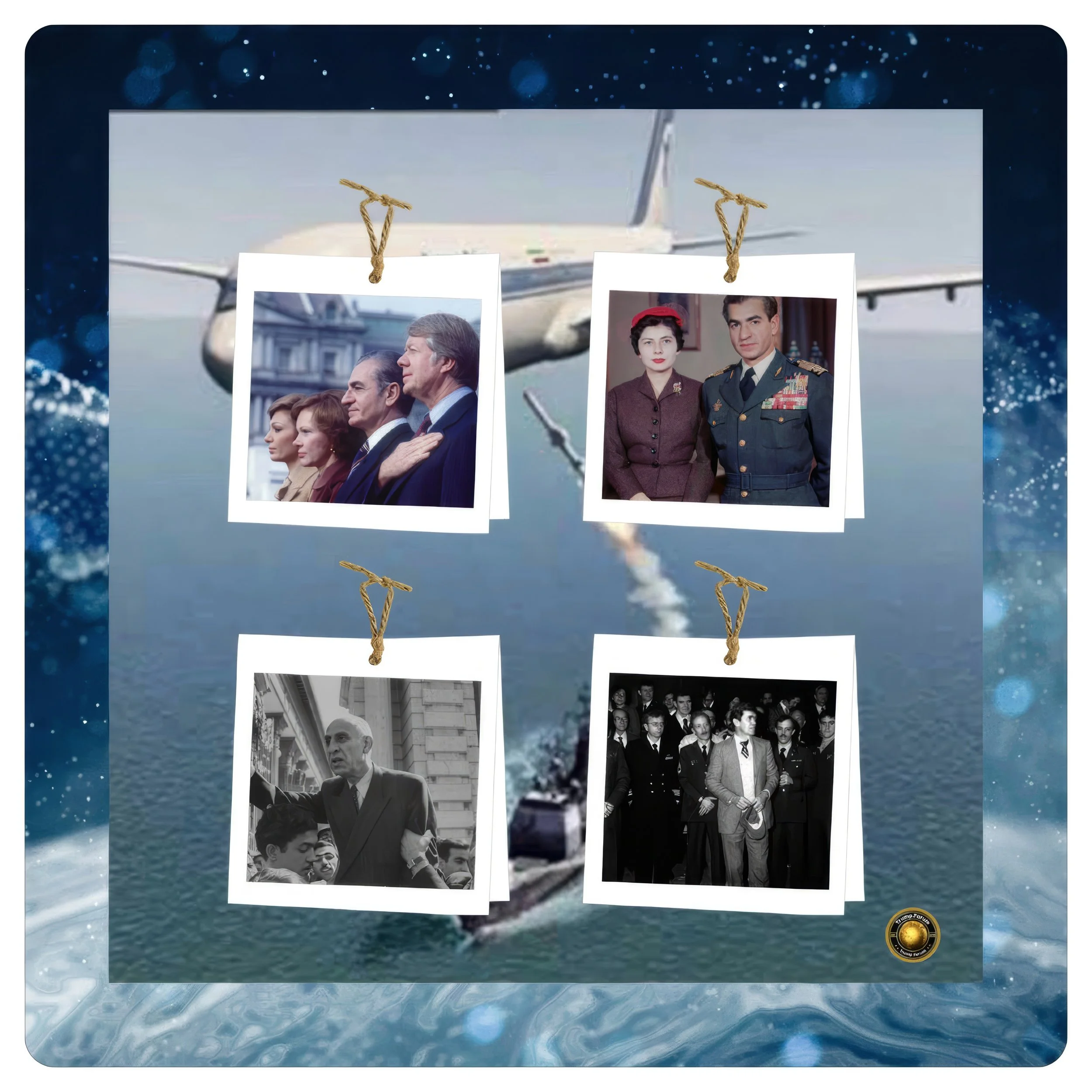
No event in the history of U.S.-Iran relations casts a longer shadow than the CIA-orchestrated coup of August 19, 1953.
Mohammad Mosaddegh, the Prime Minister of Iran who had been democratically elected and celebrated across the developing world as a symbol of Third World self-determination, was overthrown by a covert operation jointly engineered by the CIA under the code name Operation Ajax and British intelligence under the name Operation Boot.
The immediate cause was Mosaddegh's decision in 1951 to nationalize the Anglo-Iranian Oil Company, a move that threatened British commercial dominance over Iranian oil wealth and alarmed London into seeking American partnership in regime change.
The Truman administration had initially resisted British pressure, concerned about the precedent that CIA involvement in the removal of a democratically elected leader would set.
It was the Eisenhower administration, driven by both anti-communist anxieties and oil interests, that ultimately authorized the operation.
CIA-funded agents were deployed to foment public unrest, bribe military officers, harass political figures, and conduct a systematic disinformation campaign against Mosaddegh's government.
On August 19th, 1953, the operation succeeded. Mosaddegh was arrested, tried, and sentenced to house arrest.
The Shah, Mohammad Reza Pahlavi, was restored to absolute power.
Within weeks, 40% of Iran's oil fields were signed over to American companies.
The CIA did not formally acknowledge the undemocratic nature of this intervention until 2023, when a podcast produced in connection with the agency's own archives finally admitted that the 1953 coup was, in the agency's own words, "undemocratic."
For Iranians, this admission arrived 70 years too late. The coup had already become the foundational narrative of Iranian political culture — the proof that American declarations of support for democracy and self-determination were performances, not principles.
When Ayatollah Khomeini needed a language to mobilize a revolution, he did not have to invent one. He simply pointed to 1953.
Scholars at the National Security Archive have emphasized that U.S. policymakers were driven not only by oil and anti-communism but by a "collapse narrative" — a belief that Iran under Mosaddegh was so fragile that only American intervention could save it from Soviet penetration.
This paternalistic logic — that Iran could not manage its own affairs without American guidance — would recur across every subsequent decade of the relationship, including in the assumptions that underpinned Operation Epic Fury in 2026.
The 1979 Revolution and the Hostage Crisis: Memory Becomes Policy
The Iranian Revolution of 1979 was, among many other things, a referendum on 1953.
When Ayatollah Ruhollah Khomeini swept into Tehran in February 1979 to lead the Islamic Republic that replaced the Shah's Pahlavi dynasty, he carried with him a political theology that was inseparable from the history of American interference in Iranian affairs.
The Shah had been, in the collective Iranian imagination, an American creation — sustained in power by CIA advisors, armed with U.S. weapons, and protected by SAVAK, his feared secret police that had been trained in part by the CIA and Israel's Mossad.
When President Jimmy Carter allowed the ailing Shah to enter the United States in October 1979 for cancer treatment, the decision triggered exactly the kind of fear that the history of 1953 had conditioned Iranians to feel.
Tehran was gripped by the conviction that Washington was planning once again to restore the Shah to power, precisely as it had done 26 years earlier.
The storming of the U.S. Embassy on November 4th, 1979, by a group of student militants calling themselves the Muslim Student Followers of the Imam's Line, was therefore not merely an act of anger but an act of preemption — an attempt to disrupt what Iranians believed was an imminent counterrevolutionary plot.
52 Americans were held for 444 days, from November 4, 1979, to January 20, 1981.
The crisis was total in its consequences. It destroyed the Carter presidency, with Carter losing the 1980 election to Ronald Reagan in no small part because of his inability to resolve the standoff.
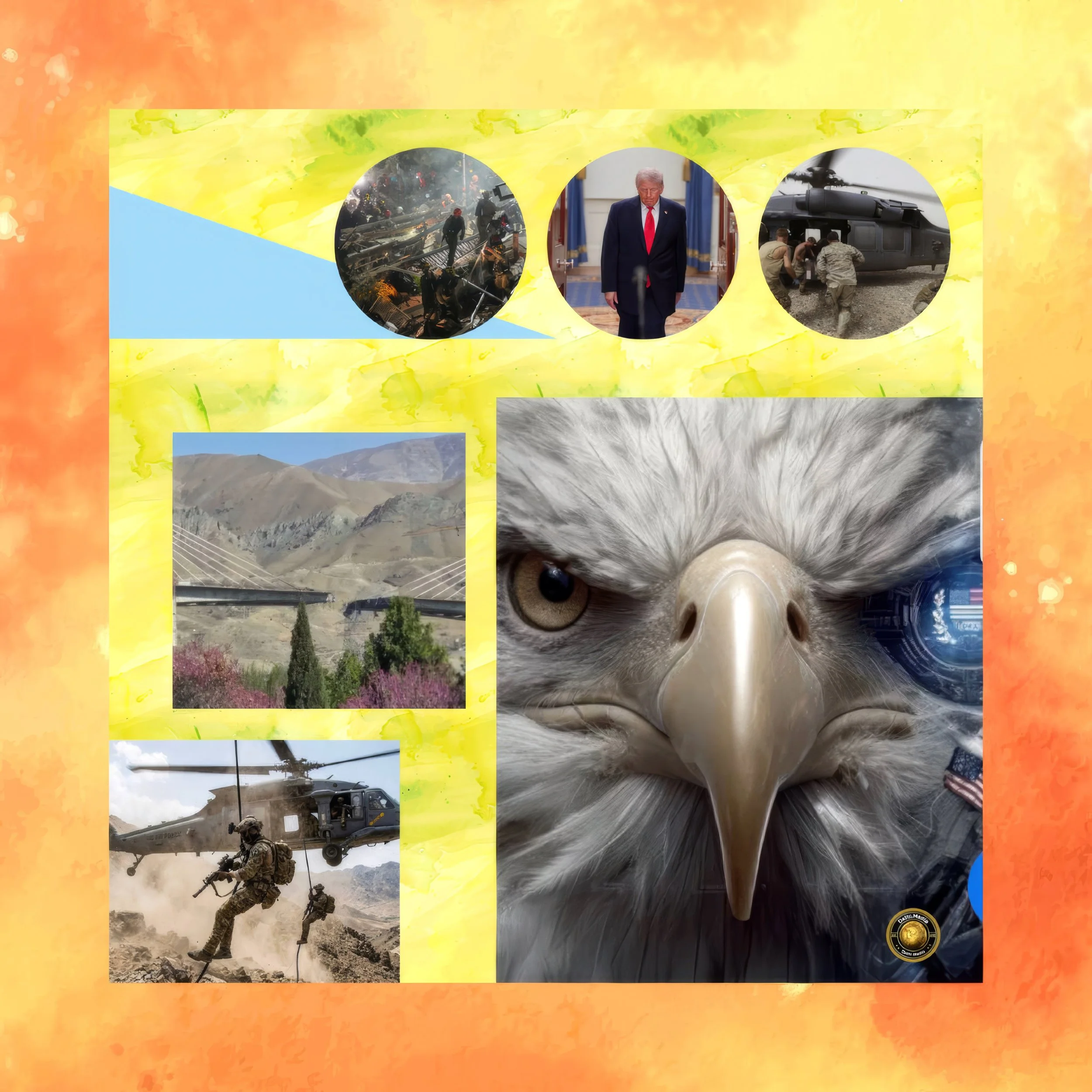
The failed military rescue mission — Operation Eagle Claw — in April 1980, in which 8 American servicemen died in a helicopter crash in the Iranian desert, deepened the humiliation.
The hostages were finally released on January 20, 1981, the precise moment Reagan was inaugurated, in a sequence so politically convenient that it gave birth to decades of speculation about a secret deal between the Reagan campaign and Tehran — the so-called "October Surprise" theory.
The hostage crisis was the moment at which U.S.-Iran relations crossed from adversarial competition to something deeper: mutual demonization. Washington froze approximately $8 billion in Iranian assets.
Tehran severed diplomatic relations with Washington.
The two countries have maintained no formal diplomatic relationship since 1980.
That absence of formal channels, that removal of the basic diplomatic plumbing through which states manage disputes before they metastasize into crises, is itself one of the most consequential structural legacies of 1979 — and one that remained unremedied on the eve of Operation Epic Fury in 2026.
Iran Air Flight 655: The Wound That Never Healed
If the 1953 coup was the original sin and the 1979 hostage crisis was the fundamental rupture, then the shooting down of Iran Air Flight 655 on July 3rd, 1988, was the wound that Americans forgot and Iranians never could.
The USS Vincennes, a technologically sophisticated Ticonderoga-class guided missile cruiser deployed to the Persian Gulf amid the Iran-Iraq War's tanker conflict phase, fired two surface-to-air missiles at a commercial Airbus A300 that was climbing normally out of Bandar Abbas Airport on a scheduled route to Dubai. All 290 people aboard were killed, including 66 children.
The U.S. Navy's initial account of the incident was riddled with inaccuracies.
The Vincennes crew claimed the aircraft had been descending and that it was transmitting on a military frequency, assertions that subsequent investigations found to be false.
The aircraft had been in Iranian airspace and was operating entirely within standard commercial parameters.
President Reagan described it as a "tragic but understandable accident" and expressed deep regret without issuing a formal apology.
In 1996, the United States agreed to pay $61.8 million to the families of the victims — on an ex gratia basis, explicitly declining to admit legal liability.
In a gesture that stunned Iranians and much of the international community, the U.S. Navy subsequently awarded the Vincennes's commander a combat action ribbon and its air warfare coordinator the Legion of Merit.
The consequences for U.S.-Iran relations were profound and lasting. Iran cited Flight 655 as proof that the United States considered Iranian lives expendable — that Washington's professions of concern for human rights and civilian life were geopolitical instruments, selectively applied.
The incident did contribute to accelerating the end of the Iran-Iraq War, as Iranian leaders concluded that the U.S. was now willing to use its naval power directly against Iran and that continued fighting was untenable.
Iran accepted UN Security Council Resolution 598 and agreed to a ceasefire with Iraq within weeks of the downing.
But the bitterness calcified. Every subsequent Iranian government, across every ideological tendency, has invoked Flight 655 as a justification for deep strategic distrust of American intentions.
For strategic analysts, the Flight 655 episode also illustrated a pattern that would recur in 2026: the United States operating in Iranian operational environments with rules of engagement and situational awareness frameworks that systematically underestimated Iran's capacity to respond and overestimated Washington's ability to control escalation dynamics.
The USS Vincennes commander's aggressive posture — the warship had entered Iranian territorial waters and initiated combat with Iranian gunboats before the fatal misidentification occurred — was emblematic of a broader American tendency to treat the Persian Gulf as a landscape of uncontested American military dominance, a tendency that Iran has consistently, and at enormous cost to itself, resisted.
The Nuclear Years: Sanctions, Negotiations, and the Nuclear Deal's Collapse
The two decades between the 1990s and the 2015 Joint Comprehensive Plan of Action (JCPOA) represent a sustained period of mutual strategic failure.
The United States imposed escalating sanctions on Iran, first targeting its revolutionary guard and terror-linked entities, then broadening to encompass oil exports, banking, and virtually the entire Iranian economy.
Iran responded by advancing its nuclear enrichment program, which Washington and its allies interpreted as evidence of weapons ambitions, and which Tehran consistently maintained was for civilian energy and medical research purposes.
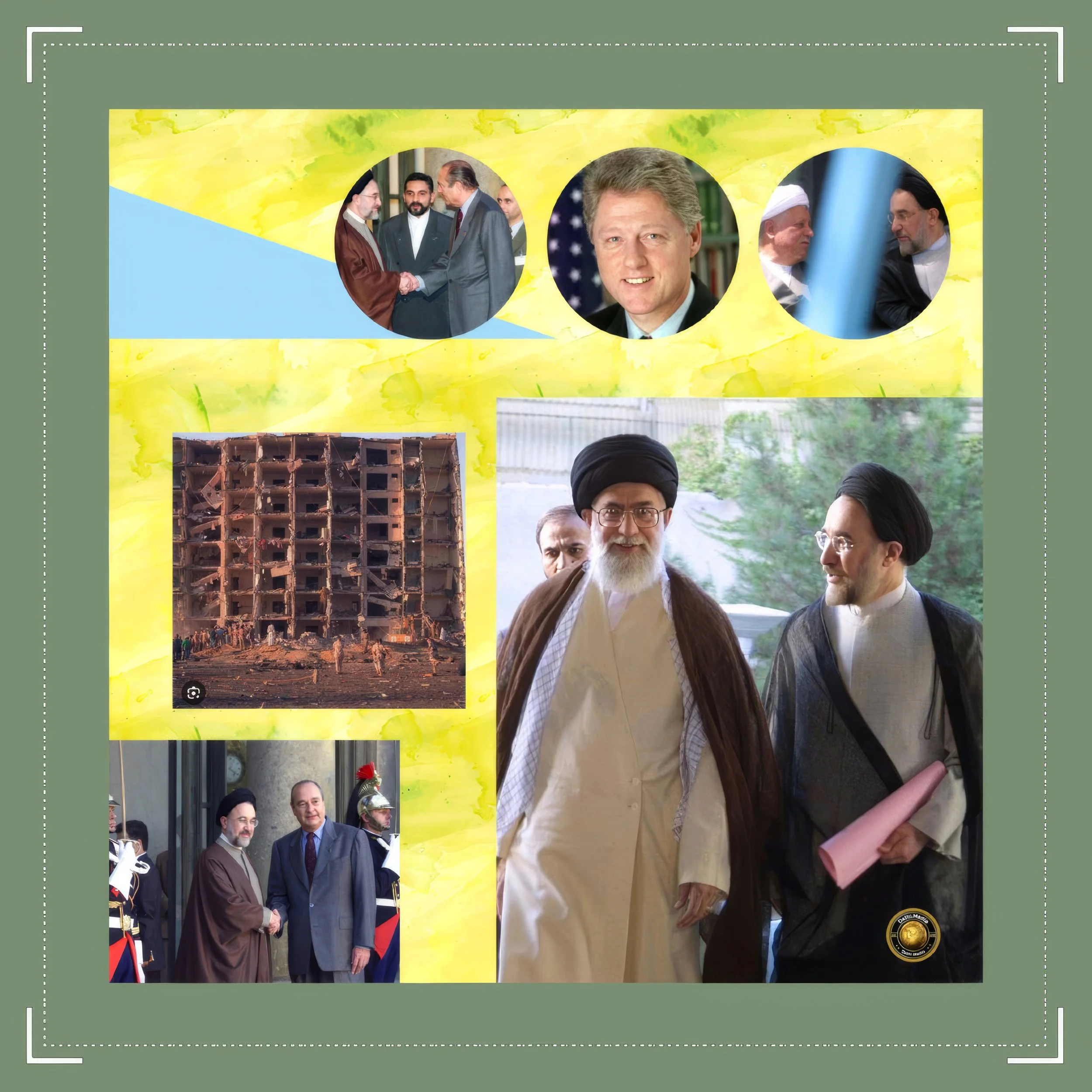
The JCPOA, negotiated by the Obama administration in 2015 alongside the United Kingdom, France, Germany, Russia, and China, represented the most serious diplomatic achievement in the bilateral relationship since the Algiers Accords that ended the hostage crisis.
Iran agreed to limit its uranium enrichment to 3.67%, reduce its centrifuge count from approximately 19,000 to 6,104, and submit to comprehensive inspections by the International Atomic Energy Agency.
In return, the United States and European Union agreed to lift the bulk of nuclear-related sanctions.
The agreement was imperfect — it did not address Iran's ballistic missile program or its regional proxy networks — but it represented a working architecture for managed engagement.
In May 2018, President Trump unilaterally withdrew the United States from the JCPOA, describing it as the worst deal ever negotiated.
The withdrawal was followed by a "maximum pressure" campaign of escalating sanctions designed to force Iran to renegotiate on terms that included not merely its nuclear program but its entire regional posture.
Iran's response was to progressively exceed the JCPOA's enrichment limits, eventually reaching 60% and then 84% purity — approaching weapons-grade.
The Biden administration's attempts to revive the deal through indirect negotiations in Vienna achieved no final agreement.
By the time Trump returned to office in January 2025, Iran's nuclear program was more advanced than at any previous point, and the diplomatic architecture for containing it had been comprehensively dismantled.
It was in this context — of a broken nuclear deal, an advanced Iranian enrichment program, a degraded U.S.-Iran diplomatic relationship, and a Trump administration openly skeptical of multilateral diplomacy — that the conditions for Operation Epic Fury were assembled.
Operation Epic Fury: The Decision and Its Discontents
The Strait of Hormuz Gambit: How Trump's 2026 Iran War Unleashed the World's Most Dangerous Energy Crisis
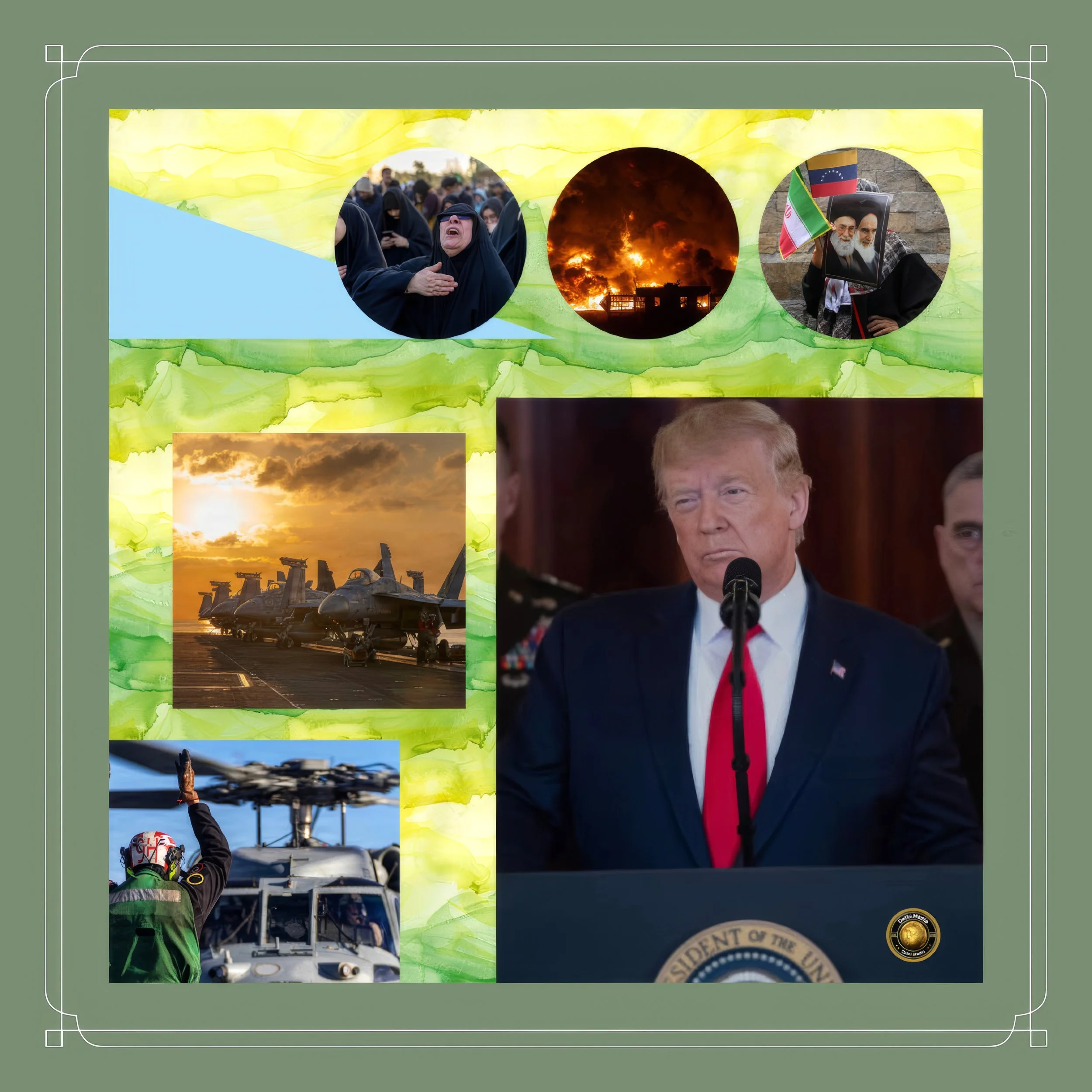
On February 27, 2026, traveling aboard Air Force One to Corpus Christi, Texas, President Donald Trump gave the order for Operation Epic Fury to commence.
The following morning, February 28th, U.S. missiles, drones, and Israeli fighter jets began striking targets across Iran, killing Supreme Leader Ali Khamenei and several senior Iranian military commanders within the first hour of the operation.
The strikes occurred during the holy month of Ramadan, during active nuclear negotiations, and despite a U.S. intelligence assessment that Iran posed no direct threat to the American homeland for at least 10 years.
The administration offered multiple and at times contradictory justifications for the war.
These ranged from preventing Iran from acquiring nuclear weapons, to destroying its ballistic missile arsenal, to dismantling its proxy networks across Lebanon, Iraq, Syria, and Yemen, to achieving regime change by empowering the Iranian opposition, to — in later formulations — securing Iran's oil resources.
This proliferation of stated objectives, which the Stimson Center and the Soufan Center both identified as evidence of strategic incoherence, suggested a decision-making process driven more by ideological maximalism and regional stakeholder lobbying than by a coherent assessment of achievable ends.
The Washington Post reported that Trump's decision was significantly influenced by sustained lobbying from Israel and Saudi Arabia, two of Washington's most consequential regional partners.
Israel had long sought the elimination of Iran's missile and nuclear infrastructure, having conducted its own strikes on Iranian nuclear sites in June 2025.
Saudi Arabia, engaged in a profound strategic competition with Iran for regional influence and anxious about Iranian-backed Houthi attacks on its oil infrastructure, saw in Trump a window for decisive action that previous administrations had been unwilling to open.
What neither stakeholder adequately accounted for — and what U.S. intelligence had in fact warned about — was Iran's most powerful retaliatory instrument: the closure of the Strait of Hormuz, the narrow waterway through which approximately 20% of the world's oil supplies and critical volumes of liquefied natural gas transit.
On March 4th, 2026, Iran closed the Strait.
Brent crude, already volatile at around $77-80 per barrel, surged past $120 per barrel within days.
The International Energy Agency described the resulting supply disruption as the greatest global energy security challenge in history. QatarEnergy declared force majeure on all exports.
Oil fields in Iraq, Kuwait, and the UAE began ceasing operations as tanker traffic halted and storage reached capacity.
Humanitarian Catastrophe and Global Cascading Effects
By early April 2026, the scale of the humanitarian catastrophe inside Iran had become impossible to minimize.
Iran's health ministry reported that between February 28th and March 25th, 1,500 people had been killed and 18,551 injured.
By early April, the International Federation of Red Cross and Red Crescent Societies revised figures upward to at least 1,900 dead and more than 20,000 injured.
More than 3.2 million people had been internally displaced, primarily fleeing major urban centers.
The World Health Organization documented at least 21 attacks on healthcare workers and facilities, with 16 health facilities damaged and 4 hospitals closed due to conflict.
Over 81,000 civilian units had been damaged or destroyed, including 61,000 homes, 275 medical centers, and nearly 500 schools.
The regional ripple effects compounded these figures. Across Iran, Iraq, Lebanon, Syria, Jordan, Israel, Kuwait, Bahrain, Qatar, the UAE, and Saudi Arabia combined, a total of 2,698 people had been killed as of March 25th.
Iran's more than 4.4 million Afghan refugees, 1.4 million of whom are undocumented, faced double displacement, with no safe transit corridor available.
The Norwegian Refugee Council described one month of war as leaving millions in extreme uncertainty, drawing explicit comparisons to the displacement cascades generated by the 2003 Iraq War.
The global economic impact was equally severe.
The USCRI's policy analysis described the conflict as having created the largest energy supply disruption in modern history, with cascading effects on global food security driven by energy-cost inflation in agricultural production and logistics.
U.S. gas prices averaged $4.06 per gallon.
Capital Economics warned that in a prolonged conflict scenario, Brent crude could reach $130 per barrel in the second quarter of 2026.
The collapse of the Gulf Cooperation Council economic model — built on stable export flows through the Strait of Hormuz — represented a structural disruption to the global financial architecture whose full consequences may take years to assess.
The Trump Doctrine and Strategic Miscalculation
The Atlantic Council's assessment, published in late March 2026, one month into the conflict, concluded that Trump's Operation Epic Fury had fundamentally undermined the "peace through strength" doctrine it claimed to embody.
The assumption driving that doctrine — that overwhelming U.S. military force could achieve rapid, decisive, and politically manageable outcomes — had been falsified by Iran's asymmetric response, which demonstrated precisely the strategic logic that historians of the Iran-Iraq War and the Flight 655 era had always understood: that Iran, when it believes its existence is at stake, will absorb enormous punishment and retaliate in ways that impose disproportionate costs on the global system.
The Soufan Center identified what it called "foreign policy malpractice" in the administration's dismissal of warnings about the Strait of Hormuz.
Energy Secretary Chris Wright had explicitly downplayed disruption risks as recently as February 18th, 2026, just 10 days before the strikes began.
The New York Times' internal reporting revealed that Trump and his advisors had systematically minimized intelligence assessments warning of Iran's retaliatory capacity, with some officials privately reassuring themselves that Iran's response to the June 2025 strikes — a 12-day conflict with minimal market disruption — would be replicated.
It was not. Iran's response to an existential threat in 2026 was categorically different from its response to a limited strike in 2025.
Geopolitical analyst Shaiel Ben-Ephraim, in a widely cited assessment, argued that Washington had been "flying blind — steered by unserious advisers" and that Trump had fundamentally "confused Venezuela with Iran" in his strategic calculus, applying the logic of regime change that had worked against a weakened Nicolás Maduro in Venezuela to a nation of over 90 million people with a formidable military, sophisticated asymmetric capabilities, and 70 years of deeply institutionalized anti-American resistance.
The Stimson Center's analysts were unambiguous: "Air strikes alone cannot topple a government, and Iran in 2026 is likely to emerge battered but not broken — a costly example of American hubris and the limits of airpower."
Cause-and-Effect Analysis: A Chain of Compounding Failures
Seven Decades of Accumulated Wounds: Why Trump's 2026 Iran War Was Built on Willful Historical Amnesia
The causal architecture of the 2026 Iran war is best understood not as a sudden rupture but as the terminal expression of a 73-year chain of compounding failures, each of which both reflected and deepened the structural conditions for the next.
The 1953 coup created the institutional memory of American imperial interference that made every subsequent U.S. policy initiative in Iran — from the Shah's support to the nuclear sanctions — legible to Iranians not as diplomacy but as covert coercion.
The 1979 revolution and hostage crisis produced the diplomatic severance — the absence of formal bilateral relations — that has denied both states the basic channels for crisis management ever since.
The USS Vincennes incident and the killing of 290 civilians confirmed, in Iranian strategic culture, that the United States viewed Iranian lives as acceptable collateral in the pursuit of its regional interests.
The U.S. decision to support Iraq during the Iran-Iraq War — including providing satellite intelligence that Iraq used to conduct chemical weapons attacks on Iranian forces — added another layer of grievance that rarely features in American accounts but is foundational to Iranian strategic consciousness.
The JCPOA's collapse under Trump's maximum pressure campaign eliminated the one functional diplomatic instrument that had, for three years, created a managed framework for the nuclear dispute.
Each failure therefore created the structural preconditions for the next escalation.
The hostage crisis produced sanctions. The sanctions produced the nuclear program. The nuclear program produced the JCPOA.
The JCPOA's collapse produced advanced enrichment.
Advanced enrichment produced Operation Epic Fury. And Operation Epic Fury produced a closed Strait of Hormuz, a global energy crisis, and a humanitarian catastrophe in Iran.
The arrow of causality, while not mechanically deterministic, is unmistakable.
Geopolitical Lessons for the Contemporary Landscape
Diplomatic Malpractice or Strategic Blindness: Did Trump Misread Every Lesson the Iran Crisis Had to Offer?
The 2026 Iran war offers several geopolitical lessons of the first importance — lessons that are directly applicable to the full range of contemporary strategic challenges, from the management of great power competition to the conduct of regional diplomacy in the Indo-Pacific, Eastern Europe, and the broader Middle East.
First, institutional memory in international relations is not merely a historical curiosity; it is an active operational variable.
States and societies that have experienced imperial intervention, colonial exploitation, or great power coercion retain those experiences as living political realities, not archived footnotes. Iran's response to every American initiative since 1979 has been shaped by 1953.
Understanding this is not apologetics for Iranian behavior; it is basic strategic literacy. The failure to incorporate this into American strategic planning in 2026 was not an oversight. It was a choice — the choice to treat history as irrelevant to power.
Second, the doctrine of overwhelming force requires a political theory of the adversary's response.
The United States entered Operation Epic Fury with extraordinary military capability and almost no political theory of what Iran would do when confronted with an existential threat.
The Iranian closure of the Strait of Hormuz was not a surprise to serious analysts — it had been the subject of strategic modeling for decades. The surprise was that the administration chose to discount it.
When adversary behavior is predictable, and that prediction is suppressed for political reasons, the resulting damage is not bad luck. It is policy failure.
Third, the legitimacy of military force in international affairs is inseparable from its diplomatic context.
The Trump administration launched Operation Epic Fury without congressional authorization, without serious public debate, and in the face of overwhelming public opposition.
It struck Iran during Ramadan, during active nuclear negotiations, and on the basis of a shifting and ultimately incoherent set of justifications.
The Stimson Center warned that this approach would "incentivize proliferation" across the international system — that states observing the U.S. decision to attack Iran while negotiations were ongoing would draw the rational conclusion that diplomacy with Washington is unsafe and that nuclear deterrence is the only reliable guarantee of sovereignty.
North Korea, Pakistan, and other nuclear-threshold states are watching.
Fourth, regional stakeholder dynamics — particularly the role of Israel and Saudi Arabia in shaping American decision-making — deserve far more rigorous scrutiny than they typically receive in public discourse.
Both states have legitimate security interests that American policymakers must take seriously. But both also have strategic agendas that are not identical to American interests, and a diplomatic architecture in which regional allies can successfully lobby a sitting U.S. president into a major war — against the advice of his own intelligence community — represents a structural vulnerability in American foreign policy decision-making that demands institutional reform.
Fifth, energy security cannot be disaggregated from military strategy.
The Strait of Hormuz is not simply a geographically significant waterway; it is the arterial system of the global energy economy.
Any military operation in the Gulf that does not include a comprehensive, pre-planned, and executable plan for Hormuz contingencies is an operation that has not been honestly war-gamed.
The failure to plan for Iranian Strait closure — despite 40 years of Iranian doctrine explicitly identifying it as a primary retaliatory instrument — is perhaps the single most inexplicable operational failure of the 2026 campaign.
Future Steps: The Path From Rubble to Stability
Operation Epic Fury and the Ghost of Mossadegh: America Still Has Not Learned Its Lesson in Tehran
As of early April 2026, indirect negotiations were underway between Washington and Tehran through Pakistan, Egypt, and Turkey, with the immediate objective of reopening the Strait of Hormuz in exchange for a suspension of strikes.
Trump announced on April 6th, 2026, following conversations with Pakistani Prime Minister Shehbaz Sharif and Field Marshal Asim Munir, a 2-week suspension of bombing, contingent on Iran's "complete, immediate, and safe opening" of the Strait.
This represented a de facto acknowledgment that Operation Epic Fury's military objectives — however defined — could not be achieved without a political settlement, and that a political settlement required the very diplomatic engagement that the administration had dismissed before the war began.
The path forward is narrow and precarious.
A durable ceasefire will require not merely a Hormuz agreement but a framework for managing Iran's nuclear program in the absence of the JCPOA, a mechanism for addressing the humanitarian catastrophe inside Iran, and some architecture for normalizing energy flows through the Gulf.
The death of Supreme Leader Khamenei, while initially anticipated to accelerate regime collapse, appears instead to have hardened Iranian resistance — consistent with the historical pattern that coercion directed at a government's survival produces defiance rather than capitulation.
The international community — including China, Russia, the European Union, and the United Nations — has been largely sidelined in the initial phase of the conflict, with NATO characterized by Trump himself as a "paper tiger" for its limited engagement.
Any sustainable post-conflict order in Iran will require the participation of these stakeholders, not merely American and Israeli military power.
The reconstruction of Iranian civilian infrastructure alone — 81,000 units damaged, 275 medical centers destroyed, nearly 500 schools struck — will require international financing and coordination on a scale comparable to post-2003 Iraq.
The lessons of that reconstruction's failures will be directly applicable.
Conclusion: The Price of Willful Amnesia
When History Becomes a Weapon: How Iran's Institutional Memory Outmaneuvered Washington's Strategic Overconfidence
The war that began on February 28, 2026, was not inevitable. It was the product of choices — choices made in 1953, in 1979, in 1988, in 2018, and in the weeks before Operation Epic Fury commenced.
At each juncture, a different choice was available: sustained diplomacy, historical acknowledgment, equitable engagement, institutional memory. At each juncture, the more demanding path was declined.
The result is a conflict that has killed thousands, displaced millions, disrupted the global energy system, and demonstrated to every state that observes the international order that the United States is capable of launching a major war against a nation of 90 million people, during a religious holiday, during active negotiations, against the advice of its own intelligence community, on the basis of lobbying from two regional allies whose strategic interests only partially overlap with its own.
The lessons are not obscure. They are written in the history that was available to every decision-maker in Washington before the first missile was fired.
The 1953 coup demonstrated what happens when great powers treat sovereign nations as instruments.
The 444-day hostage crisis demonstrated the extraordinary costs of miscalculating Iranian resolve.
The Flight 655 tragedy demonstrated the devastating consequences of operating with inadequate situational awareness in Iranian operational environments.
The nuclear decades demonstrated that sanctions without diplomacy produce proliferation, not compliance.
And the 2026 war has demonstrated, once more, that history ignored is not merely a scholarly failure — it is a strategic one, with consequences measured in barrels of oil, in bodies counted by the Red Cross, and in the slow erosion of an international order that requires American credibility to function.