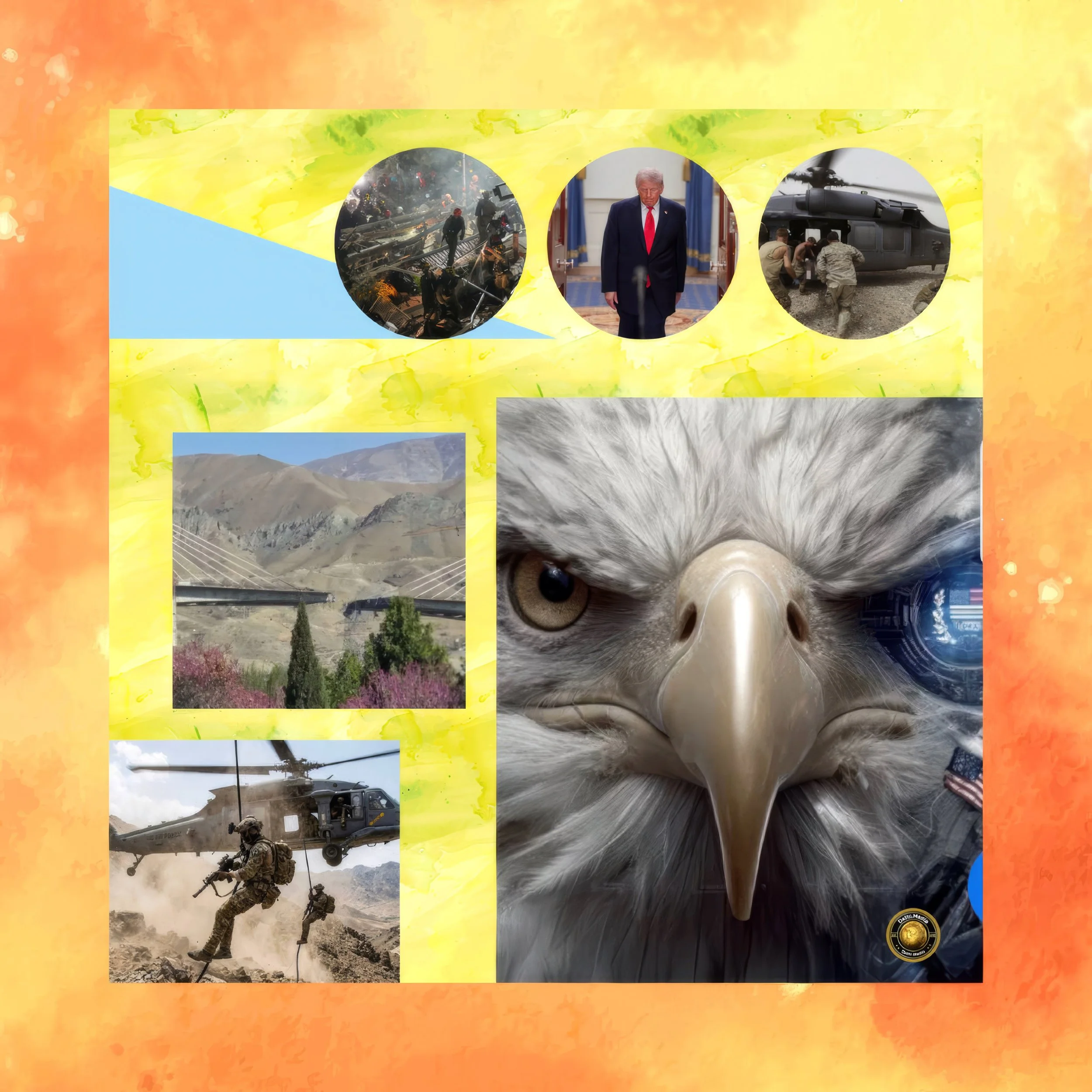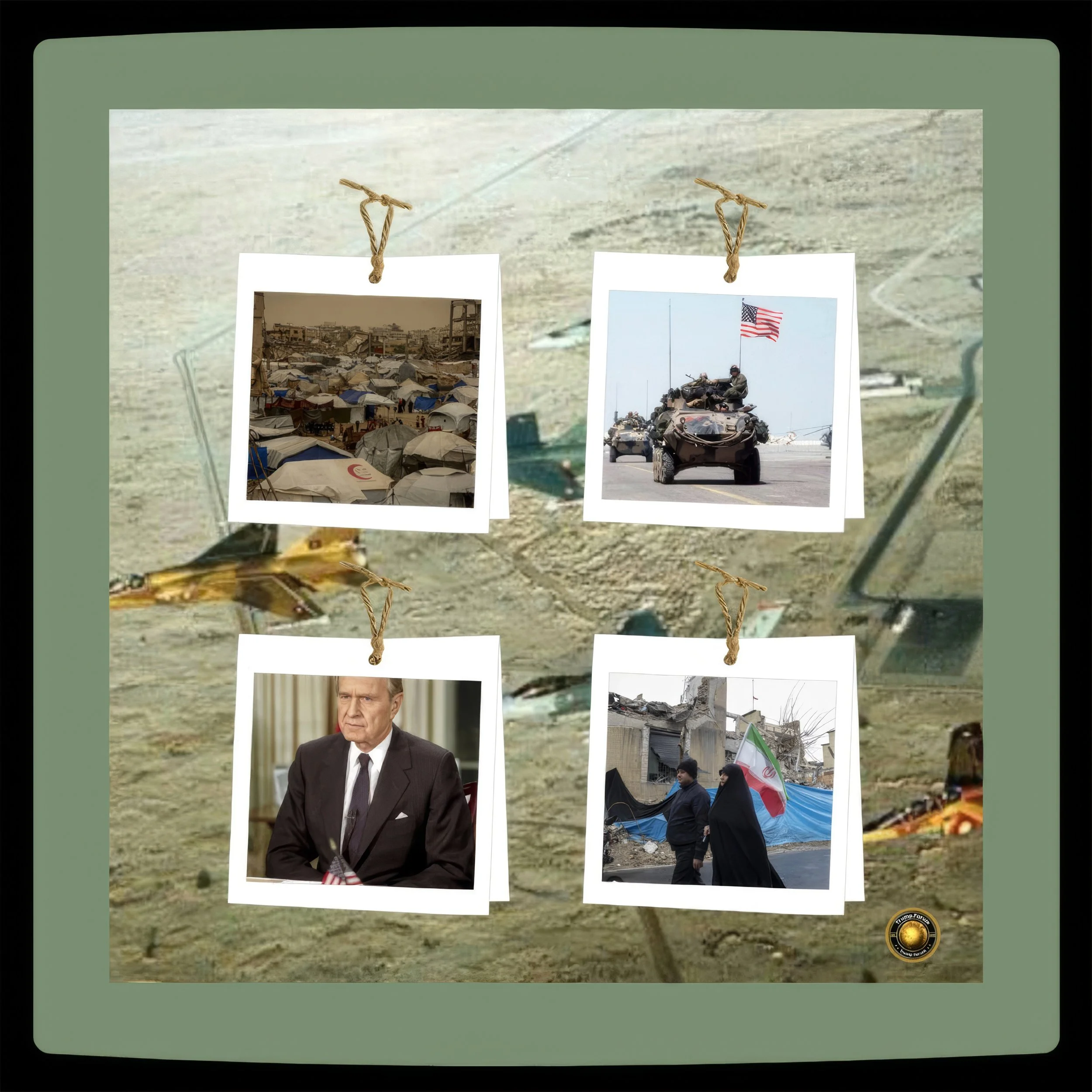
Beginner's 101 Guide: The Iran War as a Poor Repetition of Desert Storm
Summary
The current war between the United States and Iran can be understood in a very simple way. It looks like the United States is trying to repeat the success of the Gulf War, often called Desert Storm.
But the world today is very different from 1991. Because of that, what worked before is not working now.
In 1991, the United States fought Iraq after Iraq invaded Kuwait.
At that time, the United States had a very strong position in the world. The Soviet Union was collapsing, and there was no real global rival to American power.
Many countries supported the United States. There was a large coalition. The goals were also clear.
The aim was to push Iraqi forces out of Kuwait. Once that goal was achieved, the war ended quickly.
Now compare that with the current war with Iran.
The United States, under Donald Trump, is trying to weaken Iran’s military, stop its nuclear progress, and reduce its influence in the region.
These goals sound limited, but they are actually very difficult to achieve. Unlike Iraq in 1991, Iran is not a simple target.
Iran has spent many years preparing for a war like this. It does not rely on large, visible armies that can be easily destroyed. Instead, it uses smaller, flexible systems. It has missiles hidden in different locations.
It uses drones that are cheap but effective. It also works through groups in other countries. These groups can act independently and create problems for the United States and its partners.
For example, instead of fighting directly, Iran can target ships in the Persian Gulf. It can support groups in places like Iraq, Syria, or Lebanon.
These actions do not lead to one big battle. Instead, they create many small problems at the same time. This makes it very hard for the United States to respond in a clear and decisive way.
Another big difference is the global situation. In 1991, most major countries supported the United States.
Today, the world is more divided. Countries like Xi Jinping and Vladimir Putin are not supporting the U.S. war. They are watching carefully and sometimes benefiting from the situation. For example, higher oil prices can help their economies.
This means the United States is not leading a strong, united coalition like it did before. Instead, it is acting with limited support. Some countries are helping, but many are cautious. They do not want to get involved in a long and uncertain conflict.
The economic impact is also very important. The Strait of Hormuz is a narrow waterway where a large amount of the world’s oil passes every day.
Iran has the ability to disrupt this route. Even small attacks can create fear in the market. When that happens, oil prices go up. This affects the entire world, not just the countries involved in the war.
For example, if oil prices rise, transport becomes more expensive. Food prices can increase. Inflation can rise in many countries.
So even people far away from the conflict feel its effects. This is very different from 1991, when the war actually helped stabilize oil markets.
Another key issue is how the war is being fought. The United States is using airstrikes and precision weapons to hit important targets.
These attacks are very accurate and can destroy buildings, equipment, and infrastructure. But they cannot destroy ideas, knowledge, or networks.
Iran’s nuclear knowledge, for example, cannot be removed by bombing. Its regional connections cannot be eliminated quickly. So even if the United States achieves some success on the battlefield, it may not achieve its larger goals.
This creates a situation where the war continues without a clear ending. Each side takes action, then the other side responds. This cycle repeats. It becomes a long conflict instead of a short one.
Another problem is escalation. Both sides say they want to avoid a full-scale war. But small actions can lead to bigger reactions.
For example, if a missile hits a sensitive target, the other side may feel forced to respond more strongly. This can quickly increase the level of conflict.
Because there are many stakeholders involved, the risk of misunderstanding is high. A group acting on its own might trigger a larger response. This makes the situation unpredictable.
Domestic politics also play a role. In the United States, people support wars only if they believe they are necessary and successful.
If the war becomes long and expensive, public support can fall. This puts pressure on leaders to show results, even when results are hard to achieve.
At the same time, Iran’s strategy is based on patience. It does not need to win quickly. It only needs to avoid losing. If it can continue to operate and impose costs on its opponents, it can claim success.
This creates an imbalance. The United States wants clear progress. Iran wants to prolong the conflict. Over time, this can work in Iran’s favor.
Another important factor is technology. Today, even smaller groups can use drones and missiles.
These tools are cheaper and easier to access than traditional military equipment. This means more actors can participate in the conflict.
For example, a small drone can damage a large facility or disrupt an airport.
Cyberattacks can target financial systems or communication networks. These actions do not require large armies, but they can still have big effects.
This changes the nature of war. It is no longer just about tanks and planes. It is about networks, information, and disruption.
So what can be done? One option is to reduce expectations. Instead of trying to achieve big goals quickly, the United States could focus on managing the situation.
This means preventing the conflict from getting worse rather than trying to end it immediately.
Another option is diplomacy. Talking to the other side does not mean agreeing with them. It means creating a way to reduce tension and avoid misunderstandings. Even during conflict, communication can help prevent escalation.
Economic tools can also be used. Sanctions can put pressure on Iran, but they must be used carefully. Too much pressure can lead to stronger resistance. A balance is needed.
Regional cooperation is also important. Countries in the Middle East are directly affected by the conflict. If they can work together, they may help reduce tensions. But this is difficult because their interests are not always the same.
In the end, the biggest lesson is simple. The world has changed since 1991.
The success of Desert Storm cannot be repeated easily. Trying to copy that model without understanding the differences leads to problems.
The current war shows that military power alone is not enough. It must be combined with political, economic, and diplomatic efforts. Even then, success is not guaranteed.
This is why the war with Iran feels like a bad remake. It tries to follow an old script in a new world. But the stakeholders, the stage, and the audience have all changed.
If this lesson is not understood, the conflict may continue without clear results.
But if it is understood, there may still be a chance to manage the situation and avoid a larger disaster.