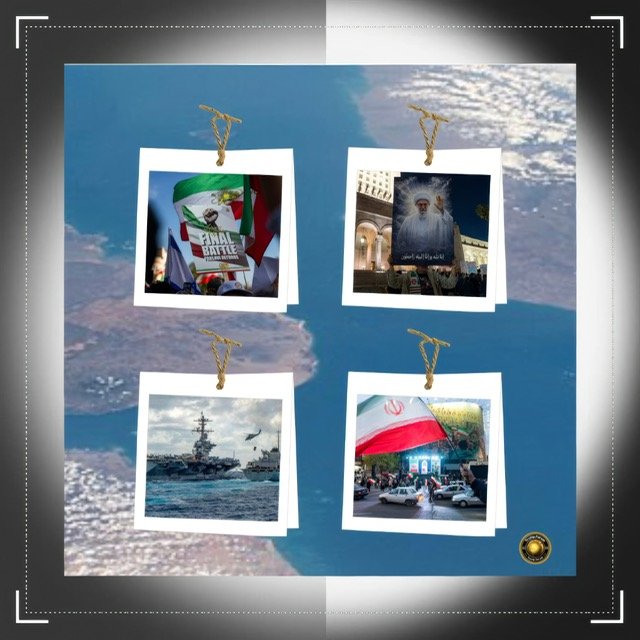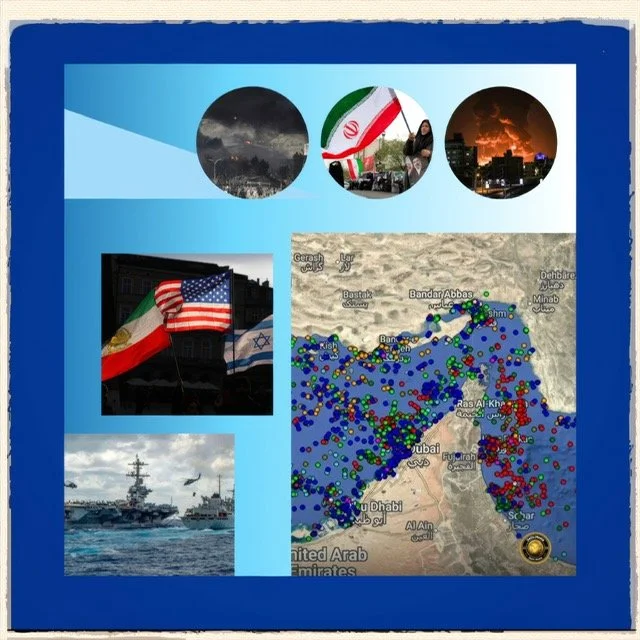
The Strait of Hormuz and the Limits of American Power: Strategic, Military, and Geopolitical Dimensions of a Forced Reopening
Executive Summary
Trump's Most Dangerous Gamble: A Military Campaign to Reclaim the World's Oil Artery
The Strait of Hormuz, the world's most consequential maritime chokepoint, has become the central arena of confrontation in the escalating military conflict between the United States and Iran in early 2026.
Since the launch of Operation Epic Fury on February 28th, 2026, the United States military has conducted an intensive air campaign against Iranian targets, including missile batteries, naval installations, air defense systems, and the command-and-control infrastructure of the Islamic Revolutionary Guard Corps.
Iran, in turn, has weaponized the strait — deploying mines, fast-attack boats, shore-based cruise missiles, and drone swarms to effectively halt commercial shipping through a waterway that normally carries approximately 20% of the world's oil and liquefied natural gas exports.
As diplomatic back-channels have so far yielded contradictory signals — with Washington claiming negotiations are underway and Tehran denying them — President Donald Trump has begun deploying amphibious Marine Expeditionary Units and elite parachute infantry, suggesting that a forced military reopening is now a live strategic option.
The following analysis examines the historical precedents of this conflict, the current operational landscape, the military logic and limitations of a forced reopening, the cascade of economic and diplomatic consequences already in motion, and the deeply uncertain future that lies beyond any conceivable military outcome.
The Historical Roots of a Strategic Confrontation
Operation Epic Fury Expands: Why America Needs Marines to Break Iran's Maritime Chokehold
The geopolitical contest over the Strait of Hormuz did not emerge spontaneously in the spring of 2026.
Its roots reach back decades, embedded in the structural antagonism between the United States and the Islamic Republic of Iran, an antagonism forged in the crucible of the 1979 revolution and hardened through four decades of sanctions, proxy conflict, and episodic military confrontation.
The strait itself — a narrow channel at its tightest point measuring only 20.5 mile bordered to the north by Iranian territory — was first weaponized by Tehran during the Iran-Iraq War of the 1980s in what historians have come to call the Tanker War.
During that conflict, Iran laid extensive minefields across the Persian Gulf, directly damaging the supertanker SS Bridgeton and, more consequentially, the guided-missile frigate USS Samuel B. Roberts, whose near-sinking in April 1988 triggered Operation Praying Mantis — the largest U.S. naval surface engagement since the Second World War.
That historical episode established a template that has never fully departed from Iranian strategic doctrine.
Tehran absorbed two critical lessons from the Tanker War: first, that mines are extraordinarily cost-effective weapons capable of neutralizing technologically superior naval forces at minimal financial outlay; and second, that the threat of closure alone carries tremendous coercive leverage over the international community, whose economies depend on uninterrupted oil flows through the strait.
In the decades that followed, Iran systematically deepened its mine warfare capabilities.
By 2019, the U.S. Defense Intelligence Agency estimated that Tehran possessed over 5,000 naval mines of various types, including sophisticated modern variants capable of discriminating between vessel classes and deployed through multiple platforms including small boats, helicopters, midget submarines, and even civilian dhows.
Some analysts have suggested that as few as 300 mines, strategically placed, could effectively close the strait for years.
The threat calculus intensified sharply through the 2010s as Iran embedded the Strait of Hormuz closure option within its broader deterrence architecture — the so-called "mosaic defense" strategy of the IRGC that relies on asymmetric, distributed, and deniable capabilities to offset American conventional superiority.
Regular IRGC naval exercises in the Persian Gulf, combined with increasingly sophisticated drone fleets, shore-based anti-ship missile batteries, and fast-attack boat swarms, transformed Iran's maritime posture from a nuisance threat into a genuinely formidable defensive system.
Washington, for its part, consistently declared its commitment to maintaining freedom of navigation in the strait as a core national interest, a commitment reiterated explicitly in Trump's own 2025 National Security Strategy, which stated that "America will always have core interests in ensuring that Gulf energy supplies do not fall into the hands of an outright enemy, and that the Strait of Hormuz remain open."
Operation Epic Fury and the Current Operational Landscape
The immediate proximate cause of the current confrontation was the launch of Operation Epic Fury on February 28th, 2026, a massive U.S. air campaign initiated following the death of Iranian Supreme Leader Ayatollah Ali Khamenei and targeting, in the words of Defense Secretary Pete Hegseth, the destruction of Iranian offensive missiles, missile production infrastructure, naval forces, and nuclear development capacity.
The operation deployed more than 50,000 U.S. troops, 200 fighter jets, two aircraft carriers, and multiple strategic bombers, with U.S. Central Command reporting that nearly 2,000 Iranian targets had been struck within the operation's opening days.
Admiral Brad Cooper, CENTCOM commander, described the campaign as having "only just begun."
Iran's response was both expected and strategically coherent.
Rather than attempting to engage American airpower directly — a contest Tehran could not win — the IRGC focused its counteroffensive on the maritime domain, exploiting the one geographic feature that gives Iran asymmetric leverage over the entire global economy: the Strait of Hormuz.
Iranian naval vessels, drones, and shore-based missile batteries moved to menace commercial shipping, effectively bringing transit through the strait to a halt since early March 2026.
The economic consequences were immediate and severe.
Oil prices surged to levels not seen since the COVID-19 pandemic, and approximately 20% of global oil and gas exports were disrupted, with ripple effects spreading across Asian manufacturing economies, European energy markets, and American gas prices.
By mid-March, the operational landscape had evolved from an exclusively air-dominated campaign to a multi-domain confrontation.
U.S. forces launched what officials described as the opening phase of an effort to reopen the strait through a combination of airpower and naval action.
A-10 attack aircraft and Apache helicopters began low-altitude operations over the sea lanes, targeting Iranian fast-attack boats and drone launch platforms, while naval forces conducted strikes on IRGC bases and shore-based cruise missile batteries.
Defense Secretary Hegseth reported that these operations had damaged or destroyed more than 120 Iranian naval vessels.
Yet the fundamental challenge remained unresolved: mines already laid in the shipping lanes, shore-based missile batteries embedded in the Iranian coastline's rugged terrain, and an adversary willing and able to replenish its capabilities through covert means.
The Marine Deployments and the Logic of Amphibious Operations
It is within this operational context that the Marine deployments must be understood — not as a routine force management exercise, but as a signal of strategic intent.
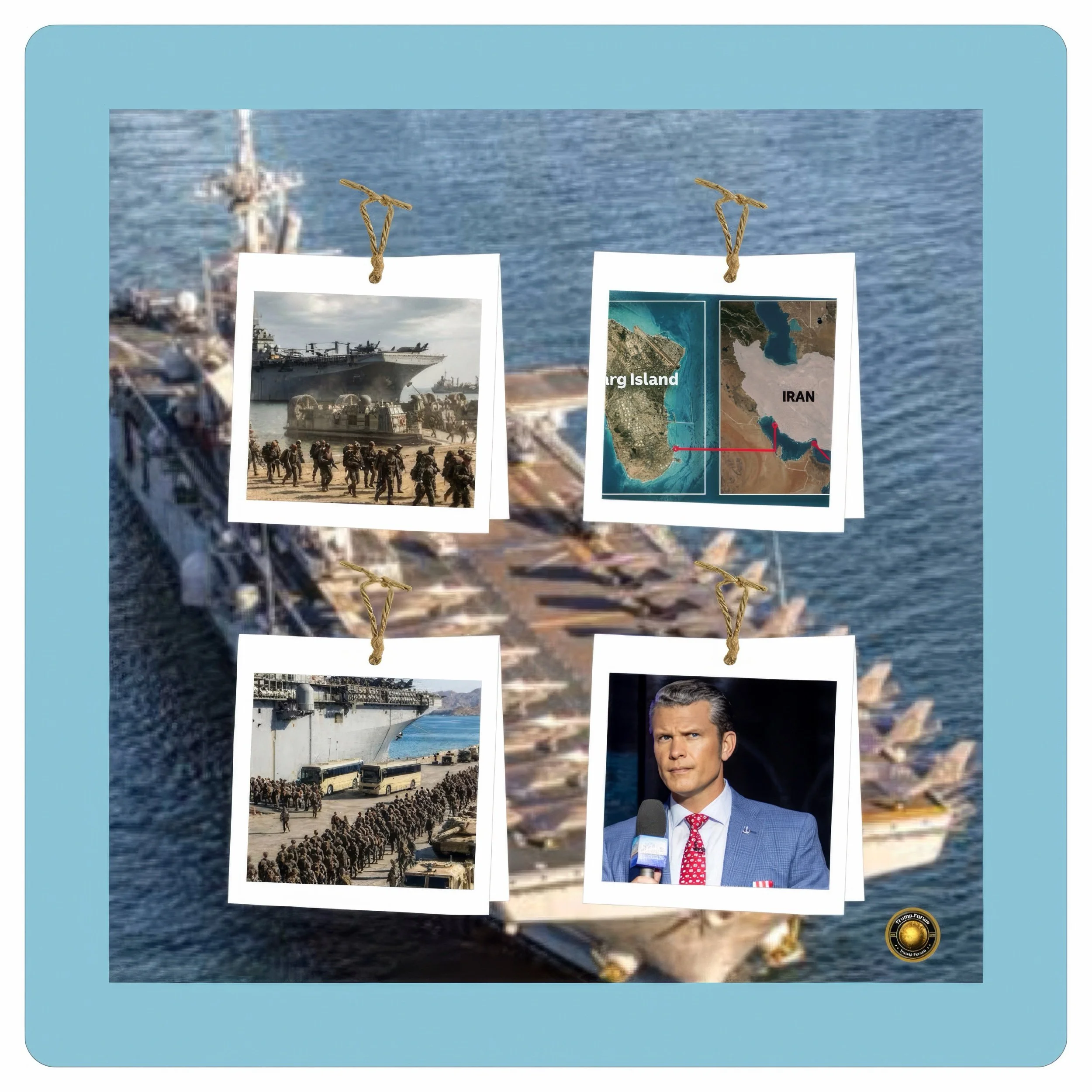
By late March 2026, approximately 4,500 U.S. sailors and Marines were en route to the Gulf aboard the USS Boxer and accompanying vessels, including an infantry battalion landing team equipped with F-35 fighter jets, Apache helicopters, and armored landing vehicles.
A 2nd Marine Expeditionary Unit, traveling from Japan, joined the USS Boxer contingent from California, while reports emerged that an elite infantry division specializing in parachute assault was preparing to follow.
The deployment of parachute-capable infantry, whose primary value lies in the rapid seizure of territory — airfields, islands, coastal installations — from unexpected vectors of approach is particularly telling: it suggests that purely aerial and naval operations are being judged insufficient to reopen the strait on their own.
Two broad strategic options appear to be under active consideration within the Pentagon and the National Security Council.
The first involves a sustained campaign of suppression — continuing to degrade Iran's naval and missile capabilities until commercial shipping can resume under armed escort, without attempting to seize Iranian territory.
This approach has the advantage of limiting American exposure to the risks of ground combat but carries the significant disadvantage of potentially indefinite duration: Iran can absorb punishment and reconstitute asymmetric capabilities faster than they can be destroyed from the air.
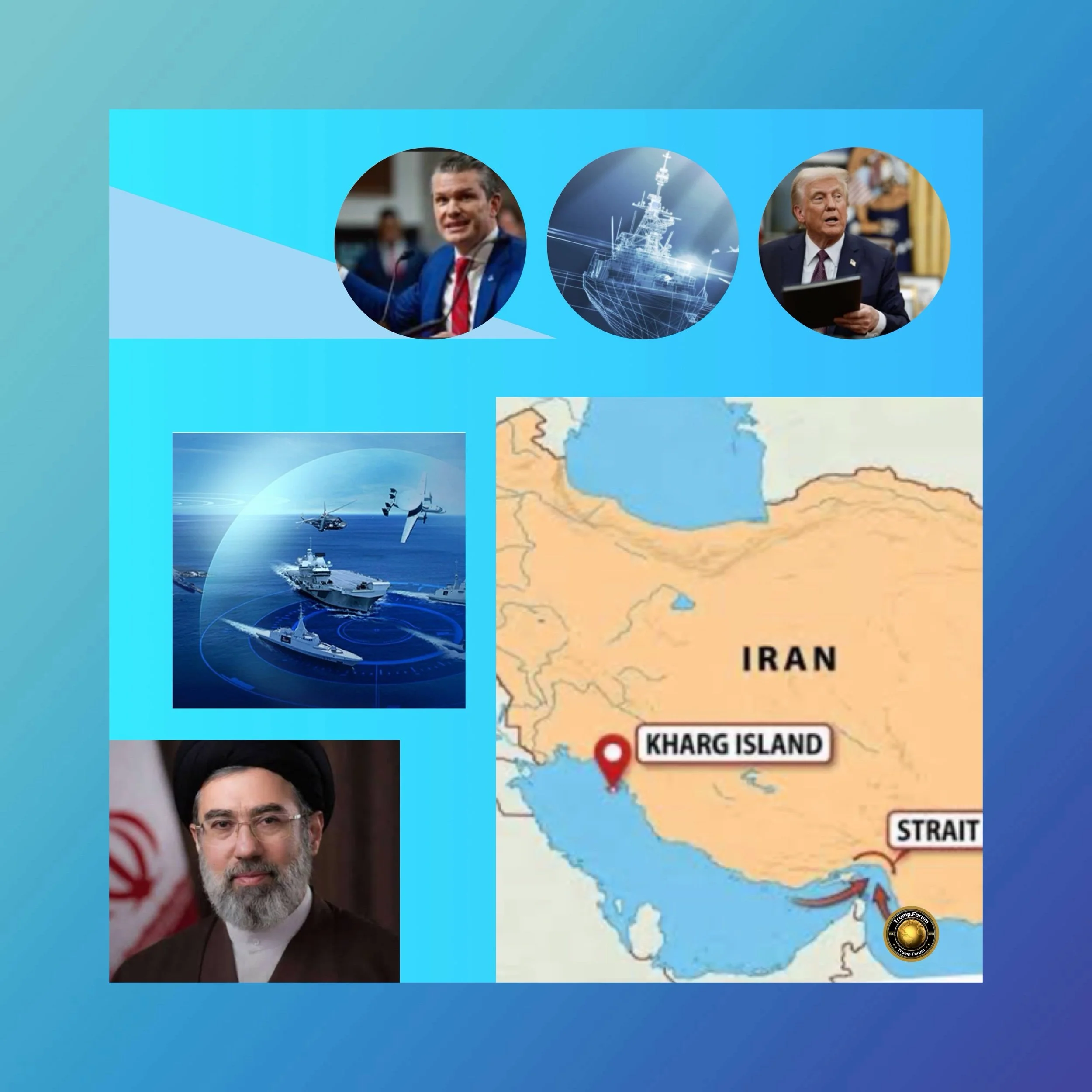
The second option, which has attracted considerable reporting and analytical attention, involves the seizure or blockade of Kharg Island — Iran's principal oil export hub, responsible for approximately 90% of Iranian crude exports — as a means of inflicting catastrophic economic pressure on Tehran sufficient to compel it to reopen the strait.
Kharg Island: Strategic Logic and Operational Hazards
The Kharg Island option represents perhaps the most audacious and consequential military option available to Washington, and its logic is not without merit.
Located in the northern Persian Gulf, the island concentrates the overwhelming majority of Iran's oil export capacity in a relatively small geographic area that could be isolated from Iranian mainland reinforcement by a combination of naval and air power.
Former White House Situation Room director Marc Gustafson has noted that Trump might pursue a Kharg Island operation for several compounding reasons: it offers a clear public relations victory, the island's offshore location provides American forces with a natural buffer from the Iranian mainland, and it targets the economic nerve center of the regime rather than merely its military extremities.
Denying Iran access to Kharg Island revenues would accelerate what U.S. officials have privately described as a strategy of forcing the regime to "collapse from within" through economic strangulation.
Yet the operational hazards of a Kharg Island assault are severe and should not be minimized.
The island sits within range of shore-based Iranian missile batteries on the mainland — anti-ship cruise missiles, ballistic missiles, and drone swarms that could devastate an amphibious landing force operating in the confined waters of the northern Gulf.
The IRGC Navy, despite suffering significant losses to American airstrikes, retains fast-attack boat capabilities that would threaten the landing ships required to put Marines ashore.
The waters surrounding the island, moreover, may themselves be mined.
Any force that successfully seizes the island would then face the challenge of sustained occupation under continuous fire — holding ground in close proximity to the Iranian mainland without the geographic depth to defend against counterattack.
American forces on Kharg Island would effectively become high-value targets for every Iranian missile and drone platform that survives the ongoing air campaign.
Iran's Asymmetric Maritime Arsenal
To fully appreciate the difficulty of reopening the Strait of Hormuz by force, one must understand the depth and sophistication of Iran's asymmetric maritime arsenal.
The IRGC Navy — distinct from the regular Iranian Navy and reporting to the Supreme National Security Council — has developed over three decades a comprehensive suite of capabilities specifically designed to neutralize American conventional naval superiority in the confined waters of the Persian Gulf.
Its doctrine, derived from the strategic thinking of asymmetric theorists within the IRGC, relies on mass, deception, and geographic exploitation rather than technological parity.
Mines remain the single most dangerous element of this arsenal.
With an estimated inventory of over 5,000 mines, Iran possesses the capacity to seed the entire width of the strait and its approaches in a matter of days, using a heterogeneous fleet of minelayers that includes small civilian-appearing craft nearly impossible to distinguish from the region's ubiquitous dhow traffic.
Modern Iranian mines include pressure-activated, acoustic, magnetic, and influence variants, as well as more sophisticated models capable of remaining dormant until vessels of specific acoustic profiles pass overhead.
The challenge of mine clearance under fire — attempting to sweep mines while simultaneously defending minesweepers from drone and missile attack — represents one of the most demanding naval warfare scenarios imaginable.
Some analysts estimate that fully clearing the strait of mines, even under permissive conditions, could take months.
Beyond mines, Iran has deployed shore-based anti-ship cruise missiles capable of striking targets throughout the Gulf from hardened inland positions difficult to eliminate even with sustained airpower.
The IRGC has also developed an extensive drone force — including both armed attack drones and suicide drone variants — that can be launched in mass from inland positions, saturating ship-based air defenses through sheer volume.
IRGC Deputy Commander Ali Fadavi has publicly referenced underwater-launched missiles capable of 100-meters-per-second velocity.
Fast-attack boat swarms operating in shallow coastal waters, exploiting the clutter of the Gulf's complex shoreline topography, add a further dimension of threat that conventional naval tactics are poorly suited to counter.
The Economic Cascade and Global Stakeholder Responses
The disruption of the Strait of Hormuz has triggered a cascade of economic consequences whose severity underscores why reopening the waterway — whether through negotiation or force — is considered an imperative rather than a preference by Washington and its allies.
The strait normally carries approximately 20% of the world's traded oil and a significant proportion of its liquefied natural gas, primarily destined for Asian economies including Japan, South Korea, China, and India.
The effective closure of this artery since early March 2026 has driven oil prices to pandemic-era highs, threatening to push major importing economies into recession if prolonged.
The economic pressure extends beyond oil. Disruption of Persian Gulf shipping lanes also affects container trade, automotive components, and petrochemical supply chains, compounding inflationary pressures already present in several advanced economies.
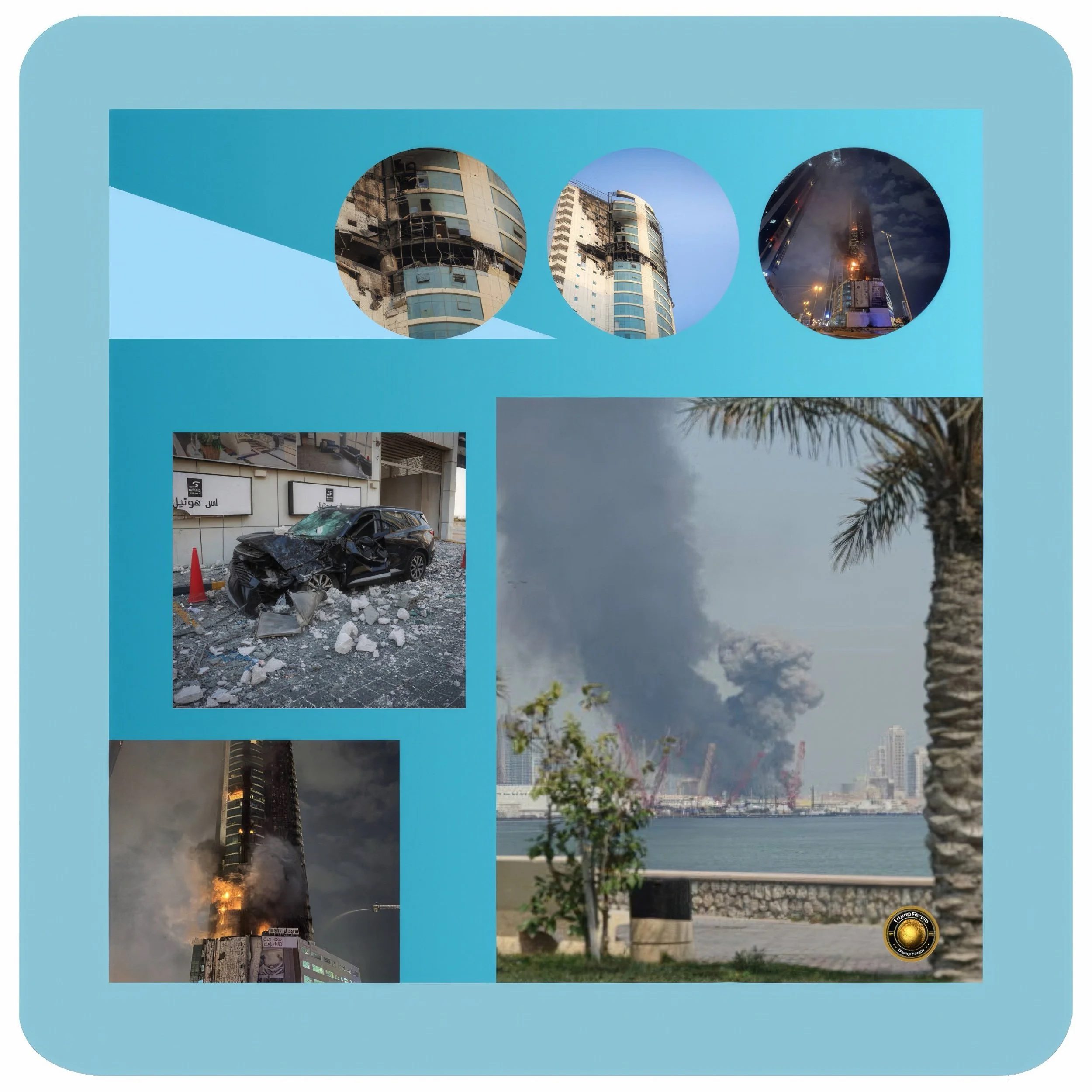
Gulf Cooperation Council states — Saudi Arabia, the UAE, Kuwait, and Bahrain — face an acute dilemma: while broadly aligned with U.S. objectives of constraining Iranian power, they are deeply wary of the escalation risks posed by a ground operation near their territory and fearful of Iranian retaliatory strikes on their own energy infrastructure.
NATO allies, for their part, have been notably reluctant to provide active military support. President Trump publicly described allies as "cowards" for refusing to commit forces to help reopen the strait.
U.S. Ambassador to the United Nations Mike Waltz indicated that allies were "starting to come around" but stopped well short of announcing concrete coalition contributions.
This allied reticence reflects a broader strategic discomfort among European governments with the nature and aims of Operation Epic Fury, particularly its maximalist objectives of regime degradation and nuclear capability elimination, which many European capitals regard as dangerously open-ended.
Iran, meanwhile, has signaled both its resolve and its escalation options.
Tehran has laid out five conditions for ending the conflict — including a complete halt to U.S. and Israeli military strikes and assassinations — while simultaneously threatening to expand maritime confrontation to the Bab el-Mandeb Strait linking the Red Sea and the Gulf of Aden, which would bring a second critical global chokepoint under threat.
Iranian armed forces spokesman Abolfazl Shekarchi issued direct personal threats to American military commanders, pilots, and officials globally, suggesting that Tehran was contemplating a shift toward counterterrorism-style responses targeting individuals.
Cause-and-Effect Analysis: The Compounding Logic of Escalation
Iron Fist in the Gulf: How America Plans to Force Open the Strait of Hormuz
The current crisis illustrates with unusual clarity the compounding logic of military escalation in constrained geographic and political spaces. The cause-and-effect chain is both simple to trace and deeply difficult to interrupt.
The United States launched Operation Epic Fury with sweeping objectives — destruction of Iran's ballistic missiles and their production infrastructure, elimination of IRGC proxy networks, and prevention of Iranian nuclear acquisition.
These objectives, by their nature, threatened Iran's fundamental national security in ways that rendered accommodation difficult without appearing to capitulate entirely — a politically impossible position for any Iranian government.
Iran's logical response was to activate the one lever of countercoercion available to it that inflicts maximum global economic pain at minimum Iranian military cost: the Hormuz closure.
The closure, in turn, created an imperative for the United States to force the strait open, because leaving it closed while pursuing other campaign objectives would impose unsustainable economic costs on allied economies and undermine Washington's credibility as the guarantor of global maritime order.
The deployment of Marines and airborne infantry follows logically from this imperative.
But the ground operation, if executed, carries the prospect of significant American casualties, extended occupation, and the transformation of what began as an aerial campaign into a ground war in one of the world's most complex strategic environments — which may, in turn, trigger further Iranian escalation including attacks on Gulf state energy infrastructure and expanded drone and missile campaigns.
The fundamental strategic problem is that each escalatory step logically necessitates the next while the endpoint — defined as a condition in which Iran accepts permanent strategic subordination, abandons its deterrence architecture, and opens its maritime chokepoints permanently — remains profoundly elusive.
Historical precedent does not favor confidence.
Neither the decade of Iraq occupation nor the two decade Afghanistan campaign produced durable strategic outcomes commensurate with their costs, and Iran is a more capable, more internally cohesive, and more strategically sophisticated adversary than either.
The Minesweeping Challenge and the Long Road to Safe Navigation
Even in the optimistic scenario in which American military operations succeed in neutralizing Iran's active naval forces, suppressing shore-based missile batteries, and seizing or neutralizing Kharg Island, the strait would not immediately be safe for commercial navigation.
The minesweeping challenge alone represents a major operational undertaking of uncertain duration.
Modern mine clearance operations are extraordinarily resource-intensive.
Minesweepers — among the most specialized and irreplaceable vessels in any navy — must operate at low speed through mined waters, using sonar, remotely operated vehicles, and trained clearance divers to locate and neutralize individual mines one by one.
Under combat conditions, with the persistent threat of drone and missile attack, these already slow and dangerous operations become dramatically more hazardous.
The U.S. Navy's mine countermeasures fleet is not large, and the prospect of clearing thousands of mines across a 20.5 mile wide, strategically vital waterway while under fire from Iranian residual capabilities is one that senior naval commanders approach with considerable sobriety.
Some observers have noted that the most valuable asset in the Gulf, should Iran succeed in laying its mine inventory, would rapidly become a minesweeper rather than an aircraft carrier — an observation that cuts to the heart of the asymmetric dynamic at play.
High-end American military power, optimized for force-on-force conventional warfare, is poorly suited to the patient, painstaking, and inherently dangerous work of mine clearance in a hostile maritime environment.
This operational mismatch between American capabilities and the demands of the task is one of the most significant sources of uncertainty in any planning for a forced Hormuz reopening.
Allied Dynamics and the Coalition Question
The question of allied participation in any military operation to reopen the strait is not merely diplomatic decoration; it has direct operational significance.
Mine clearance in particular requires specialized vessels and trained personnel that even the United States does not possess in sufficient numbers for a rapid, large-scale operation.
Allied navies, particularly those of Britain and France, possess mine countermeasures capabilities that would be materially important to any reopening effort.
Yet both countries have so far declined to commit forces, reflecting deep reservations about the strategic direction of Operation Epic Fury and its maximalist objectives.
Gulf Cooperation Council states are in a particularly delicate position. They share the American objective of constraining Iranian power but cannot be seen as facilitating a military operation that brings the war to their immediate doorstep.
The UAE and Qatar host American military bases essential to the air campaign — a degree of cooperation that already exposes them to Iranian retaliation threats — but active participation in a Kharg Island assault or mine clearance operation would cross a threshold that Gulf governments regard as politically and strategically unacceptable.
The result is a coalition architecture in which the United States possesses overwhelming offensive firepower but lacks the specialized capabilities, allied burden-sharing, and regional political cover that a sustained maritime campaign would require.
Future Steps: Pathways and Their Probability
Mines, Missiles, and Marines: The Terrifying Cost of Reopening the Strait of Hormuz
Several distinct pathways present themselves from the current operational juncture, each carrying radically different implications for regional stability, global energy markets, and American strategic credibility.
The first and most diplomatically preferable pathway is a negotiated de-escalation in which Iran agrees to reopen the strait in exchange for a cessation of American bombing and credible guarantees against further strikes.
This outcome would require both sides to accept arrangements that involve significant loss of face: Washington would need to suspend a campaign it has publicly framed as existential, while Tehran would need to accept a strategic defeat.
The contradictory signals about whether negotiations are even occurring — Trump claiming talks are underway, Tehran denying them — suggest that this pathway, while not foreclosed, faces profound political obstacles on both sides.
The second pathway involves a continued campaign of aerial and naval attrition designed to degrade Iranian maritime capabilities to the point where commercial shipping can resume under armed escort without requiring a ground operation.
This approach has historical precedent in the 1987-1988 convoy operations and is less politically costly than a ground assault.
Its limitation is time: sustained disruption of 20% of global oil trade is economically untenable for weeks, let alone months, and the pace of Iranian capability degradation through airpower alone may not be sufficient to enable safe navigation within a politically acceptable timeframe.
The third pathway is the ground operation — whether a seizure of Kharg Island, an occupation of the Iranian coastline adjacent to the strait, or a combination of both.
This option offers the most direct route to physical control of the waterway but carries the highest risks of American casualties, extended commitment, and inadvertent escalation to a full-scale conflict that neither side has formally declared.
The deployment of parachute infantry — forces whose raison d'être is rapid assault from the air — signals that the Pentagon is at minimum developing this option in operational detail.
A fourth, darker pathway involves horizontal escalation by Iran — strikes on Gulf state energy infrastructure, expansion of maritime disruption to the Bab el-Mandeb, or activation of proxy forces in Iraq, Syria, Lebanon, and Yemen against American installations and interests.
Tehran has signaled all of these possibilities explicitly, and while they would represent a significant escalation risk for Iran as well, the logic of a cornered regime with limited conventional options should not be dismissed.
Conclusion: The Weight of Uncertainty
Kharg Island in America's Crosshairs: The High-Stakes Gamble That Could Reshape the Middle East
The battle to reopen the Strait of Hormuz, whether executed by diplomatic pressure, aerial attrition, or amphibious assault, represents one of the most consequential and complex military undertakings that the United States has contemplated since the end of the Cold War.
The strait is not merely a geography; it is the physical nexus of the global energy system, a chokepoint whose disruption transmits economic pain instantaneously and universally.
Iran's decision to weaponize it reflects not irrationality but a cold-eyed assessment of its own asymmetric leverage — the understanding that a small, relatively poor country with sophisticated military doctrine can impose costs on the world's largest economy and its allies that are disproportionate to any damage that economy can inflict in return.
The United States possesses overwhelming military power, but military power is not the same as strategic effectiveness.
The history of American military interventions in the Middle East over the past three decades demonstrates with painful consistency that the capacity to destroy is not the same as the capacity to compel a durable political settlement.
A forced reopening of the Strait of Hormuz — even if operationally successful in the narrow sense of restoring commercial shipping — would resolve nothing about the underlying political conflict between Washington and Tehran, and could easily metastasize into a longer, bloodier, and more expensive entanglement than any of its architects currently envision.
The ships, the aircraft, and the soldiers now assembling in the Persian Gulf and its approaches represent not merely American military capability but American strategic credibility — the proposition that Washington will bear whatever costs are necessary to guarantee the global commons.
Whether that proposition can survive contact with Iran's asymmetric defenses, the reluctance of American allies, the arithmetic of mine clearance, and the political limits of democratic patience is the defining strategic question of this crisis.