The Battle for the World's Oil Highway: Can America Force Open the Strait of Hormuz? Beginners 101 Guide to War on Strait of Hormuz
Executive Summary
From Airstrikes to Amphibious Assault: How the Hormuz Crisis Is Escalating Beyond All Expectations
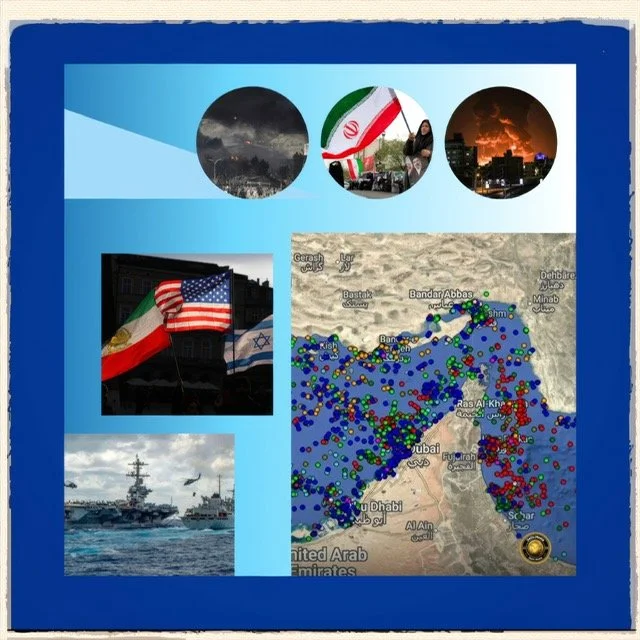
Imagine a narrow water passage, only about 20.5 mile wide at its tightest point, through which about one out of every five barrels of oil in the world must pass every single day.
That is the Strait of Hormuz. Right now, that passage is effectively closed because Iran has blocked it using mines, missiles, and armed boats.
America is sending thousands of Marines and preparing military options to force it open.
This is a very dangerous and complicated task. Here is what is happening, why it matters, and what might happen next — explained in plain terms.
What Is the Strait of Hormuz and Why Does It Matter So Much?
Think of the Strait of Hormuz like a highway that connects the world's biggest oil storage to the world's biggest oil customers.
Countries like Japan, South Korea, China, and India depend heavily on oil that must travel through this single narrow passage between Iran and the Arabian Peninsula. If this highway is blocked, oil prices go up for everyone on Earth.
Everyday things like gasoline, heating, and goods that are shipped by truck all become more expensive.
The strait has been a flashpoint before. Back in the 1980s, during the Iran-Iraq War, Iran planted underwater bombs called mines in these waters and nearly closed the passage.
At that time, an American naval ship called the USS Samuel B. Roberts was badly damaged by one of those mines in 1988.
The U.S. Navy fought back in a battle called Operation Praying Mantis.
This history matters because Iran learned an important lesson from that era: it does not need a great navy to hurt America.
It just needs enough cheap, clever weapons to make the passage too dangerous for tankers to use.
What Started the Current Crisis?
The Chokepoint That Could Strangle the World Economy: Inside America's Battle for Hormuz
On February 28th, 2026, the United States launched a large military operation called Operation Epic Fury against Iran.
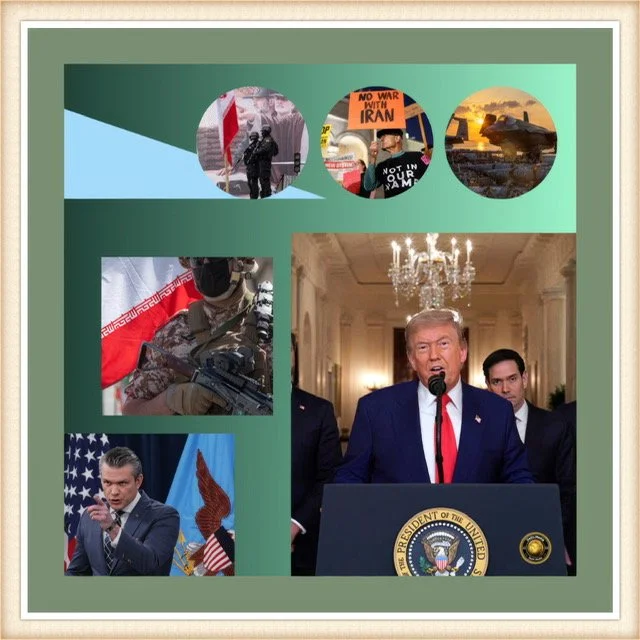
The goals, as stated by Defense Secretary Pete Hegseth, were to destroy Iran's ballistic missiles and the factories that build them, eliminate Iran's navy, neutralize its proxy militias around the Middle East, and make sure Iran can never build a nuclear weapon.
The operation involved over 50,000 U.S. troops, 200 fighter jets, two aircraft carriers, and heavy bombers.
Iran could not match American airpower directly — that would be like a club boxer stepping into the ring with a world heavyweight champion.
So instead, Iran did something much smarter from its own point of view: it moved to block the Strait of Hormuz using mines, small fast boats armed with rockets, shore-launched missiles, and drones.
Almost immediately, commercial shipping stopped moving through the strait.
Oil prices in the United States jumped to levels not seen since the height of the COVID-19 pandemic.
What Is America Doing About It?
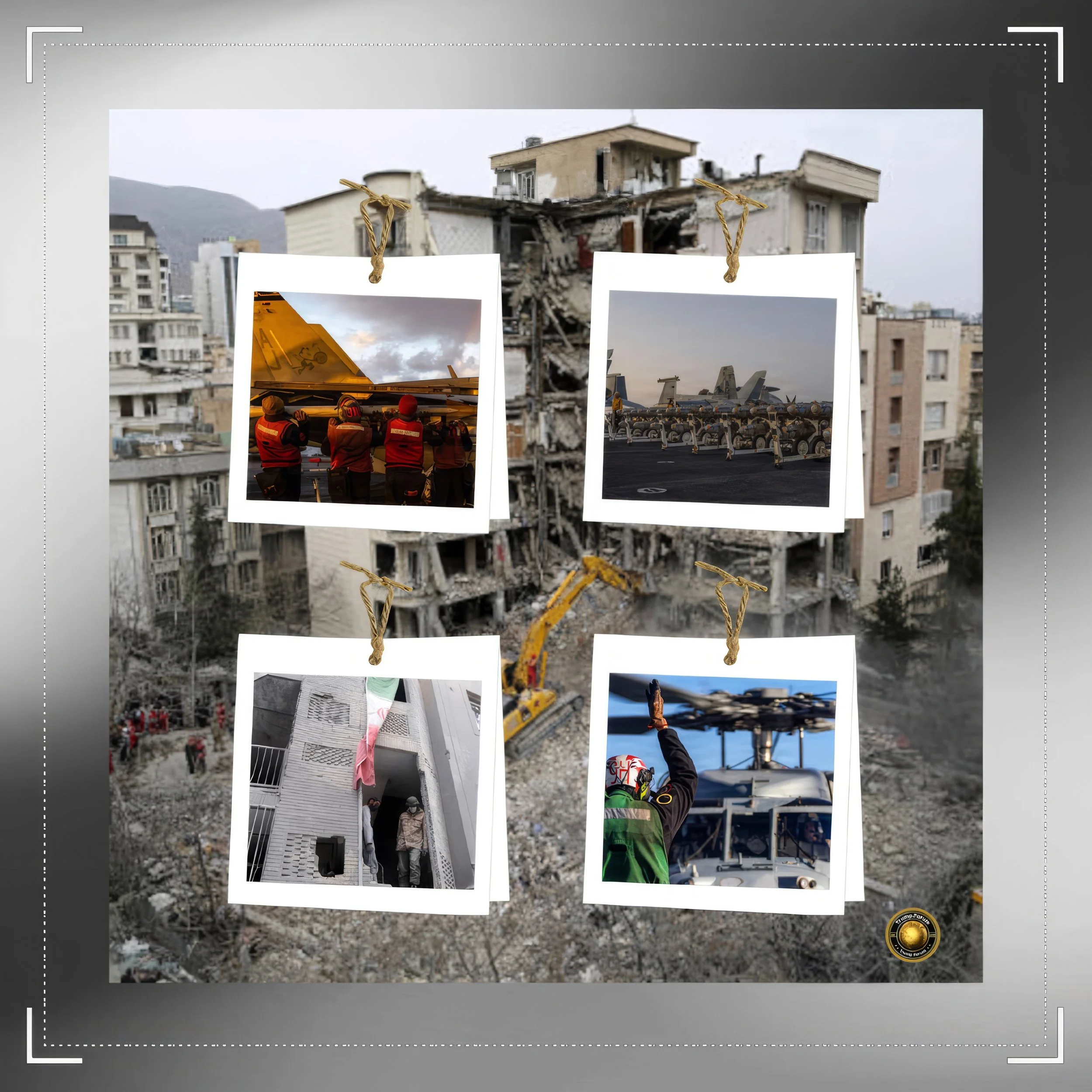
The U.S. military quickly launched the opening phase of an effort to reopen the strait. Low-flying A-10 attack jets — the same aircraft famously nicknamed "Warthog" — and Apache attack helicopters began hunting Iranian fast boats and shooting down drones over the sea lanes.
U.S. forces bombed Iranian IRGC bases and missile launch sites along the Iranian coastline.
By late March 2026, Defense Secretary Hegseth said that more than 120 Iranian naval vessels had been damaged or destroyed.
At the same time, America sent more ground forces to the region.
About 4,500 sailors and Marines were dispatched aboard amphibious ships — vessels designed to put soldiers directly onto beaches or islands.
One Marine group came from Japan and another from California.
On top of that, reports suggested that a specialized infantry unit trained for parachute assaults — meaning soldiers who jump from aircraft to seize territory — was being prepared to follow. President Trump called NATO allies "cowards" for refusing to send their own forces to help.
Why Is Reopening the Strait So Hard?
Here is where it gets complicated, and the comparison to a simple military victory breaks down. Iran has spent decades preparing specifically for this kind of confrontation.
It has more than 5,000 underwater mines stored and ready to use. Just one mine can blow a large hole in a supertanker worth hundreds of millions of dollars.
Clearing those mines is like trying to find and defuse 5,000 individual roadside bombs hidden underneath a dark ocean while someone on the shore is shooting at your mine-clearing boats.
Iran can plant mines covertly using civilian-looking small boats and fishing vessels that blend in with regular Gulf traffic.
It also has missiles launched from caves and bunkers dug into the Iranian coastline mountains — places that are very hard to destroy from the air.
Drones are launched in large swarms that can overwhelm a ship's defenses the way a swarm of bees can overwhelm a person trying to swat them one at a time.
Even if American forces destroyed every visible Iranian military asset, the mines already in the water would still be there.
Clearing them in a strait that is used by some of the world's largest ships, under combat conditions, could take weeks or months.
The Kharg Island Option
One of the boldest ideas under discussion in Washington is to seize or blockade Kharg Island, an island in the northern Persian Gulf that handles about 90% of Iran's oil exports.
Think of it as grabbing the cash register of Iran's economy.
If American forces took that island, Iran would lose nearly all of its oil revenue almost immediately, which might force Tehran to negotiate a deal to reopen the strait.
The problem is that Kharg Island is very close to the Iranian mainland, which means it would be within easy range of Iranian missiles and drones.
American Marines holding the island would essentially be sitting in a relatively small space while Iran fired everything it had at them.
It would be very dangerous for the soldiers involved and could cost many American lives.
It is a high-risk, high-reward gamble — the kind of move you make when you believe the alternative is even worse.
What Are the Consequences Already Unfolding?
The economic damage from the closed strait is already significant.
Oil prices have surged globally, adding costs to consumers in the United States and around the world.
Asian economies that rely most heavily on Persian Gulf oil — particularly Japan, South Korea, and China — are watching with alarm.
Iran has also warned it might expand its disruption campaign to the Bab el-Mandeb Strait — another narrow passage connecting the Red Sea to the Indian Ocean that is critical for global trade. If Iran opened a 2nd front there, it would compound the economic crisis significantly.
Meanwhile, President Trump said he was in peace talks with Iranian leaders, but Iranian officials publicly denied any talks were happening at all. This contradiction makes the situation even more unpredictable.
What Might Happen Next?
There are several possible directions this crisis could take.
First, a negotiated deal could be reached in which Iran reopens the strait in exchange for a halt to American bombing.
Both sides would have to accept some loss of prestige to reach this outcome, which makes it politically difficult.
Second, American military operations could gradually wear down Iran's naval capabilities to the point where shipping can resume under armed escort, without any ground assault.
This takes time, and time is expensive when global oil markets are disrupted.
Third, American Marines could conduct a ground operation — seizing Kharg Island or clearing Iranian forces from the strait's coastline directly — accepting higher risk of casualties for a faster resolution.
Fourth, and most dangerously, Iran could escalate further — attacking oil infrastructure in Saudi Arabia, expanding into new maritime chokepoints, or unleashing proxy militias against American bases in Iraq and Syria.
Every one of these possibilities carries significant risks and costs. None of them is simple, quick, or cheap.
What History Tells Us
History Repeating Itself: Why Reopening Hormuz May Prove Costlier Than Vietnam or Afghanistan
The Strait of Hormuz crisis of 2026 is not the first time the world has faced the terrifying prospect of its oil supply being suddenly cut. Each previous episode — the Tanker War of the 1980s, the Gulf War of 1991, the tensions of 2019 — resolved without a full-scale ground invasion.
But each episode also left unresolved the underlying tensions between American power and Iranian resistance.
The current crisis is the most serious of all of them, involving the largest American military deployment in the region in decades, against an Iran that has spent 40 years specifically preparing for exactly this confrontation.
The men and women aboard the ships and aircraft now converging on the Persian Gulf are there because the world cannot afford, economically or strategically, to leave the oil highway closed. Whether they can open it — and at what cost — is a question whose answer the entire world is waiting on