From Postwar Dominance to Strategic Overstretch: The Hidden Architecture Behind the American Century’s Rise and Decline
Executive Summary
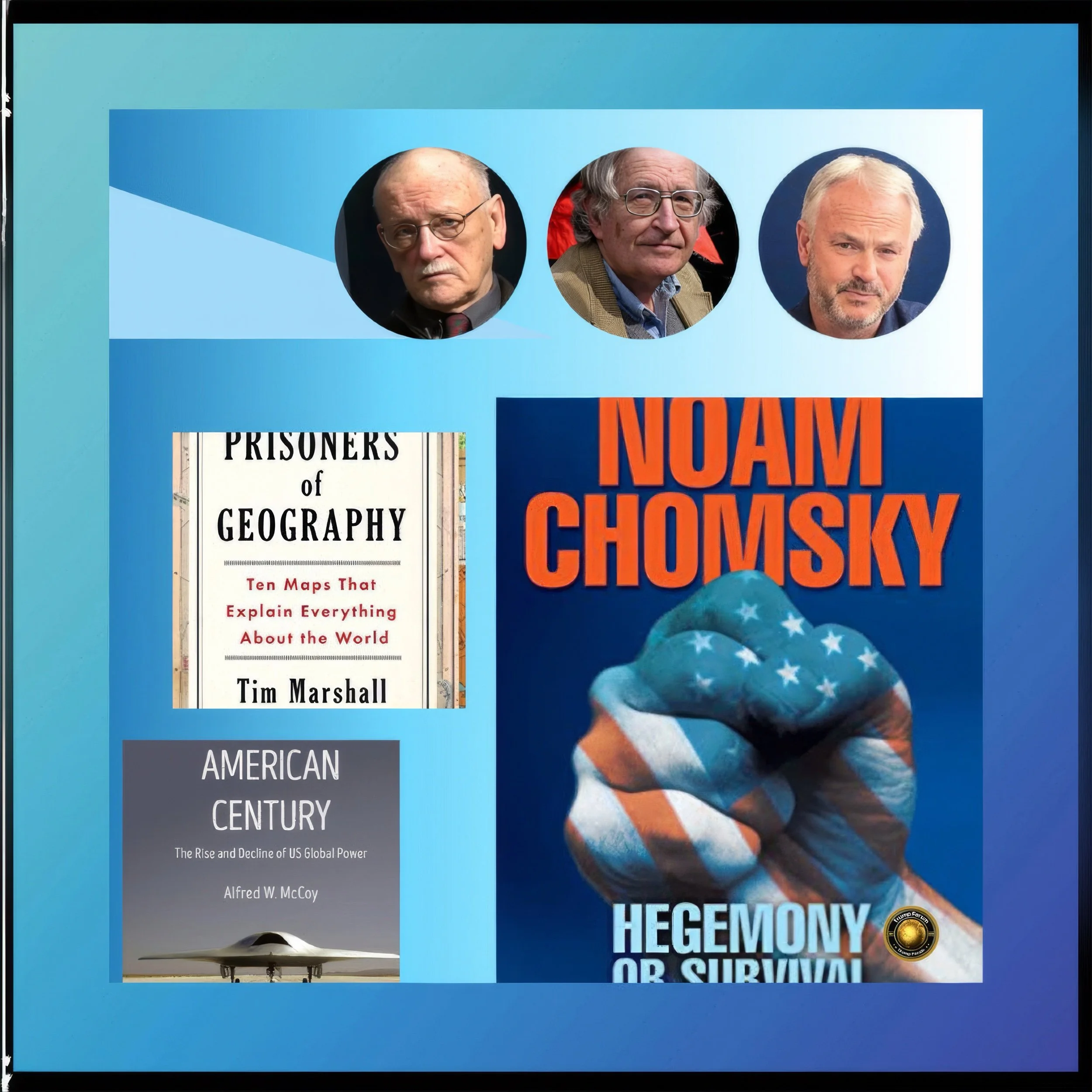
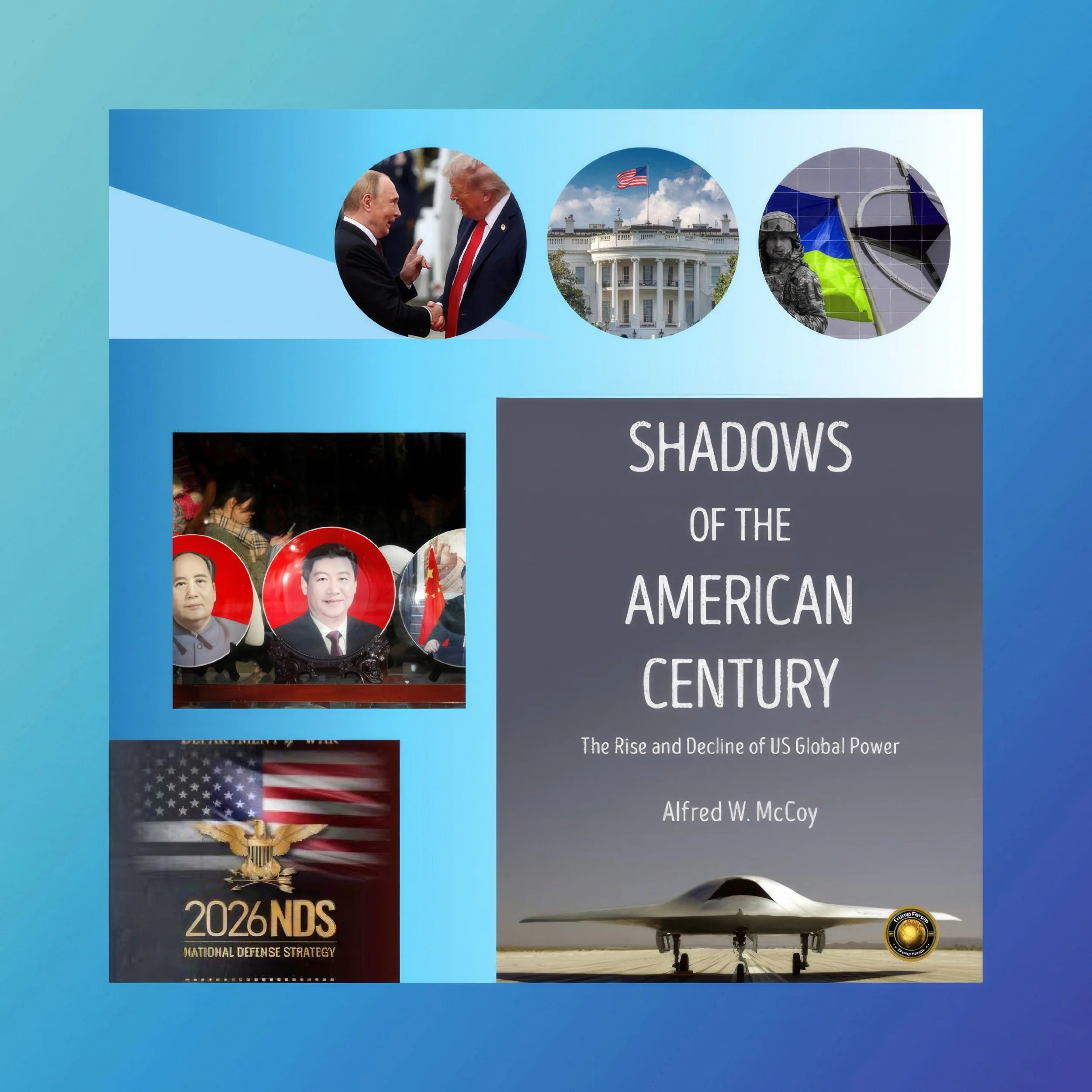
In the Shadows of the American Century: The Rise and Decline of U.S. Global Power
The global order that emerged after the Second World War was shaped overwhelmingly by the United States.
While earlier empires relied on colonies, territorial annexation, and overt political control, the American system of influence developed through a more complex architecture of power.
Historian Alfred W. McCoy argues that the United States constructed a modern empire through surveillance networks, military alliances, intelligence agencies, financial institutions, and technological supremacy.
This form of influence allowed Washington to exert enormous geopolitical leverage while avoiding the appearance of traditional imperial rule.
The foundations of this system were laid between 1945 and the early Cold War years.
During this period, the United States established hundreds of military bases around the world, created global intelligence networks led by the Central Intelligence Agency and National Security Agency, and shaped international financial institutions that tied economic development to American strategic priorities.
Together these instruments produced what McCoy describes as an empire of information and infrastructure.
The Cold War strengthened this system. Intelligence gathering, satellite surveillance, and global communications networks allowed Washington to monitor political developments across continents.
Military alliances such as NATO, combined with bilateral defense agreements across Asia and the Middle East, provided a strategic architecture that placed American forces within rapid reach of major geopolitical flashpoints.
Meanwhile, the dominance of the dollar in international trade reinforced economic leverage.
Yet McCoy’s analysis does not end with the triumph of American power. He argues that the very mechanisms that sustained U.S. global leadership are now revealing signs of strain.
Rising powers such as China have developed technological capabilities that challenge American dominance in areas including telecommunications, cyber operations, and artificial intelligence.
The costs of maintaining hundreds of overseas bases and extensive military deployments have also generated debates within the United States itself.
At the same time, new geopolitical dynamics are reshaping the global order.
Regional powers are asserting greater autonomy, international institutions are becoming more contested, and technological competition is transforming the nature of strategic rivalry.
These developments do not necessarily signal the immediate collapse of American influence. However, they do suggest that the structure of global power may be shifting toward a more fragmented and multipolar environment.
McCoy’s work therefore provides both a historical account and a warning. By examining how the United States constructed its postwar empire, he highlights the structural forces that sustain global leadership.
By identifying early signs of decline, he also raises important questions about whether the American Century can endure in the face of emerging geopolitical realities.
Foreward
Understanding the Architecture of American Power
The twentieth century witnessed the emergence of a form of global power unlike any previous empire.
Instead of formal colonies, the United States built an international system rooted in alliances, intelligence networks, financial institutions, and technological innovation.
This structure allowed Washington to exert influence across continents while maintaining the narrative that it opposed imperial domination.
Alfred W. McCoy’s work explores how this system was constructed and how it continues to shape world politics. His central argument is that American global dominance was not simply the result of economic strength or military capacity.
Rather, it was the product of a carefully constructed architecture of power that integrated surveillance, communications, intelligence, and geopolitical strategy.
This architecture functioned through a series of interconnected systems. Intelligence agencies gathered information from across the globe, enabling policymakers to anticipate political developments and intervene when necessary.
Military bases provided logistical infrastructure that allowed the rapid deployment of forces to distant regions. Financial institutions reinforced economic influence by linking development and trade to the American-led global order.
These mechanisms produced what might be called an empire of networks. Instead of controlling territories directly, the United States controlled the systems that structured global interactions.
Communications networks carried information through infrastructure dominated by American technology companies. Financial transactions flowed through institutions closely tied to U.S. regulatory frameworks. Security arrangements often depended on American military capabilities.
However, McCoy also suggests that this system contains inherent vulnerabilities. Technological advantages can erode as other countries develop comparable capabilities.
Military alliances can weaken when domestic political debates question the costs of global leadership. Economic dominance can diminish when alternative financial centers emerge.
The story of the American Century is therefore not only a story of power but also of structural change. Understanding how the United States built its global system provides crucial insight into the forces shaping the contemporary international order.
History and Current Status
The Construction of a Postwar Empire
The origins of American global dominance can be traced to the aftermath of the Second World War. By 1945, much of Europe and Asia lay devastated by conflict.
Industrial infrastructure had been destroyed, economies had collapsed, and political institutions faced profound instability. In contrast, the United States emerged from the war with unprecedented economic strength and military capability.
American policymakers recognized that this moment presented both opportunity and risk. They feared that economic instability could foster political extremism, particularly the spread of Soviet influence.
As a result, Washington embarked on an ambitious effort to reconstruct the global economy while simultaneously building a strategic framework to contain geopolitical rivals.
The Marshall Plan became one of the earliest instruments of this strategy. Through extensive economic assistance, the United States supported the reconstruction of Western Europe while reinforcing political alliances.
At the same time, the creation of institutions such as the International Monetary Fund and the World Bank established financial structures that linked economic stability to the American-led global system.
Military alliances also played a crucial role.
The establishment of NATO created a collective security framework that integrated European defense planning with American military power. Similar arrangements developed in Asia through bilateral treaties with Japan, South Korea, and other partners.
Parallel to these developments, the United States constructed an extensive intelligence apparatus.
The creation of the CIA and the expansion of signals intelligence capabilities enabled Washington to monitor political developments around the world. During the Cold War, intelligence gathering became a central component of geopolitical strategy.
Another defining feature of this period was the expansion of military infrastructure. Over several decades, the United States established hundreds of bases across Europe, Asia, and the Middle East.
These installations provided logistical hubs for operations ranging from deterrence to humanitarian missions.
By the late twentieth century, this system had evolved into a dense network of strategic influence. American satellites monitored communications and missile launches.
Naval forces patrolled key maritime routes. Financial institutions reinforced economic integration with the United States at the center.
Today this architecture remains largely intact, though it faces growing challenges. Technological competition, regional conflicts, and shifting alliances are reshaping the strategic environment in which American power operates.
Key Developments
Surveillance, Technology, and the Infrastructure of Influence
A defining characteristic of American global power has been its reliance on information dominance.
During the Cold War, intelligence agencies developed sophisticated methods of gathering and analyzing data. Satellite reconnaissance, electronic interception, and advanced computing systems allowed Washington to monitor adversaries and allies alike.
The development of global surveillance networks marked a turning point in the evolution of modern geopolitics. Systems such as satellite imaging and signals interception provided unprecedented visibility into military activities and political developments.
These capabilities enhanced strategic planning and enabled rapid responses to emerging crises.
Technological innovation also transformed the nature of military operations. Precision-guided weapons, advanced communications systems, and integrated command structures allowed American forces to project power across vast distances.
These innovations were often supported by partnerships between government agencies and private technology companies.
The rise of the digital age further expanded the scope of American influence. Internet infrastructure, software platforms, and data networks became critical components of global economic and political activity.
Many of these systems were initially developed within the United States, reinforcing its leadership in technological innovation.
However, technological dominance has become increasingly contested.
Countries such as China have invested heavily in telecommunications, artificial intelligence, and cyber capabilities. These developments are creating new arenas of competition that extend beyond traditional military domains.
Another key development has been the expansion of financial globalization. The central role of the dollar in international trade has allowed Washington to influence global economic flows. Financial sanctions, regulatory frameworks, and monetary policies have become tools of geopolitical strategy.
Together these developments illustrate the multidimensional nature of American power. Military strength, intelligence capabilities, technological innovation, and financial influence form an interconnected system that shapes the international order.
Latest Facts and Concerns
Emerging Challenges to American Dominance
In recent years, several trends have raised questions about the sustainability of American global leadership.
One of the most significant developments has been the rise of China as a technological and economic competitor. Chinese investments in infrastructure, telecommunications, and artificial intelligence are reshaping global markets and strategic relationships.
Another concern involves the financial costs associated with maintaining extensive overseas military deployments.
The network of bases that once symbolized American strategic reach now represents a complex logistical and political commitment. Debates within the United States increasingly focus on whether these commitments remain sustainable.
Cybersecurity has also emerged as a critical issue. As digital infrastructure becomes central to economic and political systems, cyber operations have become a key arena of competition.
Attacks on networks, data theft, and information warfare pose new challenges for national security.
Domestic political dynamics also influence the trajectory of American power. Periods of political polarization can complicate long-term strategic planning and affect the credibility of international commitments.
These concerns do not necessarily imply imminent decline. However, they highlight the complexity of maintaining global leadership in a rapidly changing world.
Cause and Effect Analysis
The Structural Forces Behind Power and Decline
The rise of American global power was driven by several interconnected factors. Economic strength provided the resources necessary for military expansion and technological innovation. Political institutions facilitated long-term strategic planning. Alliances amplified influence by integrating the capabilities of multiple countries.
However, the same structures that enabled dominance can also generate vulnerabilities. Extensive military commitments require substantial financial resources.
Technological advantages can erode as competitors invest in similar capabilities. Global leadership often invites resistance from countries seeking greater autonomy.
McCoy emphasizes that historical patterns of empire often follow similar trajectories. Dominant powers build systems of influence that eventually become difficult to sustain as geopolitical conditions evolve.
Understanding these dynamics does not imply deterministic decline. Rather, it underscores the importance of strategic adaptation in maintaining influence.
Future Steps
Adapting to a Changing Global Order
The future of American global power will depend on its ability to adapt to emerging geopolitical realities. Technological innovation remains a critical area of competition. Investments in research, education, and infrastructure will shape the balance of power in fields such as artificial intelligence and cybersecurity.
Diplomatic engagement will also play an important role. Strengthening alliances and partnerships can enhance resilience in the face of strategic competition. Multilateral cooperation may become increasingly important in addressing challenges such as climate change and global health crises.
Economic policy represents another area of strategic significance. Maintaining the central role of the dollar in international finance will require continued confidence in American economic institutions.
Ultimately, the durability of the American Century will depend not only on material capabilities but also on the ability to adapt to a more complex and interconnected world.
Conclusion
Empire in an Era of Transformation
The story of American global power is one of extraordinary historical transformation.
Within a few decades after 1945, the United States constructed an international system that reshaped the structure of world politics.
Through intelligence networks, military alliances, financial institutions, and technological innovation, Washington established an unprecedented architecture of influence.
Alfred W. McCoy’s analysis reveals how this system operates beneath the surface of international politics. By examining the infrastructure of surveillance, communication, and military logistics, he illuminates the mechanisms that sustain global leadership.
Yet the future of this system remains uncertain.
Technological competition, shifting alliances, and evolving geopolitical dynamics are challenging established patterns of dominance.
Whether the American Century will endure or gradually give way to a new global order remains an open question.
What is clear is that the structures built during the 20th century continue to shape the strategic landscape of the 21st.
Understanding their origins and evolution is essential for interpreting the complex realities of contemporary geopolitics.