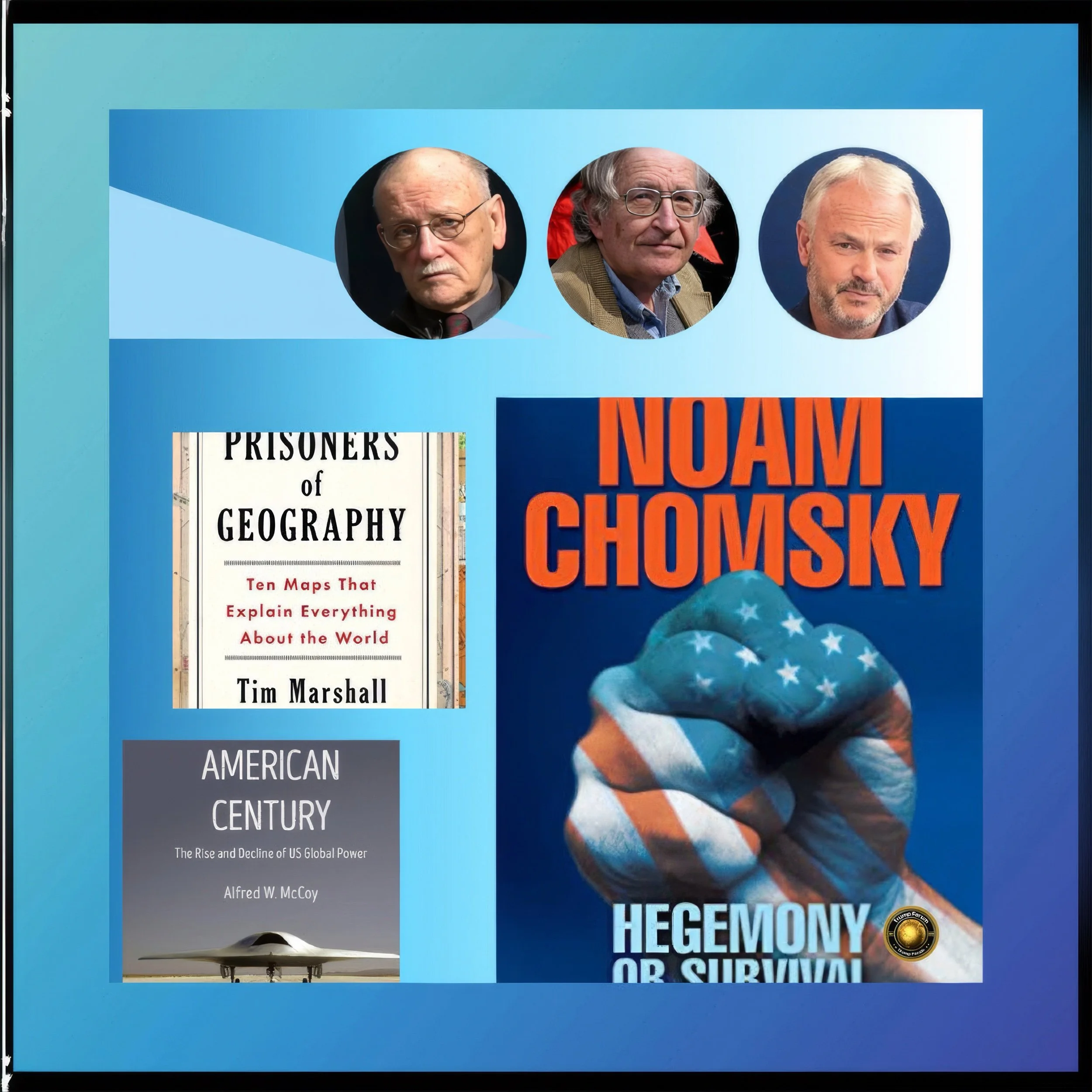
Three Visions of American Power: Chomsky, McCoy, and Marshall on the Future of Global Order
Executive Summary
Three Thinkers, Three Futures: How Chomsky, McCoy, and Marshall Explain America’s Changing Global Power Today
Few questions dominate contemporary geopolitics more profoundly than the fate of American global power.
Since the end of the Second World War, the United States has shaped the architecture of international politics through military alliances, economic institutions, technological innovation, and cultural influence.
Yet the durability of this system is increasingly debated as strategic rivalry intensifies and geopolitical fragmentation accelerates.
Three influential thinkers provide contrasting interpretations of this evolving order.
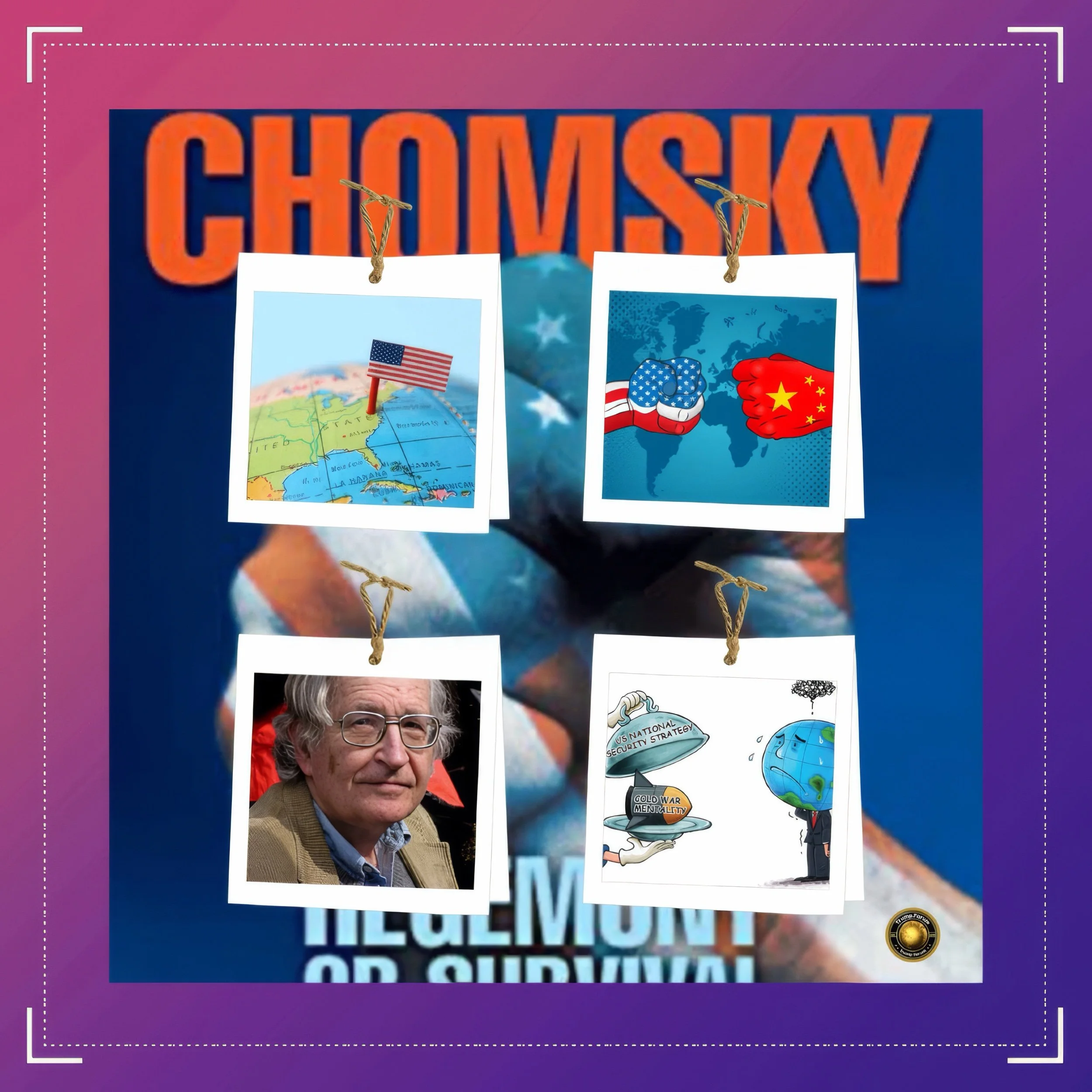
Noam Chomsky presents the United States as a hegemonic power committed to preserving global supremacy at almost any cost.
Alfred W. McCoy focuses on the structural mechanisms that underpinned American dominance, particularly surveillance networks, military bases, and technological infrastructure.
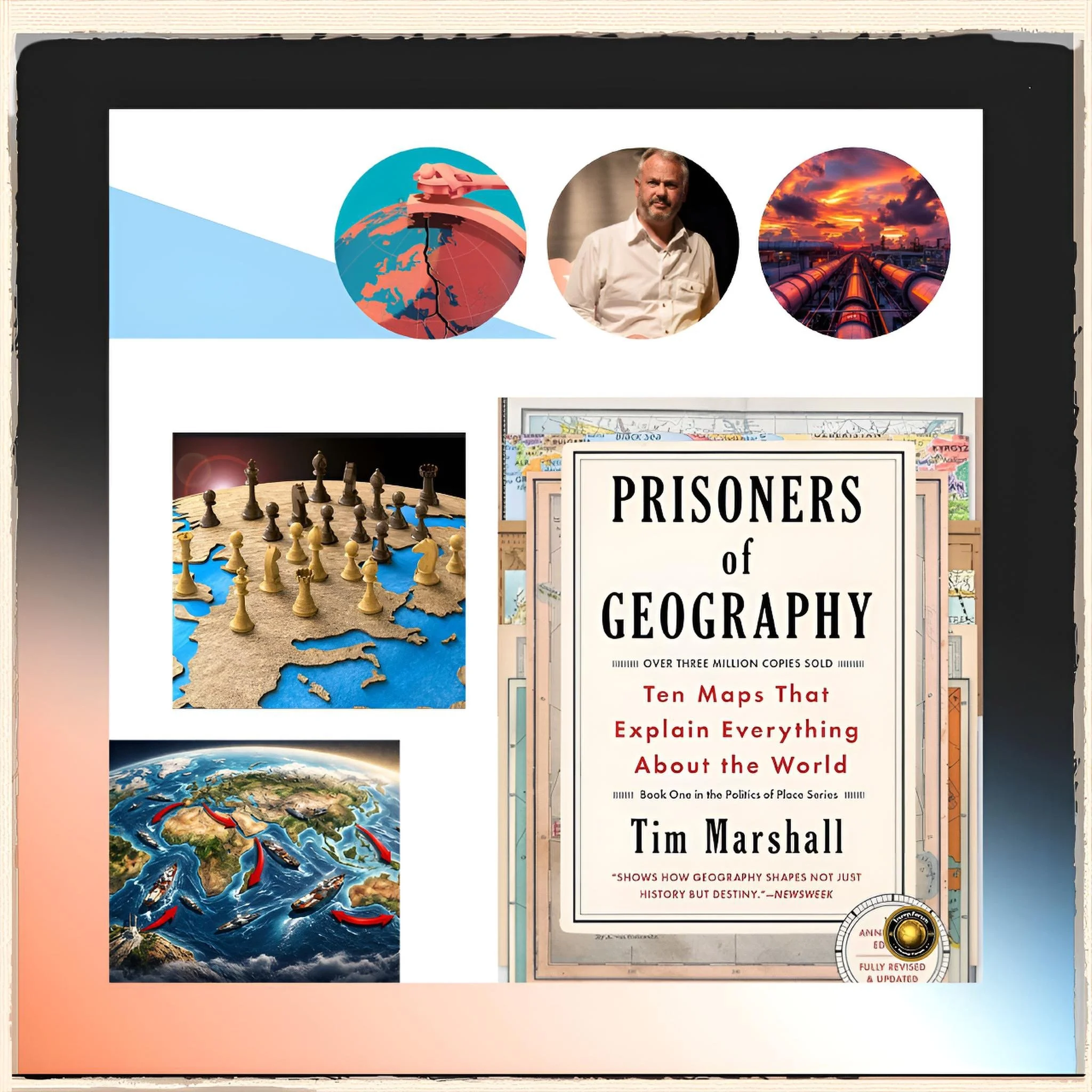
Tim Marshall approaches the question from a different perspective, emphasizing geography and physical constraints as the ultimate determinants of geopolitical outcomes.
Together, these perspectives offer a powerful framework for understanding the past, present, and future of global power.
Chomsky highlights the political logic of dominance and intervention. McCoy reveals the institutional architecture that enabled American hegemony. Marshall reminds analysts that even the most powerful states remain constrained by geography, resources, and physical realities.
Recent geopolitical developments illustrate the relevance of this intellectual debate. Strategic competition between the United States and China is reshaping the global balance of power.
The war in Ukraine has revived large-scale confrontation between nuclear-armed states. Tensions in the Middle East continue to threaten regional stability.
At the same time, technological competition in artificial intelligence, cyber capabilities, and space systems is transforming the nature of geopolitical rivalry.
Domestic political dynamics within the United States also play an increasingly significant role. Policies associated with the Trump presidency introduced new tensions within the American alliance system through tariffs and trade disputes.
Debates about international institutions, including the perceived marginalization of the United Nations and the emergence of alternative diplomatic initiatives such as the Board of Peace, reflect broader questions about the future structure of global governance.
Meanwhile, geopolitical controversies involving territories such as Greenland and discussions about North American strategic integration involving Canada illustrate how traditional assumptions about sovereignty and alliances are being reconsidered.
The central question that emerges from FAF analysis is whether the American Century represents a temporary historical phase or the foundation of a durable international order.
By examining the competing interpretations offered by Chomsky, McCoy, and Marshall, we can better understand the structural forces shaping the future of global politics.
Introduction
Understanding the American Century Through Chomsky, McCoy, and Marshall and Their Competing Visions of Global Order
Three Intellectual Lenses on American Power
The study of international relations often revolves around competing explanations for the rise and fall of great powers.
Some scholars emphasize economic capacity, others military strength, and still others ideological or institutional factors. The debate surrounding American global leadership reflects this diversity of analytical perspectives.
Noam Chomsky, Alfred W. McCoy, and Tim Marshall represent three distinct intellectual traditions within this broader discussion. Their interpretations differ not only in emphasis but also in underlying assumptions about the nature of power itself.
Chomsky approaches the question from a critical political perspective. For him, American foreign policy is fundamentally shaped by the pursuit of hegemonic dominance. The objective is not merely security but the prevention of any rival capable of challenging U.S. leadership.
McCoy’s work focuses on the structural infrastructure of empire. Rather than examining ideology alone, he analyzes the systems that sustain global influence. Surveillance technologies, intelligence networks, and military logistics form the backbone of what he describes as the American imperial system.
Marshall offers a third lens rooted in geopolitical geography. In his analysis, the ultimate drivers of global politics are physical realities such as terrain, resources, and strategic chokepoints. These factors shape the opportunities and constraints faced by all states, including the United States.
Understanding these perspectives together provides a richer understanding of contemporary geopolitics. Each framework highlights different dimensions of power, and together they reveal the complexity of the international system.
History and Current Status
Power Surveillance and Geography: The Intellectual Debate About America’s Role in the Twenty-First Century
The Rise of the American Century
The emergence of the United States as the central power in world politics was the product of historical circumstances unique to the mid-twentieth century.
The devastation of Europe and Asia during the Second World War created an unprecedented geopolitical vacuum.
The United States possessed overwhelming industrial capacity, technological innovation, and military power.
By the late 1940s, it accounted for nearly half of global economic output.
American policymakers responded by constructing a network of institutions and alliances designed to stabilize the international system while preserving U.S. leadership.
These initiatives included economic programs to rebuild war-torn economies, the establishment of international financial institutions, and the creation of military alliances such as NATO.
During the Cold War, the rivalry with the Soviet Union reinforced this structure.
Military bases were established across Europe, Asia, and the Middle East. Intelligence agencies expanded their capabilities, developing advanced surveillance systems that monitored global political developments.
McCoy argues that this infrastructure formed the backbone of the American Empire. Unlike traditional colonial powers, the United States rarely governed territories directly. Instead, it controlled the systems through which global power operated.
The end of the Cold War appeared to confirm the triumph of this model. The collapse of the Soviet Union left the United States as the sole superpower.
However, the decades that followed revealed new challenges. Economic globalization accelerated China's rise.
Regional conflicts persisted across multiple continents. Technological change introduced new domains of competition.
Today, the international system is increasingly described as multipolar.
Key Developments
Competing Theories of Power
Chomsky’s interpretation emphasizes the continuity of hegemonic ambition in American foreign policy. According to this perspective, interventions in various regions reflect a consistent effort to maintain strategic dominance.
From this viewpoint, contemporary tensions with China represent the latest manifestation of a long-standing pattern in which the United States seeks to prevent the emergence of rival power centers.
McCoy’s analysis complements this argument by focusing on the institutional architecture that enables such dominance.
Intelligence agencies, surveillance technologies, and global communications networks provide Washington with unparalleled access to information.
This informational advantage enhances military capabilities and diplomatic influence.
Marshall introduces an alternative emphasis on geography. Even the most powerful state must operate within physical constraints. Mountain ranges, oceans, natural resources, and strategic chokepoints shape geopolitical possibilities.
For example, the geographic separation of the United States from Eurasia has historically provided security advantages. At the same time, China’s location within the heart of Asia provides access to vast economic networks.
These geographic realities influence the trajectory of strategic competition.
Latest Facts and Concerns
From Empire to Geography Competing Theories About the Rise Decline and Transformation of American Dominance
Geopolitical Turbulence in the Present Era
The early decades of the twenty first century have witnessed a dramatic intensification of geopolitical competition.
Strategic rivalry between the United States and China now extends across multiple domains including trade, technology, and military capabilities.
Trade disputes involving tariffs have complicated relationships not only with China but also with traditional allies such as Canada and European partners.
At the same time, debates about international governance structures have intensified. Critics argue that initiatives perceived as bypassing the United Nations weaken the legitimacy of global institutions.
The Middle East remains one of the most volatile regions in the international system. Conflicts involving Israel, Iran, and other regional stakeholders continue to create the risk of broader escalation.
Efforts to secure ceasefires in the Palestinian conflict illustrate the difficulty of achieving durable diplomatic solutions in an environment shaped by competing strategic interests.
These developments demonstrate the growing complexity of global politics.
Cause and Effect Analysis
Why Dominance Creates Resistance
The theories of Chomsky, McCoy, and Marshall converge on one important insight: power inevitably generates countervailing forces.
When a state achieves overwhelming dominance, other countries begin searching for ways to balance that power.
Economic competition can produce technological innovation among rival states. Military alliances may form to counter perceived threats. Diplomatic initiatives may emerge to challenge existing institutional frameworks.
In this sense, hegemonic power often contains the seeds of its own transformation.
Future Steps
The Next Phase of Global Order
The trajectory of the international system will depend on several critical factors.
Technological innovation will continue to reshape strategic competition. Artificial intelligence, cyber capabilities, and space systems are becoming central elements of national power.
Diplomatic engagement will also play an essential role. Cooperation among major powers may be necessary to address global challenges such as climate change and economic instability.
At the same time, geographic realities will continue to influence geopolitical dynamics.
Conclusion
Is the American Century Ending What Three Major Thinkers Reveal About the Future Global Balance
Understanding the Future of American Power
The debate over American global leadership reflects broader questions about the nature of power in the modern world.
Noam Chomsky highlights the political logic of hegemony. Alfred McCoy reveals the structural mechanisms that sustain imperial influence. Tim Marshall reminds observers that geography ultimately constrains all ambitions.
Together their insights provide a comprehensive framework for understanding the evolving international order.
Whether the American Century represents the beginning of a durable global system or a transitional phase in the history of great power politics remains uncertain.
What is clear, however, is that the coming decades will determine whether the pursuit of dominance can coexist with the need for global stability.