Executive Summary
After the Second World War, the United States became the most powerful country in the world. But it did not build a traditional empire like the British or the French.
Instead of colonies, it created a network of military bases, alliances, intelligence systems, and economic institutions.
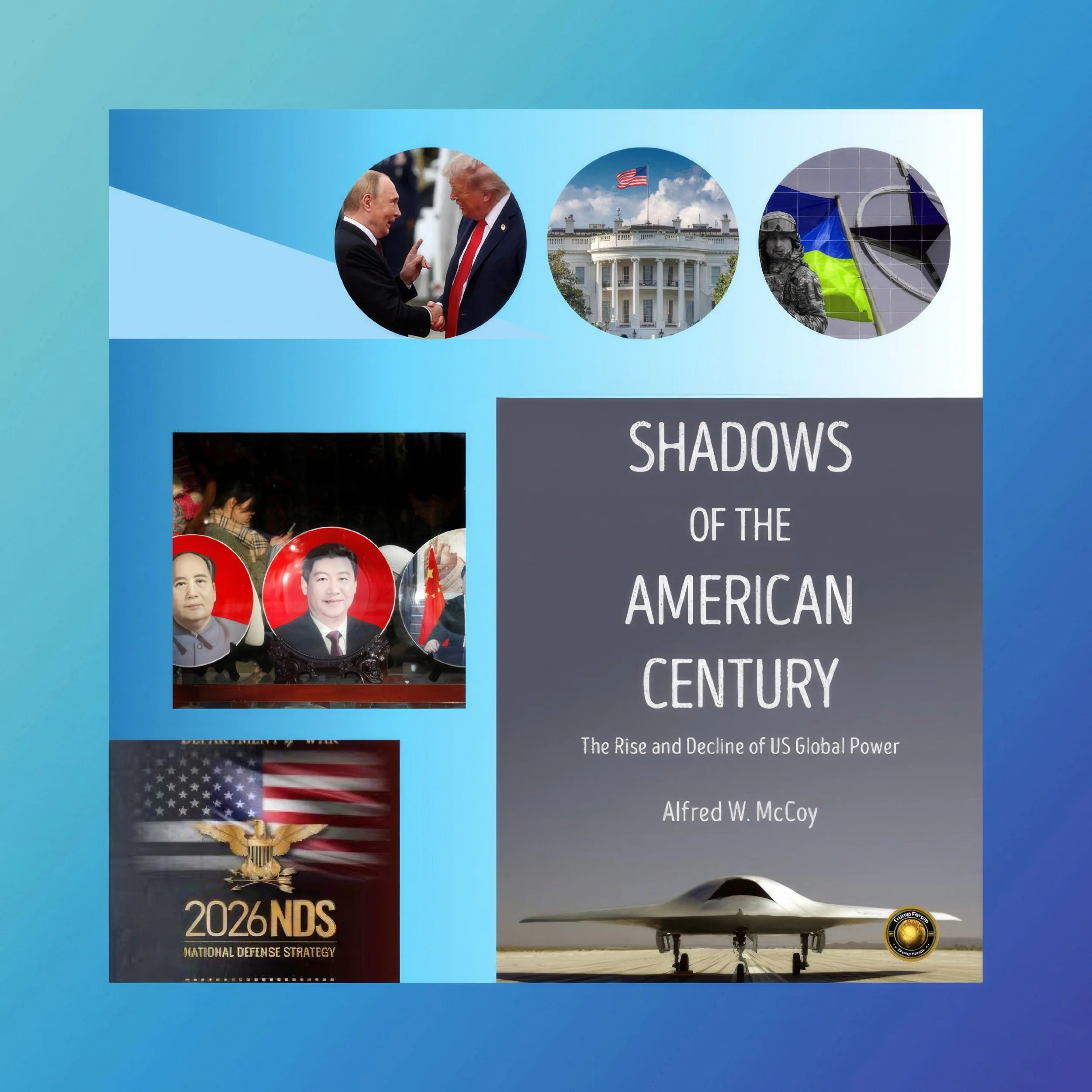
Historian Alfred W. McCoy explains that this system allowed the United States to influence world politics without directly ruling other countries.
Through technology, financial power, and global security partnerships, Washington created what many analysts call the American Century.
Today this system still exists, but it faces new challenges. Countries like China are developing new technologies and economic networks that compete with American influence.
Understanding how the United States built its global system helps explain why the international order is now changing.
Foreward
A Different Kind of Empire
When people think about empires, they often imagine countries ruling colonies across the world. But the United States built power in a different way.
Instead of controlling territories, it built systems. These systems included military bases, intelligence agencies, financial institutions, and technology networks.
Because of these systems, the United States could influence events in many parts of the world even without direct political control.
History and Current Status
The World After World War Two
In 1945 much of Europe and Asia was destroyed by war. Factories were damaged, cities were ruined, and governments were unstable.
The United States was different. Its economy was strong and its military was powerful.
American leaders believed that rebuilding the global economy would help prevent another world war. They launched programs such as the Marshall Plan to help Europe recover.
At the same time, the United States built alliances such as NATO. These alliances connected many countries through defense agreements.
The United States also built military bases in many regions. These bases allowed American forces to move quickly if a crisis occurred.
Today many of these bases and alliances still exist.
Key Developments
Technology and Intelligence Networks
One of the most important tools of American power has been information.
During the Cold War the United States built satellites that could take pictures of military installations. Intelligence agencies also developed systems that could intercept communications.
These technologies helped American leaders understand what was happening around the world.
Later, the internet and digital communications became important. Many early internet technologies were developed in the United States.
Because of this, American companies became leaders in global technology markets.
Latest Facts and Concerns
New Competitors in Global Technology
In recent years other countries have started building their own technology systems.
China, for example, has invested heavily in artificial intelligence and telecommunications networks.
This competition means that the United States no longer dominates every area of technology.
Another concern involves the cost of maintaining hundreds of military bases around the world.
Some Americans believe these bases are necessary for security. Others think they are too expensive.
Cause and Effect Analysis
Why Power Can Rise and Decline
History shows that powerful countries often rise and later face challenges.
When a country becomes dominant, it builds systems to maintain its power. These systems can include military forces, economic institutions, and alliances.
But over time other countries learn from these systems and develop their own capabilities.
This process creates competition.
For example, technological innovation that once gave the United States an advantage is now spreading to other countries.
Future Steps
Adapting to a New World
The United States still has enormous economic and military power. But the world is changing.
To remain influential, the country may need to focus on innovation and cooperation with allies.
Education, research, and new technologies will be important.
Diplomacy will also matter. Working with partners can help maintain stability in the international system.
Conclusion
Understanding the American Century
The United States created a global system of power after World War Two that was very different from earlier empires.
Instead of colonies, it relied on networks of alliances, technology, intelligence, and economic institutions.
This system shaped international politics for decades.
Today new powers are emerging, and the global balance of influence is changing.
Understanding how the American system was built helps explain the challenges that may shape the future of world politics.