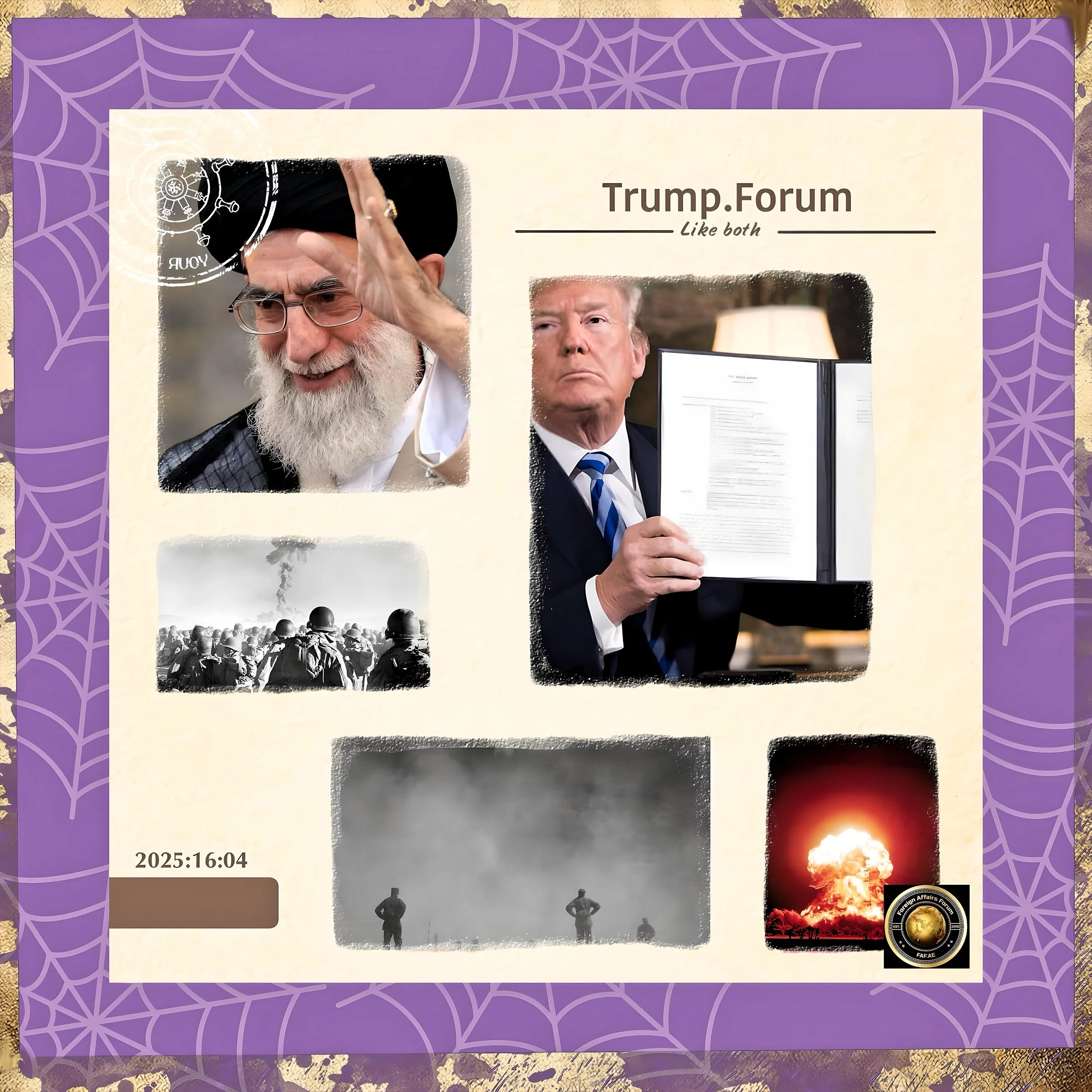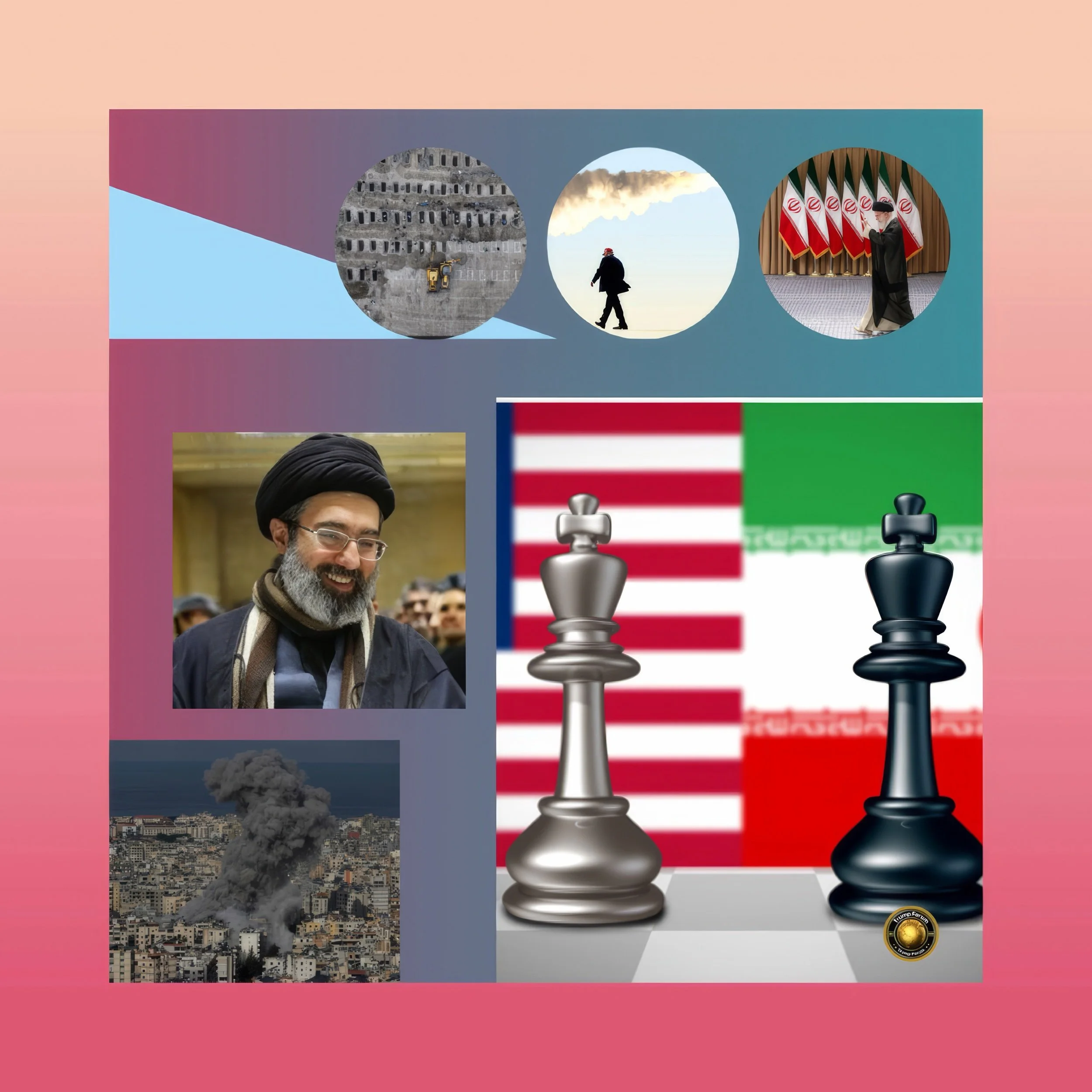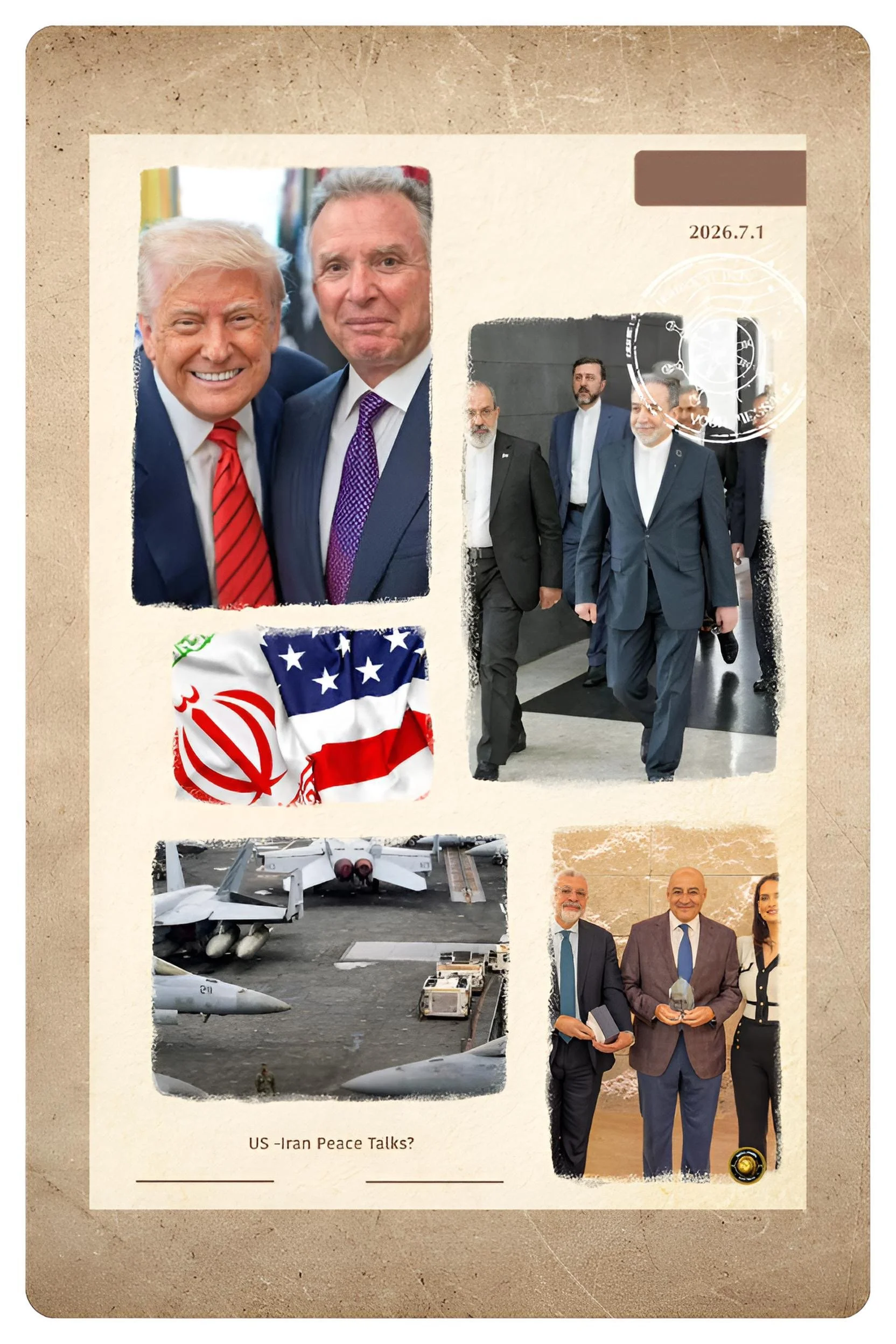
Why Diplomacy Still Fails After War, Threats, and Mistrust: The US-Iran Challenge
Executive Summary
The Stalemate: Why U.S.–Iran Diplomacy Can’t Break Free from History
The indirect talks between U.S. and Iranian officials in Muscat mark the first formal diplomatic engagement since the June 2025 Israel-Iran war and U.S. strikes on Iranian nuclear facilities.
While the meeting signals a tentative reopening of dialogue, it also underscores the profound structural, political, and strategic barriers preventing meaningful progress.
FAF comprehensive analysis delves into the historical roots of U.S.-Iran nuclear diplomacy, the immediate post-war environment, the significance of venue and participant choices, and the deeper geopolitical dynamics shaping the talks.
It argues that the Muscat meeting reflects containment rather than reconciliation, aimed at managing escalation rather than resolving core disputes, and that mistrust, militarization, and domestic political constraints make substantive breakthroughs unlikely in the near term.
Introduction
Talks Without Trust: Inside the Latest U.S.–Iran Diplomatic Deadlock
When U.S. and Iranian officials convened indirectly in Muscat, Oman, the very fact of the meeting carried symbolic weight.
It was the first structured diplomatic exchange since President Donald Trump authorized strikes on Iranian nuclear sites in June 2025, during a 12-day war between Israel and Iran that brought the Middle East to the brink of regional conflagration. Yet symbolism should not be confused with substance.
Despite cautious language from both sides, the talks produced no concrete agreements and exposed the depth of mutual suspicion that continues to define one of the world’s most consequential adversarial relationships.
Diplomacy, in this case, appears less an avenue for resolution than a mechanism for risk management. The Muscat meeting revealed how deeply militarized, politicized, and fragmented the negotiating environment has become.
History and Current Status
U.S.-Iran nuclear diplomacy has always been cyclical, oscillating between engagement and rupture.
The 2015 nuclear agreement marked the high point of negotiated restraint, offering sanctions relief in exchange for limits on Iran’s nuclear program. That framework collapsed when the United States withdrew in 2018, triggering Iranian noncompliance and accelerating enrichment activities.
Subsequent efforts to revive the agreement faltered amid mutual recriminations, regional proxy conflicts, and shifting political leadership.
By the early 2020s, the talks had effectively frozen. Iran expanded its nuclear capabilities while insisting on sanctions relief; the United States demanded compliance first.
The June 2025 Israel-Iran war fundamentally altered the landscape. U.S. strikes on Iranian nuclear sites ended any remaining trust. While the strikes were framed as limited and defensive, Tehran viewed them as confirmation that Washington prioritized coercion over diplomacy.
Today, negotiations exist in a narrow space defined by deterrence, not confidence. The Muscat talks occurred not because relations improved, but because escalation risks became intolerable.
Key Developments
Several developments shaped the character of the Muscat meeting. Iran’s insistence on relocating the talks from Turkey to Oman reflected a preference for a discreet, trusted mediator with a history of facilitating U.S.-Iran dialogue.
Excluding Turkey, Egypt, Qatar, and Saudi Arabia signaled Tehran’s desire to limit regional pressure and avoid multilateralization.
Reports that U.S. and Iranian officials met directly, despite the talks being described as indirect, highlight the pragmatic contradictions at play. Official narratives emphasize distance, while operational realities suggest quiet engagement.
The most striking development was the participation of U.S. Central Command chief Adm. Brad Cooper.
His presence underscored the fusion of diplomacy and military signaling.
For Iran, this reinforced perceptions that negotiations are conducted under threat rather than mutual respect.
Latest Facts and Concerns
Iranian Foreign Minister Abbas Araghchi described the talks as a “good start” but emphasized mistrust as a serious obstacle.
He explicitly warned that threats and pressure undermine dialogue. The United States offered no immediate public response, reinforcing ambiguity.
Behind the scenes, concerns center on three issues.
First is Iran’s nuclear trajectory, including enrichment levels and inspection access.
Second is sanctions relief, particularly financial restrictions that Tehran views as existential.
Third is regional security, where U.S. alliances and Iranian proxy networks remain in active tension.
The post-war environment has compressed timelines. Both sides fear miscalculation, yet neither is willing to concede first.
Cause-and-Effect Analysis
The Muscat talks are the product of accumulated cause-and-effect dynamics. The U.S. withdrawal from the nuclear agreement led Iran to escalate nuclear activities.
That escalation heightened Israeli threat perceptions, contributing to military confrontation.
The war triggered U.S. strikes, which hardened Iranian distrust. That distrust now constrains diplomacy, making progress incremental at best.
Military pressure has forced engagement, but it has also poisoned the atmosphere. The presence of senior military leadership at negotiations reinforces deterrence while undermining confidence-building.
This paradox lies at the heart of the current stalemate.
Geopolitical Context
Globally, the talks reflect a broader erosion of arms control frameworks and crisis diplomacy. Major powers increasingly rely on force and signaling rather than negotiated restraint.
For regional stakeholders, the U.S.-Iran dynamic shapes energy markets, maritime security, and alliance politics.
For Washington, the talks are about preventing further escalation while avoiding political backlash at home. For Tehran, they are about survival under pressure, maintaining sovereignty while extracting concessions.
Neither side views compromise as politically safe.
Future Steps
Next steps depend on internal consultations in Washington and Tehran. Limited confidence-building measures may emerge, such as informal de-escalation understandings or humanitarian exemptions.
A comprehensive nuclear deal appears unlikely without significant political change on both sides.
Oman is expected to remain the primary channel. Broader regional participation may return later, but only if initial trust is restored.
Conclusion
Bridges Never Built: The Fading Hope of a U.S.–Iran Breakthrough
The Muscat talks demonstrate that dialogue is possible even after war, but progress requires more than meetings.
Without a shift from coercion to credibility, negotiations will remain stalled.
For now, diplomacy serves as a pause button, not a solution.