China’s New Export: Health Care—Why Foreigners Are Flocking to Its Hospitals
Executive Summary
Inside China’s Medical Boom: How Global Patients Are Fueling a New Kind of Tourism
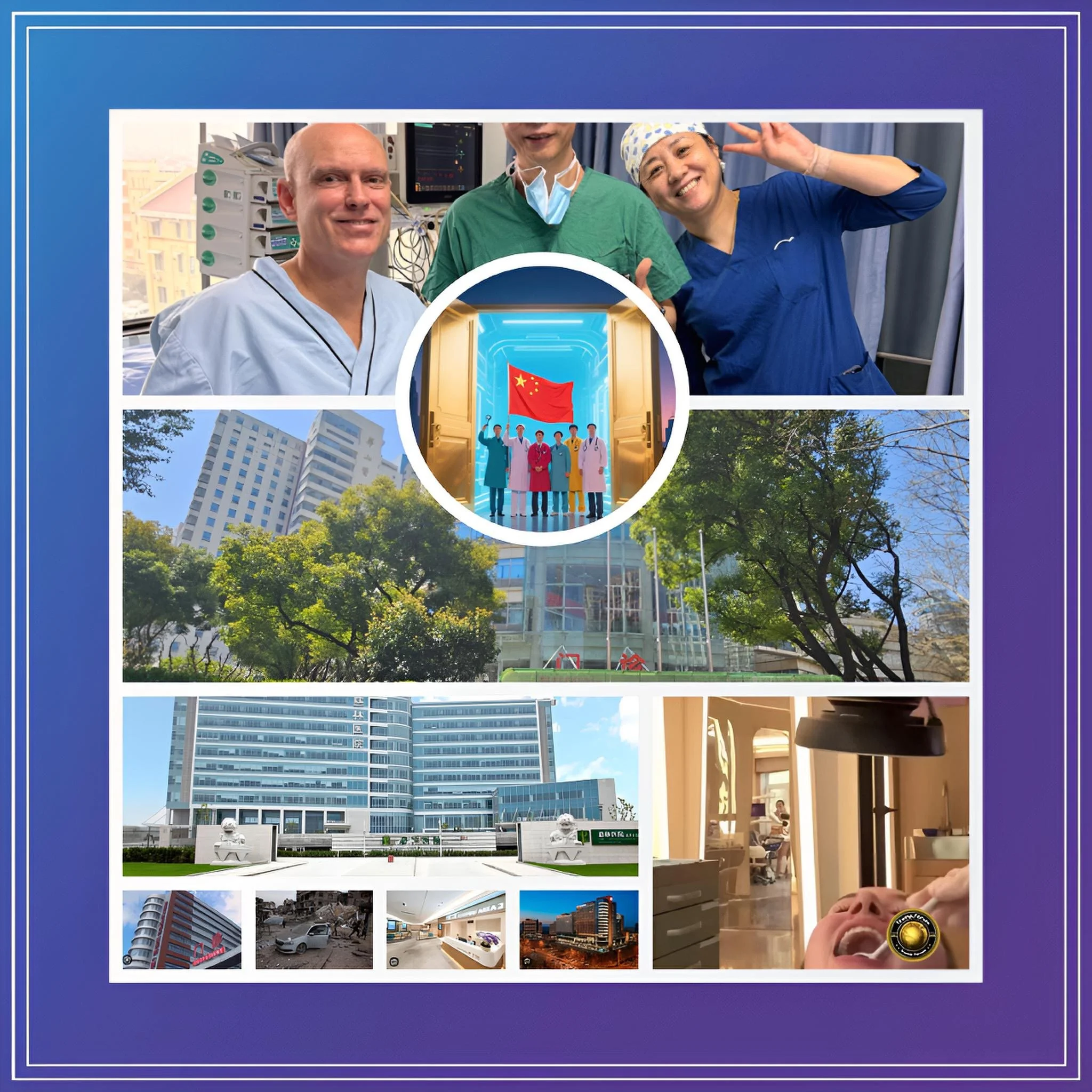
The phenomenon of medical tourism in China has burgeoned in recent years, propelled by the confluence of cost-effective medical services, expeditious diagnostic and therapeutic processes, and advancements in healthcare infrastructure.
Foreigners, disillusioned by protracted waiting times and exorbitant fees in their native systems, are increasingly gravitating toward Chinese hospitals, where procedures that command thousands of dollars elsewhere are executed for fractions of those sums.
This influx, however, engenders disquiet among domestic denizens, who perceive a potential dilution of resources earmarked for indigenous populations.
Historical trajectories reveal a transition from rudimentary facilities to world-class institutions, with current statistics indicating a surge in international patient visits approximating 1.3 million annually, a 74% escalation from antecedent figures.
Key evolutions encompass governmental initiatives to liberalize visa protocols and inaugurate specialized international medical precincts.
Contemporary verities underscore affordability—exemplified by cardiac examinations at $75 juxtaposed against $10,000 to $20,000 in the United States—while apprehensions pivot on linguistic impediments, remuneration modalities, and equitable resource apportionment.
Causal nexuses delineate how global healthcare disparities impel this migration, yielding economic boons yet exacerbating local strains. Prospective trajectories advocate augmented infrastructural investments and regulatory refinements to harmonize international allure with domestic exigencies.
In summation, China’s ascendance as a medical tourism nexus portends transformative ramifications for global health paradigms, albeit necessitating vigilant stewardship to mitigate endogenous disaffection.
Introduction
Healing Across Borders: The Rise of Medical Tourism in China and Its Local Tensions
In the labyrinthine expanse of global healthcare dynamics, China emerges as an improbable yet increasingly salient protagonist in the narrative of medical tourism.
Traditionally overshadowed by luminaries such as Thailand, India, and South Korea in this domain, the Middle Kingdom now captivates a burgeoning cadre of international sojourners seeking succor from ailments amid its urban metropolises.
This paradigm shift is not merely anecdotal; it is substantiated by a confluence of empirical data and socioeconomic imperatives.
Foreigners, beleaguered by the vicissitudes of their indigenous medical apparatuses—characterized by interminable queues in systems like Britain’s National Health Service or prohibitive tariffs in the American milieu—are enticed by China’s amalgamation of technological sophistication and pecuniary modesty.
A quintessential vignette is that of Amie, a British expatriate whose odyssey to Beijing for gastrointestinal redress, consummated in mere days for approximately $400, including aerial conveyance, reverberated across digital fora, galvanizing a cascade of analogous testimonials.
This discourse endeavors to dissect the multifaceted etiology of this escalation, juxtaposing the allure for aliens against the burgeoning unease permeating local constituencies, who apprehend a usurpation of scarce medical assets.
Through an exegesis encompassing historical antecedents, contemporaneous modalities, pivotal metamorphoses, empirical corollaries, causal dialectics, prognosticative stratagems, and synoptic inferences, this treatise illuminates the intricate tapestry of China’s medical tourism efflorescence.
History and Current Status
The genesis of China’s healthcare odyssey traces to the post-Maoist era, wherein the 1978 economic reforms precipitated a seismic reconfiguration of medical provisioning.
Antecedently, the system was predicated on communal brigades and rudimentary prophylactics, efficacious in rudimentary prophylaxis yet deficient in sophisticated interventions.
The 1980s heralded privatization impulses, engendering a bifurcated paradigm: opulent urban enclaves burgeoned with avant-garde facilities, while rustic hinterlands languished in obsolescence.
By the millennium’s advent, investments in biomedical research and infrastructural augmentation—bolstered by the 2009 healthcare reform blueprint—catapulted select institutions to global eminence.
Hospitals such as Peking Union Medical College Hospital and Shanghai’s Ruijin evince this apotheosis, proffering expertise in oncology, cardiology, and regenerative therapeutics rivaling Occidental counterparts.
Presently, the status quo delineates a robust, albeit uneven, ecosystem accommodating nearly 1.3 million foreign patients in the antecedent annum, a 74% augmentation from 2022 benchmarks.
This cohort encompasses not solely peripatetic tourists but expatriates and contiguous denizens from Hong Kong and Macao, with Shenzhen chronicling 770,000 extraterritorial consultations in 2024.
Shanghai’s anointed sanctuaries registered a 15% increment, aggregating 270,000 alien encounters.
Nonetheless, the niche remains embryonic, with dedicated medical sojourners numbering under 10,000 in 2025, impeded by linguistic schisms, pecuniary encumbrances, and visa labyrinths.
Governmental edicts, including the 2024 pilot for wholly exogenous proprietorship in nine metropolises, augur an amplification of this trajectory.
The market’s valuation, appraised at $11.3 billion in 2025, is prognosticated to burgeon to $22.8 billion by 2035, evincing a 7.2% compound annual accretion.
This efflorescence is symbiotic with inbound tourism’s resurgence, where alien disbursements escalated 51.3% year-on-year through November 2025.
Yet, the dichotomy persists: while apex facilities gleam with innovation, pervasive inconsistencies in quality, particularly interurban disparities, temper unbridled optimism.
Key Developments
Pivotal metamorphoses in China’s medical tourism tableau are manifold, commencing with the liberalization of ingress protocols.
The expansion of visa-exempt transits and ingress concessions has facilitated impromptu therapeutic forays, as evinced by a Canadian septuagenarian’s annual pilgrimages to Hainan for arthritic amelioration since 2023.
In September 2024, Shanghai consecrated institutions as vanguards for international medical peregrinations, encompassing luminaries like Huashan and Ruijin, fostering bespoke international wards.
Hainan’s Boao Lecheng precinct, a harbinger since 2013, has burgeoned into a nexus for experimental pharmacopeia and regenerative modalities, attracting patrons from Russia, Singapore, and Indonesia.
The inauguration of Shenzhen Qianhai Taikang Hospital in August 2024 epitomizes this momentum, proffering multilingual succor and streamlined remuneration conduits.
Digitally, social media’s virality—exemplified by Amie’s encomium—has catalyzed awareness, with platforms like Xiaohongshu and TikTok disseminating testimonials of celeritous diagnostics and nominal tariffs.
Economically, the sector’s integration with tourism begets novel enterprises, such as agencies orchestrating “medical excursions,” amalgamating therapy with cultural immersions.
Regulatory evolutions, including the November 2024 edict permitting unadulterated foreign dominion in hospitals across Beijing, Tianjin, and sundry hubs, portend an influx of exogenous capital and expertise.
These developments coalesce to transmute China from a peripheral contender to a formidable entity in the global medical tourism arena, projected to burgeon from $46 billion in 2026 to $250 billion by 2034.
Latest Facts and Concerns
Empirical corollaries delineate a mosaic of allure and apprehension. Factually, alien patients extol the pecuniary parsimony: an ambulatory conveyance, hematological assays, and emergent intervention aggregate under $150 in China, contra tens of thousands in American precincts.
Efficiency is paramount; Amie’s saga, from symptomatology to convalescence in diurnals, contrasts starkly with protracted British latencies.
Demographically, patrons hail from the United States, Canada, Japan, and emergent economies, with middle-income strata impelled by global fiscal compressions.
Concerns, however, abound. Locals articulate disquiet over resource sequestration, positing that international wards siphon elite practitioners and apparatus, exacerbating indigenous access inequities.
Notwithstanding assertions that these enclaves constitute under 10% of services and levy premiums, engendering fiscal surpluses, skepticism persists amid overarching healthcare strains.
For aliens, trepidations encompass linguistic barriers—mandarin hegemony impedes comprehension—remuneration schisms, wherein international insurances falter, and visa convolutions, albeit ameliorated.
Quality variances interpose risks; while urban pinnacles excel, peripheral facilities may proffer subpar succor.
Culturally, navigational dissonances in therapeutic ethos further complicate sojourns. These verities underscore the necessity for nuanced governance to equilibrate boons and perils.
Cause-and-Effect Analysis
The causal architecture underpinning this surge is multifaceted. Primordially, exogenous healthcare exigencies—escalating tariffs and latencies in developed realms—impel migration toward cost-efficacious alternatives.
In the United Kingdom, diagnostic queues extend months; in America, uninsured tariffs soar astronomically.
This engenders an effect wherein middle-class aliens, unencumbered by affluence yet burdened by systemic inefficiencies, seek Chinese sanctuaries, yielding economic infusions approximating billions.
Domestically, governmental stratagems—visa liberalizations and infrastructural augmentations—catalyze accessibility, effecting amplified inbound fluxes and sectoral maturation.
Social media’s amplification propagates awareness, effecting viral endorsements that burgeon demand.
Conversely, local unease emanates from perceptual resource scarcities; augmented alien presence ostensibly dilutes indigenous allocations, effecting heightened competition and societal discord.
This dialectic begets a feedback loop: economic gains from premiums fund enhancements, yet if unmitigated, could exacerbate inequalities, potentially precipitating policy retrenchments.
Globally, this phenomenon recalibrates medical tourism equilibria, diminishing patronage for traditional hubs while elevating China’s geopolitical soft power through therapeutic diplomacy.
Future Steps
To navigate this trajectory, prospective measures must be perspicacious.
Foremost, augment linguistic and cultural acclimatization via multilingual cadres and interpretive apparatuses, mitigating barriers.
(1) Remuneration harmonization—integrating global insurances and digital conduits—will streamline transactions.
Visa refinements, extending medical-specific sojourns, will catalyze growth.
Infrastructurally, proliferating international precincts while ring-fencing domestic resources will assuage local apprehensions.
(2) Regulatory oversight, enforcing quality benchmarks and transparency, will safeguard patrons.
Collaborative ventures with exogenous entities will infuse expertise, as evinced by the 2024 foreign ownership pilots.
Economically, diversifying offerings—amalgamating therapy with wellness tourism—will amplify appeal.
Monitoring societal sentiments through dialogues will preempt discord, ensuring sustainable expansion.
Conclusion
When the World Comes to Heal: Foreign Patients, Chinese Hospitals, and Growing Unease
China’s metamorphosis into a medical tourism bastion encapsulates the interplay of globalization, economic pragmatism, and healthcare evolution.
From humble origins to contemporary prominence, the nation’s facilities proffer a compelling alternative for aliens besieged by systemic frailties elsewhere.
Yet, this ascendance is not untrammeled; local disquiet over resource equity necessitates judicious equilibration.
Through strategic interventions, China can harness this momentum to bolster its global stature, fostering a paradigm wherein therapeutic excellence transcends borders without engendering endogenous alienation.
Ultimately, this narrative augurs a reconfigured global health landscape, where accessibility and affordability redefine therapeutic peregrinations.