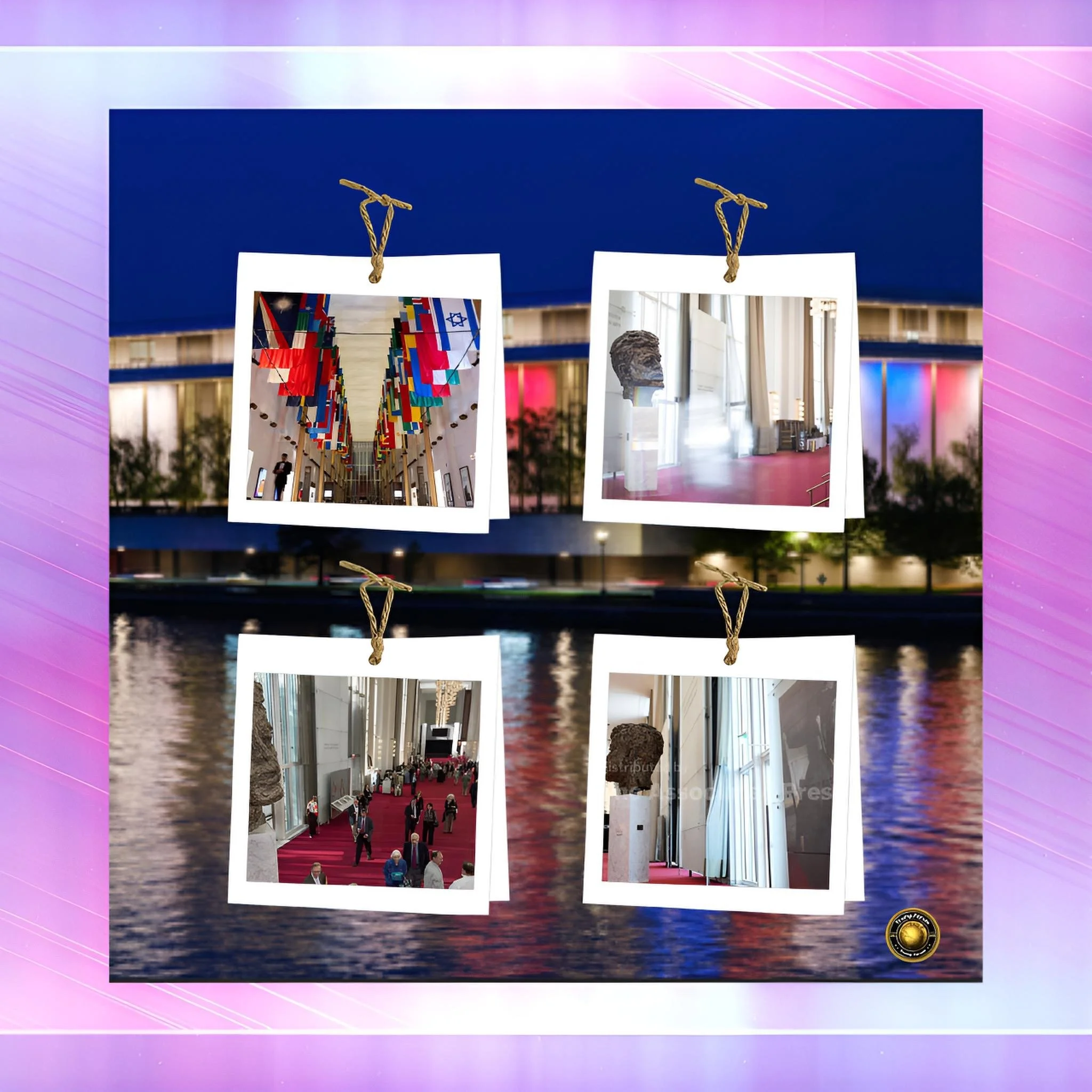
Curtain Falls at the Kennedy Center: Inside the Collapse of America’s Premier Arts Hub
Executive Summary
Promises and Silence: How the Kennedy Center’s Revival Dream Turned into Crisis
The Kennedy Centre has long stood as the United States’ most visible monument to artistic excellence, cultural diplomacy, and bipartisan civic pride.
Created as a living memorial to President John F. Kennedy, it was designed to rise above politics, even as it depended on political support.
Over the past year, however, the Centre has become a site of intense ideological struggle.
President Donald Trump’s decision to assume the chairmanship, reshape programming priorities, and ultimately announce a “temporary” closure has triggered a crisis that extends far beyond the fate of a single institution.
FAF delves into comprehensive analysis how governance changes, political symbolism, funding pressures, and cultural polarization converged to place the Kennedy Centre at the heart of a national debate about art, power, and identity.
Introduction
Promises and Silence: How the Kennedy Center’s Revival Dream Turned into Crisis
On December 7th, President Donald Trump appeared onstage at the Kennedy Centre dressed in black tie, presiding personally over the 48th Kennedy Centre Honours.
The moment was carefully staged. Supporters in the audience cheered openly, breaking with the event’s long tradition of restrained decorum. Trump, newly installed as chairman of the Kennedy Centre, declared the evening “the greatest in the history of the Kennedy Centre.”
The awardees, including Sylvester Stallone and Gloria Gaynor, evoked nostalgia for a past era of American popular culture. The spectacle felt less like a neutral celebration of artistic achievement and more like a declaration of ownership.
Less than a year later, Trump announced the Centre’s “temporary” closure, citing financial strain, declining attendance, and the need for “reform.” What began as a promise to make the institution “great again” ended with its doors shut, its staff unsettled, and its mission contested.
History and Current Status
The Kennedy Centre was conceived in the late 1950s and opened in 1971 as a national cultural landmark. Its founding vision emphasized excellence, accessibility, and independence from partisan politics.
Although federally funded, its programming decisions were historically insulated from direct political interference. Republican and Democratic administrations alike treated the Centre as symbolic neutral ground.
For decades, the Kennedy Centre functioned as both a premier performance venue and a diplomatic stage.
Foreign orchestras, ballet companies, and heads of state all passed through its halls. The annual Kennedy Centre Honours became a ritualized affirmation of cultural pluralism, celebrating artists across genres and political views.
By the early 2020s, however, the institution faced mounting pressures. Attendance patterns shifted after the pandemic. Donor contributions became more polarized.
Cultural institutions nationwide found themselves entangled in ideological debates over representation, tradition, and public funding. The Kennedy Centre’s leadership attempted cautious adaptation, expanding outreach while preserving its classical core.
Trump’s intervention altered this balance. By assuming the chairmanship, he collapsed the distinction between patron and political authority.
Programming choices, board appointments, and public messaging became increasingly centralized. The Centre’s current status is suspended between its historic mission and a new, unresolved identity.
Key Developments
The crisis unfolded through a sequence of deliberate actions rather than a sudden rupture. Trump’s appointment of loyalists to the board marked the first break with tradition. Long-standing board members resigned quietly, citing concerns about politicization.
Internal disagreements over programming followed, particularly regarding contemporary works perceived as politically progressive.
Financial pressures intensified as some donors withdrew support while others pledged funds contingent on ideological alignment. Ticket sales fluctuated sharply.
Management framed these challenges as evidence of mismanagement by previous leadership, justifying intervention.
The December honours ceremony crystallized the shift. Trump’s central role as host signaled a redefinition of the Centre as an extension of presidential authority.
Public reactions were polarized. Supporters praised the return to “traditional American culture.” Critics warned of cultural capture.
The closure announcement came weeks later. Official statements described it as temporary, necessary for restructuring and modernization.
Internally, staff described confusion, halted contracts, and uncertainty about reopening timelines.
Latest Facts and Concerns
As of the closure announcement, hundreds of employees faced furloughs or reassignment. Resident ensembles were left without rehearsal space. International touring schedules were canceled. Educational programs serving thousands of students were suspended.
Legal questions emerged regarding governance authority, donor agreements, and congressional oversight. Cultural organizations worldwide expressed concern about the signal sent by the closure of America’s flagship arts institution.
Public trust eroded further as timelines shifted and communication remained vague. The absence of a detailed reopening plan fueled speculation that the closure served political rather than operational goals.
Cause-and-Effect Analysis
The Kennedy Centre crisis illustrates how cultural institutions become vulnerable when symbolic power intersects with political ambition.
Trump’s decision to assume direct control disrupted institutional norms. That disruption triggered donor polarization, staff departures, and reputational damage.
Financial strain, often cited as cause, functioned more as accelerant. Reduced funding increased dependency on politically aligned support, reinforcing centralization. Centralization narrowed the institution’s appeal, further reducing attendance and contributions.
The closure represents the logical endpoint of this feedback loop. Once the Centre became a contested political symbol, its ability to function as shared cultural space collapsed.
Future Steps
The future of the Kennedy Centre depends on whether it can reestablish institutional independence. This would require transparent governance reforms, clear reopening timelines, and renewed commitment to artistic pluralism.
Congressional oversight may increase, particularly regarding federal funding conditions. Donor confidence will hinge on assurances that programming decisions are insulated from partisan control.
Absent such measures, the Centre risks permanent reputational damage, transforming from national symbol into ideological artifact.
Conclusion
Behind the Velvet Curtain: Politics, Mismanagement, and the Kennedy Center’s Downfall
The Kennedy Centre was designed to embody continuity, dignity, and shared cultural inheritance. Its current crisis reveals how fragile those ideals become when institutions lose their buffer from political power.
A temporary closure may yet become a turning point. Whether it marks renewal or retreat will shape not only the Centre’s future but the broader relationship between art and authority in the United States.