American Rhetoric: The Idea of a Fading Europe: Myth or Reality?
Executive Summary
Europe in Decline: The Politics Behind the Narrative
The recent barrage of vituperative commentary directed toward Europe by prominent American figures—spanning political leadership, technological oligarchs, and administration insiders—constitutes far more than mere diplomatic friction or rhetorical posturing.
Instead, this intensifying critical apparatus reveals a fundamental reassessment of transatlantic relations and, more critically, exposes the ideological underpinnings and strategic calculations animating the Trump administration's revisionist approach to the European project.
The systematic denigration of European institutions, political leadership, and governance frameworks serves both as a diagnostic tool and a prescriptive instrument, betraying an intention to fundamentally recalibrate American engagement with the continent whilst simultaneously fomenting internal European fragmentation.
Introduction
Why Europe Keeps Talking About Its Own Decline
Since the termination of the Second World War and the subsequent consolidation of the Cold War international architecture, Europe has occupied a privileged position within American strategic calculations and global engagement.
This relationship, undergirded by institutional frameworks such as NATO and fortified by multilateral economic cooperation, has persisted as the bedrock of transatlantic stability.
Contemporary pronouncements from the current American administration, however, signal an explicit departure from this historically constituted consensus.
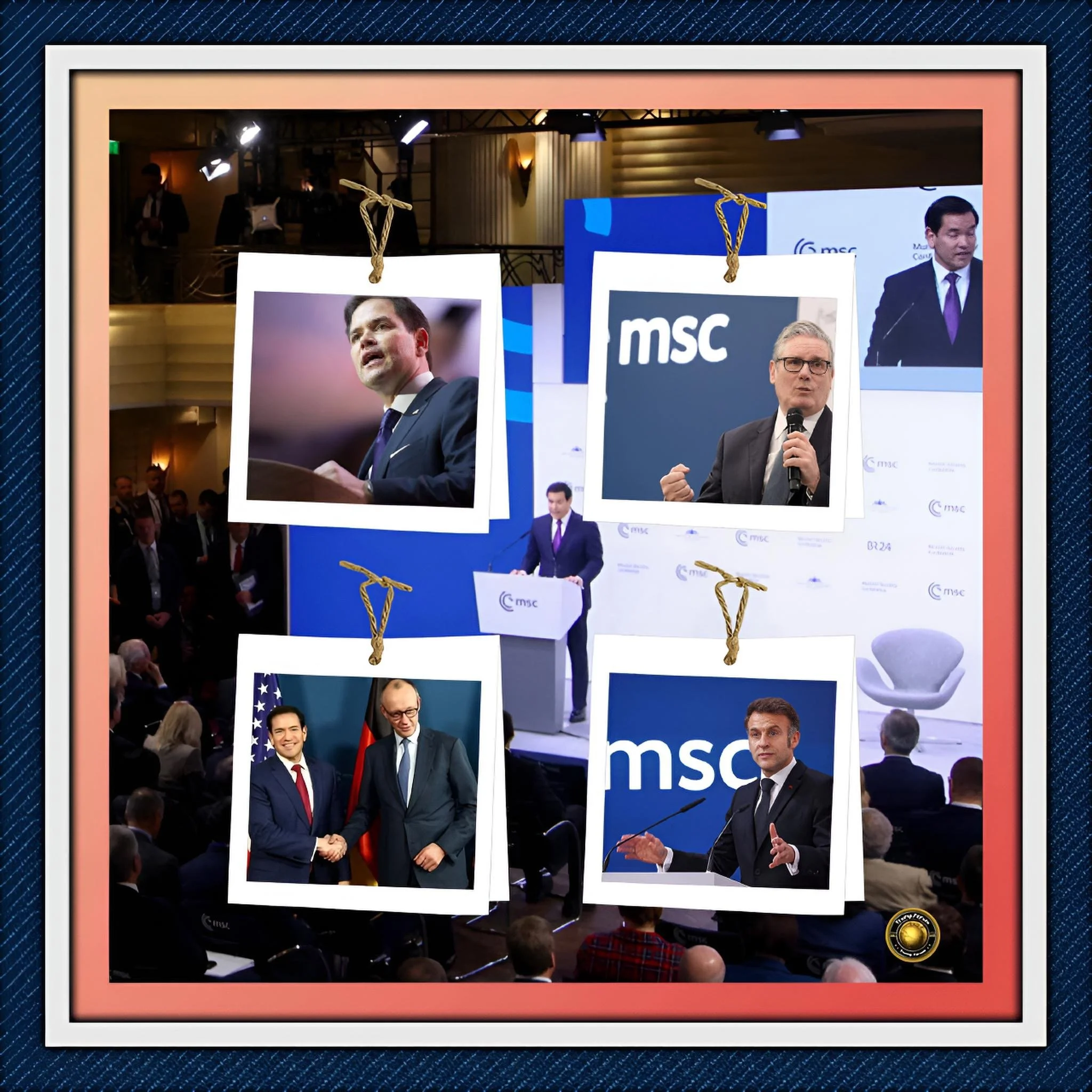
Vice President JD Vance's caustic remarks at the Munich Security Conference in February 2025, President Trump's characterization of European leadership as demonstrably "weak," and the administration's national security strategy document—which presages European "civilizational erasure"—collectively represent not aberrant commentary but rather the public articulation of a comprehensive ideological framework hostile to the contemporary European order.
Historical Context and Institutional Evolution
The European Union's institutional architecture, notably as reformed through the 2009 Lisbon Treaty, established a complex distribution of executive authority among the European Commission, the European Council, and the European Parliament.
This institutional configuration, whilst theoretically responsive to democratic pluralism, engendered a consequential disadvantage: the diffusion of recognizable leadership figures capable of commanding authority or articulating coherent strategic vision.
Furthermore, the Union's expansion to 27 member states introduced Byzantine decision-making protocols requiring either unanimous consent or supermajority voting, thereby constraining swift, decisive governance action.
This institutional morphology precedes the contemporary surge of nationalist, Eurosceptic, and far-right political formations that have systematically exploited public disaffection with Brussels bureaucratic structures and perceived disconnects between European citizens and supranational governance mechanisms.
The proliferation of populist and far-right movements across the continent—Germany's Alternative für Deutschland achieving approximately 20% electoral support, France's Rassemblement National commanding substantial parliamentary representation, and Italy's Fratelli d'Italia exercising executive influence—reflects deeper structural vulnerabilities within European democratic systems and societal cohesion.
These phenomena preceded the current American critique but have been substantially instrumentalized by external actors seeking to amplify internal European dysfunction.
Current Status
The Transatlantic Rupture
The contemporary transatlantic relationship has undergone a qualitative transformation.
The Trump administration's December 2025 national security strategy document characterized Europe as "over-regulated," suffering from declining civilizational "self-confidence," and confronting a demographic trajectory that presages institutional obsolescence within 2 decades absent fundamental policy recalibration.
This diagnosis, presented ostensibly as a strategic assessment, functions equally as a political intervention designed to delegitimize existing European governance frameworks and institutional preferences.
President Trump's December 2025 Politico interview intensified this critique through direct characterizations of European leadership as intellectually inadequate, culturally compromised through excessive "political correctness," and administratively incapable of addressing migration pressures or conflict resolution.
The administration's rhetorical posture shifted from the traditional American role as transatlantic guarantor to that of external critic and ideological antagonist, explicitly signaling American intent to condition security guarantees on European adoption of governance frameworks aligned with American preferences for immigration restriction, far-right political legitimation, and technological deregulation.
Key Developments and Technological Sovereignty
The €120 million European Commission fine imposed upon Elon Musk's X platform in December 2025—administered pursuant to Digital Services Act compliance requirements—catalyzed a revealing intersection of technological governance, geopolitical positioning, and ideological confrontation.
Musk's response—characterizing the fine as "absurd" and subsequently calling for the European Union's abolishment—coupled with coordinated Trump administration condemnation, illuminated the administration's conviction that European regulatory frameworks constitute illegitimate constraints upon American technological enterprise and free expression principles as the administration conceptualizes them.
This incident transcended routine technology regulation disputes. The European Commission's invocation of deceptive design practices regarding X's verification systems, transparency obligations, and data accessibility requirements represented the assertion of European regulatory sovereignty over American technological platforms.
The administration's response, conversely, constituted an explicit challenge to European institutional autonomy and a signal that American technology companies would receive executive protection against what American officials characterized as discriminatory European regulatory action.
Causation and Ideological Warfare
The Europe-bashing phThe phenomenon, comprehensively examined, reveals more about American strategic reorientation and ideological commitments than about European actual governance performance.
The Trump administration's support for far-right European political formations—evidenced through Vice President Vance's meetings with Alice Weidel of the AfD, Elon Musk's explicit endorsement of far-right parties, and Trump's repeated statements praising Viktor Orbán's border policies—indicates a deliberate strategy to fragment European political consensus and cultivate internal opposition to existing institutional arrangements.
The January 2026 tariff threat regarding Greenland acquisition—imposing 10 percent duties that would escalate to 25 percent unless Denmark ceded territorial sovereignty—served as an expedited demonstration of American coercive capacity.
This incident, whilst ostensibly concerning Arctic geopolitical positioning, simultaneously served as a diagnostic instrument revealing European institutional fragmentation and member-state vulnerability to bilateral pressure. The European Union's halting, differentiated responses to the tariff threat validated the administration's assessment of European strategic weakness and institutional incoherence.
These calculated provocations illuminate the ideological architecture animating contemporary American engagement with Europe: the conviction that American strategic interests are incompatible with a prosperous, unified, technologically autonomous, and institutionally capable European entity.
The administration's preference for nationalist, populist, and far-right European political formations reflects this fundamental reorientation, as such movements inherently resist supranational integration, favor bilateral rather than collective European bargaining, and remain ideologically aligned with American Christian nationalism, immigration restriction, and technological deregulation.
Future Trajectories and European Response Mechanisms
The European Union confronts a qualitatively different strategic environment characterized by transatlantic hostility rather than alliance.
The conventional response framework—emphasizing dialogue, gradual institutional reform, and strategic autonomy rhetoric—proves inadequate to the ideological warfare dimensions of contemporary American statecraft.
Macron's repeated invocations of European "strategic autonomy," whilst conceptually coherent, have encountered persistent implementation obstacles due to French fiscal constraints, German equivocation on defense spending, and Eastern European reliance on American security guarantees.
European response mechanisms have remained constrained by institutional fragmentation, economic vulnerabilities, and domestic political pressures emanating from far-right movements that have substantially benefited from American encouragement and external ideological reinforcement.
The potential invocation of the EU's Anti-Coercion Instrument against American tariff threats requires unanimous or near-unanimous member-state agreement. This procedural requirement has become increasingly complex amid internal European political fracturing.
Conclusion
The Idea of a Fading Europe: Myth or Reality?
The contemporary spate of Europe-directed insults originating from American political leadership, technological oligarchs, and administration officials illuminates less the actual condition of European governance than the ideological convictions and strategic reorientation informing American statecraft.
The systematic denigration of European institutions, the valorization of European far-right political formations, and the deployment of economic coercion serve as a coordinated strategy designed to fragment European unity, delegitimize supranational governance frameworks, and establish American technological and political hegemony over the continent.
Europe's institutional incapacity to formulate unified responses, its political fragmentation, substantially encouraged by external American actors and the rise of nationalist movements, and its persisting strategic dependence on American security guarantees collectively render the continent vulnerable to the administration's combination of ideological warfare and economic coercion.
The crisis confronting Europe transcends policy disagreements or diplomatic friction; it constitutes a civilizational rupture signaling the terminus of the postwar transatlantic order and the emergence of a fundamentally adversarial American approach to European institutional development, technological sovereignty, and political trajectories.
European capacity to navigate this transformed environment depends upon institutional reform enabling decisive collective action, cultivation of technological and defense autonomy, and candid recognition that the historical American role as transatlantic guarantor has been supplanted by competition and strategic hostility.