Atlantic Energy: The Strategic Realignment Reshaping European Security
Executive Summary
The transatlantic energy relationship has undergone a fundamental structural transformation between 2022 and 2026, transitioning from emergency stabilization following Russia's invasion of Ukraine to institutionalized strategic interdependence.
The Sixth Partnership for Transatlantic Energy Cooperation, convened in Athens on November 6-7, 2025, crystallized this evolution by reframing energy security as inseparable from technological capacity and geopolitical stability.
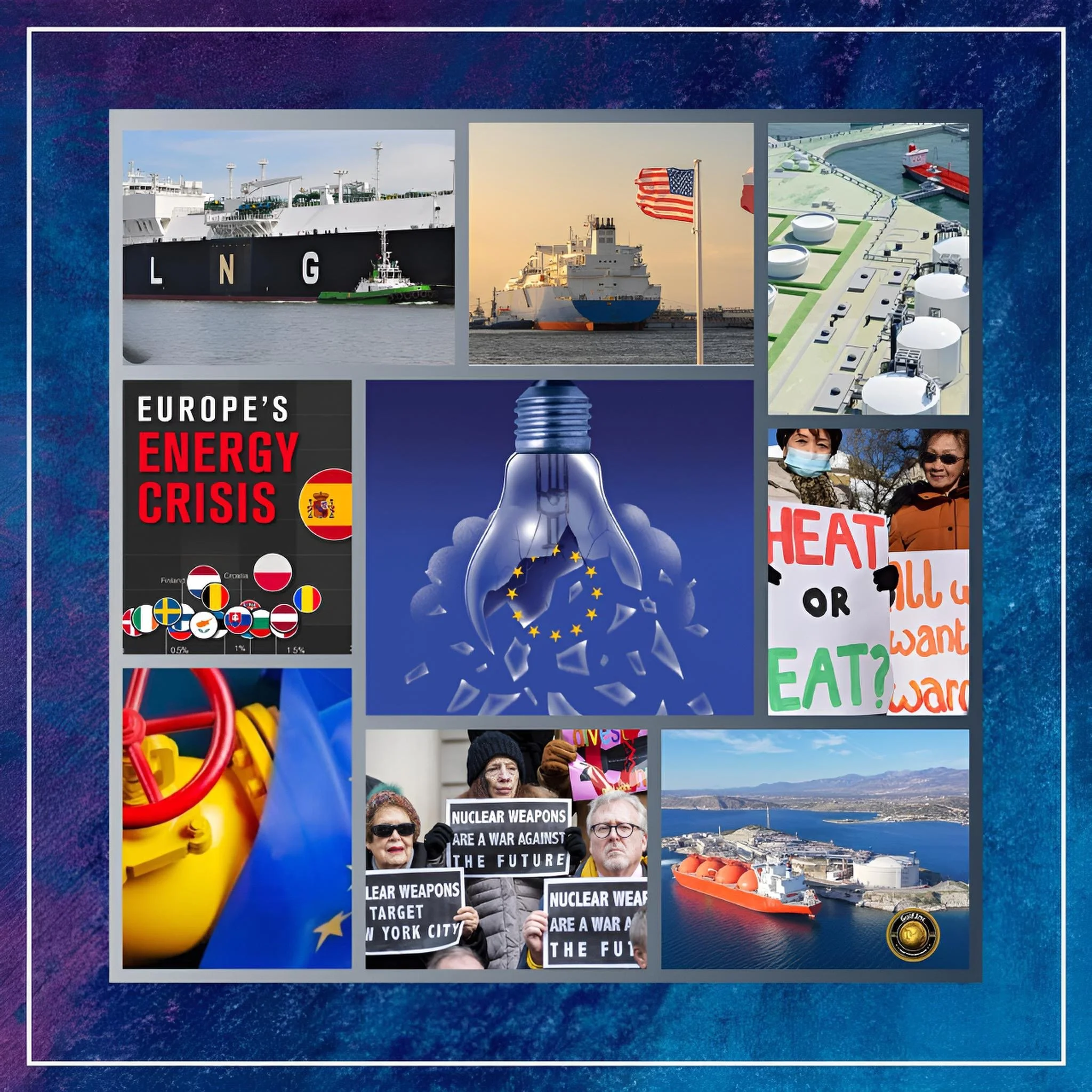
The United States emerged as Europe's dominant energy supplier, accounting for 60% of European liquefied natural gas imports in January 2026, up from 45% in 2024.
This concentration of supply, while resolving Europe's immediate energy crisis, generates new vulnerabilities that the transatlantic partnership must now address through infrastructure investment, regulatory harmonization, and explicit acknowledgment of asymmetrical dependencies.
The challenge confronting both continents is translating shared strategic intent into durable infrastructure and institutional mechanisms that withstand geopolitical turbulence and technological disruption.
Introduction
Energy geopolitics have traditionally operated according to predictable patterns: nations secure resources, establish supply chains, and extract economic and political advantage.
The contemporary transatlantic energy relationship defies this template. Rather than competition for scarce resources, both parties now display complementary interests: Europe requires reliable energy supplies freed from Russian coercion; the United States requires markets for its expanding liquefied natural gas production.
This alignment, however, conceals deeper asymmetries that will structure transatlantic relations for decades. Europe has become dependent upon a single supplier for 60% of its natural gas imports.
The United States retains alternative markets in Asia for its energy exports. Europe's renewable energy capacity remains insufficient to eliminate fossil fuel dependency within the relevant strategic timeframe.
The United States faces political pressure to leverage its energy dominance to pursue objectives far beyond energy policy. Understanding this relationship requires abandoning assumptions that shared interests automatically produce stable arrangements, and instead recognizing that transatlantic energy interdependence coexists with fundamental tensions over dependency, autonomy, and the terms upon which energy flows.
History and Current Status
Before 2022, the European Union maintained a deliberately diversified energy portfolio that nominally reduced dependence on any single supplier.
In reality, structural integration with Russian gas infrastructure had created dependencies masquerading as diversification.
Russia supplied approximately 40% of European natural gas in 2021, with even higher percentages in Central and Eastern Europe.
When Russia invaded Ukraine in February 2022, European policymakers confronted an immediate strategic crisis: continuing to purchase Russian energy meant funding a military aggressor; severing Russian energy imports meant confronting potential energy shortages during European winters, with cascading economic and political consequences.
The initial response involved emergency measures. The United States, recognizing that European energy security directly determined European support for Ukraine, expanded liquefied natural gas exports to unprecedented levels.
This supply surge was insufficient to replace the volume Russia had supplied through pipelines, but it was sufficient to prevent catastrophic shortages. In 2022 and 2023, prices exceeded equilibrium levels by orders of magnitude—natural gas that ordinarily traded at $5 to $10 per million British thermal units surged toward $30, imposing enormous costs on European energy consumers while generating windfall profits for energy producers.
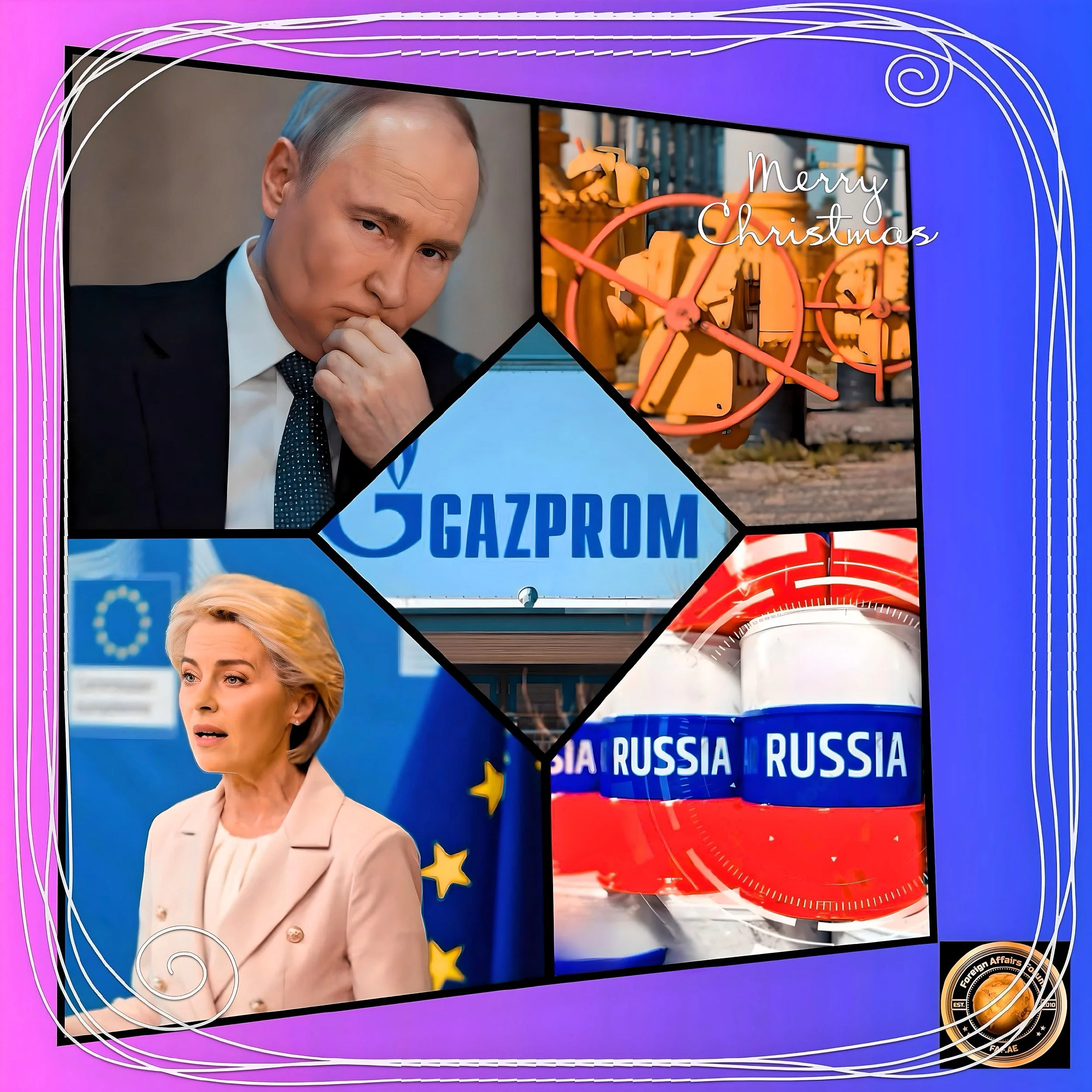
By 2024, structural change began materializing. The European Union initiated formal procedures to eliminate all Russian energy imports by 2027-2028. Russian gas transit through Ukraine—historically operating at roughly 145 billion cubic meters annual capacity—was terminated on January 1, 2025, when the transit agreement between Ukraine's Naftogaz and Russia's Gazprom expired.
This elimination of 15 billion cubic meters annually that formerly flowed to European markets represented a permanent structural shift rather than a temporary disruption.
Simultaneously, European investment in liquefied natural gas infrastructure accelerated. The Revythousa terminal outside Athens, traditionally one of Europe's smallest and least consequential LNG facilities, expanded to 5 million tonnes annual capacity.
The Alexandroupoli floating regasification unit commenced operations, positioning Greece as a critical entry point for American gas into European markets.
The Sixth Partnership for Transatlantic Energy Cooperation, convened in Athens in November 2025, represented the institutional codification of this structural realignment.
Rather than focusing narrowly on supply contracts and price negotiations, the conference elevated energy to the status of fundamental strategic infrastructure.
Ministerial discussions emphasized that energy security now directly determines technological capacity—particularly regarding artificial intelligence infrastructure, which the International Energy Agency projects will more than double global electricity demand by 2030.
The conference validated the "Vertical Corridor" concept: a multi-country pipeline system linking Greek LNG entry points through Bulgaria, Romania, Hungary, Slovakia, Moldova, and ultimately Ukraine, with capacity to transport 5 to 10 billion cubic meters of gas annually northward across Central and Eastern Europe.
Key Developments
The Structural Centrality of Dependency
The acceleration of United States LNG exports to Europe represents perhaps the most consequential energy development of the contemporary period, yet its implications remain inadequately understood by policymakers and publics.
During 2025, United States LNG exports to Europe increased by 65% compared to prior-year volumes, even as total United States LNG production surged 25% year-over-year in the first 10 months of 2025.
This production increase reflects both the initiation of new liquefaction capacity—the Plaquemines facility in Louisiana and Corpus Christi Stage 3 in Texas commenced operations during 2025—and market signals indicating robust demand from European buyers facing both the residual shadow of high prices and the strategic imperative of replacing Russian supplies.
The numerical magnification of American dominance warrants emphasis. In 2024, the United States supplied 45% of the European Union's liquefied natural gas imports. By January 2026, this figure had risen to 60%, representing an increase of 15% points within 12 months.
The volatility of this metric—fluctuating by 15 points annually—indicates that American energy flows respond to price signals rather than long-term commitments.
This creates a structural vulnerability: when Asian markets offer higher prices than European markets, American producers redirect cargoes.
When European spot prices surge due to supply shortages or winter demand spikes, American LNG flows northeastward toward Europe. This flexibility benefits European consumers during price spikes but creates permanent uncertainty regarding baseload supply availability.
Simultaneously, the European Union committed to purchasing American energy through a bilateral trade agreement negotiated during the summer of 2025, which stipulates €750 billion ($810 billion) in total energy imports through 2027.
The agreement targets €250 billion ($270 billion) annually in energy purchases—primarily liquefied natural gas and crude oil. This figure, while impressive in nominal terms, obscures an uncomfortable reality: European utilities have demonstrated reluctance to execute long-term contracts for American LNG at the prices and volumes required to achieve these targets.
The fundamental issue derives from European energy demand projections. As European renewable energy capacity expands and energy efficiency improvements mature, gas demand is expected to decline over the 2027-2030 period.
Contracting for large volumes of long-term LNG during a period of anticipated declining demand creates the risk of stranded assets—expensive infrastructure and contractual obligations for energy no longer needed.
Greece's emergence as the central node in European energy infrastructure represents a second consequential development, with implications that extend beyond energy policy into geopolitical positioning.
A nation with a population under 11 million and historically perceived as peripheral to European economic affairs has become indispensable to European energy security.
In 2025, more than 80% of Greek LNG imports originated from the United States, nearly double the prior-year proportion.
The Revythousa and Alexandroupoli terminals serve as the primary gateways through which American liquefied natural gas enters the European market.
This centrality has elevated Greece's geopolitical position within European councils, with the nation now playing a decisive role in discussions of energy infrastructure development, Balkan stability, and Mediterranean strategic positioning.
The Russian exclusion from European energy markets proceeded more rapidly and decisively than conventional analyses predicted.
The termination of Russian gas transit through Ukraine on January 1, 2025, eliminated 15 billion cubic meters annually that previously flowed toward Austria, Slovakia, Hungary, and Italy.
The remaining Russian pathway to Europe—the TurkStream pipeline through Turkey, supplying approximately 15 billion cubic meters annually—faces European Union regulatory restrictions and eventual termination as the bloc implements its commitment to eliminate all Russian gas imports by the end of 2028.
Russian liquefied natural gas continues to reach European markets, accounting for approximately 19% of the bloc's total LNG imports, but European regulations are progressively tightening restrictions on such flows.
Yet this exclusion generates secondary complications. Austria maintains energy arrangements that render it approximately 98% dependent on Russian gas as of early 2026. Slovakia and Hungary, both landlocked nations without direct access to alternative supply infrastructure, continue to demand that Russian gas transit routes remain operational.
This creates a situation where European Union unity on Russian energy exclusion remains somewhat theoretical—a growing number of Union members could technically veto any unanimity-requiring sanctions measure.
The European Commission, recognizing this vulnerability, strategically drafted its proposed regulation excluding Russian gas imports using trade policy authority rather than energy policy authority, employing procedural mechanisms that circumvent the unanimity requirement and rely instead on qualified majority voting.
Latest Facts and Concerns
The Leverage Paradox
The emergence of American energy as Europe's primary strategic resource has created a paradox in which security and vulnerability have become indistinguishable.
The Trump administration, having assumed office in January 2026, has demonstrated an inclination to leverage energy relationships in pursuit of geopolitical objectives that extend far beyond energy policy.
In January 2026, President Trump announced his intention to acquire Greenland, accompanied by implicit territorial claims on Canadian territory.
When Denmark, Greenland's sovereign power, declined the acquisition, Trump threatened to impose escalating tariffs: 10% tariffs effective February 1, 2026, rising to 25% on June 1, 2026, remaining in place until an unspecified "deal" for Greenland acquisition materialized.
The eight targeted nations—Denmark, Norway, Sweden, France, Germany, the United Kingdom, the Netherlands, and Finland—immediately invoked the principle of European solidarity and contemplated retaliatory measures through the "Anti-Coercion Instrument," colloquially termed the "trade bazooka," which permits the European Union to impose counteracting tariffs and restrictions on American goods and services.
This development crystallized the underlying vulnerability of American energy dependence. While American liquefied natural gas provides immediate energy security for Europe, the political framework in which it is supplied remains subject to unpredictable changes driven by American domestic politics.
European policymakers recognized that their energy security now depended not merely on geology and supply capacity, but also on the continued cooperation of a national government whose current administration was willing to weaponize trade relationships over matters conceptually distinct from energy policy.
Simultaneously, European governments faced uncomfortable revelations about the limits of alternative energy sources.
The Oxford Sustainable Finance Group published research indicating that Europe could theoretically replace all Russian gas through renewable energy and electrical heating by 2028 for €512 billion ($552 billion).
This figure, while substantial, proved politically palatable in principle. However, the actual capital investment requirement—€70 billion annually—encountered institutional obstacles. Grid connection timelines for new generation capacity routinely exceed 7 to 10 years in European legacy hubs such as Frankfurt, London, Amsterdam, Paris, and Dublin, with some extending to 13 years.
These delays reflected not technical limitations but regulatory frameworks designed to protect environmental and community interests.
The implication was uncomfortable: Europe could theoretically transition away from gas dependence through accelerated renewables, but the timeframe required (estimated 7-13 years per project) created a gap between immediate energy security requirements and the capacity of infrastructure development.
The emergence of artificial intelligence as an energy-intensive sector compounds this tension. The International Energy Agency projects that global electricity demand from data centers will more than double by 2030, reaching approximately 945 terawatt-hours annually.
Within the European Union, data center electricity consumption is projected to increase from 70 terawatt-hours in 2024 to 115 terawatt-hours by 2030, representing a 65% increase. These calculations were conducted with pre-artificial intelligence data center energy requirements in mind; the acceleration of artificial intelligence adoption suggests actual data center growth may exceed these projections.
Energy abundance at competitive prices becomes essential infrastructure for European technological competitiveness.
The Sixth Partnership for Transatlantic Energy Cooperation explicitly linked energy security to technological capacity, recognizing that access to low-cost, reliable electricity constitutes a competitive advantage in artificial intelligence markets, equivalent to access to rare earth minerals in the twentieth century.
Cause-and-Effect Analysis
Why Dependency Became Acceptable
The rapid acceleration of American energy dominance in European markets and European acceptance of the consequent dependency reflect a complex set of cause-and-effect dynamics operating across multiple timeframes and policy domains. At the immediate level, Russia's invasion of Ukraine created an existential threat to European energy security that transcended traditional preferences for supplier diversification.
European policymakers faced a choice: accept American energy dependency or risk energy shortages with cascading economic and social consequences. This choice was not genuinely discretionary—it represented the rational response to an imposed constraint.
However, the continuation and institutionalization of American energy dominance beyond the initial emergency period reflects longer-term strategic calculations.
European governments explicitly recognized that the transatlantic alliance constitutes Europe's primary security relationship.
Military cooperation through the North Atlantic Treaty Organization, intelligence sharing through the Five Eyes arrangement and its European variants, and integrated defense-industrial capacity create dependencies extending far beyond energy.
Against this backdrop, accepting energy dependency on the United States appeared rational—it represented one additional dimension of an already multifaceted interdependence.
Moreover, American energy development fundamentally altered the global energy market structure.
The United States, with vast unconventional gas reserves (shale gas accessible through hydraulic fracturing) and substantial conventional reserves, can expand liquefied natural gas production at scale and at costs that few nations can match.
Qatar, the historical alternative to Russian gas, possesses finite reserves and limited expansion capacity. Australia supplies liquefied natural gas, but at higher costs and with longer shipping times.
Central Asian gas flows primarily through Russia and regional intermediaries, creating political complications that Europe sought to avoid. Against this landscape of alternatives, American gas appeared not merely preferable but unavoidable.
The European Union's commitment to eliminate Russian gas imports by 2027-2028, finalized with greater institutional formality than previous climate or energy targets, reflects a strategic decision to foreclose the possibility of returning to Russian energy dependence.
This decision, in turn, mathematically compels reliance on American energy supply throughout the transition period to renewables. By explicitly committing to Russian exclusion, European policymakers simultaneously committed to American dependence, at least through the medium term.
Future Steps
Building Institutional Resilience
The challenge confronting the transatlantic partnership during 2026 and beyond involves translating shared energy interests into institutional arrangements capable of withstanding political volatility.
The Sixth Partnership for Transatlantic Energy Cooperation identified several specific initiatives meriting acceleration. The Vertical Corridor pipeline network, scheduled to be operational by late 2026, represents perhaps the most consequential infrastructure project.
Once functional at full capacity, the corridor will permit direct transportation of 5 to 10 billion cubic meters annually from Greek entry points northward through Central and Eastern Europe, supplying countries including Bulgaria, Romania, Hungary, Slovakia, Moldova, and Ukraine.
This infrastructure creates multiple pathways for energy flow rather than depending on limited regasification and transportation capacity concentrated in Greece.
European investment in renewable energy infrastructure requires acceleration commensurate with the targets established in the Paris climate accords.
The European Union's revised national energy and climate plans commit to 82% of electricity generation from renewable sources by 2030, implying a capital investment trajectory that substantially exceeds current levels. However, regulatory streamlining will prove essential. The typical 7 to 13-year permitting and grid connection timeframe for renewable energy projects must be compressed to 2-4 years.
This compression requires harmonizing environmental assessment procedures across EU member states, establishing unified permitting processes, and deprioritizing certain ecological protections in favor of climate imperatives.
Regulatory harmonization across the transatlantic partnership demands urgent attention.
The European Union's Corporate Sustainability Due Diligence Directive, implemented to ensure that companies purchasing energy meet environmental and labor standards, has prompted both ExxonMobil and QatarEnergy—two of the world's largest liquefied natural gas producers—to threaten withdrawal from European markets.
These producers have invested heavily in European infrastructure over the past decade, with ExxonMobil alone committing €20 billion. European regulatory frameworks that induce major suppliers to withdraw would catastrophically undermine energy security objectives.
Conversely, regulatory frameworks that prevent environmental oversight create unacceptable externalities. Institutional mechanisms must be developed to balance these competing imperatives.
Investment mobilization constitutes a third area requiring direct focus. The Sixth Partnership for Transatlantic Energy Cooperation featured extensive discussion of financing mechanisms for energy infrastructure.
The European Investment Bank, the United States International Development Finance Corporation, and the Export-Import Bank of the United States collectively possess capital that could accelerate infrastructure development, but coordination among these institutions remains incomplete. Establishing unified financing frameworks for cross-border energy projects would reduce transaction costs and accelerate project timelines.
Hydrogen development represents a longer-term energy strategy that both Europe and the United States are pursuing, though with different degrees of commitment and capital allocation.
European investments in hydrogen reached €12 billion in 2024, more than any other region globally. These investments position Europe advantageously for the hydrogen-based energy transition, but require sustained commitment and technological advancement.
Explicit coordination between American and European hydrogen development strategies could reduce redundant investment and accelerate technological maturation.
Conclusion
Accepting Asymmetry as the Price of Security
The transatlantic energy relationship of 2026 differs fundamentally from the diversified, nominally independent energy relationships that European governments sought to maintain in previous decades.
Contemporary European energy security depends upon sustained American energy supply, ongoing American commitment to expanding liquefied natural gas production, and political frameworks within which American administrations cooperate rather than weaponize energy relationships in pursuit of unrelated geopolitical objectives.
This dependency is not optimal from a classical international relations perspective, emphasizing autonomy and strategic independence. However, the alternative—attempting to achieve energy independence through accelerated renewable energy development—requires timeframes beyond the relevant strategic horizon for military threats and political coercion.
Ukraine demonstrates that geopolitical coercion operates in compressed timeframes measured in months and years, not the decades renewable energy transition would require.
European policymakers therefore face a genuine dilemma: pursue energy independence at the cost of strategic vulnerability during the transition period, or accept energy dependency on the United States as the lesser of two evils.
The transatlantic partnership's maturation into institutionalized energy cooperation suggests that European policymakers have implicitly chosen the second path.
The question now becomes whether institutional mechanisms can be developed rapidly enough to make such dependency tolerable—to create redundancy, establish clear rules of engagement, develop dispute resolution mechanisms, and create transitions to renewable energy that do not require simultaneously abandoning fossil fuels and tolerating energy coercion.
2026 will determine whether transatlantic energy cooperation proves a durable framework for European security or merely the most recent iteration of energy relationships subject to disruptive alteration by political volatility.
The infrastructure investments initiated in 2025—the Vertical Corridor, expanded regasification capacity, and interconnections—will require 2-3 years to mature.
Political frameworks that ensure such infrastructure functions as intended will be equally important as the infrastructure itself. Both remain works in progress.