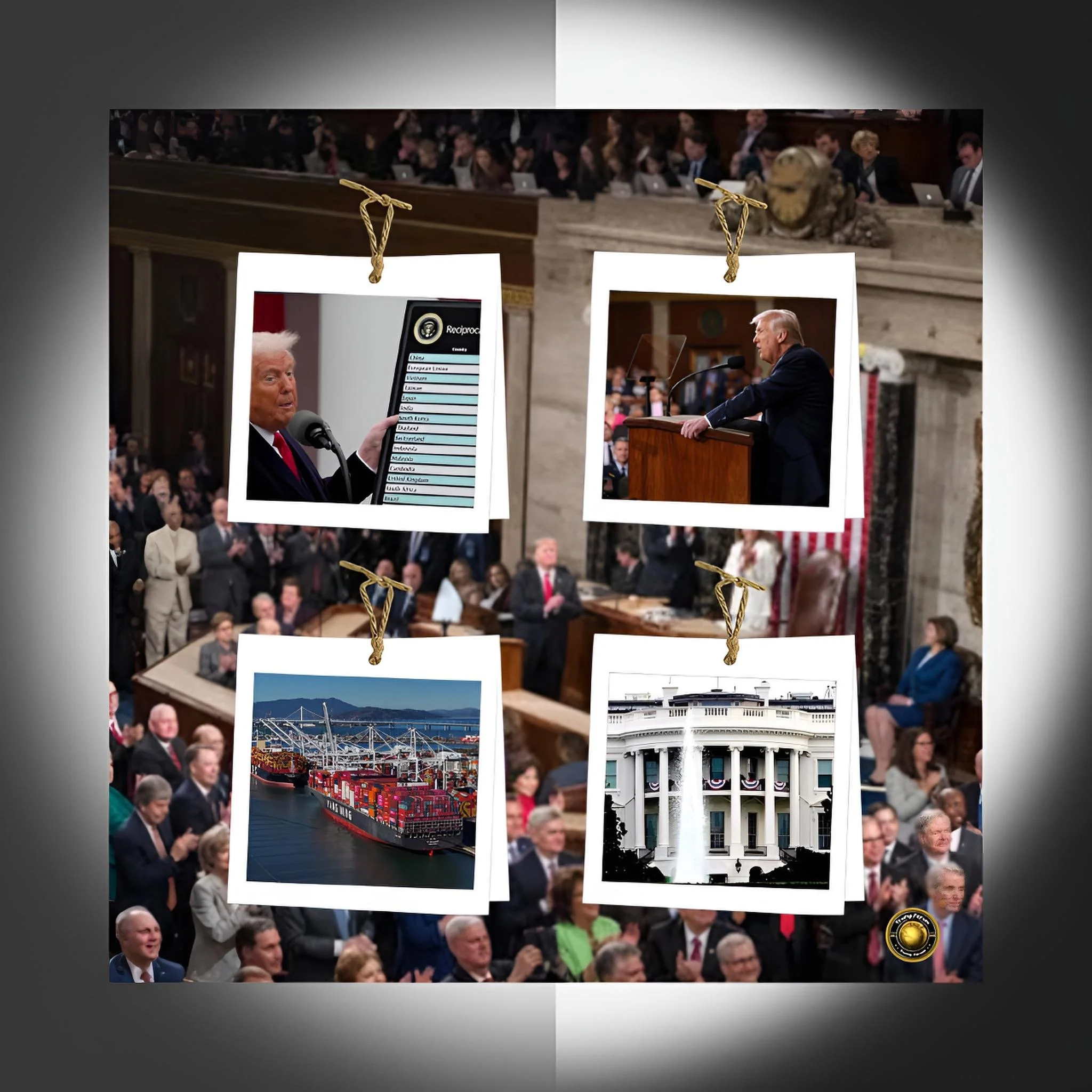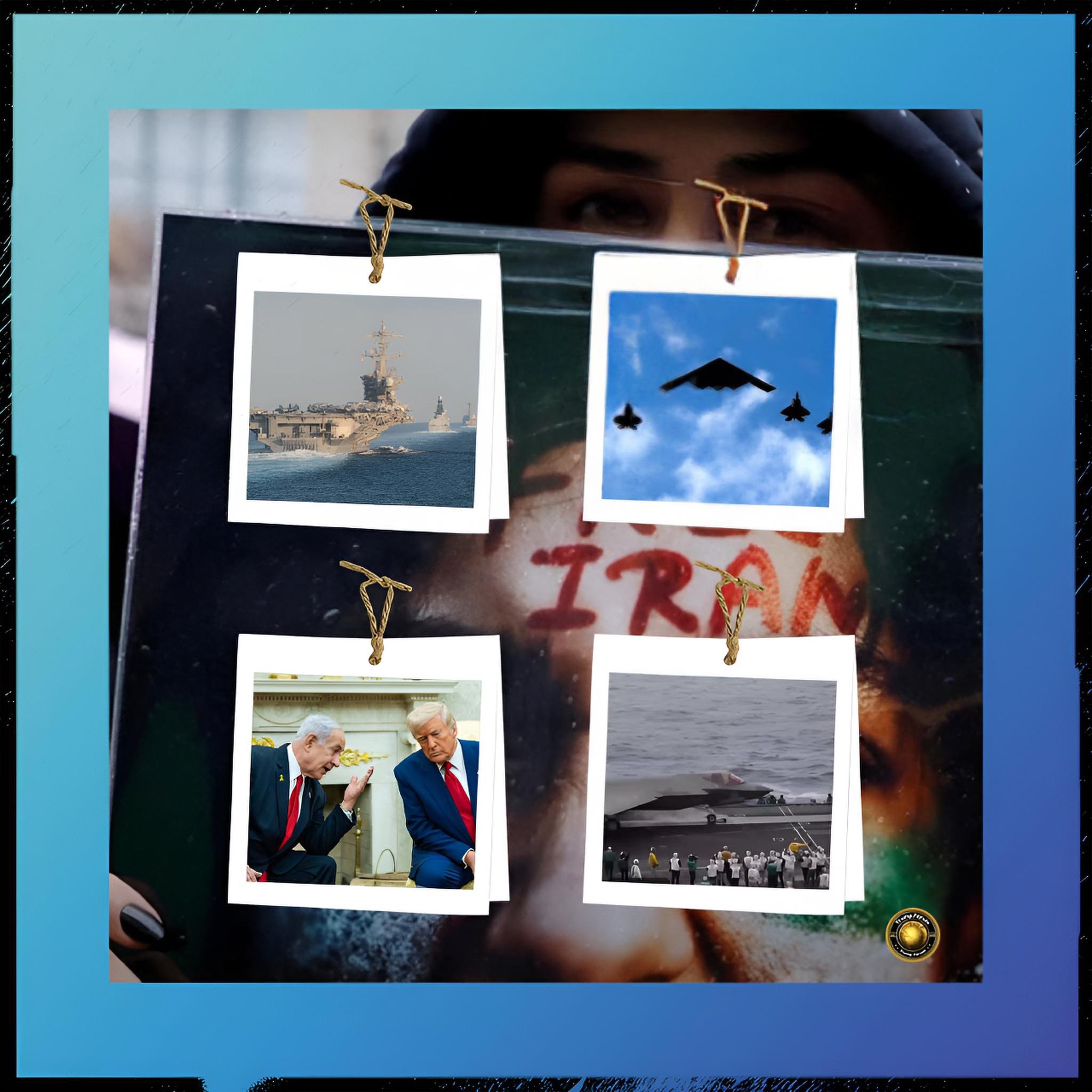
Trump’s Expanding Military Arsenal and the Strategic Crossroads Over Iran
Executive Summary
Armadas in the Gulf: Washington’s Military Calculus and Tehran’s Defiance
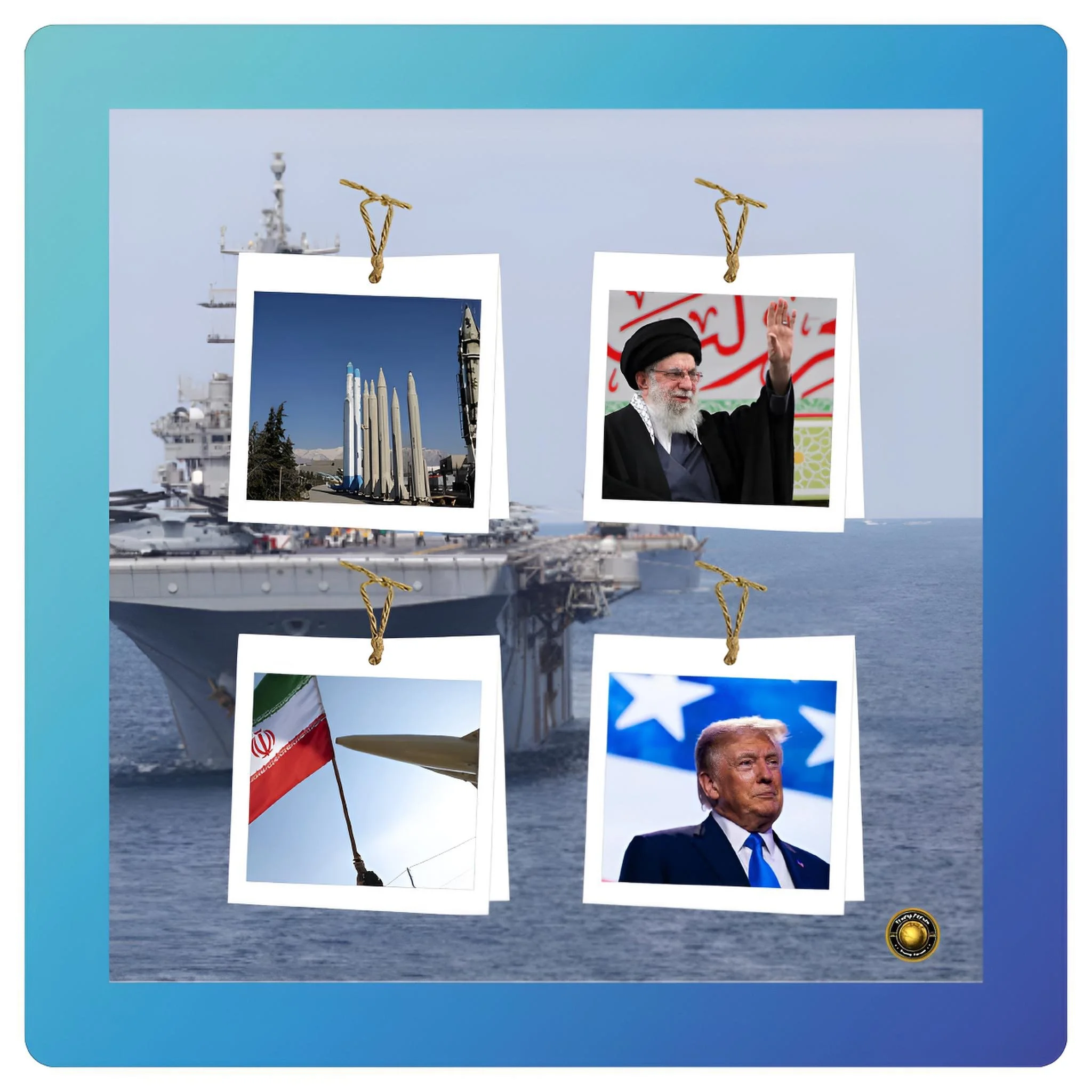
The growing American military presence across the Middle East under the direction of Donald Trump represents one of the most formidable force postures deployed in the region in more than 20 years.
Aircraft carriers, advanced surveillance platforms, long-range bombers, and air-defense systems now form an immense armada that signals credible coercive capacity.
Yet Iran has not capitulated. Instead, it has absorbed pressure, diversified alliances, and refined asymmetric tools.
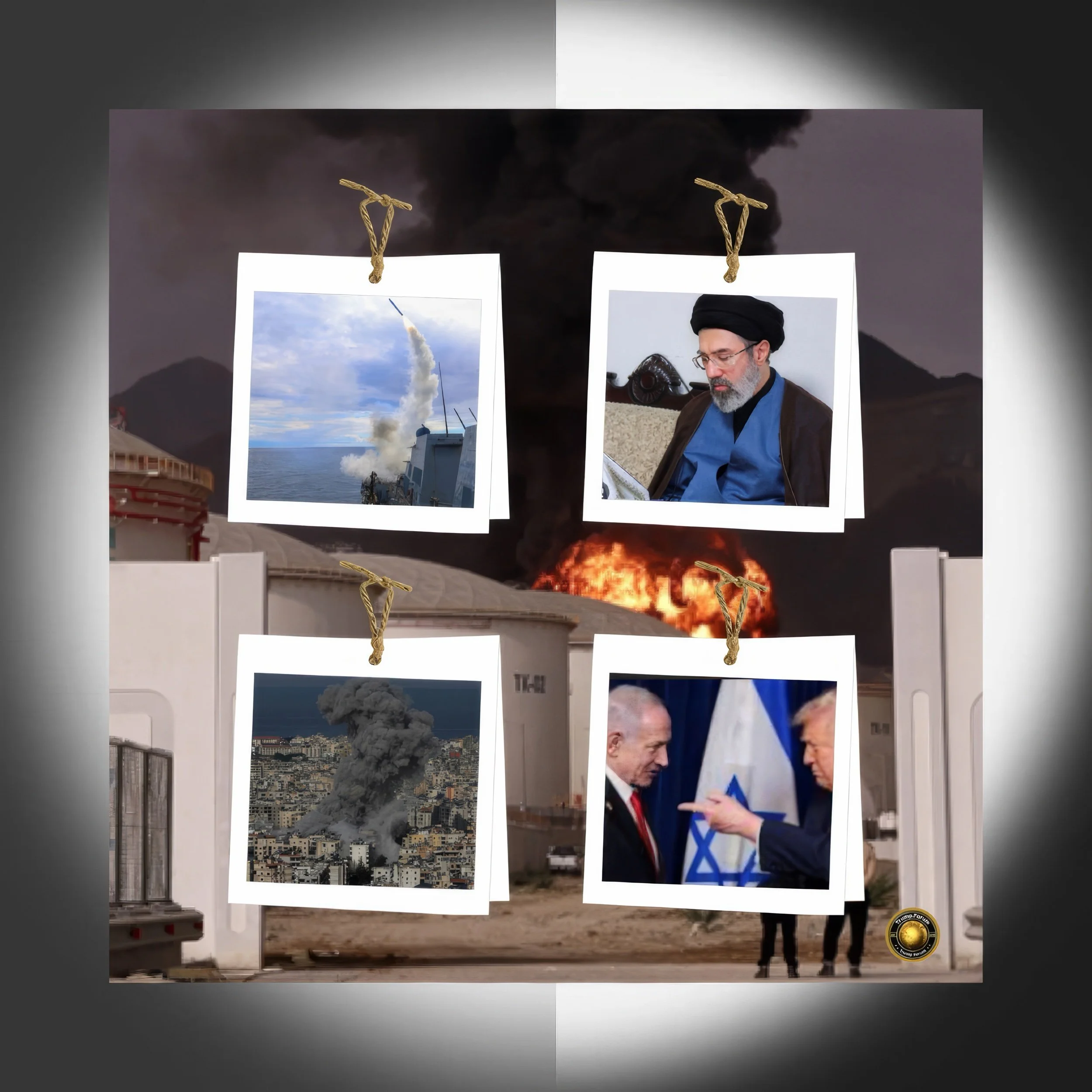
Washington’s strike options span a spectrum: limited punitive airstrikes, decapitation operations targeting senior leadership, infrastructure disruption campaigns, cyberwarfare escalation, and, at the extreme, sustained air and maritime warfare designed to degrade Iran’s military-industrial base.
Each option carries cascading regional consequences involving Israel, Gulf monarchies, Iraq, Syria, and global energy markets.
FAF analysis examines the historical trajectory of US-Iran confrontation, the military architecture currently assembled, the political logic driving Washington’s calculations, Tehran’s deterrent posture, and the real-time reactions of six global leaders. It argues that the central dilemma is not military feasibility but political sustainability.
The United States possesses overwhelming conventional superiority, yet escalation risks could transform a coercive demonstration into a protracted regional conflagration with strategic costs far exceeding immediate gains.
Introduction
Strike, Signal, or Stalemate? America’s Escalation Dilemma in Iran
The Middle East is once again saturated with American military power. Surveillance aircraft such as the E-3 AWACS, naval strike groups, long-range bombers, and rapid deployment units form a visible demonstration of readiness.
According to public statements by Steve Witkoff, the White House cannot comprehend Tehran’s refusal to yield in the face of such overwhelming force.
Yet deterrence operates not solely through mass but through credibility and perception. Iran’s strategic culture has been shaped by four decades of sanctions, covert action, targeted assassinations, and regional proxy conflict.
Capitulation under visible threat would undermine regime legitimacy.
Thus, the absence of blinking does not signal miscalculation; it reflects structural resilience embedded in Iran’s political theology and security doctrine.
History and Current Status
Since the 1979 revolution, US-Iran relations have oscillated between shadow conflict and open hostility.
The nuclear crisis intensified in the early 2000s, leading to sanctions regimes, covert sabotage campaigns, and eventually the 2015 Joint Comprehensive Plan of Action.
The US withdrawal from that accord in 2018 reintroduced maximum pressure, catalyzing Iran’s incremental nuclear expansion.
The targeted killing of General Qassem Soleimani in 2020 established precedent for decapitation operations. Since then, maritime seizures, drone strikes, and cyber intrusions have become normalized instruments of statecraft.
The present moment differs in scale. Over 1/3 of deployable US naval assets are reportedly concentrated in or near the Gulf. Patriot and THAAD batteries reinforce Gulf states.
Intelligence-sharing with Israel has intensified. Yet no formal declaration of hostilities exists. The confrontation is coercive but undeclared.
Key Developments
The expansion of airpower is central. AWACS aircraft enhance coordination for multi-vector strike packages. Carrier-based F/A-18s and land-based stealth aircraft extend operational reach. Submarines provide second-strike capability.
Parallel to conventional buildup, economic sanctions remain stringent. Iran’s oil exports fluctuate but continue through shadow networks.
Tehran deepens ties with Russia and China, seeking strategic insulation.
Recent rhetoric from Washington has revived discussions of “all options on the table.”
Simultaneously, Tehran has accelerated uranium enrichment beyond prior limits, signaling leverage rather than immediate weaponization.
Latest Facts and Concerns
Iran’s nuclear breakout timeline has shortened, though precise estimates vary. Regional militias aligned with Tehran maintain presence in Iraq, Syria, Lebanon, and Yemen.
The Strait of Hormuz remains a chokepoint for nearly 20% of global oil transit.
The principal concern is miscalculation. A limited strike could provoke retaliation through proxy missile barrages against Gulf infrastructure or Israeli targets.
Energy markets would react instantly, raising oil prices and disrupting global trade flows.
Cause and Effect Analysis
Limited Air Campaign
A calibrated strike targeting nuclear facilities or missile depots might aim to degrade capabilities without regime collapse.
The effect would likely be temporary disruption.
Iran would retaliate asymmetrically, possibly through cyberattacks or proxy escalation.
The cause would be coercive signaling; the effect could be widened instability.
Decapitation Strike
Targeting senior political or military figures mirrors prior precedent.
While tactically feasible, such action risks consolidating hardline factions within Iran.
Nationalist backlash would intensify domestic cohesion. Cause: leadership elimination. Effect: ideological hardening.
Infrastructure Warfare
Strikes on energy infrastructure or Revolutionary Guard facilities could impose economic strain.
Yet Iran’s dispersed and hardened assets limit permanent damage.
Global oil markets would spike. Cause: economic pressure via force. Effect: worldwide financial ripple.
Cyber Escalation
Cyber operations could disrupt nuclear command systems or financial networks.
However, attribution ambiguity invites reciprocal cyber retaliation against US infrastructure. Cause: covert disruption. Effect: digital tit-for-tat escalation.
Full Air-Maritime War
Sustained bombing campaigns combined with naval blockade represent maximal escalation.
Military superiority favors Washington, yet Iran’s missile arsenal could threaten regional bases.
Cause: strategic neutralization attempt.
Effect: protracted regional war.
Real-Time Comments From Six World Leaders
Benjamin Netanyahu has reportedly stated that Israel supports “decisive measures to prevent nuclear weaponization,” emphasizing preemptive security doctrine.
Vladimir Putin warned that “external military intervention will destabilize the entire Eurasian corridor,” signaling Moscow’s opposition.
Xi Jinping emphasized dialogue, noting that “stability in the Gulf is essential to global economic recovery.”
Emmanuel Macron urged restraint, arguing that “escalation risks undermining multilateral diplomacy.”
Mohammed bin Salman underscored regional security concerns while calling for de-escalation to protect energy markets.
Narendra Modi highlighted the impact on energy-importing economies, stressing the need for maritime stability.
Future Steps
Washington faces three pathways: escalate militarily, intensify sanctions with diplomatic backchannels, or pursue negotiated recalibration under threat of force.
Military action offers immediate visibility but uncertain strategic returns.
Diplomacy risks appearing weak domestically yet may avert systemic disruption.
Tehran’s counter-options include incremental nuclear advancement, proxy activation, or limited de-escalatory gestures to relieve pressure.
Conclusion
Power Without Capitulation: Trump’s Iran Options in a Volatile Middle East
The immense American armada symbolizes capability, not inevitability.
The core question is whether coercive force can compel ideological regimes without triggering broader instability.
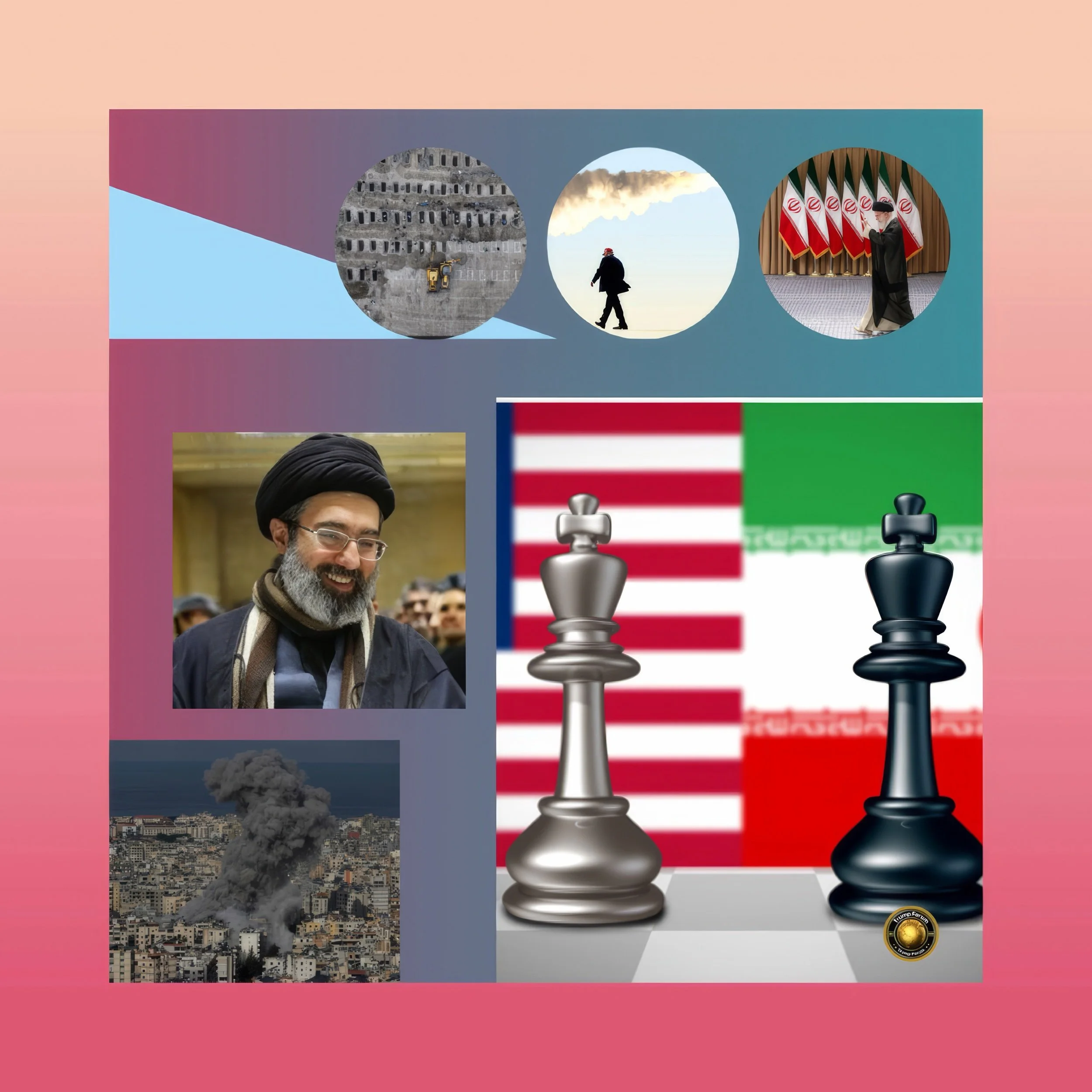
Military superiority does not guarantee political compliance. In the shadow of carriers and AWACS aircraft, both capitals weigh not only tactical outcomes but the architecture of regional order.
The choice before Washington is not between strength and weakness but between controlled demonstration and uncontrolled escalation.