Japan’s Iron Chancellor Faces Historic National Transformation Moment
Executive Summary
A Historic Mandate Confronting Structural Demographic and Strategic Constraints
FAF comprehensive article delves into the unprecedented political authority now concentrated in the hands of Takaichi Sanae following the sweeping electoral victory of the Liberal Democratic Party in the February 8th snap election.
Securing nearly 70% of seats in the powerful lower house of the National Diet, the governing party has delivered its leader a once-in-a-generation opportunity to reconfigure Japan’s economic trajectory, security posture, demographic decline, and technological competitiveness.
Yet electoral dominance does not guarantee strategic success. Japan confronts simultaneous headwinds: an aging population, structural fiscal burdens exceeding 250% of GDP in gross public debt, regional security tensions driven by China’s military expansion and North Korea’s missile program, and long-standing productivity stagnation.
The prime minister’s authority, unprecedented for a woman in Japanese political history, may be either transformative or transient depending on whether she leverages her mandate to implement politically costly reforms.
This article argues that the present juncture represents a strategic inflection point. Consolidated parliamentary control, factional discipline within the LDP, and geopolitical urgency create rare alignment. Failure to act decisively would entrench decline; bold reform could redefine Japan’s economic and security architecture for decades.
Introduction
Electoral Supremacy and the Burden of National Renewal
Since its founding in 1955, the LDP has dominated Japanese politics with remarkable durability. Even so, the scale of its February triumph stands apart.
By capturing nearly 70% of lower-house seats, the party has insulated its prime minister from legislative obstruction and internal instability. Such consolidation is rare in contemporary democracies.
Japan now faces a paradox. It is the world’s 3rd-largest economy by nominal GDP, technologically advanced, socially cohesive, and institutionally stable.
Yet it struggles with chronic deflationary psychology, demographic contraction, and strategic vulnerability in an increasingly polarized Indo-Pacific. Electoral strength therefore imposes responsibility. A supermajority confers not comfort but expectation.
The question confronting Tokyo is not whether reform is necessary. It is whether political capital will be expended while it remains abundant.
History and Current Status
From Postwar Reconstruction to Demographic Reckoning
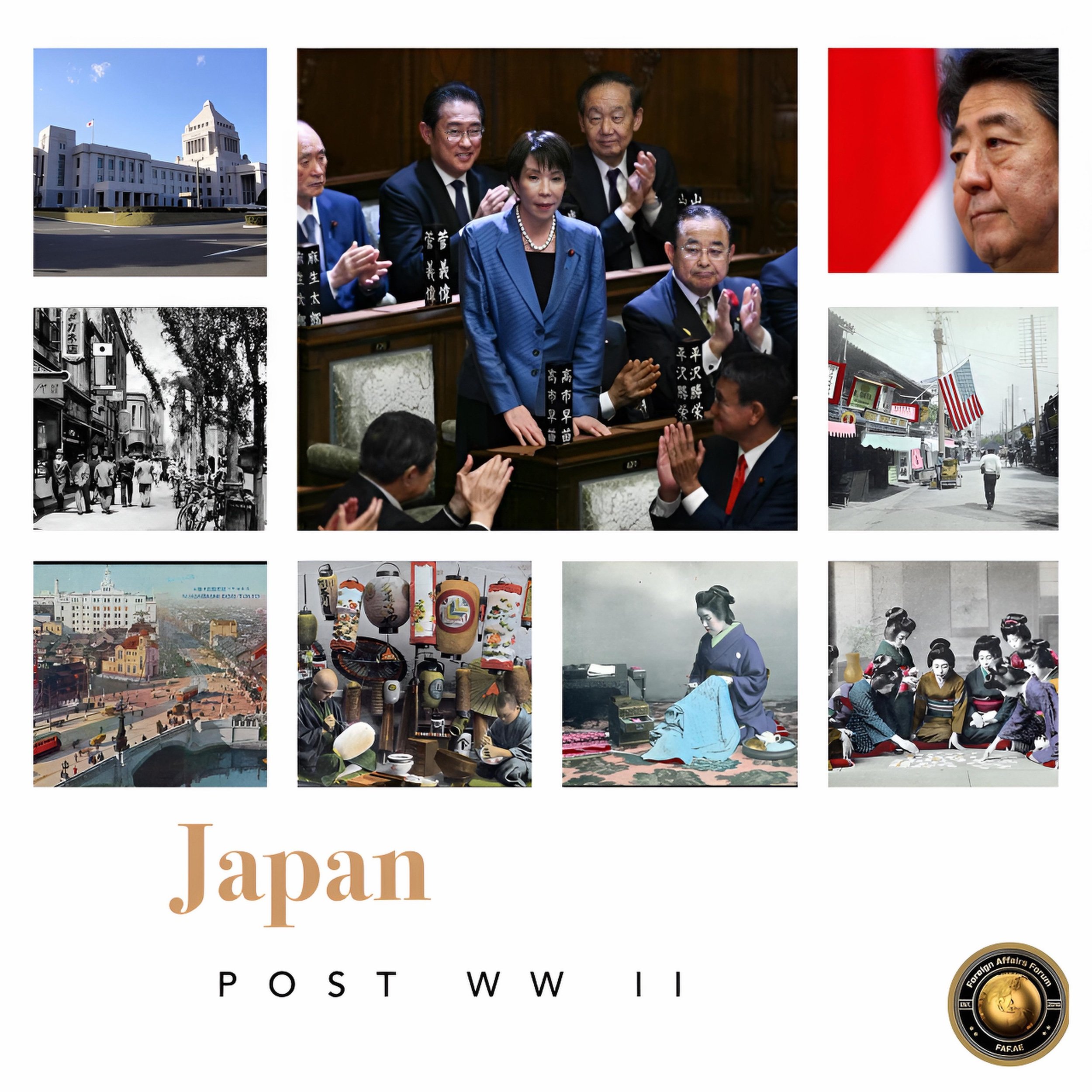
Japan’s postwar trajectory remains one of the 20th century’s most extraordinary economic transformations. Following devastation in 1945, reconstruction under U.S. security guarantees enabled export-led growth. By the 1980s, Japan stood as a global industrial powerhouse.
The asset bubble collapse in the early 1990s initiated decades of stagnation often termed the “lost decades.” Monetary easing, fiscal stimulus, and structural reforms attempted under successive administrations yielded mixed outcomes.
Under Shinzo Abe, Abenomics sought to combine aggressive monetary expansion, fiscal flexibility, and structural reform. Growth improved intermittently but demographic decline persisted.
Today, Japan’s median age exceeds 48. The working-age population contracts annually. Fertility remains near 1.3 births per woman, far below replacement level. Public debt surpasses 250% of GDP, though largely domestically held. Productivity growth lags peer economies in several service sectors.
Geopolitically, Japan has recalibrated its defense posture. In 2022 it committed to increasing defense spending toward 2% of GDP, signaling a historic departure from postwar restraint.
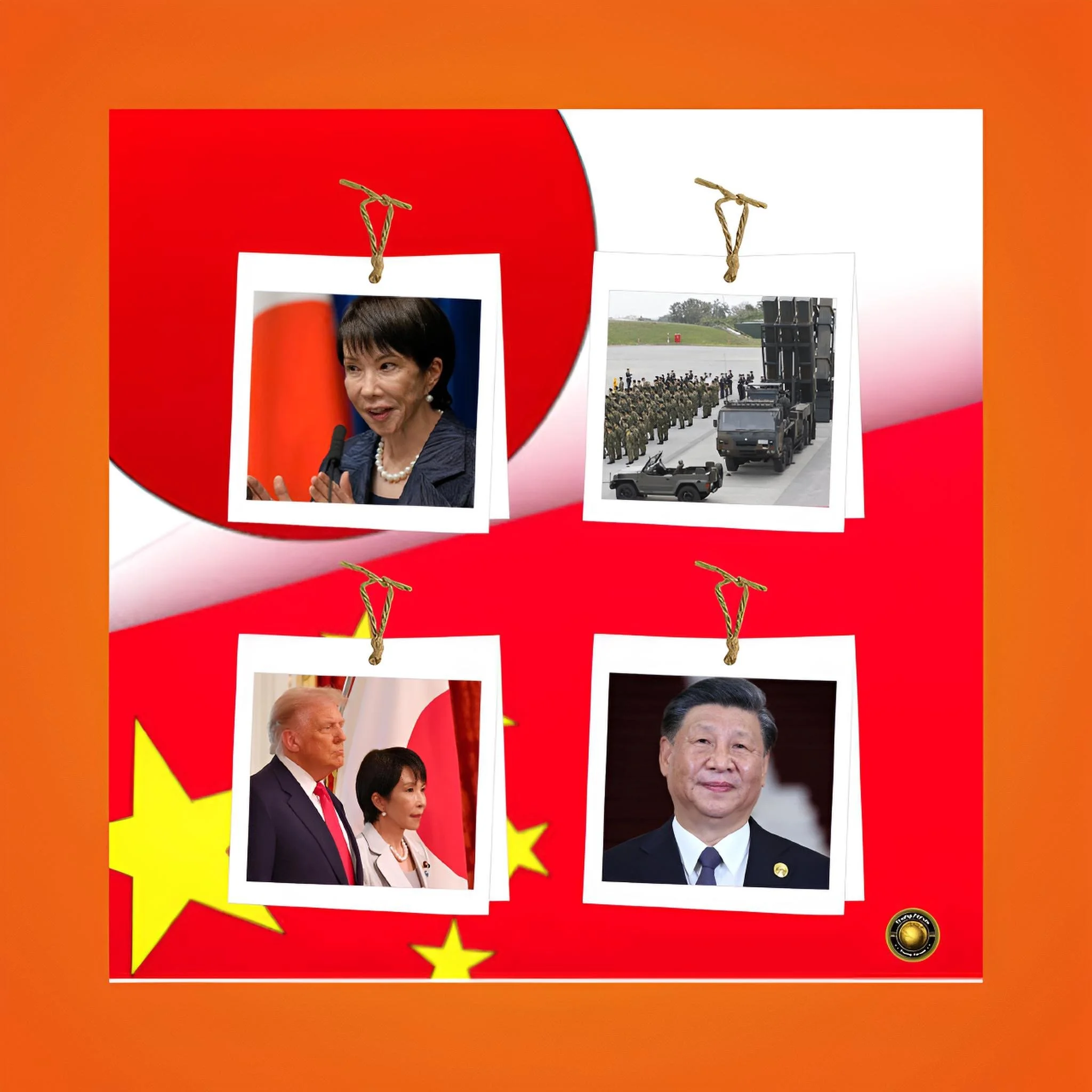
Security partnerships with the United States and regional democracies have deepened amid intensifying Chinese maritime assertiveness.
The present administration inherits both accumulated reform attempts and unresolved structural burdens.
Key Developments
Security Normalization and Economic Reorientation Accelerate
The February election outcome consolidates political authority at a moment of strategic flux. Defense policy has already entered a phase of normalization.
Long-range strike capabilities, missile defense expansion, and cyber investments are advancing.
Economic policy faces equally consequential decisions. Japan must balance inflation management with growth stimulation. After decades of near-zero rates, modest inflation has reemerged, complicating central bank normalization.
The interplay between fiscal expansion and monetary recalibration requires careful sequencing to avoid financial volatility.
Industrial policy has regained prominence. Supply-chain resilience, semiconductor production, and green-transition technologies receive targeted subsidies. Competition with China in advanced manufacturing intensifies strategic urgency.
Energy policy constitutes another axis of transformation. Post-Fukushima nuclear constraints contributed to energy import dependence. Restarting reactors and investing in renewables carry political and environmental tradeoffs.
The prime minister’s leadership also symbolizes gender transformation in a historically male-dominated political system. Yet symbolic breakthroughs must translate into policy execution to shape legacy.
Latest Facts and Concerns
Fiscal Sustainability, Regional Tensions, and Social Cohesion
As of 2026, Japan’s growth remains modest but positive. Inflation hovers above historical norms yet remains below destabilizing thresholds. Wage growth shows incremental improvement, though uneven across sectors.
Security tensions persist in the East China Sea. Maritime incursions and regional missile tests underscore strategic fragility. Tokyo’s alignment with Washington remains foundational, yet U.S. political fluctuations introduce alliance uncertainty.
Fiscal sustainability looms as the principal structural concern. Debt servicing costs could rise if interest rates normalize significantly. Balancing defense expansion with social welfare commitments for an aging population strains budgetary space.
Social cohesion remains strong relative to many democracies, but labor shortages intensify. Immigration policy, traditionally restrictive, faces reconsideration amid demographic necessity.
The prime minister’s challenge lies in synchronizing economic revitalization with strategic deterrence while preserving fiscal credibility.
Cause-and-Effect Analysis
Mandate, Momentum, and Structural Reform Dynamics
Political supermajorities create rare windows for reform. When legislative opposition is weak, governments can pursue long-term restructuring. Yet such windows are finite; popularity erodes with difficult choices.
Japan’s stagnation stems from interconnected causes. Demographic contraction reduces labor supply, dampens consumption, and elevates social spending. Low productivity in protected sectors constrains wage growth. Persistent risk aversion discourages entrepreneurial expansion.
Security normalization arises from external threat perception. Chinese naval expansion and North Korean missile development increase deterrence requirements. Defense spending growth reflects strategic calculation rather than ideological shift alone.
Fiscal expansion without structural reform would exacerbate debt burdens. Conversely, abrupt austerity could suppress fragile growth. Sequencing reforms—labor market liberalization, digital transformation, immigration recalibration—determines whether stimulus translates into sustained dynamism.
The prime minister’s authority alters incentive structures. Internal LDP factions may align behind decisive initiatives, yet entrenched bureaucratic interests and rural constituencies could resist disruptive change.
Leadership at such moments requires converting electoral legitimacy into policy transformation before complacency reemerges.
Future Steps
Strategic Choices That Will Define Japan’s Next Decade
First, labor-market revitalization must address demographic contraction. Expanding female workforce participation further, reforming seniority-based pay systems, and cautiously broadening skilled immigration channels could mitigate decline.
Second, fiscal discipline paired with targeted growth investment is essential. Defense increases should be accompanied by expenditure rationalization elsewhere to maintain debt credibility.
Third, technological competitiveness demands sustained support for semiconductors, artificial intelligence, and green industries. Public-private coordination will shape Japan’s global standing.
Fourth, alliance management requires diplomatic agility.
Deepening regional partnerships while managing relations with China demands strategic nuance.
Finally, political capital should be expended early. Structural reforms generate short-term discomfort but long-term gain. Delayed action risks dissipating the historic mandate.
The generational opportunity lies not merely in administrative adjustment but in redefining Japan’s economic model and strategic posture.
Conclusion
A Supermajority as Catalyst or Missed Opportunity
The prime minister now presides over one of the most commanding parliamentary majorities in modern Japanese history. Such authority is rare; its durability uncertain.
Japan stands at a crossroads defined by demographic inevitability, fiscal arithmetic, and geopolitical tension. With consolidated power comes responsibility to transcend incrementalism. Reform deferred becomes decline entrenched.
Whether this moment will be remembered as transformative or squandered depends on political will. Electoral dominance offers capacity. History will judge whether it produced courage.