Japan’s Political, Economic, and Social Evolution: From Post-War Recovery to Modern Challenges
Executive Summary
Japan has maintained the Liberal Democratic Party (LDP) in power almost continuously since 1955, creating a unique political system marked by long-term party dominance but frequent leadership turnover.
This paradox stems from institutional factors—factional party politics, divided government, and coalition fragility—rather than individual failures.
Japan’s postwar economic “miracle” from the 1950s to the 1980s was driven by coordinated industrial policy, high savings rates, and investment.
Still, it culminated in an asset bubble that burst in the early 1990s, triggering decades of stagnation known as the “Lost Decades”.
Japan’s current challenges are multifaceted. Its public debt now exceeds260% of GDP, making fiscal sustainability a growing concern.
The Bank of Japan’s prolonged period of ultra-low and negative interest rates prevented collapse but created a monetary trap, as recent rate normalization risks increasing debt servicing costs.
Demographic decline—rapid aging and shrinking workforce—further constrains growth, while persistent wage stagnation and high inflation erode living standards.
Prime ministerial instability intensified after the 2009–2012 Democratic Party of Japan (DPJ) interlude and the 2023–2024 LDP slush fund scandal, which shattered public trust and coalition stability.
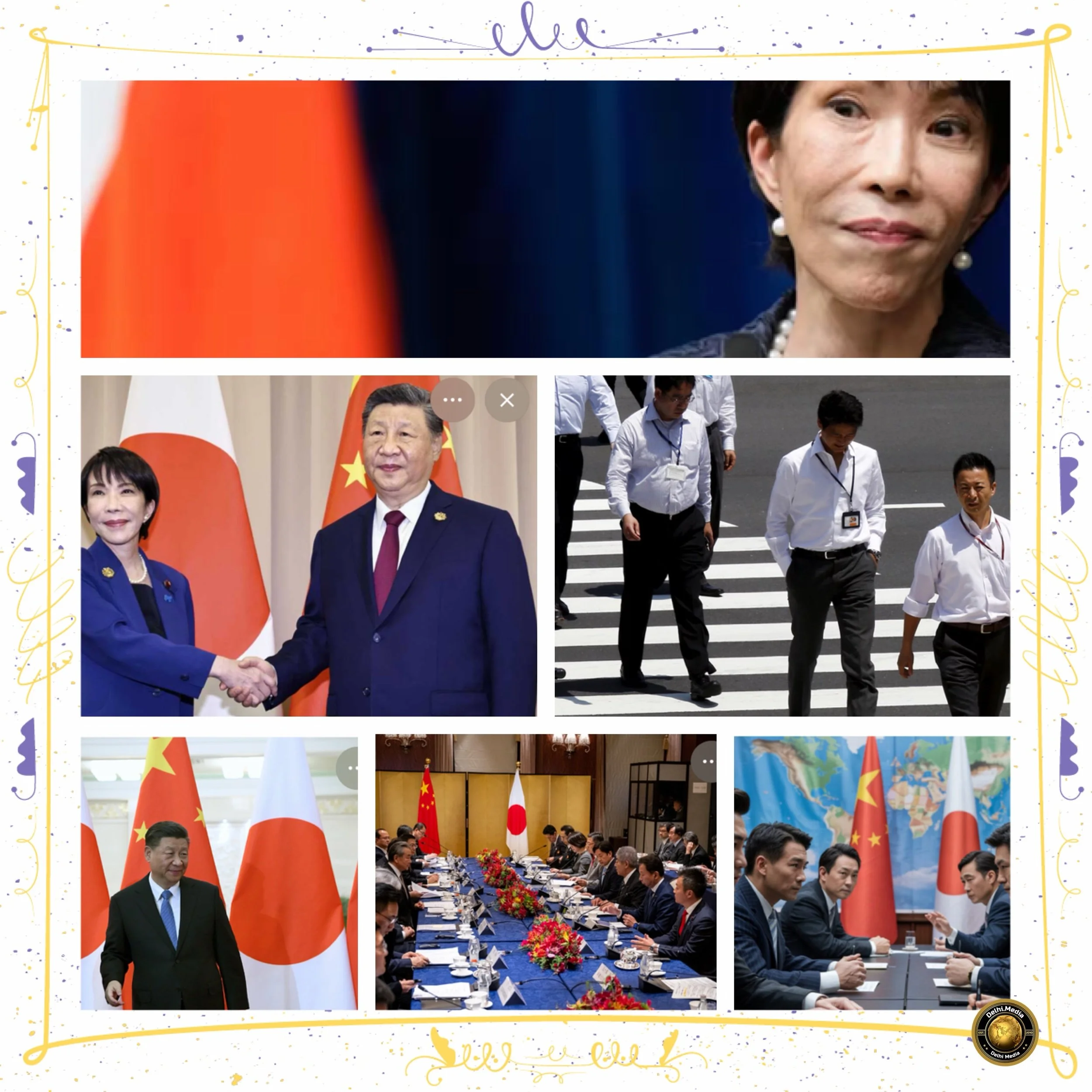
Sanae Takaichi’s ascension in 2025 as Japan’s first female prime minister came amid a fragile coalition with the Japan Innovation Party (Ishin), whose support hinges on her popularity and the LDP’s ability to deliver reforms.
This arrangement lacks the stability of the previous 26-year LDP-Komeito partnership and leaves governance vulnerable to political volatility.
Japan’s experience demonstrates that durable institutions can become destabilizing when economic and social fundamentals change.
The country now faces a critical juncture that requires institutional adaptation, fiscal reform, and renewed productivity growth to address interlocking crises of debt, demographics, and political legitimacy.
Takaichi’s tenure will test whether Japan can overcome these challenges or enter a period of terminal adaptation, with implications for its role in global economic and security affairs.
Introduction
Japan’s political landscape presents a fascinating paradox: a single party—the Liberal Democratic Party (LDP)—has dominated governance since 1955, yet the country has experienced remarkable leadership turnover, particularly in recent decades.
To understand this apparent contradiction and address Japan’s history, debt issues, and frequent prime ministerial changes, we must examine the intricate tapestry of Japan’s post-World War II transformation, its economic trajectory, and the structural factors shaping its political system.
The Post-WWII Foundation: Political, Economic, and Social Reconstruction
The Emergence of the 1955 System
Japan’s contemporary political architecture was forged in the crucible of defeat and occupation.
After surrendering to Allied forces in August 1945, Japan underwent a profound transformation under American occupation led by General Douglas MacArthur, which lasted until April 1952.
The occupation authorities sought to demilitarize and democratize Japan, implementing sweeping reforms that included a new pacifist constitution, land redistribution, the formation of labor unions, and the dissolution of the zaibatsu—the powerful industrial conglomerates that had fueled Japan’s wartime economy.
The political landscape crystallized in 1955 when two conservative parties—the Japan Democratic Party and the Japan Liberal Party—merged to form the Liberal Democratic Party.
This merger was a direct response to the recent unification of socialist factions into the Japan Socialist Party, creating what scholars term the “1955 System” or “one-and-a-half party system”.
Under this arrangement, the LDP held power almost continuously, with the opposition unable primarily to form viable alternatives, except for brief periods in 1993-1994 and 2009-2012.
The LDP’s dominance rested on a sophisticated network of relationships linking the party, government bureaucracy, and business sector.
This “iron triangle” enabled Japan to implement coordinated industrial policies while maintaining political stability.
The party itself was not ideologically monolithic but rather a coalition of competing factions—informal power groups that often determined leadership through internal negotiations rather than ideological differences.
The Economic Miracle: From Rubble to Riches
Japan’s economic transformation between 1945 and 1991 stands as one of history’s most remarkable development stories.
The immediate post-war period was catastrophic: 13.1 million people were unemployed, food and energy insecurity plagued the nation, and hyperinflation threatened stability.
The introduction of the Dodge Plan in 1948—named after American banker Joseph Dodge—proved transformative.
By implementing a balanced budget, shutting down inflationary money printing, and drastically reducing government intervention, the plan stabilized the yen and created conditions for sustained growth.
The Korean War (1950-1953) provided an unexpected catalyst, as massive demand for Japanese goods to support the war effort injected foreign capital and revitalized manufacturing.
From the 1950s through the 1980s, Japan experienced what became known as the “Economic Miracle,” with real GDP growth averaging 9-10% annually through the 1960s and remaining robust through the 1970s.
By 1968, Japan had become the world’s second-largest economy, surpassing West Germany.
Several factors underpinned this extraordinary performance.
(1) Japan maintained exceptionally high savings rates—averaging twice that of the United States during the 1971-1991 period—which provided abundant capital for private investment.
(2) The government pursued market-friendly policies, including tax cuts (particularly on savings and investment), economic liberalization, and reduced government spending.
(3) Education was prioritized, with emphasis on rigorous K-12 schooling that produced a highly skilled workforce.
(4) The labor force expanded rapidly as agricultural workers transitioned to manufacturing and service sectors, while productivity gains outpaced wage increases through the 1960s.
Prime Minister Shigeru Yoshida (1946-1954) deserves particular credit for resisting American pressure to remilitarize, allowing Japan to channel resources toward economic development rather than defense spending.
This strategy, combined with the 1951 security treaty with the United States that provided defense guarantees, enabled Japan to focus overwhelmingly on economic growth.
Social Transformation and Cultural Identity
Post-war social reforms fundamentally restructured Japanese society.
Universal medical insurance coverage was achieved by 1961, while rapid urbanization and industrialization created a thick middle class during the high-growth 1960s.
The traditional family-based welfare system gave way to a more comprehensive social support system, including the 1963 Welfare for the Elderly Act.
Despite modernization, Japan maintained distinctive cultural characteristics rooted in its indigenous spirituality.
Shintoism, Japan’s oldest religion, meaning “the way of the gods,” coexists harmoniously with Buddhism, which arrived in the 6th century.
This religious syncretism—where both faiths complement rather than conflict with each other—reflects broader Japanese cultural values emphasizing harmony, consensus, and collective well-being.
Japanese people commonly participate in Shinto wedding ceremonies but Buddhist funerals, viewing religion less as an exclusive doctrine than as a moral code interwoven with social life.
The workplace developed distinctive characteristics, including lifetime employment (shūshin koyō), seniority-based advancement (nenkōjōretsu), and strong company loyalty.
These systems fostered stability and commitment but also created rigid hierarchies and demanding work cultures that would later prove problematic.
The Bubble Economy and Lost Decades: When Success Bred Crisis
The Formation and Collapse of the Asset Bubble
Japan’s economic success contained the seeds of its subsequent stagnation.
Following the Plaza Accord of 1985, which caused sharp yen appreciation and threatened export competitiveness, the Bank of Japan aggressively cut interest rates from 5% to 2.5% between 1986 and 1987.
Simultaneously, the government implemented expansionary fiscal policies.
The resulting monetary flood, combined with financial deregulation that freed banks to pursue riskier lending, inflated a massive asset bubble.
Stock and real estate prices soared to extraordinary levels.
The Nikkei 225 stock index peaked at 38,957 on December 29, 1989, while land prices in Tokyo’s Ginza district reached $139,000 per square meter.
Nationwide, commercial land prices jumped 302.9% between 1985 and 1991, while residential and industrial land rose 180.5% and 162.0% respectively.
Banks engaged in over-lending, particularly by using land as collateral, creating a self-reinforcing cycle in which rising values justified more lending, which pushed prices even higher.
The bubble burst dramatically. Belatedly recognizing the danger of runaway asset inflation, the Bank of Japan raised interest rates five times between May 1989 and August 1990, reaching 6%.
The Nikkei crashed, falling from nearly 39,000 to below 20,000 by late 1990—a 50% decline. Land prices began declining in 1991 and continued falling throughout the decade.
By 1992, the bubble had definitively collapsed, leaving banks saddled with massive non-performing loans and the economy mired in what would be termed the “Lost Decade”.
The Lost Decades: Prolonged Stagnation
The 1990s saw Japan’s once-dynamic economy grind nearly to a halt, with average annual GDP growth of just 1%—one-quarter the 4% rate of the 1980s.
The Nikkei continued declining, reaching around 10,000 by 2001, and wouldn’t return to 1989 levels for nearly three decades.
Real estate prices remained depressed, creating a massive wealth destruction that undermined both consumer confidence and corporate balance sheets.
Economist Richard Koo characterized this as a “balance sheet recession”—firms prioritized debt repayment over investment despite zero interest rates, creating a persistent demand shortfall.
Corporate investment fell by 22% of GDP between 1990 and 2003, while businesses became net savers rather than borrowers.
The government attempted massive fiscal stimulus, essentially borrowing to offset the private sector’s deleveraging, which prevented complete collapse but accumulated enormous public debt.
Banking sector troubles compounded the crisis. Banks were slow to recognize non-performing loans, creating “zombie banks” that continued operating despite being effectively insolvent.
Regulatory forbearance and delayed intervention prolonged the financial sector’s weakness, constraining credit availability and hindering recovery.
The introduction of capital adequacy requirements in the early 1990s further restricted lending capacity precisely when the economy most needed credit.
The stagnation extended beyond a single decade. Even after banking sector stabilization in the early 2000s, growth remained anemic, leading scholars to speak of “Lost 20 Years” or even “Lost 30 Years”.
Japan’s nominal GDP per capita, which ranked third globally at $44,210 in 1995, had fallen to 36th place by 2025.
Deflation became entrenched—consumer prices fell or stagnated for most of this period, creating expectations that further dampened spending and investment.
Japan’s Debt Crisis and Interest Rate Dilemma
The Debt Accumulation
Japan’s public debt has reached levels unprecedented among developed nations.
The debt-to-GDP ratio now exceeds 260%, the highest in the world.
This massive accumulation resulted from multiple factors: persistent fiscal deficits to stimulate a stagnant economy, rising social security costs for an aging population, and declining tax revenues due to sluggish growth.
Yet Japan has managed this debt burden without the crises that afflicted other heavily indebted nations.
The key lies in several distinctive features.
(1) Japanese government bonds (JGBs) are held overwhelmingly by domestic investors—banks, insurance companies, pension funds, and the Bank of Japan itself—rather than foreign creditors.
(2) Japan’s high household savings rate provided ample domestic capital to purchase government debt.
(3) The cultural factors and risk aversion made Japanese investors willing to accept very low or even negative yields on government bonds viewed as ultra-safe assets.
The Interest Rate Trap
Japan’s interest rate policy evolved through several phases, each responding to changing economic conditions.
The Bank of Japan progressively cut rates through the 1990s, reaching near-zero by the late 1990s.
When conventional monetary policy proved insufficient, the BOJ pioneered unconventional measures, including quantitative easing (QE) starting in 2001, which involved massive purchases of government bonds to inject liquidity into the financial system.
In 2013, under Governor Haruhiko Kuroda, appointed by Prime Minister Abe, the BOJ adopted an aggressive QQE (Qualitative and Quantitative Easing) program targeting 2% inflation.
This was followed by a negative interest rate policy in February 2016, setting the benchmark rate at -0.1%.
In September 2016, the BOJ introduced Yield Curve Control (YCC), explicitly targeting 10-year JGB yields near 0% while maintaining negative short-term rates.
These ultra-low rates served multiple purposes. They aimed to combat persistent deflation, support economic recovery, and—crucially—keep government debt servicing costs manageable.
With debt exceeding 260% of GDP, even modest interest rate increases would dramatically raise the government’s annual debt service payments, potentially creating a fiscal crisis.
However, maintaining ultra-low rates created problems of its own.
As other major central banks raised rates in 2022-2023 to combat inflation, Japan’s policy divergence weakened the yen and encouraged capital outflows.
Global inflation pressures, energy costs, and yen weakness pushed Japanese inflation above the BOJ’s 2% target for the first time in decades.
Yield Curve Control became increasingly difficult to defend as investors challenged the policy by selling bonds, forcing the BOJ to intervene on a massive scale.
In March 2024, the BOJ finally ended negative interest rates and exited the Yield Curve Control framework, marking a historic shift after decades of ultra-loose policy.
However, rates remain very low by international standards, and the central bank emphasized that “accommodative financial conditions will be maintained”.
The challenge going forward is to normalize monetary policy without triggering unsustainable increases in debt servicing costs or undermining the fragile economic recovery.
The Sustainability Question
Whether Japan’s debt is sustainable remains hotly debated.
Optimists note that Japan has financed its debt domestically for decades without crisis, that inflation is finally returning, which could help reduce the real debt burden, and that recent wage growth may support stronger nominal GDP growth.
The government continues to successfully roll over debt at low rates, with Japanese investors still willing buyers.
Pessimists warn that warning signs are emerging.
Long-term JGB yields reached multi-year highs in 2025, with 10-year bonds hitting 1.59% and 30-year bonds reaching 3.21%—the highest since 2008.
Bond auctions have shown weakening demand, suggesting investor confidence may be eroding.
The aging population means household savings will decline as more people draw down assets in retirement, potentially reducing domestic demand for government bonds.
If global interest rates remain elevated or if international investors lose confidence, Japan could face a debt crisis requiring painful fiscal adjustments or even risking default.
The Paradox of Prime Ministerial Turnover
The Revolving Door Phenomenon
Japan has experienced extraordinary leadership churn despite the LDP’s enduring dominance. Since 2000, Japan has had 12 prime ministers—compared to just three chancellors in Germany during the same period.
Many served for less than 2 years, with some serving only months.
This contrasts sharply with the longer tenures of Junichiro Koizumi (2001-2006) and especially Shinzo Abe, whose second term (2012-2020) made him Japan’s longest-serving prime minister at 96 months.
Structural Factors Driving Turnover
Multiple interrelated factors explain this instability.
(1) Divided government—when the LDP controls the House of Representatives but lacks a majority in the House of Councillors (the upper house) —legislative gridlock ensues.
This “twisted Diet” scenario has repeatedly weakened prime ministers, as seen when Ryutaro Hashimoto resigned in 1998 after losing an upper house election, and during the first Abe premiership and other short-lived administrations.
(2) Japan’s political culture emphasizes existential accountability—politicians are expected to resign when they lose public support or face scandals, even if they retain parliamentary majorities.
Regular opinion polls by media outlets such as NHK, Kyodo, and Mainichi regularly measure public opinion, creating pressure on leaders whose approval ratings decline significantly.
This contrasts with Western democracies, where leaders often weather scandals and low popularity ratings without resigning.
(3) LDP factionalism means prime ministers must continuously manage internal party dynamics.
The LDP comprises competing power groups with distinct leaders and loyalties.
When a prime minister’s approval drops or policy initiatives fail, factions may withdraw support and orchestrate leadership changes—even without a formal challenge.
This internal party politics can be more consequential than opposition party pressure.
(4) Japan’s electoral system creates instability. The 1994 reform introduced single-member districts alongside proportional representation, intended to promote two-party politics and more explicit mandates.
However, rather than stabilizing leadership, this system made elections more volatile and increased the consequences of unpopularity. Coalition politics—particularly the LDP’s partnership with Komeito from 1999 to 2025—added another layer of complexity requiring constant negotiation.
(5) Recurring political scandals have repeatedly destabilized governments.
Corruption scandals have plagued the LDP for decades—including the Lockheed scandal (1970s), the Recruit scandal (1980s), the Sagawa Kyūbin scandal (1990s), and, most recently, the 2023-2024 slush fund scandal involving undeclared political funds.
These crises erode public trust and often force leadership changes.
Recent Developments: The Kishida-Ishiba-Takaichi Transition
The 2023-2024 slush fund scandal exemplified how corruption can rapidly destabilize even seemingly secure leaders.
Investigations revealed that LDP factions, particularly the powerful Abe faction (Seiwakai), had underreported hundreds of millions of yen from fundraising parties, diverting the funds into “slush funds” that benefited individual lawmakers.
Prime Minister Fumio Kishida’s approval ratings plummeted to 17%—the lowest since 2012—despite his attempts at party reform, including dissolving his own faction.
The scandal contributed to electoral setbacks. In October 2024, the LDP lost its majority in the House of Representatives, and in July 2025, lost its majority in the House of Councillors—forcing the party to run a minority government for the first time.
Kishida eventually announced he would not seek re-election, triggering a leadership contest.
The September 2024 LDP presidential election featured nine candidates—a record number—reflecting the factionless, volatile environment after most factions had disbanded following the scandal.
The contest focused on three front-runners: Shigeru Ishiba, Shinjiro Koizumi, and Sanae Takaichi. Ishiba, a former Defense Minister, narrowly defeated Takaichi in a runoff and became prime minister on October 1, 2024.
However, Ishiba’s tenure proved extremely short-lived.
The LDP’s coalition partner, Komeito, which had been allied with the LDP for 26 years, withdrew from the coalition in October 2025.
This forced Ishiba into complex negotiations with opposition parties to maintain power.
After failing to secure stable support and with his approval ratings declining, Ishiba resigned, and a new LDP leadership election was held.
The Takaichi Era and the LDP-Ishin Partnership
Sanae Takaichi emerged victorious in the October 2025 election, making history as Japan’s first female prime minister.
Takaichi, a staunch conservative who had served in various ministerial roles, benefited from strong public support—polling showed her as the most popular potential leader among LDP supporters at 34.4%.
Her conservative credentials and forceful persona appealed to party members seeking decisive leadership after months of scandal and instability.
With Komeito no longer in coalition, Takaichi and the LDP forged a new partnership with the Japan Innovation Party (Nippon Ishin no Kai)—a center-right, reform-oriented party based primarily in the Kansai region.
On October 20, 2025, the two parties signed a coalition agreement outlining cooperation across twelve policy areas including constitutional revision, defense buildup, fiscal reform, and governance restructuring.
Critically, this is a “confidence and supply” arrangement rather than a full coalition. Ishin agreed to vote with the LDP on confidence motions and key votes, enabling Takaichi’s designation as prime minister on October 21, 2025.
However, Ishin has no cabinet representation and retains freedom to vote independently on legislation.
The agreement includes high-bar conditions—Ishin demanded progress on reducing Diet membership by 10%, lowering social insurance fees, and advancing a “second capital” initiative away from Tokyo.
This arrangement is inherently fragile. If the LDP fails to meet Ishin’s expectations, the party can terminate the partnership and potentially vote down the government with other opposition parties.
Ishin co-leader Fujita Fumitake has explicitly warned that failure to submit promised legislation will end the agreement.
The lack of Komeito’s reliable bloc vote (approximately 15,000-20,000 votes per district from the Soka Gakkai Buddhist organization) also weakens the LDP’s electoral position heading into future elections.
Your observation that “Ishin would continue giving support to the government as long as popularity of Sanae Takaichi is high” reflects this dynamic accurately.
Takaichi entered office with strong approval ratings—75.1% of respondents in a November 2025 poll rated her summit diplomacy with the U.S., China, and South Korea highly.
However, maintaining this popularity while managing economic challenges, implementing reforms demanded by Ishin, and avoiding the scandals that have plagued recent LDP administrations will be extremely difficult.
If Takaichi’s popularity declines significantly, Ishin faces a strategic dilemma. Continuing to support an unpopular government could taint Ishin’s brand as a reformist alternative, potentially costing votes in the next election.
As you noted, “Ishin pulling support could jeopardize Ishin chances in next election”—but the reverse is also true: maintaining support for a failing LDP government could equally damage Ishin’s electoral prospects by making it appear complicit in LDP’s problems.
This tension makes the current arrangement particularly unstable compared to the previous LDP-Komeito coalition, which lasted over two decades.
Contemporary Challenges Facing Japan
Demographic Crisis and Its Ramifications
Japan faces perhaps the world’s most severe demographic challenge. The population is both shrinking and aging rapidly—29.3% of Japanese are now over 65, and more than one in ten are aged 80 or older.
The fertility rate stands at just 1.26, far below the 2.07 replacement rate, and in 2024 Japan recorded its largest-ever population decline.
The working-age population (15-64) peaked in the early 1990s at nearly 70% of total population but has since fallen to just above 59%—the lowest among G7 countries.
These trends create cascading economic and social problems. The labor force is shrinking, reducing potential GDP growth—the IMF estimates demographics alone will reduce Japan’s annual growth by 0.8% over the next 40 years.
Tax revenues decline as fewer people work, while social security expenditures surge as more people retire and require healthcare and pensions.
The elderly poverty rate has reached 19.6%, and nearly one million people over 65 receive public assistance. The phenomenon of kodokushi—dying alone with no family to claim belongings—has become distressingly common.
The government has implemented various countermeasures including subsidies for childbirth and housing, promoting paternity leave, and encouraging women’s labor force participation.
Women’s participation rates have indeed increased—Japan’s prime-age female labor force participation reached 76.3% in 2016, surpassing the U.S. for the first time.
However, many women work in part-time or non-regular positions with lower pay and fewer benefits, limiting the economic impact.
The deeply rooted patriarchal culture, where married women are expected to assume primary caregiving roles, continues to discourage childbearing despite government initiatives.
Economic Stagnation and Current Challenges
As of 2024-2025, Japan’s economy continues struggling with multiple headwinds. GDP growth has been anemic—only 1.0% in 2022 and 1.5-1.9% in 2023, with projections below 1% for 2024.
The economy actually contracted in the first half of 2024 due to supply disruptions before gaining modest momentum.
This weak performance occurs despite near-full employment (unemployment around 2.5%)—a paradox explained by stagnant wages and limited hours worked rather than job creation.
Inflation, after decades near zero, has surged to 3.3-3.5%—the highest among G7 countries and above the BOJ’s 2% target.
However, this is primarily cost-push inflation driven by a weak yen and imported energy and food costs rather than robust domestic demand.
Real wages remain negative when adjusted for inflation, meaning workers are losing purchasing power despite modest nominal wage increases.
Food inflation has been particularly severe, with rice prices surging over 100% year-over-year in mid-2025 due to poor harvests.
The external environment poses additional challenges. Japan’s exports declined for consecutive months in 2025, driven by weakening semiconductor and auto shipments to China and the U.S..
Trade tensions with the United States—Japan’s most important trading partner—have escalated, with the Trump administration threatening 35% tariffs on Japanese imports.
While this was negotiated down to 15% in a July 2025 deal, the episode highlighted Japan’s vulnerability to protectionist policies.
Japan also committed to $550 billion in investment in the United States to avoid higher tariffs, creating fiscal obligations of uncertain scope.
Japan’s public debt burden constrains policy options. Debt servicing costs are rising as interest rates increase from historical lows, potentially crowding out other government spending.
Long-term bond yields reaching multi-year highs and weakening auction demand suggest growing investor concerns about sustainability.
Yet aggressive fiscal consolidation could push the fragile economy into recession, creating a difficult policy dilemma.
The Abenomics Legacy and Its Limitations
Prime Minister Shinzo Abe’s economic program—dubbed “Abenomics”—represented Japan’s most ambitious attempt to escape stagnation and deflation.
Introduced in 2013, Abenomics comprised “three arrows”: aggressive monetary easing by the Bank of Japan (including QQE and eventually negative rates), flexible fiscal stimulus through government spending, and structural reforms to boost private investment and competitiveness.
The first two arrows were implemented rapidly and showed initial success. The BOJ doubled its monetary base, extended bond purchase maturities, and achieved its 2% inflation target temporarily.
The government implemented a ¥10.3 trillion stimulus package in early 2013. These policies helped weaken the yen, boosted stock prices, and created a more optimistic economic atmosphere.
However, the critical “third arrow” of structural reforms proved far more difficult.
Abe’s growth strategy targeted raising business startups, increasing capital investment to pre-financial crisis levels, enhancing productivity through deregulation, and promoting innovation and internationalization.
While some progress was made—including measures to support women’s workforce participation (“Womenomics”), corporate governance reforms, and limited deregulation—fundamental structural changes remained elusive.
Critics argue that Abenomics ultimately failed to achieve sustainable escape from deflation and low growth.
The consumption tax increase from 5% to 8% in April 2014 (and later to 10%) dampened demand at critical moments. Structural reforms faced resistance from vested interests and political constraints.
Most importantly, Abenomics could not overcome the demographic headwind of a shrinking, aging population that fundamentally constrains potential growth.
The program did stabilize the economy and prevent further decline, but it did not generate the transformational growth initially hoped for.
The Work Culture Challenge
Japan’s distinctive work culture, once seen as instrumental to economic success, has become recognized as a liability.
The concepts of lifetime employment, seniority-based advancement, and intense company loyalty fostered stability but created rigidity, limited labor mobility, and contributed to overwork.
The term karōshi—death from overwork—entered the lexicon to describe deaths from stroke, heart attack, or stress-induced suicide caused by excessive work hours. In 2022, Japan officially recognized 2,968 work-related suicides, up from 1,935 in 2021.
Long working hours remain endemic despite reforms. One in ten Japanese employees works over 80 hours of overtime monthly, and one in five faces karōshi risk.
The traditional expectation that workers demonstrate dedication through long presence at the office regardless of productivity has proven difficult to change.
The strict workplace hierarchy (senpai-kohai system) can stifle innovation by discouraging junior employees from challenging seniors or proposing new ideas.
The government has implemented reforms to address these issues.
Work-style reform legislation introduced in 2019 capped overtime at 45 hours per month and 360 hours annually for regular workers, with higher caps for specific industries like medicine.
Remote work increased during COVID-19, and some companies have maintained hybrid arrangements—though adoption declined from 27% in 2021 to 24.8% in 2023, suggesting limited permanent change.
Some large companies including Rakuten and Sony have begun moving away from seniority-based systems toward merit-based promotion and compensation, but this remains the exception rather than the rule.
Lifetime employment is declining gradually—a 2023 survey found only 30.1% of new employees aspired to remain with one company long-term, down from much higher historical rates.
However, changing deeply ingrained cultural practices requires generational time, and progress has been slow.
What We Know: Key Takeaways
Based on this comprehensive analysis, several clear conclusions emerge about Japan’s post-WWII trajectory and current situation:
On the Political System
The LDP has indeed dominated Japanese politics since 1955, holding power for approximately 65 of the past 70 years.
However, this dominance has not meant ideological consistency but rather pragmatic adaptation. The party functions as a coalition of factions rather than a unified ideological movement.
While the party’s conservative orientation and pro-business, pro-U.S. stance has remained consistent, specific policies have varied considerably depending on factional balance and external circumstances.
On Leadership Turnover
Prime ministerial instability stems from structural factors—divided government, factional politics, cultural expectations of accountability, coalition complexity, and recurring scandals—rather than mere personality failures.
The exception was Shinzo Abe’s remarkable second term (2012-2020), which succeeded because he maintained factional support, avoided major scandals, delivered relative economic stability, and benefited from a weaker opposition after the DPJ’s disappointing 2009-2012 tenure.
On Economic Performance
Japan experienced genuine miraculous growth from 1945 to 1991, transforming from devastation to the world’s second-largest economy.
The 1991-92 bubble collapse inaugurated decades of stagnation that continue in modified form today.
While Japan avoided economic collapse through massive fiscal and monetary intervention, it has been unable to return to robust growth, with demographic decline creating persistent headwinds.
On Debt and Interest Rates
Japan’s 260%+ debt-to-GDP ratio is sustainable under current conditions—domestic ownership, high savings, and ultra-low rates—but faces increasing strain as demographics worsen, bond yields rise, and fiscal demands grow.
The BOJ has been trapped between the need to normalize policy as inflation returns and the imperative to keep debt servicing costs manageable.
This dilemma will likely intensify in the coming years.
On Current Politics
Sanae Takaichi’s ascent as Japan’s first female prime minister represents both historic change and continuity.
The shift from the LDP-Komeito coalition to the LDP-Ishin confidence-and-supply arrangement creates a more unstable political environment where maintaining popularity is essential to governmental survival.
Analysts observation about the importance of Takaichi’s popularity to Ishin’s continued support is absolutely correct—but the relationship is precariously balanced, as Ishin must also protect its own electoral prospects and could face pressure to withdraw support if either the government becomes too unpopular or if LDP fails to deliver on promised reforms.
On Social Challenges
Japan confronts multiple reinforcing challenges—population aging and decline, rigid workplace cultures, gender inequality despite progress, mounting social security costs, and intergenerational wealth and opportunity gaps.
These problems have no quick solutions and will shape Japanese society and policy for decades to come.
The Japanese experience offers profound lessons about the complexities of managing economic success, the dangers of asset bubbles, the challenges of demographic transition, and the delicate balance between political stability and accountability.
Japan’s future trajectory will depend on whether it can implement structural reforms to boost productivity, manage its debt burden without crisis, adapt its work culture to modern realities, and either reverse demographic decline or successfully adapt to a shrinking population.
The coming years under Prime Minister Takaichi will test whether Japan can break free from decades of stagnation or whether the challenges have become structurally embedded.
Conclusion
Japan’s postwar political and economic trajectory offers a compelling scholarly case study in the interplay between institutional stability, structural transformation, and governance resilience.
The Liberal Democratic Party’s enduring dominance since 1955, built on factional coalition and consensus-based governance, initially enabled Japan’s rapid reconstruction and the “economic miracle” by aligning state capacity with market development and strategic international alignment.
However, the same institutional arrangements that facilitated growth became increasingly maladaptive in the face of economic stagnation, demographic decline, and fiscal overhang, revealing the limitations of path-dependent institutional frameworks when confronted with exogenous shocks and endogenous structural change.
The repeated cycles of prime ministerial turnover in recent decades reflect not personal failures, but deeper systemic vulnerabilities rooted in Japan’s factional party system, divided government, and evolving coalition politics.
The 2023–2025 political crisis, culminating in Sanae Takaichi’s rise to power under a fragile coalition with Ishin, exemplifies how institutionalized mechanisms of political accountability—public opinion, party factionalism, and coalition fragility—have intensified, constraining policy innovation and exacerbating leadership instability at a time of mounting economic and social challenges.
Japan’s extraordinary public debt, now exceeding 260% of GDP, and its decades-long experiment with ultra-low interest rates and unconventional monetary policy, highlight the fiscal-monetary trap that ensnares economies with persistent demographic decline and weak private sector demand.
The shift from the stable LDP-Komeito coalition to the ad hoc LDP-Ishin arrangement further exposes the limits of institutional continuity when foundational social contracts—such as lifetime employment, intergenerational wealth transfer, and consensus-driven governance—are eroded by changing demographics and shifting voter priorities.
In sum, Japan’s experience demonstrates that even robust, long-standing institutional frameworks can become sources of instability when economic fundamentals change and social demands outpace institutional adaptability.
The country now stands at a critical juncture, requiring not just policy adjustments, but profound institutional reengineering to address the interlocking crises of debt, demography, and governance legitimacy.
The Takaichi administration’s tenure will serve as a crucial test of whether Japan can reform its institutional foundations to meet these challenges, or whether its postwar political model is entering an era of terminal adaptation.