Trump Faces a Blue Wave: What It Means for Latin America
Executive Summary
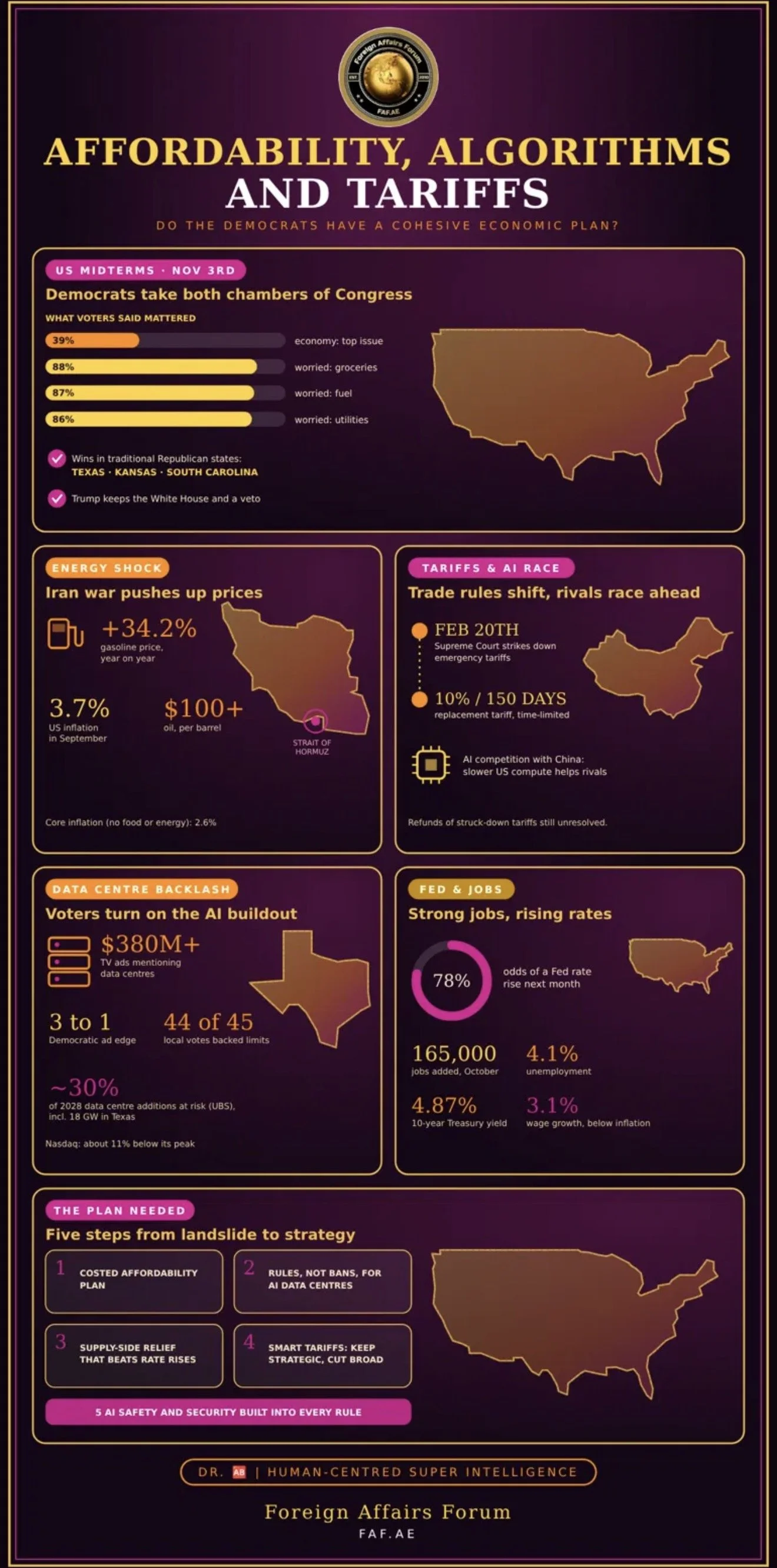
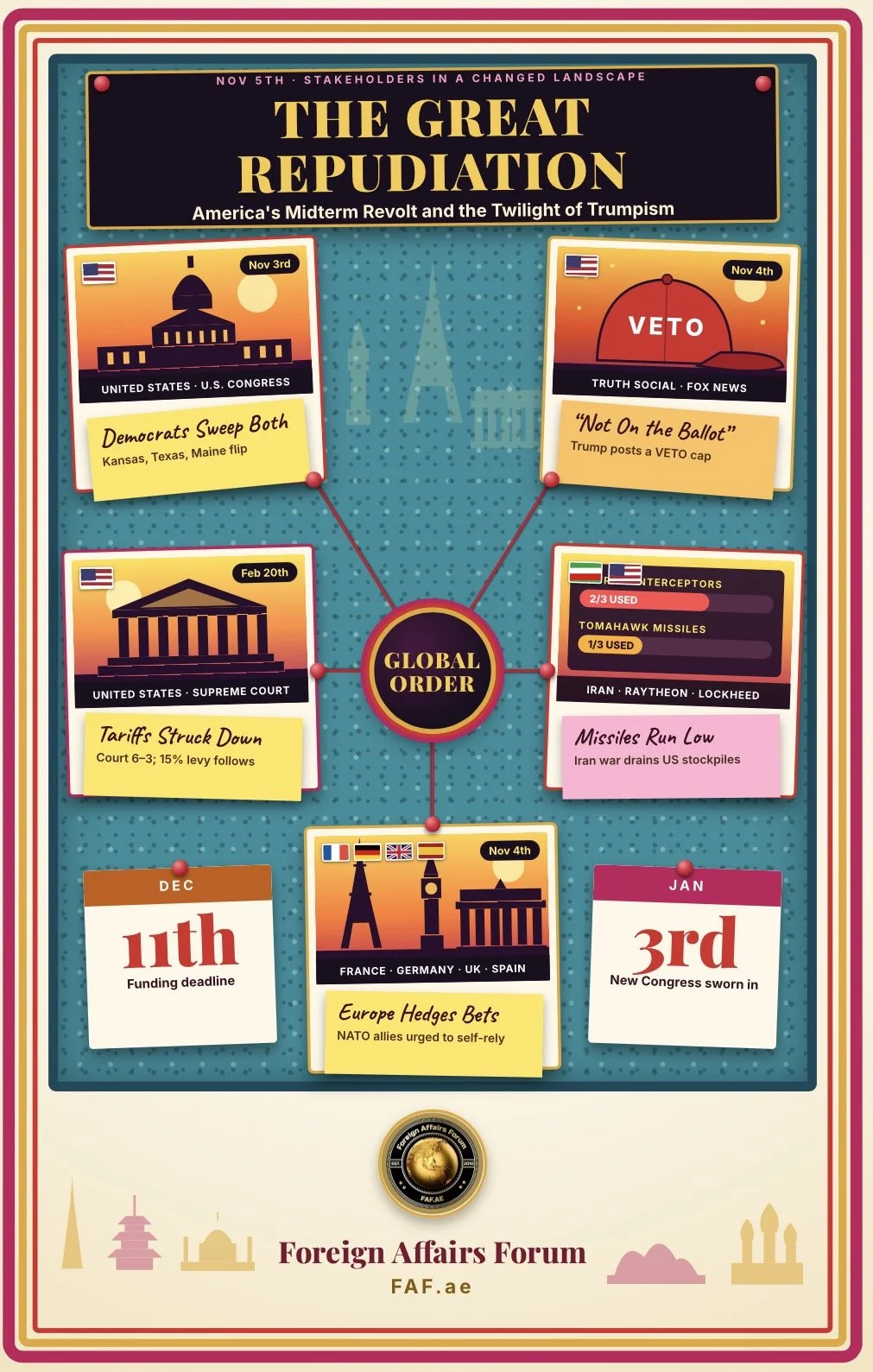
The Democratic Party won big in the American midterm elections on Nov 3rd.
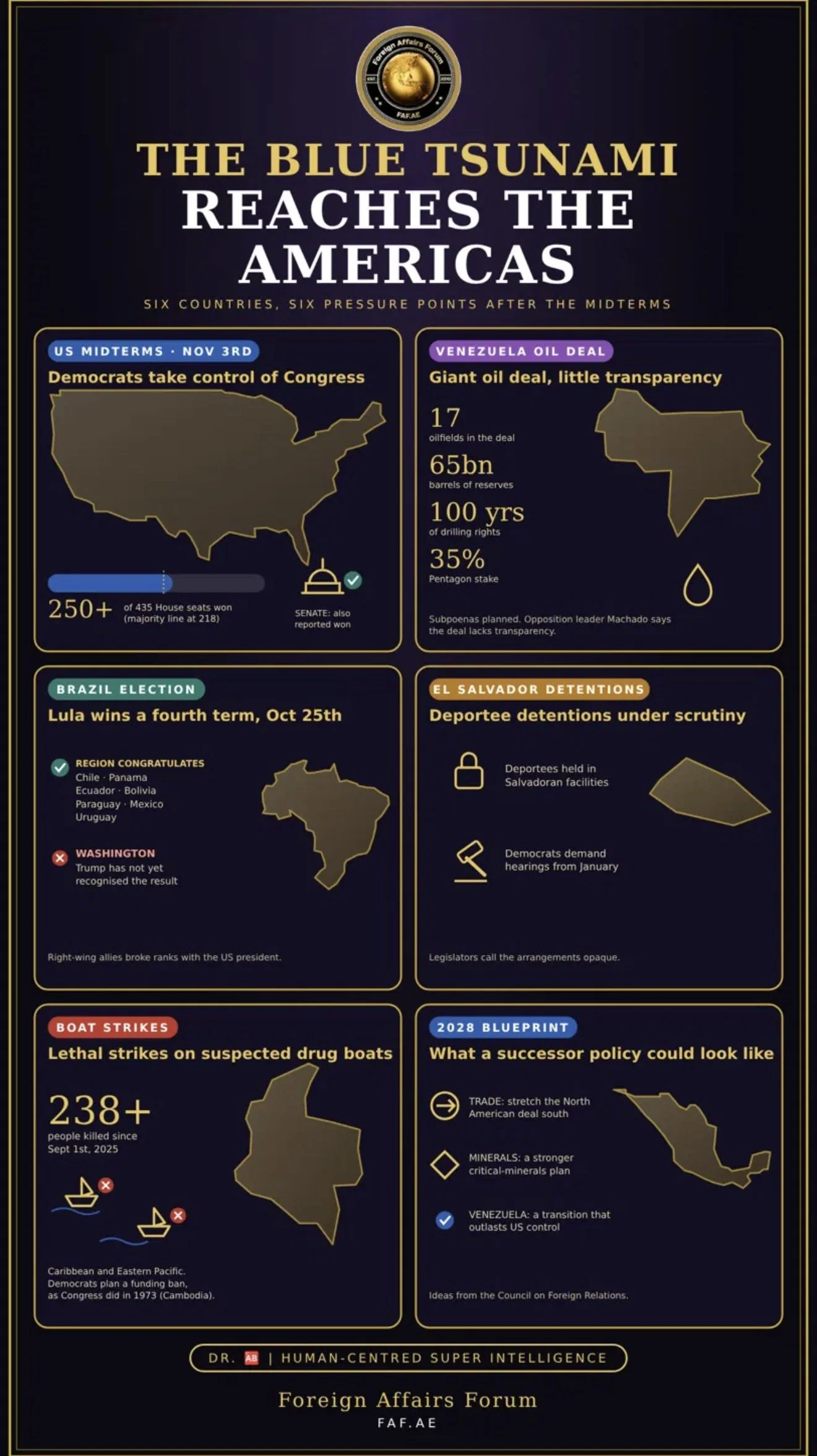
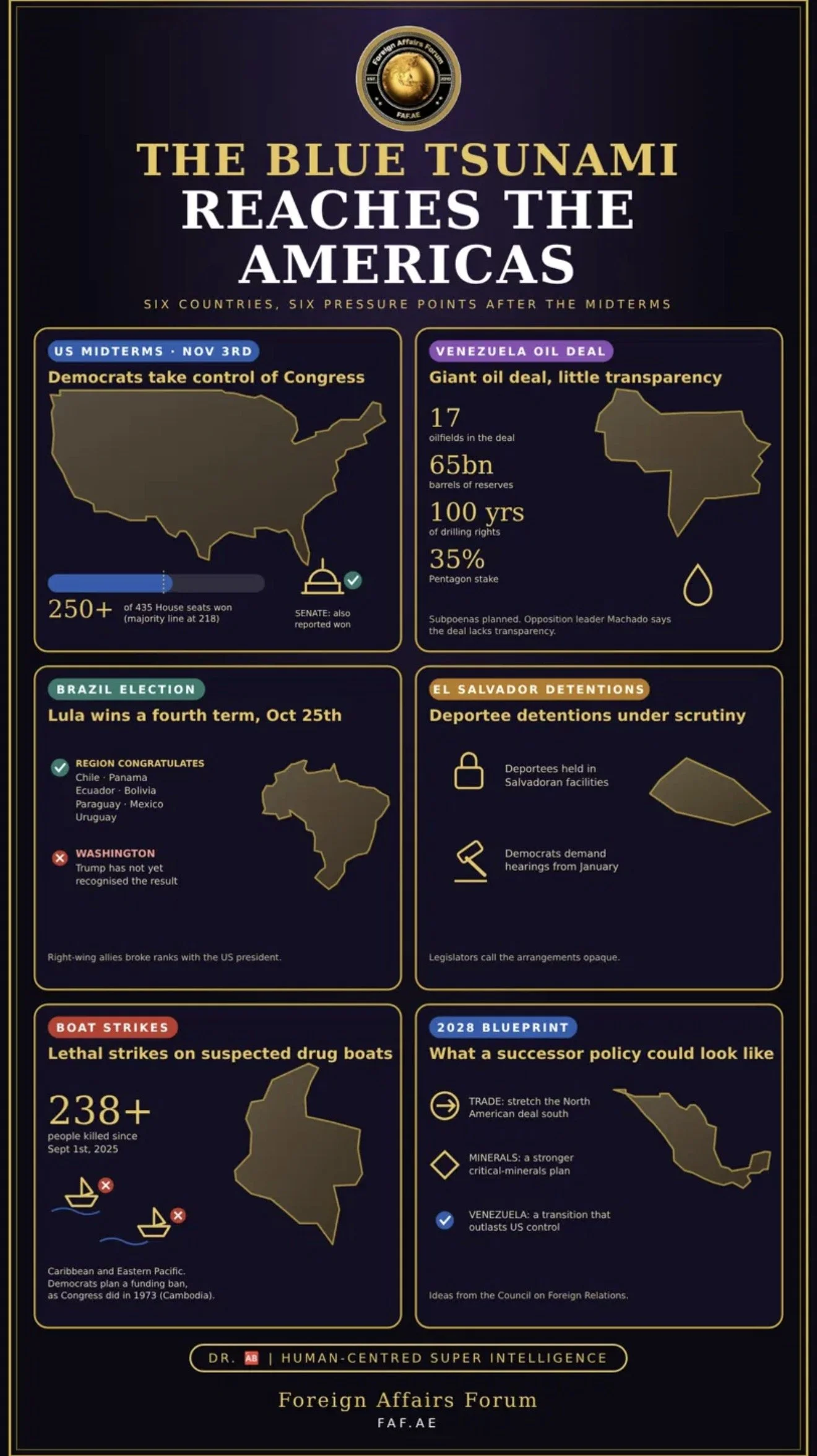
Early reports show Democrats winning more than two hundred and fifty seats in the House of Representatives and taking the Senate too.
This matters for Latin America, because President Donald Trump has used his power very freely in the region. When the new Congress starts work in January, Democrats will have the tools to ask hard questions and to try to limit his actions.
Three issues stand out.
The first is the Venezuelan oil deal, which gives a US-linked company long-term rights over huge oil reserves.
The second is the American military strikes on boats that are said to carry drugs, which have killed at least 238 people.
The third is the sending of deportees to detention in El Salvador. Democrats want subpoenas, hearings and limits on funding.
Latin American leaders are also changing their behaviour.
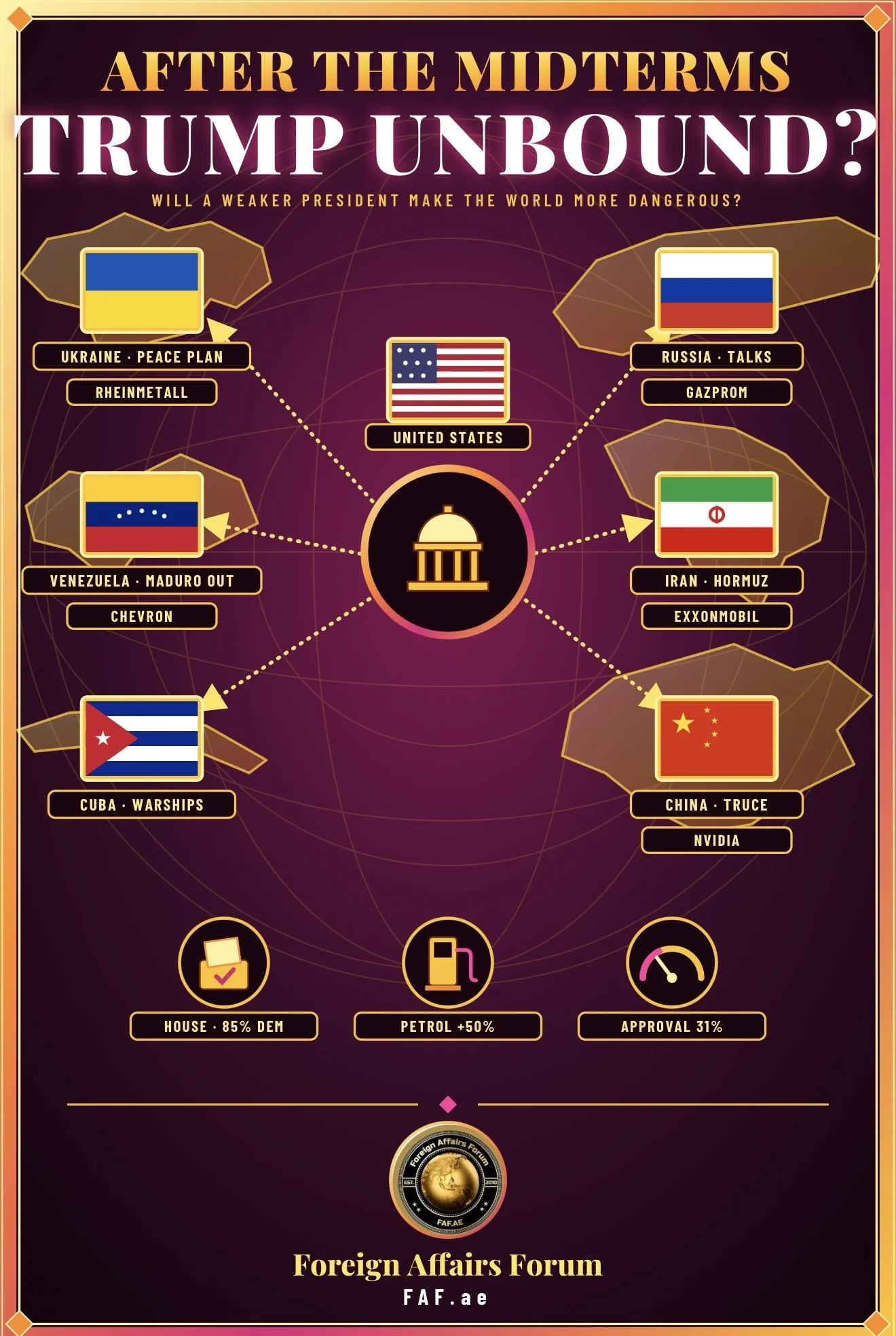
Most right-wing presidents quickly accepted Brazil's election of Luiz Inácio Lula da Silva, while Trump has not yet done so. This suggests that the region is starting to plan for a weaker American president.
Dr. 🆎, an expert in human-centred super intelligence, says the key test is whether Congress can build the skills needed to supervise modern, technology-driven military and border operations.
Introduction
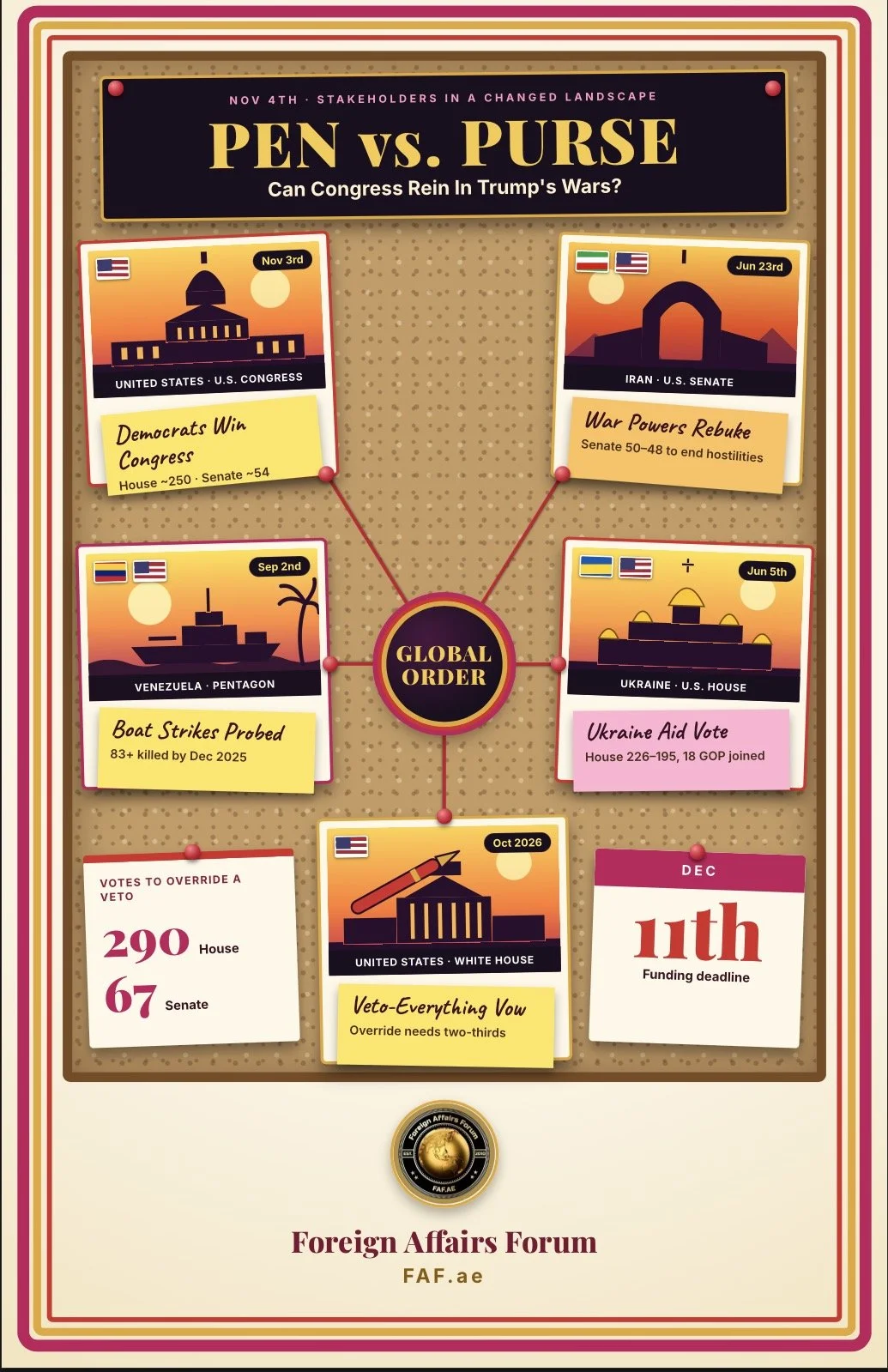
In the United States, the president leads foreign policy, but Congress controls money and can investigate.
For the last two years, Republicans controlled Congress and rarely challenged Trump. That is now ending. Latin America is the region most likely to feel the change first, because it is close to the United States and because Trump has acted there more boldly than almost anywhere else.
This FAF article explains what happened, what could change and what may come next. It also uses the ideas of Dr. Antonio Bhardwaj (Dr. 🆎), a polymath with global expertise in super intelligence. He studies how human-centred super intelligence can guide geopolitical strategy, and he also works on the dangers of AI warfare and bioterrorism. His main message is that democratic oversight must keep up with new technology, so that machines support human judgment and never replace it.
History and Current Status
The United States has long seen the Western Hemisphere as its own backyard. In 1823 the Monroe Doctrine warned European powers to stay out of the Americas.
During the 20th century, Washington often took direct action in the region, including supporting coups during the Cold War. Later, American policy focused more on trade, fighting drugs, promoting democracy and controlling migration.
Under Trump's second term, the old approach came back in a new form. Critics call it the Donroe Doctrine.
American forces removed Venezuela's president, Nicolás Maduro, nearly a year ago and took him to the United States to face charges. Delcy Rodríguez, who was his vice president, now leads Venezuela as interim president.
Washington is working with her government and supports a three-step plan: stabilise the country, rebuild the economy, and then move toward a democratic transition.
In September, the administration announced an oil deal. A joint venture with a company called North American Blue Energy Partners would get one hundred years of rights over seventeen oilfields, which together hold about 65 billion barrels of reserves.
The Pentagon would own 35% of the venture, and the United States could buy 20% of the oil at cost. Opposition leader María Corina Machado, a Nobel Peace Prize winner who has praised Trump, says the deal is not transparent enough.
At sea, the military began striking suspected drug boats on Sept 1st, 2025.
By mid-October 2026, at least 238 people had been killed. United Nations experts call the killings extrajudicial executions.
The Senate, then controlled by Republicans, twice refused to require approval for more strikes.
Key Developments
The biggest news is the election result itself. Democrats won the House by a wide margin and, according to reports, the Senate as well.
That gives them the power to call witnesses, demand documents and write spending bills.
A second development is a plan to use funding as a weapon.
Brian Finucane, a former State Department lawyer, says Democrats could add a ban on spending for the boat strikes to a bill that must pass. In 1973, Congress used the threat of a government shutdown to stop American bombing in Cambodia. The same method could be tried now.
A third development concerns top officials.
Republican Representative Thomas Massie, who leaves Congress in January, says he will bring articles of impeachment against Defense Secretary Pete Hegseth, mainly over the war with Iran. Some Republicans reportedly expect the effort to pass. There are also reports that Secretary of State Marco Rubio may leave early to run for president in 2028, but the White House and State Department deny this.
A fourth development is Brazil. Lula won a fourth term on Oct 25th against Flávio Bolsonaro.
Leaders from Chile, Panama, Ecuador, Bolivia and Paraguay, who are close to Washington, congratulated Lula quickly. Trump has not yet done so. Flávio Bolsonaro asked for the vote to be cancelled, but most of the region moved on.
Latest Facts and Concerns
There is no public proof that the boat strikes are working. American health data cited by researchers show no clear fall in drug overdose deaths since the strikes began. Families of some victims say their relatives were not smugglers. A newspaper report said Hegseth ordered that no survivors be left after one strike, but the Pentagon says that report is false. If the strikes are found to be illegal, those responsible could face serious consequences later.
Dr. 🆎 raises two worries that get little attention. First, computer systems help decide which boats to track and strike, but the public knows little about how often these systems make mistakes or who is responsible when they do. Second, when countries are unstable and health systems are weak, diseases, whether natural or deliberately spread, can move quickly. Detention centres and border posts are especially at risk.
Cause-and-Effect Analysis
The election result changes behaviour even before Congress votes on anything. Officials now know that their decisions will be examined, so they may act more carefully. On the other hand, a president under pressure at home may look for success abroad, where he can act alone. Latin America could see bold announcements about Venezuela, migration or cartels. But those actions will also be investigated, which may make officials more careful.
Latin American leaders are also hedging their bets. By accepting Lula's win, they showed that national interests matter more to them than loyalty to Trump. A weaker Washington is less dependable, and China is ready to offer trade and loans without political conditions.
Dr. 🆎 explains the core problem like this: machines and sensors help the military act in hours, but investigations take months. Unless oversight is built into systems from the start, accountability will always arrive too late.
Future Steps
First, Congress should plan its oversight carefully. Committees should work together on the oil deal, the boat strikes and El Salvador detentions, and they should pair hearings with clear laws. These laws should say when force may be used against criminal groups and require the government to report its legal reasons.
Second, Congress should use its control of money wisely. Funding conditions should end lethal strikes without charge or trial, while still allowing lawful action against drug trafficking. Independent checks should confirm who was targeted and what the results were.
Third, the United States should respect the results of free elections, including Brazil's, and recognise Lula's victory. It should build partnerships in trade, critical minerals and financing that give countries real choices. Cooperation against drug gangs should rely on shared information, sea patrols that follow the law and fair trials.
Fourth, Dr. 🆎 recommends a technology and health security plan. Congress should create an independent technical panel to check the AI and data systems used in strikes and border control. Every use of machine-assisted targeting should include recorded human review. He also urges more investment in disease monitoring and public-health cooperation across the region.
Conclusion
The blue wave will not end the Donroe Doctrine overnight, but it changes the rules. Decisions that were once made quietly will now be questioned in public hearings. The boat strikes, the Venezuelan oil deal and the detentions in El Salvador will all face closer examination, and the officials behind them are less secure than before.
The bigger lesson is that policies built on one person and on secrecy do not last. Policies that are open to review, follow the law and respect partners are slower to create but harder to reverse. Latin American governments already understand this, which is why they are quietly preparing for a different Washington.
Dr. 🆎 ends with a clear message. The real contest is between a fast, secret and personal way of deciding, and a slower, open and accountable one that combines human judgment with machine help that can be checked. Countries that choose the second path will handle the dangers now facing the Americas better, from AI-driven warfare to organised crime and disease. The first big test comes when the new Congress is sworn in this January.