The Midterm Revolt: What It Means for the World
Introduction
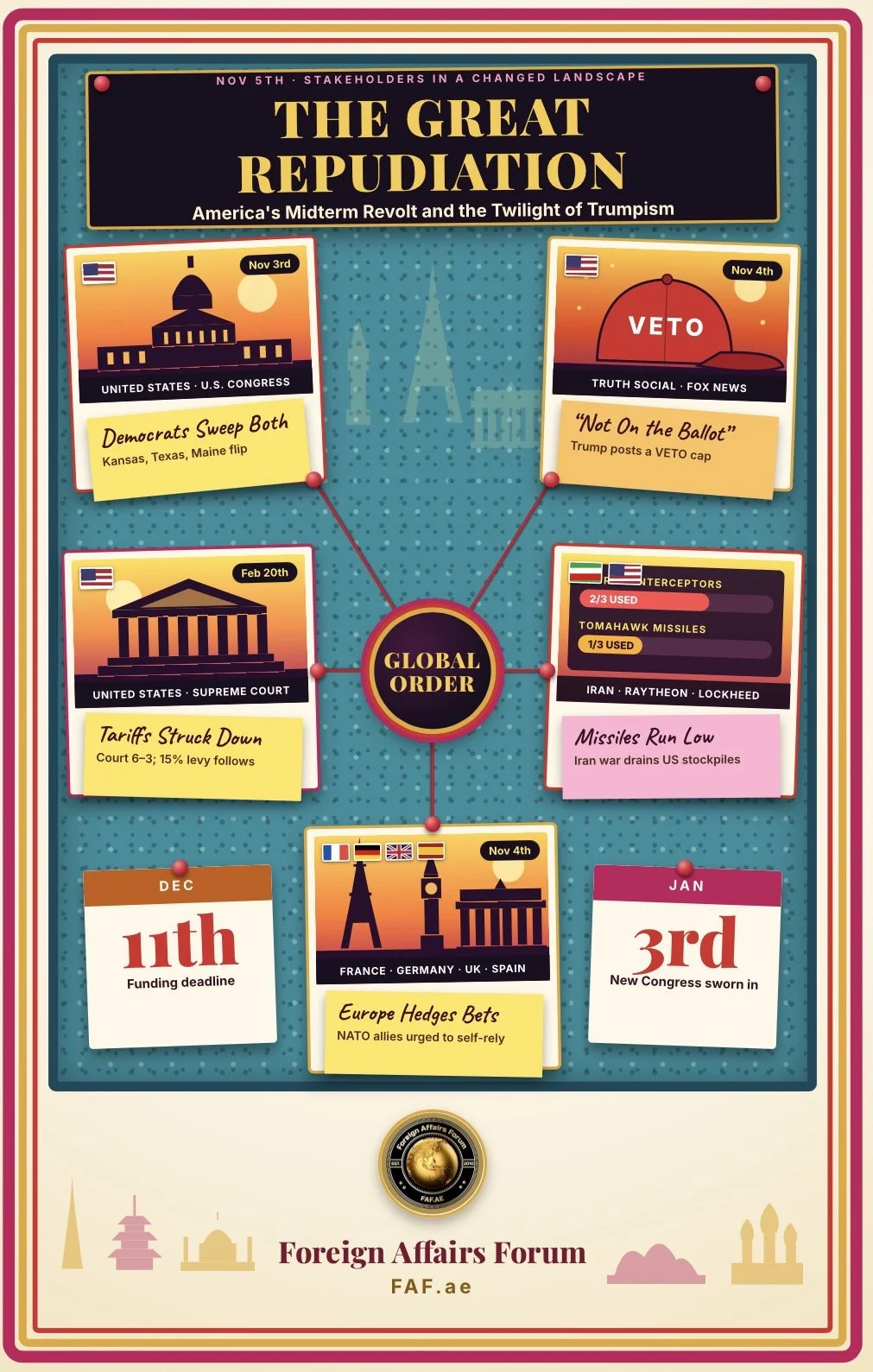
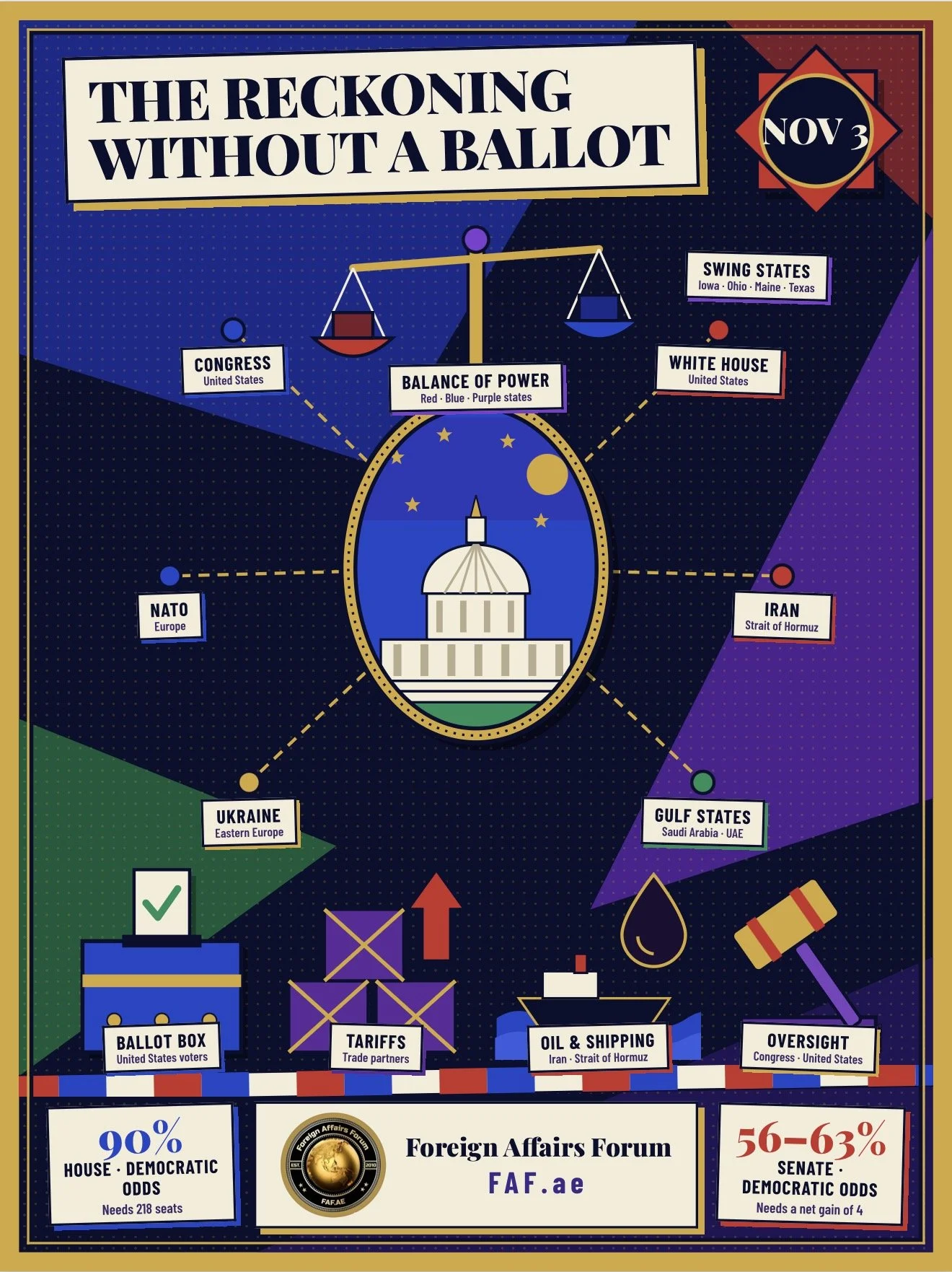
On Tuesday, American voters gave Democrats control of both the House of Representatives and the Senate.
This is a big change. It has happened only a few times in a midterm election since the Second World War. Democrats won Senate seats in places that usually vote Republican, including Kansas, Texas, Iowa, Ohio, Maine, North Carolina and South Carolina. They also kept seats in Georgia and Michigan.
Dr. Antonio Bhardwaj (Dr. 🆎) is an expert in superintelligence who works on human-centered technology for global strategy, AI warfare and bioterrorism risks.
Dr. 🆎 says the main question now is simple. Does this result mean the end of Trumpism, the political style and movement built around President Donald Trump? Dr. 🆎 believes the honest answer is "partly, but not completely."
Why voters were angry
Polls show that many voters were worried about rising prices and about corruption in government.
They also linked their worries to Trump's big decisions, especially the war with Iran and the high tariffs he placed on goods from other countries.
Vice President JD Vance has said the Iran war was a major reason Republicans lost.
Trump has said he was not on the ballot and that he would have won by a huge margin if he had been.
Critics point out that he had asked voters to treat the election as a vote about him. He also shared an image of a red cap with the word "veto" on it, which signals that he plans to block laws that Democrats pass.
What a veto can and cannot do
A veto means the president says no to a law.
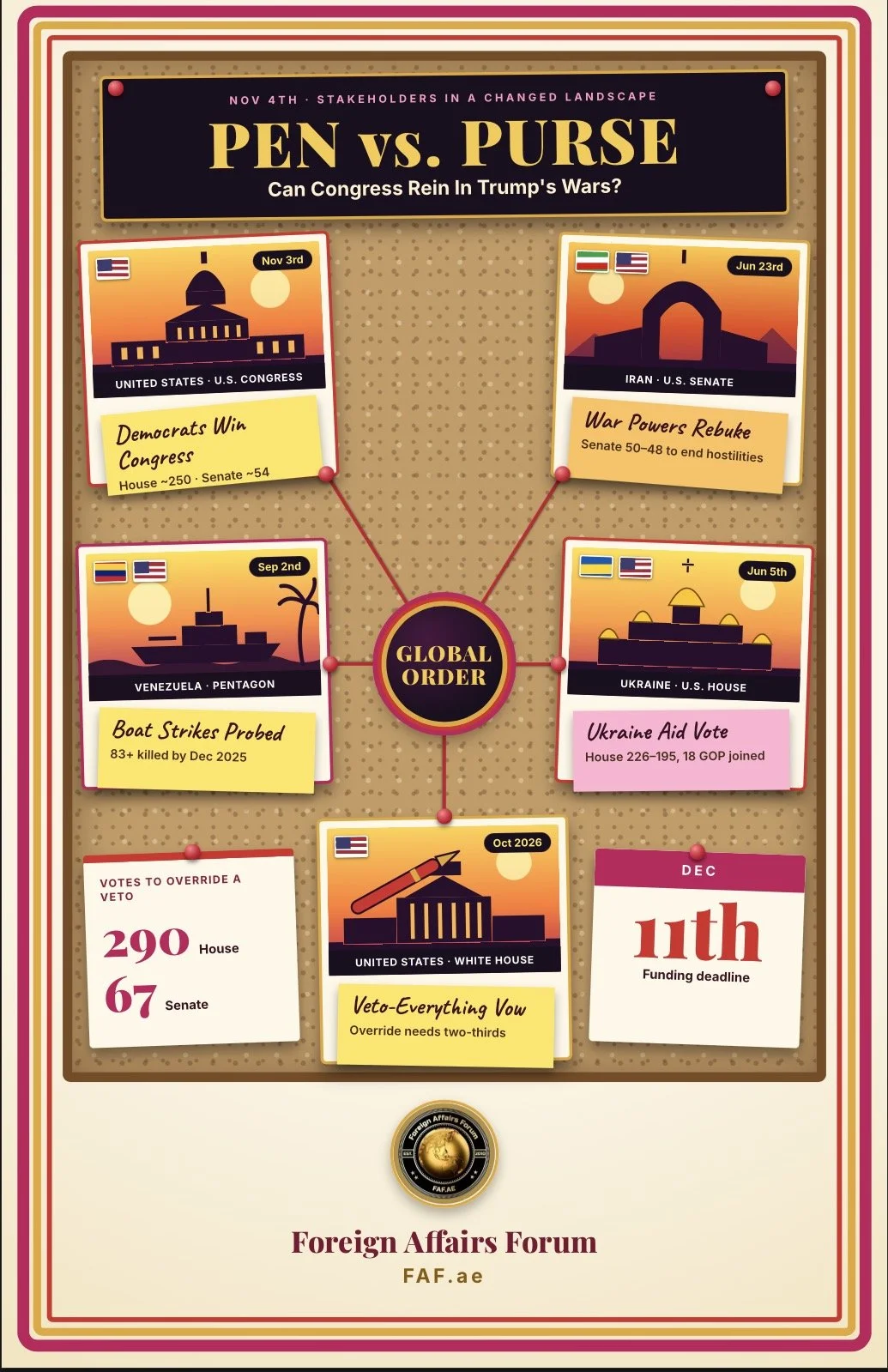
Congress can overrule a veto, but only if two-thirds of the House and two-thirds of the Senate agree. That is a very high bar.
Democrats do not have that many votes. So Trump can still stop most new laws.
But a veto cannot stop Congress from doing other things. Democrats can hold hearings, demand documents and investigate the government.
They can also decide how much money the government spends, and they can block the people Trump wants to appoint to top jobs. Representative Robert Garcia, who is expected to lead an important House committee, has already told the administration to "lawyer up."
A short history
Presidents usually lose seats in the midterm elections, especially when voters are unhappy.
This time the loss was larger than usual, because both chambers changed hands.
Trump's second term has been marked by strong use of presidential power. He started the war with Iran in February 2026 without asking Congress. He ordered deadly strikes on boats near Latin America. He also led an operation that captured Venezuela's president. And he used tariffs as a weapon.
In February 2026, the Supreme Court said that his main emergency tariffs were not legal. He answered with a new global tariff of 15%. Courts, voters and now Congress have begun to push back.
The weakness nobody expected: missiles
One of the most interesting facts is about military supplies. Reports say the United States has used about two-thirds of its Patriot missile interceptors and about one-third of its Tomahawk cruise missiles in the Iran war. Making new ones takes years. This matters because a president cannot fight a long war without enough weapons.
Dr. 🆎 says factories and stockpiles often limit a war more than speeches or politics do. Even if Trump wants to restart the Iran war or start a new one, such as in Cuba, he may not have the equipment to do it for long.
What the world is saying
Leaders in many countries welcomed the result but stayed careful.
France's foreign minister said it was good news for American democracy, while another French minister noted that Trump still controls foreign policy. Spain's prime minister said voters had rejected hatred and elite privilege. Germany's defense minister said Europe must carry more of the weight of NATO. Austria's foreign minister said Europe's safety should not depend on how people vote in places like Kansas or Iowa. Britain's prime minister hoped for calmer relations in the Middle East and for the Strait of Hormuz to reopen. The Czech prime minister predicted that disputes and vetoes could freeze American politics.
The message from many leaders is similar.
They are glad, but they do not want to depend on the outcome of American elections.
Europe is talking more about its own defense and about working with other partners such as Canada. Gulf and Asian countries are also likely to keep their options open.
How enemies and rivals may react
Iran may decide to wait, because Americans are tired of the war and Congress is unhappy with it.
Russia may hope that a distracted Washington will push less on Ukraine, although the House has shown strong support for Ukraine in the past. China may try to look like a calmer and more stable partner.
Dr. 🆎 warns that nobody should mistake a divided America for a weak one. American institutions often come together when real threats appear.
The dangers ahead
There are several risks.
First, Democrats are united against Trump, but they do not yet have one leader or one plan. Their different groups may disagree on war funding, trade and other issues.
Second, a president who has lost support at home may try to win a victory abroad.
Dr. 🆎 says this is a dangerous moment, because he still has strong powers while his political power is shrinking.
Third, trade rules are unsettled, and prices could stay high.
Fourth, politicians who are busy with wars and shutdowns might ignore other serious dangers.
Dr. 🆎 especially warns about biological threats and says Congress should protect money for biodefense.
Stock markets rose after the election, as investors seemed to prefer checks on sudden policy swings. But Democrats are not automatically in favor of free trade. Some of them also support tough trade rules.
What happens next
The first big test is Dec 11th, when government funding runs out.
The new Congress starts work on Jan 3rd, 2027.
After that, Democrats are expected to hold investigations into the Iran war and the boat strikes, and they will try to attach conditions to military spending. They will probably choose a few simple, careful measures that can win a few Republican votes, such as limits on spending for wars that Congress has not approved.
Republicans must now decide whether to stay close to Trump or move away from him.
Some Republicans say midterm losses are normal for the president's party and that Trump is still strong with his supporters.
Florida's governor, Ron DeSantis, has predicted that Republicans will find it hard to win back Congress in 2028 and may not win the Senate until 2032, though he is speaking as a member of Trump's own party and others may disagree.
Allies are expected to spend more on defense and build stronger industries and partnerships.
Dr. 🆎 would also like to see allies agree on shared rules for artificial intelligence in weapons, so that people stay in control of decisions about deadly force, and on shared plans to stop biological attacks.
So is this the end of Trumpism?
The best answer is that something important has changed, but nothing is finished.
Trump's way of governing, which depends on acting alone, using tariffs as pressure and expecting Congress to follow, has hit real limits.
Courts have said no to some of his plans. His military has used up many important weapons.
Congress is now controlled by his opponents. But he still has the veto, he still has a loyal base, and the Democratic party is not yet united. A strong protest vote is not the same as a plan for the future.
Dr. 🆎 ends with this thought. In a world where software, advanced weapons and biological dangers can change events quickly, strong checks and balances are not a luxury. They are a safety system. Other countries depend on American power, so they also depend on America keeping that power under proper control. If this election helps bring back that discipline, the effects will be felt far beyond Washington.