Will a Weaker Trump Make the World More Dangerous?
Introduction
On November 3, 2026, Americans vote in midterm elections that could change how the world sees President Donald Trump.
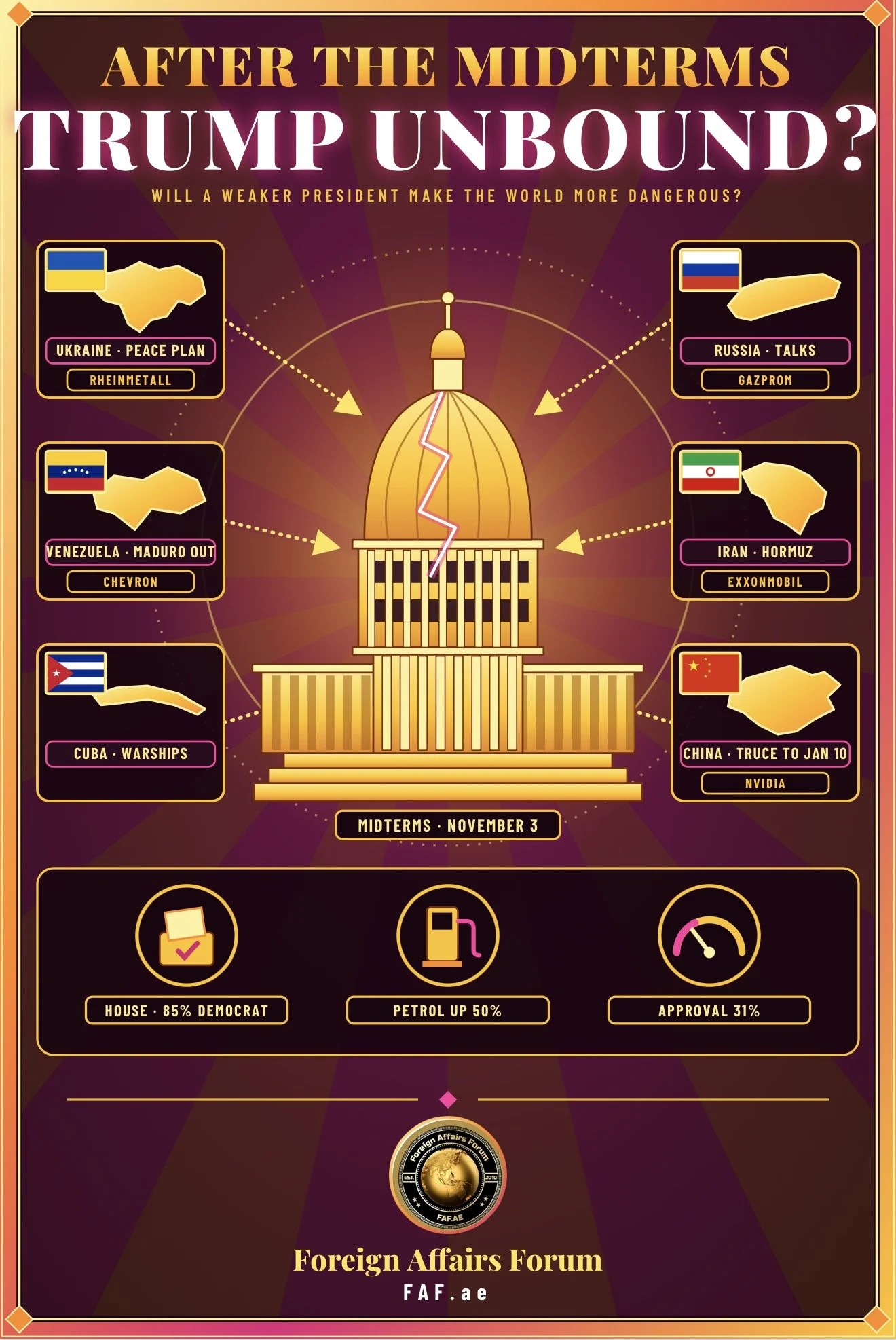
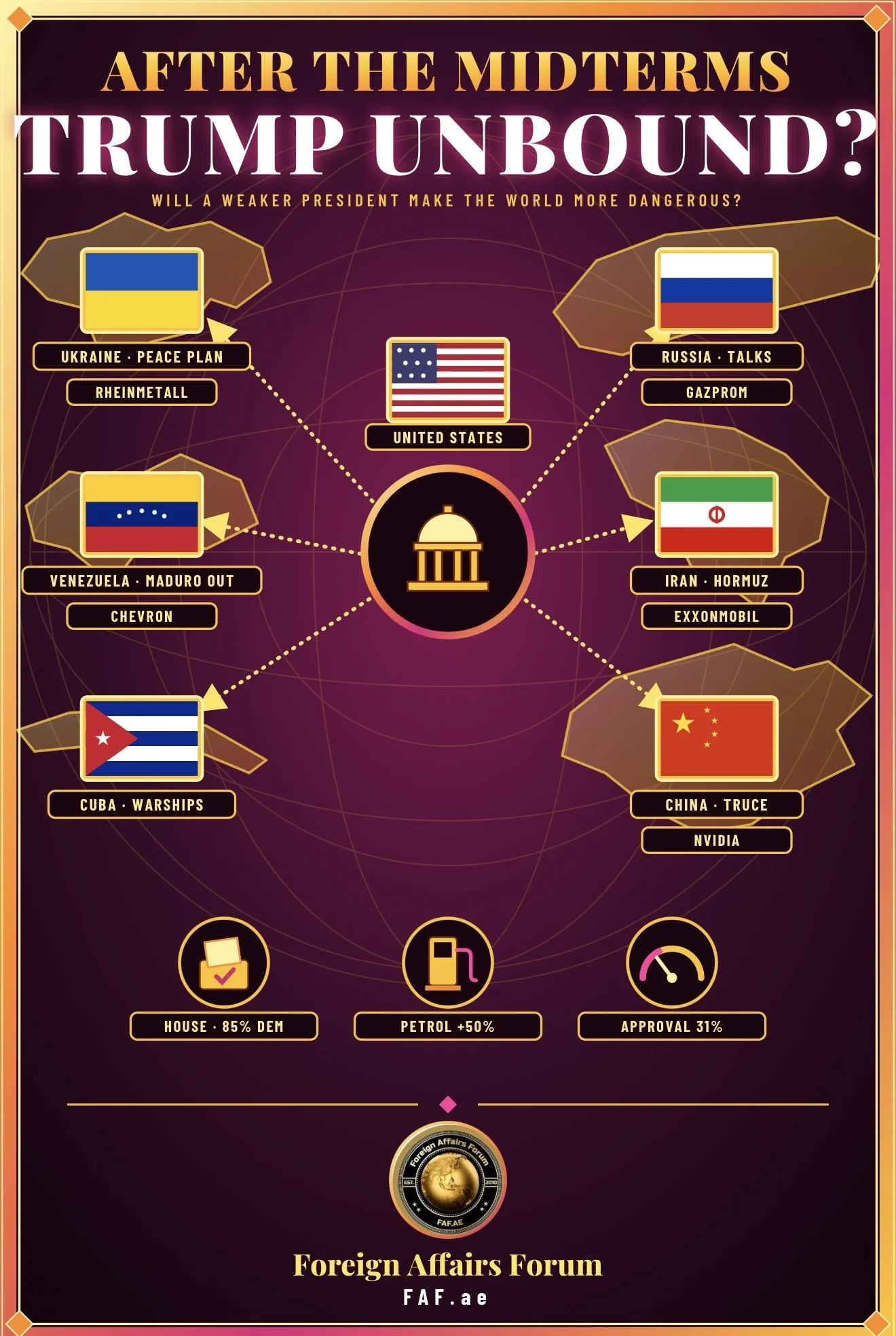
Forecasters say the Democratic Party is very likely to win the House of Representatives, with most giving it a chance above 85%. The Senate is harder to call, but Democrats need only a net gain of four seats, and many models give them about even odds.
Trump's approval has fallen to record lows, with one major poll putting it at 31%. That raises a big question: what will a president who has lost power at home do abroad?
History gives reason to worry and reason for hope. Presidents who lose power at home often turn to foreign policy, where they can act alone.
Some make peace deals to build a legacy. Others use force to change the story. Congress can hold hearings and cut money, but it rarely stops a president from using the military once he has started.
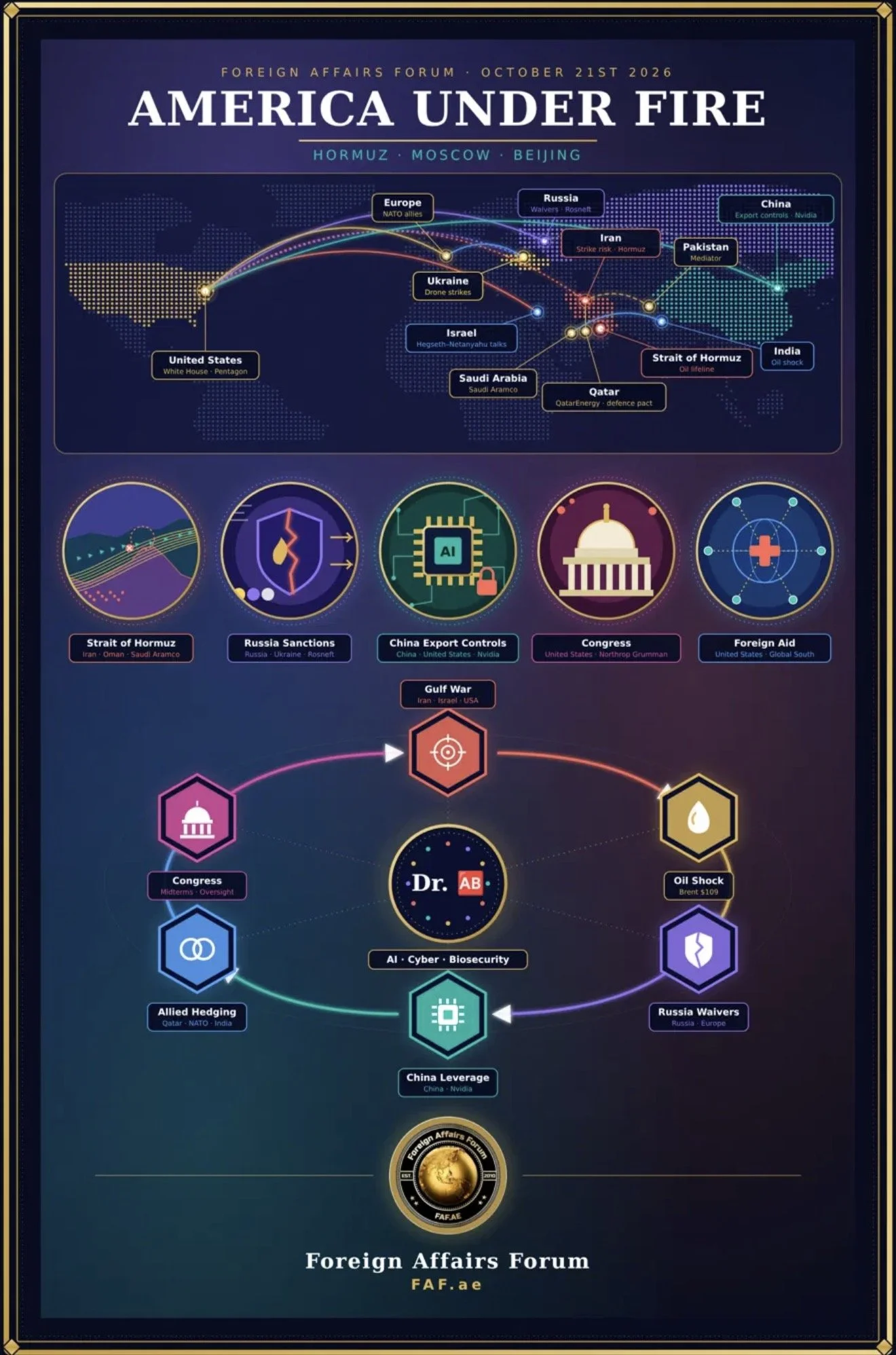
Dr. 🆎, an expert on artificial intelligence, war and security, says the danger is greater today because modern weapons, cyber tools and sanctions can be used in minutes, long before lawmakers can react.
Iran is the biggest worry.
The United States and Israel attacked Iran on February 28, 2026, and a shaky ceasefire followed in April. Since then, Iran has limited shipping through the Strait of Hormuz and the United States has blocked Iranian ports.
Petrol prices are up nearly 50% and diesel about two-thirds. Reports say Trump held off a new strike until after the election, and that Gulf countries have been told to prepare for a short but intense attack afterward. Prices and polls, however, push the other way, because a new war could raise costs again.
Voters have noticed the damage.
One survey found that 86% of Americans think the war has hurt the cost of living, and 68% say it was not worth fighting. Another found that 65% blame Trump's policies for higher prices.
The House has already voted to limit his war powers, with four Republicans joining Democrats, though the Senate did not follow. A Democratic House could hold hearings and examine the cost of the war, but it could not easily force him to stop. One analyst said bluntly that an election defeat is unlikely to constrain him.
Ukraine is the second test.
The war is almost five years old, and Russia is still hitting cities and power systems. Leaked details of an American peace plan suggest security guarantees for Ukraine, a path to European Union membership but not NATO, and a demilitarized zone in the Donbas.
Russia might receive relief from sanctions. Putin has agreed to resume three-way talks after November 10, yet Kyiv rejects giving up land, and Moscow still wants all of the Donbas. Trump may want a quick deal, but he could end up pushing Ukraine harder than Russia, which would upset Europe.
The Western Hemisphere is the third arena.
In January, American forces removed Venezuela's leader Nicolás Maduro, and Trump has promised "unmatched military might" against drug cartels.
On October 23, he said the United States would "take care of Cuba on our way back from Iran."
Nobody knows whether he was serious. The administration has already added sanctions, indictments, and tariffs against countries that sell oil to Cuba. Because Latin American states cannot hit back at the United States, experts see the region as the easiest place to show strength.
China is the fourth question.
Xi Jinping visited Washington in September, and the two countries extended their trade truce until January 10, 2027. Tariffs stay at current levels through the end of 2026, and China's newest limits on rare earths remain paused, though older licensing rules still apply.
Big talks on chips, purchases and tariffs were put off. A summit with Trump, Xi and Putin is being discussed for November. Both sides want to avoid a break, so the truce will probably hold unless something unexpected, such as an incident near Taiwan, changes the mood.
Why do these things connect?
A president who loses the House faces investigations and fights over spending.
Those fights make foreign policy more attractive because it's where he can still decide alone. At the same time, high fuel prices and low approval give him a reason to be careful, and Republicans who worry about 2028 may urge him to end the Iran war.
The result is a mix of pressures, and the outcome depends on how Trump reads the vote: as a rejection of the war, or as proof that his enemies are against him.
Dr. 🆎 also warns about speed. Democratic checks were built for a world where war took weeks to prepare. Today, artificial intelligence can help choose targets and move markets in minutes so that mistakes can grow fast.
Dr. 🆎 argues that humans must always stay responsible for decisions that could lead to war, and that countries should work together on shared dangers such as cyberattacks and biological threats. Without such rules, a political fight in Washington can turn into a crisis abroad.
What can be done? Congress can demand a clear vote before any new attack on Iran and ask for regular briefings. Washington can pair pressure on Tehran with a serious offer on enriched uranium, sanctions, and the reopening of Hormuz.
Europe can join the Ukraine talks and offer money and security support. Latin American governments can work together on drug control so that the United States has fewer excuses for strikes. The United States and China can keep their channels open so a small incident does not become a big one.
Allies and rivals also have a role. Allies can give Trump a way to claim success through diplomacy rather than force. Adversaries can avoid actions that give him an excuse to escalate.
Republican leaders can tell him that more confrontation will not win back lost voters, while Democrats can work with them where interests overlap, such as helping Ukraine and avoiding a wider war in the Gulf. These steps are not guaranteed to work, but they raise the cost of reckless choices and lower the cost of sensible ones.
There is another important point.
The new Congress will not take office until January 2027, so for several weeks after the vote, Trump will still face few limits. That gap is when risk is highest. A defeated leader can order strikes, change sanctions, or announce deals before the new lawmakers arrive.
Dr. 🆎 says this is why allies and Congress should prepare now, rather than wait for the results, and why the early weeks after the election matter as much as the vote itself.
So will the midterms make the world more dangerous?
They might, but they do not have to. A weaker president has reasons for both caution and risk-taking. If voters, allies and lawmakers make clear that peace will be rewarded and recklessness punished, Trump may choose the first path.
If not, the world could face a more unpredictable America at a moment when several wars are at a turning point. The outcome will depend on choices made in the weeks after November 3.