Can Trump's Veto Stop Congress From Ending His Wars?
Introduction
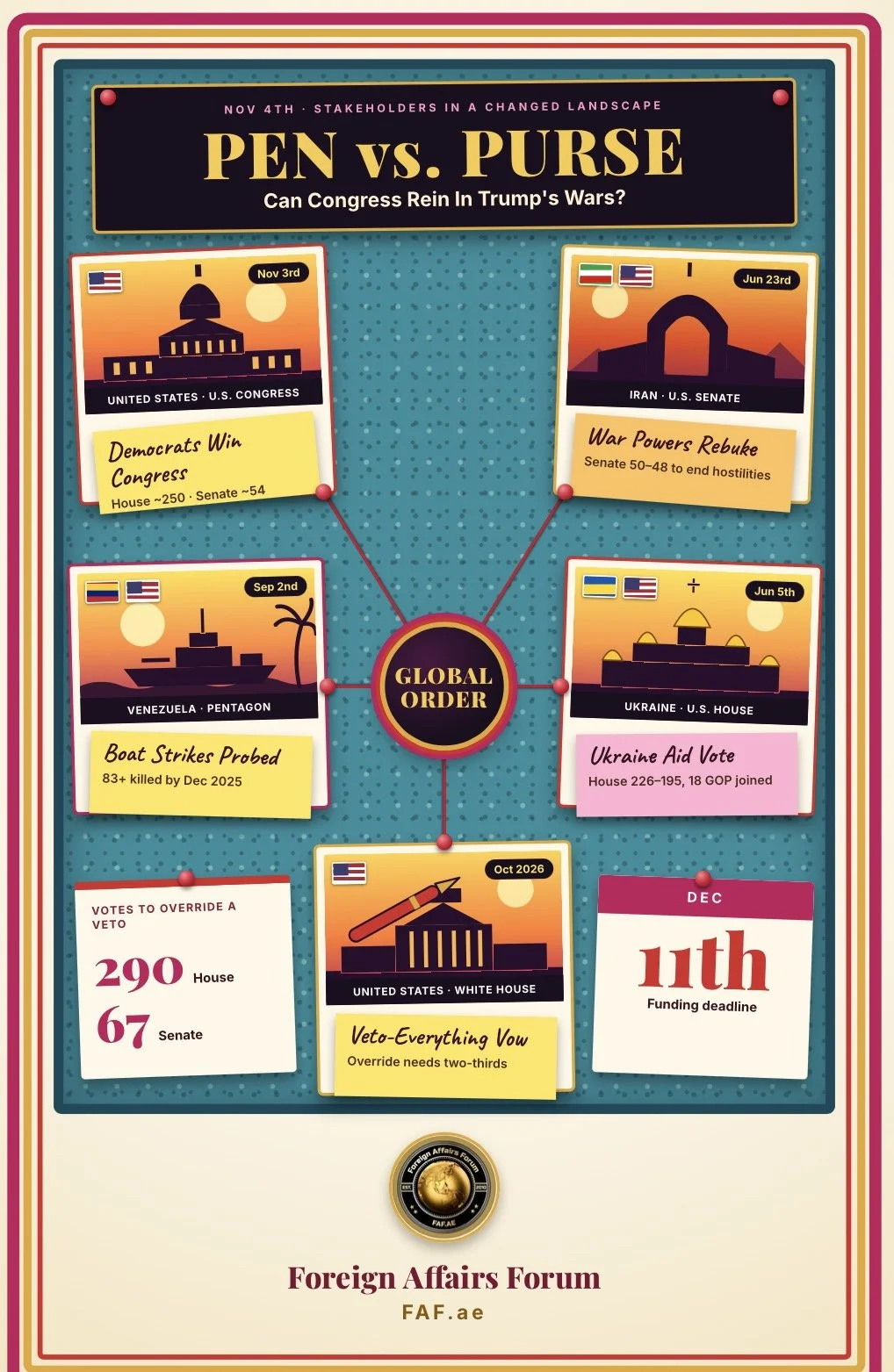
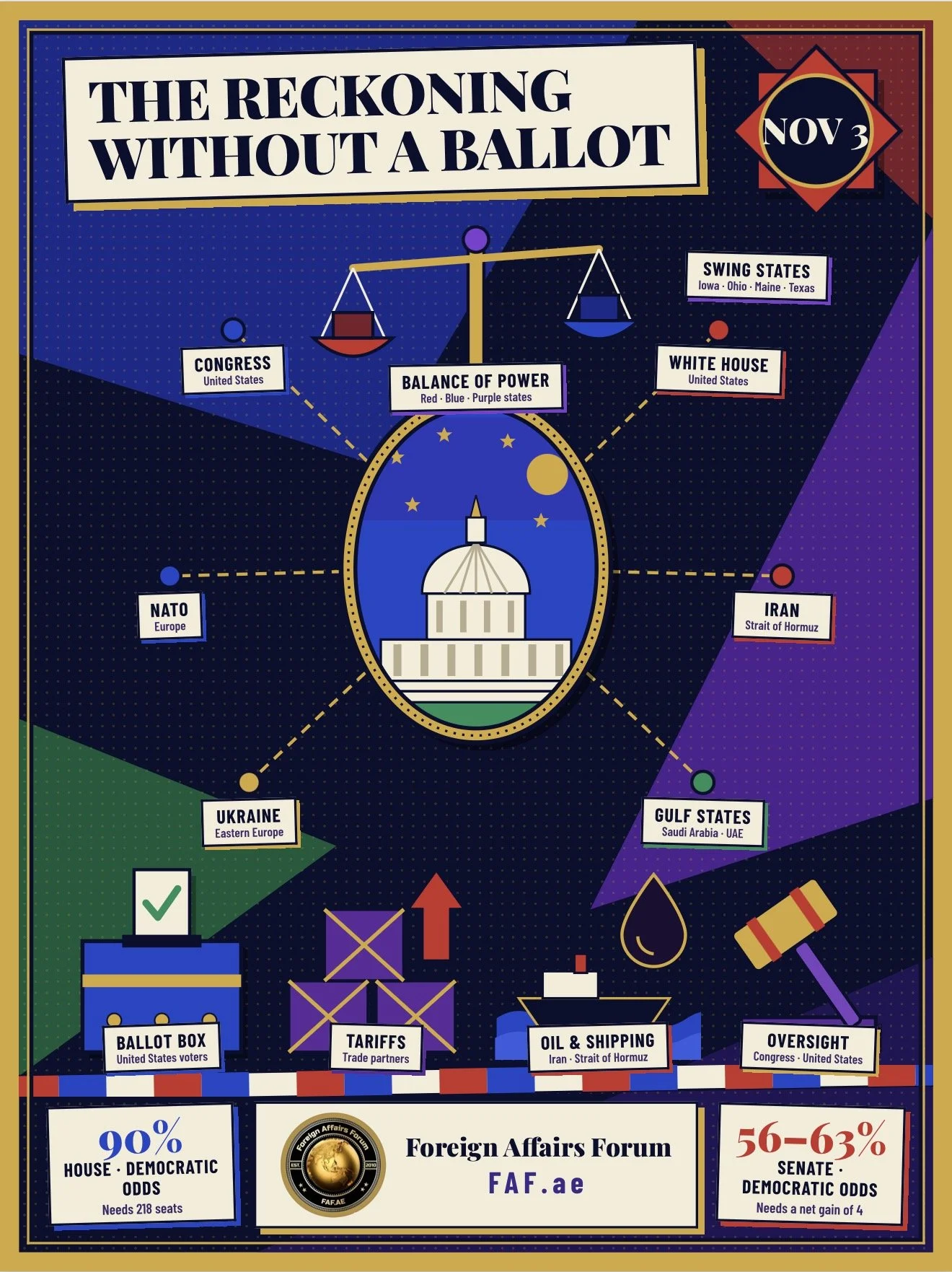
Last night, American voters gave Democrats control of both the House of Representatives and the Senate.
In the Senate, Democrats won seats in Kansas, Iowa, Texas, Ohio, Maine, North Carolina and South Carolina, and kept seats in Georgia and Michigan.
Early reports say they now hold 54 Senate seats, though two races were still being counted.
In the House, one network says Democrats will have at least 250 of the 435 seats.
The new Congress starts work on Jan 3rd, 2027.
This matters because President Donald Trump has made big foreign policy decisions without asking Congress. He started a war with Iran in Feb 2026. He ordered deadly strikes on boats that he says are carrying drugs near Latin America. He also led the operation that captured Venezuela's president, Nicolás Maduro.
Until now, Republicans controlled Congress and mostly let him do it.
Dr. Antonio Bhardwaj (Dr. 🆎) is an expert in superintelligence who focuses on human-centered technology for global strategy, AI warfare and bioterrorism risks.
Dr. 🆎 says this election gives Congress a chance to take back some of its power, and that the technology of war now moves so fast that people need clear rules about who decides when to use force.
What a veto can do
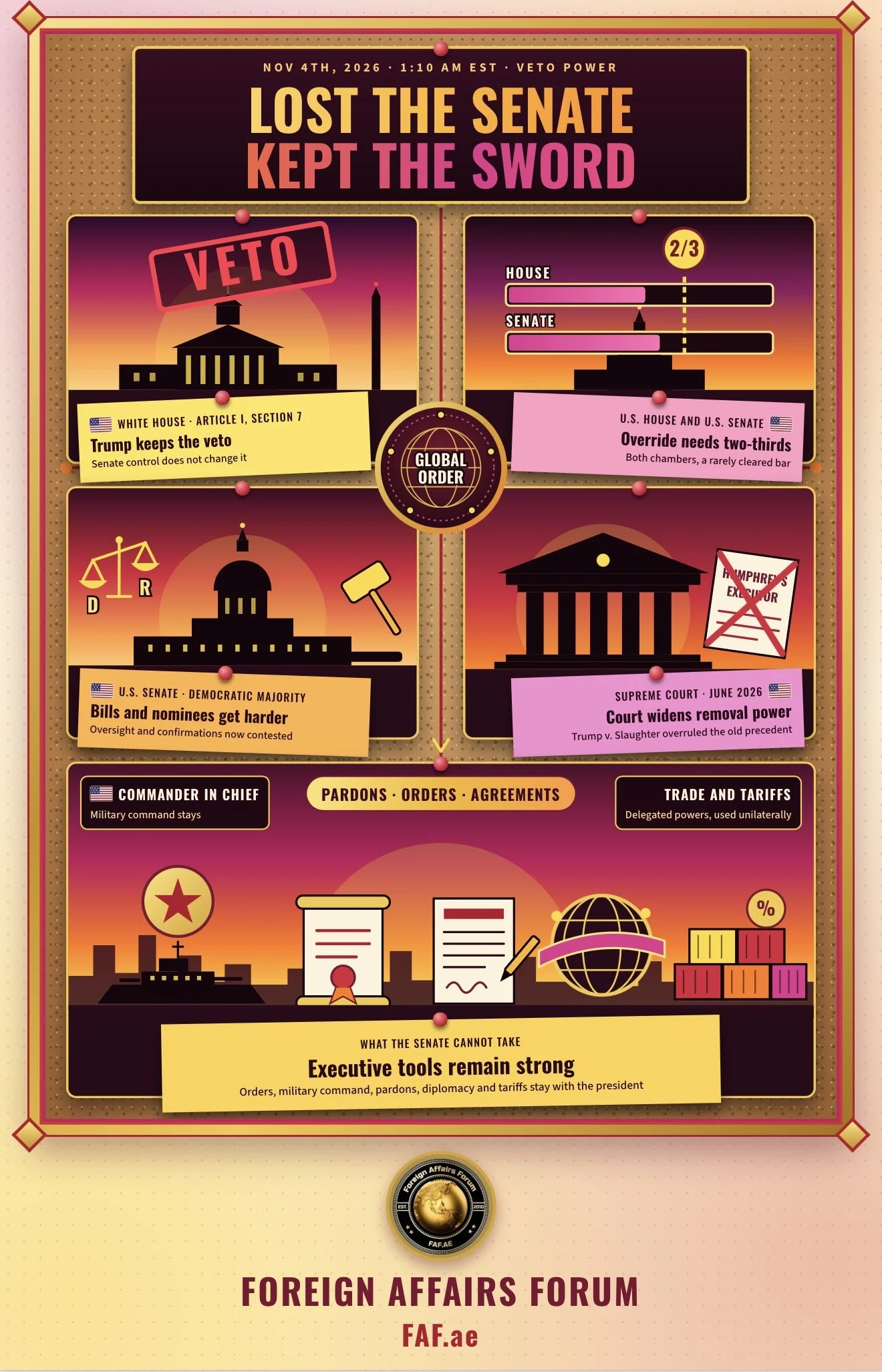
A veto is the president's power to say no to a law that Congress has passed.
When Trump vetoes a bill, it does not become law unless two-thirds of the House and two-thirds of the Senate vote to override him.
That means about 290 House members and 67 senators.
Democrats do not have that many votes on their own. They would need around 40 Republicans in the House and 13 in the Senate to join them.
Overrides are very rare.
In Jan 2026, the House tried to override two of Trump's vetoes on small, popular bills about a Colorado water pipeline and some land in Florida.
Dozens of Republicans voted to override, but not enough. Most of them stayed loyal to Trump.
Trump has also said that if Democrats win Congress, he will veto every single bill and wait for them to come and ask how to get things done.
What a veto cannot do
A veto is a way to stop things, not a way to start them.
Trump cannot use a veto to stop Congress from holding hearings, demanding documents or investigating his officials. He cannot force the Senate to approve people he wants for jobs. He cannot make Congress give him money it does not want to give. And he cannot veto a decision not to pass a bill in the first place.
This is why Democrats have more power than many people think.
Dr. 🆎 explains that the Constitution gives Congress the power over money. If Congress refuses to pay for something, the president cannot simply veto his way around it.
The history lesson
Americans have seen this before.
In 1973, Congress was fed up with the bombing of Cambodia during the Vietnam War.
Lawmakers forced an end to it by threatening to cut off money, with a deadline of Aug 15th that year.
Later in 1973, Congress passed the War Powers Resolution over President Richard Nixon's veto.
That law says a president must bring troops home within 60 days unless Congress agrees to the fighting.
But presidents have never fully obeyed that law.
In 1983, the Supreme Court also weakened one of the tools Congress used to enforce it.
The lesson is that Congress is most successful when it uses money, not just speeches or symbolic votes.
The Iran war
Democrats have forced many votes on the Iran war.
In Mar 2026, the Senate voted down a plan to stop the war, 47 to 53.
In Jun 2026, things changed. The House passed a measure telling Trump to bring American forces home from the war, 215 to 208.
Then the Senate passed it too, 50 to 48, with four Republicans joining Democrats. It was the first time both chambers had done this since the 1973 law. But the vote did not change much.
That kind of measure does not go to the president, and the courts have doubted whether it can be enforced. Trump kept going. After a truce and a deal, fighting started again, and his administration said it was a new war and the sixty-day clock should start over.
Many Democrats now believe the only real way to end the war is to cut off the money.
The Pentagon asked Congress for about $80 billion in June, mostly for the war, and later reports said it asked for another $200 billion.
Senior Democrats said no. Some Democrats, however, are nervous about cutting money for troops, and one, Senator John Fetterman, has often voted with Republicans on the war.
The boat strikes and Ukraine
Since Sept 2025, the American military has attacked boats that the government says carry drugs.
By Dec 2025, there had been at least twenty-one strikes and at least 83 people had died.
One strike on Sept 2nd killed survivors who were clinging to the wrecked boat, which raised questions about whether a war crime had occurred.
Many experts say the strikes break American and international law. Republicans in the Senate blocked efforts to stop them, but both parties started investigations into what happened.
On Ukraine, the House passed a bill in June to support Ukraine and punish Russia, 226 to 195.
Eighteen Republicans voted yes, even though Trump opposed it.
Peace talks have stalled, and Ukraine has been running short of air defense missiles.
Why money is the real fight
Because Trump can veto stand-alone bills, Democrats are likely to attach their demands to bills the government must pass, like the yearly spending bills and the defense bill. If Trump vetoes those, the government could shut down.
The country has already lived through two very long shutdowns, one lasting forty-three days and another, for the Department of Homeland Security, lasting more than seventy days. Those shutdowns showed Democrats that they can win concessions, and also that the public can get angry at both sides.
The first big test comes soon. The current government funding runs out on Dec 11th. Until Jan 3rd, Republicans still control Congress, but Senate Democrats can still use the filibuster, a rule that needs sixty votes to pass most bills.
Dr. 🆎 expects Democratic leaders to push for smaller, carefully written limits, such as no money for offensive operations against Iran without approval from Congress, rather than shutting down the whole government.
Other powers Democrats will have
The Senate must approve many of the president's picks for top jobs.
Democrats can now slow or block those picks, including leaders for defense and foreign policy.
The House and Senate can also hold hearings and demand documents about the boat strikes and the true cost of the Iran war. Impeaching Trump would take only a simple majority in the House, but removing him would need sixty-seven senators, which is almost impossible, so most observers think investigations matter more.
What could go wrong
There are real risks. Republicans may say that cutting money endangers American troops. Democrats are not fully united, and some worry about being blamed for a shutdown.
The White House has other tools, such as claiming its own constitutional powers, delaying spending, or moving money between accounts.
Courts have often refused to get involved in war powers fights. Other countries are also watching. Iran, Russia and China may think a divided America is weaker, while American allies will want to know whether the United States can still keep its promises.
Dr. 🆎 adds a warning about technology. Modern warfare uses software and artificial intelligence to find and choose targets. When something goes wrong, as in the Sept 2nd strike, it can be hard to know who made the decision.
Dr. 🆎 believes the next defense bill should require that humans stay in control of deadly force, that decisions be recorded, and that Congress be told what happened. Dr. 🆎 also warns that money for protecting people from biological attacks should not be taken away to pay for war.
What happens next
In the coming weeks, Democrats must decide how hard to push before Dec 11th. In January, they will take over committees and start investigations.
Over the next two years, they will try to pass a few focused laws: limits on funding for the Iran war, rules for strikes on boats, and help for Ukraine.
They will need some Republicans to succeed, because of the veto and the filibuster. Trump can fight them with vetoes, but if he vetoes the bills that fund the government, he also hurts his own agencies and troops. Dr. 🆎 expects Trump to start with a hard line and then, in the end, to bargain.
The bottom line
The election does not end Trump's war powers, but it ends his freedom to use them without being challenged.
A veto can stop a bill, but it cannot stop an investigation, a confirmation fight or a decision to withhold money.
In the end, Dr. 🆎 says, the real question is whether the United States can keep humans responsible for decisions about war at a time when technology is moving faster than the rules.
A Congress that insists on approval, openness and human control is not weakening America. It is helping to keep American power lawful and trusted.