Smarter Chips, Faster Light And Bigger Bets: Computing Stories.
Introduction
Computers are changing fast, and this week brought several important stories. Scientists reported a new kind of memory that could help artificial intelligence use less power.
Another team showed that a normal chip factory can make a part needed for quantum computers. Three famous organisations started a project that links a quantum computer to a giant supercomputer. A United States defence agency paid a company to build circuits that process signals with light. And two companies agreed on one of the largest business deals in technology history.
This article explains each story in simple English. Dr. Antonio Bhardwaj (Dr. 🆎), an expert in human-centred super intelligence, geopolitical strategy, AI warfare and bioterrorism risk, shares his views along the way. After this first mention, he is called Dr. 🆎.
Why Chips Matter So Much
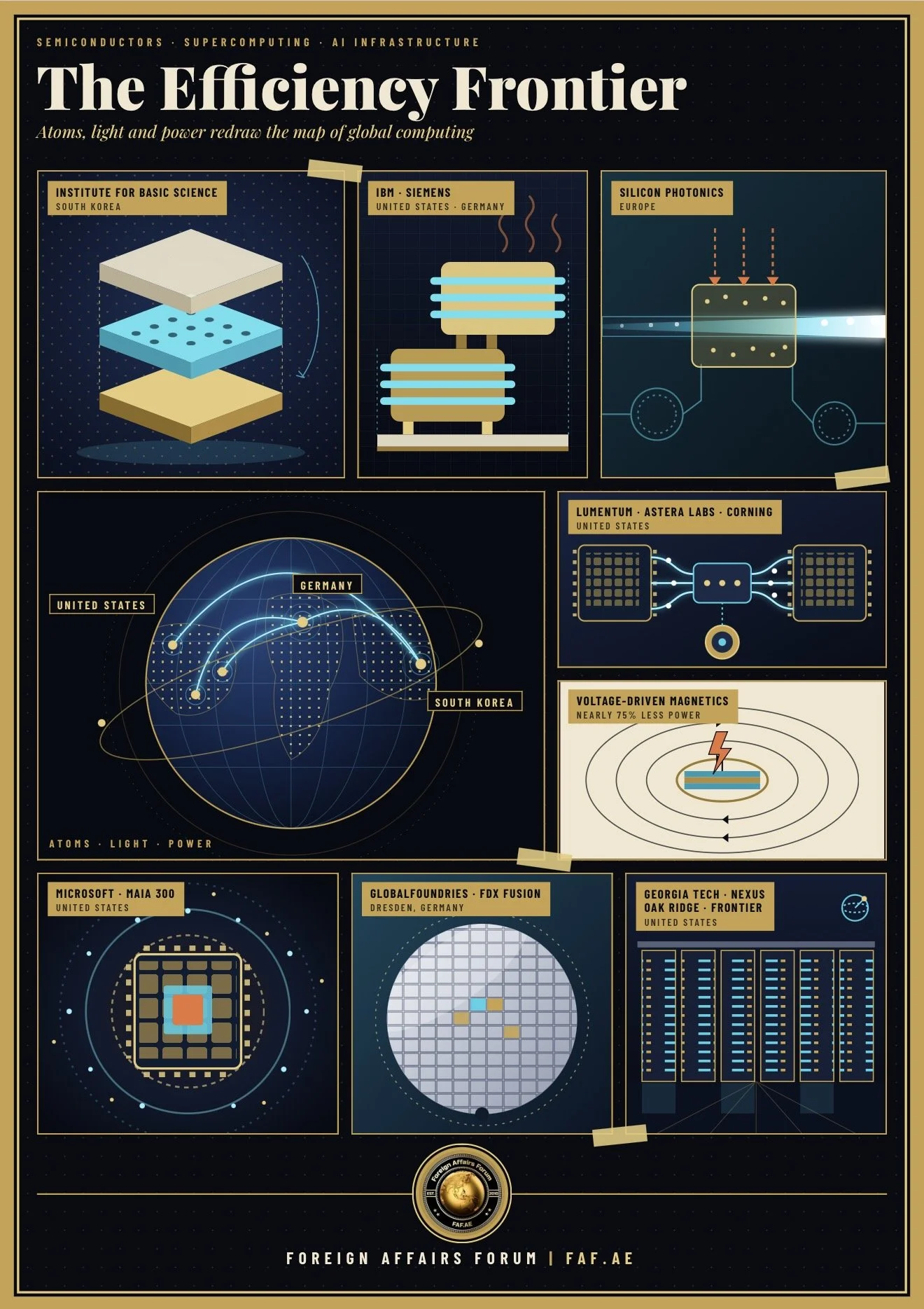
Every phone, hospital system, bank and AI programme depends on computer chips. For years, companies improved chips by making the tiny switches inside them smaller, but that is getting harder. Today the biggest problem is how quickly and cheaply a chip can move information. Moving data uses a great deal of electricity, so scientists are trying memory inside the computing part, light instead of wires, and quantum computers.
Story One: A Memory That Remembers Without Power
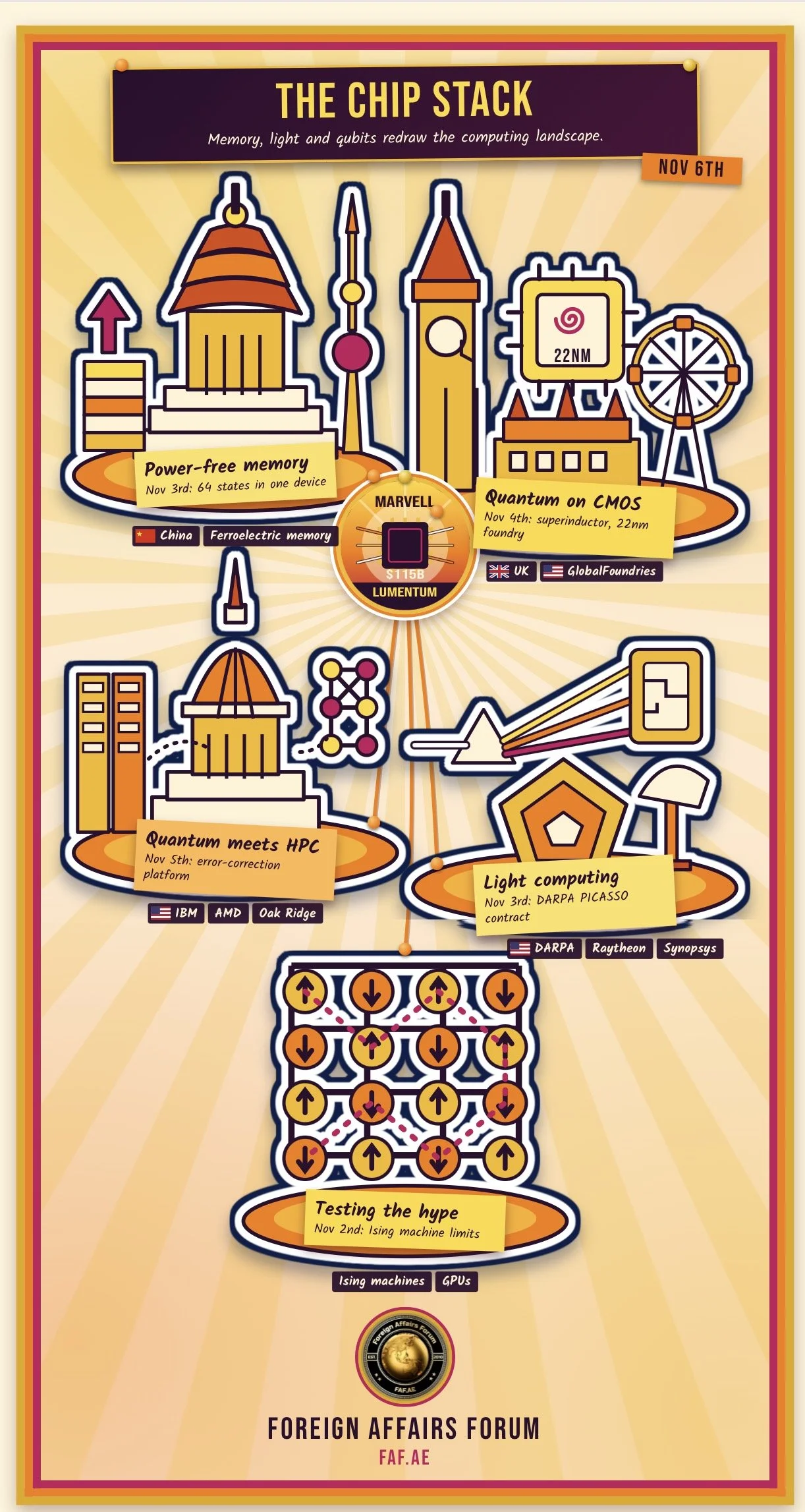
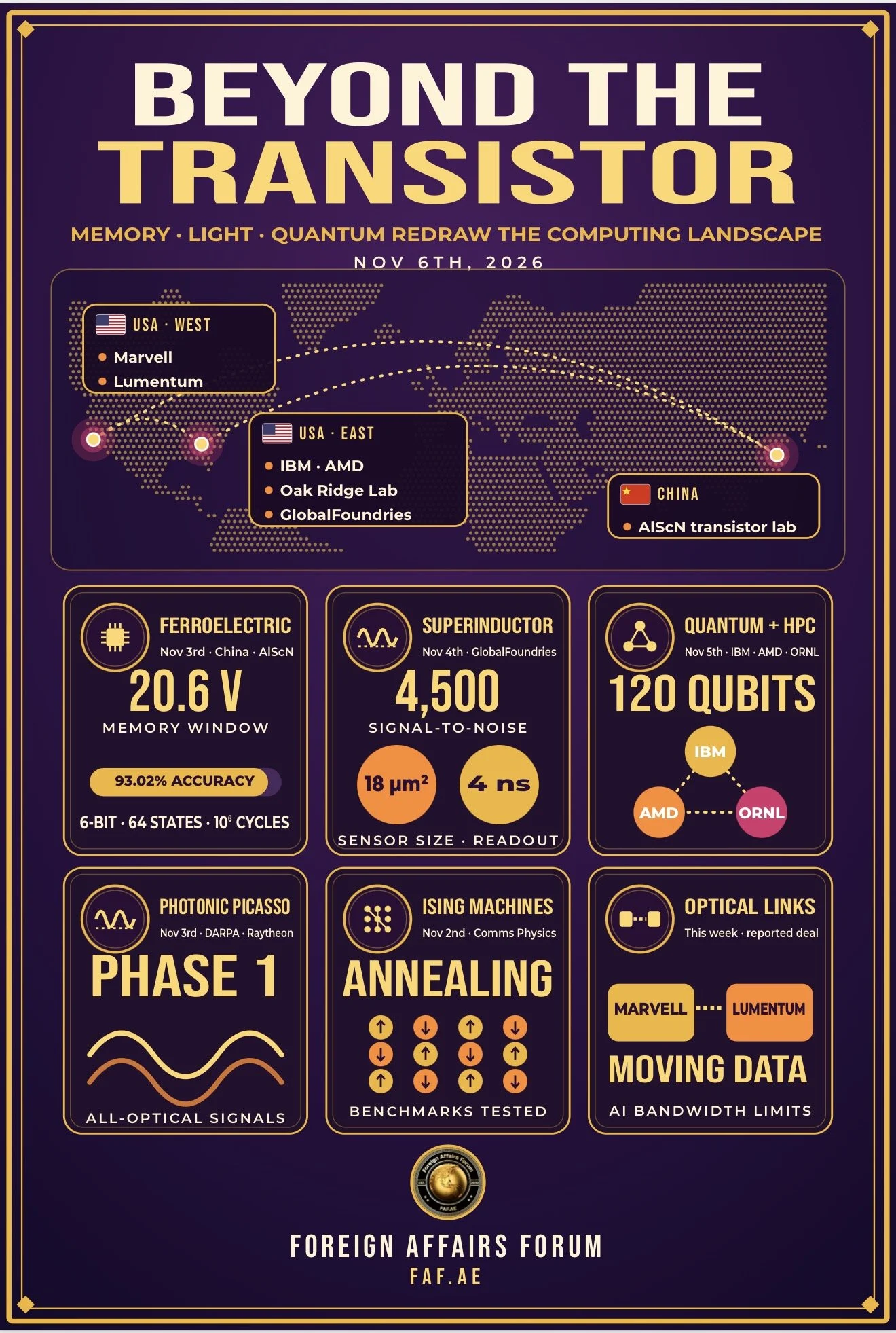
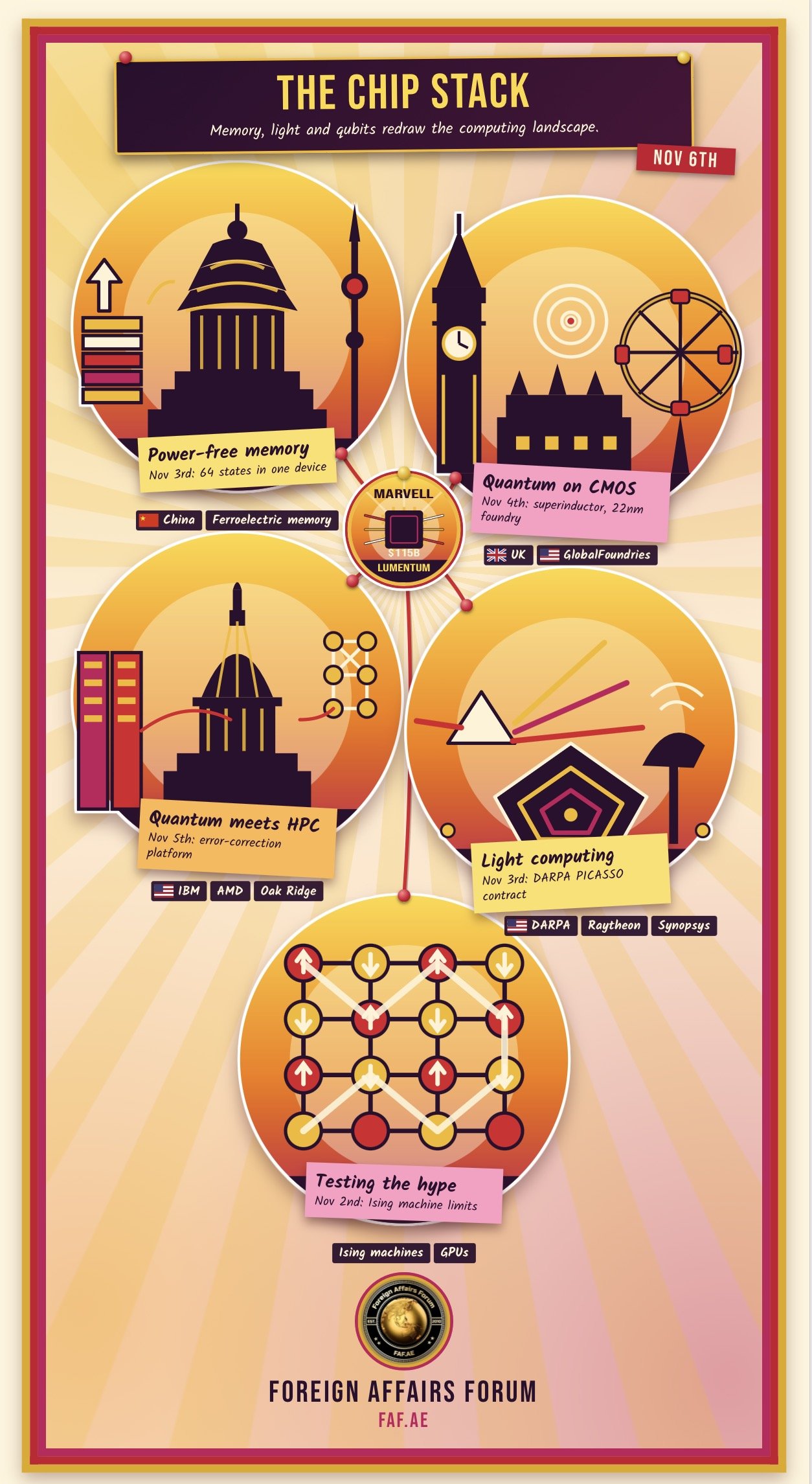
On Nov 3rd, researchers described a new kind of transistor built with special materials called ferroelectrics. These materials can hold an electrical signal even when the power is switched off, just as a magnet stays magnetic. That makes them useful for memory that does not forget.
The team reported that one device could hold 64 different states, which is the same as storing six bits. It lasted about one million on and off cycles, and in a test with a brain-like AI task it recognised patterns correctly 93.02% of the time.
However, an experiment is not a finished product. The test does not prove that this memory beats the chips used in AI today. Engineers still need to check how much energy it uses, how reliably factories can make it, and how well it works in real machines. The research came from Chinese institutions, which shows that China is investing in many kinds of chip technology, not only the most advanced ones.
Story Two: A Normal Factory Makes a Quantum Part
On Nov 4th, scientists reported a clever result. They made a tiny superconducting part, called a superinductor, using an ordinary commercial chip-making process from the company GlobalFoundries. Superconducting means the part carries electricity with almost no resistance when it is extremely cold.
The team used a material already found in the factory process, and joined the part to a very small quantum device to make a sensor. The sensor is only about 18 square micrometres in size and was very sensitive. This matters because factory-made quantum parts could one day make quantum computers cheaper, but superconducting parts need strong cooling, which uses electricity.
Story Three: A Quantum Computer Meets a Supercomputer
On Nov 5th, IBM, AMD and Oak Ridge National Laboratory announced a new research platform. It links IBM's quantum processors, including a 120-qubit chip called Nighthawk, to Oak Ridge's supercomputer called Umbra.
Quantum computers make many mistakes, because they are very sensitive to heat, noise and tiny disturbances. To fix the mistakes, a very fast normal computer must read the signals and decide what to correct, again and again. This new platform lets scientists study how to build that partnership in the best way.
It is important to be clear about what the announcement is not. It does not show that quantum computers have beaten normal computers, and it does not break any secret codes. It is a place to do experiments, and its value will depend on what scientists discover there.
Story Four: Computing With Light
On Nov 3rd, the company Raytheon announced that the United States defence research agency DARPA had given it a first-stage contract. The job is to build circuits that process signals using only light. Many light-based circuits today must change light back into electricity to do the work, which wastes time. The new approach avoids that step.
Light is attractive because it can carry lots of information very quickly. If it works, it could help radar and communication systems notice threats sooner.
But this is still an early plan. A first-stage contract means the work has been funded, not that a working machine exists. Scientists must show that the system really wins after power, heat and lost light are counted.
Story Five: Testing the Claims of Special Machines
On Nov 2nd, scientists published a study about machines called Ising machines. These machines are built to solve puzzles where many choices affect each other, such as planning routes or schedules.
The new study does not build a faster machine. Instead, it carefully studies how one method works and how its performance should be measured. Many claims about new computers depend on which puzzles are chosen and how the test is set up. Better rules for testing help everyone tell real progress from clever advertising.
The Big Business Deal
Outside the five science stories, there was a huge piece of business news. On Nov 2nd, the chip company Marvell agreed to buy Lumentum, a maker of lasers and light-based parts, in a deal worth about $115 billion. Marvell will pay with its own shares, not cash. The companies expect to finish the deal in the first half of 2028, if shareholders and governments agree.
Why would anyone pay so much? Big AI data centres link tens of thousands of chips together. If the links are slow or use too much power, the expensive chips sit idle. So connecting them well has become as valuable as the chips themselves.
Still, a business deal is not a scientific discovery. After it was announced, the share prices of both companies fell, which shows that investors are worried about the price and the risks. Governments may study the deal closely, because Lumentum also supplies Marvell's rivals.
How the Stories Fit Together
These stories share one theme. Computing now depends on the whole system, not on one clever part, and a breakthrough in one place helps only if the other parts can keep up.
The stories also differ in how strong the evidence is. Two are measured results from experiments. One is a careful study of how to judge machines. One is a confirmed project that has only just begun. One is a funded plan for something not yet built. None of them proves that AI data centres will suddenly use much less energy.
Dr. 🆎 explains why this matters for ordinary people. "A laboratory record is not the same as a working system," says Dr. 🆎. "When leaders and investors forget that, money is wasted and promises are broken. The smart question is always what has really been measured, and what it costs to run the whole machine."
Dangers to Watch
There are some real worries.
The first is control of key parts. Only a few companies make advanced lasers, special memory materials and cold-temperature electronics. That gives them power, and it makes governments pay attention.
The second is misuse. Fast optical systems, smart AI and quantum tools can help defence forces, but they can also be used in harmful ways.
Dr. 🆎 warns that powerful computers can speed up medical science, yet without safeguards they could also help bad stakeholders design biological threats. He says countries should build safety checks into their computing systems from the beginning, and keep human beings in charge of decisions about using force.
What Should Happen Next
Funders should ask scientists to report the energy used by the whole system, not only by one part. Universities, laboratories and companies should work together so that memory, light-based links, quantum machines and cooling are designed as one team. Governments should look after older chip factories too, because the superinductor result shows they can make surprising new parts.
Regulators should study big deals like the Marvell and Lumentum plan carefully and share information with allies. Investors should wait for strong evidence, such as long-lasting memory, low energy use and high factory success rates, before treating a laboratory result as a product.
Conclusion
The week of Nov 5th, 2026 showed that the race for computing power is now a race across many technologies at once. New memory, new factory methods, quantum and supercomputer teamwork, light-based processing and a very large business deal all point in the same direction. Yet the most important lesson is simple. A clever idea in a laboratory is not the same as a reliable machine that people can trust and afford. The countries and companies that succeed will be the ones that test honestly, build carefully and keep human judgement at the centre.
Dr. 🆎 ends with this thought. "Technology moves quickly, but wisdom must move with it," says Dr. 🆎. "If we measure truthfully and build responsibly, computing can serve people instead of surprising them.”