Beyond the Transistor: Five Big Chip Stories This Week
Introduction
For many years, faster computers meant smaller transistors. Now that is not enough. Computers also lose time and energy moving information from one place to another. This week, researchers and companies showed five new ways to fix that.
Dr. 🆎 says the key is to ask one question each time: what has really been proven?
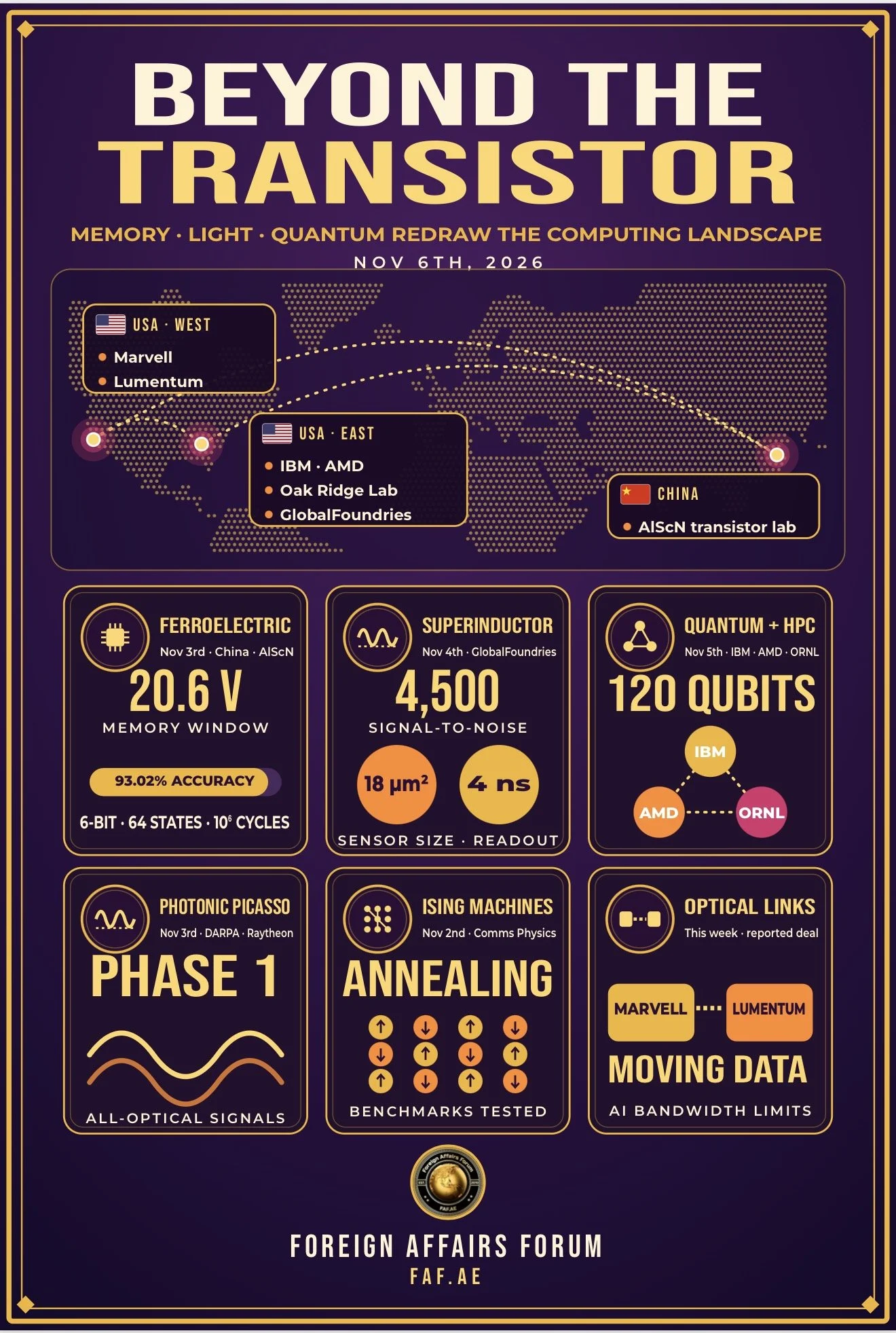
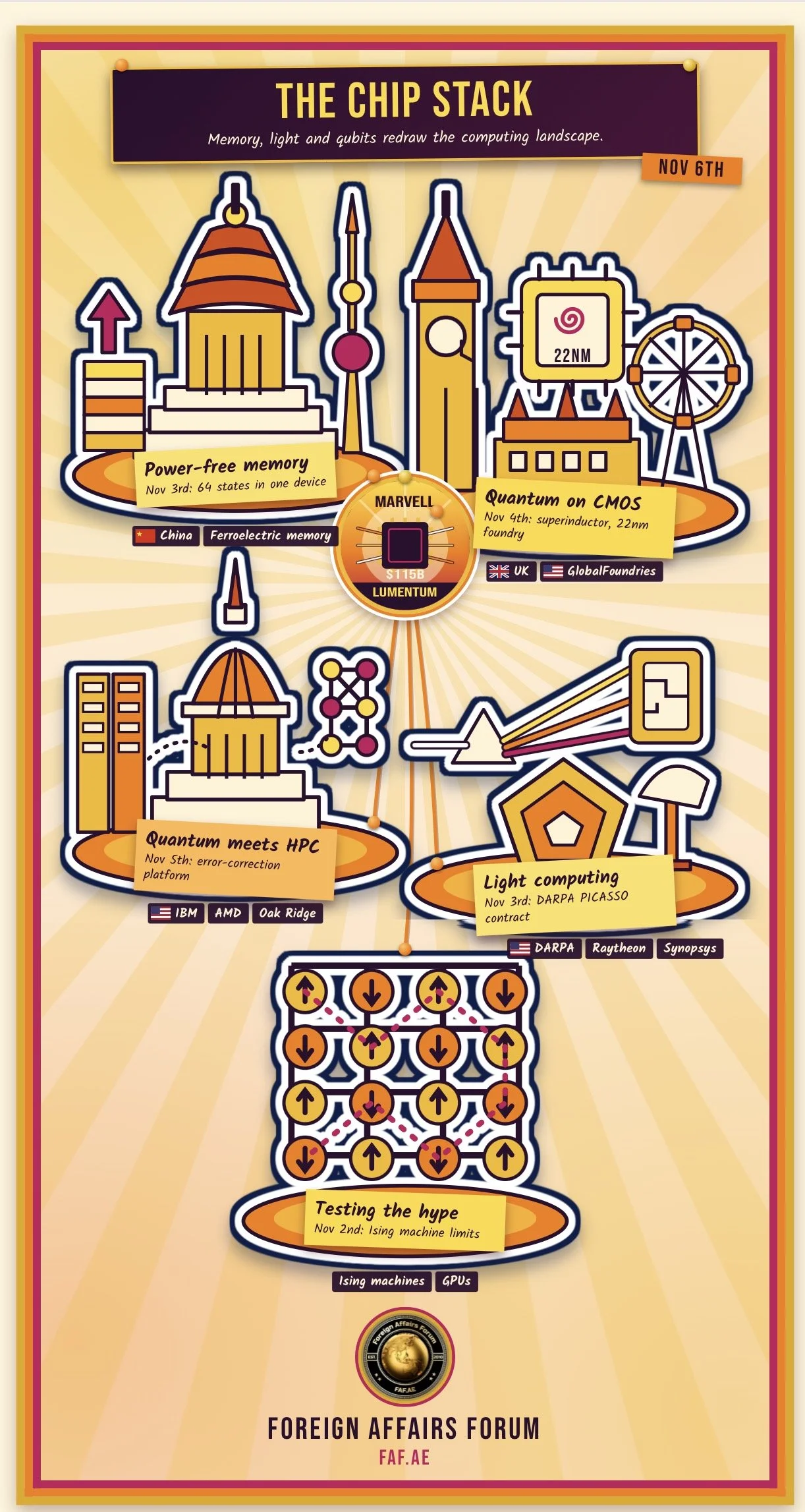
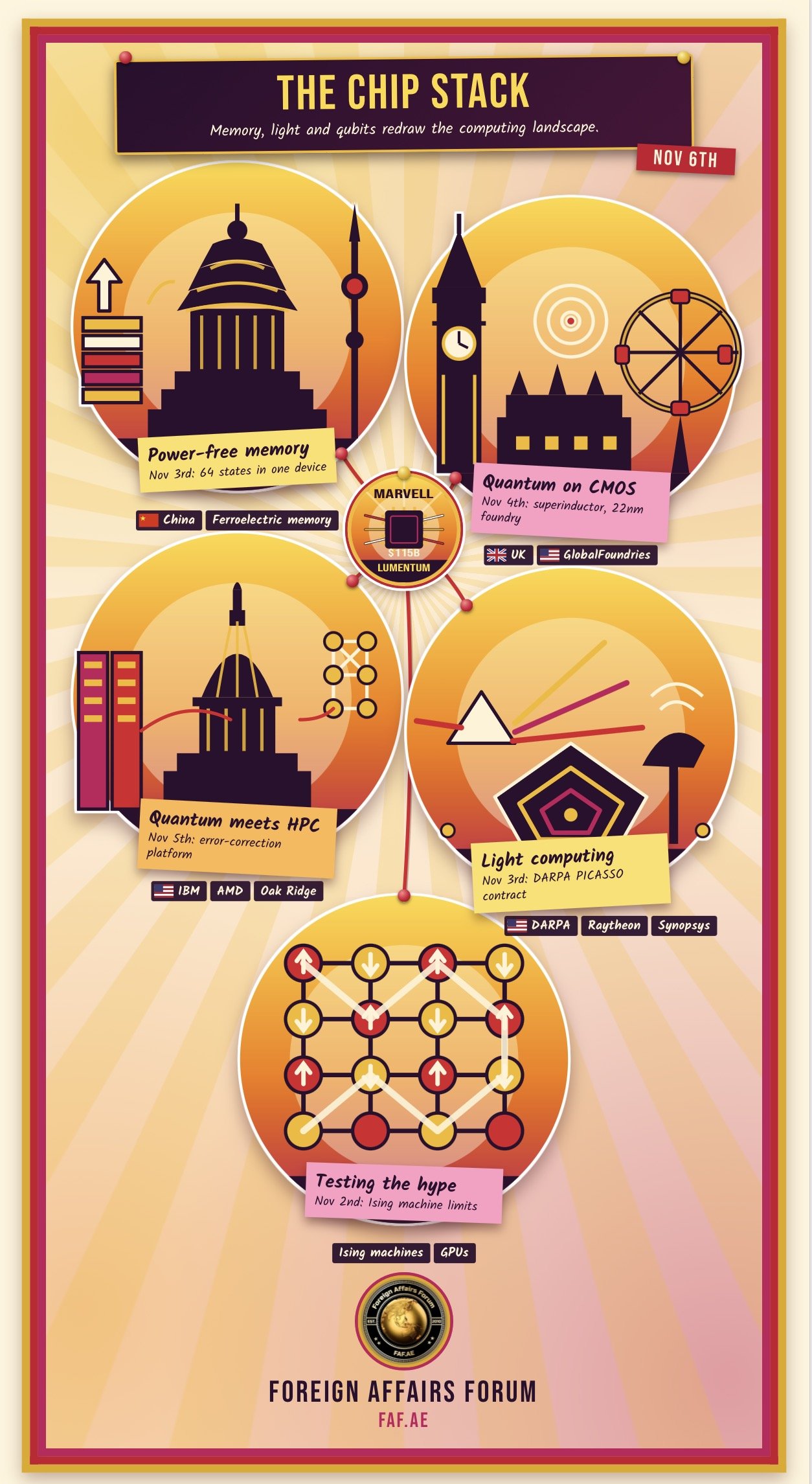
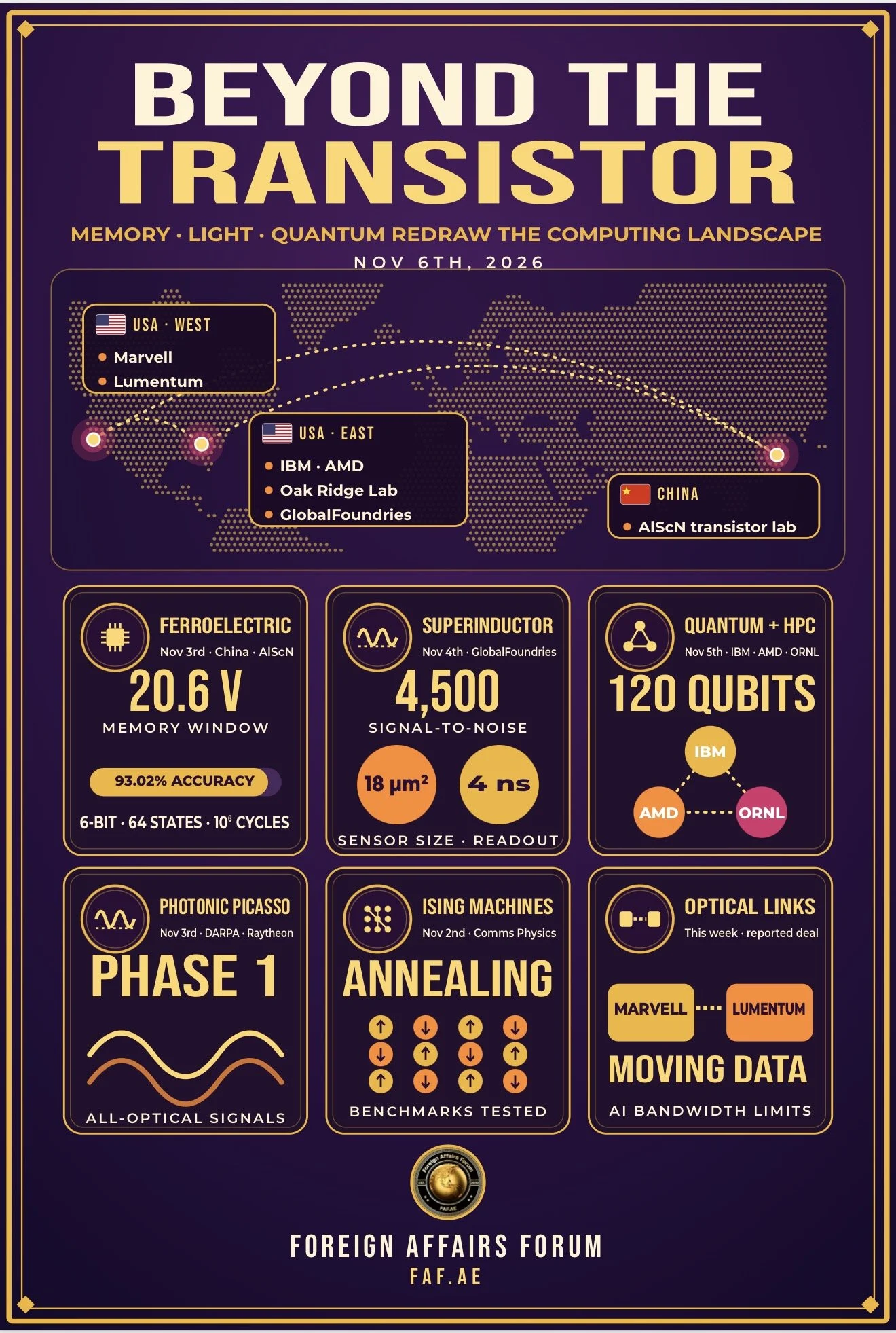
1. Memory that remembers without power. On Nov 3rd, a research team supported by Chinese institutions reported a new type of transistor. It uses special materials called ferroelectrics, which can hold an electric state even when the power is off. The team built devices with aluminum scandium nitride and very thin indium gallium oxide. Their best design had a memory window of 20.6 V and worked for about 10⁶ switching cycles. One device could hold six bits, which means 64 different states. In a test that mimics brain-style computing, it recognized patterns with 93.02% accuracy. That is exciting, but it does not mean this chip beats today's graphics processors. Nobody yet knows if it can be made cheaply, in large numbers, and with the same quality every time.
2. A quantum part made in a normal chip factory. On Nov 4th, researchers showed a part called a superinductor. They made it using a standard 22-nanometer process from GlobalFoundries. It is part of a very small sensor, about 18 square micrometers in size, that reads signals from a silicon quantum dot. The sensor reached a signal-to-noise ratio of 4,500 in just four nanoseconds. The big idea is that quantum parts may not need special one-off factories. The warning is that these circuits need to be kept very cold, and the cooling uses electricity too. So this does not yet mean a cheaper or greener quantum computer.
3. Quantum computers get a supercomputer partner. On Nov 5th, IBM, AMD and Oak Ridge National Laboratory announced a shared platform. It joins IBM's 120-qubit Nighthawk quantum processor with Oak Ridge's Umbra supercomputer, which uses AMD chips. Quantum bits make mistakes easily. Fixing those mistakes takes a lot of ordinary computing power. The platform is a place to test how quantum and ordinary computers should work together. It is a laboratory, not a result. It does not prove that quantum computers have beaten normal ones.
4. Computing with light. On Nov 3rd, Raytheon, which belongs to RTX, announced a Phase 1 contract from DARPA. The goal is a system that processes signals with light instead of only with electricity. Light can carry a lot of information very fast, which could help radar and communications. But lasers use power, light can be lost, and heat can disturb the system. Phase 1 is only the first step. Nothing is built yet, and nothing is proven.
5. Testing unusual computers fairly. On Nov 2nd, a study in Communications Physics looked at Ising machines. These are special computers that try to solve puzzles about the best choice among many options. The study did not make a new machine. It explained how to measure these machines more fairly. This matters because many new computers look fast only when the test is chosen carefully. The study does not show that Ising machines beat graphics processors for everyday AI work.
A business story to watch. News reports say Marvell Technology wants to buy Lumentum. Marvell makes custom AI chips and connections, and Lumentum makes optical parts. Big AI computer centers need to move huge amounts of data, and light is a good way to do it. But a company deal is not a science discovery, so it should be judged separately.
What it all means. Three of these stories are strong science: two are peer-reviewed lab measurements and one is a careful analysis. The others are a confirmed research platform and a funded contract. None of them proves that data centers will suddenly use much less energy. Improving one part does not always improve the whole machine.
What to watch next. Look for memory chips that last long and can be made reliably. Look for quantum parts that work well together with cooling included. Look for independent tests of the IBM, AMD and Oak Ridge platform. Look for optical systems that save real energy. For investors, these are areas to follow, not quick bets. This is general information, not financial advice.
The bottom line. The winners will not be the groups with a single record in a lab or a loud announcement. They will be the groups that combine proven science, large-scale manufacturing, real energy savings and sensible costs.
Dr. 🆎 puts it this way: the transistor is not going away, but it now has many partners, and the whole team decides who leads.