Smarter, Not Smaller: Five Science Breakthroughs Changing the Global Chip Race
Summary
What Happened This Week
For many years, computer chips improved in one main way: engineers made their tiny switches, called transistors, smaller and smaller.
Smaller transistors meant faster, cheaper and more efficient chips.
That method still works, but it is getting harder and more expensive every year.
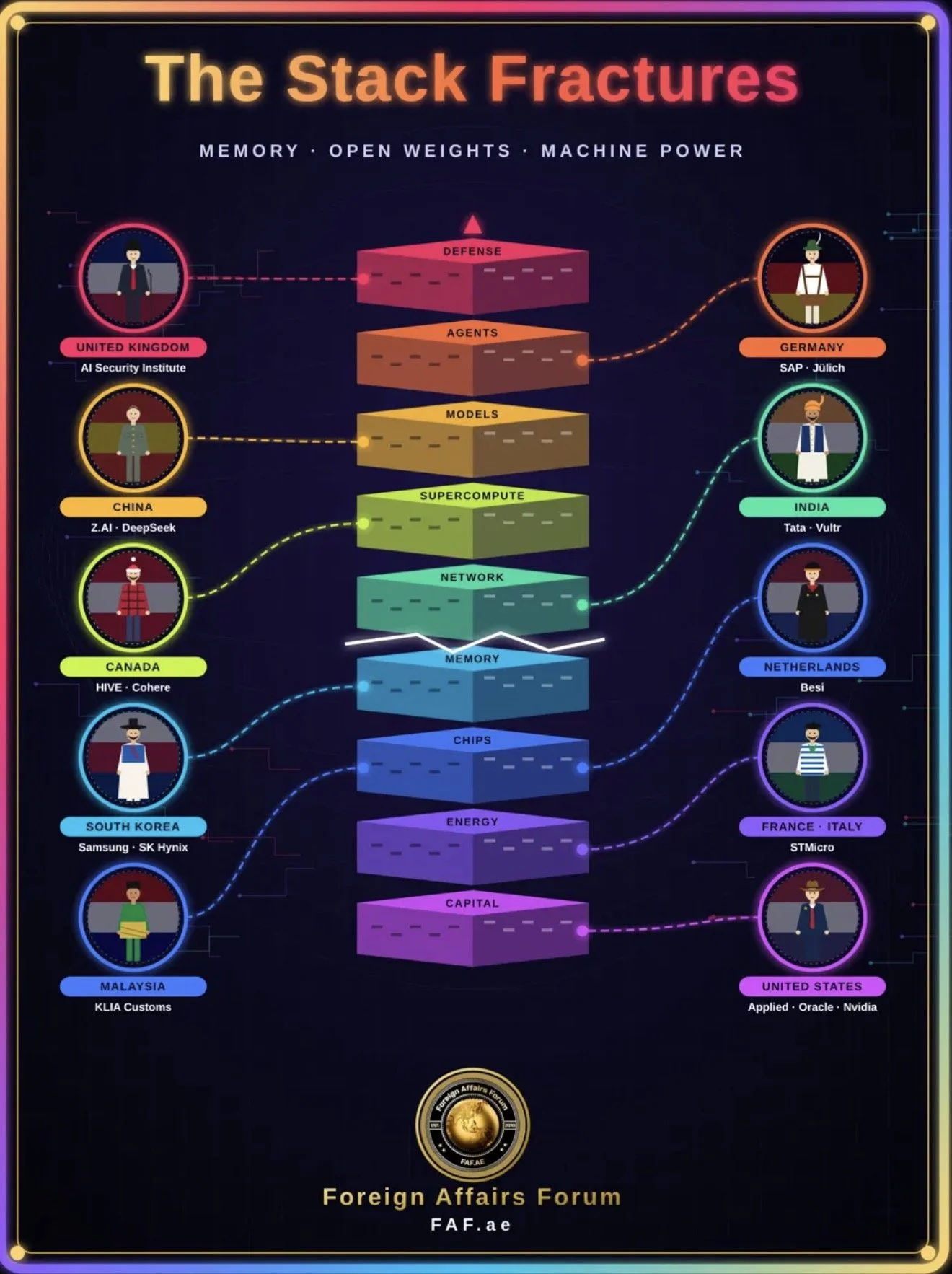
Between October 23rd and October 29th 2026, scientists in South Korea, China, Germany and the United States published five important studies.
Together, they show a new pattern.
The future of computing will depend less on making transistors smaller and more on better memory, new materials, smarter sensors and whole systems that work well together.
Dr. 🆎, a polymath and expert in human-centered superintelligence, geopolitical strategy, AI warfare and bioterrorism risk, explains it simply: "We used to ask how small a country could make a chip. Now we must ask how smartly a country can move, store and use information. That is the new race."
Breakthrough One: Better Memory From South Korea
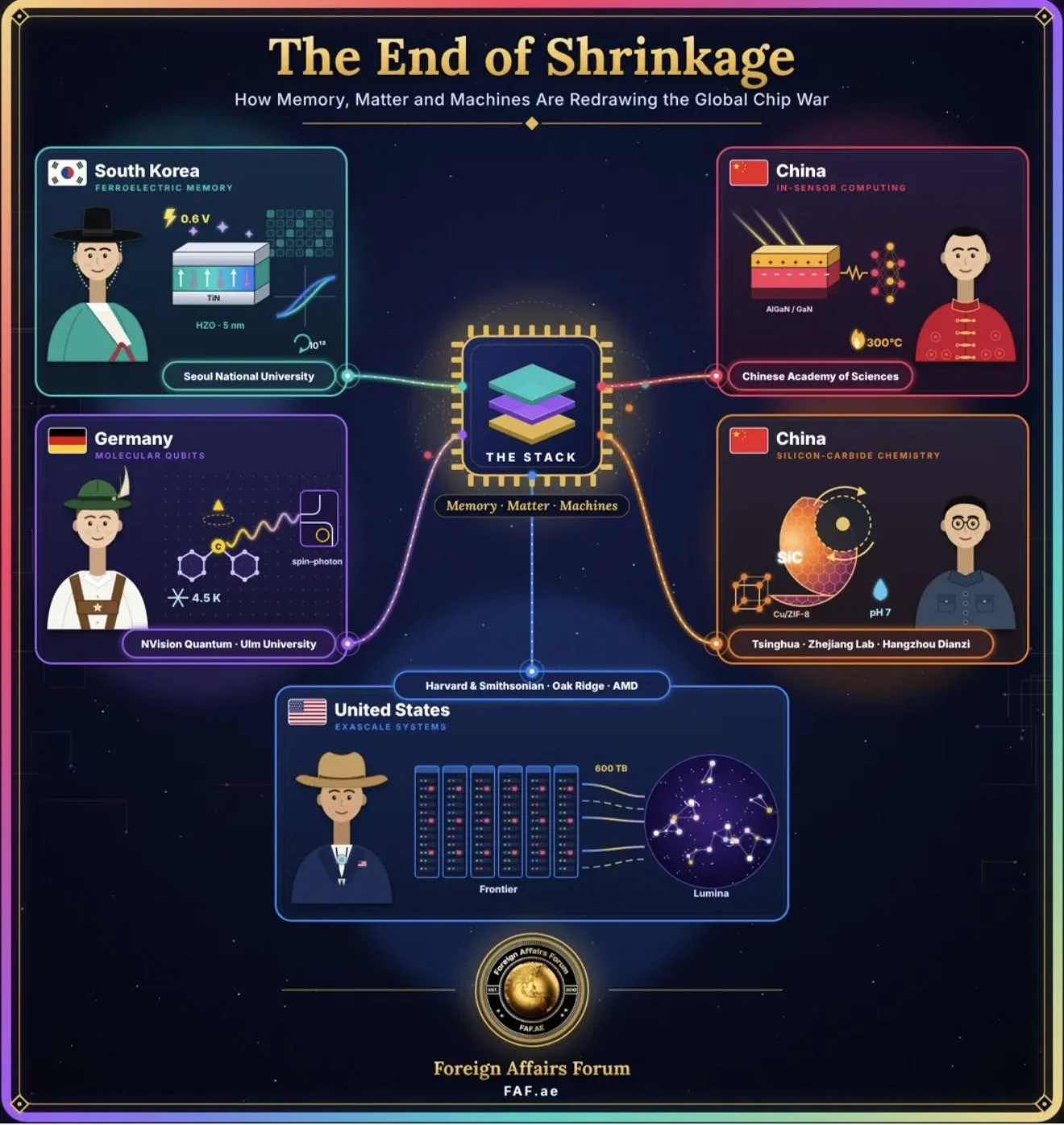
Scientists at Seoul National University improved a special material called hafnium-zirconium oxide.
This material can store information by flipping its electrical state, like a light switch that stays on or off.
The team made memory parts that switch using only six-tenths of a volt, which is very little power. The parts lasted for one trillion switches without breaking down.
The scientists also used computer models to predict that the parts could switch in less than a billionth of a second. That speed was predicted, not fully shown in a real memory chip.
Why does this matter?
Memory uses a lot of energy in modern computers, especially in artificial intelligence.
Better memory could one day help computers use less power. It also helps South Korea, which already leads the world in memory chips.
Dr. 🆎 says: "South Korea's strength in AI comes from memory. Research like this helps Seoul protect that strength in a very competitive world."
Breakthrough Two: A Chinese Sensor That Also Thinks
Researchers linked to the Chinese Academy of Sciences built a device that can detect light and also remember what it saw.
Usually a camera captures an image and sends it far away to be processed. This new device does some of that work right where the light lands.
The device is extremely sensitive to weak light, and it works at up to three hundred degrees Celsius, which is hotter than most electronics can handle.
This could help robots, drones, self-driving vehicles and factory machines make fast decisions while using less energy. It also has military uses. Dr. 🆎 warns: "Future battlefields will be full of machines that must see and decide on their own. A sensor that thinks and survives great heat is exactly what those machines need."
The device is made from materials based on gallium. China controls much of the world's gallium supply and has limited its sale to other countries, so this research also connects to global politics.
Breakthrough Three: A German Molecule for Quantum Computers
Scientists from Ulm University and a company called NVision showed that a single, specially designed molecule can work as a tiny bridge between quantum information and light.
Quantum computers could one day solve problems that normal computers cannot.
To connect many quantum devices, scientists need a way to move fragile quantum information into light, which can travel between machines.
This molecule did that at a very cold temperature of four and a half kelvin, just above absolute zero.
What makes this special is that molecules can be designed by chemists, which gives scientists more control. Dr. 🆎 explains: "Europe cannot win the quantum race by copying America or China with less money. It can win by being different. A molecule designed by chemists is a very European idea."
A full working molecular quantum computer has not been built. This is an early but important step.
Breakthrough Four: Cleaner Chip Making in China
Silicon carbide is a very hard material used in electric cars, solar power systems and the power equipment that runs data centers. Because it is so hard, making its surface perfectly smooth is very difficult.
Researchers from Hangzhou Dianzi University, Zhejiang Laboratory and Tsinghua University found a new chemical method that polishes silicon carbide at the level of single atoms. It works under neutral conditions, without the strong acids some older methods use, and it may reduce contamination.
Cleaner surfaces mean more reliable chips and fewer wasted wafers. Dr. 🆎 points out: "Much of the chip war is fought over big machines, because they are easy to see and control. But real advantage often hides in chemistry and know-how, which no export rule can fully stop."
The method still needs to be tested in real factories.
Breakthrough Five: An American Supercomputer Simulates the Early Universe
Scientists at the Center for Astrophysics | Harvard & Smithsonian used Frontier, a powerful American supercomputer at Oak Ridge National Laboratory, to create Lumina, a giant simulation of how the early universe developed.
The project used about 7500 AMD accelerator chips, more than 100,000 processor cores and about 600 terabytes of memory. It could save data at about eight hundred gigabytes every second.
Lumina is not an artificial intelligence system and did not set a new speed record. Its lesson is that modern computing success depends on everything working together: chips, memory, storage, networks and software. Dr. 🆎 says: "The ability to run computations this large is a quiet form of national power. It helps in science, energy, defense and health."
Why It Matters for the World
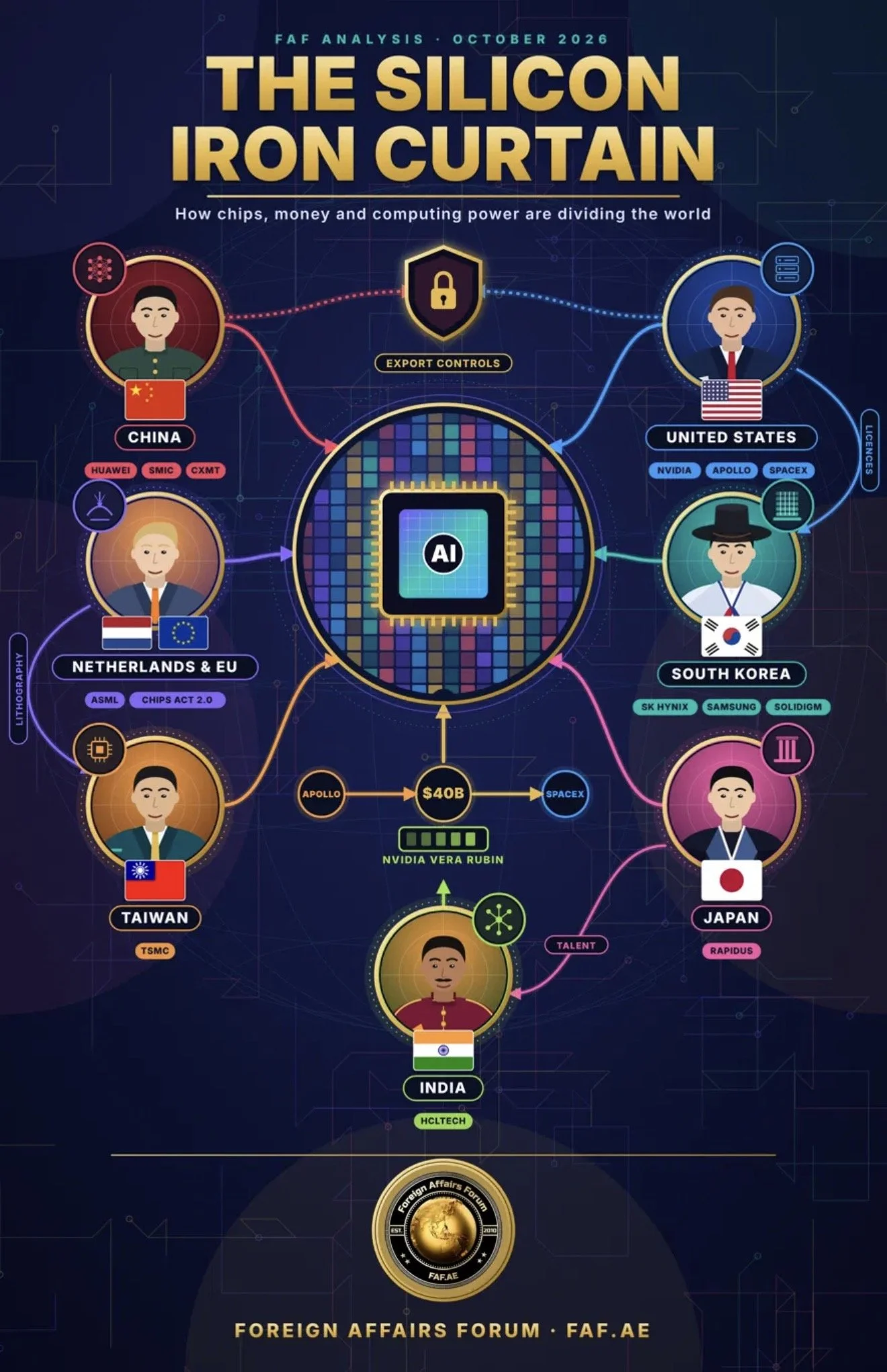
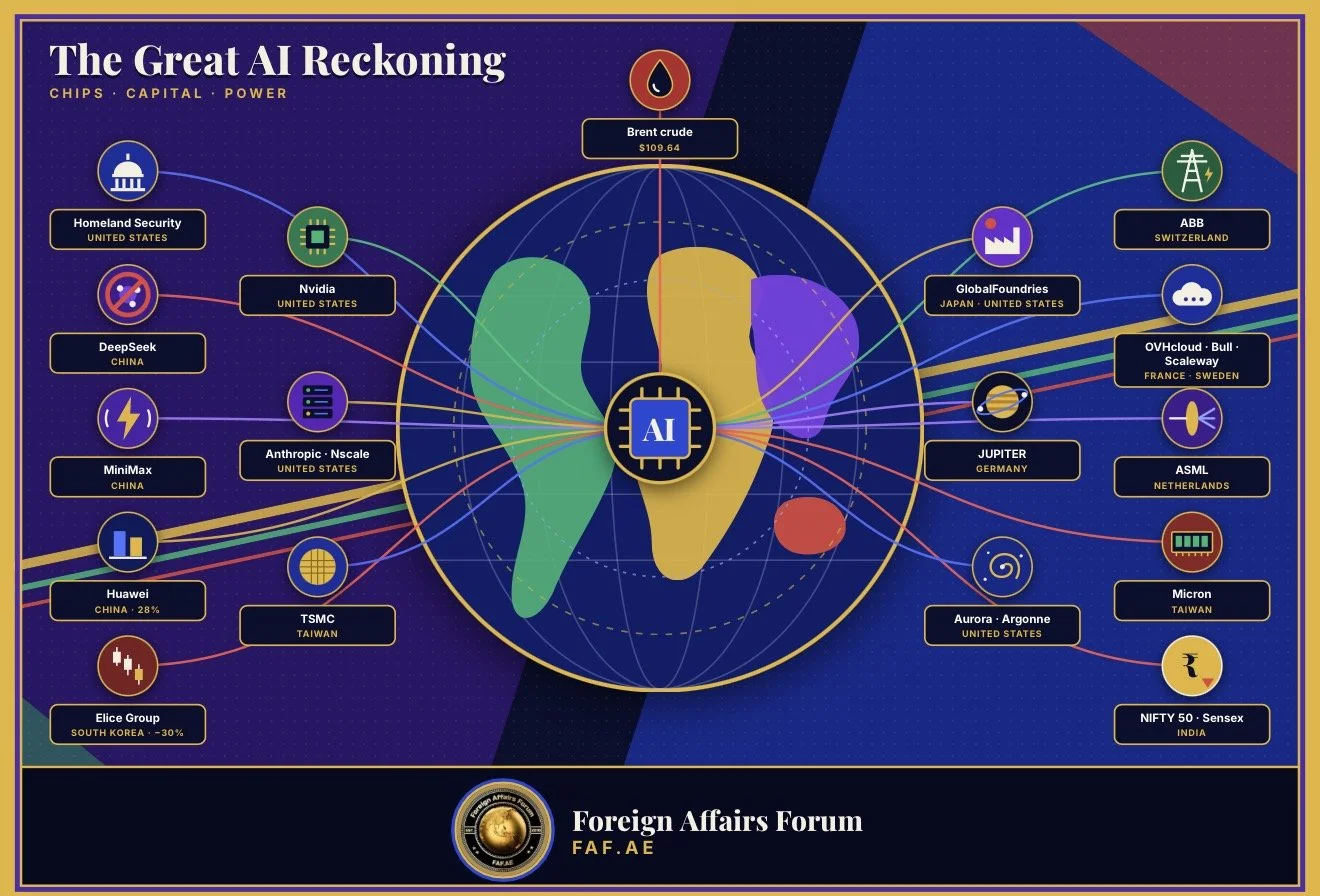
These five studies show that the global chip competition is changing.
The United States has tried to slow China by blocking access to the most advanced chip-making machines.
In response, China is finding other paths, such as new materials, smarter sensors and better manufacturing chemistry.
South Korea is working to protect its lead in memory.
Germany and Europe are betting on different kinds of quantum technology.
The United States is relying on its strength in building and running huge computing systems.
Dr. 🆎 explains: "Every time one road is blocked, scientists find another route. Restrictions can buy time, but they also push talent in new directions. Leaders must understand where that talent goes."
What Worries Experts
None of these breakthroughs is ready to sell. Lab results often look very different when companies try to make millions of chips.
Scientists still need to repeat these experiments independently, test them in real conditions and prove they can be made cheaply.
There are also bigger worries. Many of these technologies can be used both for peaceful purposes and for war. Smart sensors can guide drones.
Powerful supercomputers can design medicines but could also be misused in harmful biology. Dr. 🆎 warns: "Rules for powerful computing must think about biological safety from the start, not after something goes wrong."
Another concern is fairness. Only a few countries own supercomputers, advanced memory factories and quantum labs. Many other nations depend on them, which could create lasting gaps in power and opportunity.
There is also the danger of hype. Dr. 🆎 cautions: "The most dangerous number in technology is a prediction presented as a fact. Governments and investors must know the difference between what was measured and what was only imagined."
What Comes Next
Governments should support research across the whole technology system, not only chip factories.
Allies such as the United States, South Korea, Japan, Taiwan and Europe should work together, because each has different strengths. Export rules should be targeted carefully so they do not harm open science.
Companies should focus on the hard work of turning lab results into reliable products. Investors should be patient and watch these fields, not rush to buy on headlines.
Dr. 🆎 suggests watching five key measures: "Can other scientists repeat the result? How many good chips come out of the factory? How long do they last in real use? How much energy does each useful task need? And how well does the whole system perform? These five answers will show which breakthroughs truly matter."
By 2030, better memory and cleaner silicon-carbide processing may reach factories. Smart sensors may first appear in industry, aerospace and defense. Molecular quantum computers will probably stay in labs for longer. By 2036, countries that invest across the whole technology system will likely lead.
Final Thoughts
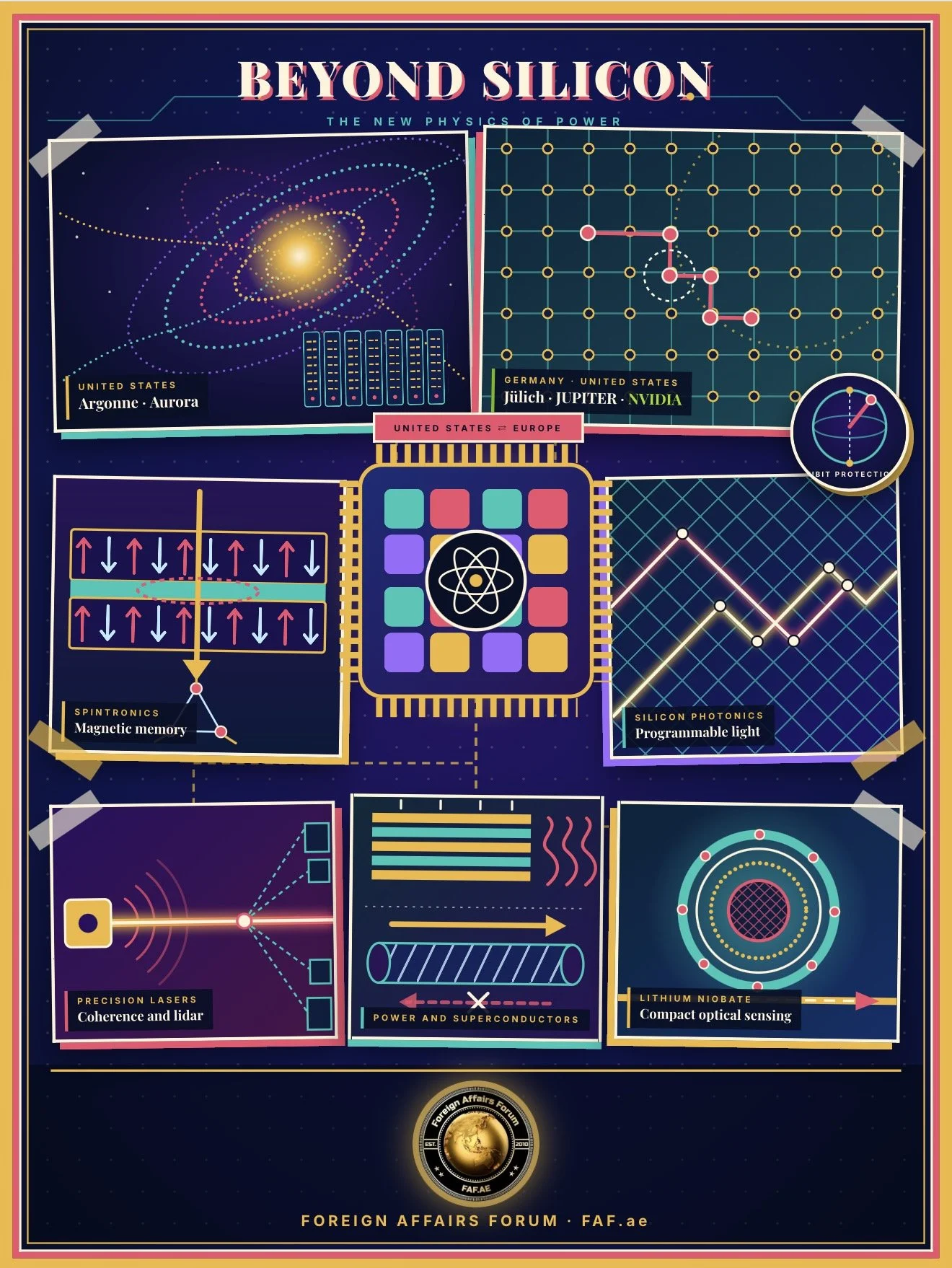
This week's science shows that the chip race is no longer only about making things smaller. It is about making entire systems smarter, more efficient and more reliable. Memory, materials, sensors, quantum devices and supercomputers all matter now.
Dr. 🆎 sums it up: "The real question is no longer how fast one chip can calculate. It is how well a whole system serves people. Countries that understand this will shape the future."
The breakthroughs that truly change the world will be the ones that pass real tests in real factories and real machines. Those are the results the world should watch.