Beginner's 101 Guide : Chips, Light and Power: The Quiet Race That Will Shape the Next Decade of Computing
Executive Summary
This week brought a set of important advances in computer chips and the machines built from them.
The big message is simple.
The future of computing will depend not only on making parts smaller, but on making whole systems use less energy to move, store and process information.
Scientists showed new ways to build tiny transistors, boost light signals on chips, grow better semiconductor crystals and create magnetic fields with less power.
Companies announced plans for stacked transistors, light-based connections between chips, new artificial intelligence processors and new factories.
Governments and universities also expanded access to powerful research computers.
Dr. Antonio Bhardwaj (Dr. 🆎), an expert in human-centered superintelligence, geopolitical strategy, AI warfare and bioterrorism risk, reminds readers that these stories are not all equal. A result measured in a laboratory is one kind of evidence. A promise made by a company is another. Treating them as the same thing leads to poor decisions.
Introduction
Computer chips sit at the heart of modern life.
They run phones, hospitals, banks, factories and armies. Today they also run artificial intelligence, which needs enormous amounts of computing power and electricity. Because of this, chips have become a matter of national security as well as business.
Countries compete to build them, protect them and sometimes restrict who can buy them.
FAF article explains what happened in the world of chips and supercomputers between the ninth and fifteenth of October 2026, why it matters, and what to be careful about. It uses plain language, but it follows the same careful approach as the longer analysis.
Dr. 🆎 offers his views throughout, especially on how these technologies affect global security.
How We Got Here
For about fifty years, computers improved in a steady and predictable way.
Engineers made transistors smaller, and each new generation of chips was faster and cheaper.
People called this pattern Moore's Law. It worked so well that whole industries planned their futures around it.
Eventually, transistors became so small that they began to leak electricity and produce too much heat.
Making each new generation also became far more expensive.
Engineers found clever answers, such as changing the shape of the transistor, but each answer cost more and required fewer companies to do the work.
At the same time, artificial intelligence changed what computers need.
Modern AI uses thousands of chips working together, and they must constantly send huge amounts of data to each other.
Moving data now uses almost as much energy as doing the calculations, sometimes more.
Engineers call this problem the energy wall.
Meanwhile, countries began restricting exports of advanced chips and spending large sums to build their own factories.
Chips became a central part of rivalry between nations.
What Happened This Week
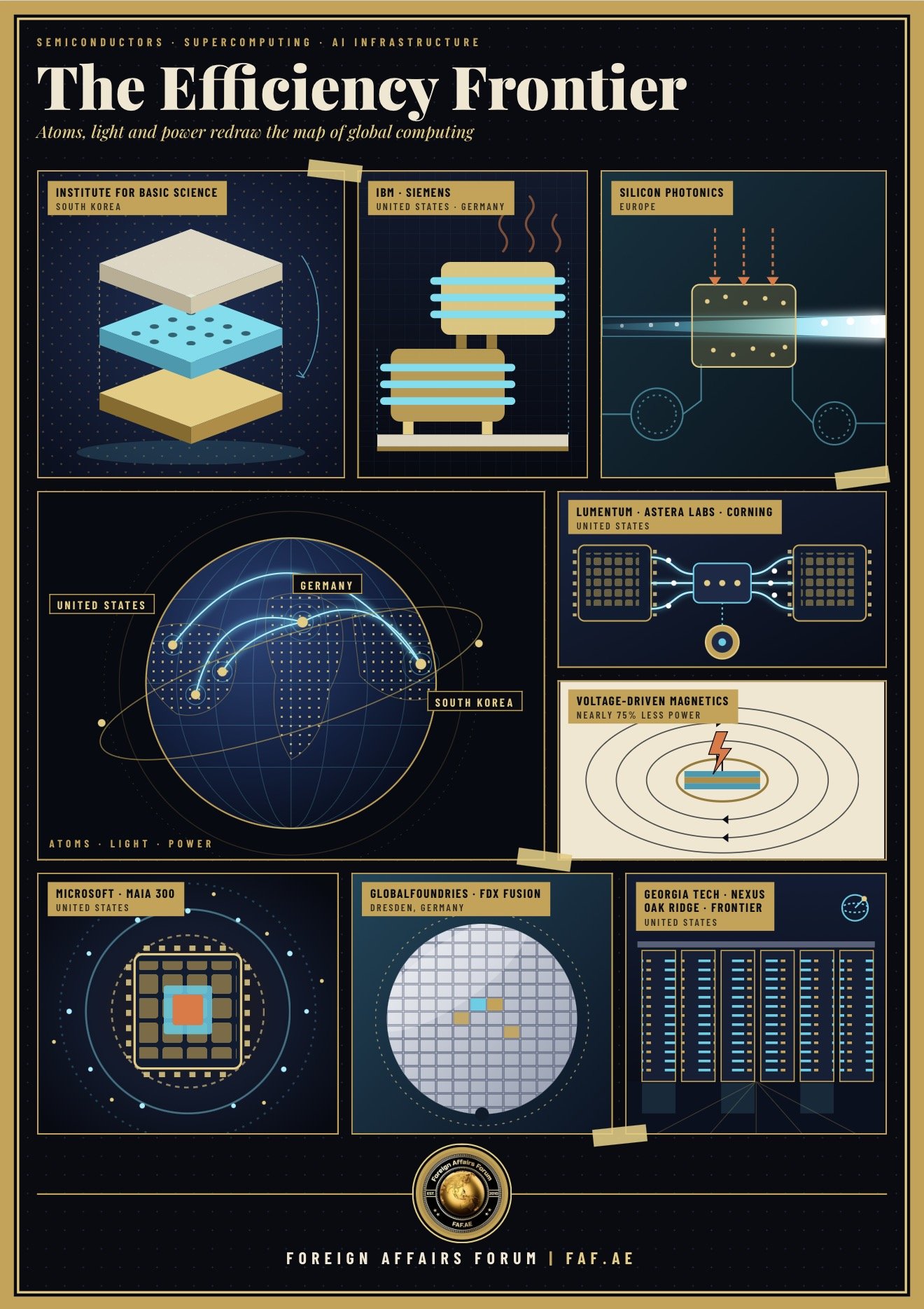
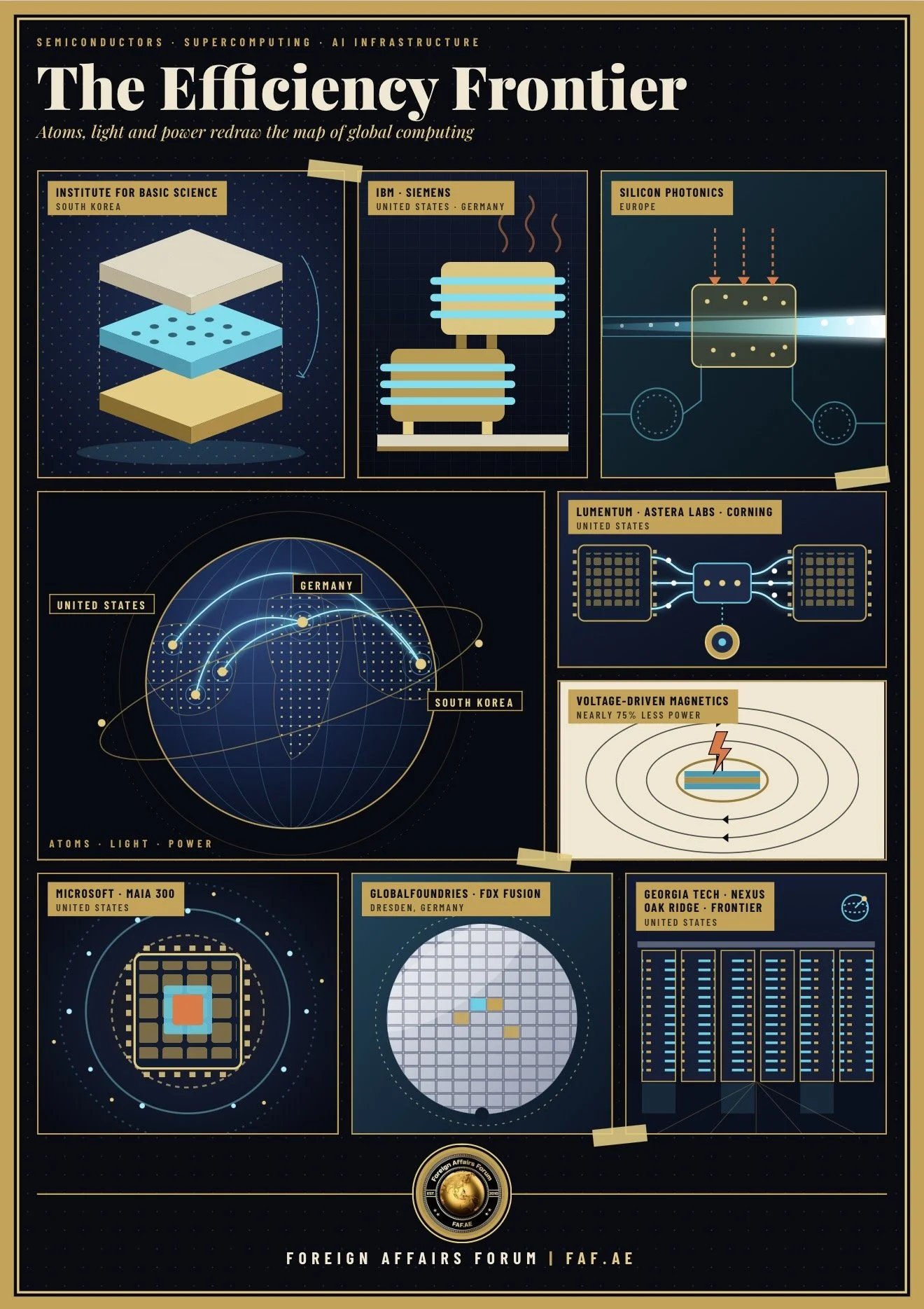
In South Korea, researchers at the Institute for Basic Science made a working transistor from one thin crystal.
They turned different layers of the crystal into the three parts a transistor needs: the channel, the insulator and the electrical contacts.
Their devices switched on and off almost as efficiently as the laws of physics allow. This is a major scientific result, but nobody yet knows whether it can be produced cheaply and reliably in a factory.
In Europe, scientists built a tiny device that boosts light signals on a chip made with materials compatible with silicon.
This could help future computers send data using light, which loses less energy than electrical wires over longer distances. The device does not yet prove that data centres will use less power overall.
Another team created a mathematical model that explains how certain semiconductor crystals form.
This lets manufacturers control the process more precisely and get better results.
A fourth team created magnetic fields using voltage instead of current, using nearly 75% less power than the usual method in their test. That saving applies only to this one part of the process, not to a whole computer.
In industry, IBM and Siemens agreed to work together on stacking transistors vertically, which could pack more of them into the same space.
Three companies, Lumentum, Astera Labs and Corning, showed a link that uses light to connect parts of an AI computer. Microsoft announced a new AI chip called Maia 300, which it says will deliver about 40% more output for each unit of power than before.
GlobalFoundries announced a plan for a new low-power factory process in Dresden, Germany, with production planned for 2028. Georgia Tech expanded national access to a supercomputer called Nexus, backed by $20 million from the National Science Foundation.
Oak Ridge National Laboratory also used the Frontier supercomputer to help develop a quantum computing method.
What to Be Careful About
The most important caution is to separate proof from promise.
A peer-reviewed experiment has real measurements behind it, though other scientists may not yet have repeated it. A prototype shown by a company is less certain. A roadmap is only a plan.
Microsoft's figures, for example, are the company's own predictions and have not been confirmed by outsiders.
A second caution is the gap between the laboratory and the factory.
Many exciting materials have failed because they could not be made in large numbers without defects.
A third caution is about claims.
A big improvement in one small part does not mean the whole computer or data centre will use that much less energy. Only tests on complete systems can show that.
Dr. 🆎 raises a further concern. Faster, cheaper and more efficient computing helps science and medicine, but it can also help those who want to build dangerous weapons or misuse AI, including in biology. He believes that the machines that run powerful AI are one of the few places where sensible oversight is possible, so their governance deserves serious attention.
Why These Changes Are Connected
These stories form a chain.
Shrinking chips makes them hot and costly, so scientists look for new materials and shapes. Denser chips need to move more data, so engineers turn to light. Moving data and running AI take huge amounts of electricity, so efficiency becomes as valuable as speed. A chip that does more work for each unit of power can serve more people and train bigger models on the same electricity supply.
This also changes politics.
Countries with plenty of cheap power can host more computing. Countries that build their own chips may become less dependent on others, but they still rely on the advanced factories that make those chips. Shared public supercomputers let more scientists test ideas, so research is not controlled only by large companies.
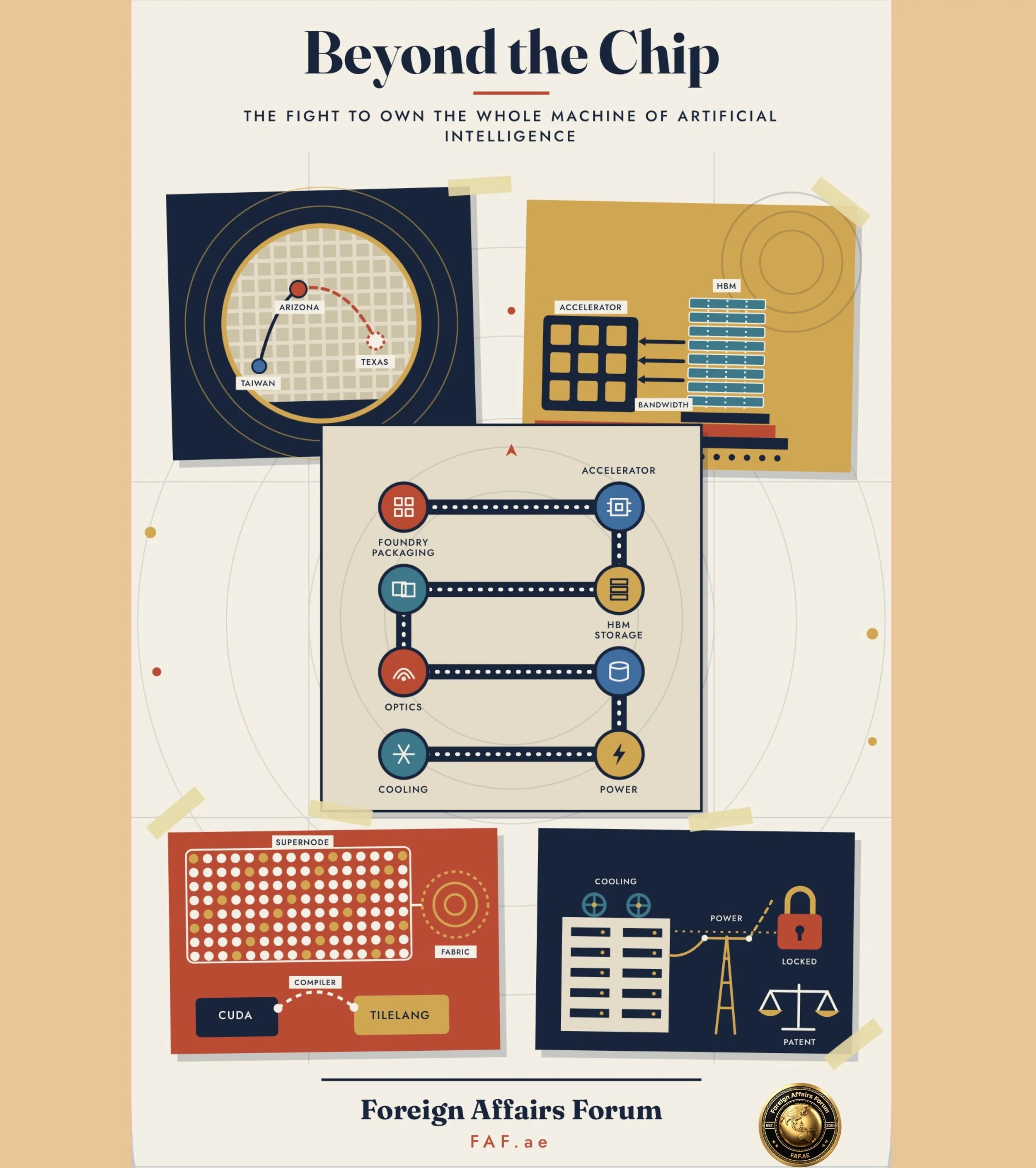
Dr. 🆎 sums it up this way: winning in computing means getting every layer to work together, and a country that is slightly behind in one layer can still come out ahead if its whole system fits together better.
What Should Happen Next
Governments should pay for the difficult middle step between a good laboratory result and a working factory process.
Independent groups should test new systems and publish fair comparisons of energy use, speed, errors and cost. Energy planning and computing planning should happen together, because one cannot grow without the other. Shared computers should come with strong safeguards, so that powerful tools are not misused.
Dr. 🆎 argues that accountable human beings, not automated systems, should keep control over the most serious decisions.
Investors should be careful too.
The fields in the news, such as advanced materials, photonics, chip design software and custom AI processors, look promising. But promising science does not guarantee that a company is a good investment at today's prices. Allied countries should work together, since no single nation holds every piece of the puzzle.
Conclusion
This week showed real progress in the science of chips, along with ambitious plans from industry and governments. It did not show that any one country has won the race. The true tests are still ahead: independent measurement, reliable manufacturing, safe operation at high temperatures, low total energy use and affordable cost. The technologies that pass those tests will shape the next decade of computing.
Dr. 🆎 ends with a simple message: be patient, measure honestly and keep human judgment at the centre, so that these powerful tools serve safety and shared prosperity.