Autonomous Warfare Is Now a Factory Race: A Simple Guide
Executive Summary
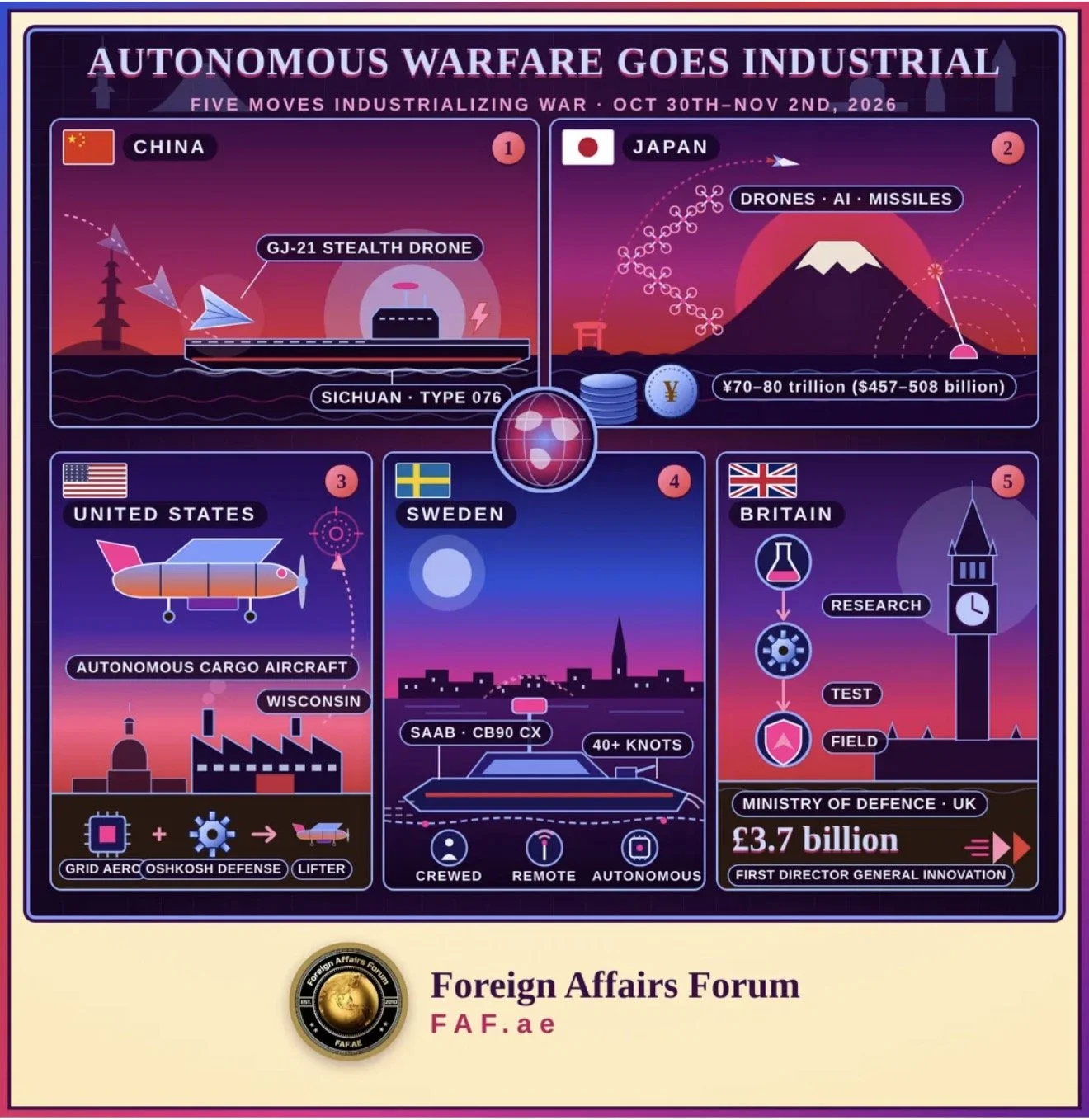
War is changing fast. In the past, the big question was who had the best ship or the best plane. Now the big question is who can build many smart machines, build them quickly, and use them well. Five news stories from Oct 30th to Nov 2nd, 2026 show this change.
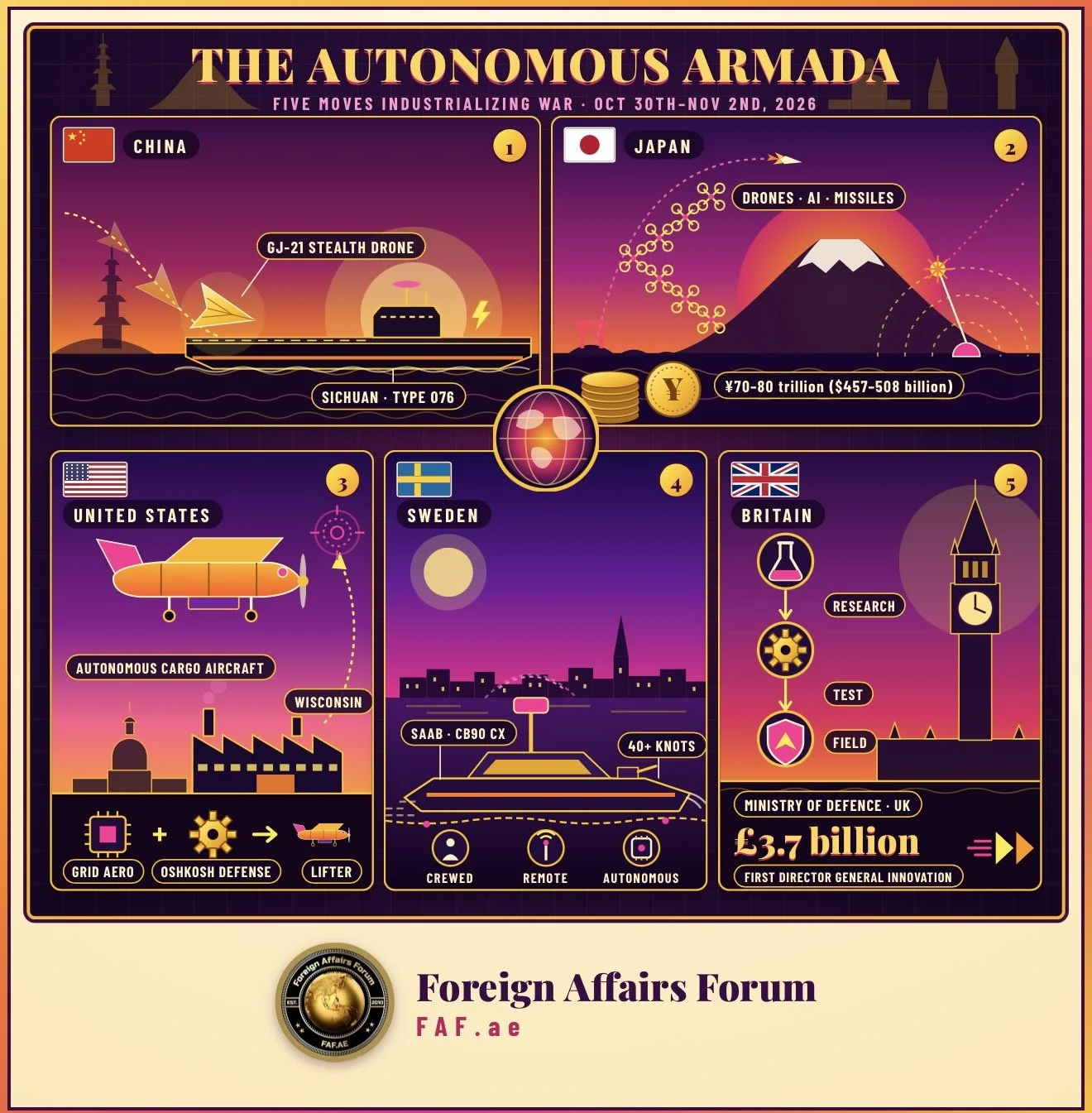
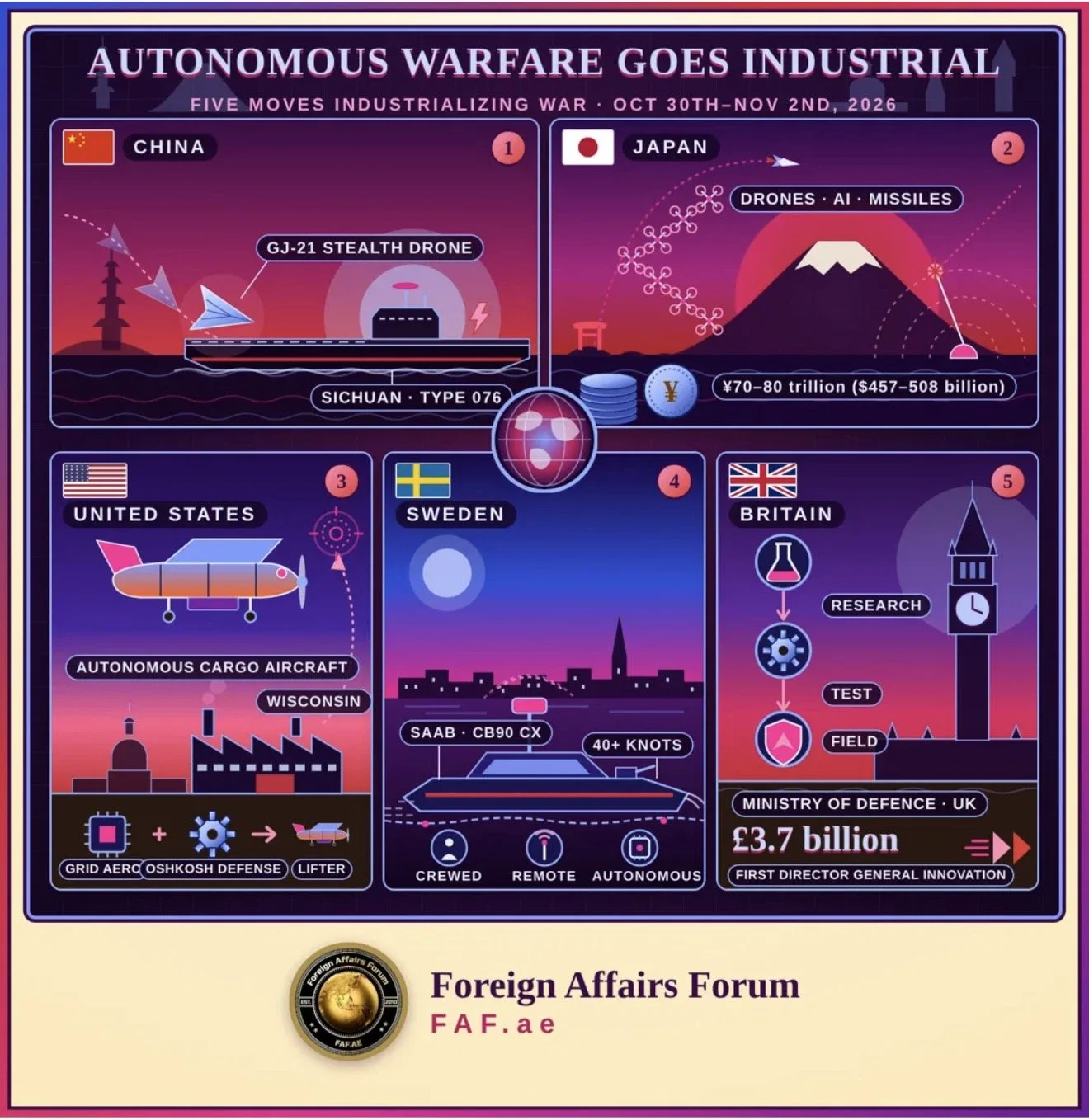
China says its GJ-21 stealth drone has taken off from and landed on a new ship called the Sichuan. Japan is thinking about spending $457 billion to $508 billion on defense over five years, starting in April 2027. An American company called Oshkosh Defense and a startup called Grid Aero will work together to build robot cargo planes. Sweden's company Saab has shown a new boat called the CB90 CX that can sail with a crew or without one. Britain has named a new leader for military innovation, in charge of a program worth about £3.7 billion.
The lesson is simple. Having a good idea is not enough. A country must also build the machines in large numbers and teach its forces to use them.
Dr. 🆎 says the biggest danger is that machines are arriving faster than the rules that control them.
Introduction
Big changes in war do not happen in one day. They grow slowly, through tests, budgets, partnerships and new jobs. This past week showed several of these small steps at once.
None of the five stories proves that a new age of war has already begun. China's test does not prove its drone is ready for real combat. Japan's plan is only a proposal. The American partnership has not said how many aircraft it will build. The Swedish boat has a first customer but no record in battle. Britain's new job is a change in organization, and we must wait to see if it works.
Still, these steps show where governments think the future is going.
Dr. Antonio Bhardwaj (Dr. 🆎), an expert in human-centered superintelligence, AI warfare and bioterrorism risks, often says that you can learn a government's real plans by looking at where it puts its money and its factories. This week, the money and the factories are moving toward machines that can act on their own.
History and Current Status
Unmanned machines are not new. Armies used target drones and remote-controlled aircraft during the 20th century. Early in the 21st century, some drones carried weapons. For a long time they were helpers for human crews, useful because they could stay in the air for a long time or be lost without costing lives.
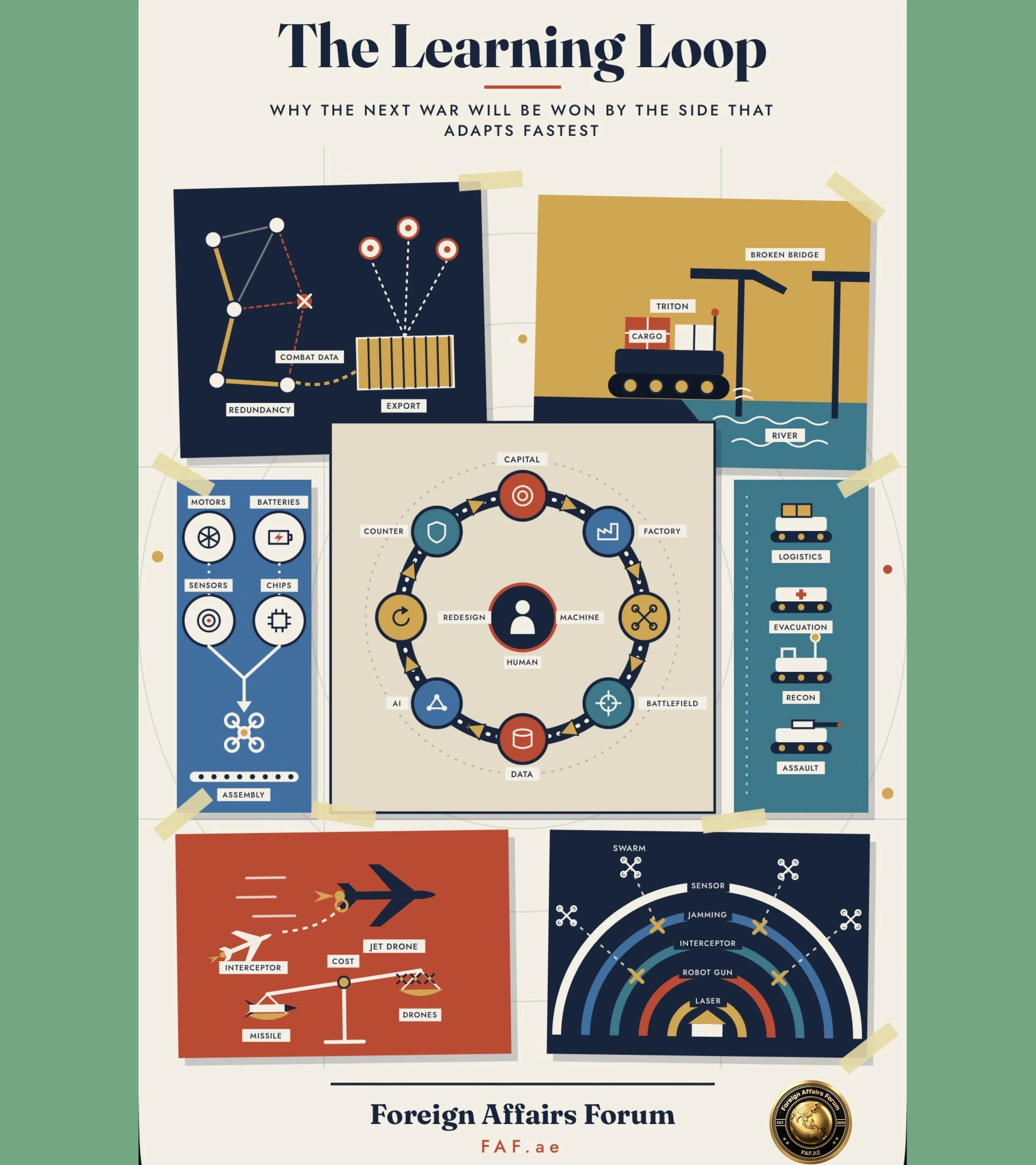
Things changed when computers, sensors and communications became cheap. A machine could now think a little for itself. Recent wars showed that cheap drones can change a battle, and that small unmanned boats can trouble a bigger navy. Leaders learned that having many machines and adapting quickly can matter more than having a few perfect ones.
Here is where the five stories stand. China's ship Sichuan was launched in December 2024. It weighs more than 40,000 tonnes and has a full-length flight deck. Chinese state media says the GJ-21 drone has now taken off and landed on it. This is an important step, but it does not prove the ship and drone are ready for long operations.
Japan's plan would be about 1.8 times its current five-year plan. It is not final. Oshkosh and Grid Aero want to build a plane called Lifter, which carries supplies in dangerous places. No number of planes has been announced. Saab's CB90 CX is about 18 meters long, can go faster than 40 knots, and can carry more than 50% more than the older model. Sweden will be its first customer. Britain's new official, Anthony Reeves, will lead a technology program worth about £3.7 billion.
Key Developments
The first key development is China's drone test. Usually, jets at sea fly from big aircraft carriers and cost a lot. A stealth drone that can fly from a cheaper assault ship means more ships can carry airpower. That makes the sea harder to defend, especially near Taiwan and in the South China Sea.
Dr. 🆎 says that spreading out is the oldest way to stay safe, and that smart machines make it cheaper to do at sea.
The second is Japan's money plan. Japan worries about China's growing military, North Korea's missiles and a long war in the region. The plan may pay for many drones, missiles made in Japan, artificial intelligence, space technology and strong defenses against incoming missiles. Japan also wants to make more of its own parts, which could bring it closer to American industry.
The third is the Oshkosh and Grid Aero partnership. Startups can invent clever machines but often cannot build them in large numbers. Older companies have factories and experience. Together they may move faster from first model to real use. Robot cargo planes could carry food, medicine and ammunition into places where trucks and pilots would be in danger.
The fourth is the Swedish boat. The Baltic Sea has narrow waters, islands and important cables under the water. A small, fast boat that can switch between crewed and uncrewed travel is very useful there. It can take risky missions without putting sailors in danger.
The fifth is Britain's new leader for innovation. Buying weapons the old way can take many years, which is too slow for drones and AI. Britain hopes one senior leader can bring scientists, startups, factories and soldiers together so good ideas reach troops faster.
Latest Facts and Concerns
Some facts are clear, and some are not. The Chinese test comes from state media, and outsiders cannot yet check details such as range or how well the drone avoids detection. Japan's numbers are only a range. The Swedish numbers come from the company. So we should accept the direction of change but be careful about its speed.
There are several worries. One is that these machines can both watch and attack. If a stealth drone appears near an island, the other side cannot tell if it is just looking or about to strike. That can push leaders to act too fast.
Dr. 🆎 warns that safety in a crisis depends on clear signals, and that machines working at great speed leave less time for people to think.
A second worry is an arms race. Japan builds up because China builds up, and China sees Japan's plan as a threat. Each side then spends more. A third worry is who is responsible. If a boat can switch from crewed to uncrewed, who answers for what it does? The laws of war were written for human decision-makers.
A fourth worry is supply. Autonomous machines need chips, sensors, batteries and software, and many come from only a few places. A fifth worry is misuse. The same plane that carries medicine can carry something harmful if criminals or terrorists get it.
Dr. 🆎, who studies bioterrorism risks, says governments should think about autonomy and other dangerous technologies together, because the biggest risks often appear where they meet.
Cause-and-Effect Analysis
Several causes drive these events.
The first is cost.
When sensors and computers became cheap, machines became cheaper to build and cheaper to lose. That leads armies to want large numbers of simple machines instead of a few expensive ones.
The second cause is geography.
The Indo-Pacific has long distances and many islands, so machines that can work alone are very useful. This pushes Japan and China to invest, and each one's choice changes what the other does.
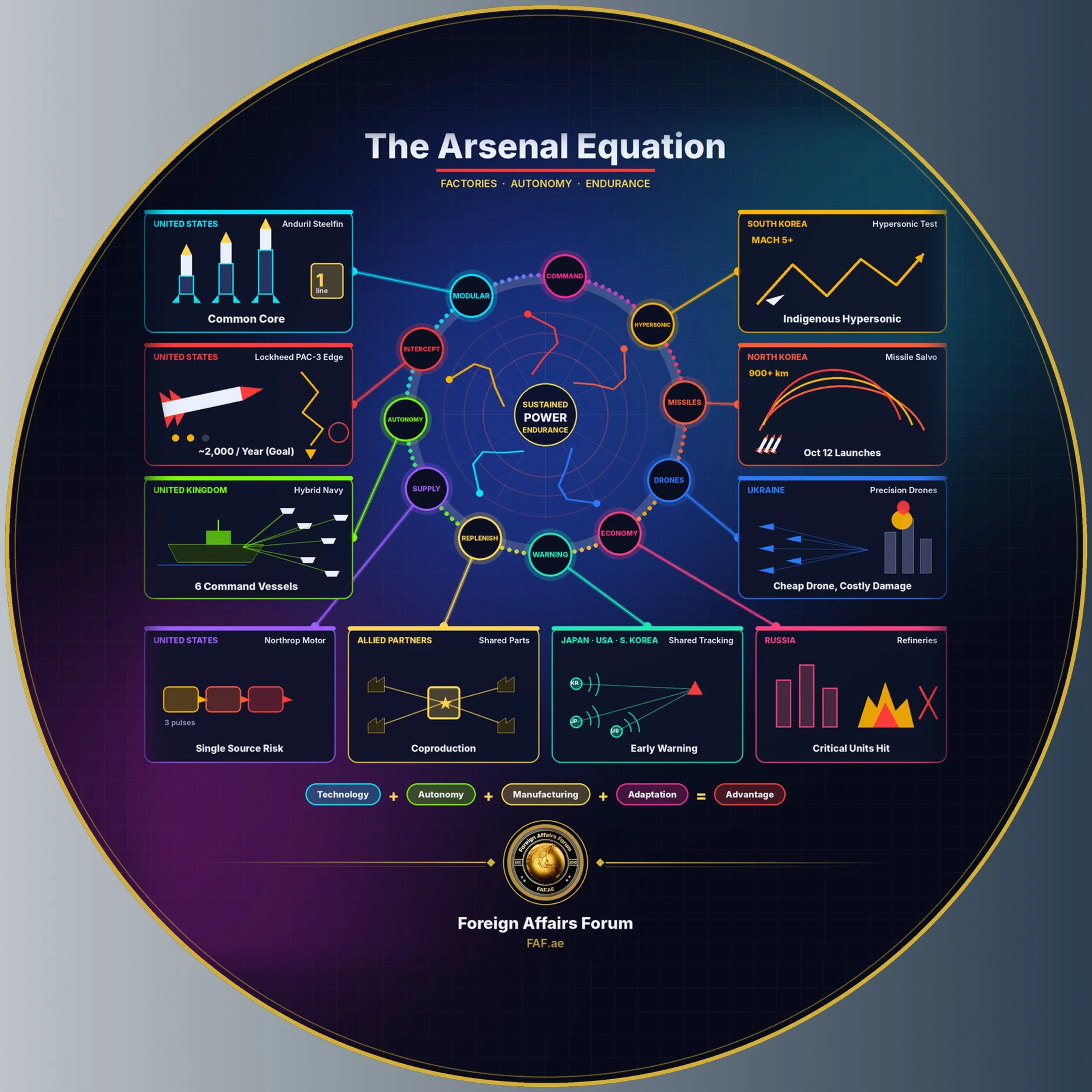
The third cause is the lesson of recent wars: long wars use up weapons quickly, so countries need factories that can make more.
That is why governments now care about partnerships, local production and supply chains. Defense policy and industrial policy are becoming the same thing.
These causes bring further effects.
Software can be updated, so any advantage may not last long. The side that adapts fastest wins more often. That is why Britain is changing its own organization. Allies are also affected. Japan's plan could bring it closer to American companies, and the Swedish boat strengthens the defense of the Baltic. Meanwhile, opponents will build counters, such as better radars and anti-drone weapons, so the contest never stops.
Dr. 🆎 says the right question is not whether a new machine works alone, but how it works when clever opponents try to beat it.
Future Steps
Governments can take several steps. First, they should turn tests into real skills. A single flight or a nice prototype is not yet a capability. Forces need training, repair teams, secure communications and clear plans.
Second, they should treat factories as part of strategy. If a country cannot build its machines in large numbers, it has not really got them. Governments can help by making steady, large orders and by checking where key parts come from. Third, they should reform buying rules so that good technology reaches soldiers faster, while still protecting public money.
Fourth, they should agree on rules before a crisis.
This could include hotlines for incidents with unmanned machines and shared ideas about what counts as a hostile act. Dr. 🆎 says people must stay in charge wherever a decision cannot be undone. Fifth, they should stop dangerous groups from getting these machines, using export controls and cooperation among agencies. Sixth, allies should share standards and plan production together so their systems can work side by side.
Conclusion
This week did not bring a sudden new age of war, but it showed the one already taking shape. The contest is now between whole systems of science, industry and government. China is widening what drones can do at sea. Japan may spend far more on new technology. The United States is joining startups with big factories. Sweden is adding autonomy to its boats. Britain is improving the way it brings new ideas into service.
The winners will be those who can build smart machines, make them in large numbers and use them faster than their rivals, without losing control.
Dr. 🆎 reminds us that the most important task of this decade is to keep these machines under human purpose and human judgment. The industrialization of autonomous warfare has begun. The question is whether the rules and wisdom to guide it will arrive in time.