Beginner's 101 Guide: Why Factories, Drones, and Robot Ships Now Matter More Than Single Weapons
Summary
A Change in How Wars Are Won
For a long time, people judged military power by asking who had the fastest missile, the biggest ship, or the most advanced jet.
That way of thinking is now out of date. The news from the past few days shows that modern military strength depends on something broader: whether a country can build weapons in large numbers, make them work together, replace them quickly when they are used up, and keep improving them.
Dr. 🆎 explains it simply. "A great weapon that you can only build a few of is a good start, but it is not a strategy," Dr. 🆎 says. "The country that wins is the one that can still fight strongly after the first week."
Here are the five stories behind this change, and what they mean.
A New Way to Build Missile Defenses
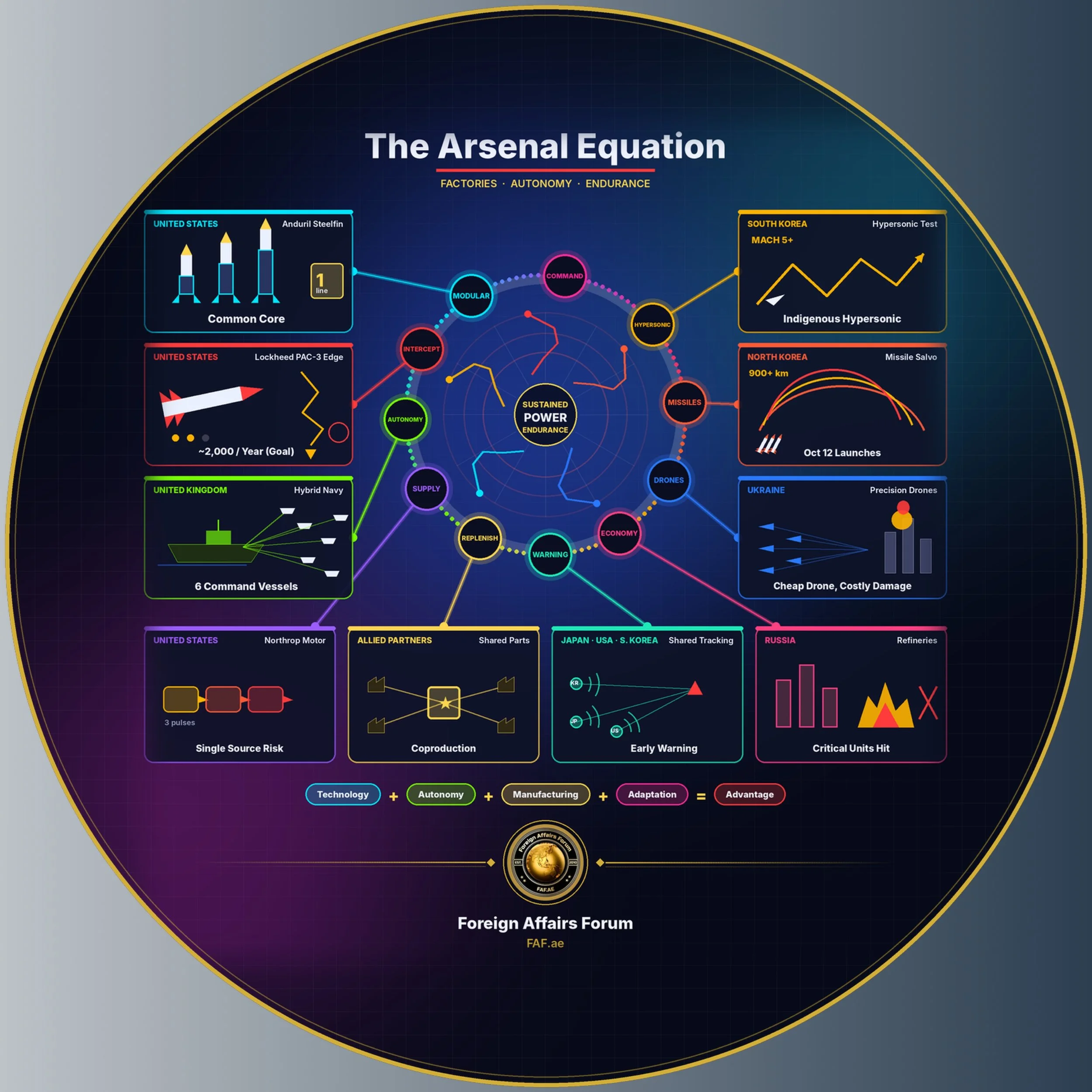
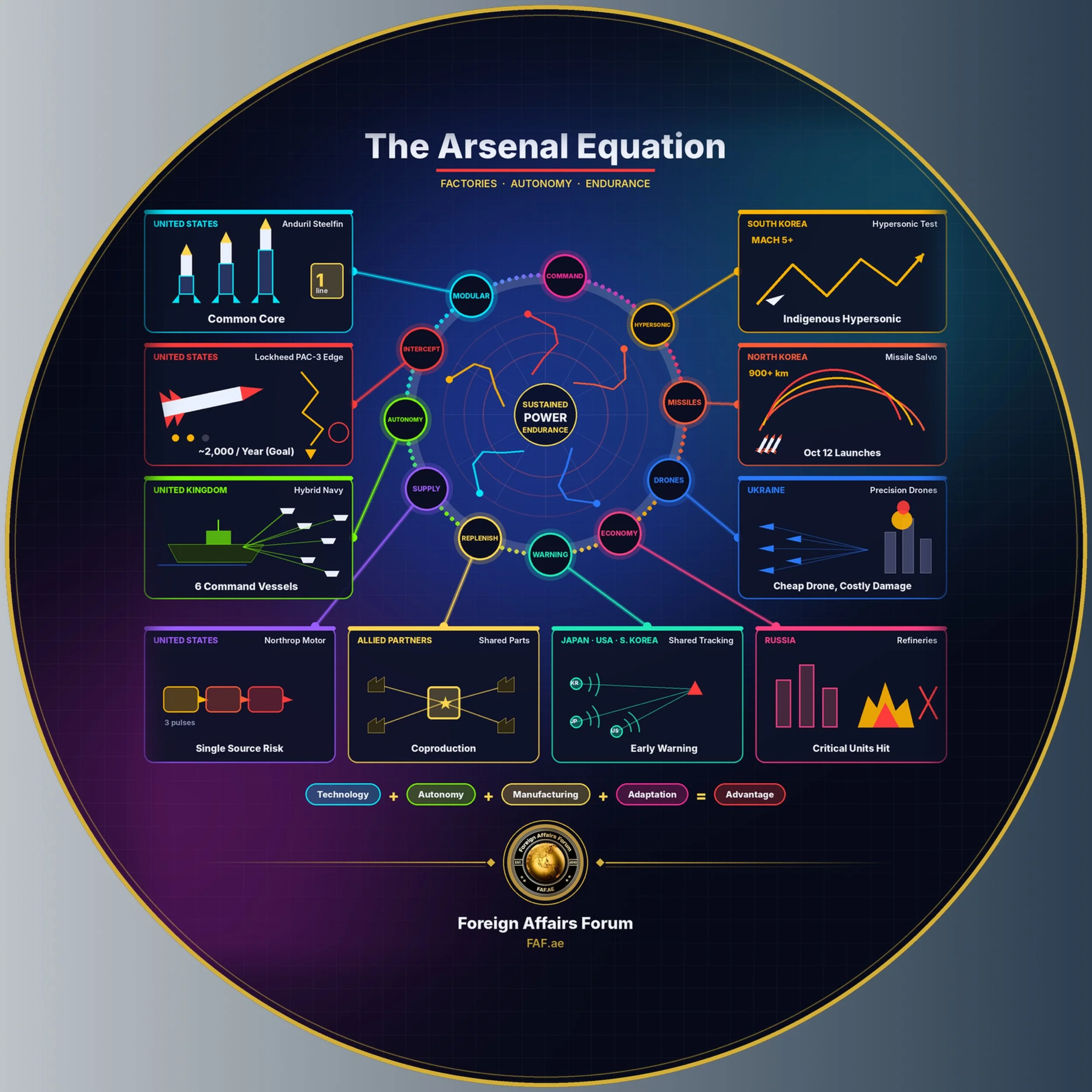
An American company called Anduril has shown off a new family of missiles called Steelfin.
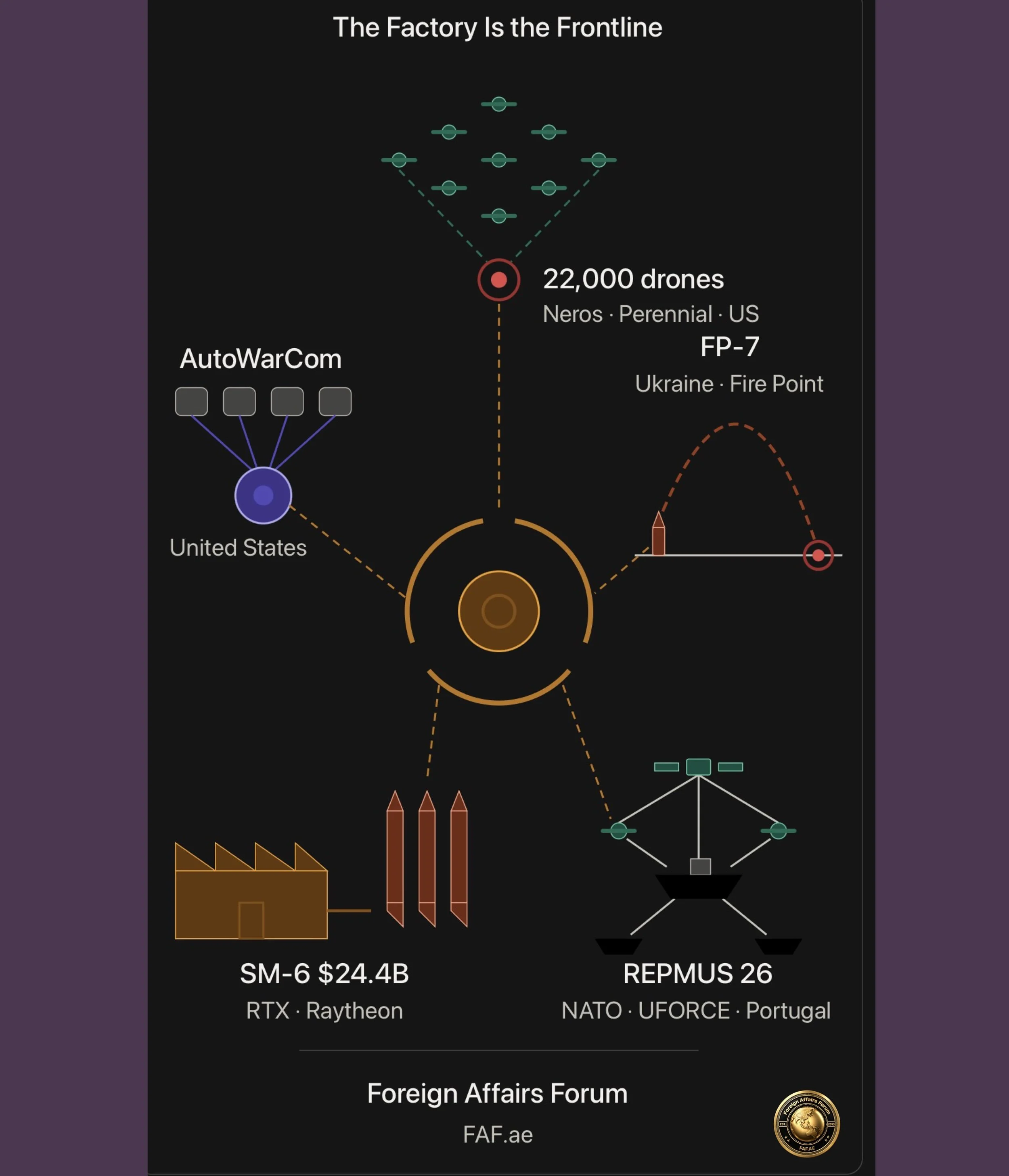
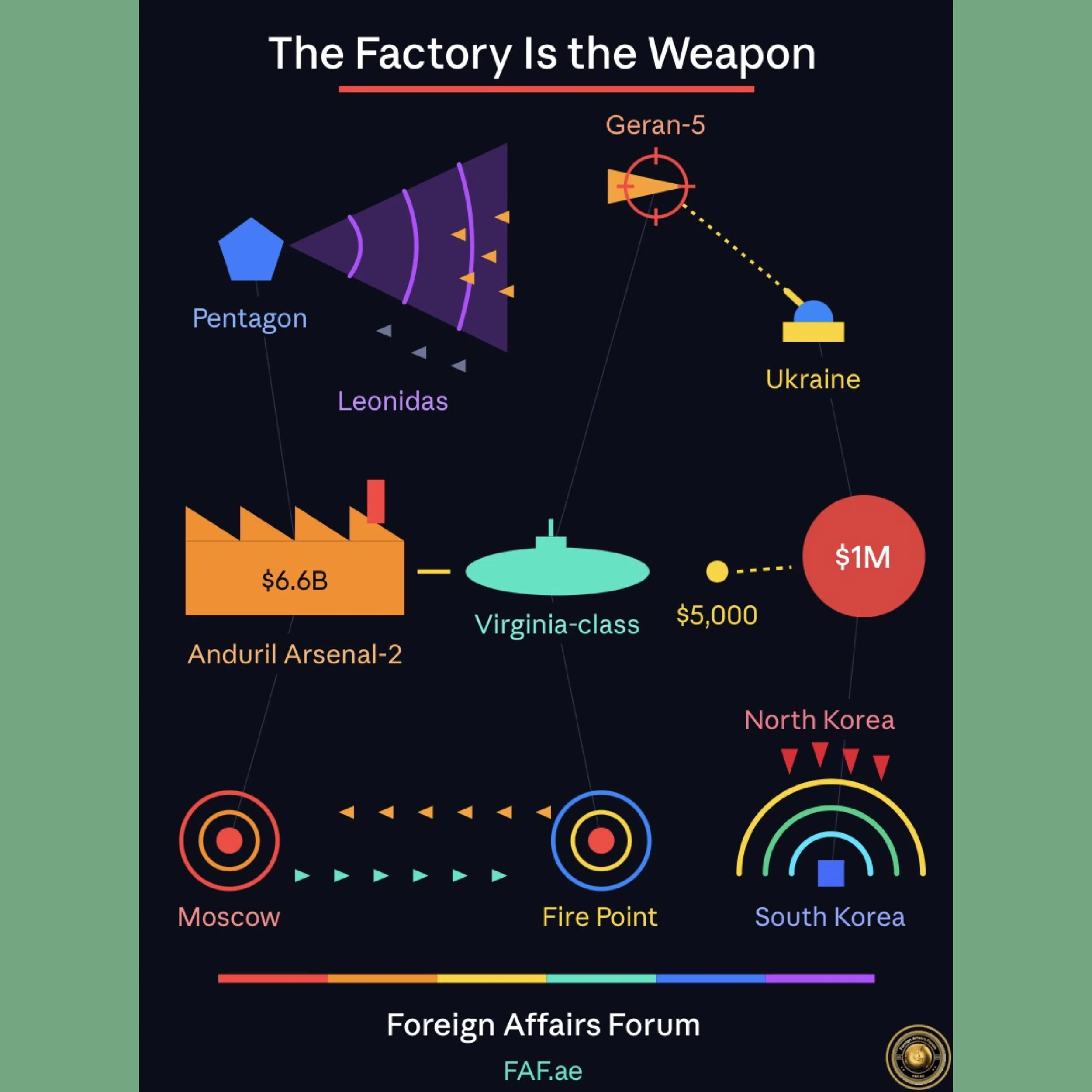
These missiles are designed to shoot down enemy aircraft and missiles. What makes them special is how they are made. Instead of building a completely different missile for each job, the company uses a common front section and swaps the rocket booster underneath depending on the mission. Because the missiles share so many parts, they can be built on the same production lines. The company hopes to make several thousand each year.
There is an important limit to remember. The missile has completed ground-based tests, but real flight tests are not planned until 2027. So it is still a promise, not a proven weapon.
Why does this matter? Defending against missiles is expensive, and countries can run out of interceptors quickly when attacked. Missiles that are easier to build in large numbers could help countries keep their defenses stocked.
"The most important part of Steelfin is the factory behind it," Dr. 🆎 says. "If you can replace what you use within weeks, your enemy will think twice before attacking."
A Better Interceptor for the Fastest Missiles
Another American company, Lockheed Martin, has introduced a new missile interceptor called PAC-3 Edge. It is built to stop very fast missiles, including hypersonic weapons.
These travel at more than five times the speed of sound and can change direction while flying, which makes them hard to catch. The new interceptor has a better guidance system, improved flight controls, and a rocket motor made by Northrop Grumman.
Lockheed Martin says it hopes to make about two thousand of these a year in the future. That is a goal, not what the company produces today. The company also expects the cost to be similar to the current version, which is roughly $4 million per missile.
The lesson is the same as before. A powerful interceptor does not help much if you only have a handful. Countries need both good technology and the ability to build enough of it.
Missile Tests Raise Tension in Korea
On October 12th, North Korea fired several ballistic missiles. One of them flew more than 900 kilometers.
This happened soon after South Korea successfully tested its own hypersonic missile. North Korea also said it tested a hypersonic missile on October 3rd. South Korean officials believe the latest launches were partly a response to the South's test.
Hypersonic missiles are fast and hard to predict, which gives defenders very little time to react. This puts pressure on South Korea, Japan, and the United States to improve their warning systems and their defenses.
Dr. 🆎 points to a danger. "When there are only minutes to decide, computers will be asked to help make the call," Dr. 🆎 says. "That can be useful, but a machine that misreads a test launch could start a crisis. We need systems that help humans decide faster, not systems that decide for them."
Britain Thinks About a Fleet of Robot Ships
The British Royal Navy is considering how to speed up a plan called the Hybrid Navy.
The idea is to mix traditional warships with robot ships that sail on the surface or under the water without crews. The plan includes six large command ships, called Common Combat Vessels, that would direct all these robot vessels.
The government has not yet decided how to buy the ships. Some companies want Britain to use ship designs that already exist, which would be faster than designing something new.
This could change how navies work. Instead of depending on a few huge and costly ships, a fleet could spread its sensors and weapons across many smaller machines. If one is destroyed, no sailors are lost, and the fleet keeps going.
Dr. 🆎 reminds us that people still matter. "Someone has to supervise all those machines, and they need to trust them and understand their limits," Dr. 🆎 says. "Navies must train their people as seriously as they build their ships."
Ukraine Uses Cheap Drones to Hit Russia's Economy
A new investigation by The Washington Post describes how Ukraine has built a clever campaign of long-range drone attacks on Russian oil refineries.
Ukraine makes many of these drones at home. It uses better intelligence to choose targets, decoys to confuse defenses, and some AI-assisted technology. Instead of hitting a whole refinery at random, Ukrainian forces aim at the key equipment that is hard to repair. Reports say this has seriously disrupted Russian refining, although nobody can say exactly how much capacity has been lost.
The economics are striking. A drone that costs perhaps $20,000 to $50,000 can damage equipment worth millions of dollars and shut down production for a long time. A small, inexpensive weapon can cause damage far greater than its price.
Dr. 🆎 warns that this lesson applies everywhere. "Every country with factories, power plants, and ports should look at this and ask how well protected they are," Dr. 🆎 says. "The same cheap technology could also be misused by terrorists. Sites that handle dangerous chemicals or biological materials need strong protection against drones."
What It All Means
Three big ideas stand out.
First, the ability to build things is now part of military power. Missiles are only useful if a country can make enough and replace the ones it uses. Steelfin and PAC-3 Edge both show this.
Second, machines are changing how forces are organized. The British Hybrid Navy shows that future fleets may be a few crewed command ships directing many robot vessels.
Third, cheap precision weapons are changing the cost of war. Ukraine's drones show that small, inexpensive machines can threaten large and expensive infrastructure, which means economies themselves can become targets.
What Should Happen Next
Governments should give weapon makers steady, long-term orders so they can build more factories and secure the parts they need, especially rocket motors and guidance systems. They should favor designs with shared parts that allies can build together.
They should speed up how they buy new equipment so it reaches soldiers and sailors in time. Allies like South Korea, Japan, and the United States should share warning data about incoming missiles. Countries should set firm rules so humans stay in charge of the most serious decisions made by AI-assisted weapons.
Finally, they should protect factories, refineries, ports, and power plants against drones, and train the people who will operate these new systems.
The Bottom Line
The next generation of military power will not be decided only by who has the most advanced weapons. It will be decided by who can build them, connect them, replace them, and improve them faster than their rivals.
"Weapons will keep changing, but one thing stays the same," Dr. 🆎 concludes. "Power belongs to those who can learn and rebuild faster than their enemies, and who keep human judgment in charge when the stakes are highest."