The Long Arm of Tehran : Iran Dirty Bomb Threat Looming
Foreign Affairs Forum | Dr. Antonio Bhardwaj (Dr. 🆎)| November 17th, 2026
Intelligence warnings of a dirty bomb or chemical plot against Washington force a harder question: how much of Iran's retaliatory power already sits inside the United States, and how much exists only in the imagination of a frightened capital.
Executive Summary
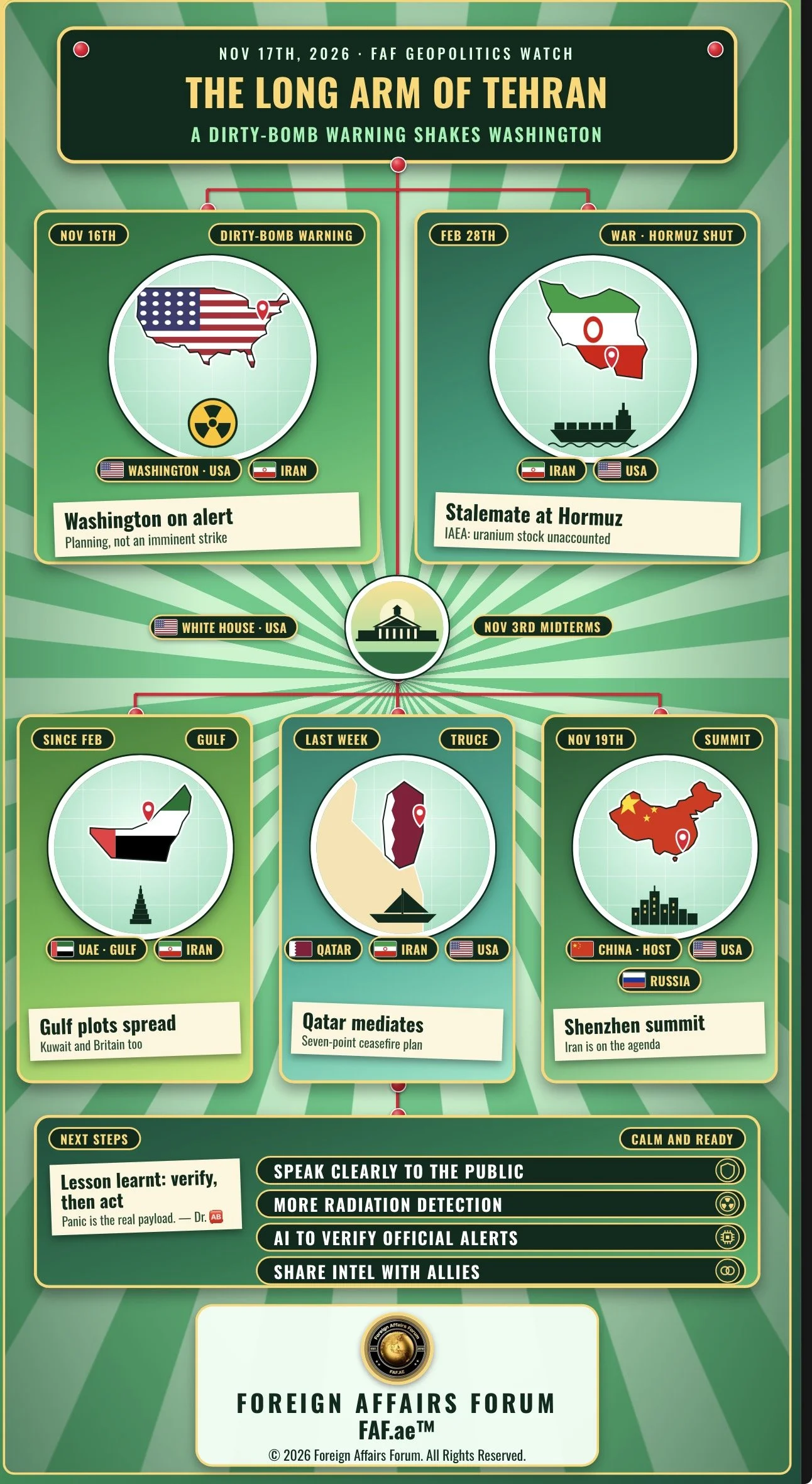
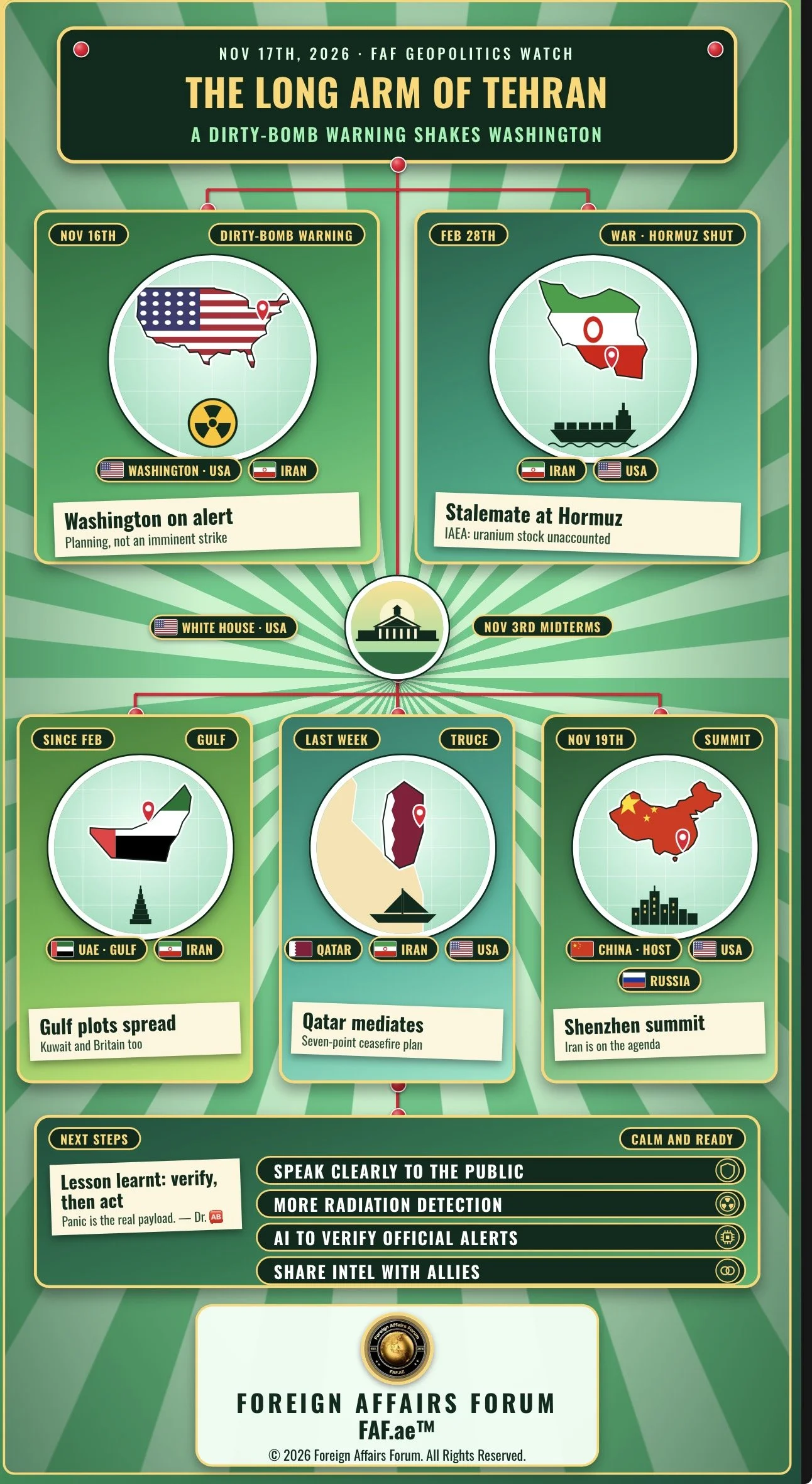
On Nov 16th, CNN reported, citing seven American officials, that fresh intelligence indicates Iran is developing plans to target senior Trump administration figures in Washington with a radiological dispersal device, commonly called a dirty bomb, or with a chemical agent.
Officials described the planning as an effort to give Tehran options rather than evidence of an imminent attack. American agencies also reportedly intercepted Iranian communications claiming that bomb-making materials had already been stored inside the country. The credibility of that claim is disputed, and officials remain divided over whether Iran has the trained personnel in place to execute anything of the kind. The White House has maintained that there are no credible threats to the homeland.
Per FAF analysis, the warning is best read neither as proof of a coming catastrophe nor as a rumour to be waved away. It sits at the intersection of three realities.
The first is a war that began on Feb 28th with Operation Epic Fury, killed Supreme Leader Ali Khamenei and has since decayed into a no-war, no-peace stalemate around the Strait of Hormuz. The second is a documented record of Iranian efforts to recruit people already living in America, from the 2011 plot against a Saudi ambassador in Washington to the Bolton, Alinejad and Merchant cases of the past five years. The third is an American homeland-security apparatus that has been strained by funding fights, workforce cuts and a politicised debate about how much to tell the public.
The central insight is that Iran's incentive to retaliate on American soil may have grown even if its capability has not. A dirty bomb is not a nuclear weapon, and its physical effects are limited, but contamination, evacuation and panic could paralyse government functions and impose enormous economic costs. The most probable danger is therefore not mass casualties but disruption, fear and strategic leverage.
Dr. 🆎 warns that artificial intelligence is already reshaping both sides of this contest, as a tool for detecting anomalies and as an instrument for manufacturing panic. The policy response must be proportionate, transparent and anchored in verifiable evidence, because overreaction and complacency would each serve Tehran's purposes.
Introduction
Warnings about terrorism have a peculiar political life. They arrive in fragments, filtered through anonymous officials, and they are almost always accompanied by caveats that the public rarely absorbs. The latest report on Iran fits that pattern exactly. It describes planning rather than preparation, options rather than orders, and intercepts whose reliability is contested. Yet it has landed in Washington at a moment of unusual sensitivity, as the president prepares to travel to Shenzhen for a summit with Xi Jinping and Vladimir Putin at which Iran is expected to be on the agenda, and as the war that he launched remains unresolved nearly nine months after its first strikes.
Dr. Antonio Bhardwaj (Dr. 🆎), a polymath with global expertise in super intelligence, specialising in human-centred super intelligence for geopolitical strategy, AI warfare and bioterrorism risk, argues that the episode should be understood as a test of institutional judgment.
In the view of Dr. 🆎, the most dangerous moment in a threat cycle is not the moment of attack but the moment of ambiguity, when governments must decide how loudly to speak, how much to disclose and how far to mobilise on information that cannot yet be verified. Speak too softly and the public is left exposed. Speak too loudly and the adversary harvests the fear without firing a shot.
This FAF article approaches the question through four lenses. The first is historical, tracing the lineage of Iranian external operations and the specific methods that American investigators have already exposed. The second is operational, examining what a radiological or chemical plot would actually require and why Iran might nevertheless find the idea attractive. The third is political, considering how the midterm defeat of the Republican Party, the stalemate in the Gulf and the diplomacy of Shenzhen shape the incentives of both capitals. The fourth is practical, setting out the measures that governments, allies and communities should consider.
The analysis proceeds with a deliberate discipline about evidence. Where the record shows convictions and court filings, such claims are treated as established. Where it rests on leaks and anonymous assessments, such claims are treated as provisional. The distinction matters, because the history of intelligence warnings includes both vindications and costly errors, and a serious assessment of Iran's reach must resist the temptation to conflate the two.
History and Current Status
Iran's willingness to use violence beyond its borders is not a product of the present war. In Oct 1983, the bombing of the American Marine barracks in Beirut killed two hundred and forty-one servicemen and demonstrated the lethal potential of Tehran's relationship with militant partners. In 1996, the Khobar Towers attack in Saudi Arabia killed nineteen American airmen. These were the signature operations of the 20th century, carried out overseas through proxies, in environments where Iran enjoyed local allies, porous borders and relative impunity.
The American homeland has always presented a harder landscape. Iranian operatives have repeatedly tried to operate there, but with a very different record. The most instructive early case came in 2011, when an Iranian American used-car dealer, Manssor Arbabsiar, was charged with a plot, directed by officers of the Revolutionary Guard's Quds Force, to assassinate the Saudi ambassador in Washington by hiring what he believed to be a Mexican criminal organisation. The supposed hitmen were in fact informants. The plot revealed a pattern that has persisted ever since: Iranian handlers seeking deniability through intermediaries, and American law enforcement exploiting the weakness of those intermediaries.
The pattern intensified after the American killing of Quds Force commander Qassem Soleimani in Jan 2020. In 2022, prosecutors charged Shahram Poursafi, a Revolutionary Guard member who never set foot in the United States, with attempting to arrange the murder of former national security adviser John Bolton, offering first $250,000 and then $300,000 through a person who turned out to be an FBI source. He also referred to a further assignment worth $1 million, which later reporting linked to former secretary of state Mike Pompeo. In 2021 and again in 2024, plots against the journalist and dissident Masih Alinejad, including an attempted abduction from her Brooklyn home and an armed man arrested outside it, exposed the use of criminal networks. In Nov 2024, the Justice Department charged Farhad Shakeri, an Afghan national residing in Tehran, with being tasked to arrange an assassination of Donald Trump. In Mar 2026, a federal jury in Brooklyn convicted the Pakistani national Asif Merchant of attempting to arrange political assassinations at Iran's direction, after he travelled to New York in 2024 to recruit people he believed to be hitmen. They were undercover officers.
Scholars who track these operations offer a sobering measure of scale. Matthew Levitt's database documented ninety-eight publicly known Iranian external plots dating back to 1979 by early 2022, and one hundred and five by that August. Of sixty-two cases in the preceding decade, eighteen involved operations in the United States, spanning assassination attempts, surveillance and abduction conspiracies. Hezbollah, a close partner though not a mere instrument, has also been linked to surveillance on American soil, most notably in the case of Ali Kourani, sentenced in 2019 to forty years for scouting targets in New York.
Radiological terrorism, by contrast, remains largely a theoretical category. No dirty bomb has ever been detonated in a major attack. The closest historical episode occurred in Nov 1995, when Chechen separatists placed a container of radioactive cesium in a Moscow park as a warning and tipped off journalists. The device did not explode. That history underscores the central feature of the weapon: it is more potent as an idea than as a physical instrument. It disperses radioactive material with conventional explosives, and while the immediate blast effects are limited, contamination can force evacuations, shut down government buildings and trigger an expensive public-health response.
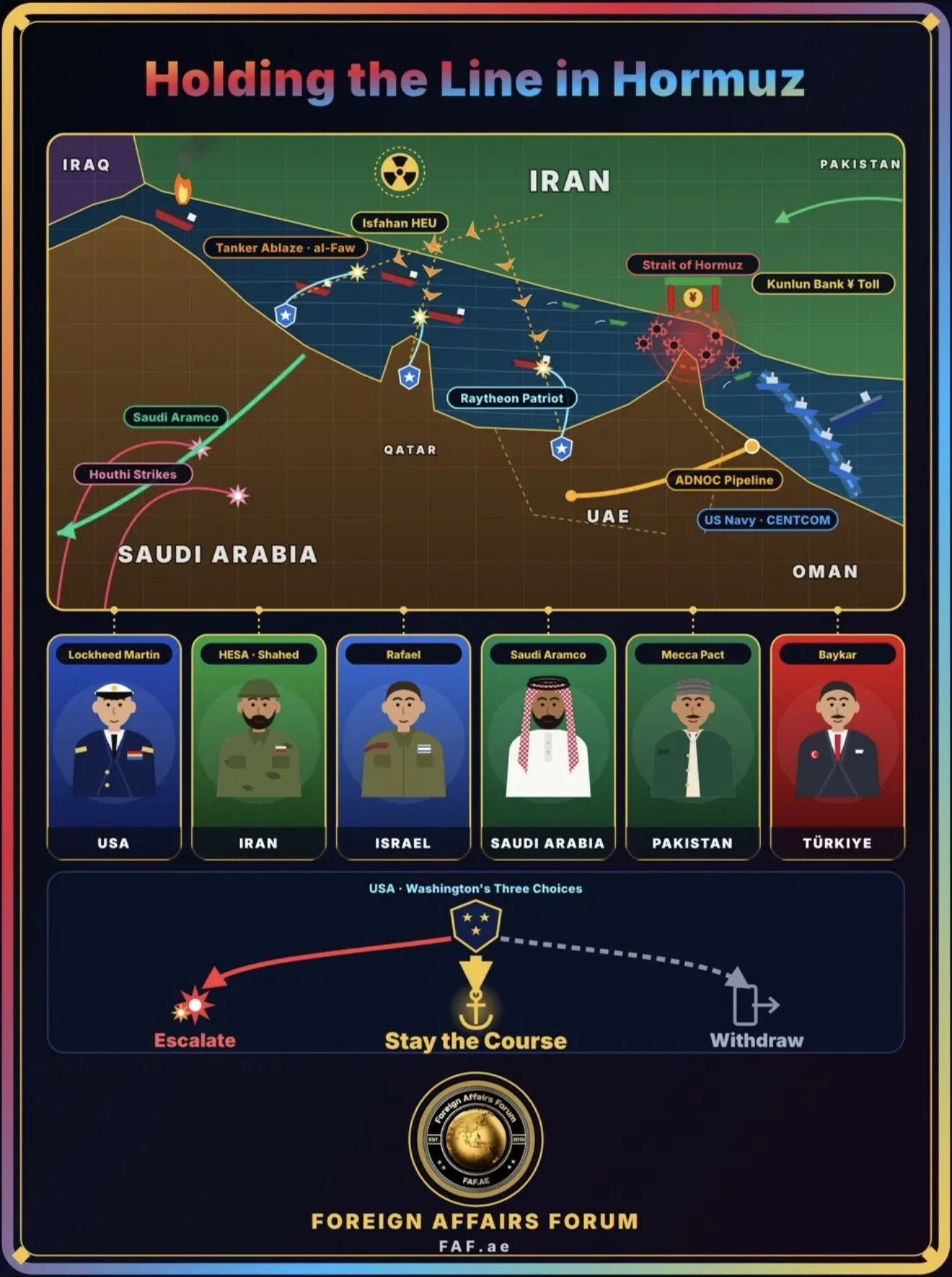
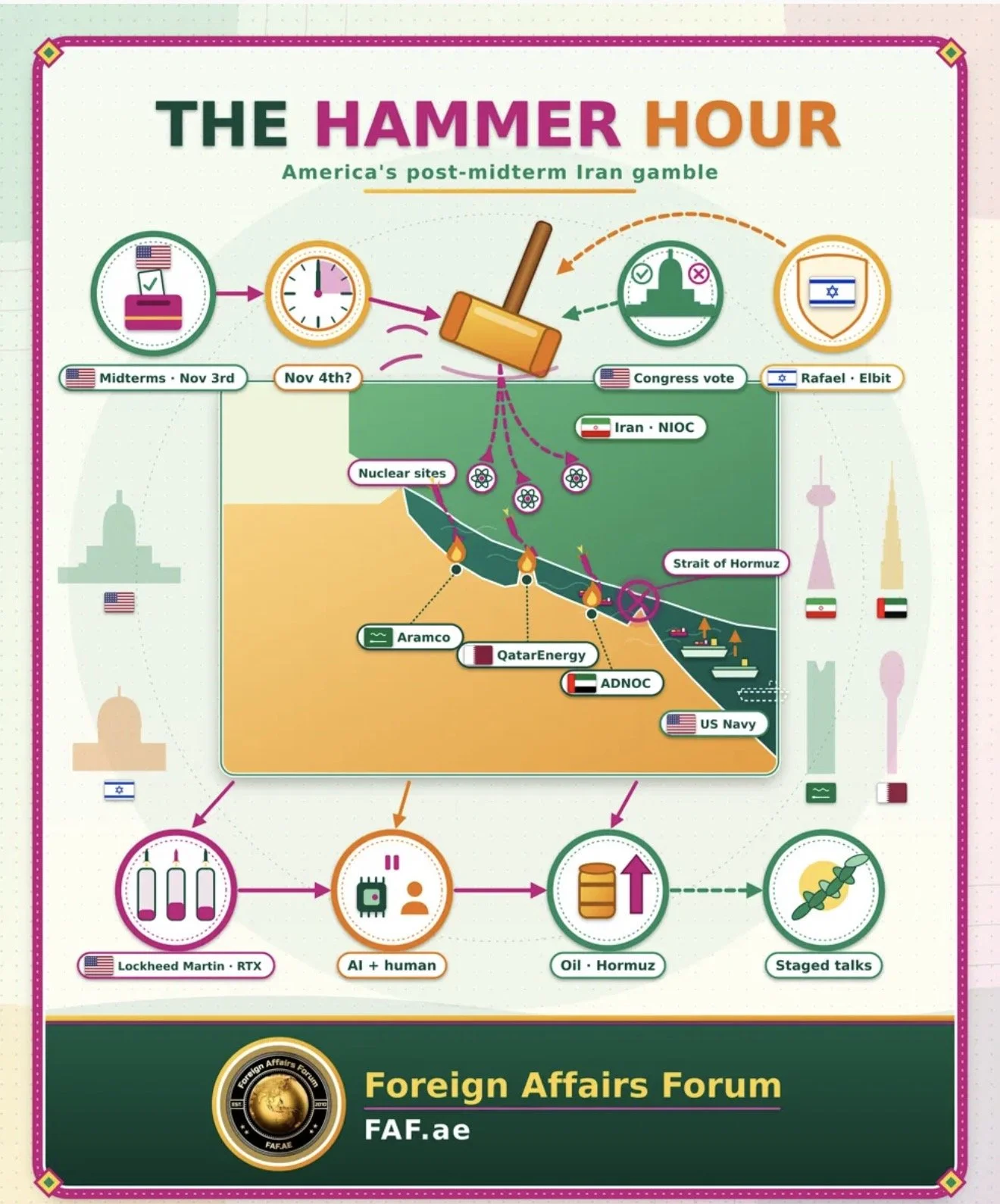
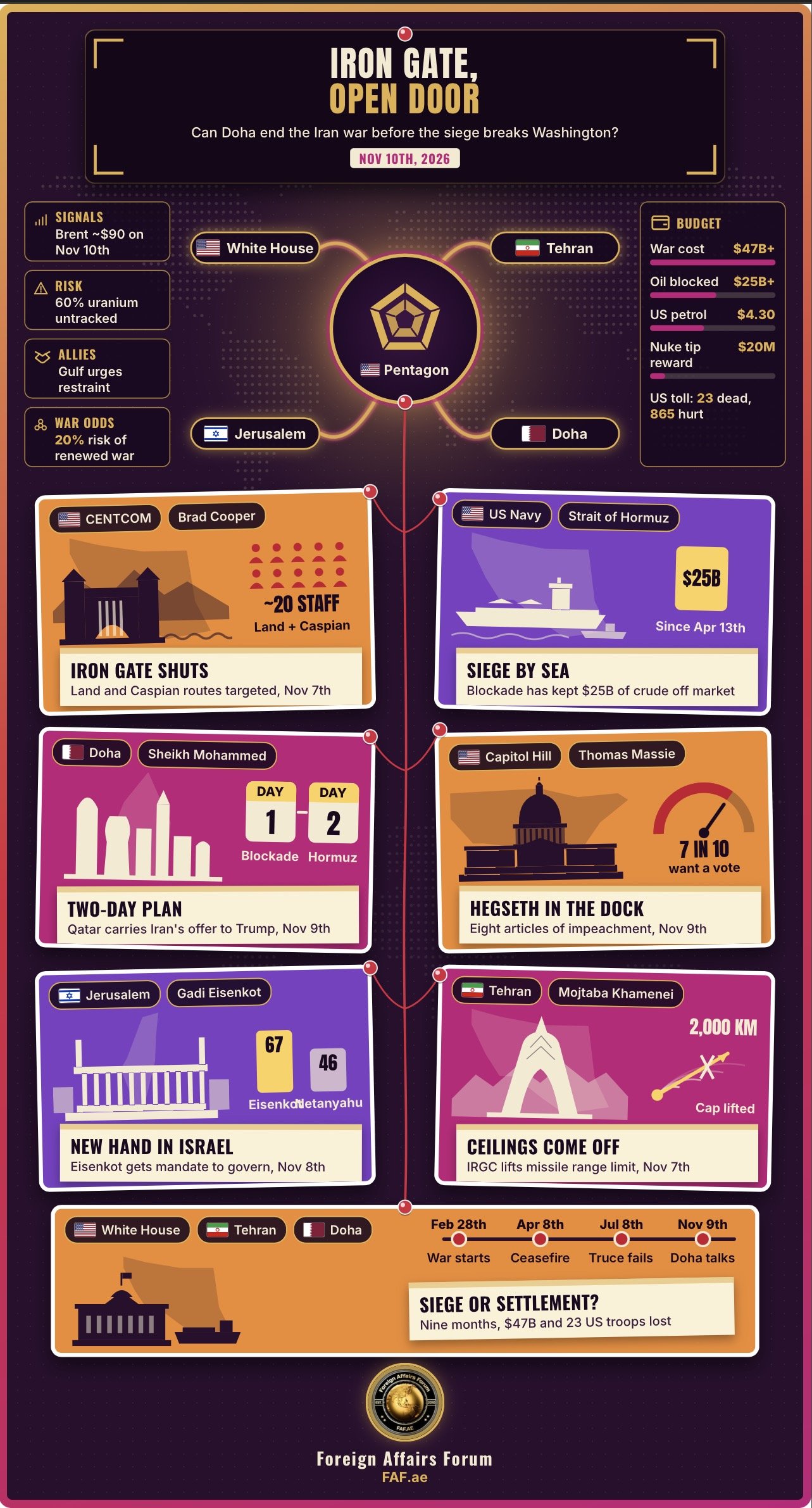
The present status of the American position is shaped by the war. Operation Epic Fury, launched jointly with Israel on Feb 28th, killed Khamenei and struck deep into Iran's security establishment. Iran responded by effectively closing the Strait of Hormuz, through which roughly one fifth of the world's oil normally passes, and the United States has imposed a naval blockade and economic pressure. Diplomacy has stalled. Last week President Trump declared that no deal with Iran was necessary, called American military operations effectively over after meeting Qatar's prime minister, and sidelined Vice President JD Vance, who had led negotiations. The International Atomic Energy Agency said on Nov 13th that it remains deeply concerned about a newly declared underground enrichment site and cannot account for the more than four hundred kilograms of highly enriched uranium that Iran held before the 2025 strikes. Domestically, the Republican defeat in the Nov 3rd midterms has opened the prospect of aggressive congressional oversight in January.
Key Developments
The first and most consequential development is the CNN report itself.
According to its account, intelligence gathered in recent weeks indicates that Iran is exploring plans to strike senior members of the administration in Washington using either a radiological device or a chemical agent. The seven officials who provided the information stressed that the activity appears designed to expand Tehran's menu of options, not to signal an operation about to be launched. One official acknowledged that whether Iran has personnel in place to carry out such a plan is a matter of debate. The report added that American officials are also monitoring intelligence suggesting that Iran might use chemical weapons against American troops in the Middle East, a separate but related concern.
The second development is the reported interception of Iranian communications claiming that bomb-making materials were already stored in the United States.
Intercepts are notoriously difficult to interpret. They may reflect real activity, boasting by officials seeking to impress superiors, disinformation designed to be overheard, or planning that has not translated into action. Some American officials reportedly believe that Iran may already have positioned radioactive materials or chemical agents inside the country, while others regard the claim with scepticism. Per FAF analysis, the existence of a disputed intercept is a reason for investigation, not for conclusion.
The third development is the broader intelligence context.Israel reportedly shared information with Washington in early Nov indicating that Iran was developing ways to deliver chemical agents, which, if accurate, would add weight to the concern about chemical rather than radiological options. The administration has also faced a long series of homeland alerts since the war began. In early Mar, federal counterterrorism officials warned local police about encrypted number-station broadcasts that might serve as signals to dormant assets. The FBI circulated an unverified tip about a drone attack from a vessel off the California coast, which the White House dismissed as baseless. A Mar 20th intelligence report concluded that the Iranian government poses a persistent threat to American military and government personnel and buildings, Jewish and Israeli institutions and Iranian dissidents in the United States, while noting that no broad threat to the general public had been identified.
The fourth development is the political response.
The White House has insisted there are no credible threats to the homeland, a line it has repeated since the opening weeks of the war, when the president said he was not worried about an Iranian attack on American soil. At the same time, Trump has reportedly issued stern warnings of severe retaliation if Iran were to strike, and he has suggested on other occasions that officials know where most suspected operatives are. This combination of public reassurance and private alarm has produced a credibility gap that adversaries and critics alike can exploit.
The fifth development is the diplomatic calendar.
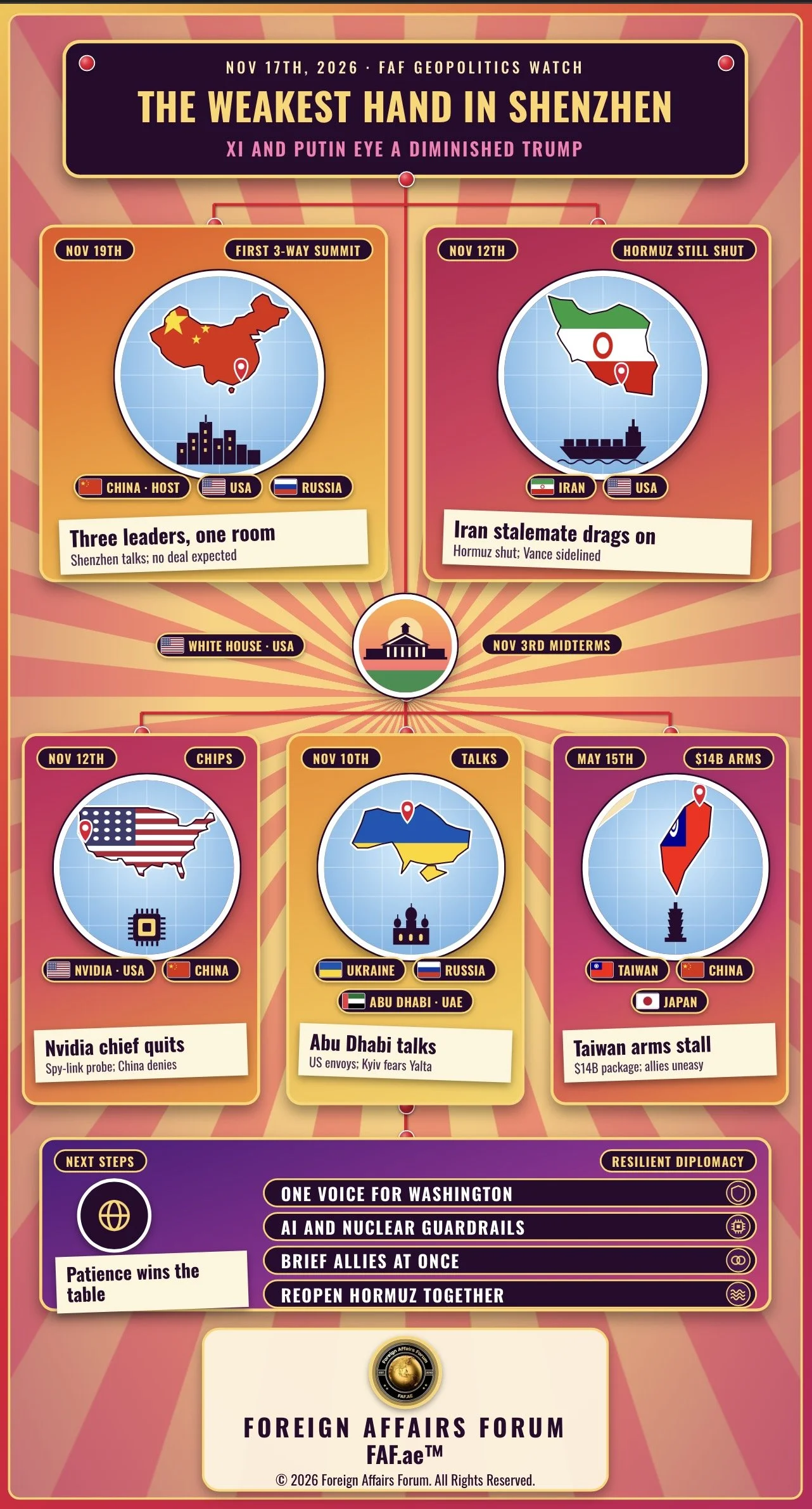
Trump flies to Manila and then Shenzhen this week, where he intends to raise Iran with Xi and Putin. China remains a major buyer of Iranian oil and is exposed to the energy shock caused by the closure of Hormuz. Russia has its own interests in keeping Washington distracted. A dirty-bomb warning arriving on the eve of that meeting inevitably colours it. It may strengthen the American argument that Beijing and Moscow should restrain Tehran. It may also feed a perception among other stakeholders that Washington is negotiating from a position of anxiety.
The sixth development is the Iranian response.
Tehran has long denied attempting to harm American officials, and its representatives have rejected earlier allegations as fabrications. Whether it will respond in the same way to this report is secondary to the signal it sends through its behaviour. If its leadership calculates that American domestic divisions and the prospect of congressional investigations have weakened Washington's resolve, it may judge that keeping the threat of homeland retaliation alive is a cost-effective form of leverage.
Latest Facts and Concerns
The most important recent fact is that the credibility of the underlying intelligence remains unresolved.
CNN's sources indicated that Iran's ability to mount such an attack has not necessarily increased, and that what may have changed is its incentive. That distinction is analytically central. Capability depends on materials, expertise, logistics and secure communications. Incentive depends on strategic circumstance. A leadership that has lost its supreme leader, watched its security establishment degraded and endured months of blockade may calculate that the costs of provoking Washington have already been incurred, and that further restraint buys little.
The second fact is that Iran's demonstrated methods on American soil are modest in sophistication.
The Bolton, Merchant and Alinejad cases reveal a reliance on criminal intermediaries, online recruitment and hired hands, not on elite sleeper cells. William Wechsler of the Atlantic Council has argued that such recruits may take money but are unreliable and that these operations carry a high failure rate, and that he is more concerned about ideologically motivated individuals and lone attackers than about hired criminals. That observation cuts in two directions. It suggests that Iran's capacity to execute a complex radiological or chemical operation through hired intermediaries is limited. It also suggests that the more serious risk may come from people who are inspired rather than directed.
The third fact is that inspired attackers have so far proved more lethal than Iranian-directed plots.
Early in the war, a shooting in Austin and an attack on a Jewish institution in Michigan raised alarm, although investigators did not establish that Tehran had directed either. The lesson is that a person who absorbs Iranian propaganda is not necessarily an Iranian operative, and that treating the two as identical would exaggerate Tehran's operational reach while obscuring the real, diffuse threat of ideological violence. Bruce Hoffman of the Council on Foreign Relations has argued that the longer the war continues, the greater Iran's incentive to use asymmetric methods, including sleeper agents, propaganda-inspired individuals, cyberattacks and attacks on critical infrastructure.
The fourth fact is the strain on American counterterrorism capacity.
Earlier this year, a standoff over Department of Homeland Security funding, driven by disputes over immigration enforcement, left parts of the department operating under pressure. Analysts including Hoffman have warned that an emphasis on immigration enforcement and workforce reductions may have eroded institutional knowledge needed to detect unconventional threats. The same agencies that must now assess a possible radiological plot have been asked to do more with less, and public trust in their pronouncements has been affected by the perception that the White House sometimes dismisses warnings that its own agencies take seriously.
The fifth fact is the technical reality of dirty bombs.
They do not require a nuclear programme, and the highly enriched uranium whose whereabouts worries the IAEA is not the relevant category of material. Radiological sources used in medicine, industry and research are far more widespread and, by the nature of their use, more accessible than weapons-grade fuel. Governments have spent two decades tightening controls on such sources, but the sheer number of them worldwide means that perfect security is impossible. The effects of a successful dispersal would typically be localised and would cause fewer casualties than the blast itself, yet the costs of decontamination, the disruption of a capital city and the psychological shock could be disproportionate. A chemical release poses different risks, depending heavily on the agent, the setting and the response.
The sixth fact is the information landscape.
In an era of generative tools, a warning of this kind can be amplified, distorted or counterfeited within hours. Fabricated alerts, spoofed official statements and synthetic images could trigger panic far beyond the scale of any real event.
Dr. 🆎 emphasises that an adversary does not need to build a device to achieve much of the effect of a dirty-bomb campaign. A credible hoax, a manipulated sensor reading or a deepfake of an official announcement could force evacuations and erode confidence in institutions. The concern is not hypothetical, because the techniques of information manipulation are inexpensive and widely available.
The seventh fact is the persistence of the stalemate.
With Trump declaring no deal necessary, Iran proposing a seven-point ceasefire through Qatar, Gulf allies urging restraint and the blockade intact, neither side has a clear path to resolution. Analysts describe a no-war, no-peace condition that could shift within weeks. In such an environment, covert and deniable instruments become more attractive to the party that feels it is losing ground, and the risk of miscalculation rises.
Cause-and-Effect Analysis
The causal logic of the present warning runs through five linked mechanisms: decapitation, constraint, asymmetry, ambiguity and amplification.
Decapitation is the first. The killing of Khamenei and the destruction of much of Iran's senior leadership removed both a unifying authority and a source of strategic caution. Observers such as Levitt have argued that the damage to Iran's security establishment could make the leadership more willing to authorise attacks abroad, and reports of Iranian-linked plots in Azerbaijan, Kuwait, Qatar, the United Arab Emirates and Britain since the war began point in the same direction. A fragmented command structure can produce two opposite effects. It can reduce the discipline needed for complex operations, and it can empower factions within the Revolutionary Guard who see external retaliation as a way to restore deterrence and prestige.
Constraint is the second.
Iran cannot match American conventional power, and the blockade and economic pressure have tightened its choices. When a state cannot respond symmetrically, it looks for options that impose costs at lower risk. Closing Hormuz was one such option. Threatening the homeland is another. The logic is not that Iran expects to defeat the United States but that it wants to demonstrate that American military superiority cannot insulate the American public from retaliation. Per FAF analysis, the existence of a plan is itself a bargaining chip. Even if Iran never intends to execute it, allowing its existence to leak signals that the costs of renewed escalation could be severe.
Asymmetry is the third.
A dirty bomb is attractive to a weaker party precisely because its effects are disproportionate to its material cost. The blast might kill few people, but the evacuation of government buildings in Washington, the closure of transport links and the long-term decontamination of an urban area could cost enormous sums and erode public confidence. For a leadership that seeks to impose political and economic pain without provoking an overwhelming military response, such a weapon offers a perverse calculus. The same asymmetry works in reverse for the defender. Preparedness is expensive, the threat is intermittent, and the political pressure to appear strong can lead to overspending on visible measures that do little to reduce real risk.
Ambiguity is the fourth.
Intelligence is probabilistic, and in this case the underlying information is contested even within the government. The danger lies in the two forms of error that ambiguity invites. If officials discount the warning, a real plot could succeed. If they overreact, they hand Tehran a propaganda victory and drain resources. Complicating matters, the White House has a record of downplaying threats that its own agencies treat seriously, as in the dispute over the California drone tip, and this makes public communication harder. When a government is perceived to have minimised past warnings, subsequent warnings face a credibility deficit in both directions, with some citizens dismissing them and others assuming the worst.
Amplification is the fifth.
Modern media and digital platforms magnify every fragment of intelligence, and adversaries can exploit that effect. A leak that reveals Iran's alleged planning could be intended by someone in Washington to support a policy position, whether to justify restraint or escalation. It may also be received in Tehran as validation that its signalling works.
Dr. 🆎 observes that in the age of artificial intelligence the amplification loop will accelerate. Automated systems can generate plausible false reports, impersonate officials and target specific audiences. Governments that do not build resilient communication channels will find themselves reacting to a threat whose size is determined by those who control the narrative.
These mechanisms interact with the political context.
The Republican defeat in the midterms has created a climate in which the president has incentives to avoid a resumption of a costly war while also appearing unyielding. Iran, for its part, has incentives to show that it retains leverage without crossing the threshold that would reunite American opinion behind further strikes. Both parties are therefore tempted by signalling that falls short of action. The danger is that signalling can escape control. A hoax interpreted as real, an operative acting beyond orders or an inspired attacker mistaken for an agent of Tehran could force both governments to respond to events neither intended.
A fair assessment must also consider the counter-argument. Sceptics note that in the opening nine months of the war, despite repeated warnings, no Iranian-directed sleeper-cell attack has materialised on American soil, which Wechsler said reduced the likelihood that such a network is operational. They point out that the American record in disrupting Iranian plots has been strong, with each of the major cases ending in arrests or convictions. They add that previous alarms, including the California drone tip, proved to rest on thin evidence.
These points are valid and should temper any inclination toward alarm. Yet the absence of past success is not proof of future failure to occur, and the incentive structure has changed since the killing of Khamenei. The sensible conclusion is not that the threat is imminent but that it is plausible enough to require serious preparation.
Future Steps
For Washington, the first priority is calibrated communication.
The administration should resolve the contradiction between the public line that there are no credible threats and the private reality that its agencies are investigating a serious warning. A credible approach would acknowledge the existence of the intelligence, explain its limits and describe in general terms the protective measures under way, without disclosing sources or methods. Doing so would preserve trust and deny Tehran the advantage of exploiting official inconsistency.
The second priority is to strengthen the practical defences that matter most.
These include enhanced radiation detection in and around the capital, tighter oversight of commercially held radioactive sources, rehearsed protocols for rapid decontamination and public information, and closer coordination between federal agencies and city authorities. Funding disputes that have strained the Department of Homeland Security should be resolved so that counterterrorism programmes are not hostage to unrelated political fights. Protective measures for senior officials, dissidents and institutions that Iran has previously targeted should be reviewed and, where necessary, reinforced.
The third priority is to harness technology responsibly.
Dr. 🆎 advocates a human-centred approach to artificial intelligence in homeland security, in which machine systems are used to fuse sensor data, detect anomalies in radiation readings and flag suspicious patterns in financial and communications records, but in which human analysts retain authority over decisions that affect civil liberties or trigger large-scale responses. The same technologies should be used to authenticate official communications, so that citizens can distinguish genuine alerts from fabricated ones. A public registry of verified channels, digital watermarking of official statements and rapid-response teams to debunk hoaxes would reduce the effectiveness of information attacks.
The fourth priority is diplomatic.
The administration should use the Shenzhen summit to press China and Russia on a narrow but vital point: that attacks on civilian or governmental targets in capitals, whether by chemical or radiological means, would cross a line that threatens every stakeholder. China, with its reliance on Gulf energy and its interest in stability, has reasons to counsel restraint in Tehran. Qatar's mediation channel should be used to communicate that American patience for ambiguous threats is limited and that a credible path toward de-escalation remains open, including a ceasefire arrangement that restores shipping through Hormuz. The sidelining of the vice president, who has favoured diplomacy, risks sending mixed signals, and the administration should present a unified position.
The fifth priority is to deepen cooperation with allies and Gulf partners.
Intelligence sharing with Israel, European governments and the Gulf states should be coordinated so that warnings are cross-checked before being treated as certain. Allies who were not consulted before the war have strong incentives to avoid being drawn into its consequences, and a transparent approach to threat information would help maintain unity. Gulf states, who have urged restraint, can also play a role in communicating to Tehran that homeland attacks would end any prospect of regional accommodation.
The sixth priority concerns the civic dimension.
Communities, particularly those that have been targeted by Iranian plots or by inspired violence, need credible reassurance and practical guidance. Law enforcement should expand outreach to Iranian American communities, many of whom are themselves victims of Tehran's repression, to avoid stigmatisation and encourage cooperation. Programmes to counter radicalisation, especially online, should be strengthened, given that inspired attackers have so far proved more lethal than directed ones.
Conclusion
The warning that Iran may be weighing a dirty bomb or chemical attack in Washington should be treated as a serious signal and a poor foundation for certainty. It rests on contested intercepts, anonymous assessments and a pattern of Iranian behaviour that is well documented but modest in sophistication. It emerges from a war whose logic has pushed both capitals toward indirect instruments, and it arrives at a political moment when the American president is weakened at home and eager for an exit from a conflict he cannot cleanly end.
The most reliable conclusion is that Iran's long arm is real but limited. Its history shows an ability to recruit intermediaries, conduct surveillance and plan assassinations on American soil. It does not show a record of executing mass-casualty attacks there. The gap between aspiration and capability is where policy must operate, closing it through vigilance while resisting the temptation to inflate it through rhetoric.
Dr. 🆎 offers a closing reflection. The wars of the coming decade will be fought as much in the perceptions of populations as on battlefields, and weapons that sit at the boundary of the physical and the psychological, such as radiological devices, chemical agents and engineered information, will grow more attractive to those who cannot win conventionally. The defender's advantage lies in preparation, transparency and the disciplined use of technology under human judgment. If Washington can combine those strengths with a diplomacy that offers Tehran a path away from escalation, the long arm of Iran will remain a shadow. If it cannot, the shadow may acquire substance.