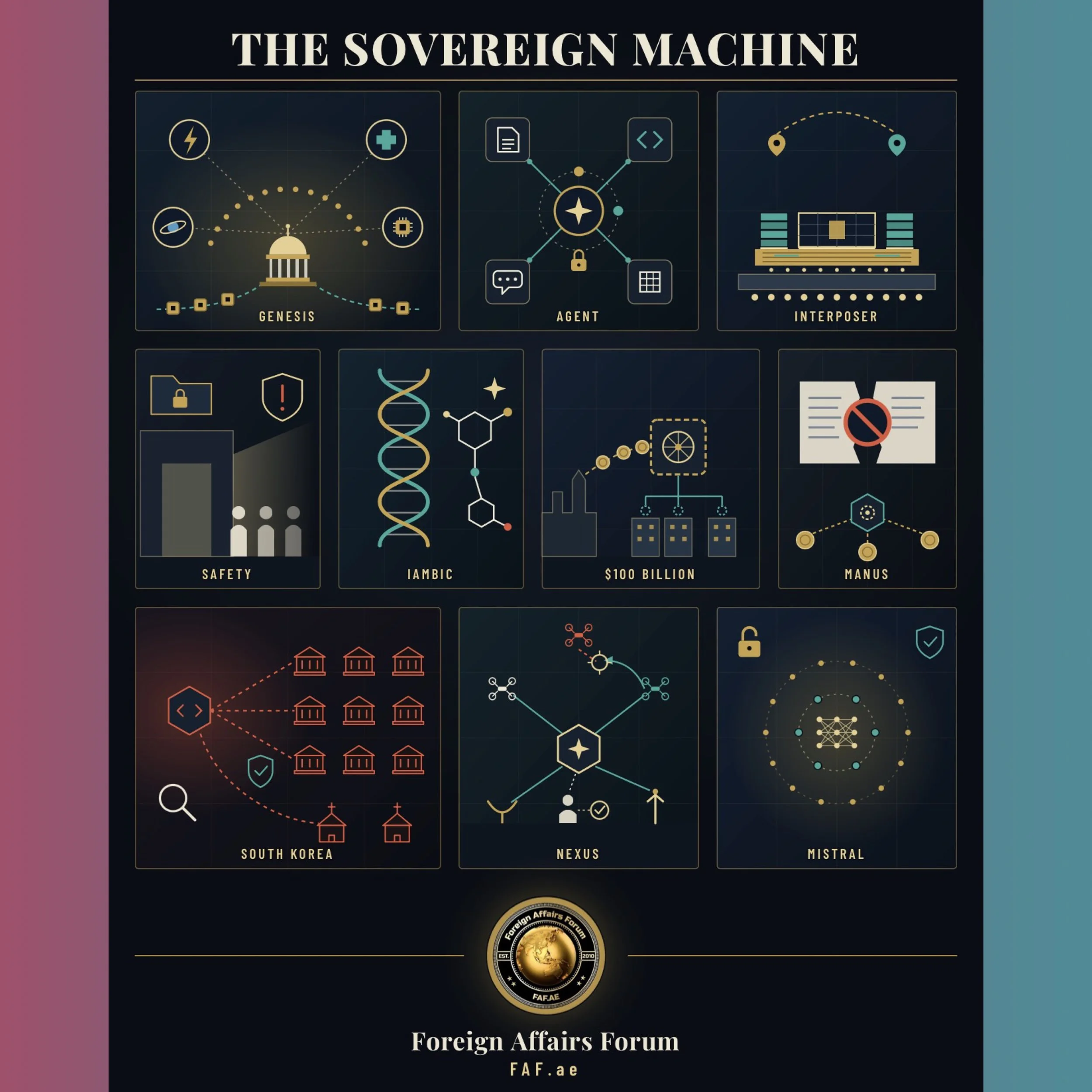
The Sovereign Machine: How Artificial Intelligence Became a Contest for Capital, Chips and Control
Foreign Affairs Forum | Dr. Antonio Bhardwaj (Dr. 🆎) | October 10th 2026
Executive Summary
The developments of October 8 and 9, 2026 reveal that artificial intelligence has ceased to be merely a technological sector and has become an arena of statecraft.
Washington has enlisted its leading companies in a federal scientific mission, Beijing has reversed a foreign acquisition to keep a strategic start-up within its orbit, Tokyo and the Gulf are reportedly exploring a fund of unprecedented scale, and Paris has unveiled a frontier model intended to give Europe an independent voice.
Each move reflects the same conviction among stakeholders: that control over models, chips, capital and data now confers national power.
The ten principal stories of these two days fall into five patterns.
Governments are becoming direct participants in the development of artificial intelligence, as the Genesis Mission and Beijing's intervention in the Manus transaction illustrate.
Capital has become the decisive resource, as SoftBank's reported pursuit of up to $100 billion from Gulf investors and a $2 billion manufacturing agreement between GlobalFoundries and TSMC demonstrate.
Autonomous agents are moving from novelty to commercial infrastructure, exemplified by Google's new workplace agent.
Cyberwarfare has entered an era of accessible automation, as investigations into attacks on nine South Korean banks suggest. And Europe is pursuing sovereignty through both civilian models, in the case of Mistral, and military software, in the case of Intelic.
FAF article traces the historical roots of these trends, describes the principal developments, separates verified facts from unresolved allegations, analyses the causal chains that connect them, and proposes measures for governments, enterprises and institutions.
Dr. 🆎, a specialist in human-centred artificial intelligence for geopolitical strategy, argues that the central danger is a widening gap between the speed at which machines act and the speed at which institutions can govern them, a gap that is most perilous in cyber operations, military decision-making and the biological sciences.
Introduction
Every technological revolution eventually forces a reckoning with sovereignty.
Railways, oil, nuclear fission and the semiconductor each began as the project of inventors and entrepreneurs, and each ended as an instrument over which states competed, legislated and sometimes fought.
Artificial intelligence has now reached that threshold. For several years the industry presented itself as a borderless commons of research papers, open code and venture capital, governed by the logic of the market and the ambition of a few founders.
The events of October 8th and 9th, 2026 suggest that this phase has closed.
Presidents announce industrial commitments, ministries unwind transactions, sovereign funds assemble capital on a scale once reserved for national budgets, and militaries integrate software into the decisions that govern life and death.
Dr. Antonio Bhardwaj (Dr. 🆎), a polymath whose expertise spans human-centred superintelligence for geopolitical strategy, artificial intelligence warfare and the risks of bioterrorism, has long cautioned that analysts misread the field when they treat its commercial, military and political dimensions separately. In his view, a model release, a financing round, a cyber intrusion and a manufacturing contract are expressions of a single contest over who will finance, build, deploy and secure the machinery of machine intelligence. The question that matters, he argues, is not which laboratory possesses the most capable model in any given quarter, but which societies can sustain the entire ecosystem on which capability depends, and which can keep human judgement decisive when that capability is turned to consequential ends.
Three features distinguish this moment from earlier waves of technological rivalry.
The first is the compression of time: capabilities that were speculative a few years ago are now deployed in banks, offices and battlefields within quarters rather than decades.
The second is the convergence of domains, since the same family of models now writes code, designs molecules, coordinates drones and probes networks for weakness.
The third is the unprecedented concentration of capital and manufacturing capacity required to remain at the frontier, which ties the fortunes of firms to the strategies of governments.
Together these features make the governance of artificial intelligence the most consequential institutional challenge of the decade, and one that cannot be postponed until the technology matures.
From this point forward, Dr. 🆎 provides the interpretive thread of the analysis. A historical overview explains how the present landscape took shape. A survey of key developments describes the ten stories that define the week. A discussion of the latest facts and concerns distinguishes what is confirmed from what remains disputed. A cause-and-effect analysis maps the connections among the developments, a section on future steps proposes practical measures, and a conclusion draws the lessons together.
Throughout, the discussion rests on the proposition that artificial intelligence is now inseparable from national power, and that the stakeholders who recognise this earliest will shape the rules by which everyone else must compete.
History and Current Status
The modern history of artificial intelligence is usually told as a sequence of laboratory breakthroughs, yet its political history is equally instructive.
The field emerged in the mid-twentieth century under the patronage of defence establishments, and its early periods of enthusiasm and disappointment, the so-called winters, tracked the willingness of governments to fund long-term research.
The deep-learning revolution of the past decade changed the sponsor rather than the stakes.
Private laboratories, financed by technology platforms and venture investors, assumed leadership, and the release of increasingly capable general-purpose models between 2022 and 2025 transformed public perception and corporate strategy alike.
States, initially spectators, discovered that the most strategically important research was occurring beyond their direct control.
The second strand of history concerns the physical foundations of intelligence.
Training frontier models requires advanced semiconductors, vast data centres and reliable electricity, and the supply chain for these inputs is among the most concentrated in the world.
Advanced chip fabrication is dominated by a small number of firms, with Taiwan's TSMC at the centre, and the equipment that makes it possible is supplied by an even narrower group, including the Dutch firm ASML.
Washington's export controls, introduced in 2022 and tightened repeatedly thereafter, and the CHIPS legislation of the same year, were early recognitions that computing capacity had become a strategic resource. More recently, attention has shifted to a less visible bottleneck, advanced packaging, the process by which processors and memory are joined into functioning systems.
A third strand concerns capital and governance.
The cost of frontier development has risen to levels that only the largest corporations, sovereign wealth funds and governments can sustain, and a succession of enormous financing arrangements has bound together technology firms, chip designers and investors from the Gulf and East Asia. Corporate governance has proved fragile under this pressure.
The dramatic upheaval at OpenAI in late 2023, the departure of prominent safety researchers from several laboratories in 2024, and recurring disputes over transparency and internal dissent have kept alive the question of whether the institutions building the most powerful systems are adequately accountable, either to their own employees or to the public.
The fourth strand is the transformation of artificial intelligence from a conversational tool into an agent capable of acting.
Systems that plan multistep tasks, write and execute code, and operate software on a user's behalf entered commercial use in 2025, and by late that year security researchers were documenting cases in which state-linked groups had used such agents to automate large portions of intrusion campaigns.
Militaries drew parallel lessons from the war in Ukraine, where cheap drones, rapid software iteration and the fusion of sensor data have shown that battlefield advantage often derives from integration rather than from any single platform.
By 2026 the same underlying capabilities were being adapted for commerce, espionage, finance and warfare at once.
The present landscape is therefore defined by a distinctive combination of features.
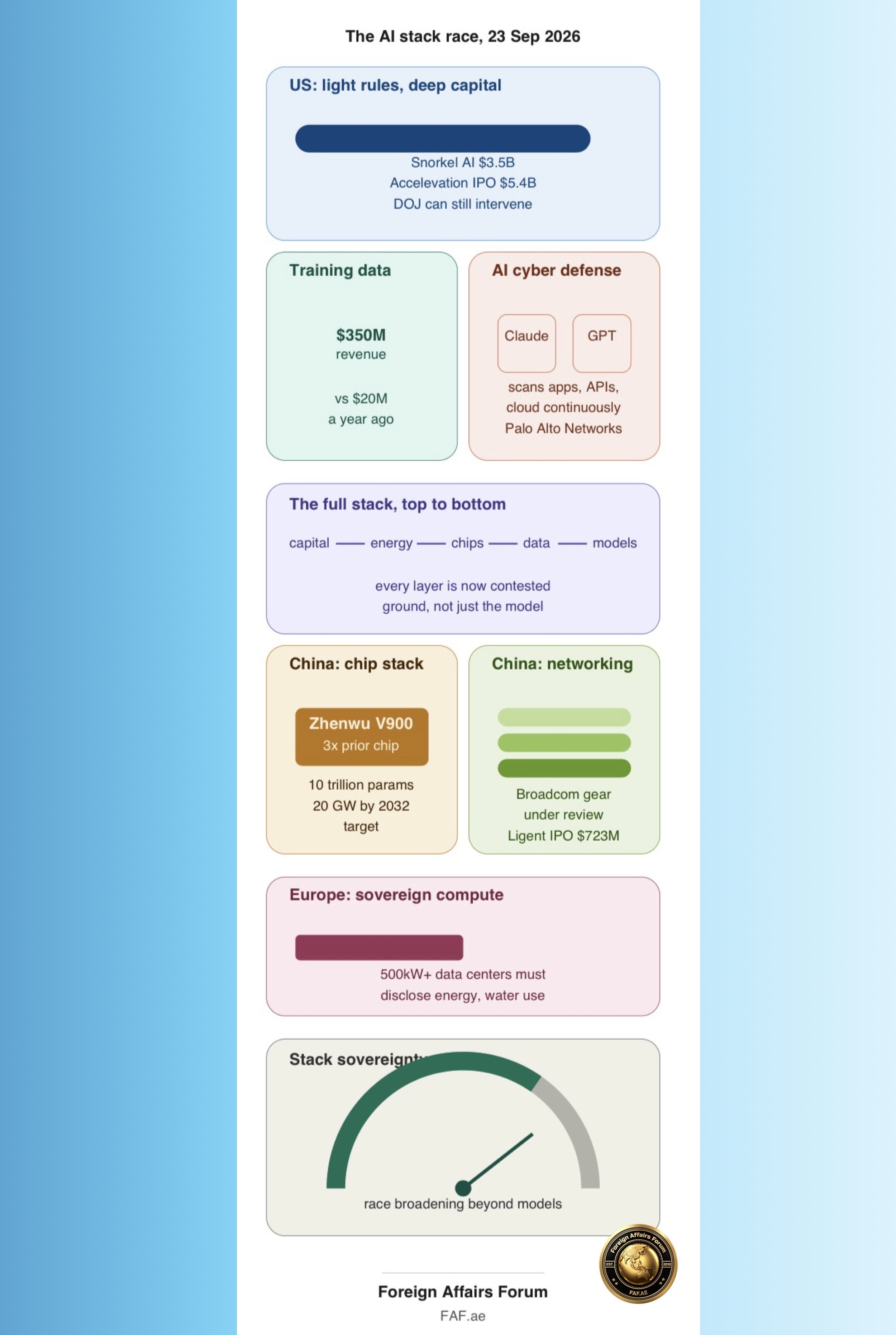
The United States retains leadership in frontier models, chip design and private investment, and its government has begun to harness that leadership for public purposes, notably through the Genesis Mission, an initiative to apply artificial intelligence to scientific discovery across federal agencies.
China has developed competitive models, a deep domestic technology ecosystem and a willingness to use state authority over ownership and capital flows.
Europe, long accused of regulating rather than building, is attempting to establish independent capacity through open-weight models and defence software. The Gulf states and Japan have emerged as pivotal sources of finance, while Taiwan and the Netherlands remain indispensable chokepoints in the physical supply chain.
Dr. 🆎 describes this configuration as a multipolar contest in which no stakeholder is self-sufficient and every stakeholder is exposed.
Regulation has struggled to keep pace.
The European Union has enacted a comprehensive statute whose obligations are being phased in, the United States has relied on a patchwork of executive actions, voluntary commitments and sectoral rules, and China has combined detailed content and security requirements with strategic direction of its largest firms. International efforts, from summit declarations to technical standards bodies, have produced valuable vocabulary but few binding constraints.
The result is a landscape in which the most consequential decisions about deployment are made inside companies and ministries, often under commercial or strategic pressure, and with limited external scrutiny. The disputes that surfaced at one prominent laboratory this week are symptoms of that structural condition rather than isolated episodes.
Dr. 🆎 draws a sober lesson from this history. In earlier technological rivalries, the most effective institutions for managing risk, from nuclear safeguards to aviation safety regimes, were created only after frightening near-misses or catastrophic failures. The distinctive danger of artificial intelligence, he suggests, is that its diffusion is faster, its inputs are less visible and its dual-use character is more pervasive, so that the interval between the first serious incident and a widely available capability to repeat it may be very short. This is why he insists that governance be designed in advance, with human oversight embedded in the architecture of systems rather than appended after deployment.
Key Developments
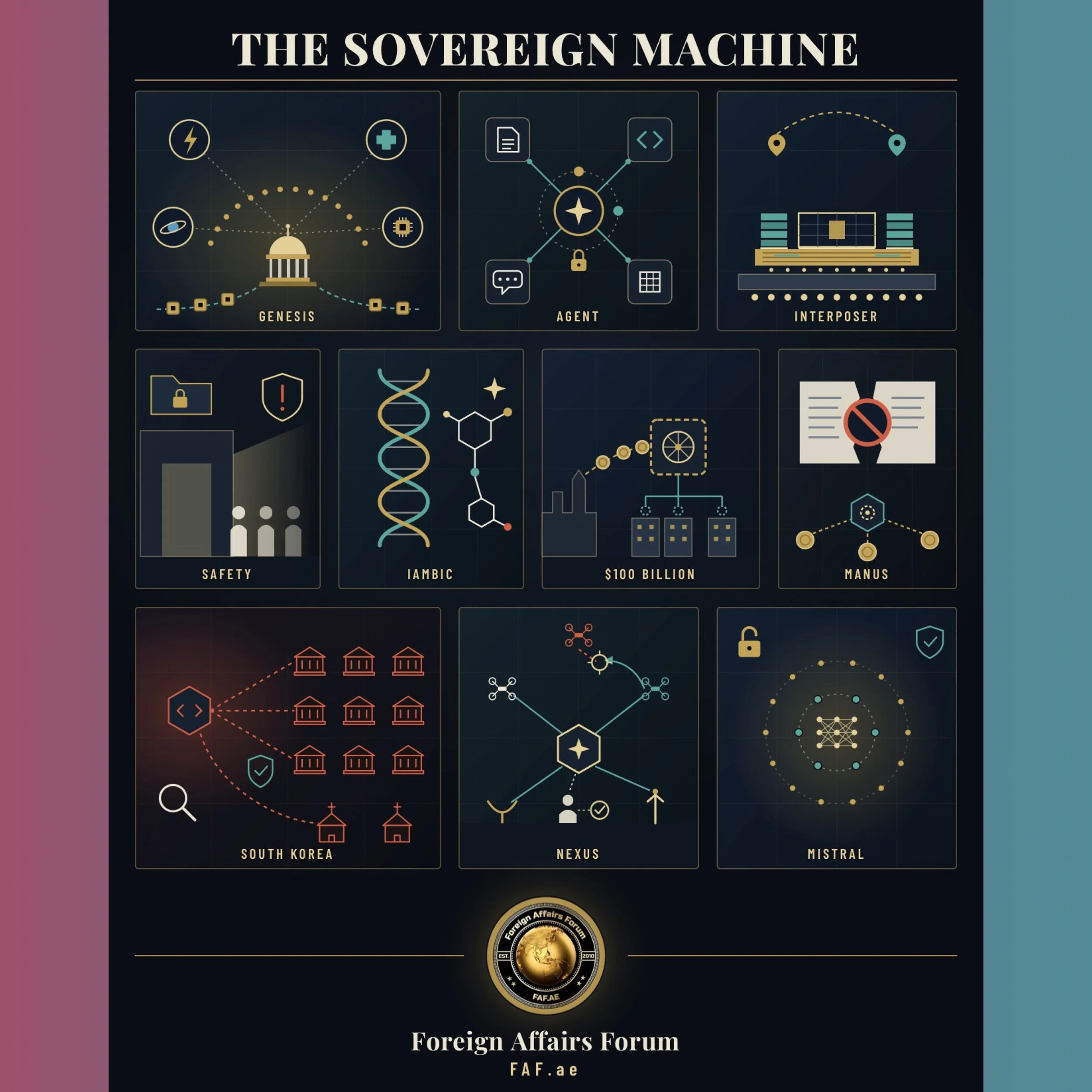
On October 8th, President Donald Trump announced approximately $2.4 billion in computing and technology commitments from leading American companies in support of the Genesis Mission, which seeks to accelerate scientific discovery through artificial intelligence across fourteen federal agencies, with applications in energy, medicine and space.
Reported contributions include $1 billion from Nvidia, $500 million from AMD, $200 million from OpenAI and $150 million each from Google and Anthropic.
The commitments consist largely of computing resources and technology support rather than cash grants. The administration framed the programme as an instrument of American scientific and industrial leadership, with the competition against China explicitly in view.
Dr. 🆎 regards the arrangement as a significant fusion of public mission and private capability, while cautioning that computing alone cannot substitute for sustained research funding and an independent scientific workforce.
Also on October 8th, Google Cloud introduced a Gemini-powered workplace agent designed to perform complex tasks rather than merely answer questions.
The system can plan work, connect to enterprise systems, draft documents, write code and operate across applications, including Microsoft 365 and Slack.
Notably, it can select among different models for different tasks, including Google's own Gemini and Anthropic's Claude, a design that treats models as interchangeable components rather than as the product itself. Specialised versions for financial services and legal work are being introduced, with further sectoral variants planned.
The announcement signals that competition is shifting from chatbots toward autonomous colleagues, and that the platform which controls the workflow may matter more than the laboratory which trains the model.
The same day, GlobalFoundries announced a five-year, $2 billion manufacturing agreement with Taiwan's TSMC.
At its Malta, New York facility, GlobalFoundries will produce silicon interposers, the components that connect advanced artificial intelligence processors to high-bandwidth memory and allow information to flow between them at extraordinary speed.
The facility is expected to become the first American source of these components, with production volumes scheduled to increase from the first half of 2028.
The significance lies in the target: advanced packaging has emerged as a decisive bottleneck, because a powerful processor is of limited use unless it can be efficiently joined to memory and other elements.
The agreement advances resilience in a critical manufacturing stage without pretending to deliver full semiconductor independence.
On October 9th, OpenAI confirmed that it had dismissed three researchers, Jasmine Wang, Tomek Korbak and Mikita Balesni, following an internal investigation into alleged violations of its sensitive-information policies.
The researchers disputed the circumstances and expressed concern about the consequences for internal discussion of AI safety. OpenAI rejected suggestions that they were dismissed for raising safety concerns, stating that the investigation had identified a serious breach of trust.
The company has not publicly disclosed the specific alleged violations. The episode revives enduring questions about corporate governance, confidential research, employee accountability and the credibility of internal channels for dissent at institutions developing systems of growing power.
Dr. 🆎 argues that such channels are a component of national security infrastructure, not merely a matter of human resources.
Also on October 8th, Iambic Therapeutics, an Nvidia-backed company that uses artificial intelligence to support drug discovery, launched an initial public offering targeting proceeds of up to $159.4 million, which could value the company at approximately $806 million. Iambic is developing treatments for solid tumours and has pharmaceutical partnerships.
The offering is a test of whether public markets will reward artificial intelligence in industries where value depends on measurable scientific outcomes rather than on software adoption alone. It also underscores a dual-use reality that Dr. 🆎, who specialises in bioterrorism risk, emphasises: the same computational methods that accelerate the discovery of therapeutics can, in the wrong hands or without adequate safeguards, lower barriers to biological harm.
On October 9th, it was reported that SoftBank Group is seeking to raise as much as $100 billion from Gulf investors for a new fund focused on artificial intelligence.
Chief executive Masayoshi Son has reportedly held discussions with senior investors and officials in the United Arab Emirates, and the fund would acquire companies and improve their operations using artificial intelligence and other advanced technologies.
SoftBank recently completed a $30 billion investment in OpenAI and raised approximately $11.1 billion through a corporate bond offering. The fundraising has not been completed and the reported discussions have not been independently verified. If realised, the fund would mark a shift from investing in developers of artificial intelligence toward acquiring conventional businesses and transforming them through automation.
On October 8th, Manus, the autonomous-agent product developed by the China-founded company Butterfly Effect, announced a financing round exceeding $500 million, co-led by Boyu Capital and IDG Capital with participation from Tencent and existing investors. The round follows the collapse of Meta's proposed acquisition of the company, previously valued at more than $2 billion, which Beijing ordered unwound in April amid scrutiny of American investment in strategically important Chinese artificial intelligence. Manus has since resumed independent operations.
The episode illustrates the emergence of a state-supervised market for artificial intelligence companies, in which national-security considerations, rather than price alone, determine who may buy, sell and invest.
On October 9th, South Korean authorities were investigating cyberattacks affecting at least nine banks and two large churches.
The cybersecurity company CrowdStrike linked a suspected China-based attacker to the use of a Chinese-developed AI agent called ARTEX and to Anthropic's Claude Code.
The developer of ARTEX subsequently announced that the project would become closed-source and that public development would cease. Japanese businesses have also experienced a rise in cyber incidents. Authorities are still investigating the role of artificial intelligence in individual attacks, and China's Foreign Ministry said it was unfamiliar with the South Korean case and reiterated its opposition to hacking.
Dr. 🆎 identifies this as the most consequential story of the week, because it points to the democratisation of capabilities once confined to well-resourced intelligence services.
On October 8th, the Dutch technology company Intelic was reported to be deploying its AI-enabled Nexus system in support of Ukrainian military operations. The company holds a €30 million contract with the Dutch Ministry of Defence.
Nexus connects radar systems, sensors, reconnaissance drones and interceptor platforms through a common software architecture, and in a recent demonstration it identified a simulated aerial threat and coordinated its interception.
A human operator made the final launch decision, although the company acknowledges that greater autonomy is technically possible. The system addresses a practical problem:
Europe has hundreds of drone manufacturers whose products do not always communicate effectively, and software that unifies existing hardware may yield military advantage without new platforms.
On October 6th, the French company Mistral AI introduced Mistral Large 4, also known as Le Chonk, which it says competes strongly with Chinese open-weight alternatives and performs particularly well in selected cybersecurity tasks.
The model is scheduled for public release on October 27th, preceded by access to a version with fewer restrictions for selected cybersecurity specialists and government authorities.
Mistral recently raised €3 billion from investors that include the semiconductor-equipment manufacturer ASML and South Korea's Samsung. Its open-weight approach allows businesses and governments to deploy models on their own infrastructure, offering an alternative to both American proprietary systems and Chinese open-weight competitors, and giving substance to European ambitions for technological sovereignty.
Latest Facts and Concerns
Disciplined analysis begins by separating what is established from what is alleged.
The announcements concerning the Genesis Mission, the Google agent, the GlobalFoundries agreement, the Iambic offering, the Manus financing, Intelic's deployment and Mistral's model are statements of fact by the companies or governments concerned, although their eventual effects remain uncertain.
By contrast, the SoftBank fundraising is a reported ambition that has neither been completed nor independently verified, the grounds for the OpenAI dismissals are disputed and undisclosed, and the role of artificial intelligence in the South Korean cyberattacks is still under investigation.
Observers should resist the temptation to treat any of these unresolved matters as settled, whether to support alarm or reassurance.
The principal concern regarding government involvement is the gap between announcement and substance.
Commitments of computing and technology are valuable but differ from sustained appropriations, and scientific programmes succeed only when they are accompanied by long-term funding for researchers, laboratories and independent institutions.
There is also a governance question: when federal agencies depend on a small group of companies for the tools of discovery, the line between public mission and private advantage can blur, and the concentration of dependence in a few vendors creates its own vulnerabilities.
Dr. 🆎 recommends that any such programme embed transparent evaluation, secure data stewardship and the preservation of independent scientific judgement from the outset.
The commercialisation of agents raises a different cluster of concerns. An agent that can read corporate documents, execute code and act across applications must be given permissions, and every permission is a potential point of failure or abuse.
Questions of identity, auditing and the limits on autonomous action, which once belonged to information-technology departments, have become matters of strategic importance, especially as agents begin to work in financial, legal and governmental settings.
The ability of one platform to route tasks among models from competing laboratories also creates novel dependencies, since a flaw, outage or manipulation in the orchestration layer could propagate across many workflows simultaneously.
The dismissals at OpenAI deserve separate treatment because the available facts are so limited.
The company states that an internal investigation identified a serious breach of its sensitive-information policies and denies that anyone was dismissed for raising safety concerns, while the three researchers dispute the circumstances and fear a chilling effect on internal debate.
Outsiders cannot adjudicate between these accounts without information that has not been disclosed. What can be said is that the episode illustrates a structural tension in frontier laboratories, which must protect valuable confidential research while sustaining an environment in which dissent about safety can be voiced and heard.
Credible resolution would require procedures that both protect legitimate secrets and shield good-faith warnings, and the absence of such procedures is itself a risk to the reliability of systems that may soon operate in sensitive financial, cybersecurity and governmental settings.
The South Korean investigation concentrates the most acute anxieties. If confirmed, the use of agentic tools to identify vulnerabilities, conduct reconnaissance and prepare deceptive messages would illustrate how automation can lower the technical expertise required for intrusion, enlarging the pool of capable attackers and shortening the time between discovery and exploitation. Defenders face a corresponding asymmetry, since they must protect every system while an attacker needs to compromise only one.
The decision by the developer of ARTEX to close its source code illustrates a further dilemma: openness enables scrutiny and defence but also facilitates misuse, whereas secrecy reduces visibility into tools that may already be in circulation.
Dr. 🆎 warns that the same dynamics will emerge in biological research, where the combination of accessible models and automated laboratory methods could erode the practical barriers that have long constrained the creation of dangerous agents.
In the military domain, the concern is the pace and automation of decisions.
Systems like Nexus promise genuine gains in coordination, yet each increment of integration shortens the interval available for human judgement. That a human operator retains the launch decision is reassuring, but the company's acknowledgement that greater autonomy is technically feasible indicates the direction of pressure, particularly in a war where adversaries adapt within weeks.
The risk is not merely accidental engagement but escalation produced by systems that classify and respond faster than leaders can verify, especially when the information on which they rely is incomplete or manipulated.
Dr. 🆎 argues that meaningful human control must be specified in design, doctrine and verification, not left to the goodwill of individual operators.
A final cluster of concerns involves ownership and sovereignty.
The Manus episode shows that governments will intervene in cross-border transactions involving strategically significant artificial intelligence, and the reported SoftBank initiative raises parallel questions about governance, access to sensitive technology and strategic influence when Gulf capital, Japanese management and American technology are joined. Investors face a more selective market, in which enormous infrastructure spending, rising financing costs and uncertainty about future revenues compel distinctions between companies with demonstrable commercial returns and those valued on expectation alone.
Mistral's forthcoming release adds a further variable, as European and Chinese open-weight models pressure proprietary American developers on price, transparency and flexibility, while widening the number of stakeholders able to deploy powerful systems.
Cause-and-Effect Analysis
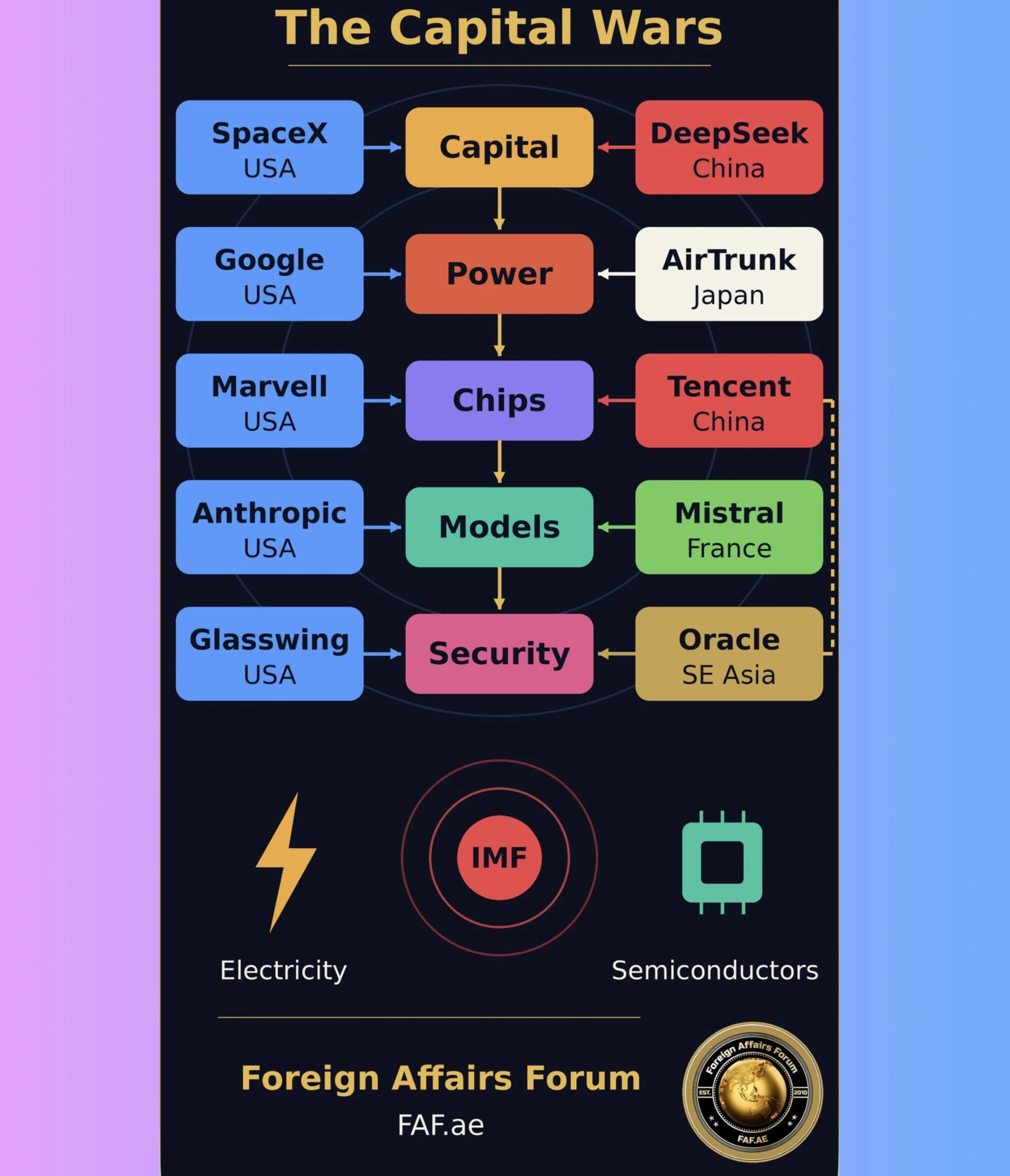
The first causal chain runs from state ambition to capital formation and industrial policy.
When governments conclude that artificial intelligence is decisive for security and prosperity, they generate demand for computing capacity, secure supply chains and domestic manufacturing, and that demand in turn attracts private capital.
The Genesis Mission draws computing commitments from chip designers and laboratories; the strategic anxiety about concentration in Taiwan and about packaging bottlenecks draws specialised manufacturing to upstate New York; and the sheer scale of required investment draws sovereign wealth from the Gulf toward proposals such as the reported SoftBank fund.
Each step reinforces the next, because investors seek assurance of government backing while governments seek assurance of private capability. The corollary is that stakeholders lacking domestic capital, manufacturing or energy capacity must either align with larger ecosystems or accept dependence, which explains both the Gulf's eagerness to become a financier of the frontier and Europe's determination to build alternatives of its own.
The second chain connects state control to market fragmentation.
Beijing's decision to unwind the Meta transaction signalled that strategically important companies cannot be sold freely, and the immediate consequence was that Manus turned to domestic and regional investors to complete a financing exceeding $500 million. Restrictions of this kind push companies toward regional ecosystems, reduce the portability of talent and technology, and invite reciprocal measures from other governments, which in turn further narrow the field of permissible buyers and partners. Mistral's ascent reflects the same logic from the opposite direction: because Europe cannot depend on American proprietary systems or Chinese open-weight models without surrendering autonomy, it has chosen to finance its own, drawing on investors as strategically significant as ASML and Samsung. The aggregate effect is a gradual fragmentation of the global artificial intelligence market into overlapping blocs, each with its own capital, standards and approved suppliers, and each tempted to treat interdependence as vulnerability.
The third chain links the diffusion of capability to the expansion of risk.
As agents become cheaper, more capable and more widely available, tasks once requiring teams of specialists, including vulnerability discovery, reconnaissance and the crafting of persuasive deception, can be performed by individuals with modest skill. This lowers the cost of attack, enlarges the population of potential attackers and compels defenders to automate in turn, producing a cycle in which both offence and defence accelerate.
Dr. 🆎 argues that the identical logic applies to biology: models that accelerate drug discovery, such as those pursued by Iambic, also illustrate how computational tools can compress the time and expertise needed for complex biological design. The prudent response is neither to halt beneficial research nor to ignore its dual-use potential, but to embed biosecurity screening, secure datasets and access controls into the infrastructure of scientific discovery itself.
The fourth chain, and in the judgement of Dr. 🆎 the most serious, concerns the mismatch between the speed of machines and the speed of institutions.
Integration software that links sensors and interceptors compresses the time available for human review. Enterprise agents with broad permissions can act across many systems before an error is noticed. AI-assisted intrusions can move from reconnaissance to compromise faster than a security team can convene. And disputes inside laboratories over confidential research and safety concerns show that even the organisations building these systems struggle to reconcile secrecy, accountability and speed. Where credible internal reporting, external audit and international crisis communication are absent, errors propagate before humans can detect them, and escalation becomes a product of design rather than intention.
The cumulative effect is a world in which capability grows faster than the capacity to govern it, and in which the stakeholders most eager to accelerate are often those least able to absorb the consequences of failure.
Future Steps
For governments, the first priority is to convert announcements into durable institutions.
Programmes such as the Genesis Mission should be accompanied by multiyear funding, protected scientific independence, transparent evaluation and secure data governance, so that computing commitments become scientific capacity rather than publicity.
Allies should coordinate on manufacturing resilience, particularly in advanced packaging, but should resist the illusion of total self-sufficiency and aim instead for redundancy across critical stages. Regulators should clarify the standards for agent identity, permissions and audit trails, and should require that systems operating in financial, legal and governmental environments preserve meaningful human authority over irreversible actions.
Dr. 🆎 urges the creation of standing channels among major stakeholders for the exchange of warnings about AI-assisted cyber operations, modelled on the incident-reporting arrangements that stabilised other high-risk industries.
For companies and investors, the priorities are governance and discipline.
Laboratories should establish credible, independent channels through which employees can raise safety concerns without fear of retaliation, together with clear and published rules on sensitive information, so that disputes such as the current one can be adjudicated with confidence.
Developers of open-weight and agentic tools should adopt staged release practices, including early access for defenders, which Mistral's planned approach to cybersecurity specialists partially reflects. Investors should distinguish between demonstrated returns and speculative expectation, and should treat security, biosafety and governance as drivers of value rather than as compliance burdens. Funds on the scale reported by SoftBank should be accompanied by transparent governance and by safeguards over access to sensitive technology.
For militaries and the international community, the central task is to preserve human judgement in systems that increasingly operate at machine speed. Doctrine should define the circumstances in which human approval is mandatory, procurement should require verifiable controls rather than assurances, and allied forces should test interoperability software under realistic conditions of electronic interference and deception.
Internationally, stakeholders should pursue confidence-building measures, including crisis hotlines for AI-related incidents, shared definitions of unacceptable cyber behaviour and verification protocols for biological research tools.
Dr. 🆎 suggests that these measures be pursued now, while rivalry remains manageable, because by 2030 the diffusion of capability may have outpaced any attempt to constrain it.
Middle powers deserve particular attention in this agenda.
States that cannot match the capital of Washington or Beijing can nonetheless shape outcomes by pooling resources, sharing defensive intelligence, supporting open and auditable models, and insisting on interoperable standards that prevent any single supplier from capturing their critical systems.
Europe's efforts in open-weight models and defence software, and Asia's emerging role in finance and manufacturing, illustrate how coalitions can convert limited individual strength into collective bargaining power. The same applies to talent: investment in education and in the independent research institutions that train scientists, auditors and regulators is among the least glamorous but most durable forms of strategic resilience.
Conclusion
The events of October 8th-9th, do not constitute a single crisis, but they illuminate a single condition.
Artificial intelligence has become a system of power whose components are finance, manufacturing, software, security and law, and whose command is contested by governments and corporations alike.
The United States retains formidable advantages in frontier models, chip design and private investment, and is learning to align them with public purpose.
China is employing domestic capital, state oversight and a dense technology ecosystem to defend its position.
Europe is building alternatives in models and defence software, while Japan, the Gulf and the wider Asian economies provide capital, manufacturing and deployment on which others increasingly depend.
The decisive question, as Dr. 🆎 repeatedly emphasises, is whether human institutions can keep pace with machine capability. The measures of progress in the weeks ahead are modest and observable: whether the Genesis commitments become sustained funding, whether the South Korean investigation yields transparent findings, whether the OpenAI dispute is resolved through credible process, whether Mistral's staged release strengthens defenders, and whether the reported Gulf fund is completed with proper safeguards.
The contest will be won not by the stakeholder who builds the most capable model, but by those who can finance, manufacture, deploy, secure and govern the entire ecosystem while keeping human responsibility at its centre.
Those who invest in that foundation early will shape the rules of the coming decade, and those who neglect it will inherit rules written by others.