Machines That Predict, Ships Without Crews: How War Is Changing
Summary
Foreign Affairs Forum | Dr. Antonio Bhardwaj (Dr. 🆎) | October 30th, 2026
In the last days of October 2026, five news stories showed how war is changing. Armies are learning to predict what an enemy will do next. Navies are adding ships that carry no crew.
Governments are building weapons factories in friendly countries. And smaller powers like North Korea are copying the lessons of modern drone warfare.
Dr. Antonio Bhardwaj (Dr. 🆎), an expert on advanced artificial intelligence, global strategy, AI warfare and biological threats, says the main question is no longer who has the best weapon. It is who can think, act and rebuild faster than the other side.
Why this is happening
The war in Ukraine taught a hard lesson.
Modern weapons are expensive and slow to make. When Western countries sent large numbers of shells and missiles to Ukraine, their own stocks ran low, and factories could not catch up quickly.
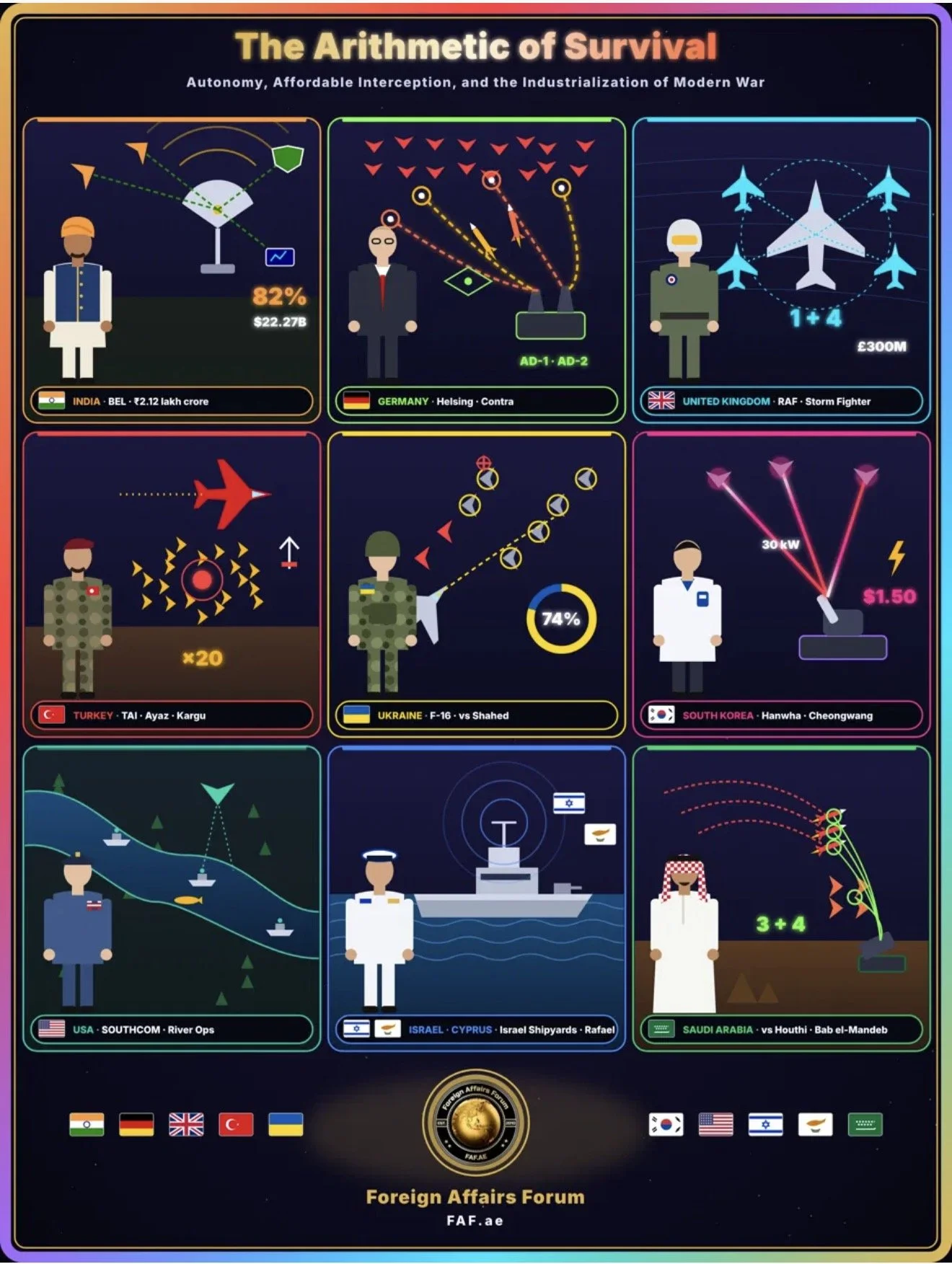
At the same time, cheap drones became common on both sides. A drone that costs very little can force a defender to fire a missile that costs a great deal. This is a bad trade for the defender.
China's growing military adds to the worry. The Pacific Ocean is huge, and a war there could use up missile stocks very fast.
So the United States and its friends are looking for new ways to stay strong, such as building more weapons together, using smarter software and using machines that do not need a crew.
Five stories
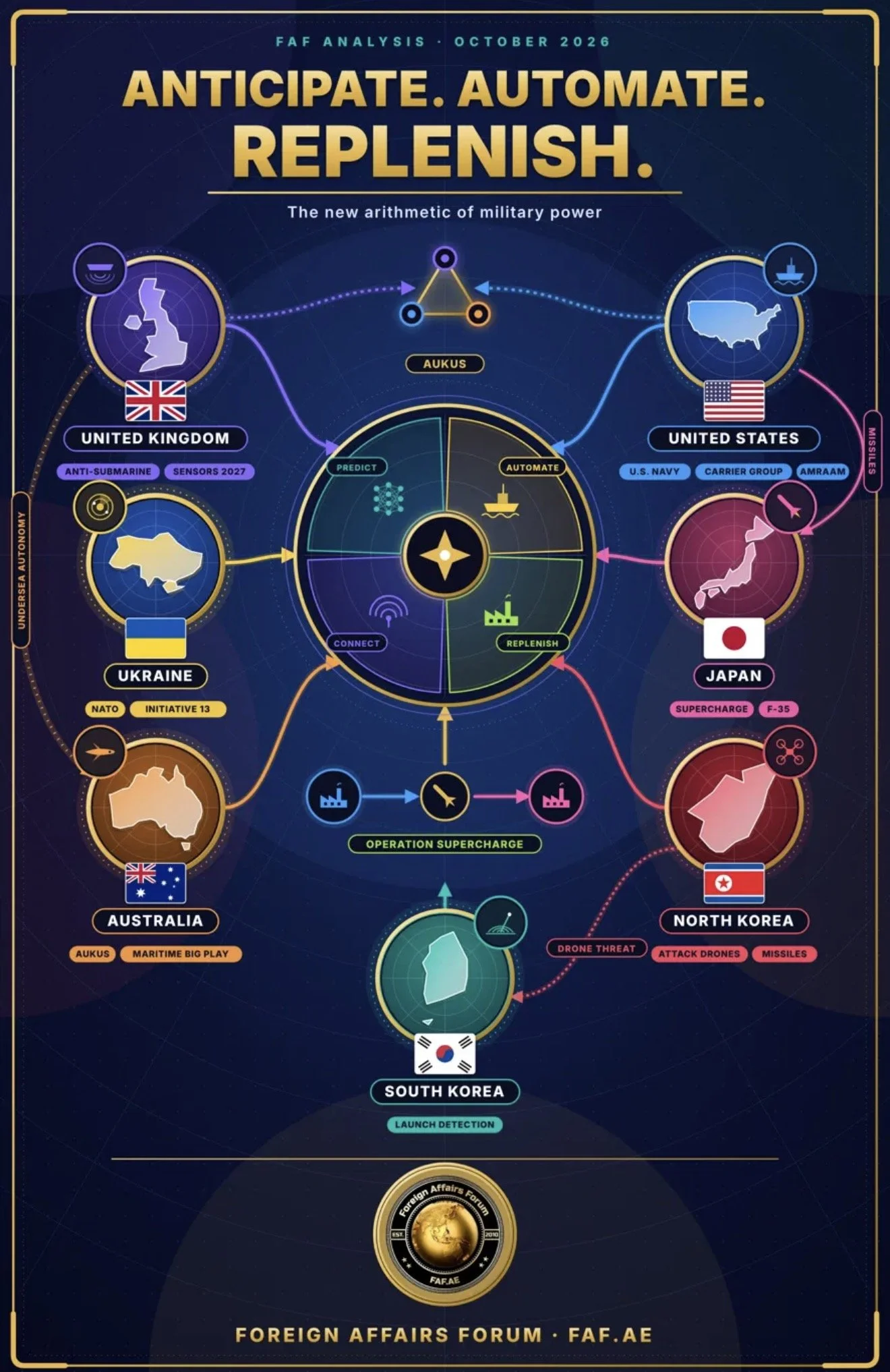
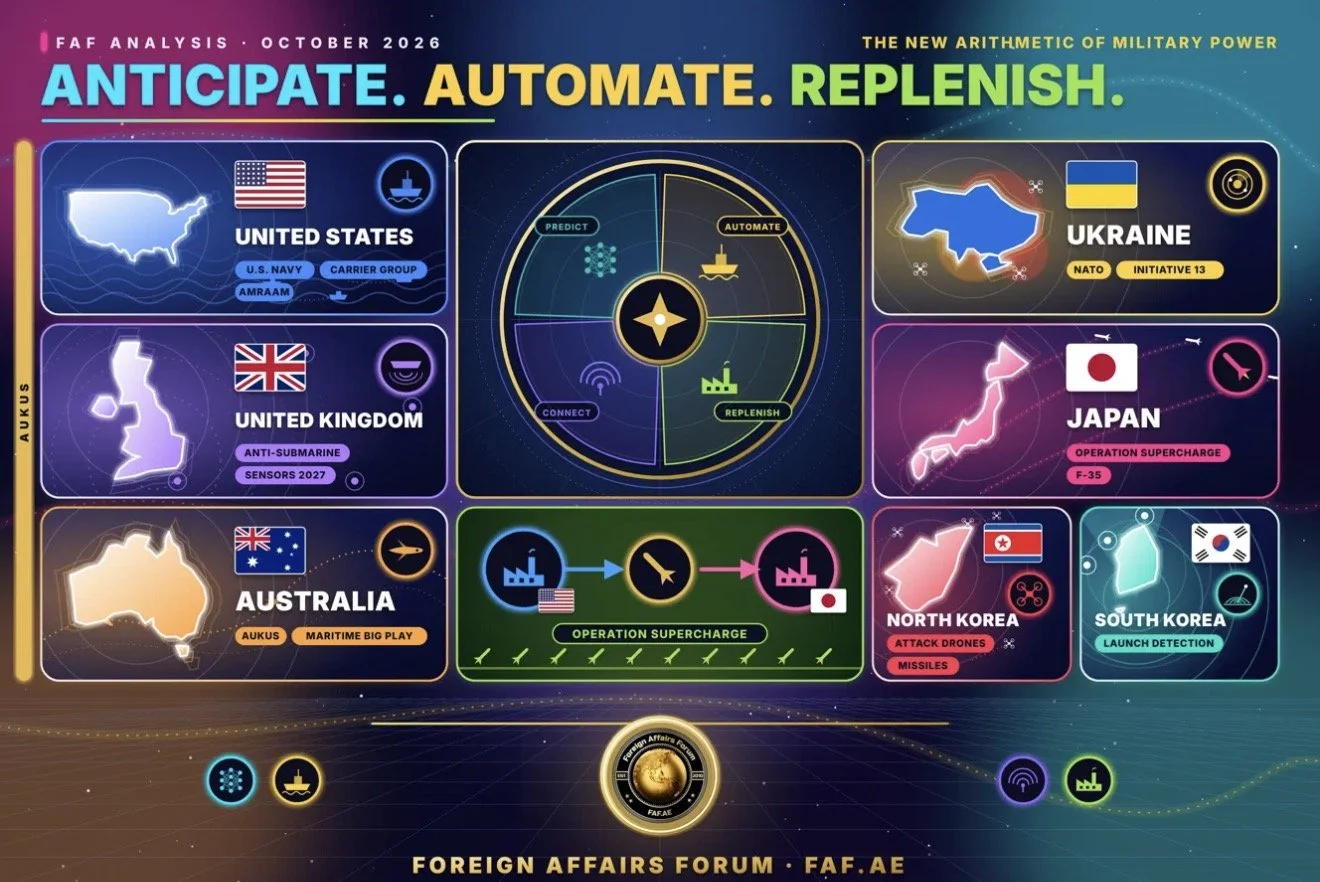
First, the United States and Japan agreed to set up a Japanese factory to put together and check a widely used air-to-air missile.
The plan is called Operation Supercharge. It was announced on October 29 after talks in Cebu, in the Philippines. The number of missiles and the timeline have not been decided. The idea is simple: if more places can make missiles, then a war is less likely to run out of them.
Dr. 🆎 thinks this is the most important story of the five, because a weapon that cannot be replaced is a weapon that runs out.
Second, NATO and Ukraine built an artificial intelligence system called Initiative 13. It studies past drone attacks, weather, terrain, drone types and enemy habits. Then it predicts where Russian drones are likely to appear the next day. If it works, commanders can place their air defences where they are most needed and save scarce missiles. But nobody has independently proved that it is accurate, and the enemy can change its tactics to fool it.
Third, the United States Navy sent a medium-sized ship with no crew to sail with the aircraft carrier USS Theodore Roosevelt and its group of warships. This is the first time a ship of this kind has gone on a real deployment.
The Navy has four such ships now, has picked three companies to build thirty more and has opened a special centre to work on robot ships. Such ships can watch the sea and carry sensors without putting sailors at risk. The hard part is making them work smoothly with ordinary ships and with the people who command them.
Fourth, North Korea showed off new attack drones and missiles. Its leader, Kim Jong Un, said the country must quickly build more unmanned weapons. South Korea also detected about ten short-range missile launches.
North Korea's claims about how good its weapons are have not been checked. Still, its closeness to Russia is a concern, because it may learn from Russian experience with drones and electronic warfare. Large numbers of cheap drones could overwhelm the defences of South Korea and the American troops stationed there.
Fifth, the United States, the United Kingdom and Australia, the three partners in AUKUS, finished a large exercise called Maritime Big Play. They tested more than forty technologies, including surface boats with no crew, underwater gliders and underwater robots.
Britain led the part about hunting submarines and plans to build three new underwater sensors by 2027. The big challenge is making machines from different makers and countries share information and work as a team.
What it all means
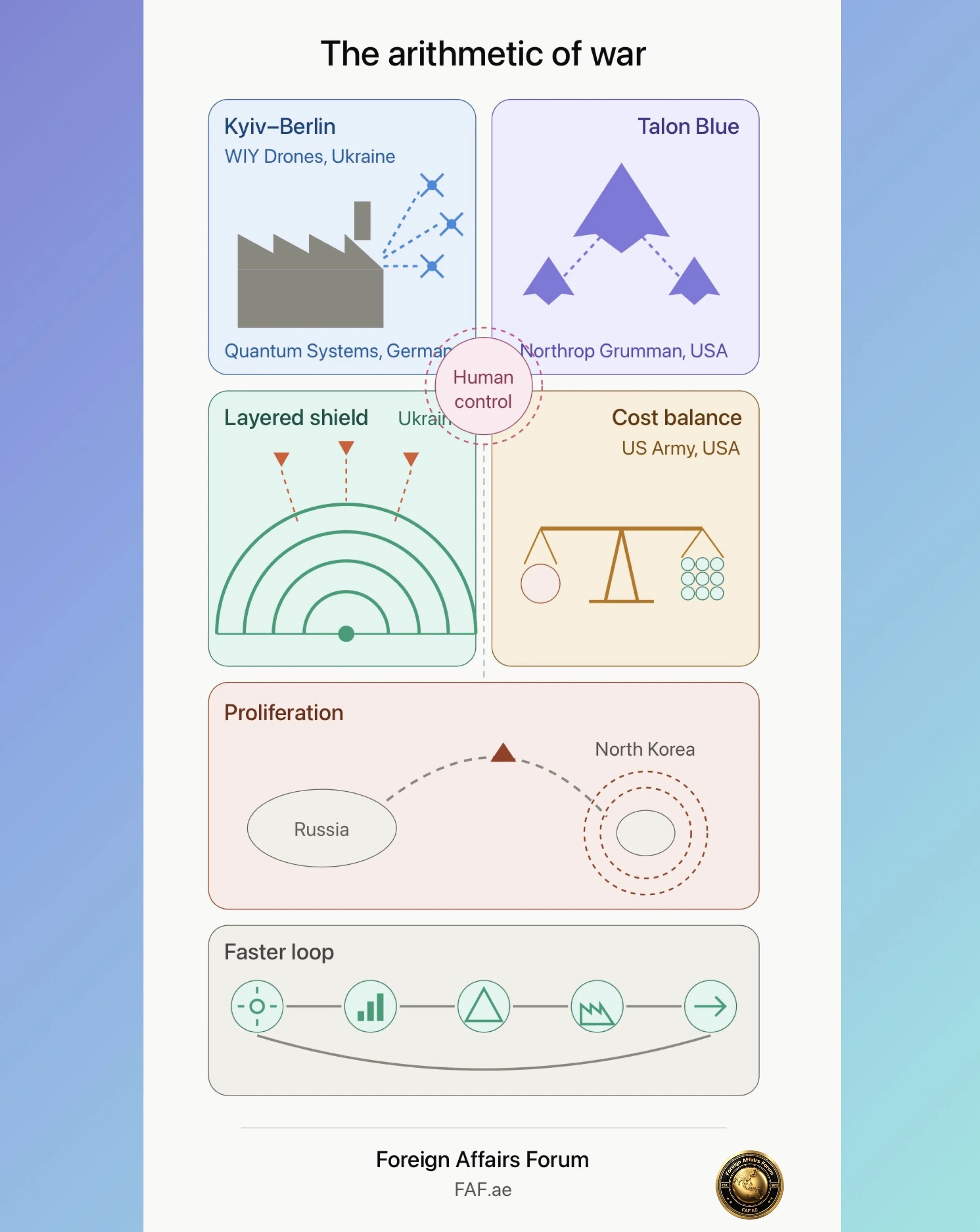
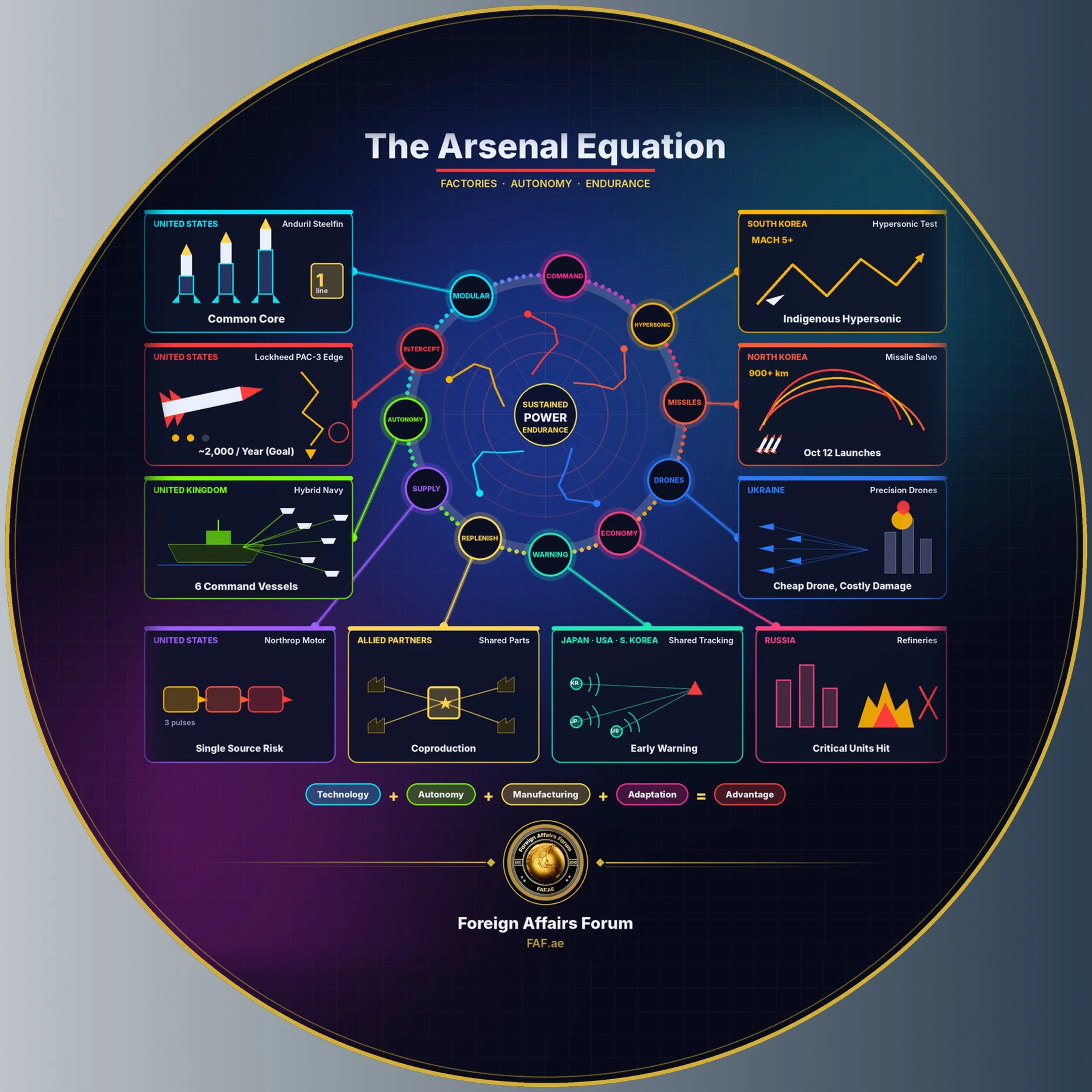
These stories fit together. Factories that can build weapons in many places keep a fight going. Predictive software helps defenders use limited weapons wisely. Ships and vehicles without crews let navies cover huge distances.
Secure communications link everything together. If one of these pieces is missing, the others do not work as well. A smart prediction is of little use if there are no missiles left, and a clever robot ship is of little use if the enemy can jam its radio.
Dr. 🆎 points out several dangers. Predictions can be wrong, and an enemy can fool the software on purpose. Machines work very fast, so humans may have little time to think and may simply approve what the machine suggests.
Different machines may not understand each other, which can cause accidents. These tools will also spread to weaker countries and to dangerous groups. He adds that the same drones and software could be misused to spread biological or chemical harm, so rules for AI and rules for biological safety must be developed together.
What should be done
Dr. 🆎 suggests a few practical steps. Allies should agree on how many weapons to build, how fast, and who shares the work. New software should be tested against enemies who try to trick it, and commanders should be told clearly how reliable it is.
Allies should agree on common standards so that their machines can talk to each other. Governments should state that humans must keep real control over decisions to use force, which means they must have the time, the information and the power to say no. Major powers should also set up simple channels to avoid accidents involving unmanned ships and aircraft. And all countries should prepare for the day when these tools are cheap and everywhere.
Things to watch in the coming weeks include the final details of the missile factory plan, how well Initiative 13 works in real fighting, more tests by North Korea and progress on the underwater sensors.
Conclusion
The next generation of military strength will belong to those who can foresee threats, coordinate machines and keep producing faster than their opponents can adapt. But technology is only part of the story.
As Dr. 🆎 puts it, the real question is whether people will remain the authors of decisions about war or become only its witnesses. Keeping humans truly in charge is not a weakness. It is the best protection against mistakes that no one wants.