Beginner's 101 Guide: Cheap Drones, Smart Guns, and Giant Factories—How the Race to Defend Against Swarms Is Changing War
Introduction
War is changing very quickly, and the changes are easier to understand when they are explained clearly.
Cheap drones are now being launched in huge numbers, and defending against them is becoming a problem of money as much as of technology.
Dr. Antonio Bhardwaj (Dr. 🆎), a specialist in human-centered artificial intelligence, geopolitical strategy and AI warfare, believes this is the biggest military change of our time. In his view, the winner will not be the country with the fanciest weapon. It will be the country that can build and defend at the lowest cost and the fastest speed. This article explains five important stories from the past few days and shows how they fit together.
Lasers and Microwaves to Stop Drones
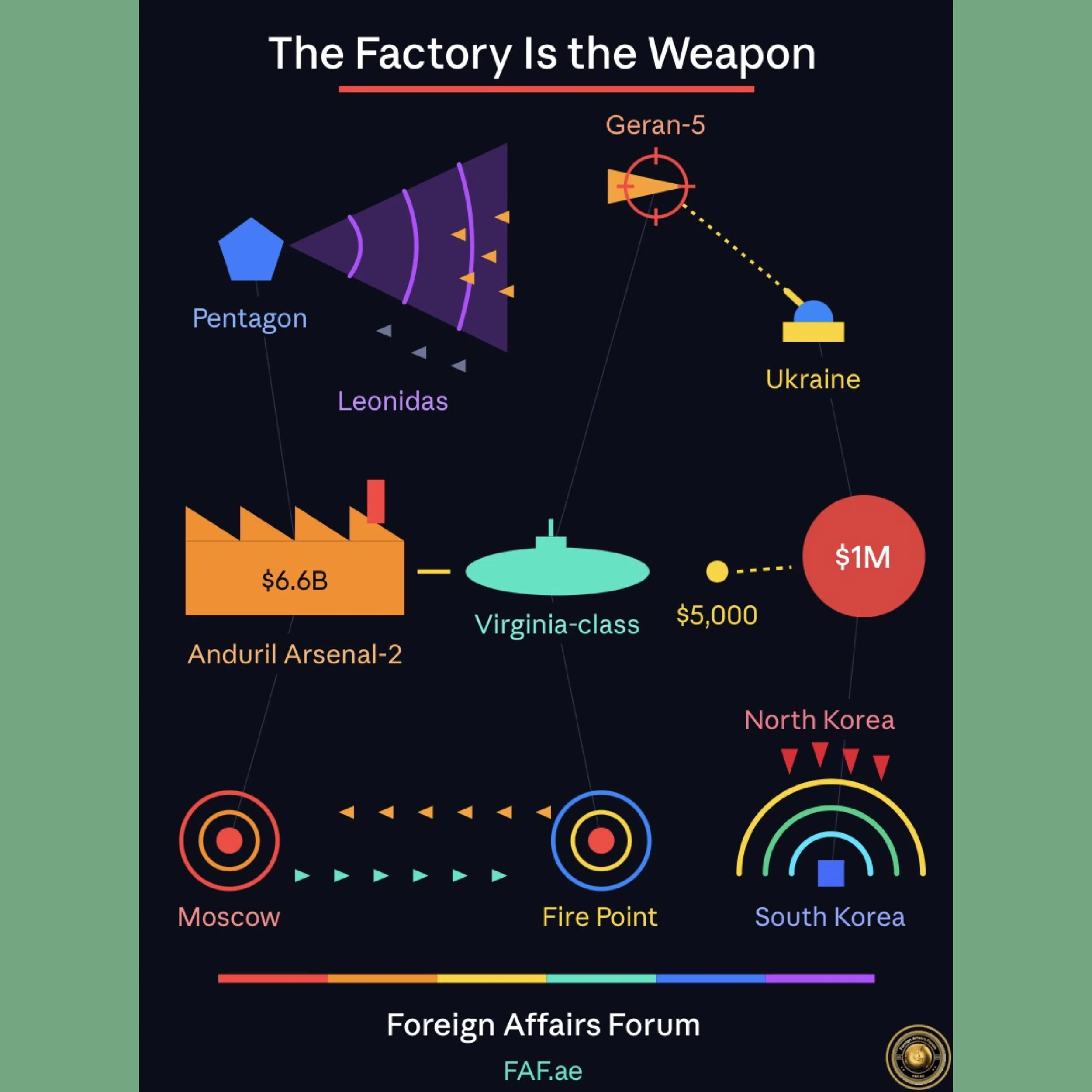
The Pentagon has chosen four weapons that use directed energy to test against drones at American military bases.
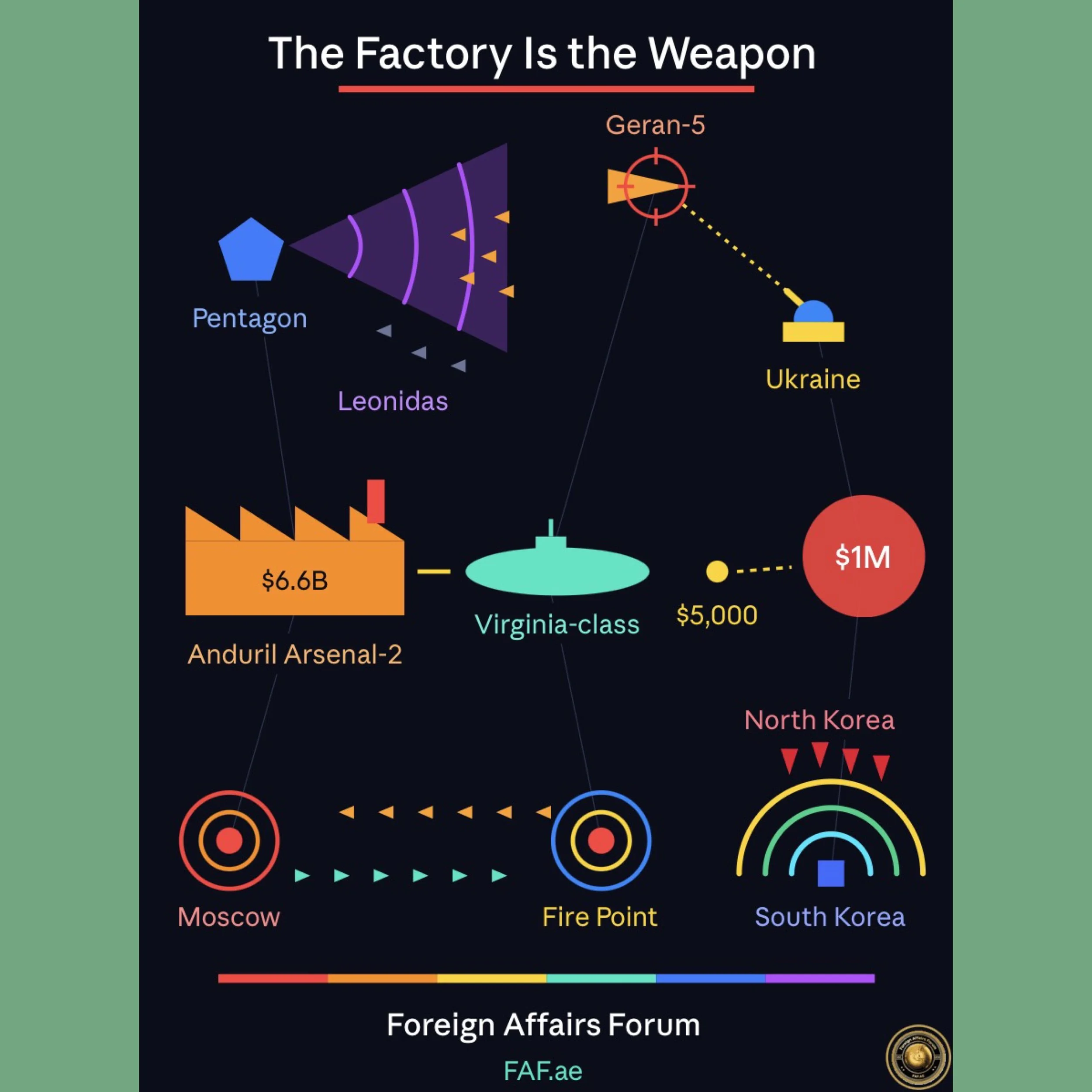
They include high-energy lasers and a microwave weapon called Leonidas, built by the company Epirus. A laser aims at one target at a time, but a microwave weapon can switch off many drones at once.
In an earlier test, Leonidas reportedly stopped all 61 target drones, including a swarm of 49 in one go.
Why is this important?
Think about the cost. A cheap drone can cost around $5,000, while a missile used to shoot it down can cost between $500,000 and $1 million.
No country can keep paying that price. A laser or microwave costs a lot to build, but each shot costs very little, because it uses mostly electricity.
Dr. 🆎 says this could change the balance between attack and defense.
A Submarine Factory Built Like a Tech Company
On October 6th, the company Anduril said it will invest $3.7 billion in a new factory in Maryland called Arsenal-2.
At the same time, the United States Navy gave the company a contract worth up to $2.9 billion to make parts for Virginia-class nuclear submarines.
Together, that is about $6.6 billion. The Navy will pay based on how much is actually produced, and Anduril says it will carry much of the risk.
This is surprising because Anduril became famous for artificial intelligence and drones, not for building submarines.
The United States has struggled to build submarines fast enough, and it also needs them for its partnership with Australia and Britain.
Anduril wants to use software, automation and digital design to speed up production.
As Dr. 🆎 puts it, the factory itself is now a weapon, because the country that can build faster has a major advantage in a long war.
Ukraine's Robot Machine Guns
Ukraine says its robotic machine-gun turrets have shot down Russian jet-powered Geran-5 drones.
These turrets use cameras and artificial intelligence to find and track targets, and they fire .50-caliber machine guns. More than a dozen are already around Kyiv, and more are planned for nearby areas.
The jet drones fly at about 600 km/h, which is much faster than older models.
Ukraine says it stops only about 50% to 70% of them, compared with more than 85% of the older types. A machine gun is a very old weapon, but with artificial intelligence it becomes a smart defense that costs only the price of bullets.
This is a good example of how software can give new power to old equipment.
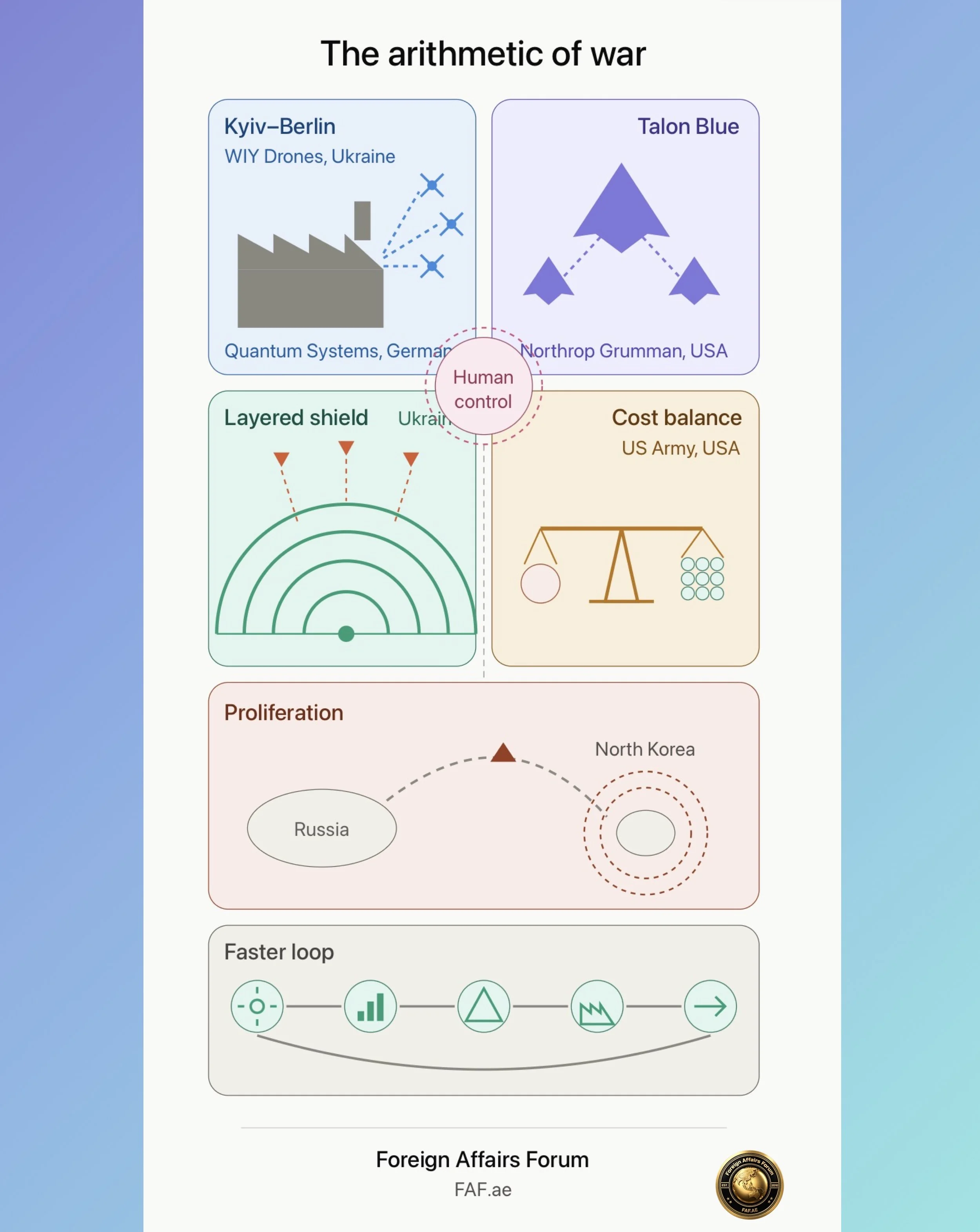
Dr. 🆎 notes that such systems must always remain under human control for the most important decisions.
Nearly 900 Drones and a Huge Missile Attack
The scale of the war reached a new level.
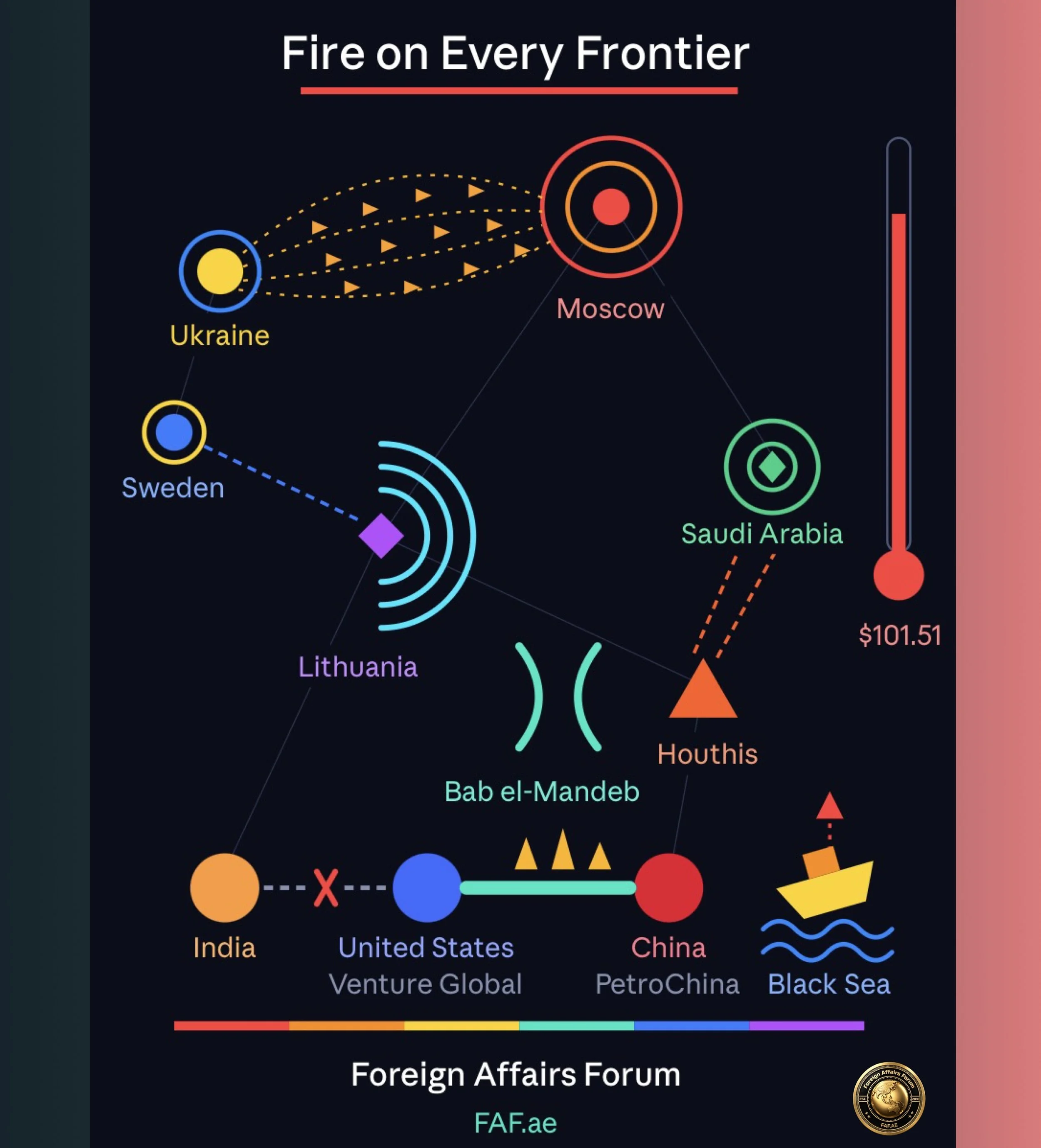
Ukraine launched nearly 900 drones against targets in Russia and Russian-held areas, and more than 700 were aimed at the Moscow region.
This disrupted flights and targeted energy sites. Russia then launched a large attack overnight with 130 attack drones, 48 cruise missiles and ballistic missiles, according to Ukrainian officials.
Ukraine said it stopped 161 targets, and at least eight people were killed.
Russia said it aimed at military factories, including sites linked to Fire Point, a Ukrainian company that makes long-range drones and missiles.
This shows that factories are now targets. Even a defense that works 95% of the time can fail if the attacker sends enough weapons at once.
First comes a mass of cheap drones that uses up the defender's interceptors. Then a second wave with more powerful missiles gets through.
Dr. 🆎 warns that countries must plan for that second wave.
The Problem Comes to South Korea
The United States Seventh Air Force has asked companies to suggest ways of defending American bases in South Korea against small drones.
This request is part of a Pentagon program that tries to bring new technology into use faster. It comes at a time of growing worry about North Korea's drones.
This matters because the lessons of Ukraine are spreading to Asia. A future attack on bases could mix ballistic missiles, cruise missiles, drones, decoys and electronic jamming.
Traditional missile defenses cannot afford to stop everything. The answer is layers of defense, from sensors and radar to jamming, interceptor drones, robot guns, lasers and, finally, missiles for the most serious threats. Bases in Japan and Guam will face the same problem.
What It All Means
These five stories show different parts of one large picture.
The laser and microwave program is the directed-energy layer. Anduril's factory is the industrial layer. Ukraine's robot guns are the smart-weapon layer.
The huge strikes between Russia and Ukraine are the saturation layer. The South Korea request shows the spread of these ideas around the world.
The old way of thinking asked how likely an interceptor was to hit its target.
The new way asks more questions. How much does each interception cost?
How many interceptors can we keep in stock? How fast can we build more? How quickly can we learn from the battlefield and improve? A defense that destroys 99% of threats but costs one hundred times as much as each threat may not last through a long war.
The main lesson is that the next revolution in warfare may not be about the most advanced weapon. It may be about the country that can join artificial intelligence, cheap defense and large-scale manufacturing into the fastest and most sustainable system.
Dr. 🆎 adds a final warning: speed and cost matter, but human judgment must stay in charge. Without human control, even the best technology can create mistakes that no one wants.