Beginner's 101 Guide : Gaza After the Ceasefire: Is a Palestinian State Still Possible?
Summary
Gaza Today: A Ceasefire Only on Paper
In October 2025, the United States helped Israel and Hamas agree to a ceasefire in Gaza.
The deal brought home the last Israeli hostages and promised an end to two years of terrible war. One year later, many people in Gaza say the war never really stopped.
According to Gaza's Health Ministry, about 1500 Palestinians have been killed since the ceasefire began.
More than 320 of them were children. Since the war started in October 2023, more than seventy-four thousand Palestinians have died.
Israel says its strikes target fighters who break the ceasefire, but more than one hundred aid and human rights groups say the ceasefire exists "in name only."
Life in Gaza is still very hard. None of its thirty-six hospitals operate at full capacity.
About 1.4 million people face serious hunger.
Nearly 2 million people lack proper homes, and many live in tents, ruined buildings, or even cemeteries.
Women now head almost one in four households because so many men have been killed, injured, jailed, or are missing.
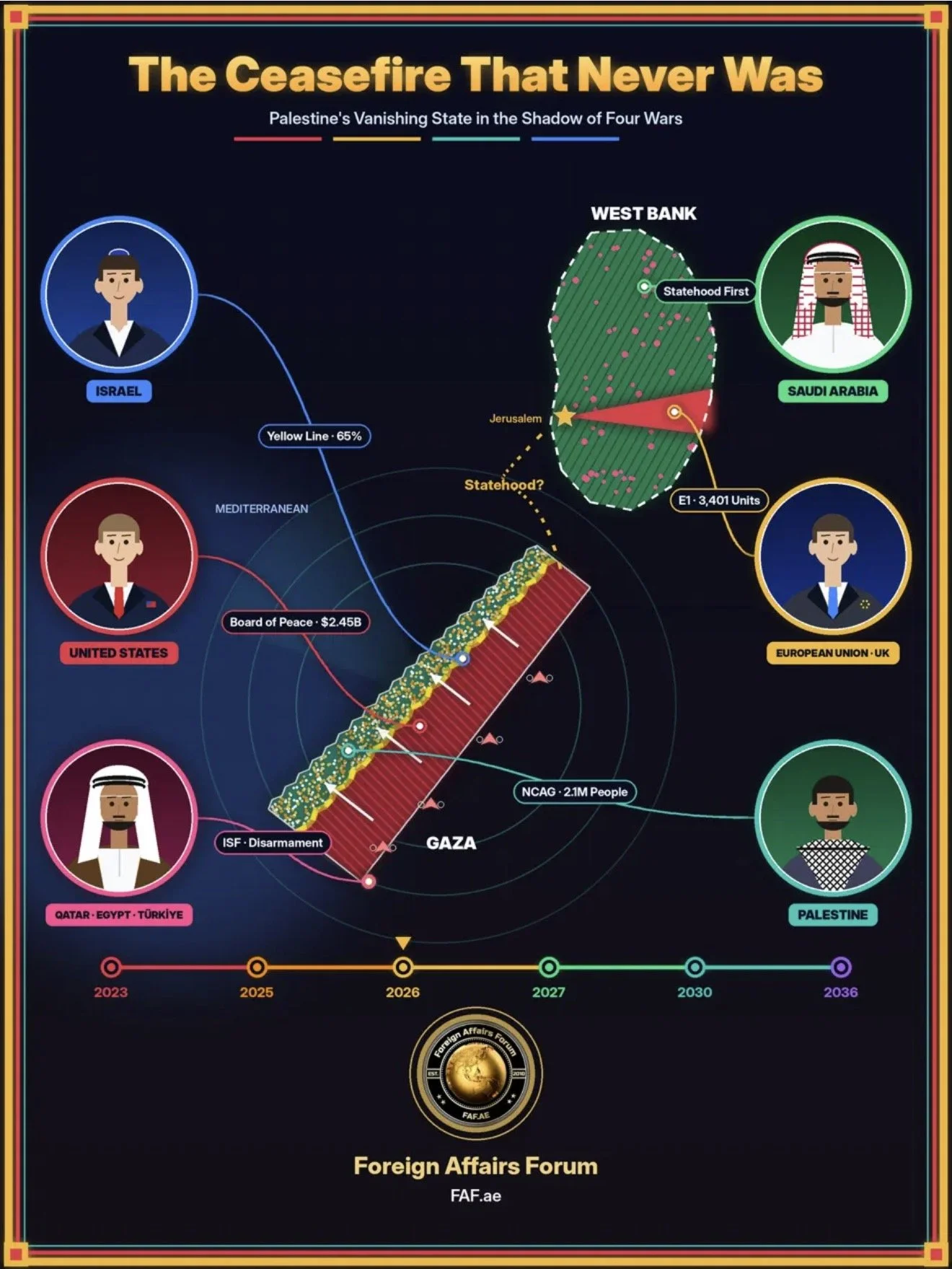
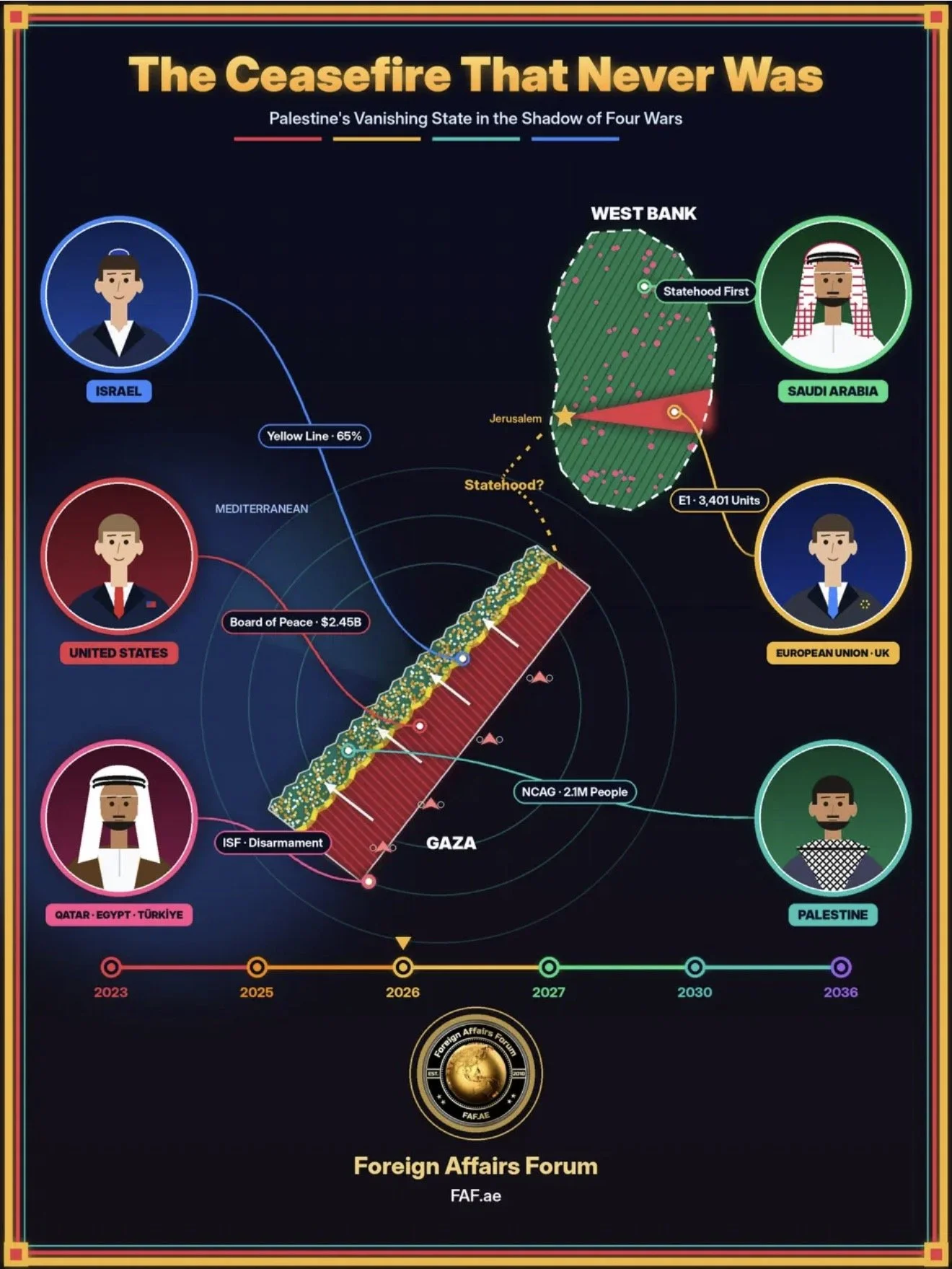
Israel's army also controls more of Gaza than it did when the ceasefire started. Back then, Israel held 53% of the Strip.
Today it holds between 60% and 65%.
A line called the "Yellow Line" separates Israeli-controlled areas from the rest, and it keeps moving west. More than two million people are being squeezed into an ever-smaller space.
How Did We Get Here?
The conflict between Israelis and Palestinians goes back many decades.
In 1967, Israel took control of the West Bank, East Jerusalem, and Gaza.
In the 1990s, the Oslo Accords created the Palestinian Authority. The plan was to reach a final peace deal within five years, but it never happened.
In 2007, Hamas took control of Gaza, while the Palestinian Authority ran parts of the West Bank.
On October 7th 2023, Hamas attacked Israel, killing about twelve hundred people and taking around two hundred and fifty hostages. Israel responded with a massive war in Gaza.
In September 2025, President Donald Trump announced a twenty-point peace plan. It promised that Hamas would give up its weapons, Israel would slowly pull out, a group of Palestinian experts would run Gaza, and an international security force would keep the peace. A new body called the Board of Peace, chaired by Trump, would oversee everything.
That same month, France, the United Kingdom, Canada, and Australia recognized a Palestinian state.
Today, about 160 countries recognize Palestine.
What Does Israel Want?
Israel's government says Hamas must give up all its weapons before Israel leaves Gaza or allows rebuilding. Israeli leaders point out that Hamas has rebuilt its forces after past ceasefires, and they do not want another October 7th.
Some Israeli ministers want much more. They openly support taking permanent control of the West Bank.
Finance Minister Bezalel Smotrich has said that a new settlement project called E1, near Jerusalem, would bury the idea of a Palestinian state.
Israel has now opened tenders for all 3,401 homes planned there. If built, E1 would cut the West Bank in two.
Israelis vote today in a national election. Polls show Gadi Eisenkot's party slightly ahead of Prime Minister Benjamin Netanyahu's Likud, but neither side looks likely to win a clear majority. Even if Netanyahu loses, his likely replacements are unlikely to promise a Palestinian state.
"A new leader may change the tone, but not the direction," says Dr. 🆎. "Since October 7th, most of Israel's political class believes Israel must keep security control over all the land. That belief will not disappear after one election."
What Does America Want?
The United States designed the ceasefire and leads the Board of Peace.
In September 2026, the Board announced a $2.45 billion plan to start rebuilding Gaza over six months. It also said full rebuilding would cost $35.2 billion in the medium term and another $71.4 billion over the next ten years.
But most of this plan has not started.
The Board says real progress will come after Israel's election and America's midterm elections next week. A senior American diplomat has even warned that the Board lacks enough staff to do the job.
Washington says it does not support Israel annexing the West Bank, but it chose not to criticize the E1 project.
The Trump administration's bigger goal is to get Saudi Arabia to make peace with Israel. America is also busy with its war against Iran, which started in February 2026 and has turned into a tense standoff over the Strait of Hormuz, a key route for the world's oil.
American public opinion is changing too. A March 2026 poll found that 60% of American adults had an unfavorable view of Israel.
What Does the Rest of the World Think?
Saudi Arabia has made its position clear: it will not make peace with Israel unless there is a clear and irreversible path to a Palestinian state.
In August 2026, eight Arab and Muslim countries, including Saudi Arabia, the UAE, Qatar, Egypt and Türkiye, jointly condemned the E1 project.
Europe is split. The United Kingdom has declared Israel's occupation unlawful and is preparing sanctions against companies that support settlements.
The European Union has punished violent settlers, but it has not agreed to cut trade benefits with Israel because Germany and Italy are against it. Spain, Ireland and others want tougher action.
The United Nations remains deeply worried. A UN commission said this week that Israel continues to commit serious crimes in Gaza and the West Bank. Israel rejected those findings.
Why Is Nothing Moving?
The biggest problem is order. Israel says Hamas must disarm first.
Hamas says Israel must stop attacking and withdraw first, and it says it will only give up its heavy weapons when a Palestinian state exists.
Because nobody wants to go first, nothing happens. While everyone waits, Israel takes more land.
The Palestinian side has problems too. Palestinian Authority President Mahmoud Abbas promised elections in 2026, but he has now delayed them until September 2027.
Most Palestinians, 79% according to one poll, want him to resign. Without strong, trusted Palestinian leaders, it is harder to argue for a Palestinian state.
Technology plays a role as well. "Drones, cameras, and AI systems have made it cheaper to control territory," Dr. 🆎 explains. "When control is cheap, there is less pressure to make peace. Technology is buying time, but it is not solving the problem."
What Could Happen Next?
There are three possible paths.
The first is a frozen conflict.
Israel keeps a large part of Gaza, Palestinians live in a small strip that depends on aid, the West Bank keeps breaking into pieces, and a Palestinian state exists mostly on paper. Sadly, this is the most likely outcome if nothing changes.
The second is a return to full war.
If the ceasefire collapses, the suffering in Gaza would become even worse, and fears of Palestinians being pushed out of Gaza would grow.
The third is slow, real progress.
The international security force would deploy, the Palestinian expert committee would take over, Hamas weapons would be stored under international watch, and Israel would pull back step by step. Rebuilding money would flow only when all sides keep their promises.
For this to happen, outside powers must act.
America could oppose West Bank annexation as firmly as it demands Hamas disarmament. Gulf countries could tie their rebuilding money to a clear timetable. Europe could use its trade power. Palestinians need real elections with new leaders.
Dr. 🆎 believes technology could help here too. "Satellites and sensors can be used to check promises, not just to watch people," Dr. 🆎 says. "An independent monitoring system could show the world who is keeping the deal and who is breaking it."
Final Thoughts
Gaza has not disappeared. It has been pushed aside by other crises: the war in Ukraine, the war with Iran, and elections in America and Israel. But every month of delay makes a Palestinian state harder to build.
If real steps do not begin soon, the chance of a connected, working Palestinian state could be gone by 2030, no matter how many countries recognize it on paper.
"The world cannot keep promising Palestinians a future and then postponing it," Dr. 🆎 concludes. "A state that is recognized everywhere but built nowhere is not a state. It is a memory."