Beginner's 101 Guide: Seven Days That Shook the World: Ten Stories Explained Simply
Introduction
Sometimes a lot of important news happens at once. The last weekend of October 2026 was one of those times. Elections changed leaders in two countries. A new peace effort started in the Middle East. China's top leaders began an important meeting. Tension rose between North and South Korea.
To make sense of it all, this FAF article draws on Dr. Antonio Bhardwaj (Dr. 🆎). He is a polymath with global expertise in Super Intelligence, specialising in human-centred SI for geopolitical strategy, AI warfare and bioterrorism risks. In his words: "The world used to wait for a few big powers to solve problems. Now many countries act at the same time. That makes the world faster and harder to predict."
What Happened Before
In February 2026, the United States and Israel attacked Iran. This started a war that has stopped and started many times. Iran made it hard for oil tankers to pass through the Strait of Hormuz. Before the war, about 20% of the world's oil exports passed through that narrow waterway.
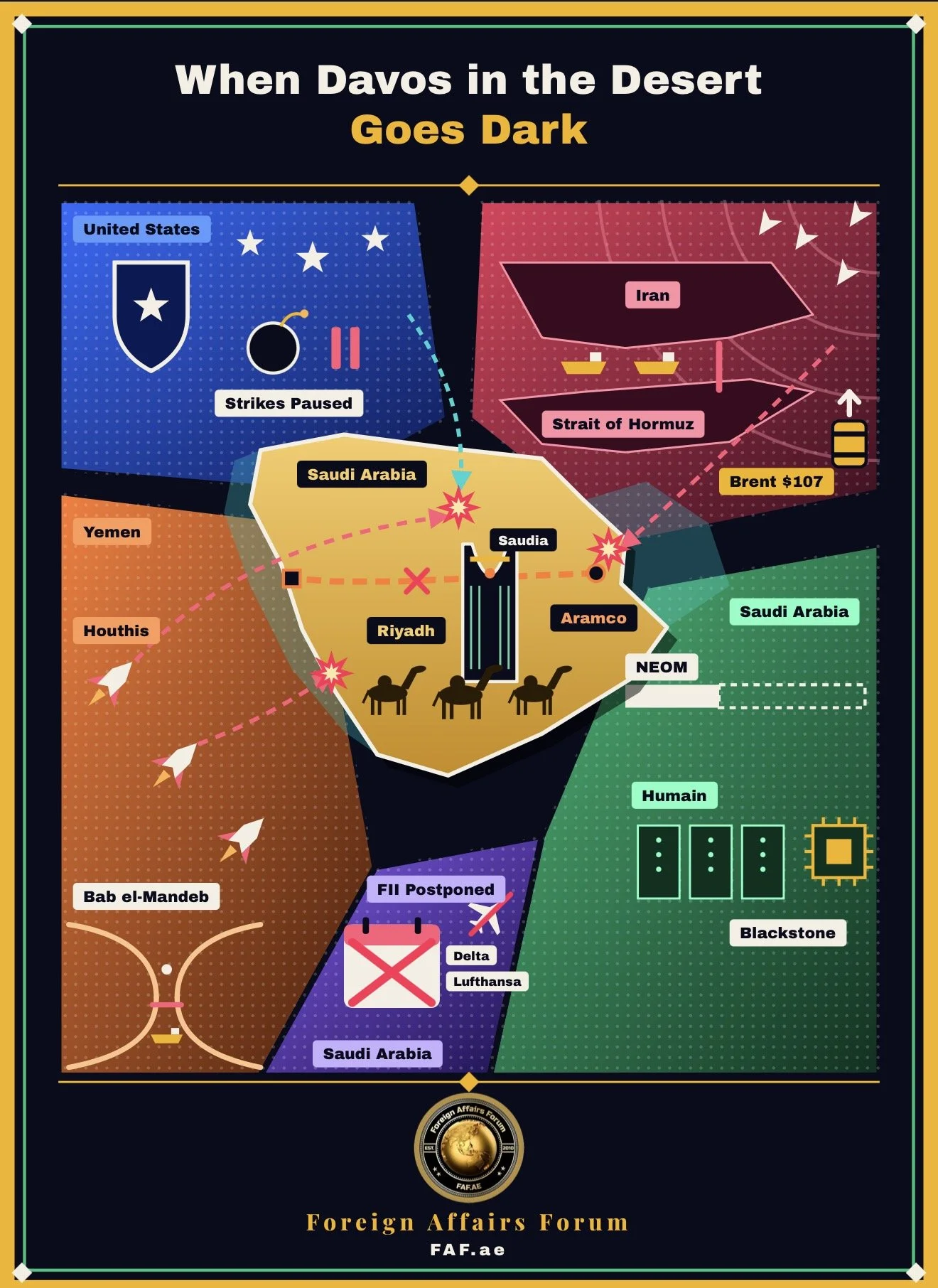
Yemen's Houthi group, which is close to Iran, began firing missiles and drones at Saudi Arabia. They hit airports, oil pipelines and cities. In August 2026, Saudi Arabia, Turkey and Pakistan signed a defence pact in Mecca. Under it, an attack on one country counts as an attack on all three.
In Brazil, former President Jair Bolsonaro is in prison. His son, Senator Flávio Bolsonaro, ran against President Lula in this year's election.
In Serbia, a train station roof collapsed in Novi Sad in November 2024. It killed sixteen people. Students blamed corruption and began protesting. Their movement grew for almost two years.
The Ten Big Stories
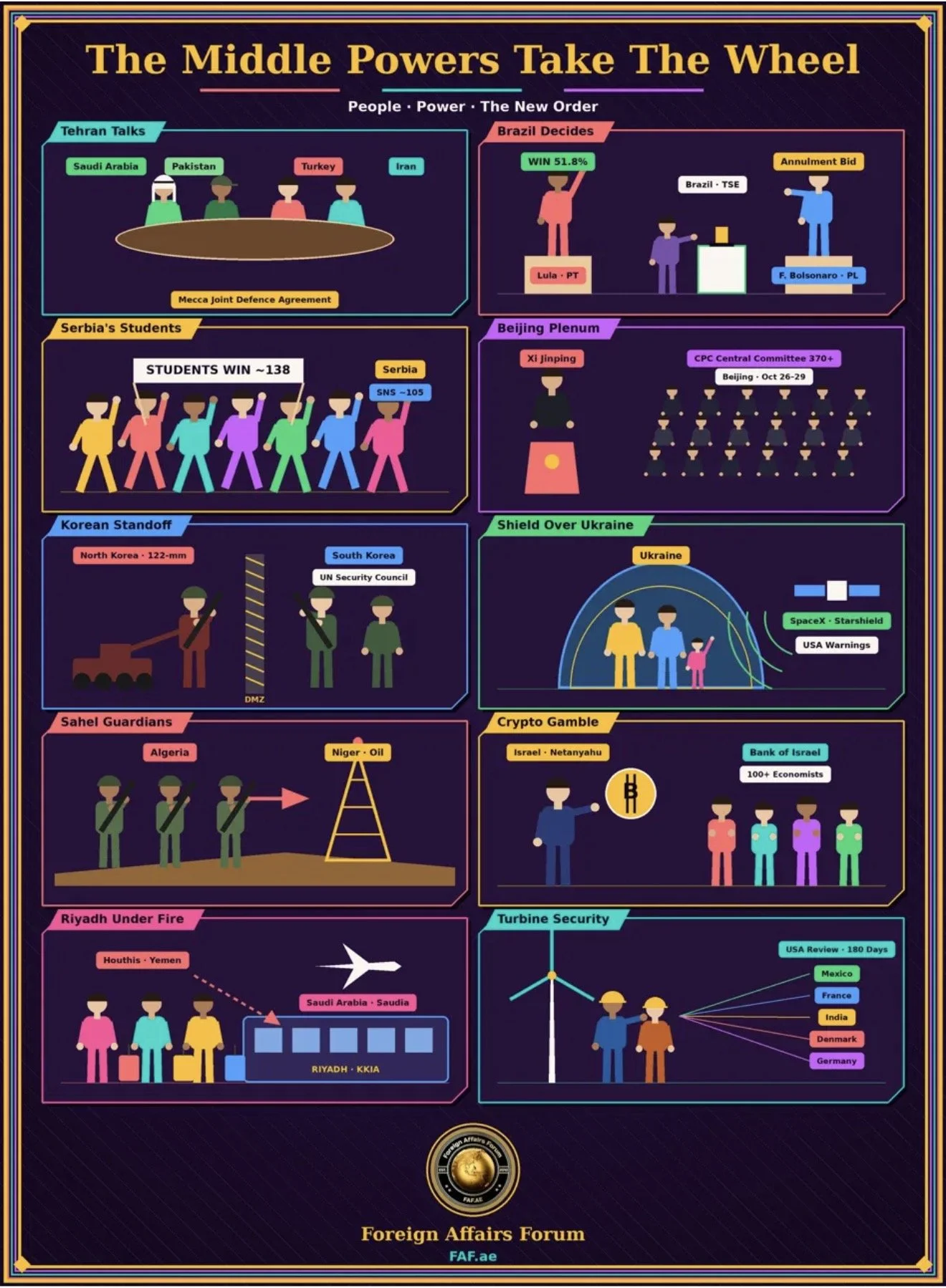
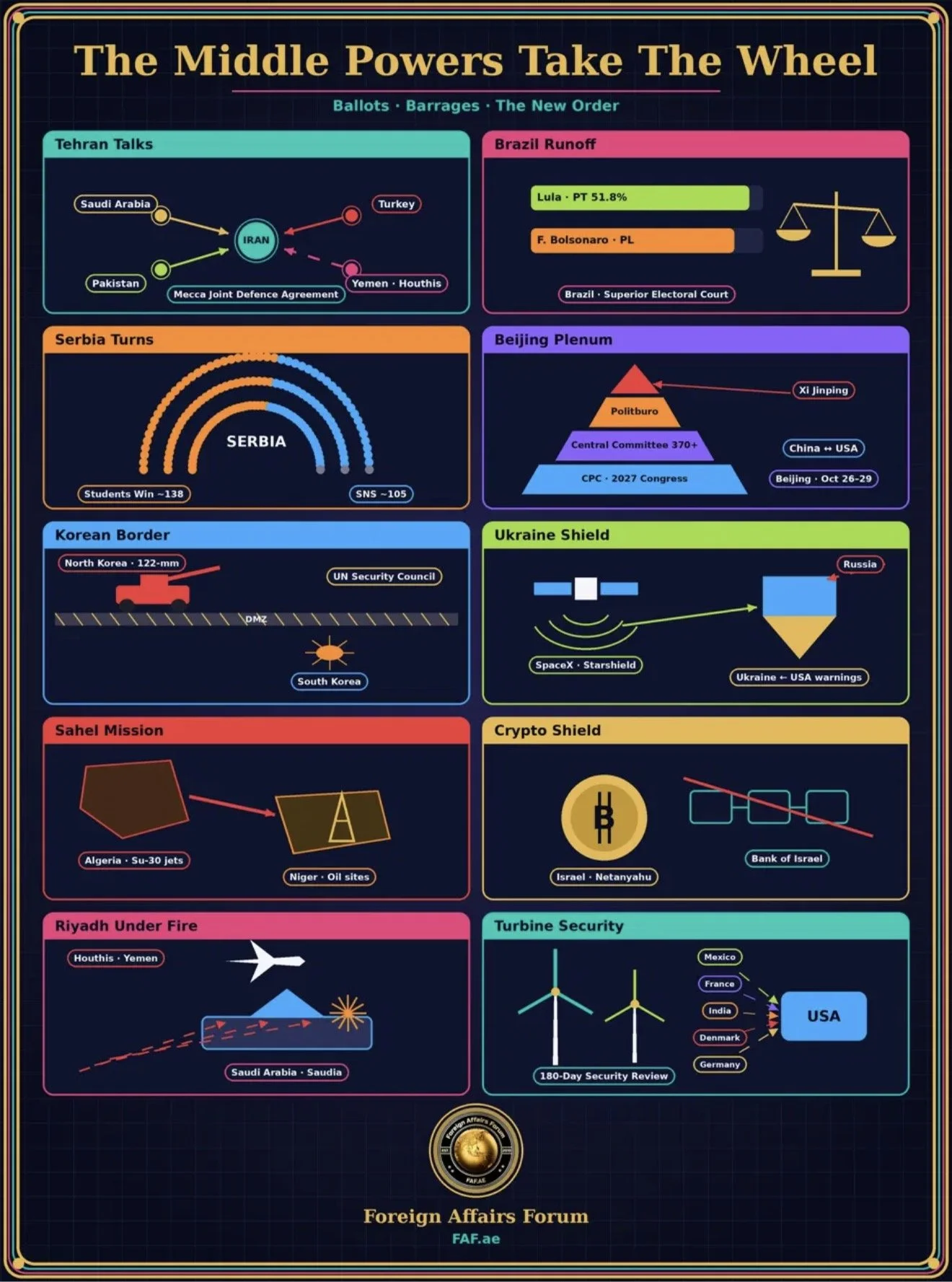
The first story is in Iran. Top officials from Saudi Arabia, Turkey and Pakistan are expected to meet Iranian officials in Tehran on Monday. They want Iran to help stop the Houthi attacks on Saudi Arabia. The meeting has not been officially confirmed.
Dr. 🆎 says: "The big question is whether Iran still controls the Houthis. Cheap drones and missiles give small groups a lot of power, and that makes them harder to control."
The second story is in Brazil. President Lula won the election with about 51.8% of the vote, a margin of more than four million votes. Flávio Bolsonaro refuses to accept the result. He says it was wrong to keep polling stations open longer. Election officials say this did not change the outcome.
The third story is in Serbia. The student-backed movement won the parliamentary election. It is expected to take about one hundred and thirty-five to one hundred and forty of the two hundred and fifty seats. Aleksandar Vučić, who had led Serbia as prime minister or president for fourteen years, accepted defeat. European leaders welcomed the result.
The fourth story is in China. The Communist Party began a four-day meeting in Beijing. More than three hundred and seventy senior members are taking part. It is the last big meeting before the party congress in 2027, where President Xi Jinping is expected to begin another term. The meeting focuses on party discipline and fighting corruption.
The fifth story is in Korea. North Korea told the United Nations that South Korea invented a story about a landmine. In September, a mine hurt three South Korean soldiers. North Korea also placed a large artillery gun near the border where everyone could see it.
The sixth story is in Ukraine. President Zelenskyy said the United States has fully restored its warnings about Russian missile attacks. A satellite communication service called Starshield is also working normally again. But Zelenskyy said Ukraine will not accept limits on its army or be forced to stay neutral.
The seventh story is in Algeria. Its upper house of parliament agreed to send troops to Niger to help protect oil sites there. The lower house must still vote. In August, Algeria had already sent fighter jets to Niger after a failed uprising in its capital.
The eighth story is in Israel. Prime Minister Netanyahu suggested that cryptocurrency could protect Israel's economy if other countries impose sanctions. Israel's central bank and more than one hundred economists disagreed. They said digital money cannot replace normal banks and trade. Israel holds an election on October 27.
The ninth story is in Saudi Arabia. Riyadh's main airport partly reopened. On October 10, a Houthi missile attack there killed twelve people and injured more than three hundred. The Houthis have threatened new attacks, and few flights are operating.
The tenth story is in the United States. President Trump said imported wind turbines may be a national security risk. No new taxes on imports have been set yet. Officials have one hundred and eighty days to talk with supplier countries, including Mexico, France, India, Denmark and Germany.
Why It Matters
These stories share three big ideas.
First, middle-sized countries are taking charge of their own safety. Saudi Arabia, Turkey and Pakistan are going to Iran themselves instead of waiting for America. Algeria is protecting its neighbour.
Second, elections inside countries are changing how those countries deal with the world. Lula will likely keep Brazil friendly with America, China and its BRICS partners all at once. Serbia's new leaders may move the country closer to Europe and further from Russia.
Third, everyday things like airports, pipelines, satellites, banks and factories have become targets and tools of power.
Dr. 🆎 explains: "When one cheap drone can close an airport, the most expensive weapons are not the only thing that matters. Protecting daily life is now the front line."
Cause and Effect
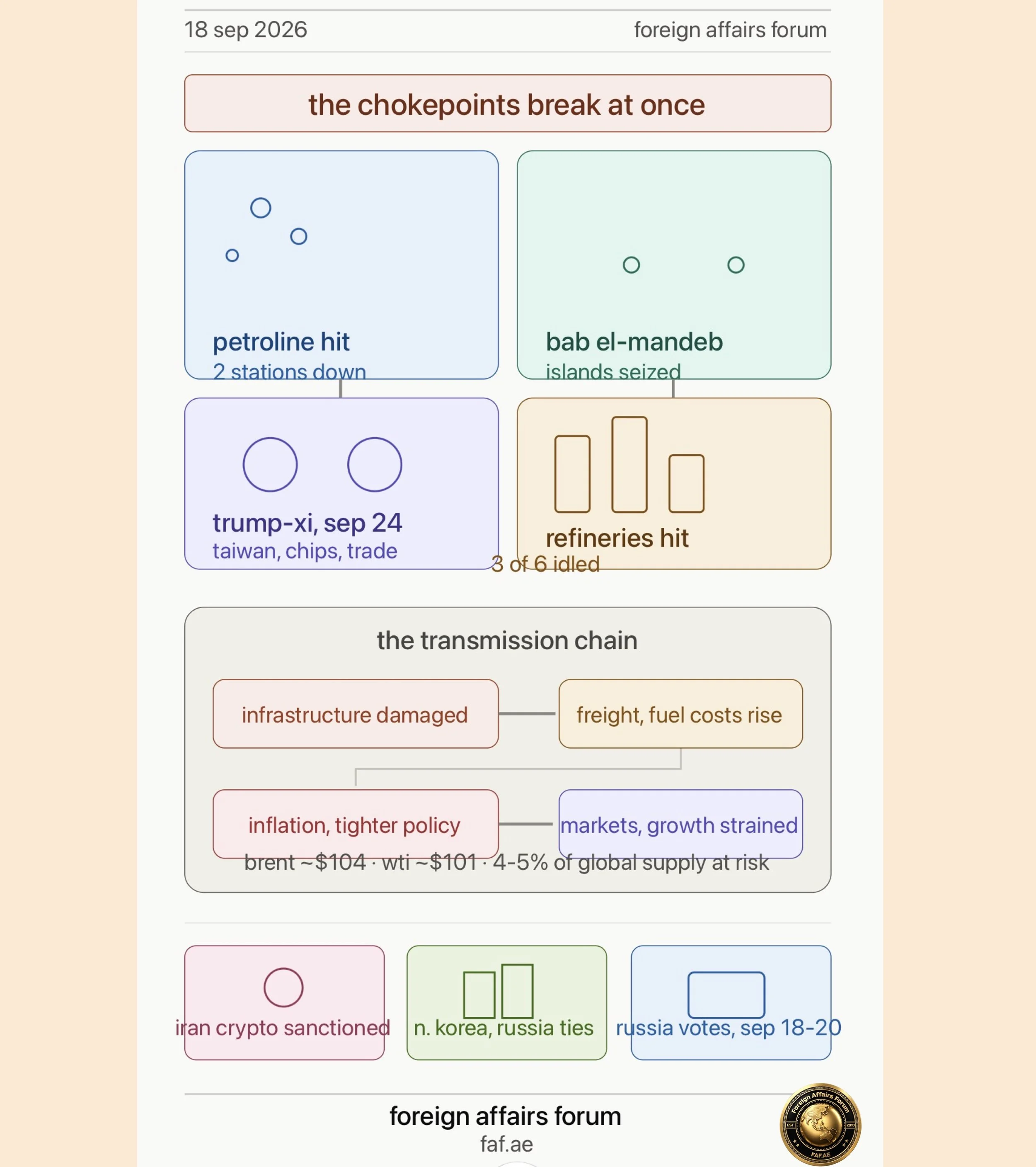
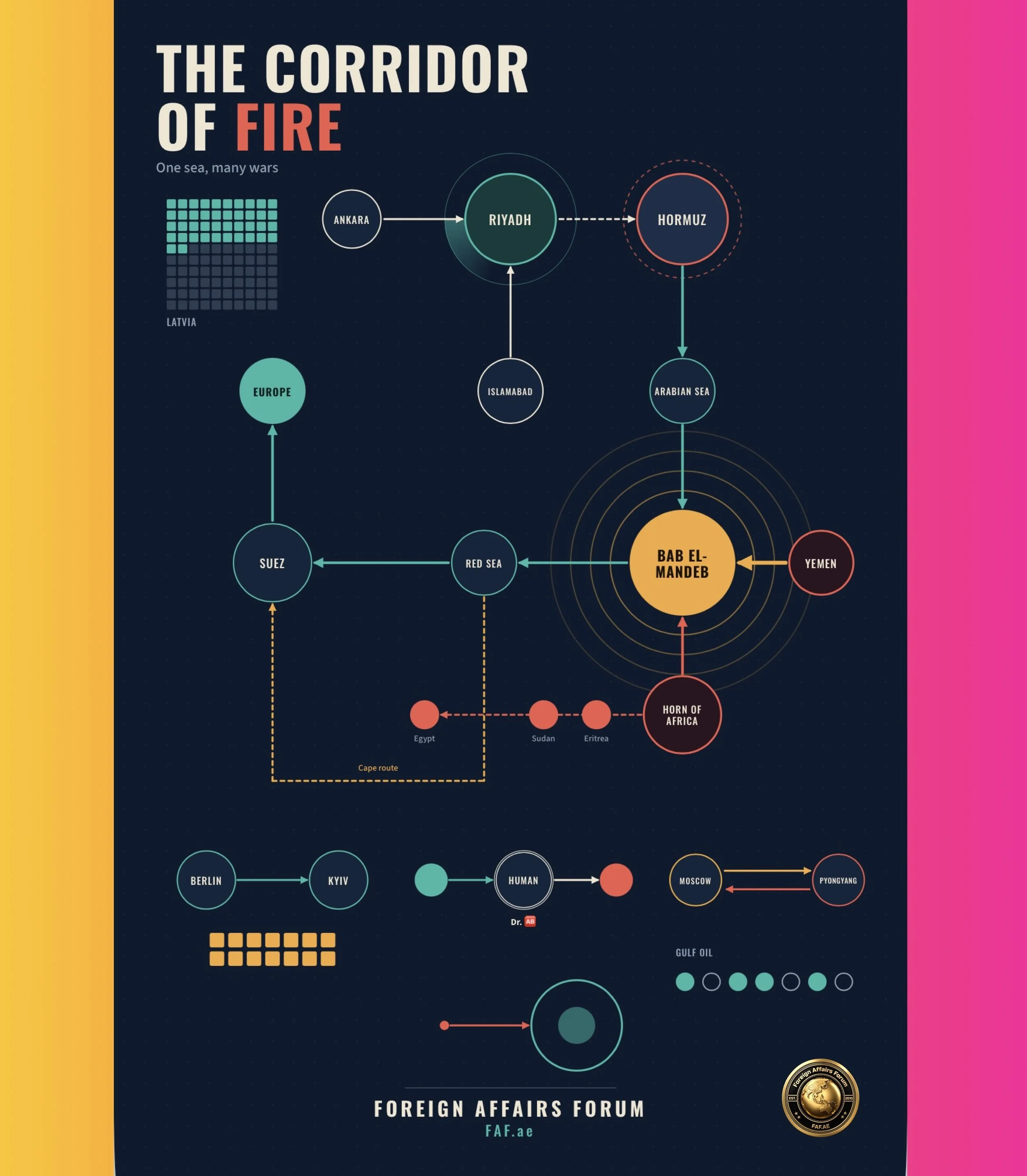
The chain of events in the Middle East is easy to follow. War with Iran blocked oil routes. Saudi Arabia then relied more on pipelines and Red Sea ports. That made those places attractive targets for the Houthis. The attacks pushed Saudi Arabia to sign its defence pact, and the pact made the Tehran talks possible.
Elections follow a similar chain. In Brazil, doubts about the result could cause protests and weaken trust in the government. In Serbia, anger over sixteen deaths grew into a movement that changed the government.
Dr. 🆎 warns that artificial intelligence could make these problems worse: "Fake stories about elections can now be produced in seconds. Election officials need fast tools to check facts and explain the truth to people."
What Comes Next
There are five things to watch. Will the Tehran talks reduce the Houthi attacks? Will protests grow in Brazil? Can Serbia's students form a working government and prepare for a presidential election before the year ends? What will China announce when its meeting ends on October 29? Will tension on the Korean border lead to fighting, or will both sides start talking again?
Israel's election, Algeria's final vote on sending troops, and America's decision on wind turbines also matter. India and other turbine exporters will watch the American review closely.
Dr. 🆎 gives this advice: "Governments must look at military, money, energy and information problems together, not one at a time. In this new world, everything is connected."
Conclusion
The world is not falling apart, but it is changing shape. More countries are acting on their own. Voters are changing the direction of nations. Daily infrastructure has become a key area of competition. This new world can be stable if leaders build strong institutions, keep clear rules and act carefully.
As Dr. 🆎 puts it: "The future will be shaped by many capitals, not a few. Success will depend on trust, preparation and wise use of technology."