Beginner's 101 Guide: Saudi Arabia's Year of Trouble: The Summit That Could Not Be Held
Executive Summary
Saudi Arabia was set to open one of its biggest events on 26th October.
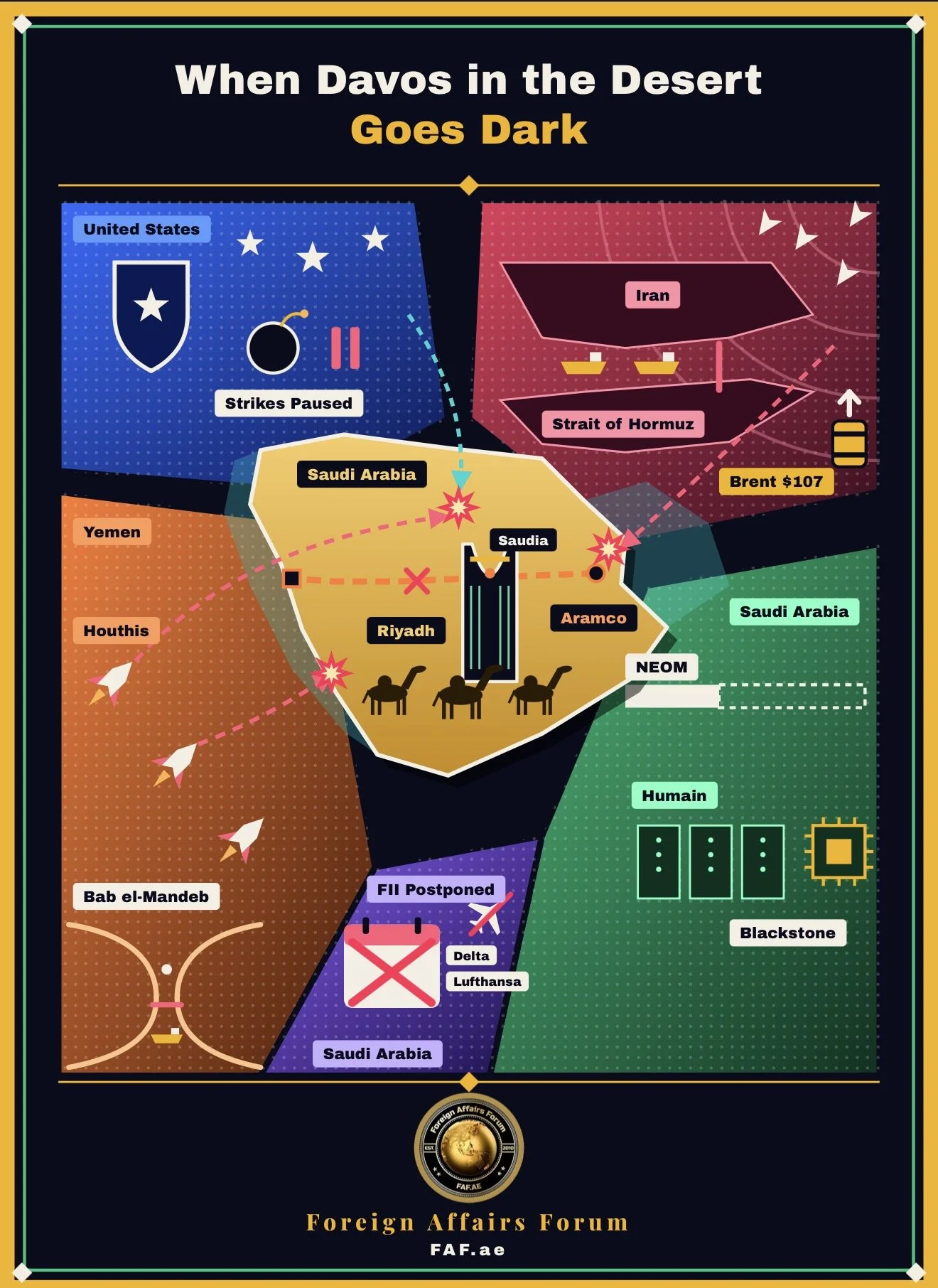
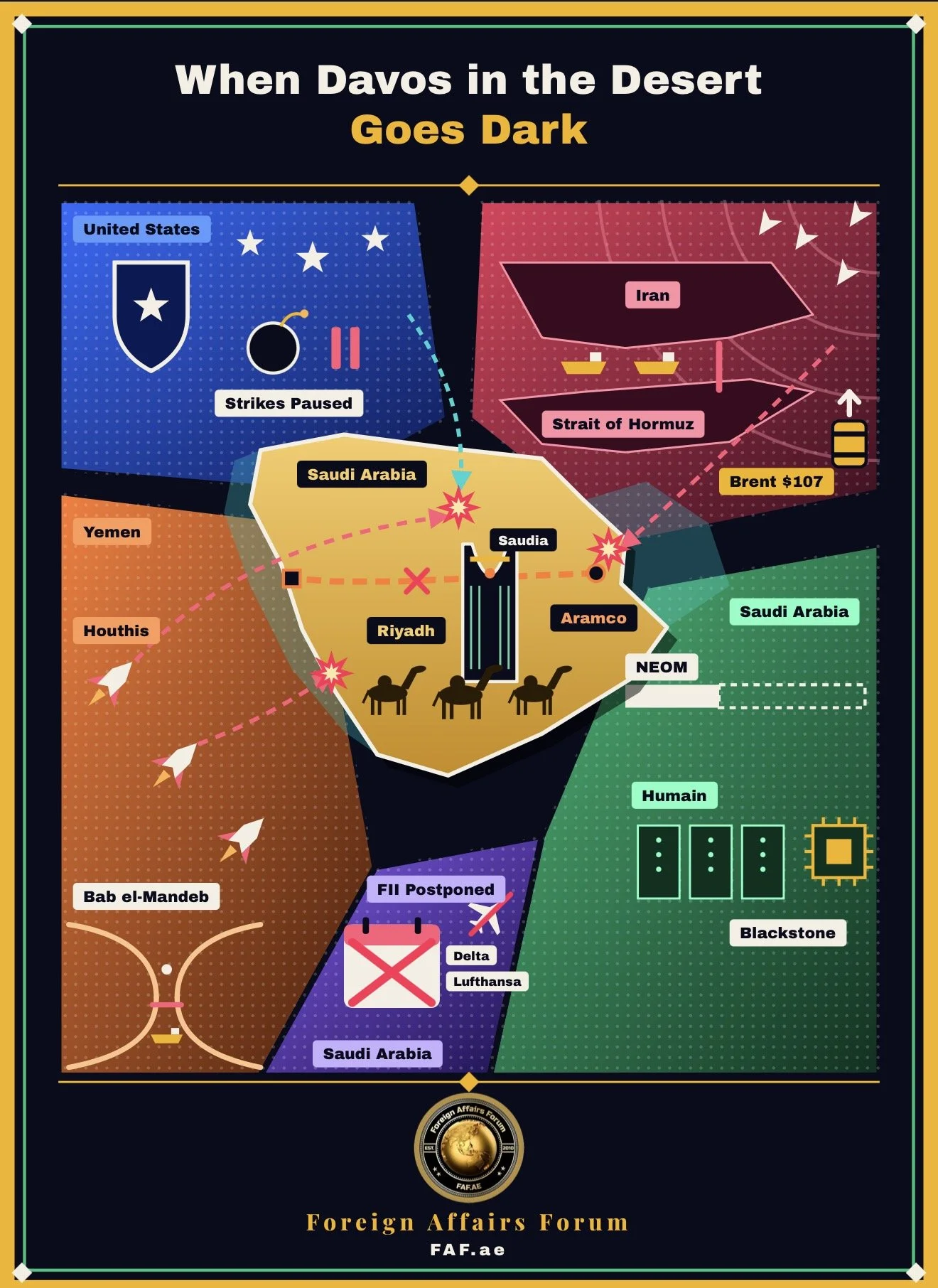
The Future Investment Initiative, often called Davos in the desert, brings business leaders and politicians to Riyadh each year. This year it has been postponed to 2027 because Houthi fighters from Yemen keep attacking the kingdom with missiles and drones.
The cancellation is only the most visible sign of a very hard year for Crown Prince Muhammad bin Salman.
A war involving Iran has closed key sea routes and hurt the Saudi economy. The Houthis have hit three Saudi airports and an important oil pipeline.
The United States has so far refused to bomb the Houthis, even though it signed a defense agreement with Riyadh last November. At the same time, the crown prince has had to scale back some of his biggest building projects. This FAF article explains what happened, why it matters, and what could come next.
Introduction
A summit may seem small, but it can tell us a lot. The Future Investment Initiative was created to show that Saudi Arabia is safe, modern, and open for business. When missile attacks force it to close, investors notice, and so do airlines and governments.
Dr. Antonio Bhardwaj (Dr. 🆎), Chief Executive of the Foreign Affairs Forum and a specialist in human-centered artificial intelligence for geopolitical strategy and AI warfare, explains the problem clearly. "Big plans rarely fail because of one blow," Dr. 🆎 says. "They fail when people discover that the parts of the plan depended on each other more than anyone admitted. This year, Saudi Arabia has discovered exactly that."
History and Current Status
In 2016, the crown prince launched Vision 2030, a plan to reduce Saudi Arabia's dependence on oil. It promised tourism, entertainment, new industries, and a huge investment fund.
The most famous project was NEOM, a massive desert development announced in 2017 with a planned cost of $500 billion. It included a futuristic city called The Line. The Future Investment Initiative was launched in 2017 to attract investors to the project.
For years, the plan moved forward, despite setbacks such as the killing of the journalist Jamal Khashoggi in 2018. By 2025, things looked bright. The crown prince visited Washington in November and signed a defense agreement. Saudi Arabia was preparing to host Expo 2030 and the 2034 football World Cup.
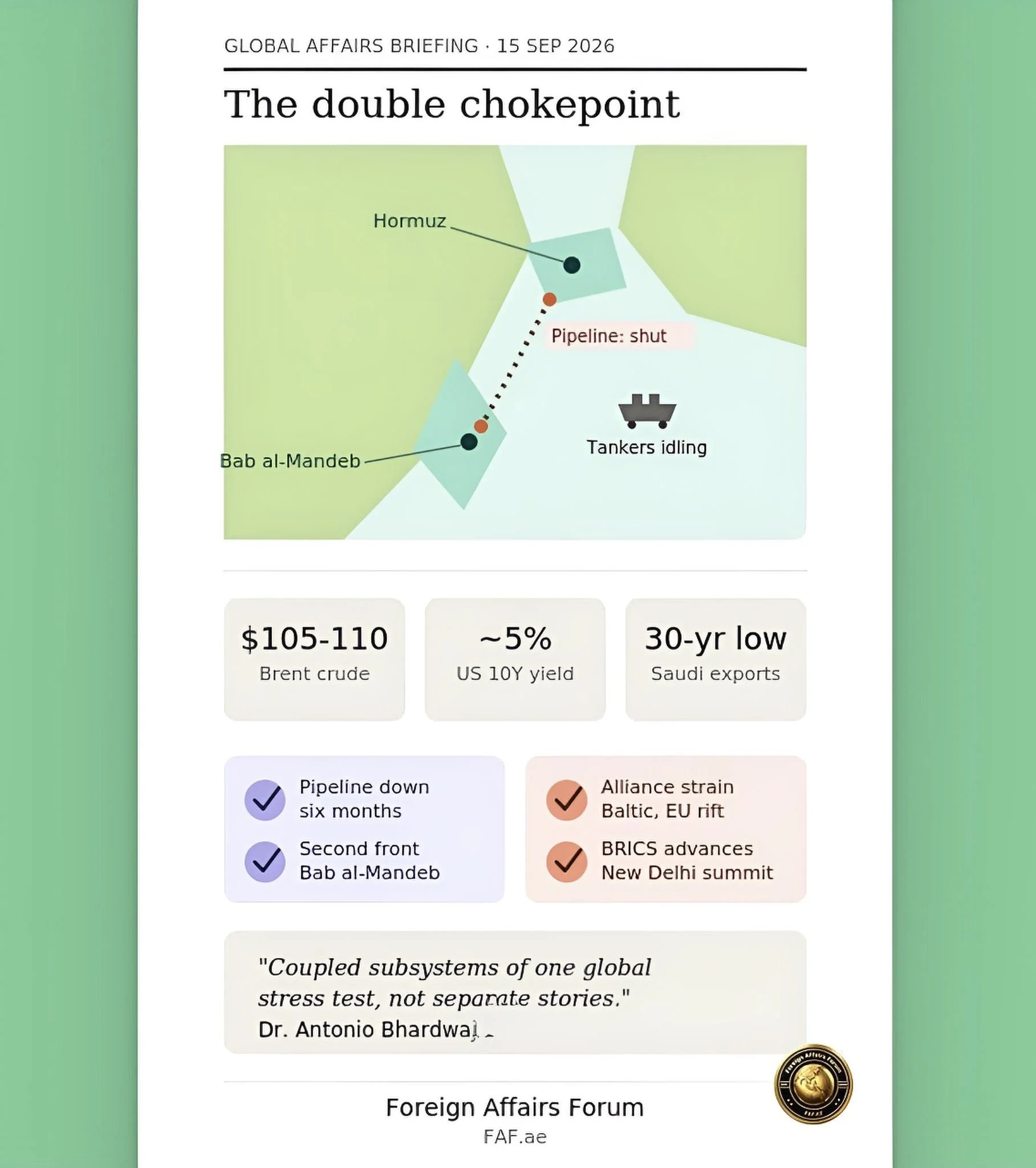
Then 2026 changed everything. In late February, the United States and Israel struck Iran, and a war began that is now almost eight months old. Iran closed the Strait of Hormuz, a narrow sea route that carries much of the world's oil. Oil prices rose to around $107 a barrel, about 75% higher than at the start of the year.
This has created a strange situation. Saudi Arabia is earning more from each barrel, but it is selling fewer barrels, and the war is costing money.
In the first three months of the year, the government recorded its largest quarterly budget gap ever: $33.5 billion.
Officials now expect the economy to shrink by 3.6% in 2026 and the annual deficit to reach 4.9% of GDP. A rebound of almost 13% is possible in 2027, but only if oil exports return to normal.
Key Developments
The first big change came in July, when a ceasefire in Yemen collapsed.
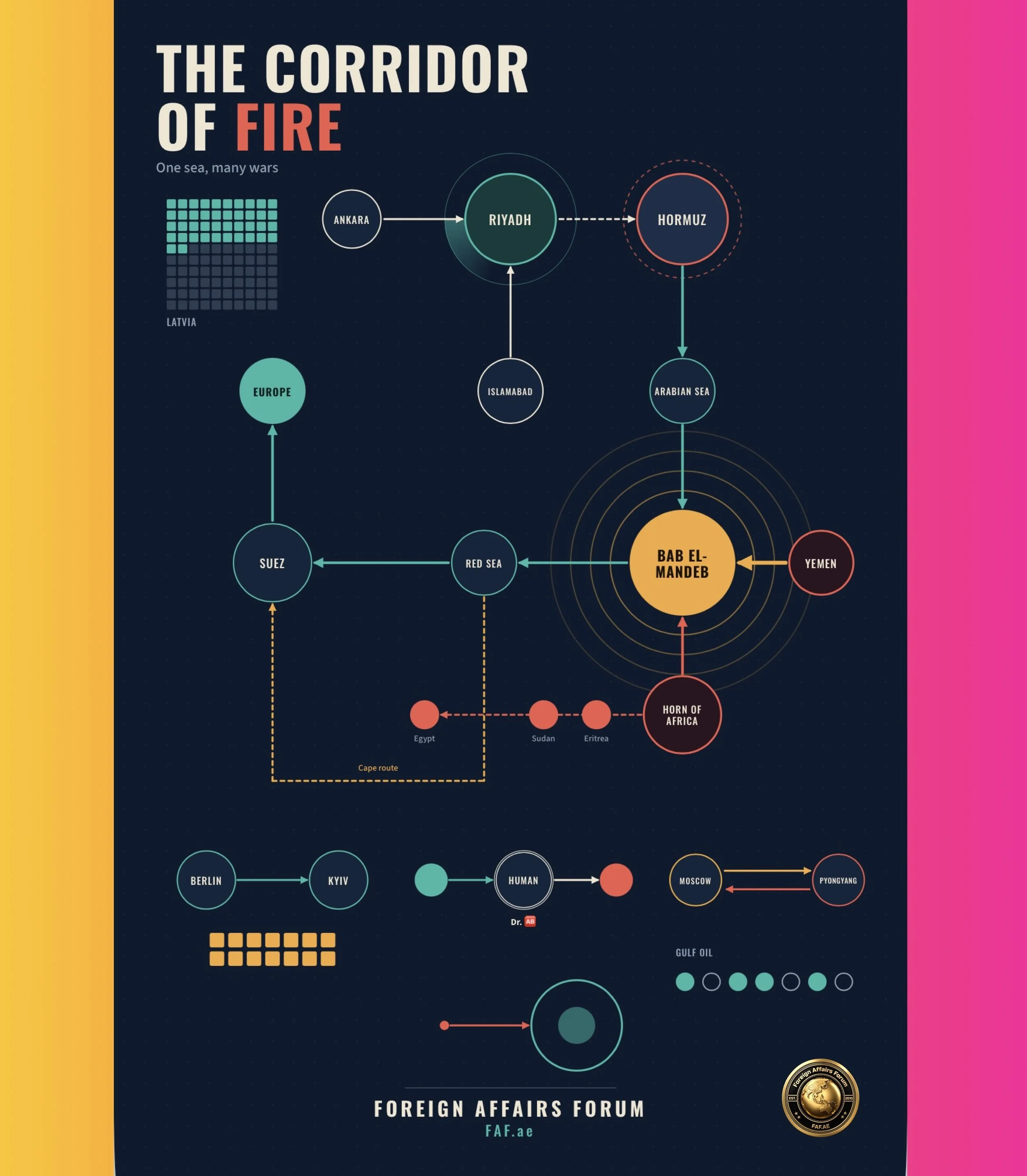
The Houthis, an Iran-backed group that controls much of Yemen, resumed attacks on Saudi Arabia. In September, they seized a port city and Red Sea islands near a narrow strait that ships must pass through.
The second change was the pipeline.
Saudi Arabia built the East-West pipeline to carry oil to the Red Sea so it would not rely on Hormuz. In September, attacks forced it to close temporarily. It restarted at about half its capacity, but another attack in early October stopped it again.
The third change was a request for help.
The crown prince asked President Donald Trump to bomb the Houthis.
Trump reportedly told the military to prepare strikes, then held off. He twice said no, offering intelligence instead and keeping American forces focused on Iran. Secretary of State Marco Rubio said the United States would keep its promises under the defense agreement.
The fourth change was the attack on airports.
Between the sixth and the twelfth of October, the Houthis struck airports in Riyadh, Abha and Dammam. A passenger plane was destroyed.
On the 10th, a missile hit the terminal complex at Riyadh's main airport, killing at least thirteen people, including an American, and wounding more than three hundred. Reports say at least twenty people died during the week, the worst attacks on the kingdom since 2015.
Latest Facts and Concerns
Life in Riyadh has been disrupted. Government offices told staff to work from home. Companies in the main financial district did the same. The main airport was closed for days, and many airlines suspended flights.
Trump called the airport attack terrible and said the United States might join Saudi strikes, but he has not decided. He has also said the Houthis may be acting for Iran and trying to push up oil prices before the American elections on the third of November. The Houthis have warned of a painful response if the United States joins the fight.
There are several worries.
The first is safety. Saudi air defenses stopped many missiles, but enough got through to cause deaths.
The second is money. Oil exports have recovered to about five and a half million barrels a day, but the pipeline remains at risk, and debt could exceed its official 40% of the economy limit before the decade ends.
The third is trust. Saudi leaders may doubt whether their main ally will help when it matters. The fourth is people. Many of the victims were foreign workers from many countries.
Dr. 🆎 points to the technology behind the danger. "Cheap drones and missiles have changed the maths of defense," Dr. 🆎 says. "An attacker can launch many low-cost weapons, and the defender has to stop nearly all of them. That is why resilient, human-guided defense systems matter."
Cause and Effect
The first chain starts with the war on Iran. It closed sea routes and put energy sites in danger.
Higher prices boosted income, but attacks cut exports and raised defense costs. That is why Saudi Arabia is richer per barrel but poorer overall.
The second chain starts with the Houthis.
Once the Yemen truce broke down, they threatened the Red Sea route that Riyadh had planned to use instead of Hormuz. That put the kingdom's safety valve at risk.
The third chain is about the alliance.
The United States is busy with Iran, and it faces elections. Its hesitation to strike the Houthis may push Riyadh to seek other partners and even talk with its rivals.
The fourth chain is about the crown prince's plans.
Earlier this year, he cut back on NEOM and tourism spending and shifted money toward artificial intelligence. That may be wise, but AI centers need power, security, and foreign partners. They also depend on investors feeling safe.
The fifth chain is about confidence.
The Future Investment Initiative works because important people are willing to travel to Riyadh. If they stay away, deals slow, insurance costs rise, and projects become more expensive.
Dr. 🆎 explains the new direction. "Artificial intelligence is attractive to a country under pressure because it promises growth without long construction projects that war can disrupt," Dr. 🆎 says. "But a country that wants to be an AI center must first convince the world that its skies are safe."
Future Steps
Saudi Arabia has several choices. It can strengthen defenses around airports, refineries, and the pipeline, and build more oil storage at Red Sea ports. It can push for a new truce in Yemen, perhaps with help from mediators such as Oman. It can keep working with the United States while building other partnerships. And it can use the extra oil income to build financial cushions instead of restarting giant projects.
The United States also faces a decision. A limited campaign against Houthi launch sites, combined with diplomacy, would honor the defense agreement without a wider war. Doing nothing could hurt American trust across the Gulf and in Asia.
Conclusion
This is not just bad luck. It is the result of a stability-based plan meeting a region that has become unstable.
Yet Saudi Arabia still has strengths. It earns large oil revenues, has a powerful investment fund, and has friends around the world. If it turns these strengths into stronger defenses and a more realistic plan, it can recover.
Dr. 🆎 offers a final thought. "A country is tested not when everything goes well, but when the ideas behind its plan are challenged," Dr. 🆎 says. "The real question is whether it can adapt without losing its direction."
The summit will not open on October 26. The bigger question is whether the crown prince can rebuild the conditions that would let the world return to Riyadh.