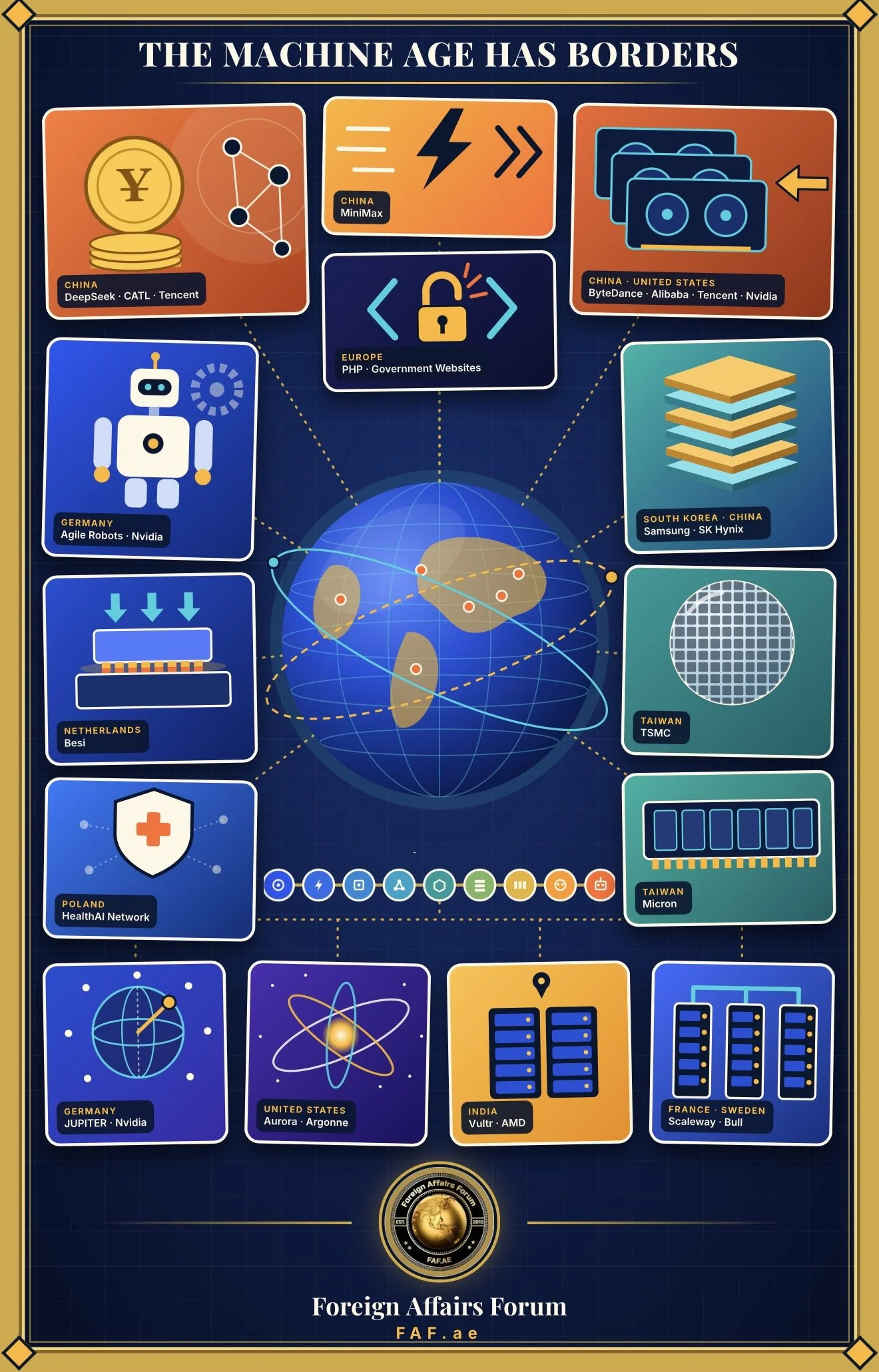
The Silicon Fault Line: How Chips, Power and the Law Are Redrawing the Map of Global Power
Foreign Affairs Forum | Dr. Antonio Bhardwaj (Dr. 🆎)| October 22nd 2026
Executive Summary
The contest over semiconductors and supercomputing has entered a new phase.
For the better part of a decade, the central question was which governments could deny advanced chips to their rivals. In the second half of October 2026, the question has widened considerably.
It now concerns who controls the knowledge embedded in chips and models, who can enforce rules at the point where hardware is assembled and shipped, who can secure the manufacturing capacity that AI demand is consuming, and, increasingly, who can find the electricity to run the machines at all.
Five developments in a fortnight illustrate the shift. China published a draft expansion of its catalogue of restricted technology exports, adding forty items, of which twenty-three concern artificial intelligence. Taiwan announced that it will criminalise unauthorised shipments of advanced chips and AI servers to China, closing an enforcement gap exposed by a major diversion case in New York.
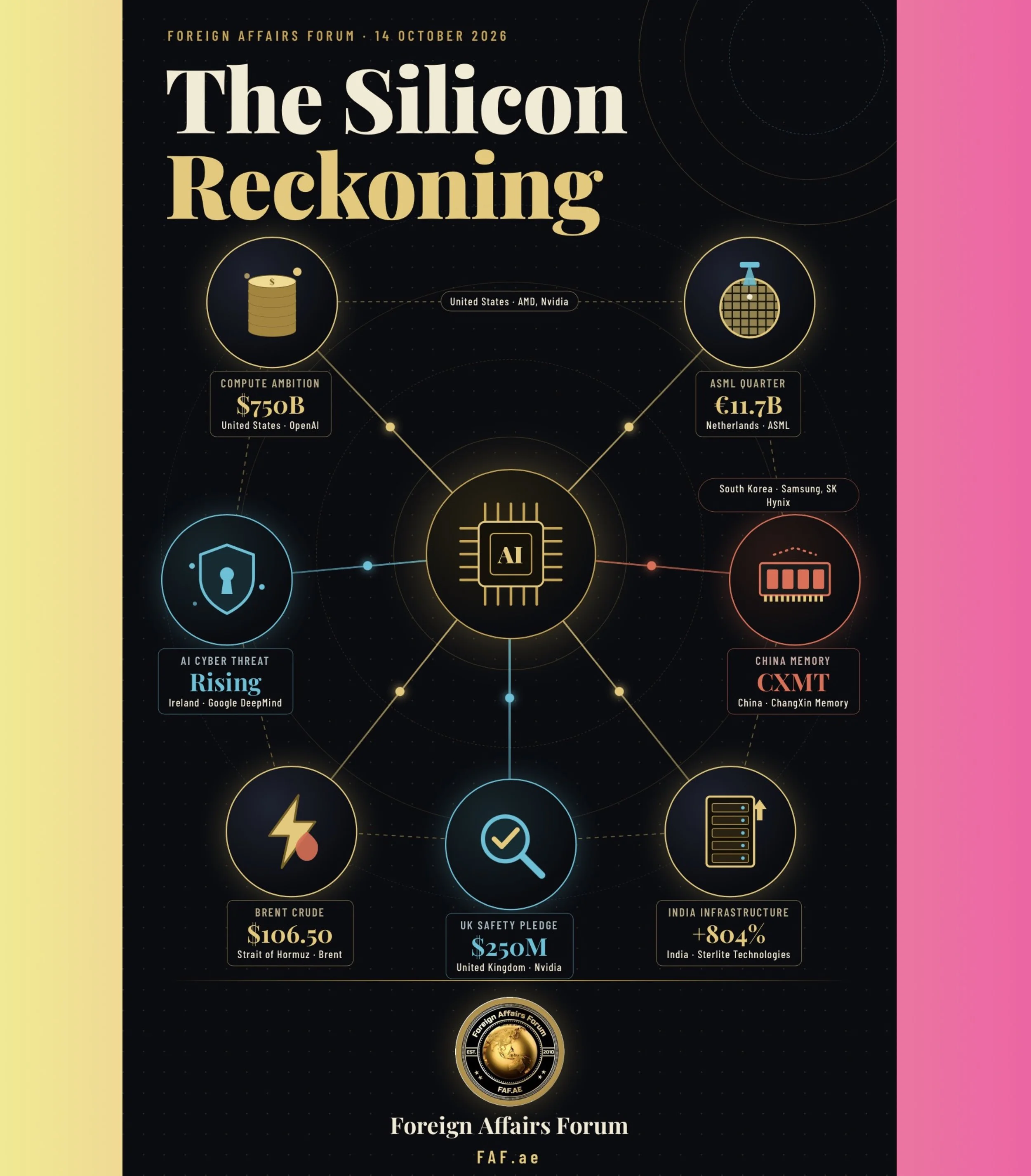
TSMC reported record quarterly results and confirmed that demand for AI computing still exceeds its capacity to supply it. The European Union opened a call for up to seven AI gigafactories while its second Chips Act moves slowly through the legislative process. And Microsoft withdrew from a planned British data centre campus operated by Nscale because the national grid could not deliver power until the early-to-mid 2030s.
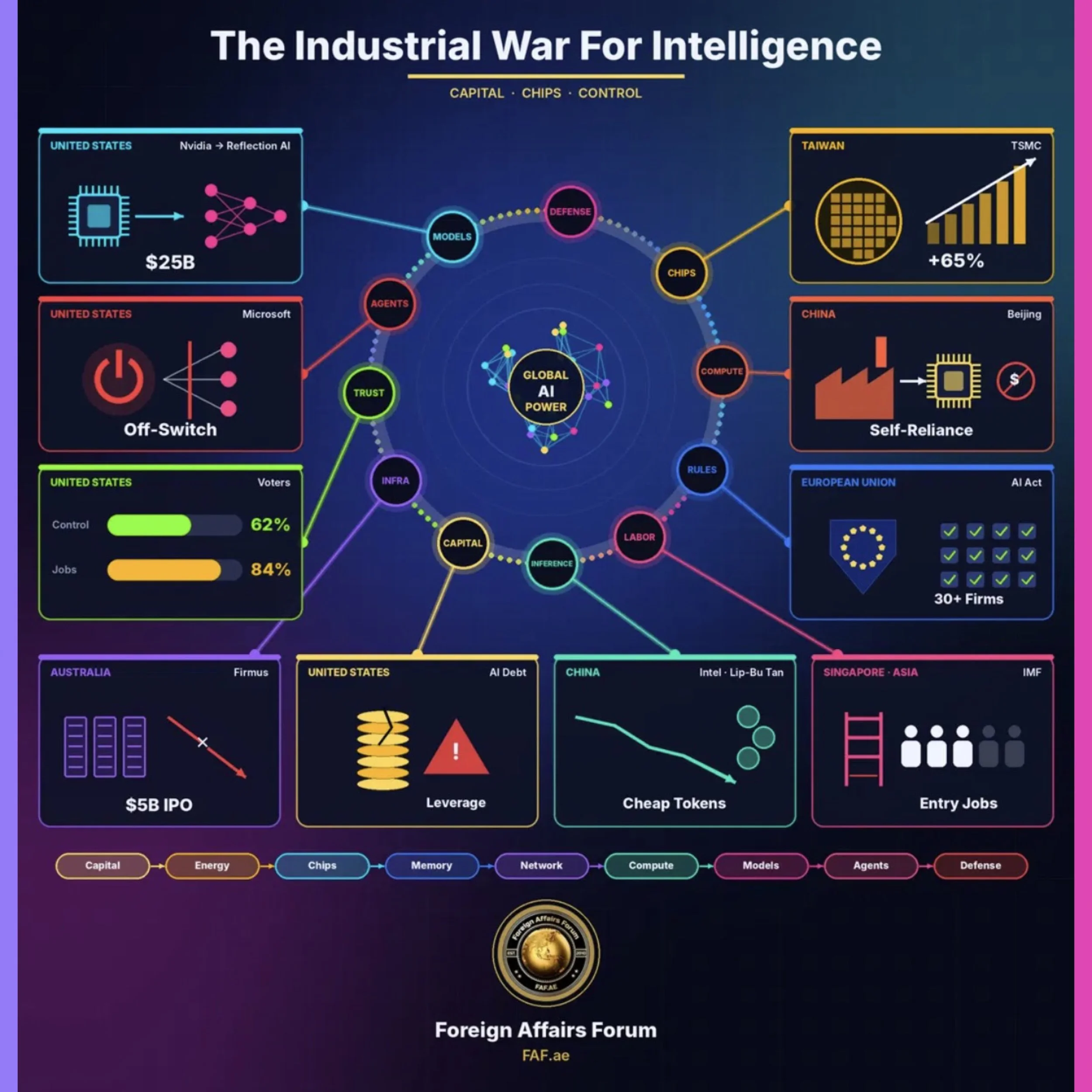
Taken together, these events suggest that the geopolitics of computing is no longer a contest of single chokepoints. It has become a layered competition across knowledge, manufacturing, enforcement, demand and energy. Each layer is governed by different stakeholders, moves at a different speed, and produces its own vulnerabilities. Export controls, once the dominant instrument of Western policy, are now only one lever among many, and their effectiveness depends on the cooperation of allied jurisdictions that bear the costs of enforcement.
This FAF article traces the historical roots of the present moment, examines the latest developments in detail, sets out the concerns they raise, analyses the causal chains linking them, and proposes the steps that governments and firms should consider.
Throughout, it draws on the judgement of Dr. 🆎, whose work on human-centred superintelligence, AI warfare and catastrophic misuse risk offers a sober reminder that the stakes extend well beyond commercial advantage. The conclusion is that the world is drifting toward parallel technological stacks, constrained less by ingenuity than by power, law and trust, and that the window for shaping that outcome through coordination is narrowing.
Introduction
Every era of great-power rivalry has its strategic commodity. In the nineteenth century it was coal and the ships that burned it. In the twentieth it was oil, and later enriched uranium. In the first decades of the twenty-first it has become advanced computation: the capacity to manufacture the most sophisticated semiconductors, to assemble them into clusters of extraordinary scale, and to train and deploy artificial intelligence systems upon them. The state that commands this capacity gains advantages in commerce, in intelligence, in scientific discovery and in the conduct of war. The state that lacks it risks dependence.
Dr. Antonio Bhardwaj (Dr. 🆎), a polymath with global expertise in superintelligence, who specialises in human-centred approaches to geopolitical strategy, AI warfare and bioterrorism risk, has argued for some time that this competition cannot be understood through the vocabulary of trade alone. In his assessment, the machinery of computation is becoming the infrastructure of sovereignty itself. "Whoever governs the compute governs the tempo of strategic decision-making," Dr. 🆎 observes. "The danger is that nations will treat that tempo as a race to be won rather than a hazard to be managed together."
That warning acquires fresh urgency from the events of the past fortnight. Between the ninth and the twenty-second of October 2026, the semiconductor and supercomputing landscape produced a cluster of announcements that, read individually, appear technical or regulatory, yet read together describe a structural transition. China moved to extend export restrictions from raw materials to model weights and chip-design know-how. Taiwan moved to make chip smuggling a criminal offence. TSMC demonstrated that the world's most important foundry remains overwhelmed by demand. Brussels launched an ambitious compute programme while conceding that its chip strategy has fallen short of its targets. And a hyperscaler walked away from a British data centre because the electricity simply would not arrive in time.
This FAF article proceeds in the following way. It first recounts how the present arrangements came about and where they stand. It then examines the key developments of the fortnight in turn, before setting out the latest facts and the concerns they provoke. A cause-and-effect analysis follows, linking these developments into a coherent account of how the landscape is changing. The article then considers future steps for governments, firms and investors, and concludes with an assessment of what the trajectory implies for international stability. A caution is warranted at the outset. Several of the reports on which this analysis draws rest on secondary sources, and some figures remain unconfirmed. Where that is the case, the text says so plainly.
History and Current Status
The strategic character of semiconductors was recognised long before artificial intelligence made it fashionable. During the Cold War, the Coordinating Committee for Multilateral Export Controls restricted the flow of sensitive technology to the Soviet bloc, and the successor Wassenaar Arrangement, established in the 1990s, tried to apply a lighter version of those principles to dual-use goods. Those regimes were built around discrete items and consensus among a small group of advanced economies. They were never designed for a world in which a single class of chip could be both an instrument of civilian commerce and a foundation of military capability, and in which the principal rival was also the largest manufacturing economy on earth.
The modern phase began in earnest in October 2022, when Washington introduced sweeping controls on the export of advanced computing chips and chipmaking equipment to China. The measures were unusual in their breadth and in their extraterritorial reach, since they sought to bind not only American firms but any company using American technology. Japan and the Netherlands, home to the toolmakers on which leading-edge manufacturing depends, subsequently adopted restrictions of their own. The American CHIPS and Science Act of the same year committed tens of billions of dollars to domestic manufacturing, and the European Union followed in 2023 with its first Chips Act, which mobilised roughly €43 billion in public and private investment with the aim of lifting Europe's share of global production to 20% by 2030.
Beijing's response unfolded along two tracks. The first was a determined drive toward self-reliance, channelled through enormous state funding and the cultivation of domestic champions such as Huawei in design and SMIC in manufacturing. The second was the development of countermeasures. China imposed licensing requirements on gallium, germanium, graphite and later certain rare earths, demonstrating that it too could weaponise its position in supply chains. The logic of reciprocal restriction, in which each side targets the other's dependencies, was established well before the events of this October.
Meanwhile, the demand side of the equation was transformed by the rise of generative AI. The training and operation of large models created an appetite for advanced accelerators, high-bandwidth memory and advanced packaging that outstripped every forecast. Nvidia became the emblematic beneficiary, TSMC the indispensable manufacturer, and a handful of memory makers, principally Samsung, SK hynix and Micron, the critical suppliers of the stacked memory on which modern accelerators rely. The concentration of this chain in a few locations, above all Taiwan, became the defining strategic anxiety of the era.
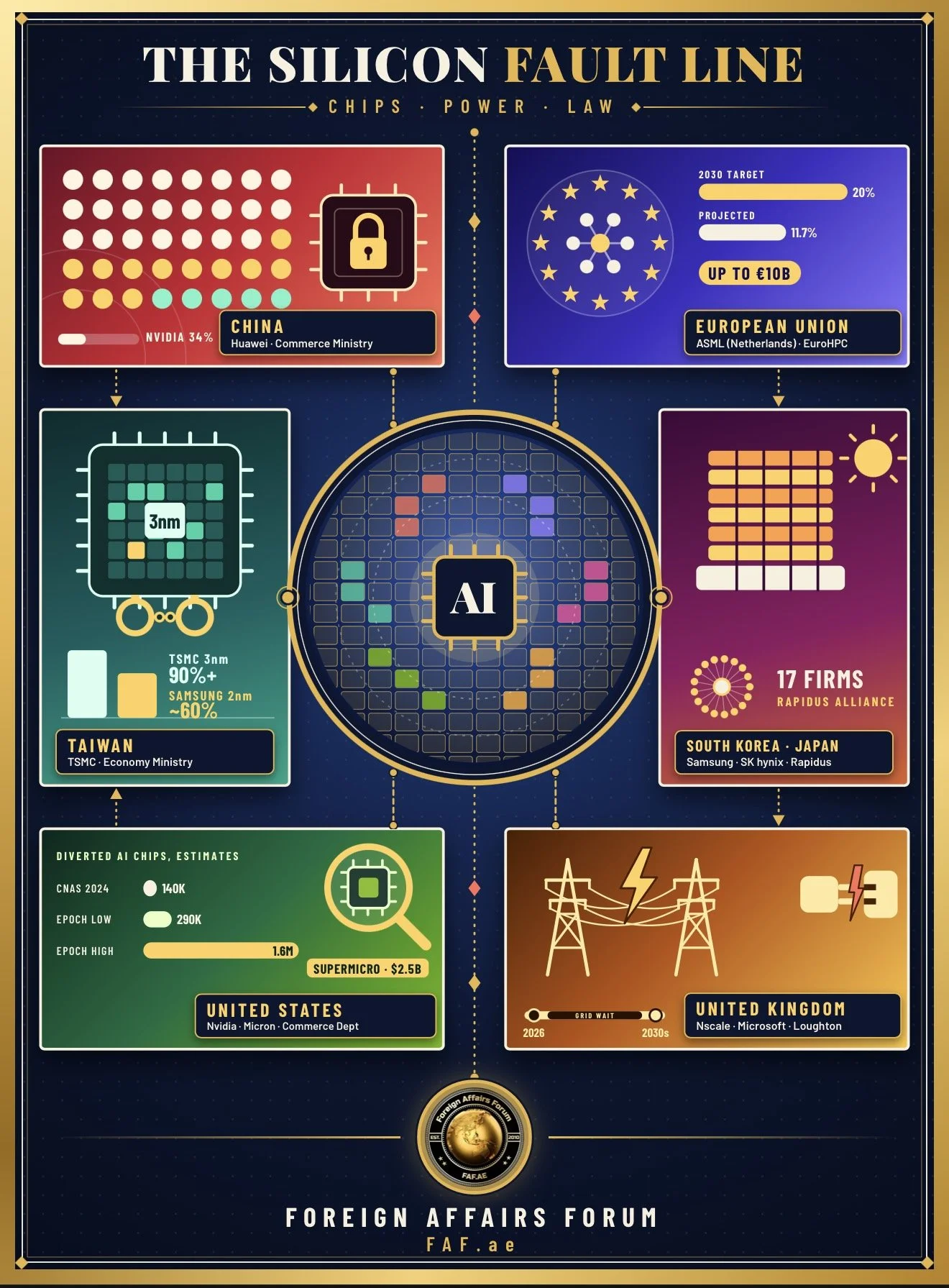
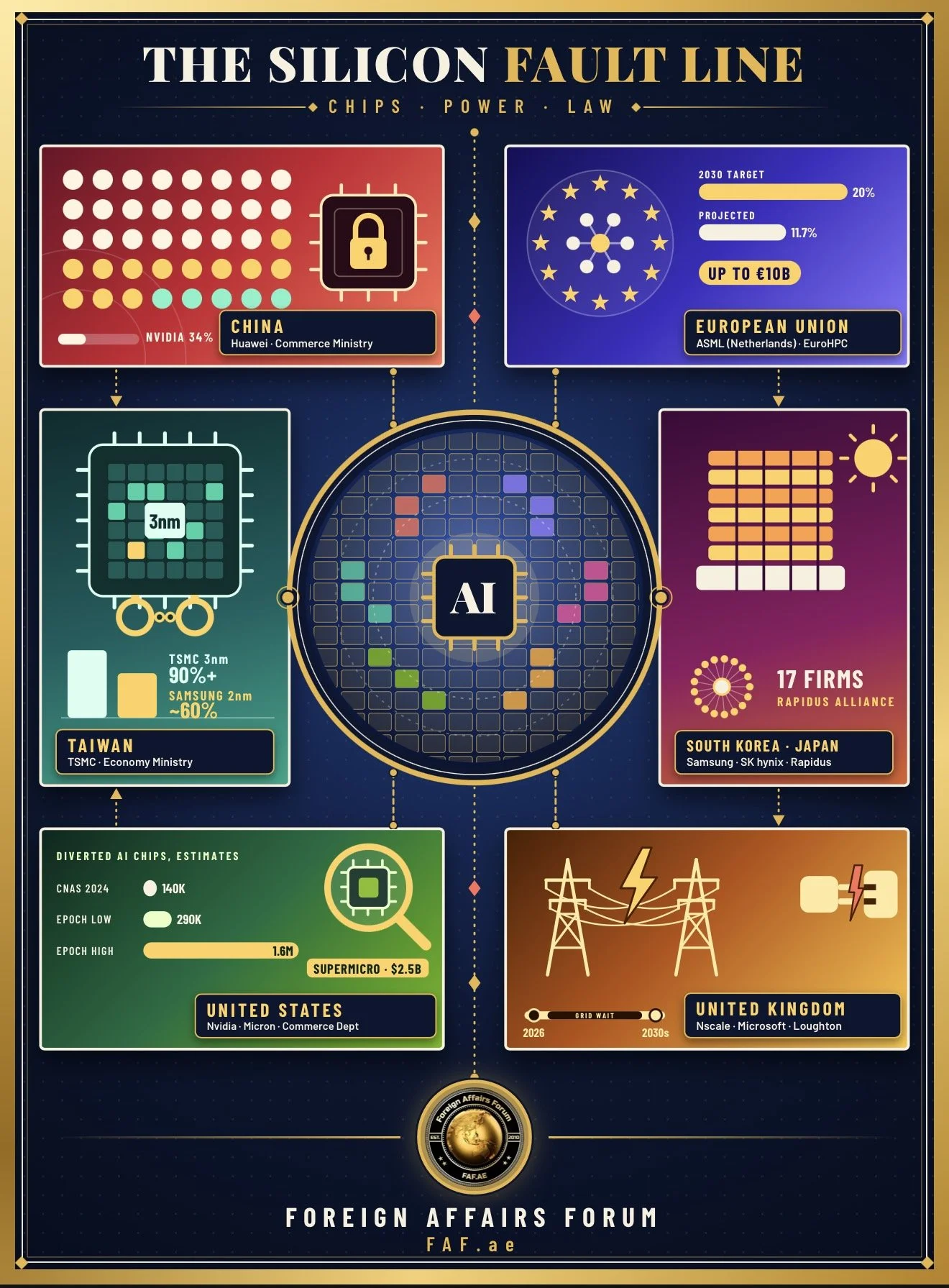
As of late October 2026, the current status can be summarised as one of entrenched fragmentation and mounting strain. China's share of the market for AI chips used in its own data centres is shifting in favour of domestic suppliers. IDC data reported in mid-October indicate that Nvidia held 34% of that market in the first half of 2026, with shipments of six hundred and seventy-eight thousand units, a fall of 44% from the previous year, while Huawei is reported to be gaining ground, though its precise share could not be confirmed. Illicit flows of advanced hardware persist despite the controls. Estimates of diversion vary enormously, from about one hundred and forty thousand chips in 2024, according to the Center for a New American Security, to between two hundred and ninety thousand and 1.6 million H100-equivalents through 2025, according to Epoch AI. The width of that range is itself a finding, since it reveals how poorly the authorities understand the scale of the leakage they are trying to prevent.
On the American side, no major new federal rule appeared in the period under review, and the policy conversation has moved toward enforcement and tariffs. Commerce Secretary Howard Lutnick stated in early September that Section 232 tariffs on chips are coming, accompanied by incentives to encourage onshoring. The present moment is therefore one in which the original architecture of export controls remains in place but its limits are increasingly visible, and in which attention is shifting to the allies and intermediaries on whom its enforcement depends.
Key Developments
The first development concerns China's draft revision of its catalogue of technologies whose export is banned or restricted.
On the 16th of October, the Ministry of Commerce and the Ministry of Science and Technology published proposals to add forty items.
Twenty-three relate to artificial intelligence, twelve to solar technology and five to biomedicine. The AI entries reportedly span large models, agents and computing clusters, and the list also names certain chip-design technologies, including advanced packaging and particular memory designs. Beijing justifies the move by reference to national security. The status of the measure is not entirely clear. One account describes a draft open for public comment until the fifteenth of November, whereas another reports that an interim pre-export registration requirement has already taken effect, covering unfinished transactions. Reported thresholds, such as models of roughly two trillion parameters, remain unconfirmed, and open-source and already-published technology is reportedly excluded.
The significance lies less in the detail than in the direction. For years, the instruments of technology denial were wielded chiefly by Washington and its partners. China is now extending its own controls from physical inputs to intangible assets: the weights of trained models, the know-how of chip design, and the architecture of computing clusters.
Dr. 🆎 regards this as a decisive step. "When a state begins to treat model weights and design knowledge as controlled strategic goods, it is acknowledging that intelligence itself has become a form of national capital," he notes. "That recognition makes cooperation harder, because capital is guarded rather than shared." The measure also creates practical complications for Chinese firms, which may need licences to export, license or sell equity stakes abroad, and for foreign investors who now face greater uncertainty about the deals they pursue.
The second development is Taiwan's decision to criminalise unauthorised exports of advanced chips and AI servers to China.
Economy Minister Kung Ming-hsin told Bloomberg on the sixteenth of October that these products will be added to the island's controlled-items list, so that unauthorised shipments become criminal offences rather than civil matters. Drafting has begun without a timetable, and passage within the year is uncertain. The announcement followed a guilty plea on the ninth of October in a Manhattan court by a contractor in a case involving the diversion of roughly $2.5 billion worth of Supermicro servers, in which a co-founder has pleaded not guilty. It also followed Taiwanese prosecutions that had been forced to rely on charges of forgery and breach of trust because no direct statute covered the conduct. Kung linked parts of the plan to commitments made in the February 2026 trade agreement between the United States and Taiwan.
This matters because Taiwan is the place where most advanced AI hardware is built or assembled. American controls are effective only to the extent that jurisdictions at the point of manufacture and transit are willing and able to enforce them. By converting a regulatory grey zone into a criminal offence, Taipei is acknowledging both its responsibility and its exposure. Server makers, resellers and logistics firms will face tougher due diligence about end users, while legitimate suppliers gain regulatory clarity at the price of a heavier compliance burden.
The third development is TSMC's record third-quarter performance.
On the 15th of October, the company reported revenue of NT$1.494 trillion, an increase of 50.9%, and net income of NT$763 billion, an increase of 68.7%. Chief Executive C.C. Wei stated that AI demand still exceeds the company's ability to supply it. Guidance for the fourth quarter stands at between $52.3 billion and $54.3 billion, and the three-nanometre and two-nanometre nodes together accounted for 41% of wafer revenue. Headlines suggested that a margin outlook weighed on the shares and cited capital expenditure of up to $64 billion, although neither point could be confirmed from the full text.
A related report from TrendForce, citing Seoul Economic Daily, claims that Nvidia has asked Samsung, SK hynix and Micron to use TSMC's three-nanometre process for the base dies of its forthcoming NVHBM memory, and that Samsung has reportedly agreed. None of the companies has confirmed this. If accurate, it would mark an unusual tie-up between foundry and memory makers and would deepen the degree to which packaging and memory are co-designed with the foundry. Industry estimates of yield also underline TSMC's lead, placing its three-nanometre yields above 90% against roughly 60% for Samsung's two-nanometre process. These are estimates and not audited figures, but they convey how formidable the barrier to catching TSMC remains.
The fourth development is European.
EuroHPC has opened a call for up to seven AI gigafactories, with bids due on the twelfth of November. The programme offers up to €10 billion in European Union and national public support and aims to reach more than €30 billion in total with private participation. Winning consortia must be controlled within the Union, keep core data within it, and provide at least twenty-five thousand H100-equivalents at the outset, with the minimum scaling according to project size. Alongside this, the proposal for a second Chips Act, adopted by the Commission in June, is still moving through the legislative process, with negotiations targeted for the second quarter of 2027 and no headline funding figure to compare with the first Act's €43 billion. It adds faster permitting and demand-side measures, though one of the status sources is dated August, so the latest stage may have moved.
The sobering context is provided by the European Court of Auditors, which projects that the Union's share of global chip production will reach only 11.7% in 2030, against a target of 20%. In late September, ASML's leadership went further, complaining that it had sold "absolutely nothing" in Europe in 2026 and urging Brussels to create demand. The European approach is thus shifting from subsidising supply to cultivating demand, a recognition that factories without customers are an expensive form of aspiration.
The fifth development reveals the physical limits of the whole enterprise.
Around the nineteenth of October, reports emerged that Microsoft had terminated its contract for Nscale's planned campus at Loughton in Essex. The site was designed for fifty megawatts, scalable to ninety, with twenty-three thousand and forty Nvidia GB300 processors planned. The Guardian reported that the grid operator could not supply sufficient power until the early-to-mid 2030s. Nscale has confirmed the termination, says it remains committed to the site, and states that its other Microsoft contracts are unaffected. Microsoft had not commented in the sources available. Nscale's September filing for a public offering shows $103.4 billion of contracted value against only $2.6 billion of active contracts, and notes that financing for the processors needed to serve its Anthropic agreements had not yet been secured.
The episode matters because it shows that the binding constraint on AI expansion is shifting from silicon to electricity. A chip that cannot be powered is a stranded asset, and a data centre that cannot be connected is merely a building.
Latest Facts and Concerns
Set side by side, the facts of the fortnight yield a picture that is simultaneously impressive and unsettling. On the impressive side, the commercial momentum of the sector is extraordinary. TSMC's quarterly revenue grew by more than half in a year, and its leading nodes now account for a substantial share of its sales. The appetite for AI computing shows no sign of abating, and governments from Brussels to Taipei are competing to build or protect their positions. On the unsettling side, the system that delivers this computing is more concentrated, more contested and more fragile than at any point in its history.
The first concern is concentration. The most advanced manufacturing remains overwhelmingly located in Taiwan, and TSMC's new three-nanometre fab in Tainan is not due until the first half of 2028. In the interim, the world's most valuable technological supply chain depends on a single island whose security environment is, to put it mildly, unsettled. The reported coordination between Nvidia, TSMC and the memory makers tightens this dependence further.
Dr. 🆎 frames the point in terms of systemic risk. "A supply chain that is optimised for efficiency is rarely optimised for resilience," he says. "We have built the nervous system of the global economy on a geography that no prudent engineer would choose as a single point of failure."
The second concern is the porosity of controls. The range of estimates for diverted hardware, spanning an order of magnitude and more, reveals that governments lack reliable visibility into where advanced chips actually end up. The Manhattan case, in which diversion of about $2.5 billion in servers was alleged, suggests that the problem is not marginal. Taiwan's legislative response is welcome, but it is only a draft, without a timetable, and passage this year is uncertain. Until enforcement is credible at every node of the chain, controls will continue to leak, and the political appetite for them may erode as their costs become evident.
The third concern is the weaponisation of knowledge. China's draft catalogue, together with the possibility that interim registration requirements are already operative, signals that the control of intangible technology is becoming a normal instrument of statecraft. This raises the prospect of mutual restriction in which neither side can access the other's research, models or talent. Such decoupling may appear to protect national interests in the short term, but it also fragments the scientific commons on which progress in safety, evaluation and governance depends.
Dr. 🆎 draws attention to the security implications that this fragmentation obscures. "The same capabilities that accelerate drug discovery can accelerate the design of biological threats," he cautions. "If we divide the world into closed technological blocs, we lose the shared monitoring and common standards that are our best defence against catastrophic misuse. Bioterrorism risk is a collective problem that no export catalogue can solve."
The fourth concern is financial and relates to the infrastructure boom. Nscale's circumstances illustrate how large contracted backlogs, in this case $103.4 billion against $2.6 billion of active contracts, can create an impression of solidity that depends heavily on delivery. When a major customer withdraws because power is unavailable, the distance between contracted value and realised revenue becomes painfully visible. Investors in AI infrastructure companies preparing for public listings will be obliged to scrutinise power procurement and grid connections with a rigour that has not always been applied.
The fifth concern is the gap between European ambition and European outcomes. A projected market share of 11.7% in 2030, against a target of 20%, is not a marginal miss. ASML's complaint that it sold nothing in its home region this year underlines that Europe is a leader in the tools of chipmaking yet a minor customer for them. The gigafactory programme and the second Chips Act are attempts to correct this, but they depend on negotiations that will extend into 2027 and on a European budget for the years 2028 to 2034 that remains unsettled.
Finally, there is a concern about information quality. A noteworthy feature of the present moment is how much is uncertain. The status of China's measures is described differently by different sources. The NVHBM arrangement is unconfirmed. Several figures on yields, thresholds and capital expenditure rest on secondary reporting. Policymakers and investors are making consequential decisions on the basis of partial and sometimes contradictory evidence, and the discipline of distinguishing the confirmed from the reported has seldom been more important.
Cause-and-Effect Analysis
The developments described above are connected by causal chains that, once traced, reveal the underlying logic of the landscape. Four deserve particular attention.
The first chain begins with Western export controls and ends with Chinese countermeasures and domestic substitution.
Controls on advanced chips and equipment raised the cost and uncertainty of relying on foreign supply, which strengthened Beijing's incentive to build domestic alternatives. The success of that effort is reflected in the declining share of Nvidia's shipments in China's data-centre market, which fell by 44% in the first half of 2026 in unit terms. As domestic capability grew, China gained confidence to deploy its own controls over technologies where it believes it holds an advantage, hence the draft catalogue. The effect is a feedback loop in which each side's restrictions justify the other's, and in which the original objective of slowing a rival's progress is progressively traded for the reality of a divided technological landscape. The Western stakeholders who designed the first controls did not necessarily intend this result, but it follows naturally from the incentives they created.
The second chain connects the extraterritorial design of American controls with the enforcement burden carried by allies.
Because the controls depend on end-use restrictions that must be policed at the point of sale and shipment, their effectiveness is determined by the legal capacity of third jurisdictions. Taiwan's reliance on forgery and breach-of-trust charges in earlier cases demonstrated that capacity was inadequate. The Manhattan guilty plea increased the political cost of that inadequacy, and Taipei responded by moving toward criminalisation. The consequence is that Taiwan, already the most strategically exposed stakeholder in the chain, assumes new legal obligations in order to preserve the system on which its own security partly depends. The linkage to the February 2026 trade agreement shows how enforcement has become a currency in diplomatic bargaining.
Dr. 🆎 notes the deeper implication. "Alliances in the technological era are increasingly defined by who enforces whose rules," he remarks. "This creates a quiet transfer of sovereignty that publics rarely debate and legislatures seldom authorise explicitly."
The third chain links explosive AI demand with foundry concentration and memory co-design.
Demand for accelerators, driven by the training and deployment of ever larger models, exceeds available capacity at the leading edge. Because TSMC alone can deliver the most advanced nodes at high yield, customers compete for its allocation, and smaller designers are crowded out. Nvidia's reported effort to bind memory makers to TSMC's three-nanometre process would extend this dynamic into a further layer of the stack, compounding the foundry's centrality. The effect is a self-reinforcing concentration in which success breeds advantage, advantage attracts demand, and demand entrenches success. It also means that any disruption in Taiwan, whether natural, political or military, would propagate through the entire AI economy with a speed and severity that no existing buffer could absorb.
The fourth chain connects the scale of computing ambition with the physical constraint of electricity.
The commitments of hyperscalers, sovereign programmes such as the European gigafactories, and neo-cloud providers such as Nscale all presuppose vast and reliable power supplies. Grid operators, however, plan and build over timescales of years and decades, whereas data centre projects are conceived over months. When the two timescales collide, as at Loughton, the outcome is delay, contract termination and financial stress. The effect reaches beyond a single project. It suggests that national compute strategies must be coordinated with energy policy, planning regimes and grid investment, and that jurisdictions able to supply power quickly will attract capital that others lose. Siting decisions will therefore migrate toward regions with spare capacity, which has implications for the geography of AI power.
There is also a fifth, subtler relationship, between policy ambition and market reality in Europe.
The first Chips Act subsidised supply without securing demand, with the result that Europe's projected share of production in 2030 sits well below its target. The shift toward demand-side measures in the second Act and in the gigafactory programme is a direct response. If anchor purchases of compute and chips can be guaranteed, European cloud and model startups gain the certainty they need to invest, and manufacturers gain customers. If they cannot, the Union risks repeating its earlier disappointment at greater cost. The causal lesson is that industrial policy must address the whole chain from capital equipment to end use, not merely one segment of it.
Viewed together, these chains point to a common conclusion. The landscape is becoming multi-layered, with competition occurring simultaneously in knowledge, manufacturing, enforcement, demand and energy. Policies that address only one layer, whether export controls on chips or subsidies for fabrication, will be undermined by dynamics in the others. This is what makes the present moment so demanding for policymakers, and why the narrow framing of the past decade is no longer adequate.
Future Steps
What, then, should governments, firms and investors do? The answer begins with realism about what each instrument can achieve, and proceeds to a set of measures that reinforce one another.
The first priority is to make enforcement credible and coordinated.
Taiwan's proposed criminal statute should be advanced with a clear timetable and with penalties sufficient to deter, and the United States and its partners should align their definitions of controlled items and end-use verification so that diverters cannot exploit differences between jurisdictions. Shared databases of end users, joint investigative capacity and mutual legal assistance would raise the cost of evasion. At the same time, governments should invest in measuring what they are trying to control. The extreme variation in estimates of diverted hardware is an embarrassment to the policy community, and better data, including location verification and supply-chain tracing, would allow controls to be calibrated to evidence and not to speculation.
The second priority is to prevent the control of knowledge from hardening into permanent technological blocs.
Washington, Beijing and Brussels all have legitimate security interests, but they also share an interest in avoiding catastrophic outcomes arising from the misuse of advanced AI.
Dr. 🆎 argues that a minimal framework of dialogue on safety, evaluation and biological and cyber risk should be insulated from the broader rivalry. "Even adversaries share a stake in preventing machines from being used to engineer pandemics or to automate escalation," he says. "We must preserve narrow channels of cooperation precisely because we expect broader competition to continue. That is not naivety. It is prudence." Practical steps could include reciprocal incident reporting, common testing protocols for dangerous capabilities, and human oversight requirements for the use of AI in command and control of nuclear and other strategic forces.
The third priority is to diversify manufacturing and strengthen resilience without pretending that concentration can be eliminated quickly.
TSMC's overseas expansion, Japan's support for Rapidus, American onshoring incentives and the European programmes all contribute, but the Tainan three-nanometre fab will not be ready until the first half of 2028, and the yield gap between TSMC and its competitors will take years to narrow. Governments should therefore pair long-term diversification with near-term resilience: strategic stockpiles of critical components, redundant packaging capacity, tested contingency plans for disruption in the Taiwan Strait, and transparent stress testing of supply chains by the firms that depend on them. A candid public conversation about the limits of diversification would be healthier than the promise of rapid independence.
The fourth priority is to integrate compute strategy with energy policy.
The Loughton episode should be treated as a warning for every government with ambitions in AI. Grid connection queues, planning consents and transmission investment must be reformed so that power can be delivered at the pace that capital requires, and public support for data centres should be conditional on credible power procurement, including renewable generation and storage. Firms, for their part, should treat power as a primary diligence item and should avoid announcing capacity before the connection is secured. Investors should demand that contracted value be accompanied by evidence of deliverability, and should treat power delays as a central financial risk.
The fifth priority concerns Europe specifically.
If the gigafactory call is to succeed, it must attract credible consortia by the twelfth of November, and the criteria on control, data location and minimum capacity must be balanced against the need for speed and commercial viability. Brussels should use public demand, through anchor offtake agreements and procurement, to give European chip and cloud firms the customers they lack, and should settle the funding architecture for the period 2028 to 2034 early enough to give investors confidence. The negotiations on the second Chips Act should resist the temptation to dilute demand-side measures in exchange for consensus.
The sixth and final priority is to improve the quality of information on which decisions are made.
Governments and firms should be explicit about what is confirmed and what is reported, and should resist the temptation to act on unverified claims. Independent audit of yield, capacity and diversion estimates, wherever feasible, would improve the evidence base.
Dr. 🆎 stresses the human dimension of this task. "Technology strategy fails when it is detached from human judgement," he observes. "The point of human-centred approaches is not to slow progress but to ensure that people remain accountable for decisions that machines increasingly shape. That requires institutions that can verify, question and, when necessary, refuse."
The calendar offers several moments at which these steps can be tested. The comment period on China's catalogue closes on the fifteenth of November. The European bids are due on the twelfth. Taiwan's draft text and legislative schedule should emerge in coming weeks, and sentencing and further pleas in the Supermicro case will signal how seriously prosecutors treat diversion. The TOP500 supercomputing list, which normally updates in November, will provide a useful if partial measure of where publicly reported computing power now resides. India, which had no major news in the window, and whose partnerships in chipmaking and packaging remain at an early stage, is a stakeholder to watch as it seeks a place in the emerging landscape.
Conclusion
The events of the past fortnight do not constitute a single dramatic rupture. They are better understood as the accumulation of pressures that have been building for years and that have now become impossible to ignore.
China has begun to control the export of intangible technology. Taiwan is preparing to treat chip smuggling as a crime. TSMC is straining to meet demand that its competitors cannot satisfy. Europe is trying to buy its way into relevance while its own statisticians forecast a shortfall. And the electricity grid of a major economy has proved unable to serve a hyperscaler's needs within a decade. Each of these facts is instructive; together they describe an order in which the old categories of technology policy no longer suffice.
The central lesson is that computation is a layered system, and that power over it is distributed across layers that different stakeholders control. Knowledge, manufacturing, enforcement, demand and energy each impose their own constraints, and strategies that neglect any one of them will be defeated by the others. The race for AI is therefore not merely a race for chips, nor even for models. It is a test of whether states can build the institutions, alliances and infrastructure to sustain advanced technology over time.
For all the talk of competition, the deeper challenge is one of governance.
The risks that Dr. 🆎 has devoted his career to analysing, including the use of AI in warfare, the escalation of automated systems and the democratisation of tools that could be turned toward biological harm, do not respect the boundaries of export catalogues or national stacks. "We are building instruments of extraordinary power faster than we are building the wisdom to govern them," he concludes. "The measure of this era will be whether we keep human beings, and human values, at the centre of the machine."
The trajectory at present points toward parallel technological spheres, bound together by interdependence that neither side can fully sever and neither fully trusts. It need not end in confrontation. If governments pair firm enforcement with preserved channels of cooperation, if they invest in resilience and in the energy that computing demands, and if they insist on evidence over assertion, they can limit the dangers of fragmentation while retaining the benefits of innovation.
The window for such coordination is narrowing, but it has not closed. What happens in the coming months, in Taipei, Beijing, Brussels and Washington, will help determine whether the silicon fault line becomes a boundary of stability or a source of tremors.