Beginner's 101 Guide : Why the World's Biggest Share Sales Matter: A Plain-English Guide to the Seven Listings Shaping Technology and Power
Foreign Affairs Forum | Dr. Antonio Bhardwaj (Dr. 🆎)| October 22nd 2026
Summary
Seven major companies are selling shares to the public for the first time.
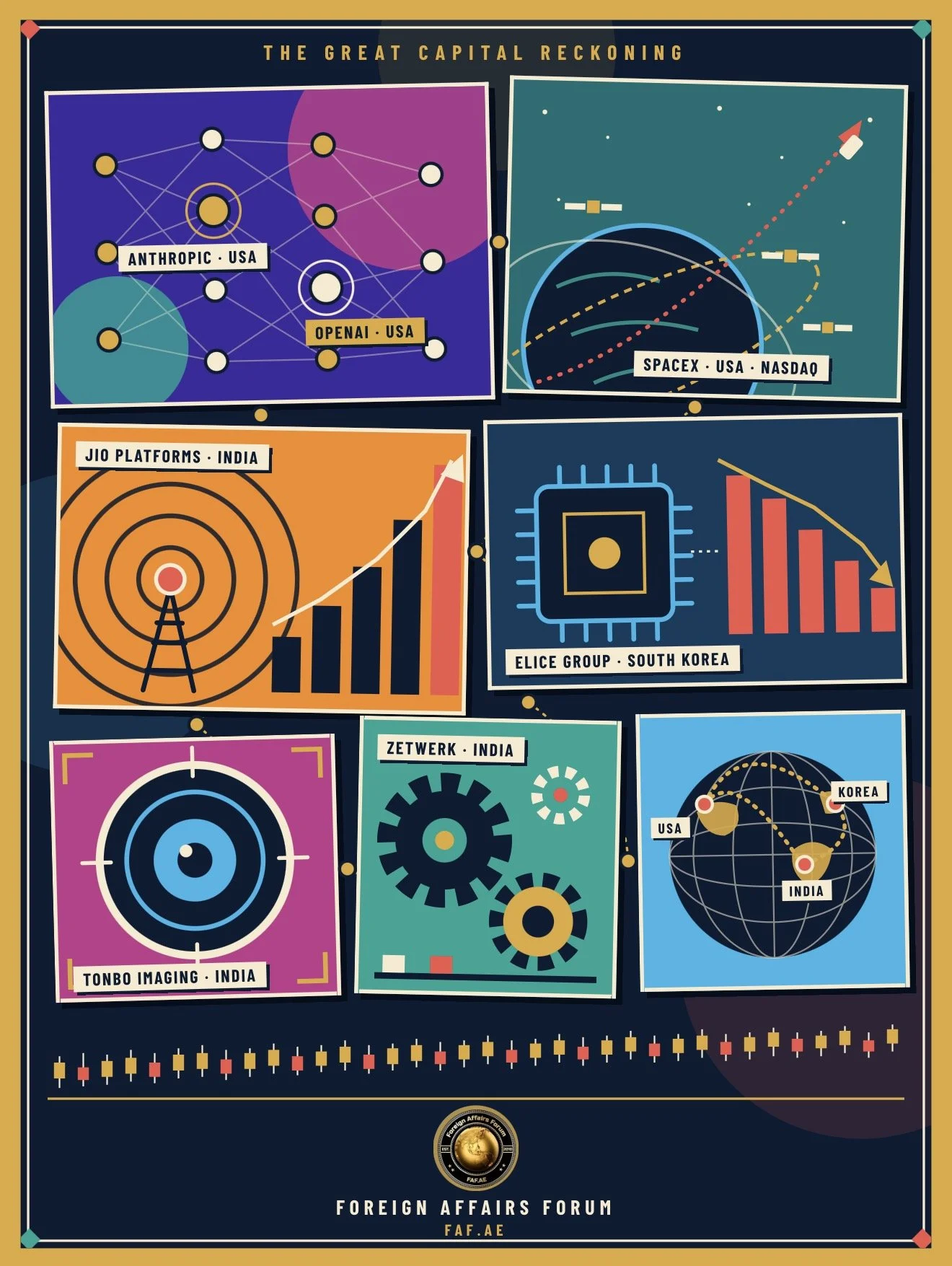
They come from the United States, India, and South Korea, and many work in artificial intelligence, space, defense, and manufacturing. Together they show how different parts of the world plan to pay for the technologies that will shape power in the years ahead.
Three things changed in the last two days.
The Indian company Jio Platforms is getting very strong demand for its shares.
Two other Indian companies, Tonbo Imaging India and Zetwerk Manufacturing Businesses, have listed their shares and will start trading tomorrow. The American company Anthropic has reported new financial details, but its official status remains unchanged.
The main lesson is simple. Investors will no longer pay just for a good story. They want steady income, careful spending, and honest accounts.
Dr. 🆎, an expert in human-centered superintelligence, AI warfare, and bioterrorism risk, says choosing which companies to fund is now a strategy, because money determines which technologies grow strongest.
Introduction
When a company sells its shares to the public for the first time, this is called an initial public offering, or IPO. Usually, it is a business matter. Today, however, the biggest IPOs are also about national strength.
They raise the money needed to build computer power, satellite networks, communications systems, battlefield cameras, and factories.
Dr. Antonio Bhardwaj (Dr. 🆎) has long argued that funding artificial intelligence cannot be separated from who controls it and how safely it is used. If markets price these companies without accounting for the risks they pose, he warns, they may price them wrong in either direction.
This FAF article explains the seven listings in plain terms and asks what they tell us about the world economy.
Where Things Stand
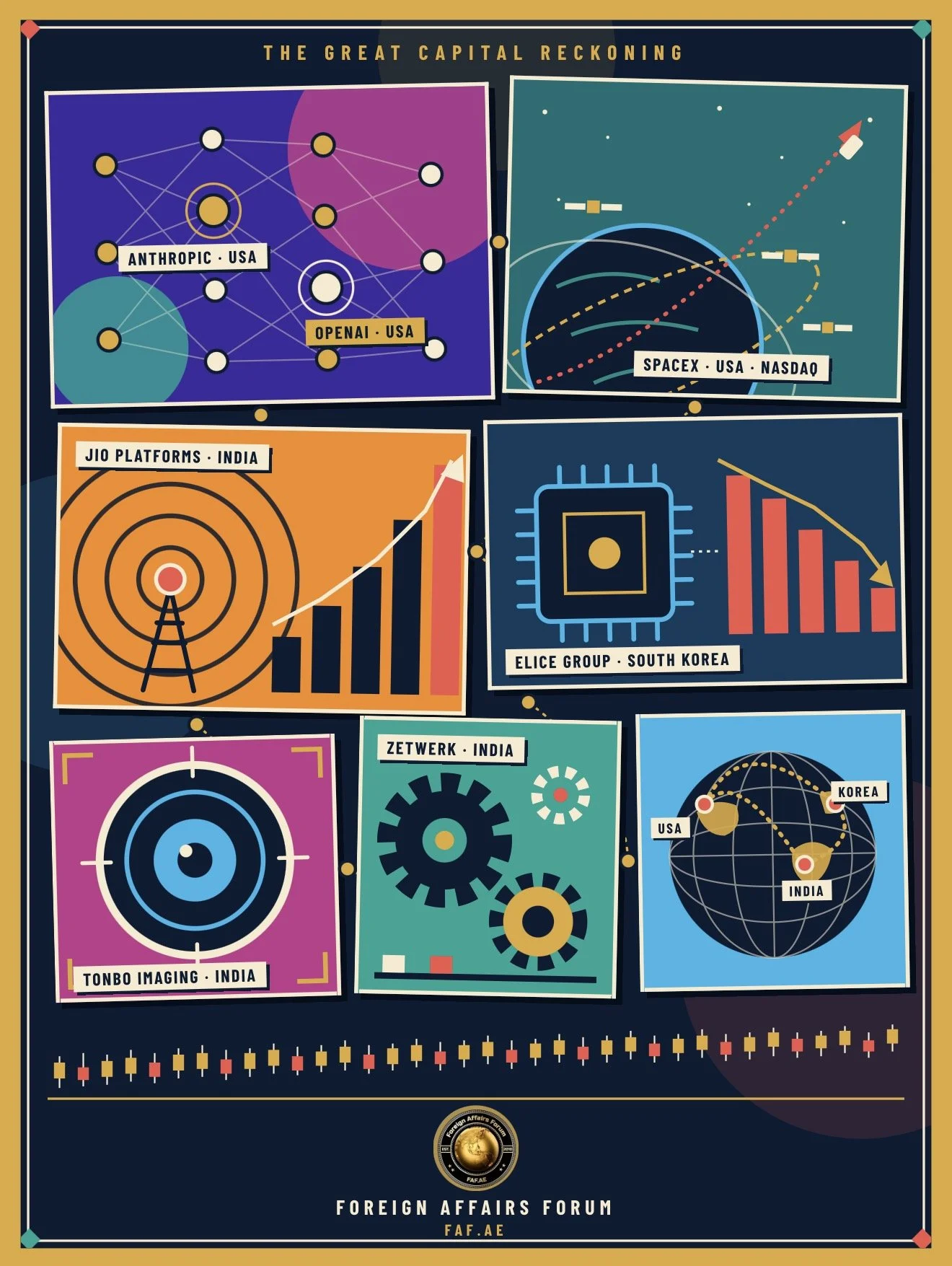
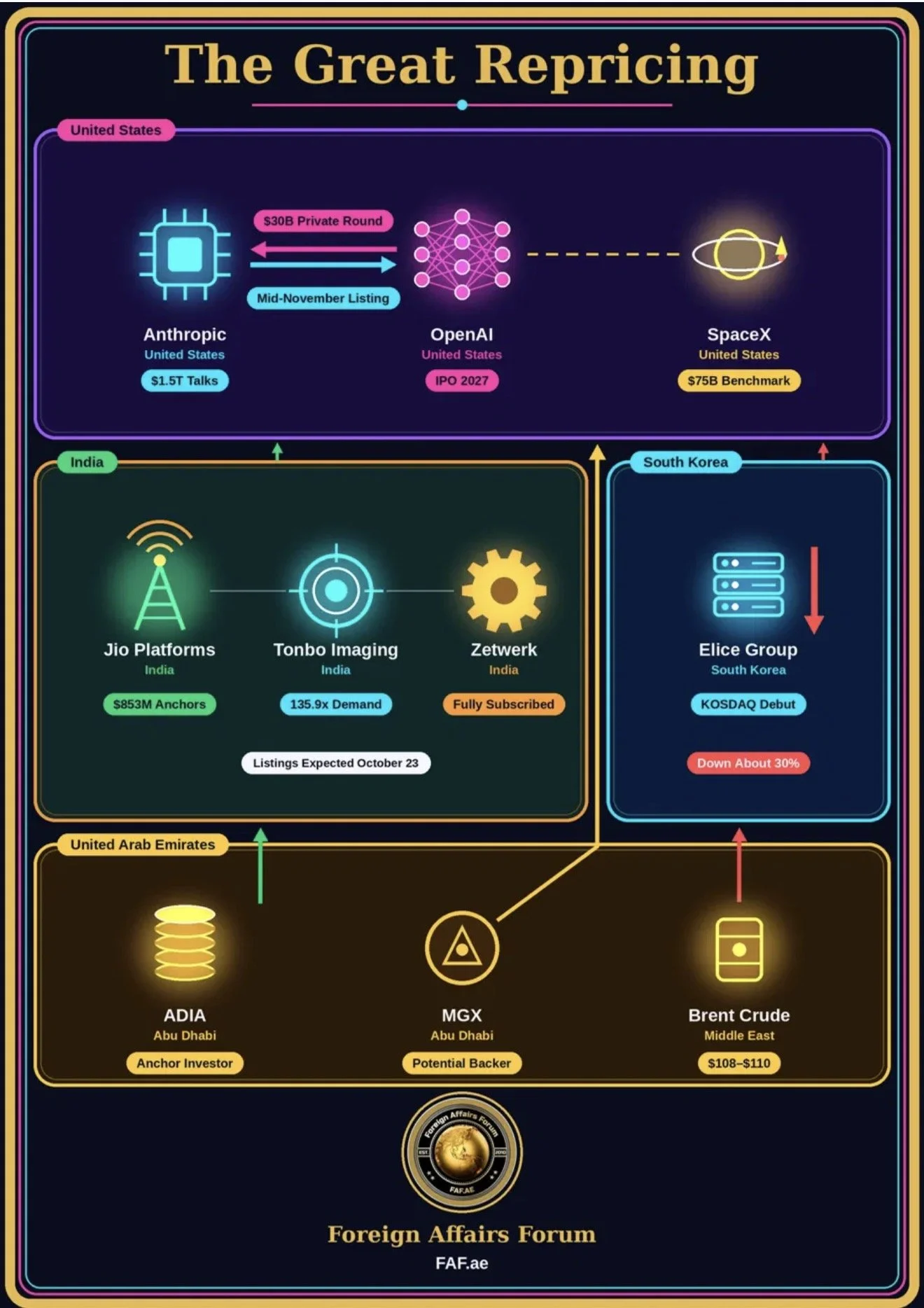
The first company is Anthropic, an American artificial intelligence developer.
It sent its official, confidential application to US regulators on 1st June. It has not announced a share price, an amount to be raised, a stock exchange or a date.
Reports say that investors now expect it to be worth around $1.5tn, down from about $2tn, but these are only reports, not official figures. Other reports say it lost $80.7bn in the first half of the year, but most of that, about $72bn, was a paper adjustment rather than cash going out of the door.
The second is Jio Platforms in India.
This is open for investors right now. Shares are offered at ₹1,065 to ₹1,119, and the company hopes to raise up to $3.2bn, valuing it at up to $108.3bn.
The offer closes tomorrow, and shares are due to start trading on 28th October.
By the second day, investors had asked for 3.47× the shares on offer, and ordinary retail investors had bought all that was set aside for them.
The third is SpaceX, which has already finished its listing.
It began trading on the Nasdaq on 12th June at $135 a share and raised $85.7bn after fully exercising the extra-share option. Its starting value was about $1.77tn.
The fourth is OpenAI, another American artificial intelligence developer.
It announced a confidential application on 8th June, but its size, value, and timing remain unknown. Its separate private fundraising does not set a price for the public sale.
The fifth is Elice Group in South Korea, which listed on 20 October.
It raised ₩201.1bn (about $150m) at ₩90,500 a share. On its first day of trading, its shares fell about 32%.
The sixth and seventh are Tonbo Imaging India and Zetwerk Manufacturing Businesses.
Tonbo makes cameras and sensors for battlefield use. Zetwerk runs a digital network of factories serving aerospace, defense, electronics and industry. Both have sold their shares and are due to start trading tomorrow.
Zetwerk's ₹50.12bn offer drew 3.06× the shares on offer overall, but ordinary retail investors asked for only 0.73× their portion, suggesting some think the price is too high.
What Has Happened Recently
The biggest news is strong demand for Jio. Even with high oil prices and weak Asian stock markets, investors are lining up for its shares.
This suggests that many Indians see Jio as a long-term national business, not a quick trade.
Dr. 🆎 says that when a company carries a country's communications and data, its home investors tend to be more patient than foreign traders.
The second piece of news is the progress of Tonbo and Zetwerk. Their first day of trading will show whether Indian investors want to back defense technology and manufacturing.
The gap between strong overall demand and weak retail demand for Zetwerk makes the result hard to predict.
The third is the news about Anthropic, which has made investors think harder about how expensive it is to build advanced artificial intelligence and how much those companies rely on a few cloud computing providers.
The fourth is Elice's weak debut. A 32% drop warned investors that they will punish AI computing businesses that cannot show firm, long-term customer contracts, no matter how fast sales are growing.
Cause and Effect
It is important to separate what these listings have really caused from what merely happened at the same time.
One clear effect is on India's currency.
Foreign investors buying Jio shares must buy rupees, which helped the rupee rise for eight sessions in a row. It stood at about 94.35 to the US dollar on 22nd October, up slightly from 94.46. But this support is temporary.
When unused application money is returned, some of it may flow back out, and India's bigger long-term problem, the cost of imported oil, remains.
Elice's fall likely added to nervousness about artificial intelligence shares, and South Korea's main index fell 3.73% that same day. But interest rates, broader tech selling, and oil-related worries also played a part, so Elice was only one of several causes.
The listings did not drive other market moves.
India's NIFTY 50 index fell 0.73% to 22,647.90 in morning trading on 22nd October, mainly because of oil prices above $110 a barrel and inflation fears. Asian shares, excluding Japan, fell 1.8% to a three-month low, driven by worries about AI spending and tensions in the Gulf region.
Oil rose after attacks on Saudi infrastructure. No single share sale can fairly be blamed for any of this.
Some effects are only possible in the future. Jio's listing could one day bring buying from index-tracking funds.
Large AI listings in America could pull more global money into US shares and computer infrastructure. Successful fundraising for AI and defense could increase demand for electricity, copper, advanced electronics, uranium and special metals.
These are things to watch, not things that have clearly happened.
Dr. 🆎 describes a loop that sits behind all of this. Public money buys computer power and talent. That builds better technology, which raises hopes of future profit, which lifts share prices and makes it easier to raise more money. The loop works well when technology improves faster than expected, but it can turn against a company quickly when it doesn't, as Elice has just shown.
What Comes Next
In the next few days, Jio's offer closes tomorrow, Tonbo and Zetwerk start trading tomorrow, and Jio starts trading on 28 October. These debuts will show whether investors still have an appetite for large and strategic listings.
For Anthropic and OpenAI, the big step is publishing their full financial documents.
Dr. 🆎 hopes they will use that moment to set a high standard of openness, showing clearly how much they have promised to spend on computing, how much they depend on cloud providers, and who their main customers are.
Regulators in the United States, India, and South Korea can help by ensuring investors get clear information, especially for companies with complex accounts. Ordinary savers need protection from paying too much.
Investors should remember that a few very large technology and space companies may soon make up a big share of major stock indexes. If they all depend on the same chips, energy supply, or government decisions, a single problem could hit many holdings at once.
Companies planning to list should understand that fast growth is no longer enough. They need long-term customer contracts, careful spending, and strong governance.
Dr. 🆎 also stresses safety. As advanced AI becomes better funded, the risks of misuse, including biological threats and automated warfare, become more serious. He believes how a company handles safety should count toward its value.
Conclusion
The seven listings show three different ways of paying for the future.
The American way relies on deep stock markets to fund artificial intelligence and space. The Indian way aims for national strength in digital services, defense and manufacturing. The South Korean way is still being tested, and its first result was harsh.
So far, the evidence suggests that investors reward honesty, steady income and discipline, and punish hype. Today's broader market troubles, from oil prices to Gulf tensions, are not mainly the fault of these listings, though they show how nervous investors have become.
Dr. 🆎 sums it up this way: the funding of intelligent machines is among the most important decisions of this decade, and the best result will be systems that stay answerable to human purposes.
The debuts due tomorrow and Jio's listing on 28th October will give the first real clues about which way the markets are leaning.