Beginners 101 Guide: Why the World's Chip Race Is Now About Power, Law and Electricity
Summary
The Big Picture
For many years, the story of computer chips was simple. A few countries made the best chips, and they tried to stop their rivals from buying them. That story is now much bigger.
In the last two weeks, five events showed that the fight over chips and artificial intelligence, or AI, is no longer about chips alone. It is also about knowledge, laws, factories, customers and electricity.
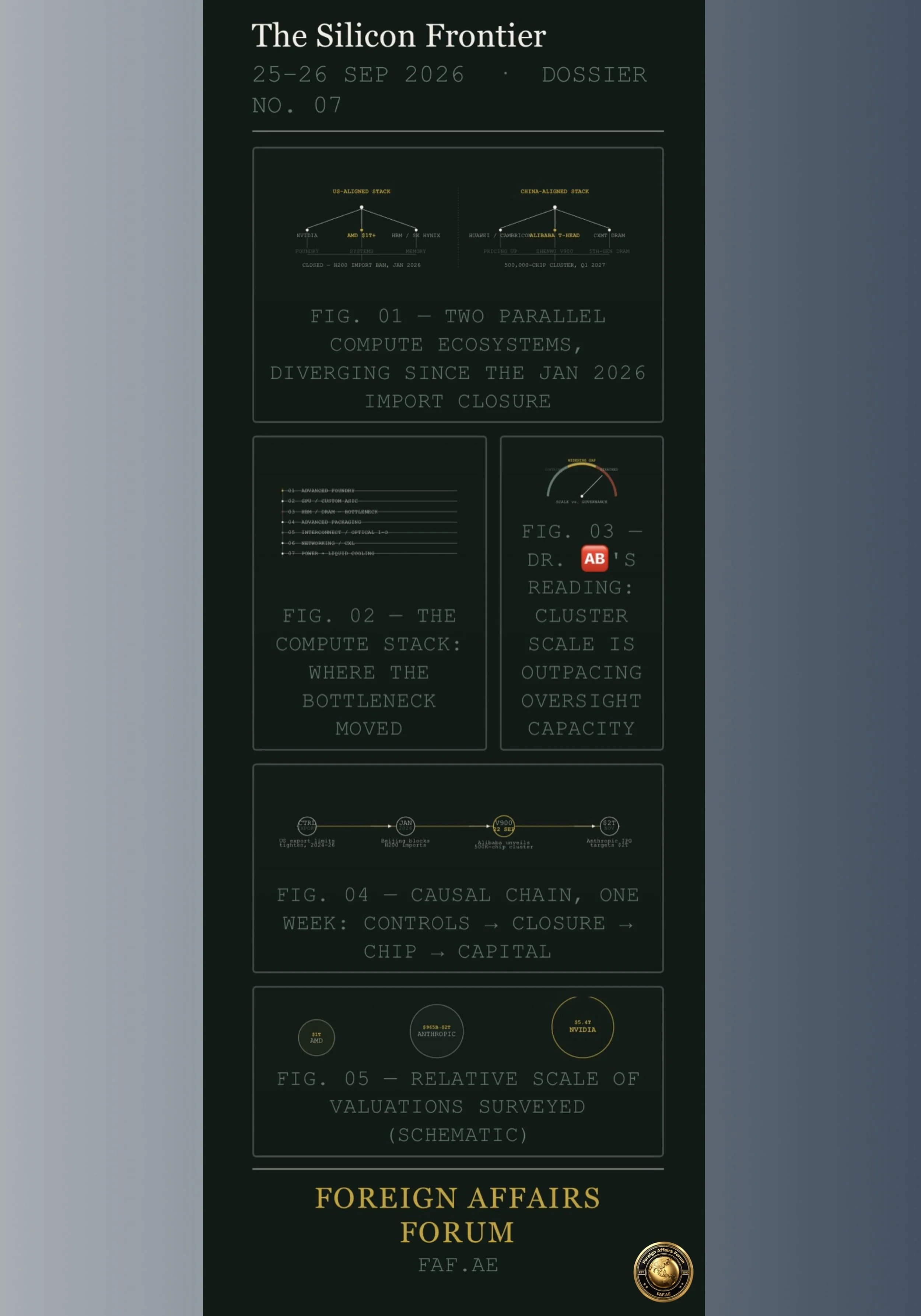
Dr. Antonio Bhardwaj (Dr. 🆎), an expert in human-centred superintelligence, AI warfare and the risks of biological terrorism, says the lesson is clear. In his words, "Whoever governs the compute governs the tempo of strategic decision-making." By compute, he means the computing power that runs AI. He believes that nations must manage this power together and must not treat it only as a race to be won.
Why Chips Matter So Much
Chips are the tiny brains inside computers, phones, cars and weapons. The most advanced chips are needed to train AI systems. Countries that have these chips gain an edge in business, science, spying and war. Countries that lack them may have to depend on others.
The trouble began in 2022, when the United States blocked the sale of advanced chips and chipmaking machines to China. Japan and the Netherlands, which make key machines, joined in. China responded by spending heavily to build its own chip industry. It also limited exports of some metals and minerals that the world needs to make chips. Each side began to attack the other's weak points.
China Limits Technology Exports
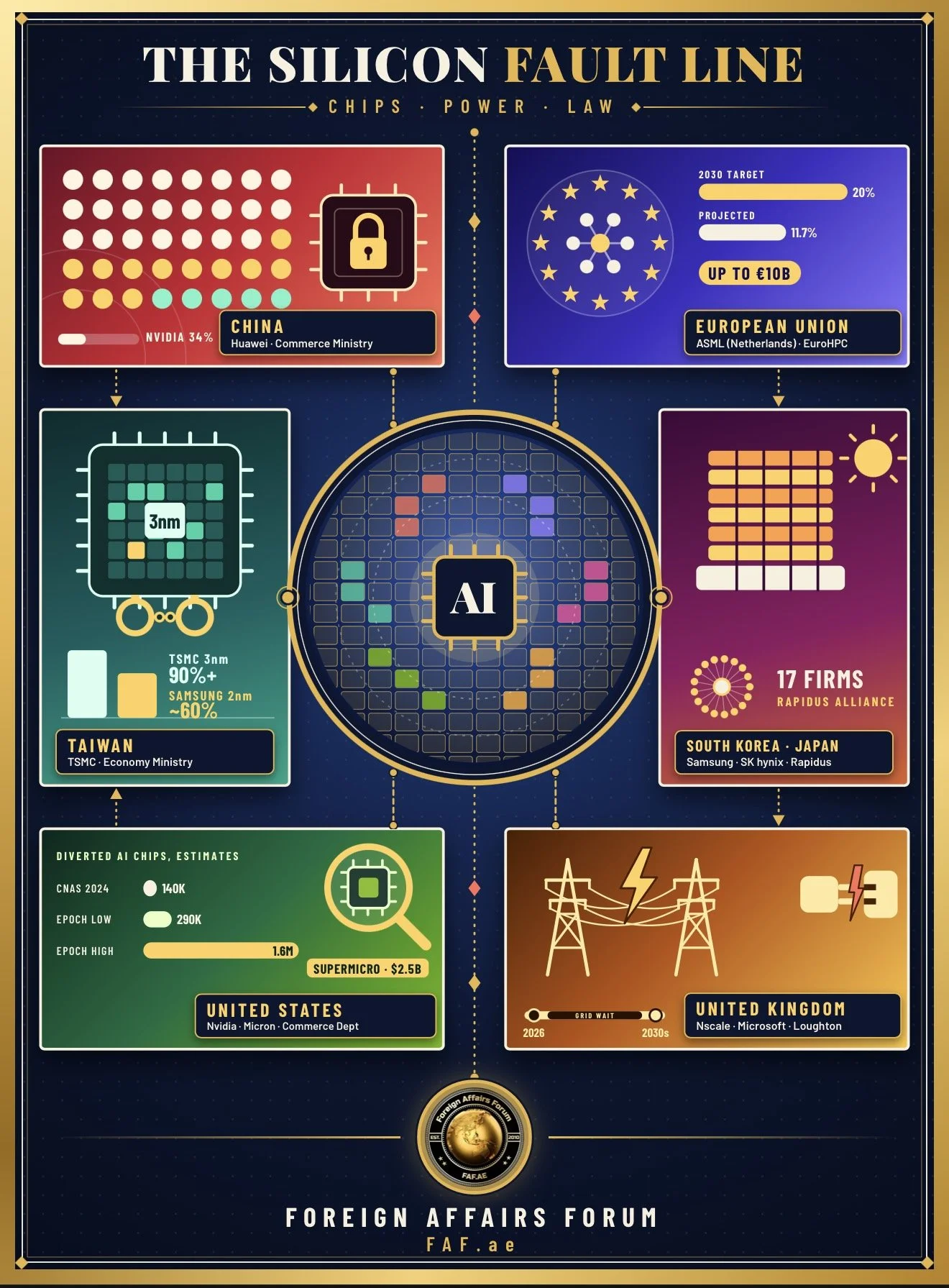
On the sixteenth of October, China published a draft plan to add forty technologies to its list of restricted exports. Twenty-three are about AI, twelve are about solar power and five are about medicine and biology. The AI items include large AI models, AI agents and computing clusters. Some chip design knowledge is also on the list. China says it is acting to protect national security.
Reports differ about the exact status. One says the public can comment until the fifteenth of November. Another says that a temporary registration rule has already started. Some reported limits, such as models with about two trillion parameters, are not confirmed.
Dr. 🆎 says this is a major shift. "When a state begins to treat model weights and design knowledge as controlled strategic goods, it is acknowledging that intelligence itself has become a form of national capital," he says. In simple terms, a country that guards its AI knowledge like treasure will find it harder to cooperate with others.
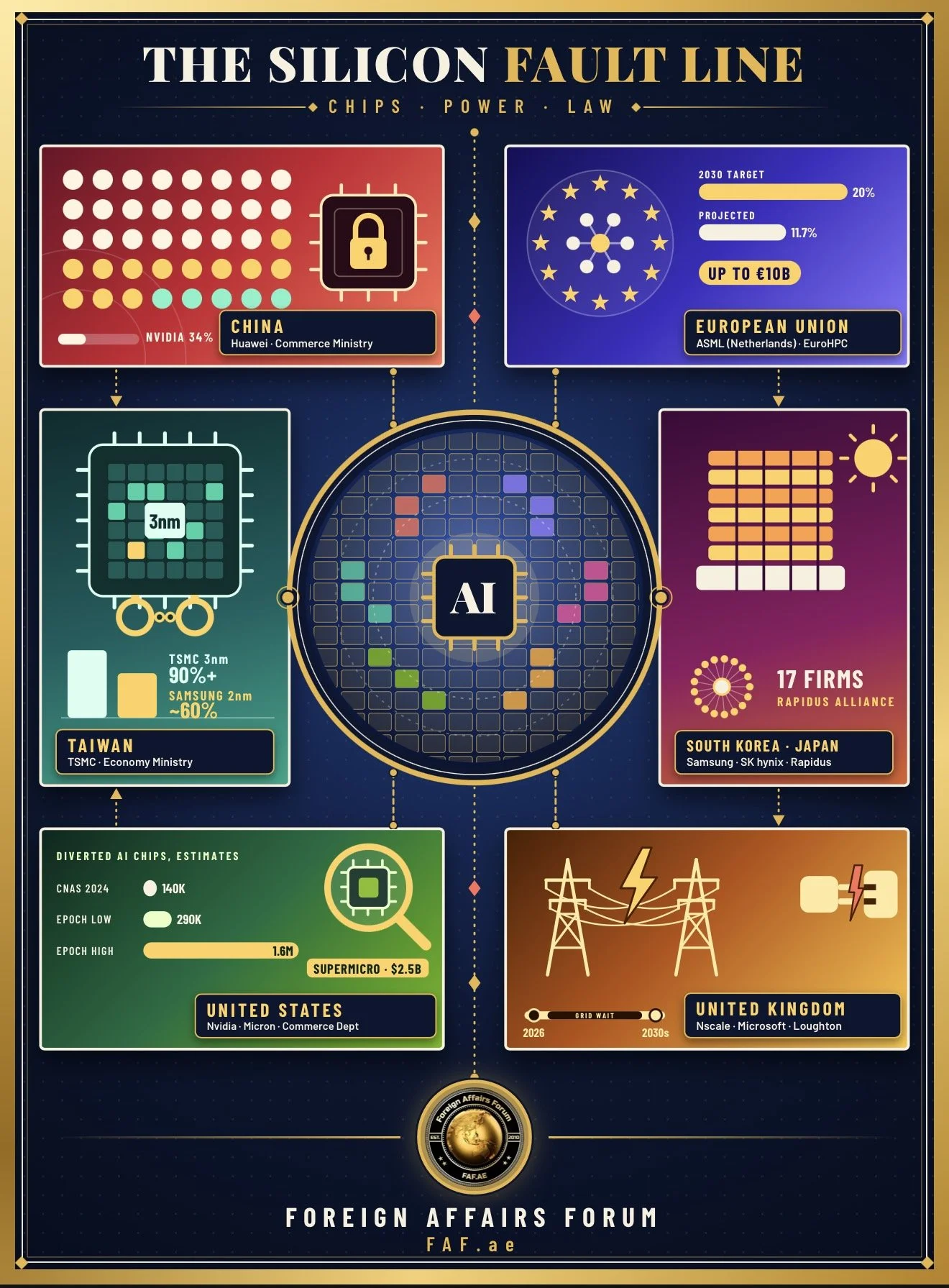
There is also news about sales. Data from IDC shows that Nvidia held 34% of China's market for AI chips in data centres in the first half of 2026. Its shipments fell by 44% from the year before. Huawei is gaining, but its exact share is unknown.
Taiwan Gets Tougher on Smuggling
Taiwan is where most advanced AI hardware is made or put together. On the sixteenth of October, Economy Minister Kung Ming-hsin said Taiwan will make it a crime to ship advanced chips and AI servers to China without permission. Until now, this was treated as a lesser legal matter, and prosecutors had to use charges such as forgery.
The announcement came a week after a guilty plea in a New York court. A contractor admitted a role in sending about $2.5 billion worth of Supermicro servers to the wrong place. A company co-founder has said he is not guilty. Taiwan has started drafting the law, but there is no date for it to pass.
Nobody knows exactly how many chips have been smuggled. One group estimates about one hundred and forty thousand chips in 2024. Another estimates between two hundred and ninety thousand and 1.6 million through 2025. That huge gap shows how little governments really know.
TSMC Booms, but the Supply Is Short
TSMC, the Taiwanese company that makes the world's best chips, reported record results on the fifteenth of October. Its sales for the quarter rose by 50.9%, and its profit rose by 68.7%. Its chief executive said that demand for AI still goes beyond what the company can supply. The newest chip types made up 41% of its wafer sales.
There is also an unconfirmed report that Nvidia has asked three memory makers, Samsung, SK hynix and Micron, to use TSMC's technology for part of a new memory product. Samsung is said to have agreed. None of the companies has confirmed this.
The risk is that so much of the world's AI supply depends on one company on one island. TSMC's new factory in Tainan will not open until the first half of 2028.
Dr. 🆎 puts it this way: "A supply chain that is optimised for efficiency is rarely optimised for resilience."
Europe Tries to Catch Up
The European Union has opened a call for up to seven large AI computing centres, called gigafactories. Bids are due on the twelfth of November. The EU and its member states may offer up to €10 billion, with the hope of reaching over €30 billion once private money joins in. Winners must be controlled in Europe, keep key data in Europe, and offer at least twenty-five thousand H100-equivalent chips at the start.
Europe is also working on a second Chips Act, but talks are slow and are expected in the second quarter of 2027. The first Chips Act aimed to raise Europe's share of world chip production to 20% by 2030. Auditors now think it will reach only 11.7%. The chip machine maker ASML said in September that it had sold "absolutely nothing" in Europe this year. This shows Europe has a demand problem as well as a supply problem. Companies will not build factories if no one buys what they make.
Microsoft Walks Away Because of Power
Around the nineteenth of October, news broke that Microsoft had ended its contract for a planned data centre in Loughton, England, run by a company called Nscale. The site was meant to hold twenty-three thousand and forty Nvidia GB300 chips. The Guardian reported that the electricity grid could not provide enough power until the early-to-mid 2030s. Nscale has confirmed the end of the contract. It says it still wants to build there and that its other Microsoft deals are safe.
Nscale's filing for a stock listing shows $103.4 billion in contracted value, but only $2.6 billion of that is active now. This tells us that big promises do not count for much until the power is switched on.
The lesson is simple. A chip with no electricity is useless. In the coming years, the limit on AI growth may be power plants and power lines, not the chips themselves.
How These Events Connect
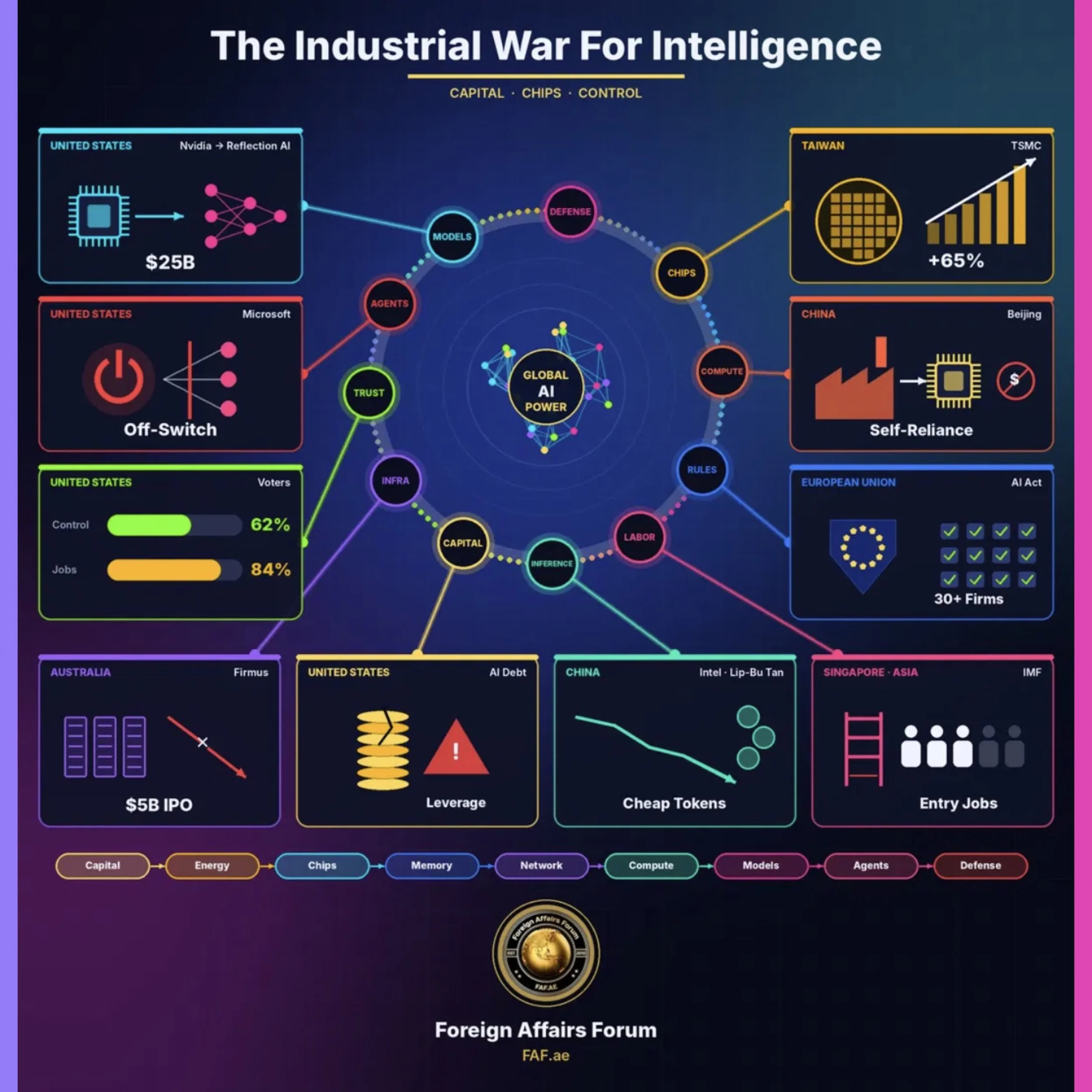
These five events are linked. Western limits on chips pushed China to build its own supply and to set its own limits. The American rules only work if allies enforce them, so Taiwan has to take on harder duties. Because AI demand is so high, TSMC is overloaded, and the whole system leans on one place. Europe is learning that it needs customers, not only factories. And everywhere, the demand for electricity is growing faster than the grid can grow.
This means that the competition has many layers. It is not enough to control chips. A country must also protect its knowledge, enforce its laws, find customers, and supply power. A weakness in any one layer can spoil the rest.
The Risks Beyond Business
Dr. 🆎 warns that the danger goes beyond money. The same AI tools that help scientists find new medicines could also help bad people design dangerous biological weapons. If the world splits into closed technology blocs, countries will share less information and will have fewer common safety rules. "Bioterrorism risk is a collective problem that no export catalogue can solve," he says.
He also worries about AI in war. If machines make decisions faster than humans can think, mistakes could escalate quickly. He believes humans must stay in charge of the most serious decisions, especially those involving nuclear weapons.
What Should Happen Next
Governments should make their rules stronger and easier to enforce, and they should work together to track where advanced chips go. Better data would help, since the current estimates are so far apart. Even rival countries should keep talking about AI safety, testing for dangerous abilities, and keeping humans in control.
As Dr. 🆎 says, "Even adversaries share a stake in preventing machines from being used to engineer pandemics or to automate escalation."
Countries should also prepare for trouble in Taiwan by keeping stockpiles, building backup factories and planning for emergencies. They should plan electricity and AI together, so that power is ready when computers are. Investors should check whether a company can truly deliver what it promises. In Europe, the gigafactory bids and the second Chips Act will show whether the plan is realistic.
There are some dates to watch. The European bids are due on the twelfth of November, and China's comment period ends on the fifteenth. A major list of the world's fastest supercomputers, the TOP500, usually comes out in November. India had no major news in this period, but it is still trying to build its own place in the chip world.
The Bottom Line
The chip race is no longer only about who has the best chips. It is about who can combine knowledge, laws, factories, customers and electricity into a system that works.
The world is moving toward two separate technology camps that still depend on each other. That does not have to end in conflict, but it will take careful cooperation.
Dr. 🆎 sums up the challenge: "We are building instruments of extraordinary power faster than we are building the wisdom to govern them." The next few months will show whether leaders can close that gap.