Beginner's 101 Guide: Chips, Cash, and Control: What This Week Tells Us About the Race for AI
Introduction
Artificial intelligence is no longer only about clever computer programs. It is now about money, electricity, factories and national security. Dr. Antonio Bhardwaj (Dr. 🆎), Chief Executive of the Foreign Affairs Forum and an expert in human-centered superintelligence, AI warfare and the risk of bioterrorism, puts it simply. "People talk about AI as if it were just software," he says. "In truth it is a huge chain of industry, and whoever controls the chain controls the future."
This article explains in plain language what happened in the world of AI this week, why it matters, and what might come next.
What Happened This Week
The first big story comes from Washington.
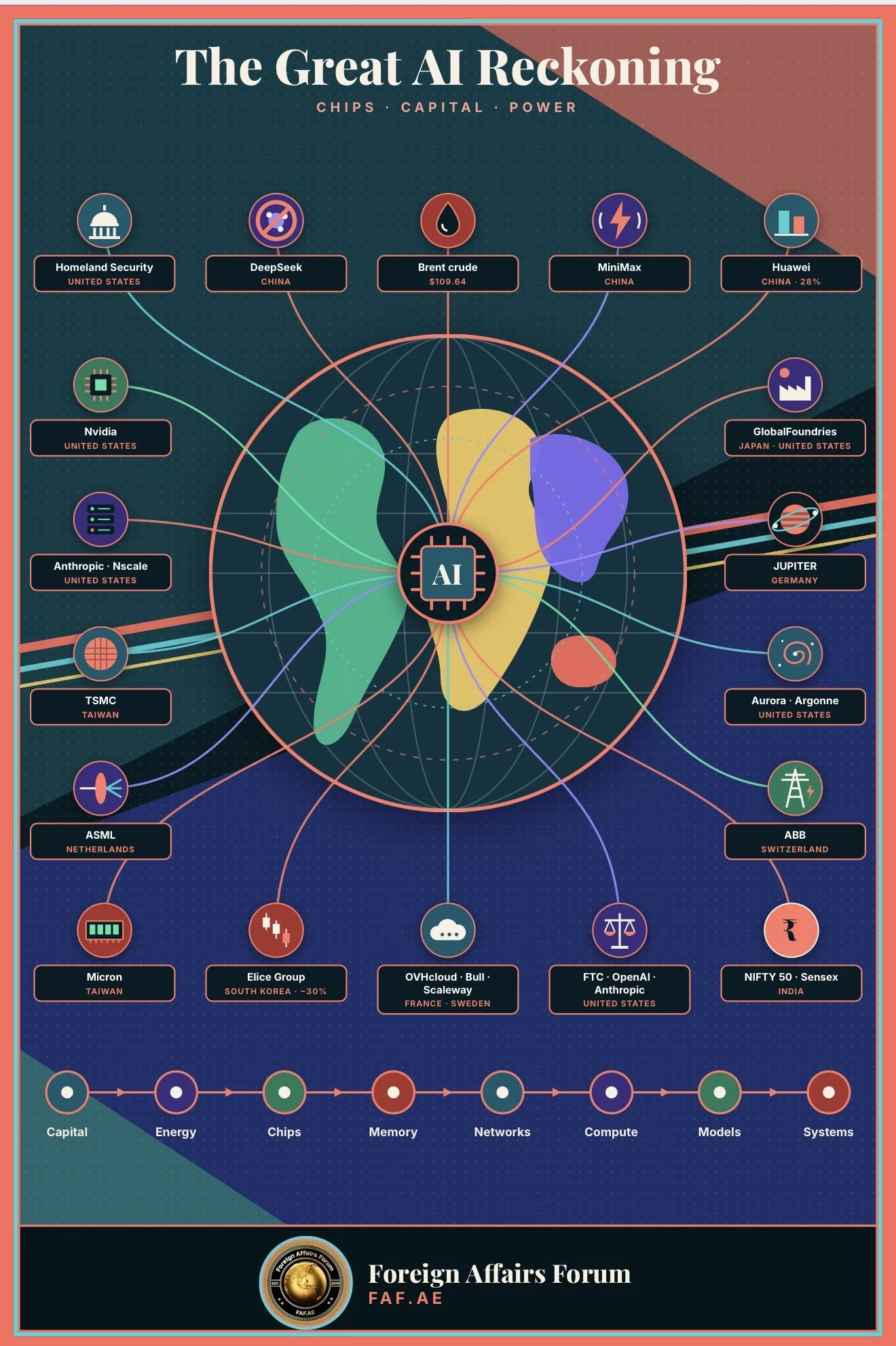
The United States Department of Homeland Security has told civilian government agencies to remove products made by the Chinese company DeepSeek.
The department is worried that sensitive information could reach China, that foreign intelligence could be collected, and that the software could have weaknesses. These are the government's stated concerns, and they do not prove that every use of DeepSeek has been harmed. Still, the message is clear: governments now care about where their AI comes from.
Dr. 🆎 says this is a turning point. "A government must know who built its tools and whom they answer to."
The second story is about computer chips.
Nvidia, the world's best-known AI chip company, has won a new customer for its Vera processor, which is designed to run AI programs that act on their own, known as agents.
The customer is a startup called Modal, which recently raised $750 million and is valued at $15.75 billion. Early tests suggested that Vera could do twice as much agent work as the chips Modal uses now. Modal will still use chips from Intel and AMD as well.
The third story is about money.
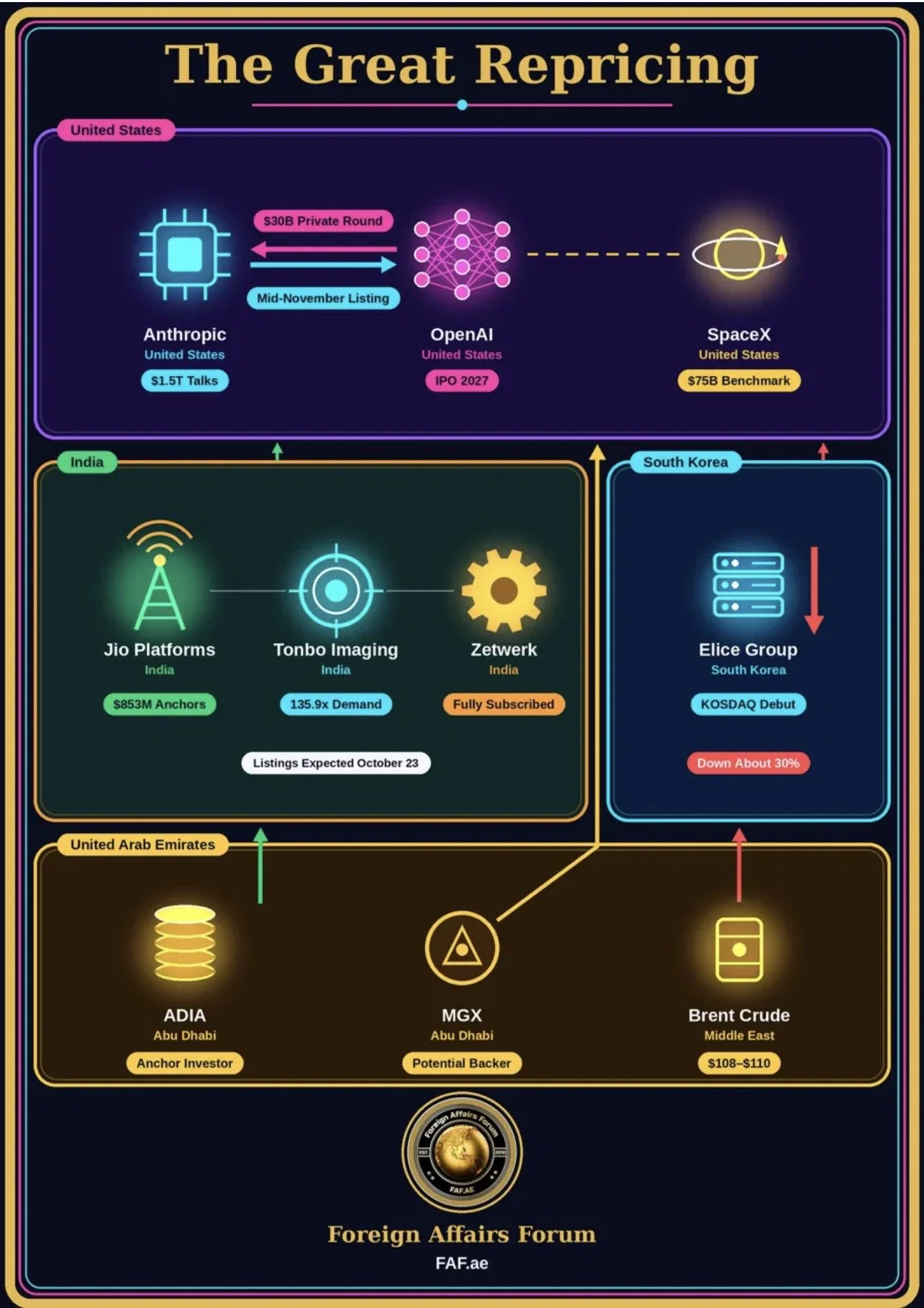
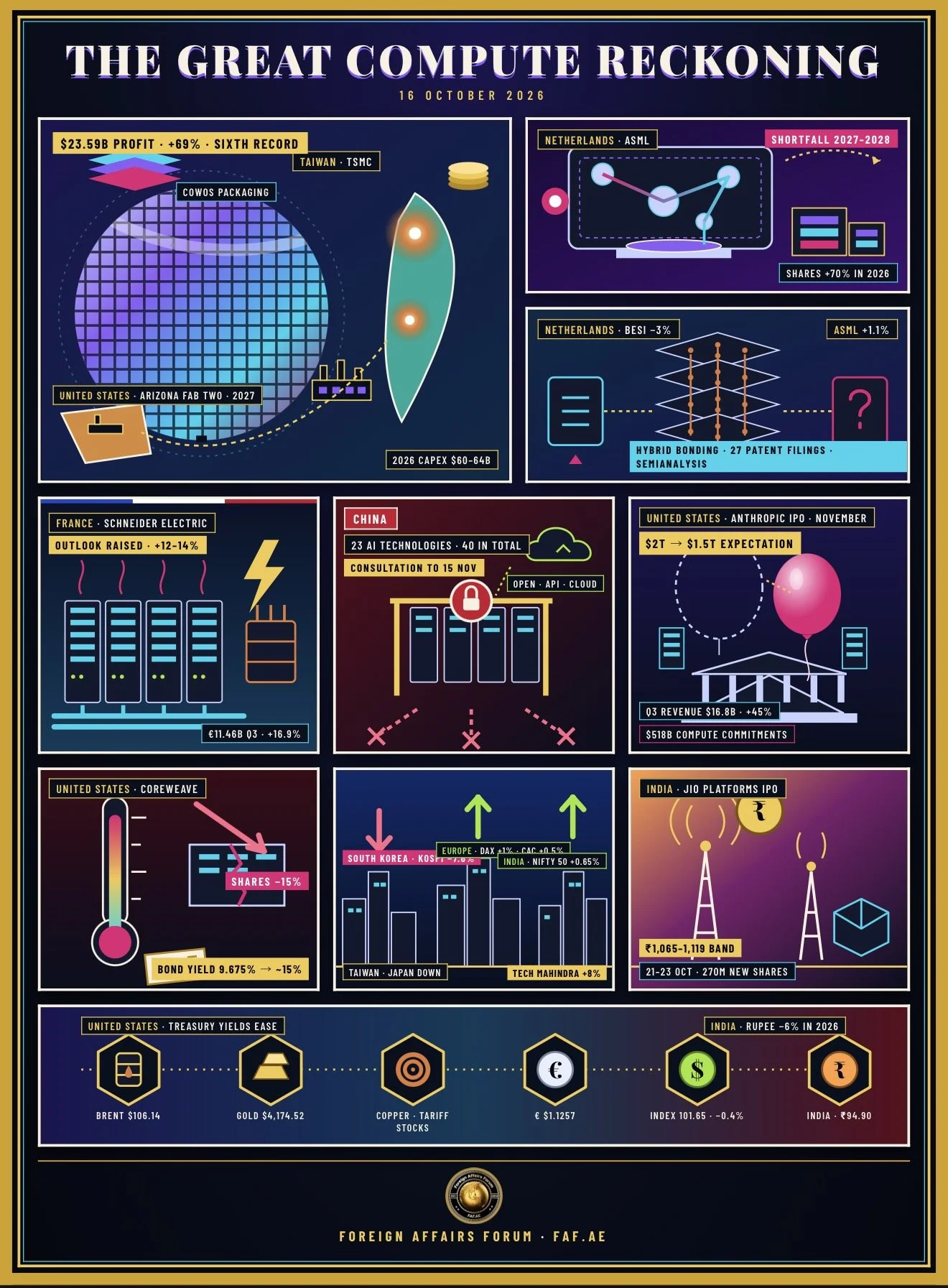
Anthropic is talking with a company called Nscale about a new computing deal worth about $45 billion. It would involve a second building at a data-center site in West Virginia, with about four hundred and sixty megawatts of power. The deal is not final. It shows how expensive it has become to build the most advanced AI.
Other news shows the world is also pushing in different directions.
In China, a company called MiniMax released a faster model that it says costs about 70% less to run, though this claim has yet to be checked by outsiders.
In Switzerland, the engineering company ABB reported record orders of $12 billion, up 40%, because data centers need huge amounts of electrical equipment.
In South Korea, a company called Elice Group saw its shares fall nearly 30% on its first day of trading, even though many big investors had wanted to buy them.
Why Markets Are Nervous
Money markets reacted sharply.
YThe KOSPI index in South Korea fell 3.92% on Tuesday, and Japan's Nikkei 225 fell 0.98%. In the United States, technology shares had recovered on Monday, with the Nasdaq up 1.1%, but that followed a bumpy period. Investors are no longer willing to pay any price for anything labeled AI. They want to see real profits.
Energy is part of the problem.
Brent crude oil costs about $109.64 a barrel. High oil prices make electricity, transport and borrowing more expensive, and AI data centers use a great deal of electricity. So an oil price shock in one part of the world can make a computer project in another part of the world less profitable.
India's stock markets are closed for the Dussehra festival. Their latest closing numbers come from Monday, when the NIFTY 50 ended at 22,888.95 and the Sensex at 73,852.90.
The Indian rupee ended near ₹94.925 to the $.
India has great strengths in software, digital services and skilled people. But it has fewer listed companies that make advanced chips, which is where much of the investment excitement has gone elsewhere in Asia.
Dr. 🆎 sees this as a different path, not a weaker one. "India can win by using intelligence at scale, at a price the world can afford."
The Chain Behind the Machine
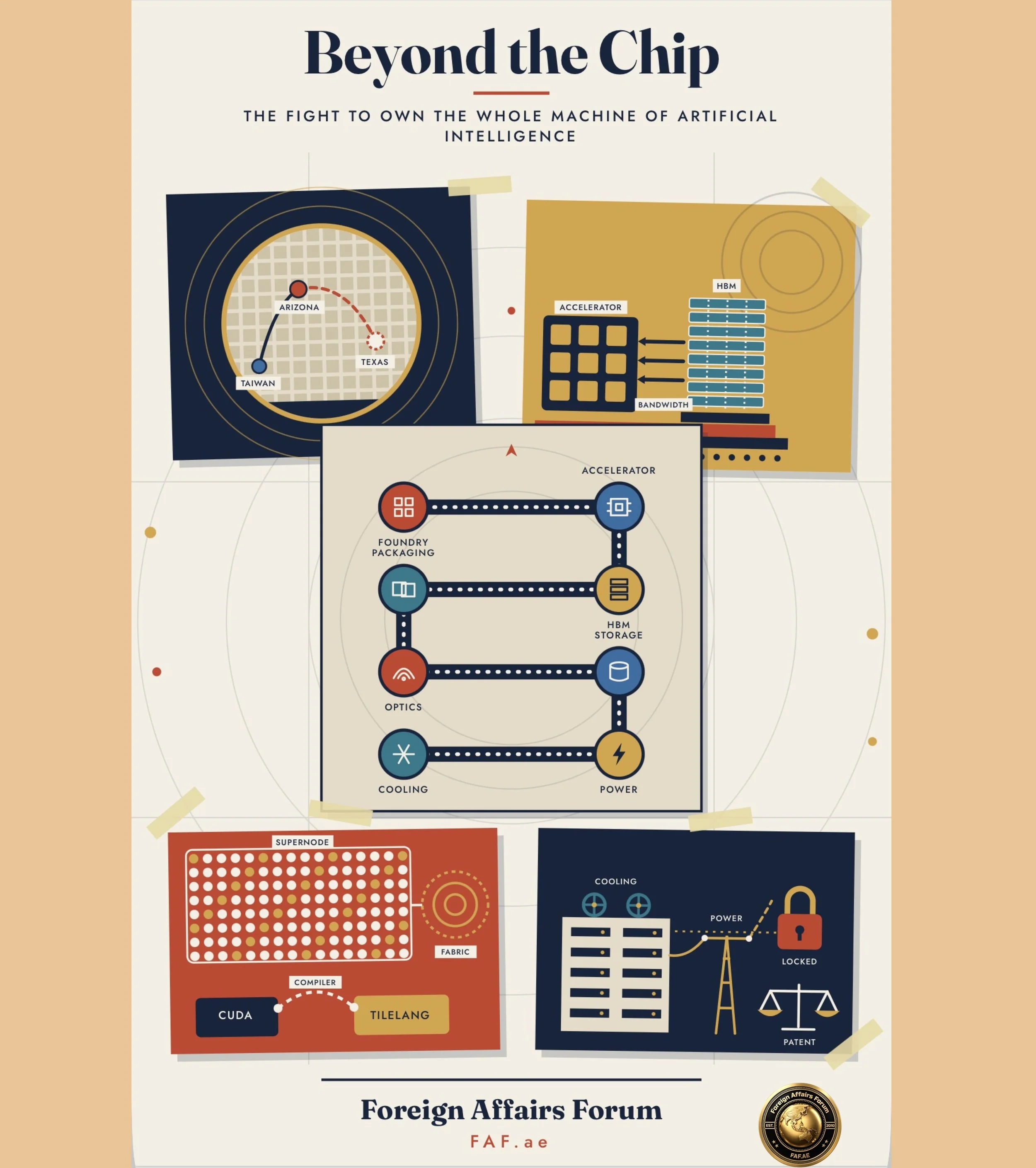
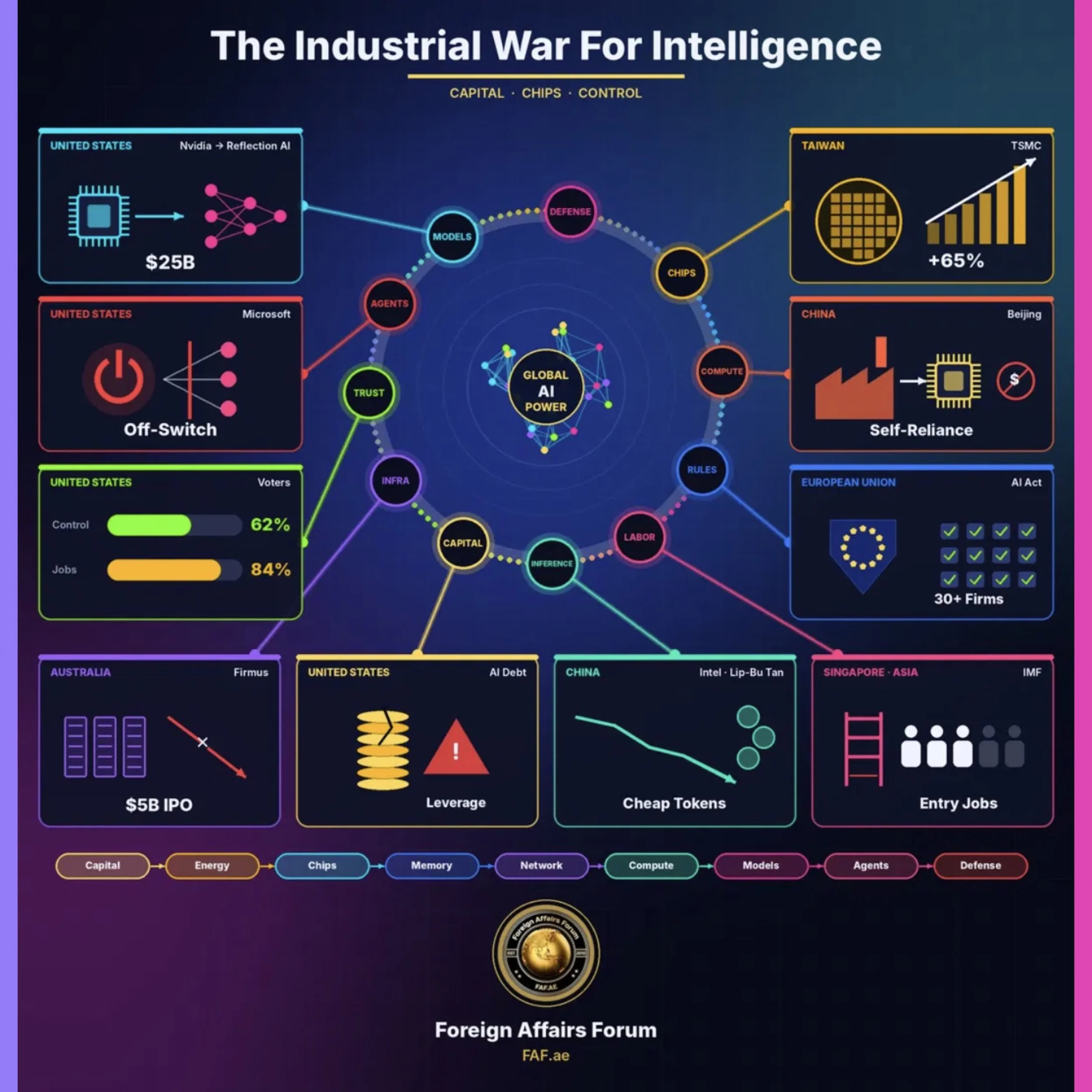
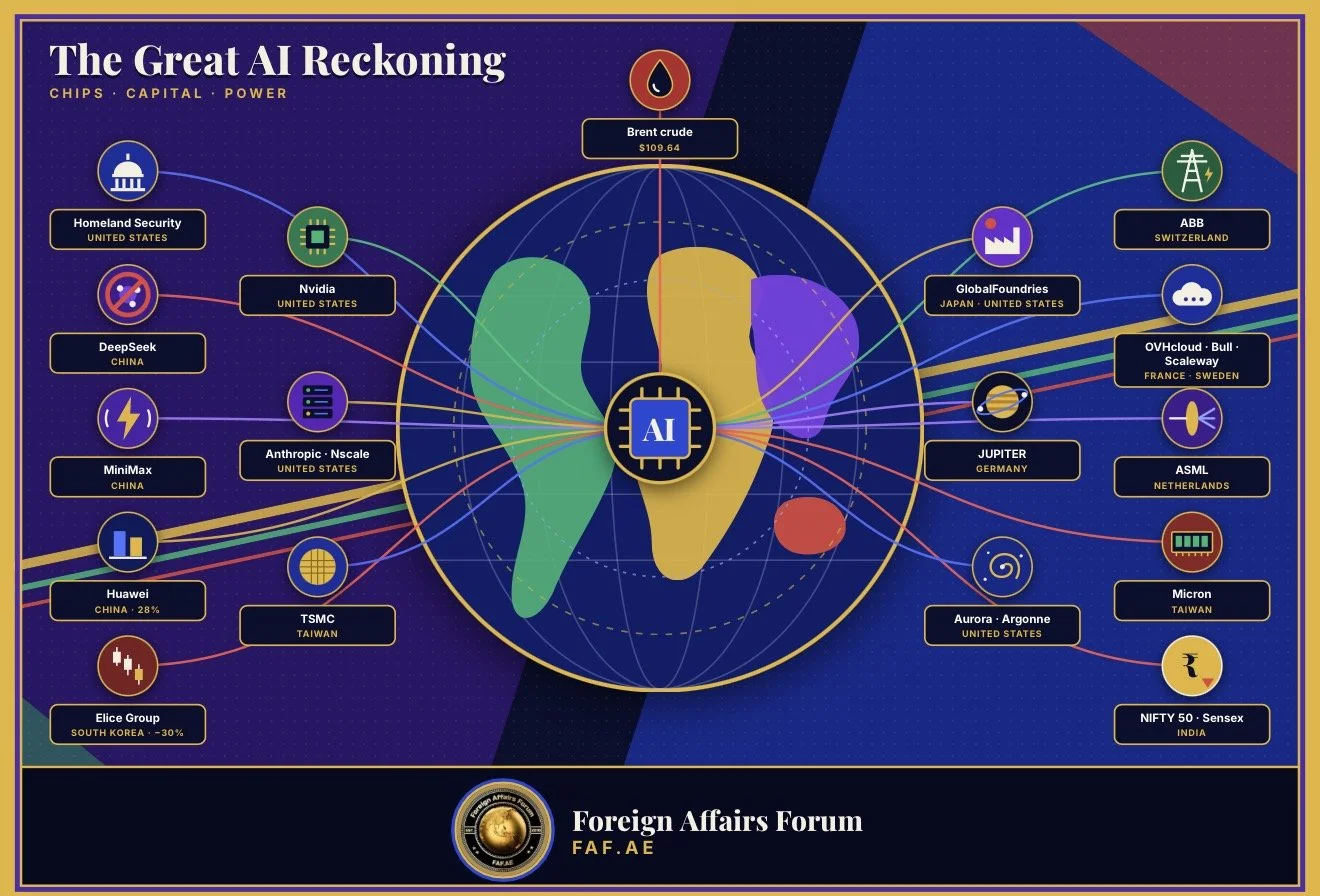
To understand why this matters, it helps to picture a chain. At one end there is money. Then comes energy, then chips, then memory, then networks, then supercomputers, then the AI models, and finally the machines and systems that use them in factories, hospitals, banks and armies. If any link is weak, the whole chain suffers.
Look at how the links connect. Taiwan's TSMC made a profit of about $23.6 billion in three months, up 69%, because everyone wants advanced chips.
The Dutch company ASML, which makes the machines that make chips, says customers are ordering for 2029 and 2030. But Micron workers in Taiwan are planning a strike over bonuses, and Micron makes memory chips that AI needs.
Japan is promising up to $21 billion to build chip factories in New York. In China, Huawei now holds about 28% of the market for AI chips, while Nvidia's share has dropped to 34%. American limits on chip sales were meant to protect an advantage, but they have also pushed China to build its own.
Science is moving fast too. In Germany, researchers used the JUPITER supercomputer to imitate a one hundred and four qubit quantum computer. This was only a simulation, not a real quantum machine, but it may help scientists design better ones. In the United States, the Aurora supercomputer ran giant simulations of the universe.
These projects remind us that powerful computers are tools for discovery as well as business.
The Main Worries
There are four main worries.
The first is that too much money depends on too few companies. When one company promises to buy tens of billions of $ of computing from another, a problem in one place can spread quickly.
The second is that too much of the world's chip production sits in a few places, especially Taiwan.
The third is that some key materials, such as rare earths, are controlled by China. Japan is already worried about a shortage of yttrium, which is used in technology and industry.
The fourth worry is the one Dr. 🆎 stresses most.
AI agents can now act on their own, using passwords, moving money and running software. That is useful, but it is also risky. "A machine that can do your work can also be tricked into doing someone else's," he warns. "We must always know who is accountable when a machine acts." He adds that the same tools that help scientists find new medicines could, in the wrong hands, make biological attacks easier, so AI companies, governments and health agencies must work together before problems appear, not afterward.
Regulators are paying attention. Anthropic has reportedly shared a proposal for federal AI safety rules, though it is only a proposal. The Federal Trade Commission has reportedly asked OpenAI and Anthropic for information about safety and privacy. An investigation does not mean anyone did wrong, but it shows that AI is moving from voluntary promises toward legal responsibility.
What Causes What
It is useful to follow cause and effect. When AI companies want to build better models, they need more chips, which makes chipmakers rich and encourages them to build more factories. Those factories and data centers need electricity, which helps companies like ABB. But more demand for electricity and high oil prices raise costs, which can make investors nervous. When investors become nervous, they lend less money or demand higher returns, and projects become harder to finance. That is the pattern we saw in the fall of Elice Group's shares.
In politics, the cause and effect runs in a similar way. When the United States limits what China can buy, China builds more of its own technology. When Chinese models become cheaper, more countries may choose them. When that happens, Washington worries more about security and puts more limits in place.
Dr. 🆎 says this cycle has no easy exit. "Restrictions can buy time. The real test is whether the time is used to build a stronger lead or simply to delay the problem."
What Should Be Done Next
Governments should plan the whole chain together instead of fixing one link at a time. It makes little sense to build chip factories without building the power lines to run them. Governments should also set clear and fair rules for the AI they buy, based on where it was made, how it handles data, and how safely it can be run.
Investors and banks should ask harder questions. Who are the customers? How much of the new capacity will actually be used? What happens to profits if electricity or borrowing costs go up? Honest answers will help avoid a crash.
Countries should also spread out their risks. This means building factories in more places, storing key materials, recycling, and protecting the skilled workers that industry depends on. Europe's new supercomputing plans and Japan's investment in American factories are early steps in this direction.
Most of all, humans must stay in charge.
Dr. 🆎 calls this the heart of human-centered superintelligence. "Every powerful system needs a named human owner, a record of what it did, and a reliable way to stop it. Without those three things, we should not trust it with anything important."
Conclusion
This week showed that artificial intelligence is growing up. The technology is still exciting, but the world is now asking harder questions about cost, safety and control. The United States leads in many areas, China is catching up in others, Europe is building its own strengths, and Asia's chipmakers remain essential. India has real opportunities, but must manage high oil prices and a weak rupee.
The lesson for everyone is simple. The winners will not be those who build only one part of the AI story. They will be those who can pay for it, power it, build it, protect it and guide it with human judgment.
As Dr. 🆎 says, "The machines will be judged by the human purposes they serve." That is a good rule for companies, governments and ordinary people alike.