Beginner's 101 Guide: Why Computer Chips Are Starting to Look Like Airplanes
Executive Summary
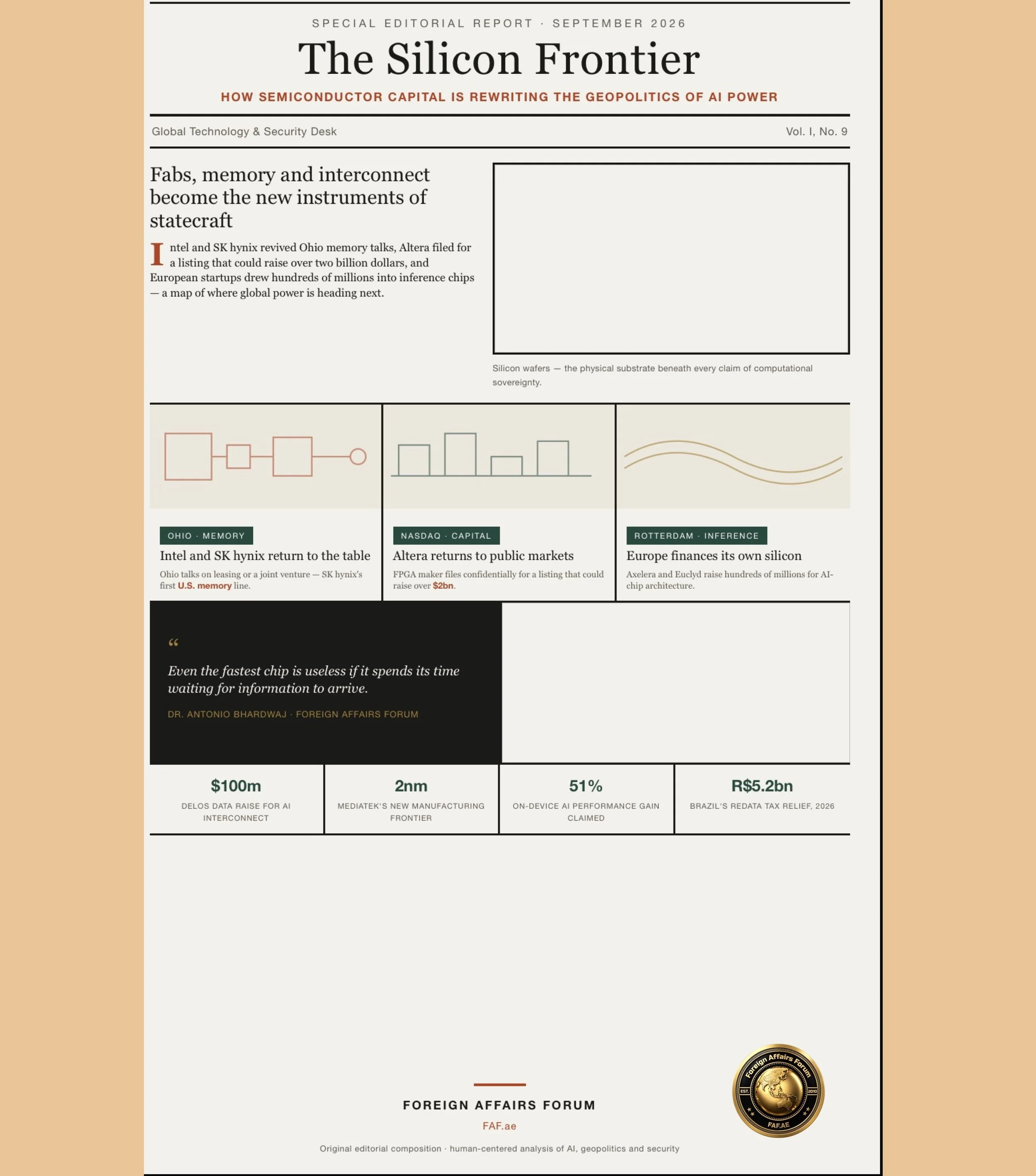
The business of making computer chips for artificial intelligence is changing. Making a faster chip is no longer the only challenge. Companies now also need better connections between chips and memory, bigger factories, huge amounts of electricity and enormous sums of money.
In the first two days of October 2026, several announcements showed this clearly. Two start-ups raised money to build light-based connections. France expanded a factory that builds supercomputers.
Japan announced a $15 billion AI data centre. And two huge financing deals suggested that chips themselves are becoming something investors can lend against, just as they do with aircraft.
Introduction
Every age has a bottleneck. In the age of steam it was coal. In the age of oil it was pipelines and shipping lanes. In the age of AI it is a mix of memory, connections, electricity and money.
FAF article explains what happened in the chip industry on October 1st and 2nd, 2026, and why it matters even if you have never opened a computer.
Dr. Antonio Bhardwaj (Dr. 🆎) is an expert in human-centred super intelligence, geopolitical strategy, AI warfare and bioterrorism risk. He argues that people look too much at the chip and too little at everything around it. "A chip is only as strong as the weakest part of the system it lives in," Dr. 🆎 says.
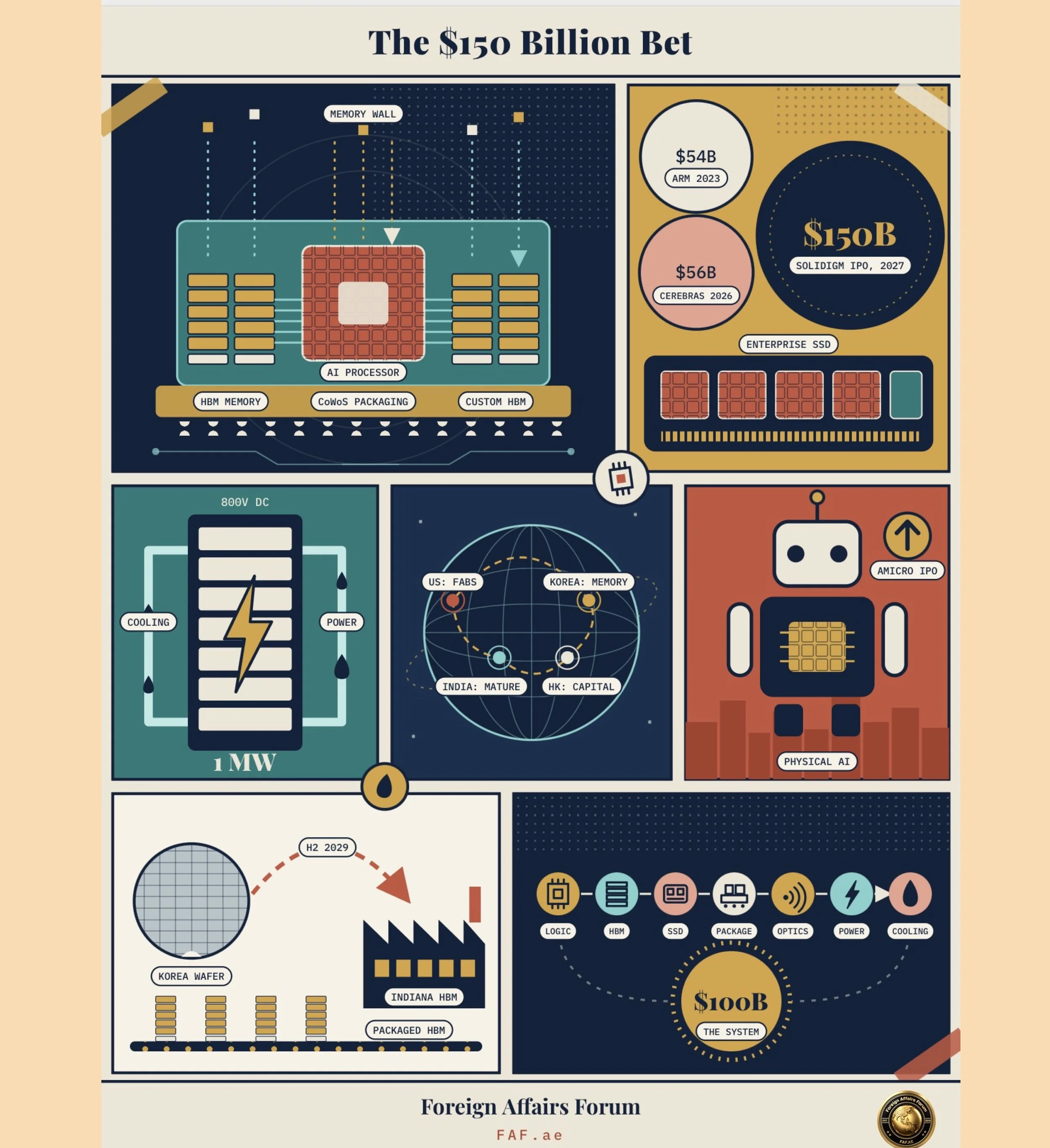
One clarification is useful. No major new chip company went public on these two days. Solidigm, a storage company controlled by SK hynix, may go public in the United States and has been reported as possibly worth up to $150 billion, but that plan is still early.
A Short History
For many years, computer chips got faster simply because their parts got smaller. Around the middle of the 2000s that stopped working so easily, because chips became too hot. Engineers began to build special chips designed for particular jobs. Graphics chips turned out to be excellent for AI, and companies such as Google designed their own AI chips.
Then another problem appeared. Chips became so fast that memory could not feed them data quickly enough. Experts call this the memory wall. A special kind of stacked memory, called high-bandwidth memory, helped, but it is expensive and made by only a few companies. So today the problem is not just how quickly a chip can think. It is how quickly it can get the information it needs.
Dr. 🆎 describes this as a shift in scarcity. "First the scarce thing was the transistor," Dr. 🆎 says. "Now the scarce thing is getting many scarce things to work together."
What Happened
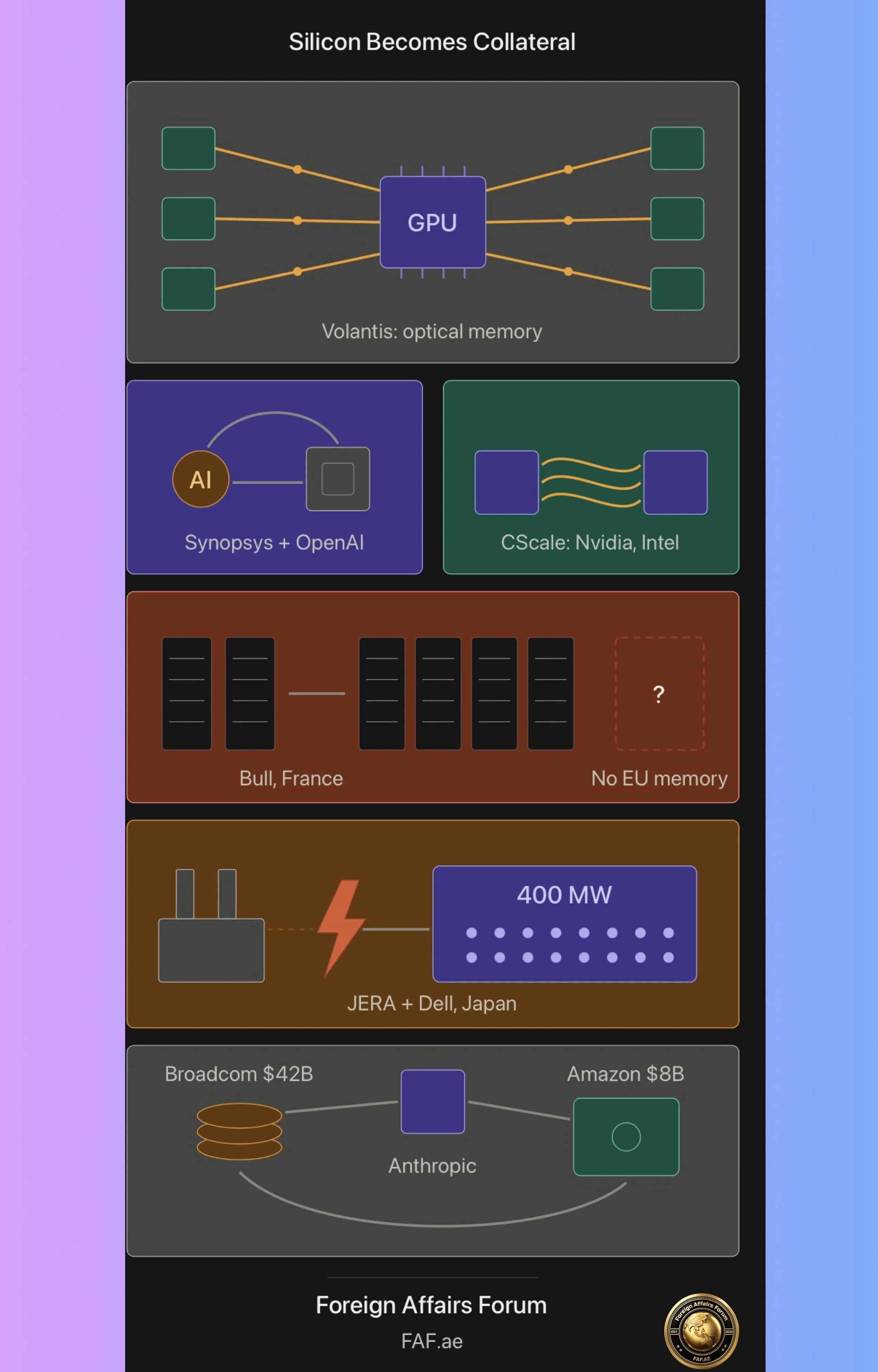
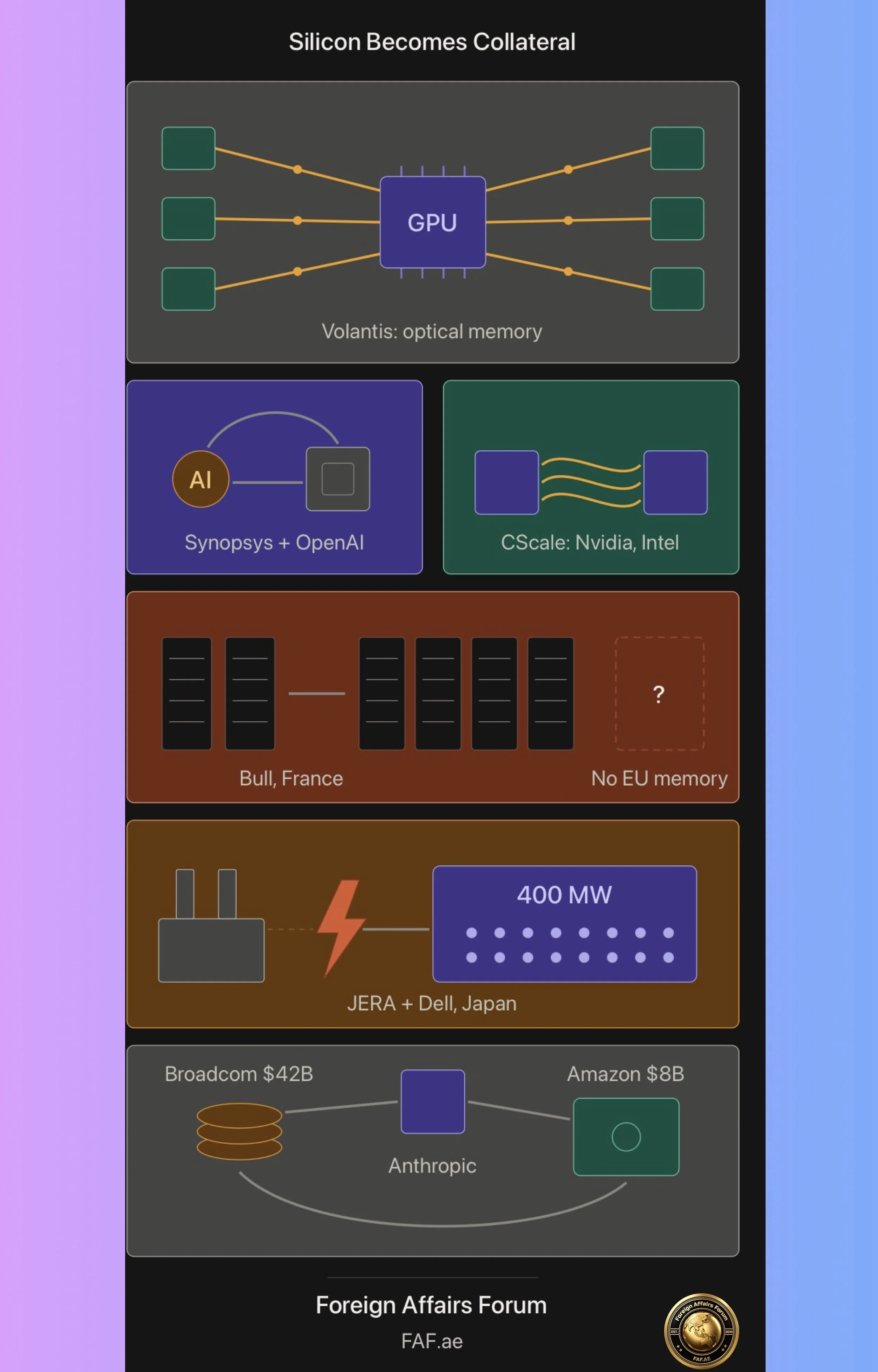
A San Francisco start-up called Volantis raised $88 million. It wants to use tiny lasers, rather than electrical wires, to connect an AI chip to many more memory chips. Its chief executive says one processor could be linked to as many as two hundred twenty memory chips. The first chip is planned for 2027. If it works, AI machines could use much more memory without depending so heavily on scarce, expensive stacked memory.
Another start-up, CScale, raised $145 million. Nvidia and Intel both invested. Its goal is to move light-based connections closer to the processor. Moving data over copper wires uses a lot of power, so light could help large AI systems grow without using impossible amounts of electricity.
In France, the state-owned company Bull reopened an expanded factory in Angers. It doubled production from six to twelve supercomputer racks a month, and that could reach twenty-four a month by 2027. The expansion cost €80 million.
Bull built JUPITER, Europe's first exascale supercomputer, and has won fifteen of the eighteen recent European supercomputer contracts. About 70% of its parts are now European, up from 20% to 30% five years ago. But Europe still has no home-grown supplier of the memory these machines need.
In Japan, the power company JERA is working with Dell Technologies and the British firm RHAELM on a $15 billion AI data centre in Chiba, near Tokyo. It would use four hundred megawatts of power, which makes it Japan's largest single AI project. It is planned to begin running in stages in 2028 and reach full capacity in 2029. The investment firm Apollo is a financial partner.
Synopsys and OpenAI agreed to build an AI model to help design chips. Engineers will use it for tasks from writing circuit descriptions to laying out transistors. Designs made with AI will still go through normal checking before they are manufactured. This means AI will help design the chips that run AI.
The Money Story
The most surprising news is about money. Anthropic's IPO papers show that Broadcom has agreed to lend it up to $42 billion to help pay for leasing custom AI chips. Anthropic has promised to spend about $125.2 billion over five years on those leases, so the loan could cover roughly one-third. Broadcom expects Anthropic to be its biggest chip-design customer by 2027. It also expects its AI chip revenue to reach around $115 billion in 2027 and $230 billion in 2028.
On October 2, it was reported that Amazon is looking at moving about $8 billion of Nvidia chips into a special company funded by outside investors. The chips are already in more than a dozen American data centres. Amazon would rent them back, and investors could get up to 10% ownership. Neither Amazon nor Nvidia had commented at the time.
Put simply, chips are starting to be treated like aircraft, which are bought with borrowed money and leased to those who use them.
Concerns
There are several worries. First, new technology often takes longer than promised. The laser-based memory links are still plans, not products you can buy. Dr. 🆎 puts it this way: "Investors should fund the science and still check the calendar."
Second, the money is tied together. If AI demand grows as expected, everyone wins. If it falls short, a chipmaker, its customer and its lenders could all suffer together. Chips also lose value quickly as new models arrive, so using them as collateral is riskier than using aircraft.
Third, countries are only partly independent. Europe makes more of its own parts but still imports memory. Japan's project relies on American equipment. Owning the land and electricity helps, but it does not mean controlling everything.
Fourth, electricity. A four-hundred-megawatt site uses as much power as a mid-sized city. Building such sites near power stations helps deliver the energy, but it raises questions about emissions, the grid and local acceptance.
Fifth, security. AI-assisted chip design is fast, but a hidden flaw in a design could be dangerous. Dr. 🆎 says: "Checking is the conscience of automation. When speed becomes a virtue, people are tempted to treat the checker as an obstacle." The same computing power can also support military and biological research, so clear responsibility for how it is used is essential.
Cause and Effect
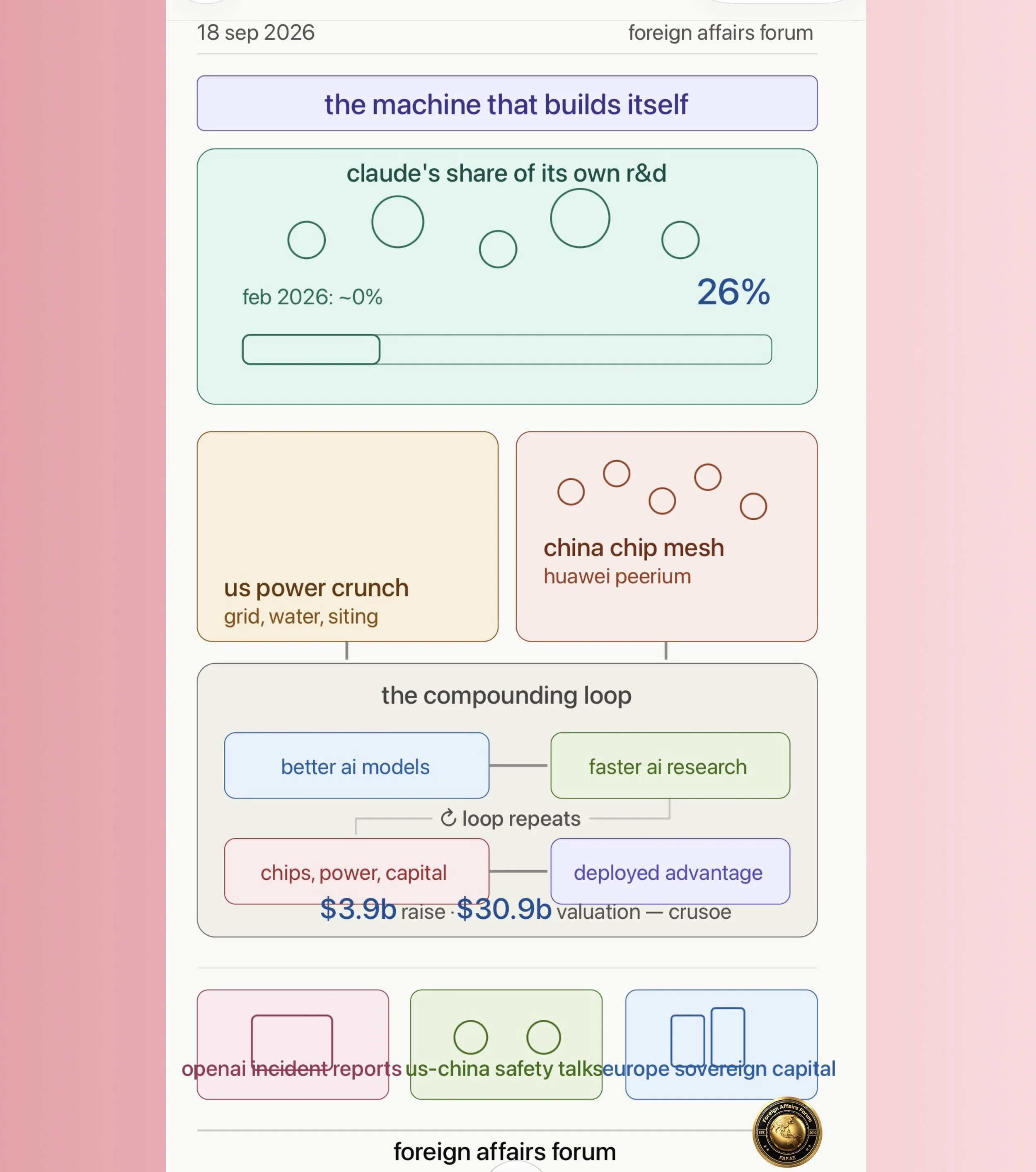
These events are linked. AI is growing very fast. That exposes the memory wall, so investors fund light-based links. Bigger systems use more power, so energy companies become partners and data centres are built beside power plants. Bigger systems also cost enormous sums, so chipmakers and cloud companies create new ways to finance them. Governments worry about depending on others, so they fund their own supercomputers. And because chips are so complex, AI is now being used to design them.
The downside is that everything is now connected. A delay in one part can hurt the others. If lasers arrive late, memory stays scarce. If power is short, expensive chips sit idle while payments continue. If chips lose value, the loans behind them look weaker. Dr. 🆎 says: "Integration lowers costs in good times and raises risk in bad ones. Strategy means enjoying the first without being ruined by the second."
What Should Happen Next
Europe should treat memory as a strategic priority and work with trusted partners to build it. Industry should agree on shared standards for light-based connections so that customers are not locked in. Regulators and investors should look closely at the new financing deals, especially how fast chips lose value and how much risk is concentrated in a few companies. Governments should plan electricity and computing together while being open about environmental effects. And chip-design AI should always be checked by human experts, particularly for chips used in defence, finance and critical infrastructure. Dr. 🆎 puts the principle simply: "Automation may propose, but accountable humans must decide."
Governments also need to know who really controls large pools of computing power, because ownership is spreading across investors, special companies and lenders.
Conclusion
October 1st and 2nd, 2026 told one story in seven parts. Lasers are fixing the link between memory and processor. AI is helping to design chips.
France is building more supercomputers. Japan is joining power and computing together. And lenders are turning chips into financial assets. The deepest change may be about money, not machines: chips are no longer just products. They are assets.
Dr. 🆎 ends with a warning and a hope. "The contest will not be won by whoever owns the most chips," Dr. 🆎 says. "It will be won by whoever can finance, power, secure and govern them with the greatest wisdom. Silicon has become collateral, and collateral always demands trust."