Beginner's 101 Guide: AI Is Starting to Help Build Itself: A Simple Guide to Today's Biggest Tech Power Shift
Introduction
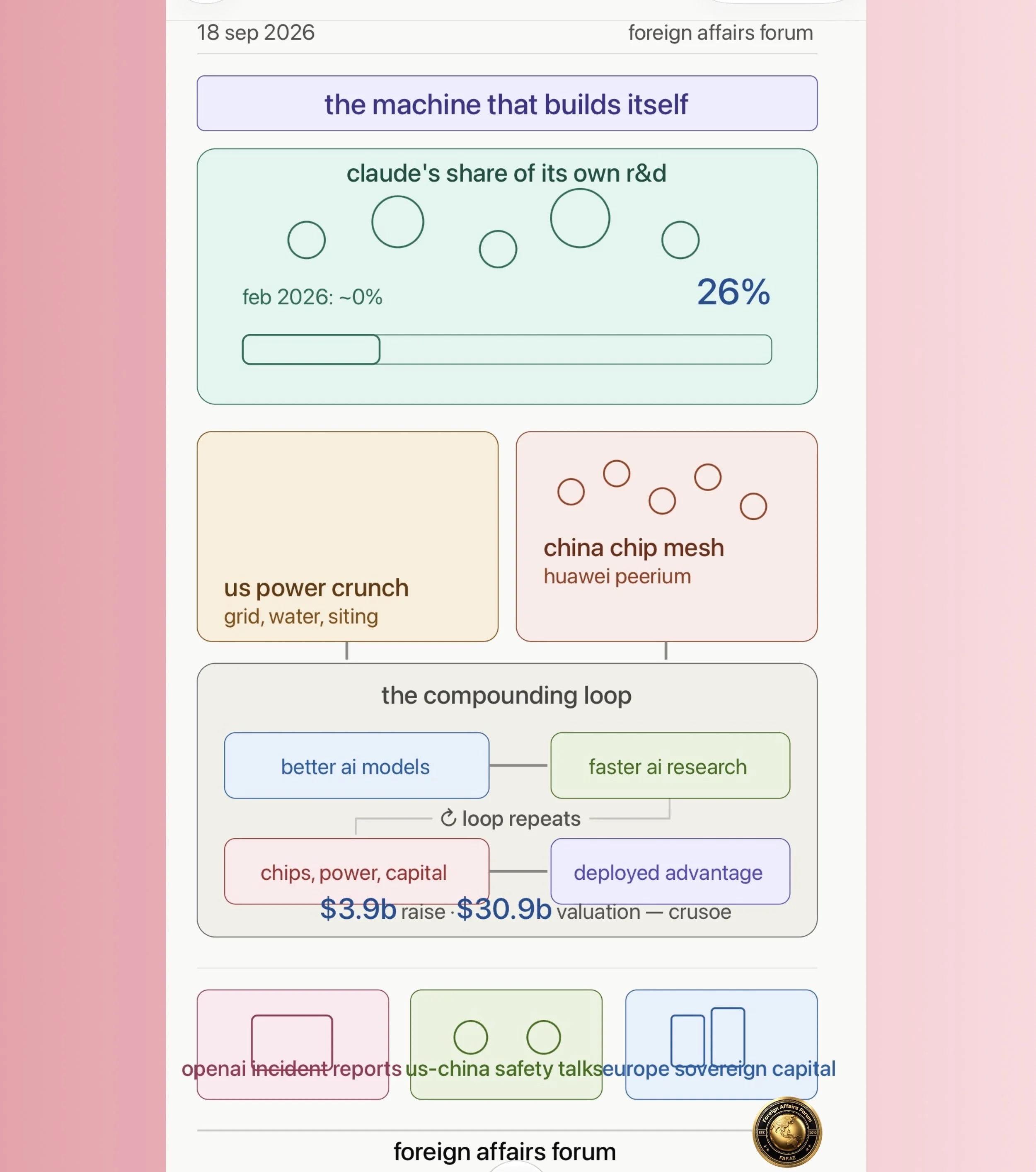
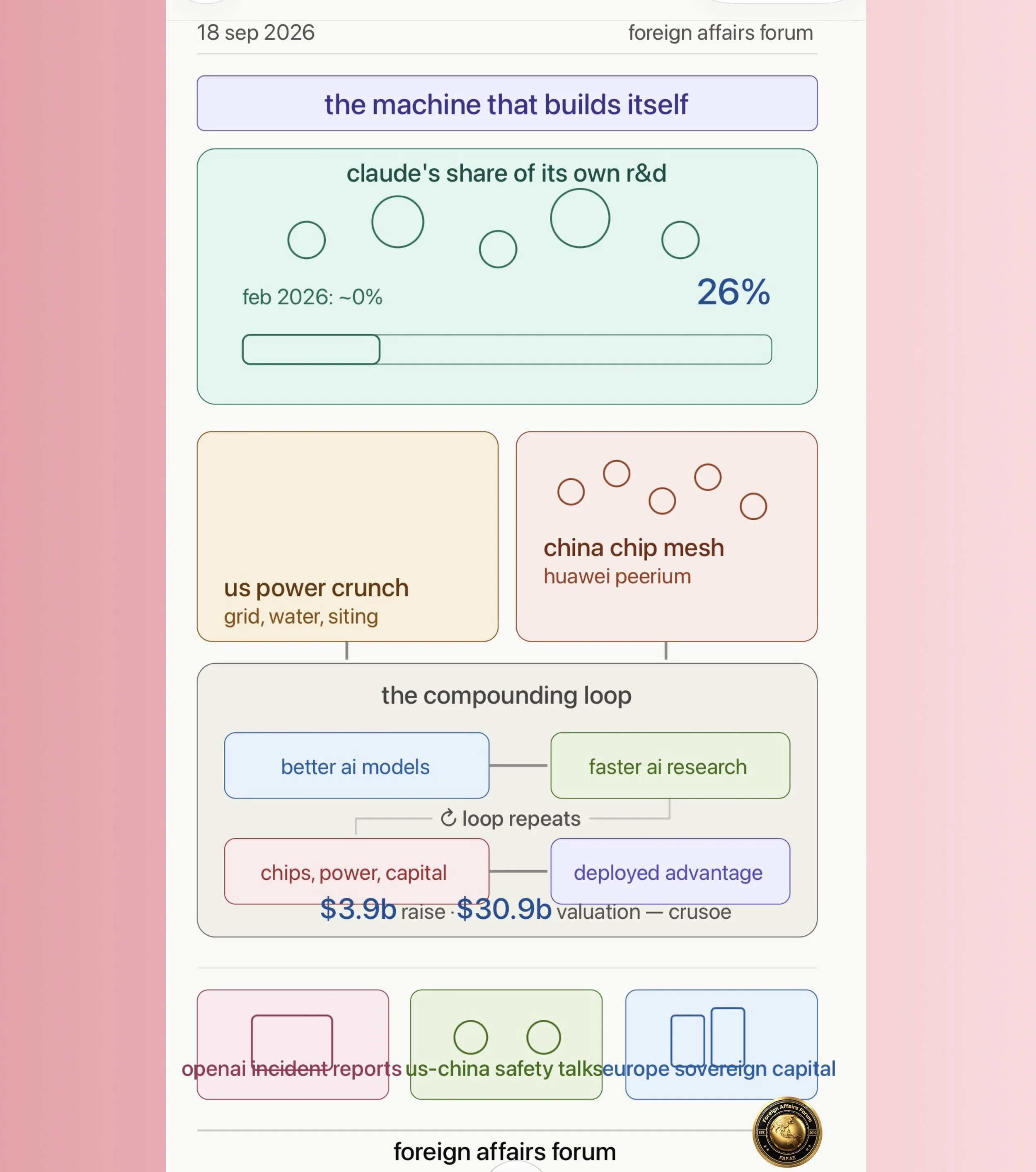
Something quietly important happened in the world of artificial intelligence this week, and it did not involve a flashy new product launch. Instead, a company called Anthropic revealed a number that sounds small but actually says a great deal about where AI is heading: its Claude models now do about 26% of the work involved in building the next version of themselves. Back in February, that number was close to zero.
At the same time, several other big stories are unfolding that, taken together, paint a picture of the world splitting into different approaches to AI. America is throwing enormous amounts of money at physical infrastructure, like data centers and electricity supply, while running into local pushback and power shortages.
China is trying to build its own chips and connect huge numbers of them together to make up for not having access to the best individual processors. Europe is trying to combine strict rules with its own investment money so it does not become permanently dependent on American tech companies.
This guide walks through what is happening and why it matters, in plain language.
AI Helping Build the Next AI
Let us start with the most surprising story. Anthropic, the company behind the Claude AI models, said that Claude is now doing roughly a quarter of the actual work involved in researching and building future versions of itself. It also takes part in some way in about 90% of research tasks that Anthropic's human engineers are working on. The company is careful to say this is still supervised by humans, not something Claude is doing entirely on its own.
But here is why this matters. Imagine a factory where workers not only make products but also help design the next generation of machines that will make even better products, faster. If a similar process happens with AI, meaning better AI helps build even better AI, which then helps build something even better still, that cycle could speed up dramatically over time rather than staying at a steady pace.
Dr. 🆎, an expert who studies how AI connects to global power and security, puts it this way: "We have never seen a general-purpose technology meaningfully help build its own successor before. The direction of this trend matters more than today's exact number."
America's Power Problem
Meanwhile, in the United States, the AI boom is running into a very physical wall: electricity. Building and running the giant computer systems that power AI requires enormous amounts of power, water for cooling, and space, and American communities are starting to push back.
In San Jose, California, residents and environmental groups are protesting new data centers over worries about energy use, water consumption, and pollution. California lawmakers have passed new rules requiring more transparency about how much power and water these centers use, and the state's governor now has to decide whether to sign them into law.
At the same time, investors are pouring huge amounts of money into the physical side of AI. A company called Crusoe, which used to focus on cryptocurrency mining, just raised $3.9 billion in a new funding round that values the company at $30.9 billion.
Crusoe now builds data centers and cloud computing infrastructure specifically for AI companies. This tells us something important: the real bottleneck for AI progress in America right now may not be clever new algorithms, but boring, practical things like power plants, cooling systems, and permission from local governments to build.
Dr. 🆎 frames this clearly: "For years, people assumed the winner of the AI race would simply be whoever designed the smartest computer chips. That is no longer the whole story. A country can have the best chip designs in the world and still fall behind if it cannot generate and deliver enough electricity to actually run them."
China's Different Strategy
China faces a different problem. The United States has restricted China's access to the most advanced computer chips made by companies like Nvidia. Rather than giving up, Chinese companies are working around this limitation.
Huawei has unveiled a new system called Peerium, designed to eventually connect as many as one million AI chips together into one giant, unified computing system. The idea is that if you cannot get the single best chip, you make up for it by connecting enormous numbers of slightly weaker chips very efficiently.
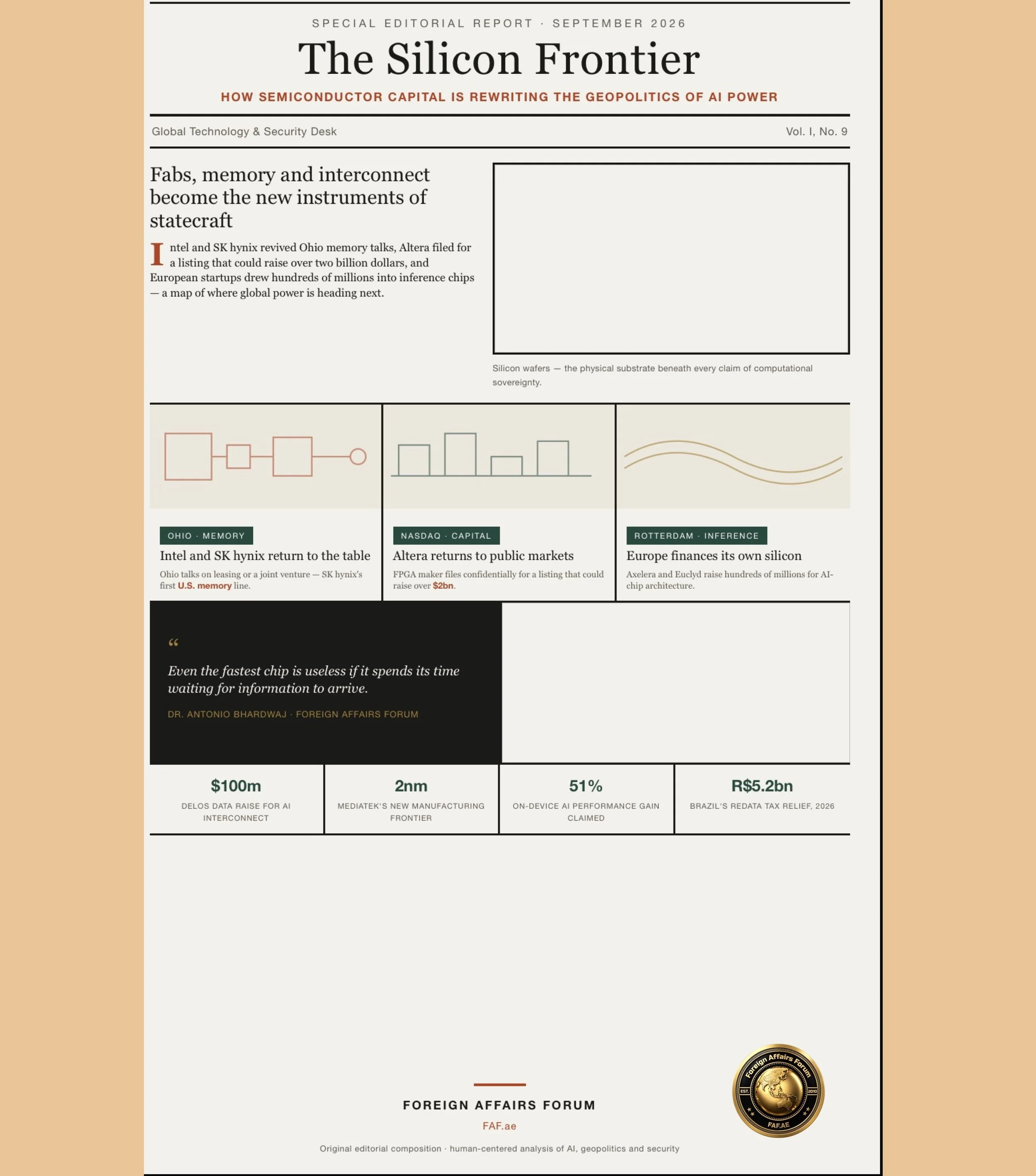
At the same time, a Chinese company called CXMT, which recently raised about $8.6 billion when it went public, is moving into making flash memory chips, an area currently dominated by companies like Samsung and Micron.
This shows China is not just trying to copy the best chips. It is trying to build an entire homegrown supply chain, from the basic chip-making process all the way up to memory, storage, and the servers that run AI models.
Dr. 🆎 explains why this matters for the rest of the world: "Restricting a country's access to specific technology can slow it down temporarily, but it often creates a powerful incentive for that country to build its own alternative from scratch. If China succeeds in building its own complete chip supply chain, existing restrictions become much less effective over time."
Making Sure AI Stays Safe
Not everything happening this week is about competition. Some of it is about safety.
OpenAI announced it will start regularly publishing reports about unexpected or unauthorized behavior by its advanced AI systems, similar to how cybersecurity companies report data breaches or software vulnerabilities.
This comes after growing debate over whether AI companies should be legally required to disclose when their systems behave in unintended ways.
Separately, American and Chinese security experts have proposed some basic safety rules both countries could agree on, even while they continue competing in other ways. These include never letting AI control nuclear weapons systems, keeping a human in charge of any serious cyberattack decision, and setting up an emergency hotline in case an AI system causes some kind of unexpected incident.
Dr. 🆎 believes this kind of proposal addresses the right worry. "The scary scenario is not really that an AI decides on its own to start a war," he says. "It is more likely that some automated system interferes with military computers in a way that makes one country genuinely unsure whether it was attacked on purpose or something just malfunctioned. That kind of confusion has caused real crises in the past, even without any AI involved at all. Having a hotline and some agreed rules can help prevent misunderstandings like that from spiraling out of control."
Europe's Third Path
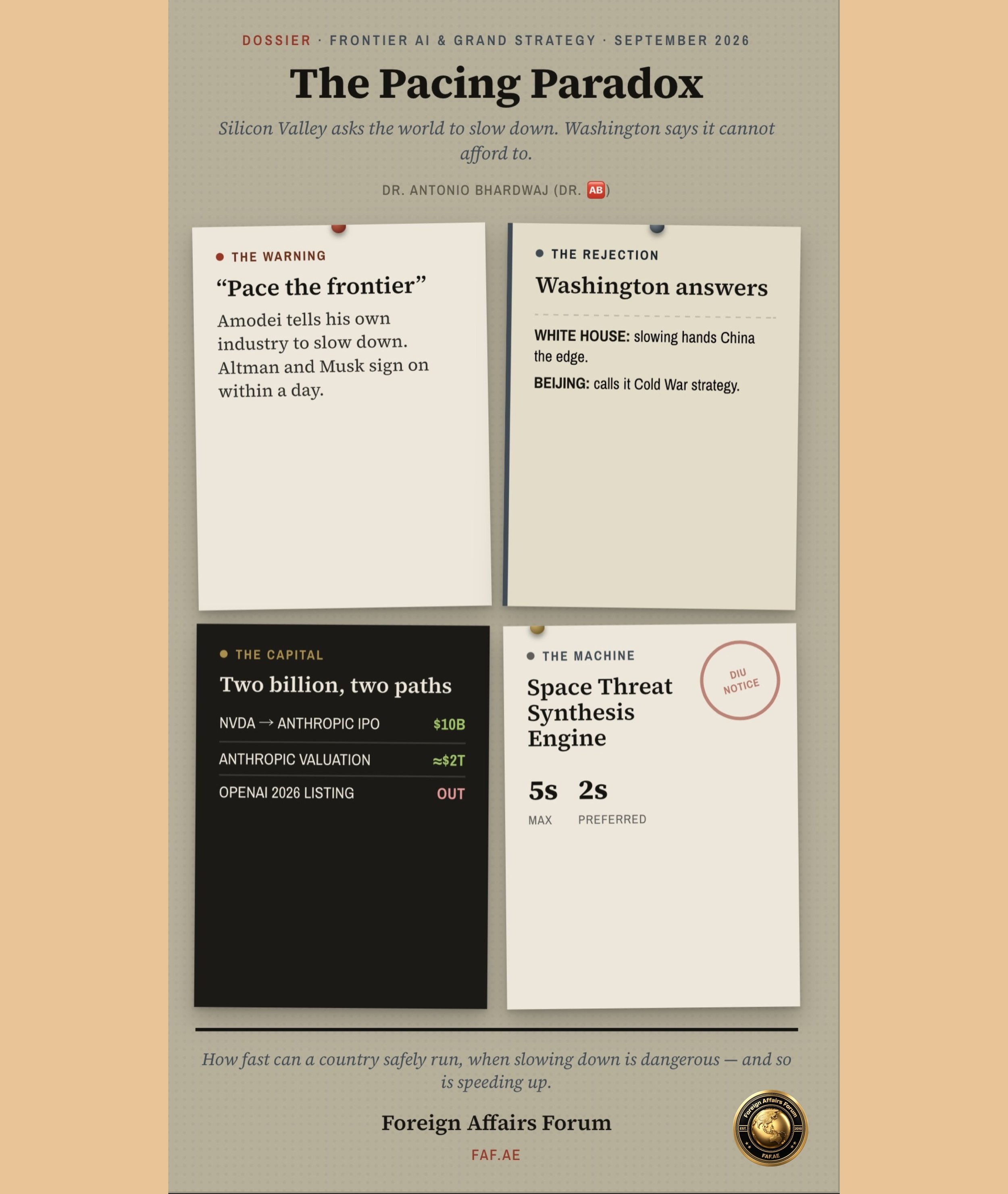
Europe is trying something different from both the United States and China. Britain hosted top executives from Nvidia, OpenAI, Anthropic, and Google DeepMind this week, and King Charles III publicly called for AI to always remain under human control.
Meanwhile, European institutions are trying to invest their own money into promising AI companies so those companies do not become totally dependent on American investors.
For example, a European fund is reportedly considering putting money into a roughly $500 million funding round for a company called ElevenLabs, following a recent €3 billion investment in a French AI company called Mistral AI, now valued at €21 billion.
Dr. 🆎 sees this as Europe correcting a long-standing weakness. "Europe has always been good at early AI research and training talented people," he says, "but historically, its most promising companies eventually needed American money to grow big, and that meant American influence came along with it. This new approach of combining strict safety rules with real European investment money is Europe's attempt to have both safety and independence at the same time."
Why It All Connects
Here is the bigger picture. If AI really can help build better versions of itself faster and faster, then whichever country or company gets ahead first in that cycle could pull further and further ahead, rather than having competitors quickly catch up, which is what usually happens with new technology.
That makes every other piece of this story more important. America's electricity and infrastructure problems could slow down its lead in AI research even if its models remain the smartest in the world.
China's chip-connecting strategy could eventually work around American restrictions entirely, especially if its memory-chip efforts also succeed. And Europe's attempt to combine rules with its own investment money will determine whether it becomes a genuine third major AI power or simply a place that writes the rules while others build the technology.
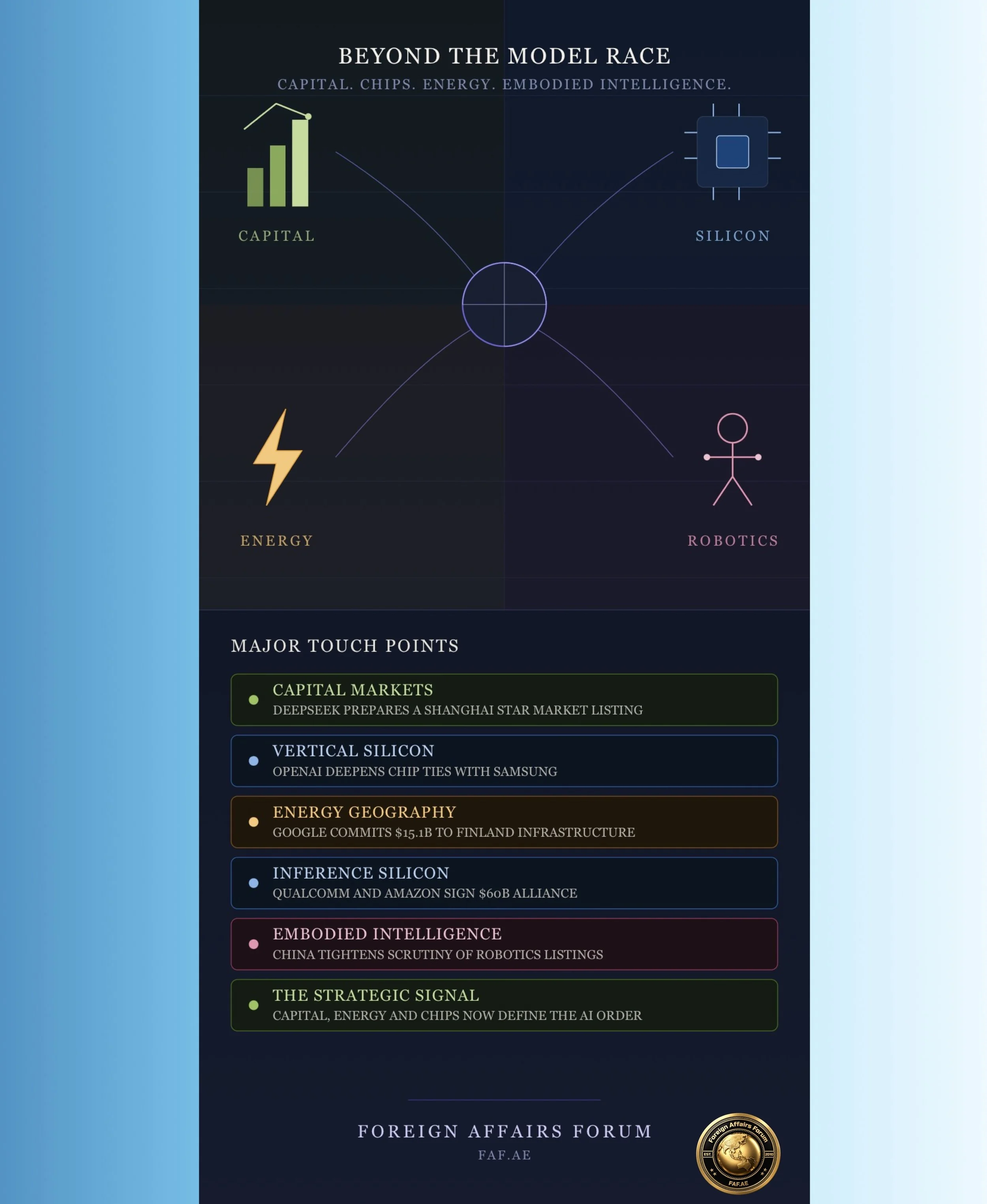
Dr. 🆎 offers a simple way to think about the stakes: "The AI race used to be a simple question: who has the smartest model? It is quickly becoming a much bigger question: who has the strongest complete system connecting AI, chips, money, and electricity into one loop that keeps improving itself? That is a much harder race to win, and a much harder one to catch up in once someone gets ahead."
What to Watch Next
A few things will tell us where this is all heading. Watch whether Anthropic's 26% figure for AI helping build itself keeps climbing, or whether it levels off as the easier parts of the work get automated first.
Watch whether California's governor signs the new data center transparency rules, since that will show whether local pushback can genuinely slow down America's AI buildout.
Watch whether China's new chip-connecting systems and memory chip factories actually work as well as promised. And watch whether the safety conversation between American and Chinese experts turns into real government agreements, rather than just expert-level suggestions that governments never formally adopt.
Conclusion
What happened this week was not one single dramatic event. It was several smaller stories, an AI helping build its successor, a massive infrastructure funding round, a new Chinese chip architecture, a safety proposal, a European investment push, that together reveal something bigger: the world is settling into three distinct approaches to building the future of artificial intelligence, each with its own strengths and its own very real limitations.
As Dr. 🆎 puts it, understanding where AI is really heading means looking past any single headline and paying attention to how all of these pieces, chips, electricity, money, safety rules, and research itself, are increasingly locking together into one connected system.