Beginner's 101 Guide : Why the AI Industry's Giant Debts Are Scaring Investors
Executive Summary
Artificial intelligence companies have borrowed enormous sums to build the computer centres that train and run their systems. Now lenders are getting nervous.
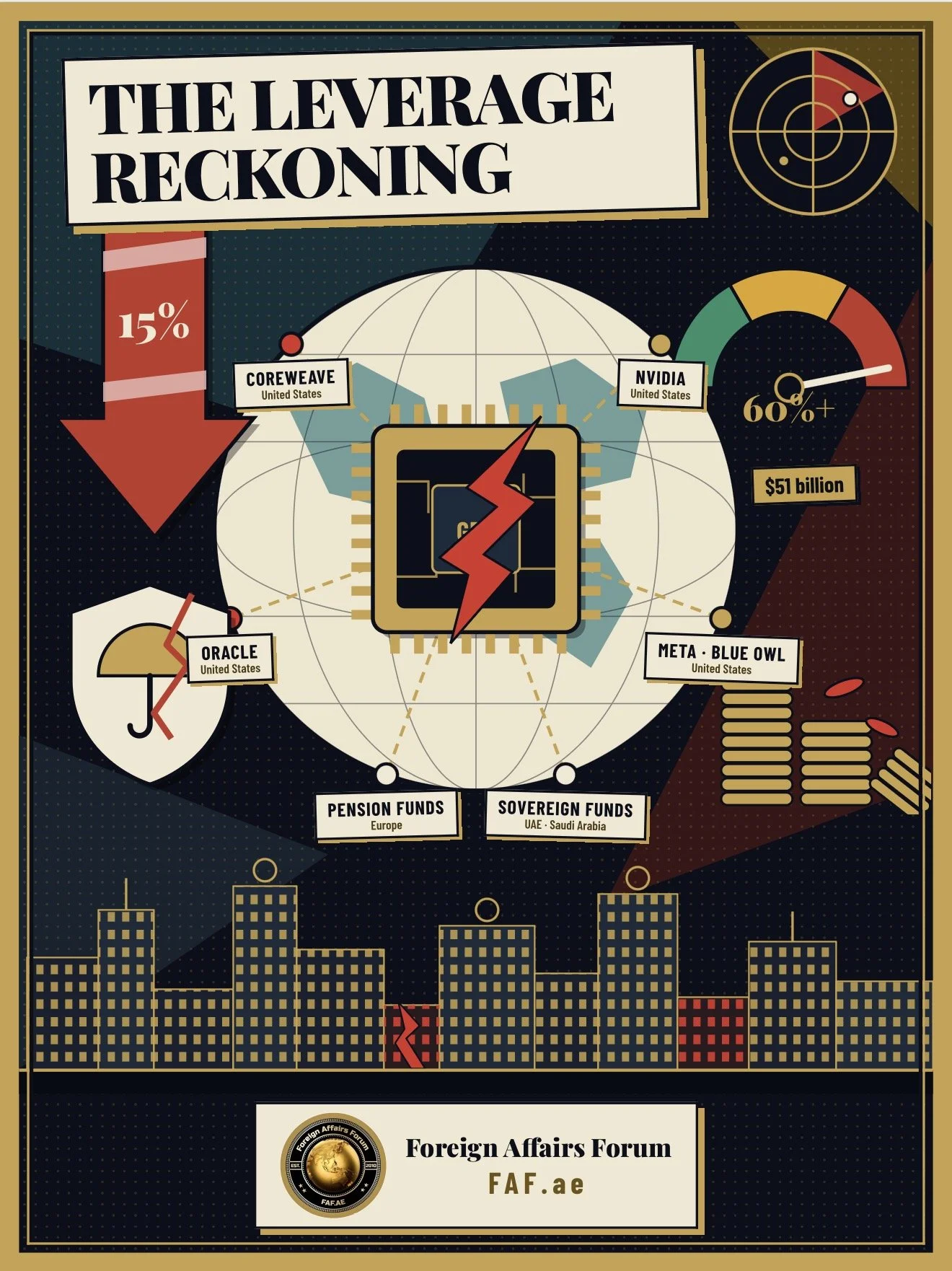
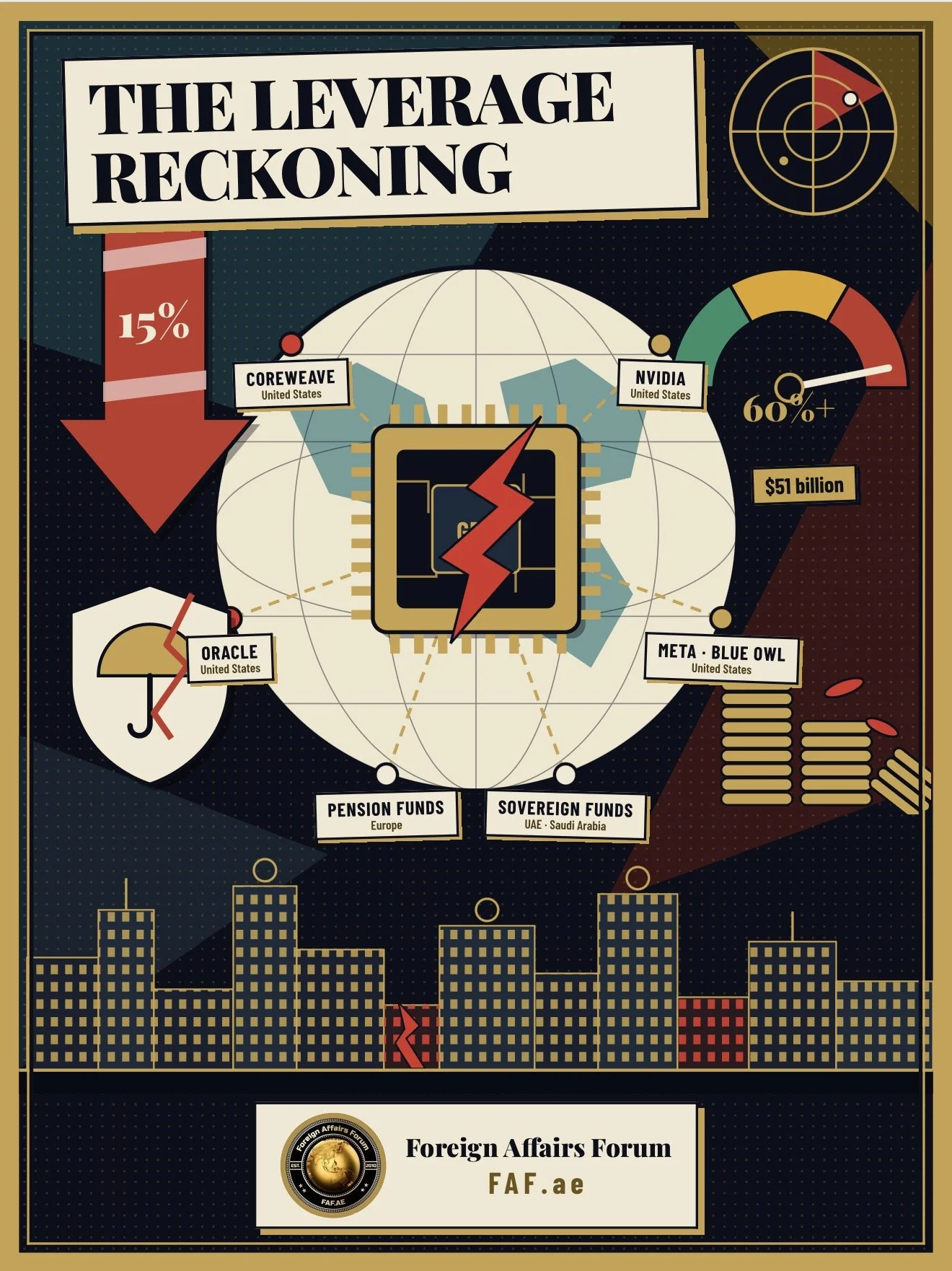
CoreWeave, a company that rents out computing power to AI developers, has seen its bond price fall by about 16% since July.
The interest rate that investors now demand to hold its debt has risen from around 10% to about 15%, a level normally linked to companies in trouble. The cost of insurance against its default suggests that markets see a chance of failure above 60% over five years. This FAF article explains what is happening in plain language, why it matters, and who might end up paying if things go wrong.
Introduction
Imagine a company that borrows heavily to buy expensive machines, rents them out to customers, and promises to repay lenders from that rent. This works well when customers keep paying and machines keep earning. It works badly when customers slow down, interest rates rise, or the machines become old faster than expected.
That is the situation facing parts of the AI industry today.
Dr. Antonio Bhardwaj (Dr. 🆎), an expert in human-centred superintelligence and in the security risks that come with advanced AI, says the lesson is simple: "A powerful technology does not guarantee a safe investment. The money behind it must be as strong as the idea."
What Has Happened
CoreWeave is known as a neocloud. It owns thousands of powerful computer chips, mostly made by Nvidia, and rents them to companies that build AI models.
To buy those chips and build data centres, it has taken on more than $51 billion of debt and related obligations. The company says it has signed contracts worth around $100 billion, and that these contracts are more than enough to cover what it owes.
Lenders are not fully convinced. In October the price of CoreWeave's bonds dropped sharply, and the yield, which is the return buyers demand for taking the risk, rose to nearly 15%. At the same time, the cost of buying insurance against the company failing to pay its debts reached record levels.
These insurance contracts are called credit default swaps. When their price rises, it means investors think a default is more likely. The current price implies a chance above 60% over five years, though this is a market estimate rather than a certainty, and actual default may never happen.
The rating agencies see the company as risky too. Its credit rating is B+, which is below investment grade and is often called junk territory. The shares have also fallen heavily in recent weeks.
It Is Not Only CoreWeave
Other big names have faced pressure. Oracle, a much larger and older company, has borrowed heavily to build data centres for its AI customers. Its credit rating has been cut to one step above junk, and the cost of insuring its debt has also hit record highs. Some of its long-term bonds now trade well below face value.
Meta, the owner of Facebook, arranged a $27 billion financing for a huge data centre in Louisiana through a joint venture with an investment firm called Blue Owl.
Blue Owl owns most of the project, so the debt does not appear on Meta's own books. This kind of arrangement is legal and common, but it makes it harder for outsiders to see how much risk the system as a whole is carrying.
Private credit funds, which are lenders that operate outside the traditional banking system, have become central to this story. A year ago they supplied about 9% of AI financing. Today they supply about 34%. The money often comes from pension funds and insurance companies that want steady returns.
Why Is This Happening
There are several reasons, and they feed one another.
First, the machines wear out quickly. AI chips are usually replaced every five or six years, but the loans and leases that pay for them may run for fifteen years or more. This means companies must keep borrowing just to replace what they already bought.
Second, interest rates are higher. The ten-year American government bond now yields more than 5%. When borrowing becomes more expensive, projects that looked profitable can quickly look risky.
Third, customers are concentrated. A handful of AI developers account for much of the demand, and many of them spend more than they earn. If one of them cannot raise fresh money, the companies that serve it feel the damage quickly.
Fourth, the relationships are circular. Chipmakers invest in neoclouds, neoclouds buy chips and rent them to AI developers, and the chipmakers may also invest in those developers. When everyone depends on everyone else, one weak link can threaten the whole chain.
Fifth, fear spreads. When lenders see trouble in one place, they ask for higher returns everywhere, which makes borrowing harder for every company in the same business, and that can turn a worry into a real problem.
Dr. 🆎 compares the situation to a race: "Every company feels it must build faster than its rivals. Each decision makes sense alone, but together they can create more capacity, and more debt, than the market can support."
Who Might Pay If There Is a Crash
Shareholders would be the first to lose, since their investments would fall in value. Lenders and private credit funds would follow. The strongest tech giants might suffer least, because they often have more room to renegotiate contracts or delay commitments.
The most worrying part is what comes next. Many of the long-term loans were bought by insurance companies and pension funds. These institutions look after the savings of ordinary people. If the loans lose value, retirement funds and insurance returns could be affected. In a severe case, governments might be asked to step in, which would mean taxpayers could be left with part of the bill.
There is also a security angle. Governments increasingly depend on private companies for the computing power behind defence, intelligence and scientific research. If one of those companies failed, important work could be disrupted, and valuable facilities might fall into the hands of buyers who are not aligned with the national interest.
Dr. 🆎 warns that "a financial failure in critical computing infrastructure is not just a market problem. It can become a national security problem very quickly."
Reasons for Caution Before Panic
It is important to be fair. The demand for AI computing is real, and many of the contracts are genuine. A company can pay a high interest rate and still survive. Some analysts believe the market has overreacted, and company leaders insist that their finances are strong. Nvidia's chief executive has said that CoreWeave's financial strength is improving and that it needs no rescue. These views deserve to be heard.
But markets are telling a different story at the moment, and the history of technology booms shows that a great invention can still lead to terrible investments. Railways changed the world, yet many railway investors lost their money. The same may be true here.
What Should Be Done
Companies should be open about their contracts, their customers and how long they expect their machines to last. Lenders should test their loans against tougher conditions, such as lower rental prices and the loss of a major customer. Regulators should require clearer reporting of AI-related debt across banks, insurers and private lenders, and they should work with other countries, because the money comes from all over the world.
Governments should identify which computing facilities are truly essential for national security and prepare plans to protect them without rewarding reckless borrowing. Investors should remember that a good technology and a good investment are not always the same thing.
Conclusion
The trouble in CoreWeave's bonds is a warning, not necessarily a catastrophe. It shows that the way the AI boom has been financed may be more fragile than many people thought. The technology is powerful and probably here to stay. The question is whether the debt built around it can survive higher interest rates, ageing machines and nervous lenders. If it cannot, the people who pay may not be the ones who made the decisions.
Dr. 🆎 puts it plainly: the strength of a technological power depends not on how big its dreams are, but on how solid its foundations are. The coming months will show which one the AI industry has built.