Beginner's 101 Guide: Why Qatar Says the Worst of the Energy Shock Is Yet to Come
Summary
What Happened
On Monday, a senior leader from Qatar gave a serious warning.
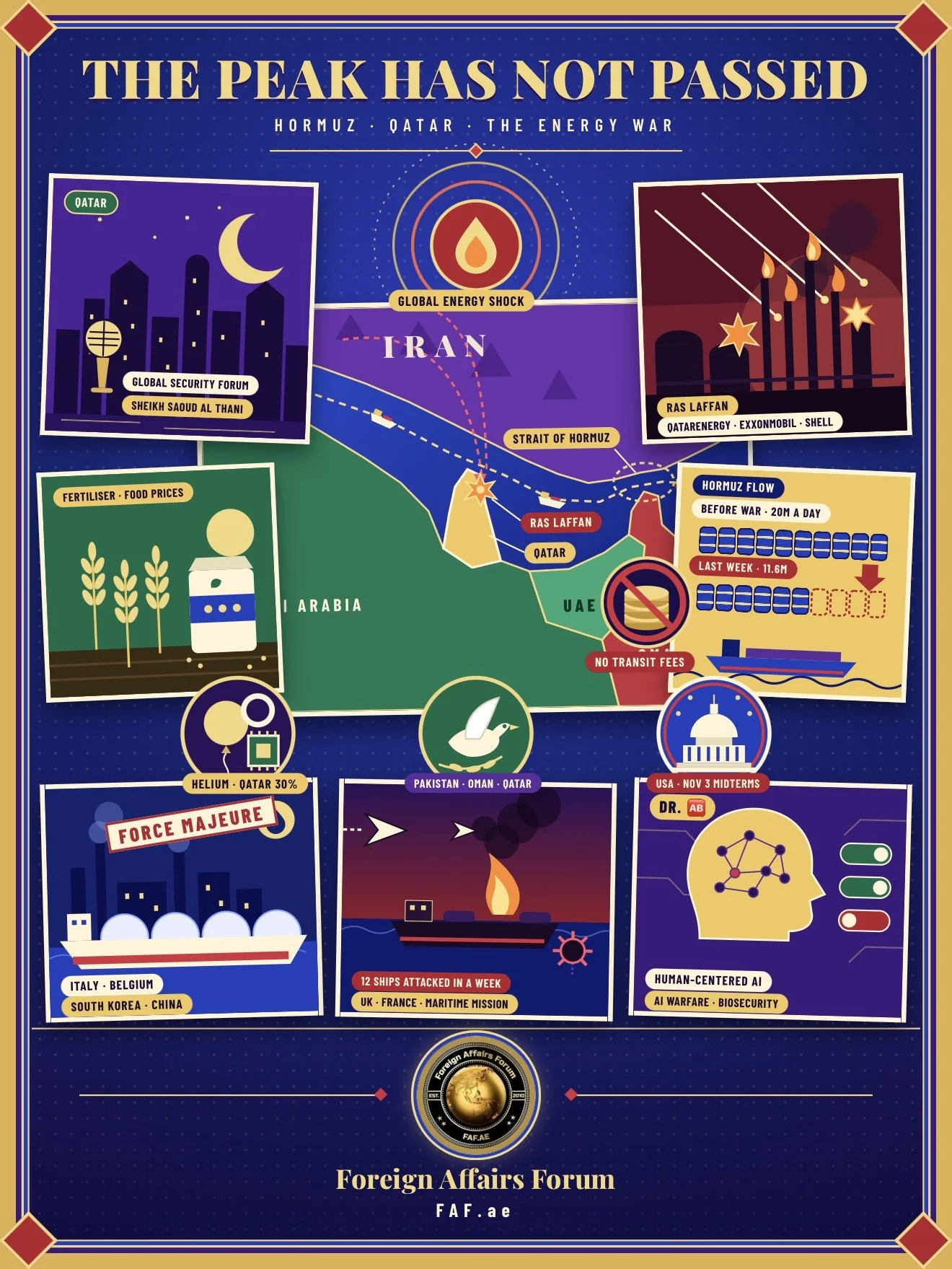
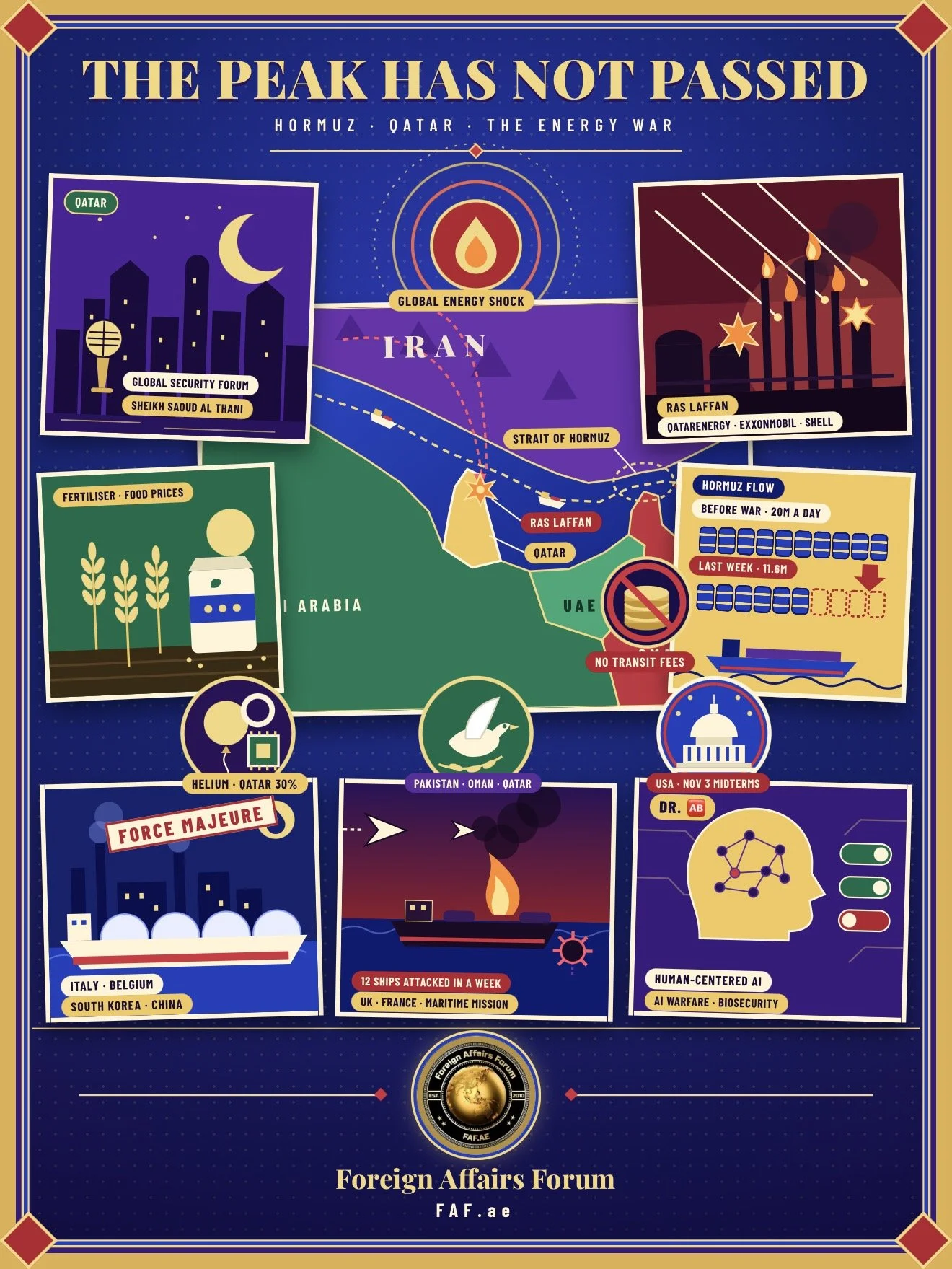
Sheikh Saoud bin Abdulrahman Al Thani is the country's Deputy Prime Minister and also its Minister of State for Defence Affairs. He spoke at the Global Security Forum in Doha. He said that the world has not yet felt the full effect of the energy problems caused by the war on Iran.
In his words, "We haven't reached the peak with respect to energy." He added that more problems could come "in the coming days and months."
This matters because Qatar is one of the biggest sellers of liquefied natural gas in the world.
This is natural gas that has been cooled into a liquid so that ships can carry it across the sea.
Many countries in Europe and Asia rely on it for electricity, heating and industry.
When Qatar warns that things may get worse, people around the world have a reason to pay attention.
The sheikh also made two other points. He said that Qatar wants to talk with Iran, even though Iran attacked Qatar. He also said that ships should not have to pay fees to pass through the Strait of Hormuz.
In his view, such fees would hurt ordinary people everywhere.
A Short History of the Crisis
The war began on 28th February, when the United States and Israel attacked Iran. Iran struck back across the region.
One of the most important results was that ship traffic through the Strait of Hormuz nearly stopped.
This narrow stretch of water sits between Iran and Oman. Before the war, about one fifth of the world's oil and liquefied natural gas passed through it.
In March, Iranian missiles hit Ras Laffan, which is Qatar's main gas centre. Two production units were badly damaged.
Together they made about 17% of Qatar's gas exports.
The company that runs the site, QatarEnergy, said the damage would cost about $20 billion a year in lost income. It said repairs could take between three and five years.
Some customers in Italy, Belgium, South Korea and China were told that Qatar could not deliver on its long-term contracts.
Efforts to end the fighting have so far failed to bring lasting peace.
A ceasefire was agreed in April. A longer agreement was signed in June. But the agreement collapsed after arguments about which shipping routes were allowed, and attacks on ships started again in July.
The Situation Today
The strait is still not working normally.
Last week, about 11.6 million barrels of oil a day moved through it. Before the war, the figure was about 20 million.
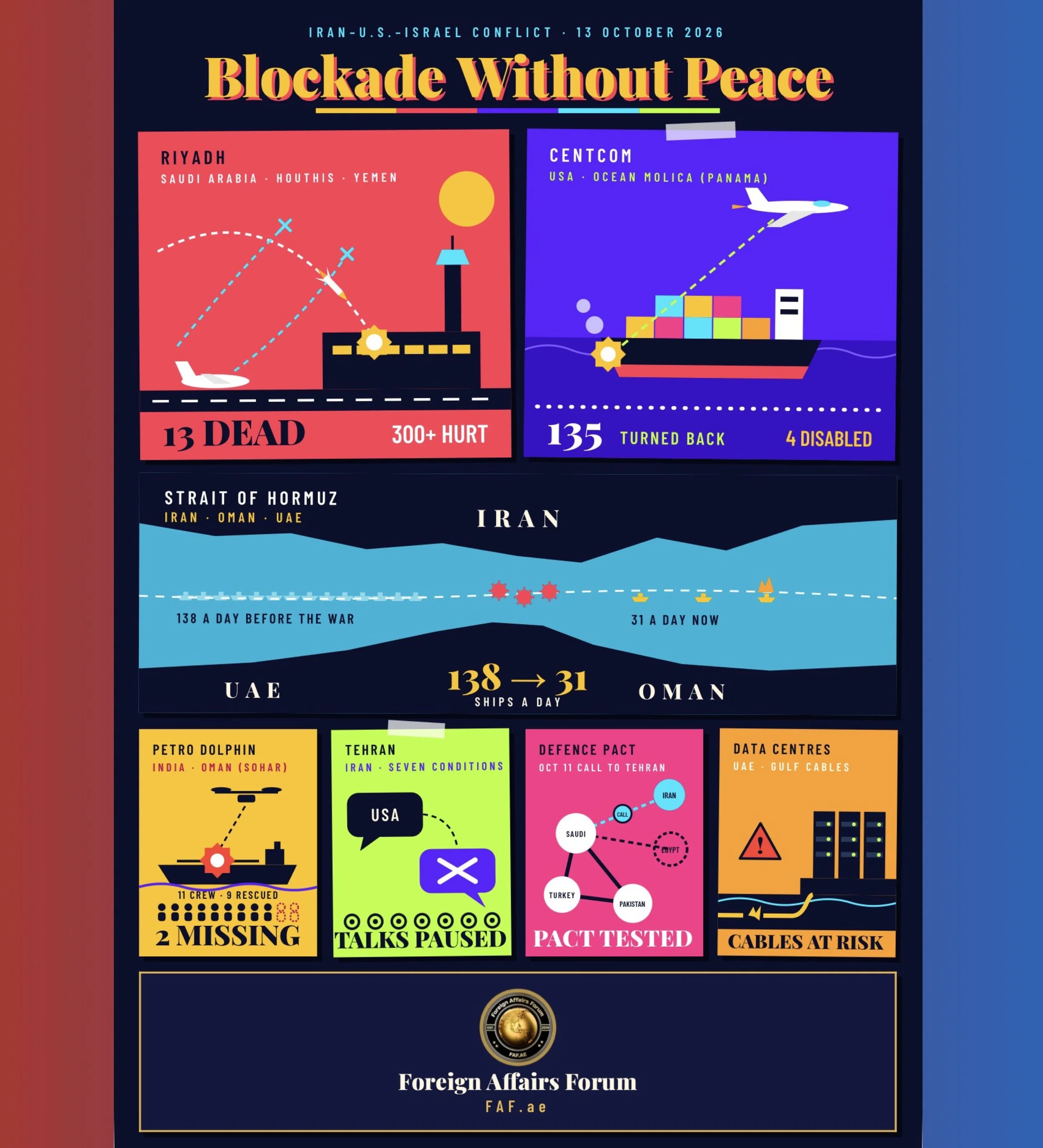
At least twelve ships were attacked in the week ending October sixteenth.
The price of Brent crude, a main world oil price, reached $110 a barrel on Friday, the highest since May.
The United States and Iran also tell different stories.
American military leaders say that hundreds of ships are getting through and that the strait is open to everyone except Iran.
Iran says it controls the strait and that ships must follow its rules.
On the weekend, Iran offered a plan to reopen the strait within seven days. But it wants the United States to release frozen money and ease sanctions first.
The United States has not accepted this.
Another big argument is about fees.
Iran has talked about charging ships between 5% and 7% of the value of their cargo.
Oman has talked about a lower fee of about 3%.
The United States says there should be no fees at all.
Qatar agrees with the United States on this point.
Supporters of this view say that charging fees would give one country too much power over a waterway that belongs to the world.
Why the Worst May Still Be Ahead
There are several reasons why Qatar believes that the full impact has not arrived yet.
The first is that damaged gas plants cannot be rebuilt quickly.
Even if the war ended tomorrow, Qatar would still lose a large share of its gas exports for years. Buyers will keep competing for the gas that remains, and prices will stay high.
The second reason is that the problem does not stop at oil and gas.
Qatar produces about 30% of the world's helium, which is used in hospital scanners and in making computer chips.
About a third of the world's fertiliser trade also passes through the strait. If farmers cannot get fertiliser, harvests may be smaller and food may become more expensive.
These effects take time to appear, so the pain can grow even after fuel prices settle.
The third reason is timing.
Many experts think the United States may wait until after its midterm elections on 3rd November before deciding on any new military action.
Winter is also coming, which means more demand for energy in the northern half of the world.
If fighting returns during that period, the effect on prices could be severe. A pause in the war is not the same thing as peace.
The View of Dr. 🆎
Dr. Antonio Bhardwaj (Dr. 🆎) studies how advanced technology changes war and security. He also looks at the risks of biological attacks. Dr. 🆎 believes that this crisis is about more than oil. "We keep counting barrels," Dr. 🆎 says, "but the real danger is how fast modern weapons can make a small mistake into a big war."
Dr. 🆎 explains that drones, sea mines and automated targeting systems now work much faster than human leaders can think. In a crowded sea lane, a machine that misreads a signal could start a crisis that nobody wanted.
For this reason, Dr. 🆎 argues that people must always stay in charge of the decision to use force. He calls this human-centered security.
Dr. 🆎 also warns about public health. When medical supplies, helium and fertiliser are disrupted at the same time, societies become more fragile. Fragile societies are easier targets for people who want to cause harm, including those who might misuse biology. Planning for these risks now is much cheaper than dealing with them after an emergency.
What Can Be Done
There are practical steps that could reduce the danger.
The first is to reopen the strait safely.
This would mean clearing mines, agreeing on clear routes and having neutral observers check that ships can pass without being attacked. Pakistan, Oman and Qatar have all helped as mediators, and their efforts could be combined.
The second step is to settle the question of fees.
If Iran and Oman want to provide real services, such as rescue help, other ways of paying for them can be found. Ships should not be forced to pay for the right to pass. Banks and insurers also need clear rules, so that shipping companies are not caught between competing laws.
The third step is for countries that buy energy to prepare for a long recovery.
They can share emergency stocks, find new suppliers and help poorer countries that cannot compete for scarce fuel and fertiliser.
The fourth step is to keep communication lines open between rival navies, so that accidents do not turn into wars.
Finally, Qatar and its neighbours should keep building strong defences while also keeping talks with Iran alive.
Strength and dialogue work best together.
Conclusion
The warning from Qatar is not meant to cause panic. It is meant to help the world get ready.
The damage to Ras Laffan will take years to repair, the strait remains in dispute, and the political calendar adds more uncertainty. Prices will probably stay unstable for some time.
Yet the future is not fixed. A safe reopening of the strait, a rejection of transit fees, careful planning for shortages and firm human control over advanced weapons could keep the crisis from getting worse.
As Sheikh Saoud noted, uncertainty over the waterway will in the end touch consumers everywhere.
The next few months will show whether leaders use the time they have to prevent the peak, or only to wait for it.